The concluding interview in the MK Lit Fest series, The Long and the Short of It, took place on Monday 25th March 2024, and focused on the novel form. Amit Chaudhuri was in conversation with OU PhD student, Rebekah Lattin-Rawstrone, in a discussion that touched on diverse topics such as the influence of Indian classical music on his writing, the (un)conventional novel, and the importance of the inconsequential. PhD student, Anita Schwartz, offers here a summary of the discussion for those of you who couldn’t make it.
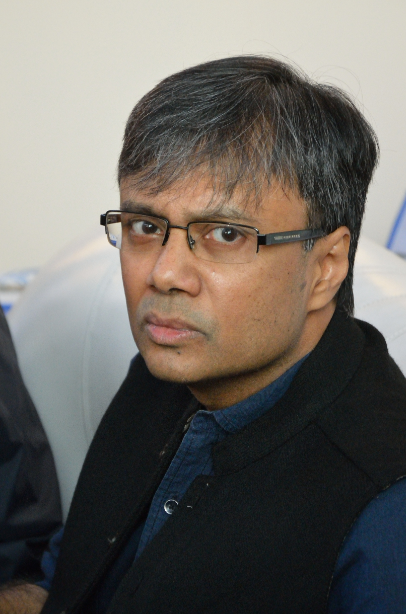
Amit Chaudhuri is the author of eight novels, the latest of which, Sojourn, was published in 2022. His novels have won numerous awards, including the Commonwealth Writers’ Prize, the Los Angeles Times Book Prize, and the Sahitya Akademi Award. He is also an acclaimed musician, poet, and essayist.
Rebekah Lattin-Rawstrone opened the discussion by asking how the structure of Chaudhuri’s novels has been influenced by his musical interests? Chaudhuri revealed that he is unaware of being a singer when he writes, and equally unaware of being a writer when he sings. For him, a model of ‘multifaceted’ creativity, the suggestion of unity between co-existing creative selves, just does not work. He likened this internal detachment to life in India, which for him is always decentred. Wherever you may be, you are listening (and therefore linked) to what is happening in another flat, or on the street outside, but are not distracted by the sounds. It is a disconnection, Chaudhuri said, that he finds fascinating.
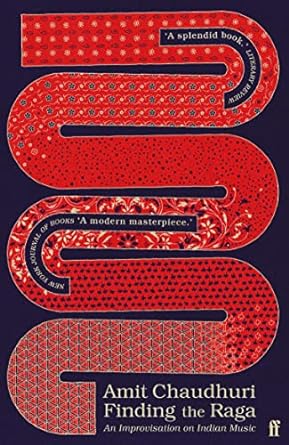
Yet, he pointed out, his novels follow a similar framework of improvisation that is present in the Indian classical musical form, the Raga. The musician moves up and down the octave, elaborating and expanding the scale, and finally arriving at the note in a ’round about way’. This, he says, is how he approaches his novel writing, the narrative trajectory is constantly deferred through an avoidance of ‘coming to the point’ that the reader may expect in a novel.
As a teenager, Chaudhuri revealed, his novel-writing began as a rebellion ‘against my own interiority’. Never comfortable with the realist novel as a form, or with the idea that you pour an ‘inner life’ into a character, he instead narrates the modes of being which could have happened. His novels, he explained, depict unimportant everyday events where nothing of consequence has occurred, exploring how the senses inhabit or partake in life, rather than presenting the ‘sensational’ itself. Even objects – or the life of objects – are of great importance in his narratives. The novel as a genre, he elaborated, accommodates the possibility of the object playing a part in the milieu of the character, as they exceed the room where they are placed.
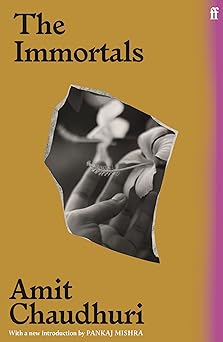
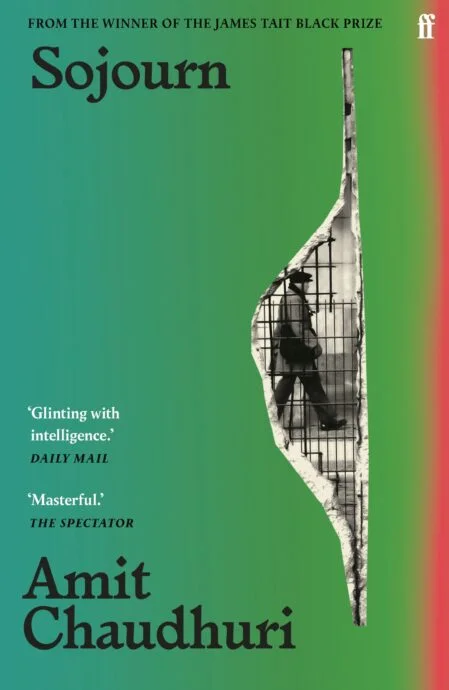 In answer to Lattin-Rawstrone’s question about reader engagement, Chaudhuri explained that he rarely thinks of his audience, as to do so would cause him to freeze, or deliver a novel that wouldn’t please them. Every work, therefore, is based on immediate impulses and stimuli. However, Chaudhuri has a ‘vague sense’ of how the novels will unfold, a theme that is to be investigated. For example, in The Immortals (2010), Chaudhuri explores the precarious position of the artist after the onset of the free market through the relationship between the ‘puritan’, privileged and unkempt teenager, Nirmalya, and the ‘ambivalent’, unprivileged, knowledgeable teacher, Shyam Lal. The comedy and irony of that relationship, Chaudhuri says, ‘went to the heart of life as far as I was concerned’. In his latest novel, Sojourn (2022), a visitor to Berlin is absorbed in the city, feeling both a sense of recognition and a loss of himself and memory. As Chaudhuri explained, the character of the unnamed man emerges into the city as a ‘product’ of the end of the Cold War, and the novel is an exploration of the new world of market forces that energises the narrative.
I will finish with Chaudhuri’s fascinating answer to a question on the personal process of writing and revision. When composing a novel, Chaudhuri reflected, he constantly asks himself, which sentences have a ‘future’ in terms of direction, that somehow hold a promise? He works, he explained, paragraph by individual paragraph, re-reading and deciding if they are ‘dreadful’ or not, and once again questioning: What am I doing? What has future? Every sentence and paragraph, he concluded, must have a life and sense of direction outside of the story. Pluck it out of the narrative, and it should possess the potential for a myriad of directions. It was a perfect note on which to end such an engaging discussion.

Anita Schwartz is a part-time PhD student in the Department of English. Her thesis explores little-known texts in English by Indian women between 1870 and 1947, and the complex debates taking place around reform, nationhood, and women’s position in late colonial Indian society. Her supervisors are Prof. Alex Tickell and Prof. Suman Gupta.