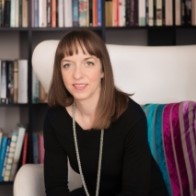
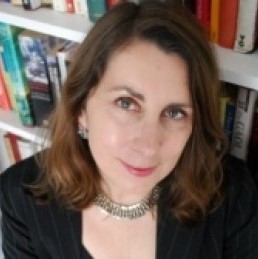
In this bonus summer post, Jennifer Shepherd, Chair of the Faculty of Arts and Social Sciences team in Ireland, shares a behind-the-scenes glimpse into the Open University’s partnership with the John Hewitt Society’s annual Summer School.
What does summertime mean to you?
For me, it’s festival time.
Each summer, I find myself in the picturesque cathedral town of Armagh, Northern Ireland at the Marketplace Theatre, home to the annual John Hewitt International Summer School. Now in its 36th year, the festival is hosted by the John Hewitt Society, established to celebrate the legacy of local poet, art historian and social activist John Hewitt.
Hewitt’s legacy is everywhere in evidence here in Armagh in late July, as a diverse group of writers, visual artists, musicians, political commentators and social entrepreneurs gather to celebrate the power of story to explore some of the most pressing social issues we face today on the island of Ireland.
It’s warm and unpretentious and full of surprises.
One day the mainstage hosts eminent Irish playwright Frank McGuiness, sharing the wit and wisdom of a literary career spanning over 4 decades; another day finds bestselling crime writer Denise Mina discussing her take on hard-boiled crime fiction; still another, a round table of political commentators and journalists pitch ideas for engaging citizens meaningfully in the Northern Ireland political system.
Everywhere there’s story, whether it takes the form of images – such as Nigel Swann’s haunting photographs of the ‘Yellow Star’ houses of Budapest – or music, provided by award-winning folk artist Jack Warnock.
As an OU academic based in Northern Ireland, I have the pleasure of managing a partnership with the John Hewitt Society on the delivery of the Summer School. It’s a natural fit since the Open University has much to offer local conversations around politics, history, and creativity.
Collaborating with the John Hewitt Society for the last decade has allowed the Open University in Ireland to showcase the incredible quality of our teaching and research, particularly in the area of creative writing.
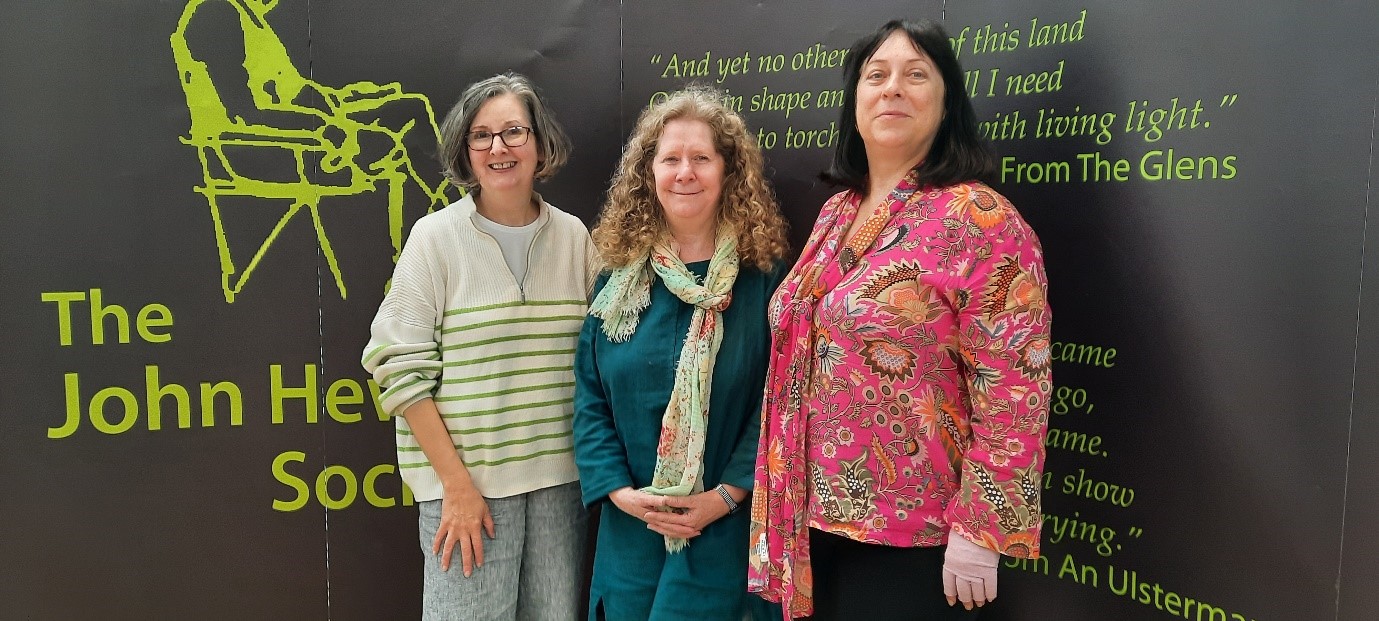
Heather Richardson, Nessa O’Mahony, and Siobhan Campbell
It’s a pleasure to meet festival-goers during the week who have signed up for workshops led by OU writers – this year, we were joined by novelist Heather Richardson, and poets Nessa O’Mahony and Siobhan Campbell. Festival-goers are full of praise for our teachers, noting that OU writers really ‘see’ each student and bring out the very best in them and their writing.
‘Oh, you’re with the OU,’ is how I’m often greeted when I introduce myself in the busy foyer between events—because if there’s a proverbial zero degrees of separation in Ireland, the same holds true here for the Open University.
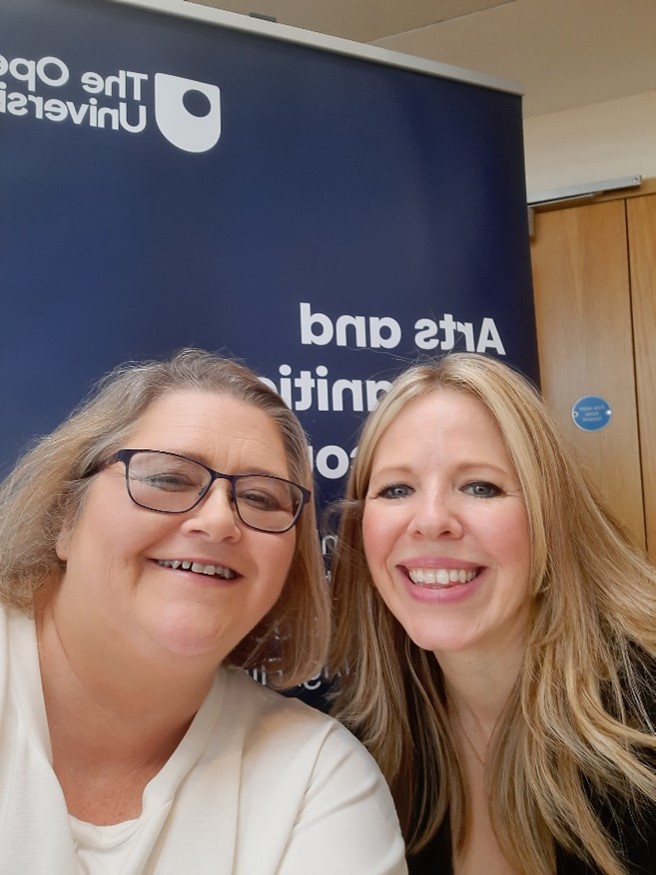
Jennifer Shepherd (right) with former OU student
At the local book vendor’s festival stall, a man tells me his friend is studying on the new English Lit MA and really enjoying it. I encounter a woman at the OU pop-up stand who confides that she’s already got a place reserved on an MA programme and wonders if she can get further details. Another man lingers over the OU leaflets on display and tells me a long story about a professional life that took many unplanned turns. He always wanted to study law but never got the chance – did I think it was too late for him? A former OU student of my own waves from across the crowded foyer and makes her way over for a catchup and selfie.
She reminisces fondly about her first OU module and grins at the memory of her debut at an Open University open mic night, the first of many engagements over the years as an accomplished poet and flash-fiction writer.
And maybe this is what I like most about my annual pilgrimage to Armagh each summer: to see the power of story at work in unexpected places. While speakers on the mainstage are inspiring us with tips for master storytelling or compelling new visions for a shared future in Ireland, I’m seeing something just as exciting at my Open University pop-up stand. People talk about their daily lives and, when they do, I get a glimpse of the way in which OU study allows people to write new futures for themselves and shape the story of their own lives in fresh and exciting ways.
Jennifer Shepherd
Originally from Canada, Jennifer Shepherd completed her PhD at the University of Alberta and post-doctoral fellowship at the University of Hull. She is a Senior Lecturer and Staff Tutor in the Department of English Literature and Creative Writing at the OU. As chair of the FASS team in Ireland, she is responsible for facilitating local knowledge exchange and engagement opportunities, as well as maintaining partnerships with Ireland-based organisations which include the John Hewitt Society, the Belfast Book Festival, and Dublin/Belfast Culture Nights.
Co-directors Professor David Johnson and Dr Philip Seargeant founded the new research group to give oxygen to interdisciplinary research conversations and initiatives, and they see it as an exciting opportunity for new and interesting synergies to emerge.
The group launched with an online literary event featuring author Jim Crace, who read from his Booker-shortlisted novel, Harvest, and spoke to OU Lecturer in Creative Writing and fellow novelist, Dr Emma Claire Sweeney, about the interrelationship between politics and language in his own work.
A conversation between Jim Crace and Emma Claire Sweeney
This year, LLP will kick off with a series of public talks that take inspiration from Raymond Williams’s hugely influential ‘Keywords’ book to examine the terms and concepts that act as touchstones for today’s society.
Williams describes a keyword as one for which ‘the problems of its meanings seem inextricably bound up with the problems it’s being used to discuss.’ So the act of defining the word is part of the process of exploring and arguing for the values that the concept represents.
An animated video essay about Raymond Williams’s ‘Keywords’, and the relevance of the idea for today’s society.
With speakers spanning disciplines from philosophy to political science and lexicography to literature, the series will look at how Williams’s project is still highly valid today, and at what words – and the arguments around them – define society and culture in 2022.
Sally O’Reilly is a novelist and Senior Lecturer here at the Open University’s Department of English and Creative Writing, where her role as Media Lead has included editing this blog. Before Sally’s appointment as a Central Academic in 2014, she’d already worked here for many years as an Associate Lecturer. But Sally’s long relationship with the OU is about to evolve as she is now making the leap to fulltime writing. Ahead of her departure, Sally’s successor as Media Lead, Emma Claire Sweeney, has seized the opportunity to ask Sally about her recent research into climate change and creativity – an area where Sally hopes to continue collaborating with OU colleagues.
Emma: How do you think creative writing might play a role in addressing the societal challenges posed by climate change?
Sally: Like so many people, I am increasingly alarmed by the climate crisis and I also feel unsure what I can do to help. It’s hard to see a way in which any one person can make a difference, and there are two default settings – thinking about something else, or assuming a position of nihilistic fatalism. But what I’ve realised is that it’s not about any one person, it’s about the power of collective action and social change, and while one person is powerless alone, if you can start communicating with like-minded people, astonishing changes can be made.
And while, at first, I thought that trying to address these issues was something I must do outside my work and writing time, I saw eventually that writing creatively is directly related to the climate crisis, because writers can (perhaps) encapsulate what this means in human terms, and be part of a movement to reimagine the world.
I’ve talked about this in three videos recorded for the Faculty of Arts and Social Sciences:
Imaginative writing can seem like an adjunct, a ‘nice to have’, rather than being essential to society like (say) physics. But if you look at the way people turned to books, film and TV during the lockdown, you see how vital narrative is to everyone. So writing can both help people process what is going on, and help communicate the situation – but without pushing an overt ‘message’ because there we have another pitfall, becoming polemical or seeming to preach.
Emma: Can you name a few contemporary writers who you feel have navigated this territory particularly well?
I really like the way that a fiction writers like Jenny Offill can play on our sense of unease by weaving alarming statistics about climate, preppers and the coming apocalypse into a contemporary realist narrative. It is the very ordinariness of the story that makes it terrifying.
Right now, I’m in the middle of a fascinating book called Being a Human by Charles Foster, which isn’t overtly about climate change, but about the way in which humans lived for many thousands of years, as Palaeolithic hunter gatherers. They lived long, healthy lives, their carbon footprint was zero and they produced visual art of stunning sophistication. Our view of modernity as being part of a post-Enlightenment process of constant improvement does not stand much scrutiny if you take the long view, and the despoliation of the planet is part of that. What’s particularly interesting about Foster, who is an extraordinary writer, a sort of modern William Blake, is that he bends genre in this book. Ostensibly, it’s creative nonfiction, but he brings in the ghost figures of a character named X and his son, spirits from the Palaeolithic age. His writing reminds me of both Ted Hughes and Alan Garner, the sense of the numinous in nature, the mystery in being. And Foster also embodies the meeting of scientific, empirical knowledge and creativity – he has studied veterinary medicine, he is barrister, and he has a wild imagination.
Sally: I invited poets, fiction writers, scientists and activists to talk about how distilling observations about the natural world and telling stories relates to the present moment and our choices about the climate. I’m aware of my own ignorance here. My writing has not focussed on climate previously, and so it is as steep a learning curve for me as it is for anyone. But in the research I have done so far, I can see how this issue connects with so many other issues – racism, social justice, education, equality.
Emma: So your own research interests are changing in the light of these connections?
After I leave the OU, I will be working on a series of essays about the contemporary world and climate, working tranche title Eco Worrier. And my current novel explores Victorian attitudes to nature and the way in which the ancient, shamanic understanding of the natural world had its last gasp at that time. It’s a book that has led me down a lot of surprising, twisty pathways, like walking through an ancient forest. Or so I tell myself when my energies are flagging.
Emma: Another area of your research relates to diverse voices in historical fiction. Could you tell us a bit more about that? Are there links between this and your interest in creativity and climate change?
Sally: I’m in the process of putting together a collection of essays about difference in historical fiction, and the way that previously marginalised voices are now being heard in this genre. Two years ago, I would have said this was separate from my interest in climate, but now I see a close connection. If you read about the British Empire and the ruthless way in which the British colonised and exploited people and resources, you can see how the foundations of climate injustice were laid. The Industrial Revolution paved the way for global expansion, which traditional British histories have said made the UK the ‘workshop of the world’, but we did this at the expense of disenfranchised groups in Britain – women, children, the working class – as well as in the global South. And the roots of Empire go back to Tudor England, to those glamorous swashbucklers Drake and Raleigh, that period of history that now seems so brightly coloured and picturesque.
Emma: Now that you are leaving your current post at the OU to write full time, how do you hope your new relationship with the OU might develop?
I’d like to find a new way of working, writing books that have academic rigour in collaboration with academics, perhaps in other disciplines, and also writing novels that reflect the new way that I see the modern world. One of the poets at the first seminar, Kristian Evans, talked about the way in which writing makes us more present to reality, and helps us experience life with more intensity, more directness. I’d like to channel that, into reading, thinking and writing. And collaborating. Because as I was saying earlier, this has to be about collective action. Novelists are good at sitting on their own tapping out sole-authored books, and writing novels is still my priority, but I’ll be looking for creative collaborations with OU colleagues whose interests relate to mine. I’d like to follow Foster’s example and work at the interface between fiction and nonfiction, a way of writing that seems particularly resonant at this time, when the facts are so extraordinary that processing them is an imaginative challenge.
 What does summertime mean to you?