
By Emily Bullock & Jennie E. Owen
British and Irish Folk Horror stories usually explore isolated communities, forbidden knowledge, strange rituals and superstitions as the plot builds towards the collapse of rational explanations. Landscape is often central to the story and atmosphere, and it is layered with history: ancient stones, burial places, pagan rites. The horror emerges when the modern outsider discovers that the past never stays buried for long. Of course, there are many variations in the genre but if you are feeling brave enough to enter the world of Folk Horror, here are some of our favourites from the last few years (as always, readers should check for topics they may be sensitive to, particularly as trauma is a common trope in the genre).

Water Shall Refuse Them by Lucy McKnight Hardy (dead ink 2019)
This first-person story draws you into a world of heatwaves and isolation. A family are relocating to a virtually derelict house in Wales during the summer of 1976. But this isn’t a holiday, and a tragic backstory is quickly revealed: there has been an accident, there’s a dead sister, relics, and the looming presence of the ‘Creed’. The sweltering, skin crawling, dread of a family in crisis is palpable.
It’s a slow-burn of a novel, but the past drips through into the present-day storyline like sweat down your spine as the tension keeps steadily building. It is also a coming-of-age story which reveals that sometimes the things to fear most are the things we carry inside ourselves. And as the heat intensifies and the cruelty grows, the reader knows something terrible is about to be revealed.
Bog People edited by Hollie Starling (Chatto & Windus 2025)
The subtitle for this book is ‘A Working-Class Anthology of Folk Horror’ and it is great to see how the introduction by Hollie Starling makes an interesting connection between ‘folk culture’ and being working class. The anthology also experiments with the genre and form: there is a story written in the style of a piece of music journalism and there is a graphic story. However, there is plenty here for the folk horror traditionalist too, and if you can stomach a story like Perpetual Stew then you will love this eclectic collection.
As with any anthology there are some stories you will prefer over others, and some that play with the Folk Horror tradition more confidently than others. But they all contain strong voices that resonate off the page, and they all view the world from a little off-kilter.
Saltwash by Andrew Michael Hurley (John Murray 2025)
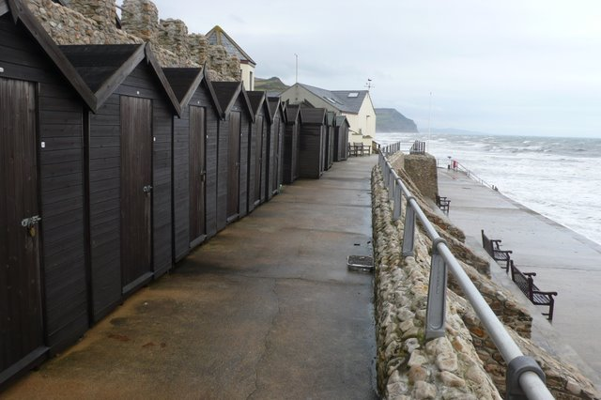
As the title suggests this novel is set at the seaside. The shore, the coast, out of season hotels, rain washed esplanades – all these ingredients make great use of liminal spaces to add to the folk horror ambience. Although this story, which deals with regrets, aging and illness has more menace than horror. But of course, there is horror in the mundane and the ordinary, the wreckage people leave in their wake, all of which this novel captures so well.
Fans of Shirley Jackson and her masterful short story The Lottery, should find plenty to enjoy in the growing discomfort experienced by our central character, retired travel writer Tom, as he is drawn into the mysteries of the run-down Castle Hotel’ with its group of often grotesque visitors, who return to this unique location once a year with only one outcome in mind. This is a novel that brings together the pervading nostalgia of a seaside setting with its central creeping mystery seamlessly. Lovers of folk horror cannot go far wrong with any of Hurley’s back catalogue either.
White is for Witching by Helen Oyeyemi (Picador 2009)
From the start, this inventive novel puts the reader on the back foot as it plays with perspective and language, with a fragmented prose that demands you slow down and pay attention. The novel explores the trauma and secrets that connect a family. It reminds us that we cannot always find the answers we seek in the past.
Teen twins Miranda and Eliot find their lives diverging after moving back to their mother’s house on the cliffs of Dover; a town full of ghosts, and voices (including the house itself), each clamouring to be heard. The story draws on many familiar gothic tropes such as haunted houses, vampires, and ghosts of the past; but also draws on Caribbean folktale and heritage to subvert these in a thought-provoking way. The overall feel is one of disorientation and creeping unease.
The Burial Tide by Neil Sharpson (Zando 2025)
Dublin based writer, Neil Sharpson, is making a name for himself as an emerging voice in Irish Folk Horror. His novels explore and reimagine Irish Folklore in terrifyingly visceral new ways. The novel begins with our nameless protagonist waking to find she is buried alive, and the reader is immediately swept up in the mystery and tension that pervades each claustrophobic page.
The action takes place in a familiar Folk Horror setting: an isolated island community, where nothing is as it seems and the locals know more than they are letting on about what is roaming the countryside at night. This is a genuinely frightsome novel, perfect for Halloween and those who do not mind a bit of gore. Our band of unlikely heroes also inject some unexpected and welcome humour along the way.
If you enjoy this, you may also enjoy Grace by A.M. Shine (Head of Zeus 2026).
File:The British Seaside in Summer – geograph.org.uk – 928110.jpg – Wikimedia Commons
