Heather Hind is a Lecturer in English Literature with research interests in Victorian literature and material culture. She is currently turning her PhD thesis into a monograph. In this post, the second in our series on the PhD and beyond, she shares her hints and tips for getting started with this process.
Why do you want to publish a book? And how, in broad terms, do you want to go about it? These questions are worth asking yourself early on. Perhaps you see a monograph as a steppingstone in an academic career. Or maybe you want to disseminate your research to a wider audience. Or publication might be a personal goal. Quite likely, your reasoning is a combination of all of these and more.
There are alternatives to the book route, such as publishing your research via academic journals or public-facing media outlets. In any case, practical life matters need to be factored in too. The post-PhD period can be tricky in terms of employment, access to resources and mentoring, and time.Even if you plan to lightly edit your thesis, the timeline from writing your proposal through to seeing your book being published can be surprisingly lengthy – not to mention busy and uncertain.
My best advice is to keep in mind a clear sense of your motivation for publishing your book, and to create a realistic editing schedule. For me, that has meant being more ambitious than I initially intended with my revisions (because my motivation is academic impact) and assigning plenty of time to do them (acknowledging that I have other demands on my time).
Proposal
The next step, after deciding to publish your book, is to get a proposal and sample chapters in order. I’d highly recommend checking out Laura Portwood-Stacer’s Manuscript Works Archive. Laura is the author of The Book Proposal Book and her website contains guidelines, templates, prompts and all kinds of proposal-writing information.
The broad questions I found useful to think about while writing my proposal, and working out the new shape and emphasis of my monograph, were:
What new perspective/s will my book offer?
What ideas does it connect, or what story does it tell?
How might it inform and influence my field and discipline?
Initial edit
First, remove any thesis-y phrasing and heavy-handed signposting, such as ‘In this thesis…’. Next, revise or cull your footnotes and any extraneous references. One of my PhD supervisors advised me to ‘wear my learning heavily’ in the thesis or, in other words, include plenty of references to show the full breadth and depth of my reading and research. While your monograph should be detailed and well-researched, it doesn’t want quite the same ‘heaviness’ as a thesis. During this initial edit, pay extra attention to the clarity of your writing and flow of your argument. As with your footnotes and references, consider cutting any tangential sentences or paragraphs. It’s a good idea to make space for new material before it’s written, rather than adding and adding to an increasingly baggy monster of a manuscript.
Next, you might rethink your monograph’s overall content and structure. Your examiners’ reports can be very useful here! You may well plan to cut as well as add material, though identifying areas to expand—whether to include unused thesis research or new post-PhD developments—can make for a major selling point in a book proposal. I have heard that some publishers want to see an entirely new chapter for the monograph, though another approach (which I’ve adopted) is to add sections of new material to your existing chapters.
You might also consider restructuring your chapters so that they make more sense (or are more marketable) as a book. For example: would splitting your chapters up into shorter ones help to guide your reader through the material with more ease? Is there a current or emerging topic that you might engage with in a new chapter or sub-section? Can you retitle your chapters (or overall book) to appeal to a wider audience?
With these points in mind, I found it helpful to reread some monographs that I admire to reflect on what works well, especially in terms of structuring the introduction and conclusion.
Academic writing guides
These can also be sources of inspiration. Helen Sword’s books on academic writing are excellent and she also has some free writing tools and videos. Here are two more resources I’ve found helpful for writing and editing:
The Thesis Whisperer – This site is useful for thesis writing pointers as well as general academic writing tips.
I have found online writing retreats vital to gaining momentum with my editing because they force me to sit down, focus, and work in regular blocks. I even volunteered to run a series of them to squeeze more into my calendar. Even if you don’t join a writing group, you could try marking out blocks of writing and editing time in your calendar as well as planned deadlines for chapters or sub-chapters (which work even better if you tell someone about them for accountability!).
Look into post-PhD funding and other kinds of support
While there are major postdoctoral funders that provide longer-term fellowships (e.g. Leverhulme, British Academy), these almost exclusively require you to start work on a new project. However, your period or discipline may have societies or associations that provide small pots of research funding to early career academics for developing existing projects or publications (e.g. the Royal Historical Society). Some will cover expenses for research trips (ideal if needed for expanding your monograph), while others may fund proposal writing or even monograph editing. Some have early career memberships and fellowships that provide other benefits to recent PhD graduates, such as academic affiliation, library access, or networking and mentoring opportunities.
Keep connected to others
I’ve found academic and peer networks in the form of writing groups, societies, conferences, and PhD/Early Career Researcher friends even more important in the post PhD-period. Whether it’s through presenting and getting feedback on your research, swapping proposals or chapter drafts with someone, or just venting about how it’s all going, don’t underestimate the value of sharing your work-in-progress with others.
Heather Hind
Heather Hind’s monograph will be the first book-length study of Victorian hairwork – the crafting of decorative objects from human hair – and its presence in British literature of the period, with chapters that focus on works by Charlotte and Emily Brontë, Wilkie Collins, and Margaret Oliphant. Her broader interests are in nineteenth-century literature, material culture, textiles and handicrafts, and object-led and embodied methodologies.
Today on the blog, we welcome our colleague Clare Walker Gore, who has recently joined us as a Lecturer in Victorian Literature. Clare offers us a glimpse into her research interests by sharing insights into the multiple ways nineteenth-century writer Harriet Martineau represented her experience of disability.
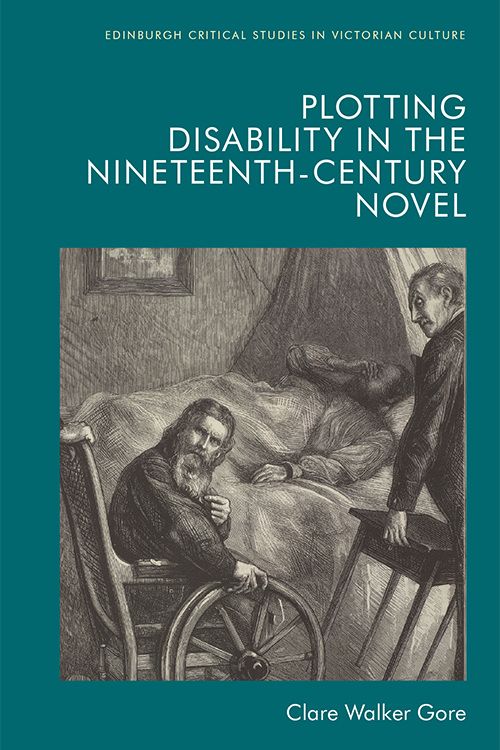
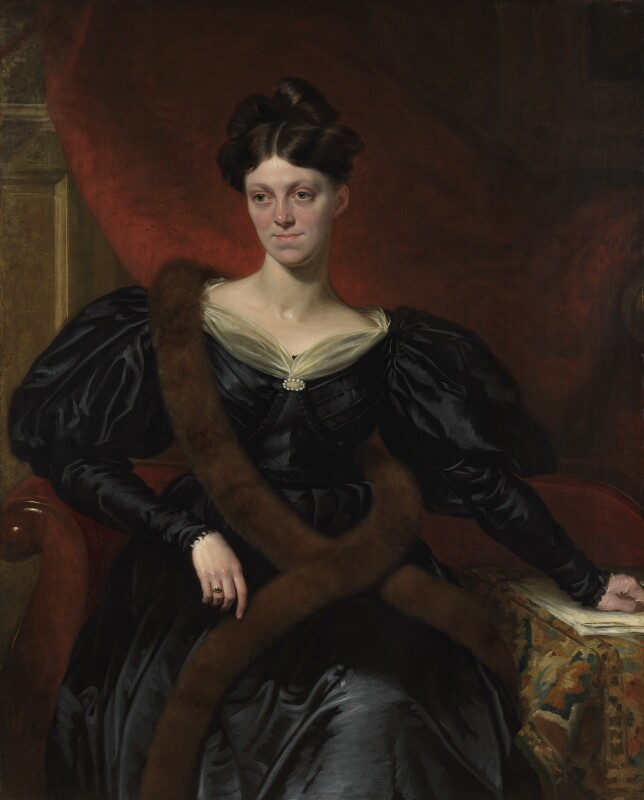
I first came across Harriet Martineau’s ‘Letter to the Deaf’ (1834) when I was writing my book on representations of disability in nineteenth-century fiction. I had been drawn to Martineau as an example of a writer who was herself disabled, having lost most of her hearing in childhood, but whose life signally failed to conform to the expectations established by fiction of the period for disabled characters.
By 1834, when she published this article on her experience of deafness, Martineau was well known as a writer unafraid to tackle controversial and even ostentatiously ‘unfeminine’ subjects. In 1832 she had made her name, and indeed her fortune, by publishing a spectacularly successful series of pamphlets, Illustrations of Political Economy, and become a notable – in some circles infamous – champion of free market capitalism.
She went on to tackle a wide range of inflammatory subjects, apparently undeterred by attacks on her character in the press and even by ostracism from her own family.
Martineau was clearly a woman who thrived on conflict. As she admitted in her Autobiography (1877), she found hostile reviews more inspiring than positive ones, declaring that ‘the more brutal, the more animating’ they were (Martineau, Autobiography II, 158)
So it came as something of a surprise to me to find that in her ‘Letter to the Deaf’, Martineau advises her Deaf readers that they must ‘submit to be usually insignificant’, and accommodate themselves to hearing society in every possible way, recommending positively masochistic strategies of self-suppression (Martineau, ‘Letter’, 176). She promises that Deaf readers who mask their true feelings and adopt the rule of turning ‘every sigh into a smile’ will experience the ‘thrill of delight which arises during the ready agreement to profit by pain’ (Martineau, ‘Letter’, 177).
How could so self-assertive and combative a writer have integrated such a view of her own disability with the narrative of her own life?
An answer is offered, I think, by the way Martineau develops her apparently depressing advice as the ‘Letter’ goes on. She exploits one of the commonest tropes of disability in contemporary fiction to offer her Deaf readers a potentially powerful self-image.
Most nineteenth-century novels depict disabled characters as either exceptionally flawed or exceptionally virtuous. Martineau taps into this tradition, suggesting that her Deaf readers will emerge from their ‘trial’ as either ‘selfish in principle, sour in temper, and disagreeable in manners’ or ‘with principles strengthened, affections expanded … and manners graced by the permanent cheerfulness of a settled mind and a heart at ease’ (Martineau, ‘Letter’, 179).
The exceptionally virtuous deaf subject will achieve such perfect self-control, in Martineau’s account, that they will be able to withstand anything in the future: ‘If you have brought vigour out of this conflict … your cheerfulness will probably be beyond the reach of circumstance’ (Martineau, ‘Letter’, 179). In other words, Deafness necessarily entails conflict and possibly produces heroism; it also puts the Deaf subject beyond the comprehension or judgement of their hearing counterparts. ‘No one can judge for you’, she assures her Deaf readers (Martineau, ‘Letter’, 177).
It is this understanding of her disability which shapes Martineau’s self-representation in her Autobiography. She depicts the onset of her deafness as ‘about the best thing that ever happened to me’ (Martineau, Autobiography I, 78). In her account, the struggle it entailed formed her character and freed her from dependence upon her family, in both an intellectual and an emotional sense. In Martineau’s telling, deafness essentially made her the heroine of her own story, the self-reliant and resourceful woman who could reject the belief systems she had inherited, and the limitations imposed by her society.
Indeed, Martineau suggests that disability put her beyond the scope of conventional femininity and allowed her to draw on masculine forms of heroism – acting, as she told her mother in one letter of 1833, the part of ‘a professional son’ rather than a daughter (Martineau, Autobiography III, 91).
Martineau’s choice to live by herself, when she could have lived with members of her family, shocked some reviewers. The novelist Margaret Oliphant, for example, clearly found Martineau’s preference for ‘bachelor life’ deeply unfeminine, suggesting that the Autobiography proved her to be ‘a very clever writer’ who was ‘not much of a woman at all’ (Oliphant, 52; 59).
Martineau anticipates and attempts to disarm such a reaction by insisting that her deafness effectively excepted her from ordinary rules, just as it excluded her from conventional femininity.
Interestingly, however, Martineau occasionally uses her disability not to circumvent but to re-affirm her femininity, in the face of accusations that her writing has in some sense unsexed her. She was criticised, for instance, for championing Thomas Robert Malthus’ highly controversial Essay on the Principle of Population (1798), in which he argued that over-population would lead to disaster unless drastic action were taken – often interpreted as an argument for the use of birth control. In an essay for the conservative Quarterly Review, John Lockhart accused her of having ‘no modest misgivings’ as she promoted ‘unfeminine and mischievous doctrines’ (‘Miss Martineau’s Monthly Novels’, 136).
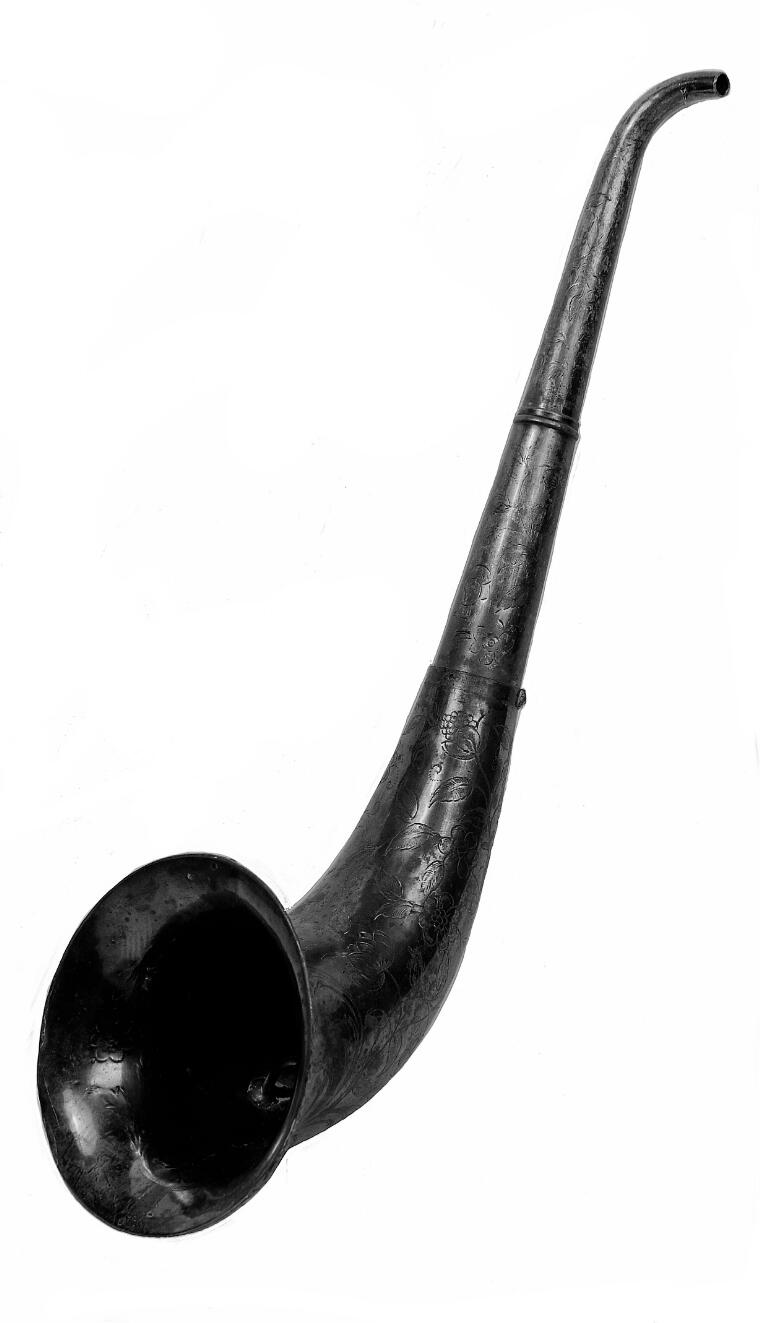
Recalling how she dealt with such criticism, Martineau uses her ear trumpet – a nineteenth-century version of a hearing aid – to defend her impugned modesty:
Credit: Ear trumpet, 19th century. Wellcome Collection. Attribution 4.0 International (CC BY 4.0)
‘I consider it, as treated by Malthus, a strictly philosophical question. So treating it, I find no difficulty in it; and there can be no difficulty in it for those who approach it with a single mind. To such I address myself. If any others should come whispering to me what I need not listen to, I shall shift my trumpet, and take up my knitting.’ (Martineau, Autobiography I, 202)
In this scene, Martineau’s ear trumpet becomes an instrument of self-assertion, just as her deafness, while cast as ‘affliction’, became a means of writing herself out of one, undesirable role and into an alternative, more heroic one. It’s an intriguing example of the multiple uses to which disability could be put in nineteenth-century texts, and into both the difficulties but also the possibilities opened up by an autobiographer’s dual identity as both ‘woman’ and ‘writer’.
Clare Walker Gore has recently joined the Department of English and Creative Writing as a Lecturer in Victorian Literature. She is the author of Plotting Disability in the Nineteenth Century Novel (Edinburgh University Press, 2019), and is now pursuing a project on women novelists’ life writing in the nineteenth century.