Heather Hind is a Lecturer in English Literature with research interests in Victorian literature and material culture. She is currently turning her PhD thesis into a monograph. In this post, the second in our series on the PhD and beyond, she shares her hints and tips for getting started with this process.
Why do you want to publish a book? And how, in broad terms, do you want to go about it? These questions are worth asking yourself early on. Perhaps you see a monograph as a steppingstone in an academic career. Or maybe you want to disseminate your research to a wider audience. Or publication might be a personal goal. Quite likely, your reasoning is a combination of all of these and more.
There are alternatives to the book route, such as publishing your research via academic journals or public-facing media outlets. In any case, practical life matters need to be factored in too. The post-PhD period can be tricky in terms of employment, access to resources and mentoring, and time.Even if you plan to lightly edit your thesis, the timeline from writing your proposal through to seeing your book being published can be surprisingly lengthy – not to mention busy and uncertain.
My best advice is to keep in mind a clear sense of your motivation for publishing your book, and to create a realistic editing schedule. For me, that has meant being more ambitious than I initially intended with my revisions (because my motivation is academic impact) and assigning plenty of time to do them (acknowledging that I have other demands on my time).
Proposal
The next step, after deciding to publish your book, is to get a proposal and sample chapters in order. I’d highly recommend checking out Laura Portwood-Stacer’s Manuscript Works Archive. Laura is the author of The Book Proposal Book and her website contains guidelines, templates, prompts and all kinds of proposal-writing information.
The broad questions I found useful to think about while writing my proposal, and working out the new shape and emphasis of my monograph, were:
What new perspective/s will my book offer?
What ideas does it connect, or what story does it tell?
How might it inform and influence my field and discipline?
Initial edit
First, remove any thesis-y phrasing and heavy-handed signposting, such as ‘In this thesis…’. Next, revise or cull your footnotes and any extraneous references. One of my PhD supervisors advised me to ‘wear my learning heavily’ in the thesis or, in other words, include plenty of references to show the full breadth and depth of my reading and research. While your monograph should be detailed and well-researched, it doesn’t want quite the same ‘heaviness’ as a thesis. During this initial edit, pay extra attention to the clarity of your writing and flow of your argument. As with your footnotes and references, consider cutting any tangential sentences or paragraphs. It’s a good idea to make space for new material before it’s written, rather than adding and adding to an increasingly baggy monster of a manuscript.
Next, you might rethink your monograph’s overall content and structure. Your examiners’ reports can be very useful here! You may well plan to cut as well as add material, though identifying areas to expand—whether to include unused thesis research or new post-PhD developments—can make for a major selling point in a book proposal. I have heard that some publishers want to see an entirely new chapter for the monograph, though another approach (which I’ve adopted) is to add sections of new material to your existing chapters.
You might also consider restructuring your chapters so that they make more sense (or are more marketable) as a book. For example: would splitting your chapters up into shorter ones help to guide your reader through the material with more ease? Is there a current or emerging topic that you might engage with in a new chapter or sub-section? Can you retitle your chapters (or overall book) to appeal to a wider audience?
With these points in mind, I found it helpful to reread some monographs that I admire to reflect on what works well, especially in terms of structuring the introduction and conclusion.
Academic writing guides
These can also be sources of inspiration. Helen Sword’s books on academic writing are excellent and she also has some free writing tools and videos. Here are two more resources I’ve found helpful for writing and editing:
The Thesis Whisperer – This site is useful for thesis writing pointers as well as general academic writing tips.
I have found online writing retreats vital to gaining momentum with my editing because they force me to sit down, focus, and work in regular blocks. I even volunteered to run a series of them to squeeze more into my calendar. Even if you don’t join a writing group, you could try marking out blocks of writing and editing time in your calendar as well as planned deadlines for chapters or sub-chapters (which work even better if you tell someone about them for accountability!).
Look into post-PhD funding and other kinds of support
While there are major postdoctoral funders that provide longer-term fellowships (e.g. Leverhulme, British Academy), these almost exclusively require you to start work on a new project. However, your period or discipline may have societies or associations that provide small pots of research funding to early career academics for developing existing projects or publications (e.g. the Royal Historical Society). Some will cover expenses for research trips (ideal if needed for expanding your monograph), while others may fund proposal writing or even monograph editing. Some have early career memberships and fellowships that provide other benefits to recent PhD graduates, such as academic affiliation, library access, or networking and mentoring opportunities.
Keep connected to others
I’ve found academic and peer networks in the form of writing groups, societies, conferences, and PhD/Early Career Researcher friends even more important in the post PhD-period. Whether it’s through presenting and getting feedback on your research, swapping proposals or chapter drafts with someone, or just venting about how it’s all going, don’t underestimate the value of sharing your work-in-progress with others.
Heather Hind
Heather Hind’s monograph will be the first book-length study of Victorian hairwork – the crafting of decorative objects from human hair – and its presence in British literature of the period, with chapters that focus on works by Charlotte and Emily Brontë, Wilkie Collins, and Margaret Oliphant. Her broader interests are in nineteenth-century literature, material culture, textiles and handicrafts, and object-led and embodied methodologies.
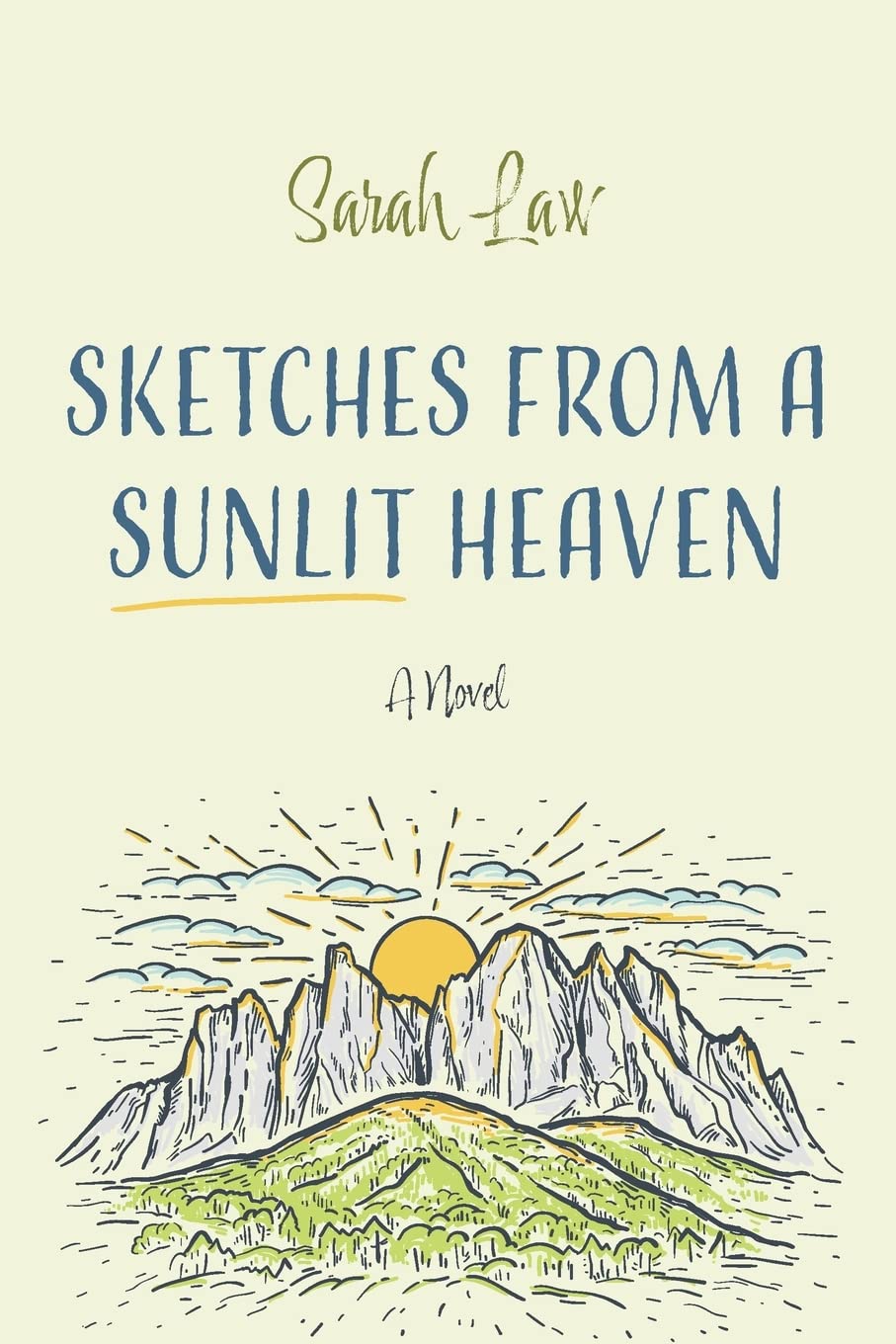
Today, we hear from one of the Associate Lecturers who teaches on our Creative Writing MA programme. Sarah Law draws back the curtain to reveal some of the choices and happy accidents that lie behind the final form and title of her recently published novel Sketches from a Sunlit Heaven.
Sometimes writing allows us to meet characters who we don’t correspond with in terms of time or culture, but who speak to us anyway. My novel, Sketches from a Sunlit Heaven, arguably falls into this category: historical fiction where my characters, based on real people, tell their stories.
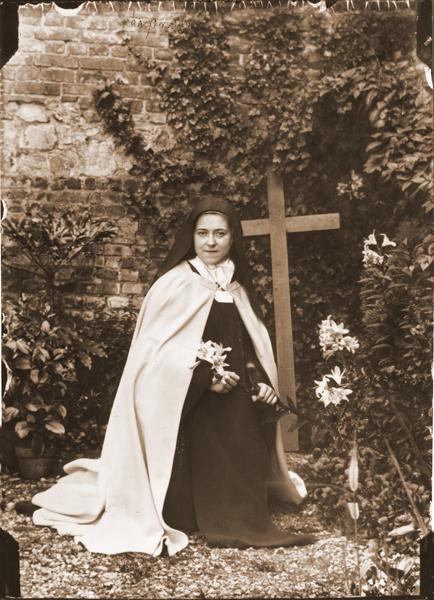
By way of an introduction to my subject matter: I have an endless fascination with the ‘Little’ Saint Therese. She lived in a Carmelite Monastery in Lisieux, France, for nine short years before dying of tuberculosis in 1897 at the age of twenty-four. Her own memoir is full of sweetness but granite-tough underneath. Rare archive photos reveal lively eyes and a subtle smile full of some secret I still want to hear. Most unusually, three of her blood sisters and a cousin joined her in the same monastery. One sister was an artist and photographer. Another became prioress for much of her long life, and together they supported the cause of Therese being canonised, which she duly was in 1925 when, had she lived, she would have been fifty-two years old.
I started writing a fictionalised biography, hoping to deepen my knowledge of this young nineteenth-century nun. Then, as I read about her family, particularly her blood sisters, I heard their voices in my head (I mean this figuratively, of course). Pauline, the prim, practical community leader. Marie, the warm-hearted dreamer. Celine, the fiery-tempered artist. And Leonie, the difficult loner. Add in cousin Lucie with a beautiful singing voice, and Maurice, a missionary who fails and fails again, but with whom Therese, toward the end of her life, corresponds with the tenderness of an ethereal lover. Six different perspectives emerged: six distinct, but related, takes on Therese. But how were they going to work together? As each character’s narrative grew, so did my concerns about a clunky jumping from one chapter to another, from one account to the next, especially as they would substantially be going over the same events as each other.
I paused to reflect. I decided that my options were:
Change the novel’s narrative perspective back to the third person, potentially becoming an authorial presence in my own right;
Revise my narrative strategy to just one sustained first-person voice;
Somehow intercalate my various first-person speakers (or at least some of them) into one chronological narrative.
While I considered each option seriously, I decided I wanted to retain the polyphony of multiple voices, even if they weren’t the longest-lived or most substantial in terms of narrative length. I wanted the book to offer a multidimensional account. A series of fragments mapped over Therese’s life and beyond. A mosaic.
Something clicked into place: this was how the novel itself wanted to emerge. A mosaic or a series of sketches, as each speaker passed the narrative between themselves. Sketches from a Sunlit Heaven had found its form and, incidentally, soon afterward, its title.
I embarked on an intense period of copying and pasting as I took what felt like brief but complete episodes from all six of my first-person narratives. I wanted to proceed in chronological order, but alert to the poetic magnetism produced by selective juxtapositions of my speakers’ accounts. Of course, I’m not the first novelist to choose multiple speaking characters (‘intradiegetic narrators’, if you will). From Wilkie Collins’s The Woman in White to George Saunders’ Lincoln in the Bardo, the polyphonic approach to narrating a novel has been successful across recent centuries. Virginia Woolf’s The Waves remains one of my favourite modernist novels. A very tall order to write anything on par with these great works! But, to paraphrase the words of poet Robert Browning in ‘Andrea del Sarto’ a writer’s reach should exceed their grasp, or what’s a heaven for?
As I continued to cut, paste, shape, and write, I imagined jigsaw pieces fitting together to make a whole picture. Neither mosaics or jigsaws are perfect analogies, but both echo images in the novel: pieces of mosaic from the Roman Forum that teenage Celine cherished, and later, Lucie’s imaginative consideration of the ‘jigsaw’ view of Normandy seen from above – looking down from a sunlit heaven.
Two more motifs appeared as the novel grew into its ultimate structure. Firstly, that of letters. Therese, her sisters, and others close to them or the family wrote to each other a lot. I haven’t framed any narrative fragments as letters per se, but their usual length—from a few hundred words to a thousand or so—is reminiscent of a letter. The epistolary novel is the earliest form of the novel genre in English, so there is perhaps an echo in my work of its literary ancestor. My characters write to each other, request letters, read, receive, and even dream letters. And then there’s the sketch. A sketch is brief, descriptive, often urgent, suggesting with few lines, and judicious shade and hatching, larger issues than itself. Something Celine literally does, as do the others, figuratively. Sketches from a Sunlit Heaven secured its place as my novel’s name.
Combing through my draft, I found it fell into fourteen sections, each bound by dates, and housing narrative fragments that developed the section’s essential kernel—Vocation, Discipline, Legacy, and so on. An introductory section, Glimmerings, also appeared.
It’s strange how, in the end, a novel largely emerges of its own volition. Despite the planning and researching, even historical fiction does too. Holding the published book in my hand, I can say the process of writing it is still part mystery.
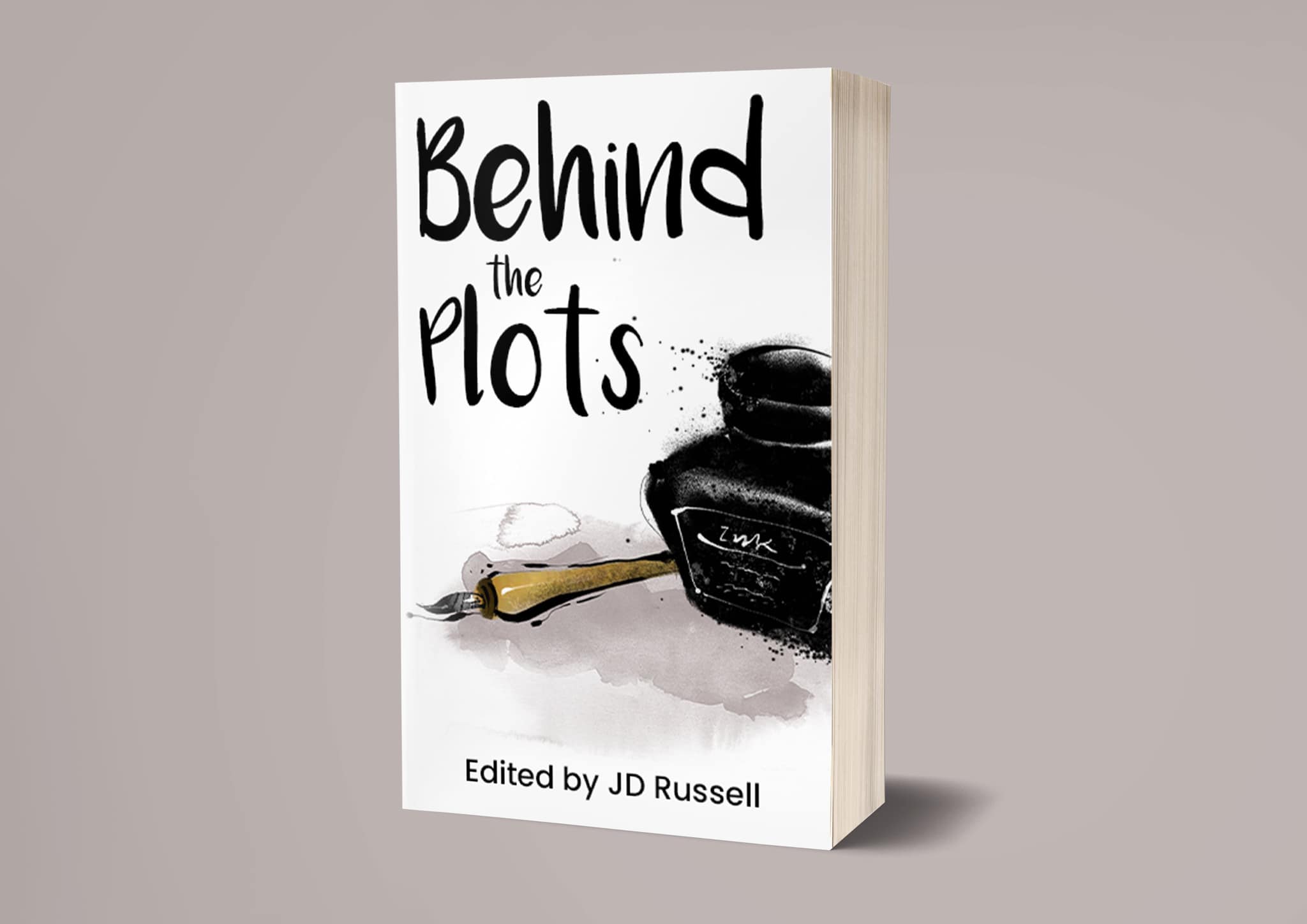
With thanks to Writing Bad for permission to publish this blog, which is an abridged version of an essay Sarah Law originally published in Behind the Plots.
DrSarah Law is an Associate Lecturer for the Open University. As well as a novel, she has published six poetry collections and writes academic and creative nonfiction. She also edits the online journal Amethyst Review, for new writing engaging with the sacred. She lives in Norwich.