Custom and Practice in Creative Writing Research

We kicked off our series on the PhD journey and beyond, with a post from an English Literature PhD student, which offered a glimpse into a trip to an archive. This month, one of our Creative Writing PhD students, Alistair Daniel, shares his reflections on a very different form of research.

The customs officer flipped the pages of my passport and frowned. ‘What’s the purpose of your visit?’ he said.

I removed my fingers from the biometric scanner, leaving little crescents of sweat. I had not been looking forward to this question.

‘I’m doing research for a novel,’ I said.

The officer frowned. ‘Why?’ he said. ‘Can’t you just make it all up?’

Creative writing research has an image problem. While few people question the idea of research in other disciplines, in my experience, when you tell someone you’re doing creative writing research, they start to smile, visualising a pair of air quotes that hover over the word ‘research’ like a sceptical drone. If, when pressed as to the nature of this ‘research’, you admit that it involves spending five days in a bed and breakfast outside Hallowell, Maine, where you plan mostly to sit by a lake, the smile tends to broaden considerably. This is just a jolly, says the smile. You’re having a laugh.

Even if your trip doesn’t bear a suspicious resemblance to a holiday, the question still stands: what is creative writing field research for? After all, some writers don’t seem to need it. Shakespeare never went to Verona. And it’s amazing what can be gleaned nowadays from YouTube and Google Earth. Did I really need this field trip at all?

Montreal, the novel I was planning to research, is set not in Montreal but in a summer camp in central Maine where my protagonist, a hapless 19-year-old philosophy student called Simon Pritchard, has come to work in the kitchen. When not dicing carrots, Simon plans to spend his time transforming himself into a philosopher. To cut a medium-length story short, his plan goes tragically wrong.

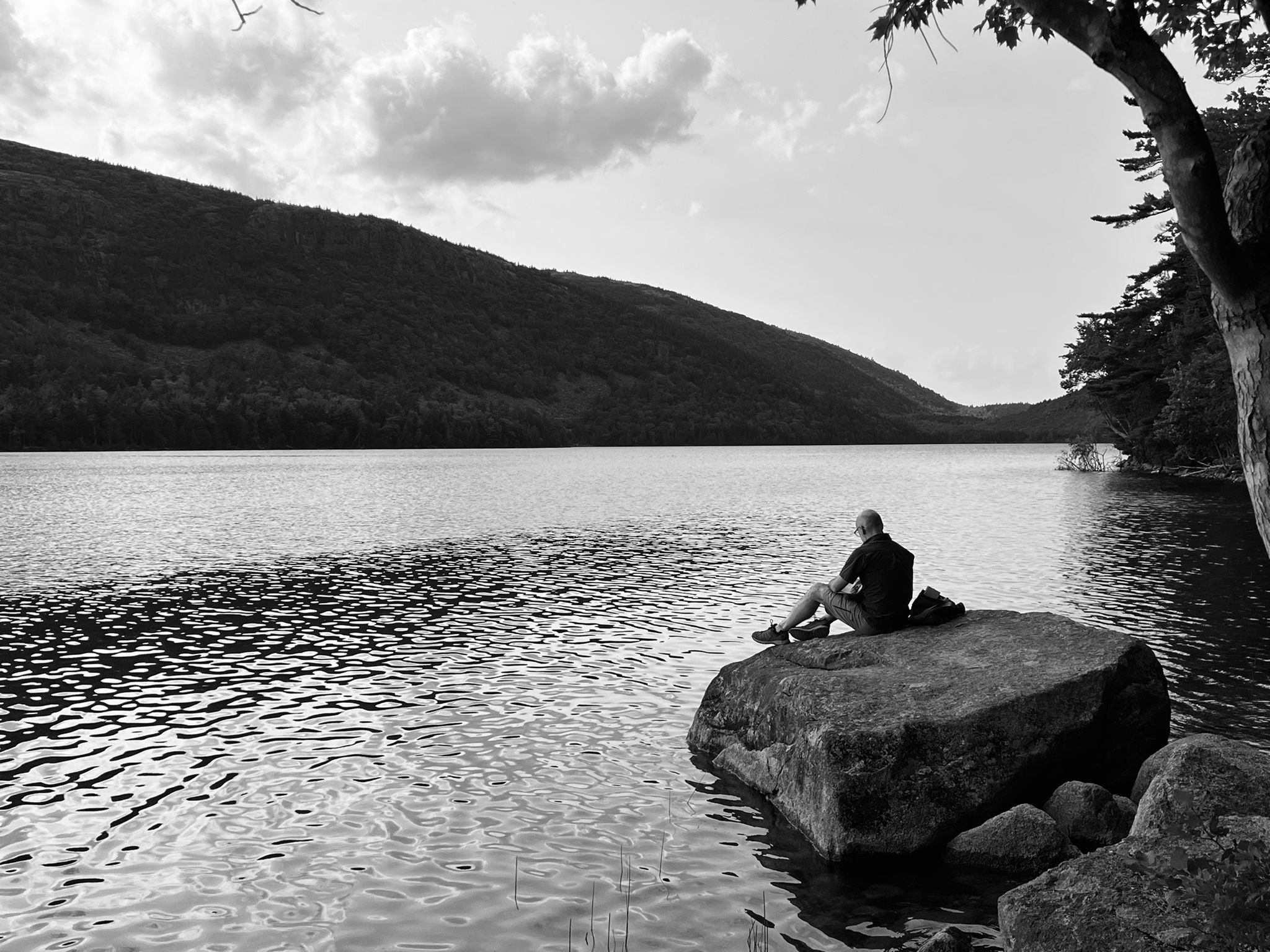
Over the previous five years, I’d done the work of imagining Simon and his world – of making it all up – but that (I didn’t tell the customs officer) was partly why I needed to go: I needed to see how much of it was true. But there were other reasons as well. As a philosophy student, Simon is full of romantic Sartrean ideas about self-transformation. He finds an idyllic spot by a lake, a boulder hidden from the rest of the camp, and attempts to philosophise there, making phenomenological observations about his surroundings and noting them down. I needed to know what he would note. I needed to see what he saw. I needed to sit by a real Maine lake on a real Maine rock observing real Maine dragonflies, insects and birds, observing the kind of moss that grows on the Eastern Hemlock, touching the bark of an Eastern White Pine, hearing the unsettling cry of a loon, inhaling the stench of lake mud and Amber Solaire. I needed the sort of rich sensory detail that can’t be conjured by watching videos on YouTube.

Alistair sitting on a rock at the edge of a vast lake, notebook in hand.

Arriving in Boston I was excited, but anxious. Any writer knows that the timing of research, as much as the research itself, can be crucial. I’d originally applied for a grant in 2020, but Covid intervened. It intervened again in 2021 and by the time I was finally able to go, in the summer of 2022, my novel was almost complete. What if I’d got everything wrong? I was due to submit my PhD in three months’ time. How much would I really be prepared to rewrite at this stage? On the other hand, if it turned out I’d got everything right – that you can, in fact, make it all up – I would have wasted both my time and the university’s generous research grant. The trip would have looked – and felt – like a jolly.

In the end, I needn’t have worried. As I travelled around Maine, following in Simon’s footsteps, I soon realised how worthwhile it would be. Some things, I discovered, I’d got more or less right. There were plenty of rocks at the edges of lakes, many of them suitable for sunbathing and phenomenology. The loons really did sound insane. In this respect, the trip was good for my writerly confidence.

But I made fresh discoveries too. I drove the freeway Simon takes towards Canada – a road you can’t find on YouTube. I ate Maine dishes of the kind served at summer camps (popovers, whoopie pie). I walked out to Bar Island at low tide, a trip Simon takes with the kitchen crew. Two friends in Freeport showed me how to cook a lobster, which Simon does in a climactic scene at camp. I auditioned five different lakes and half a dozen rocks. None of them were exactly what I’d imagined, but between experience and imagination I worked up something that felt right.

And it was while sitting on those rocks that I had some entirely new ideas. I’d already pictured the movements of the dragonflies at the edge of Simon’s lake – after all, I’ve seen dragonflies elsewhere – but I hadn’t realised that Maine has so many kinds. And I discovered that they were hard to identify, even with a guidebook in hand. In previous drafts I hadn’t considered this. I’d imagined Simon buying an Audubon guide and painstakingly identifying each type. In practice, I realised, that would be hard. Dragonflies tend not to stay still, nor do they match the pictures in the book. Very little, in this world, matches the picture. I’d not considered this, or how a somewhat rigid and unimaginative boy like Simon might struggle to cope with the dragonflies’ refusal to conform to a neat taxonomical system. Or how this refusal, this resistance of the world to classification, perfectly suited a novel in which Simon continually pigeonholes other people, fitting them into his own taxonomical system, with fatal results. In this way, I came home with far more than 24,000 words of fresh description: I had new metaphors for the themes of the novel, and new ways of presenting character.

Next time, I’ll tell the customs officer.

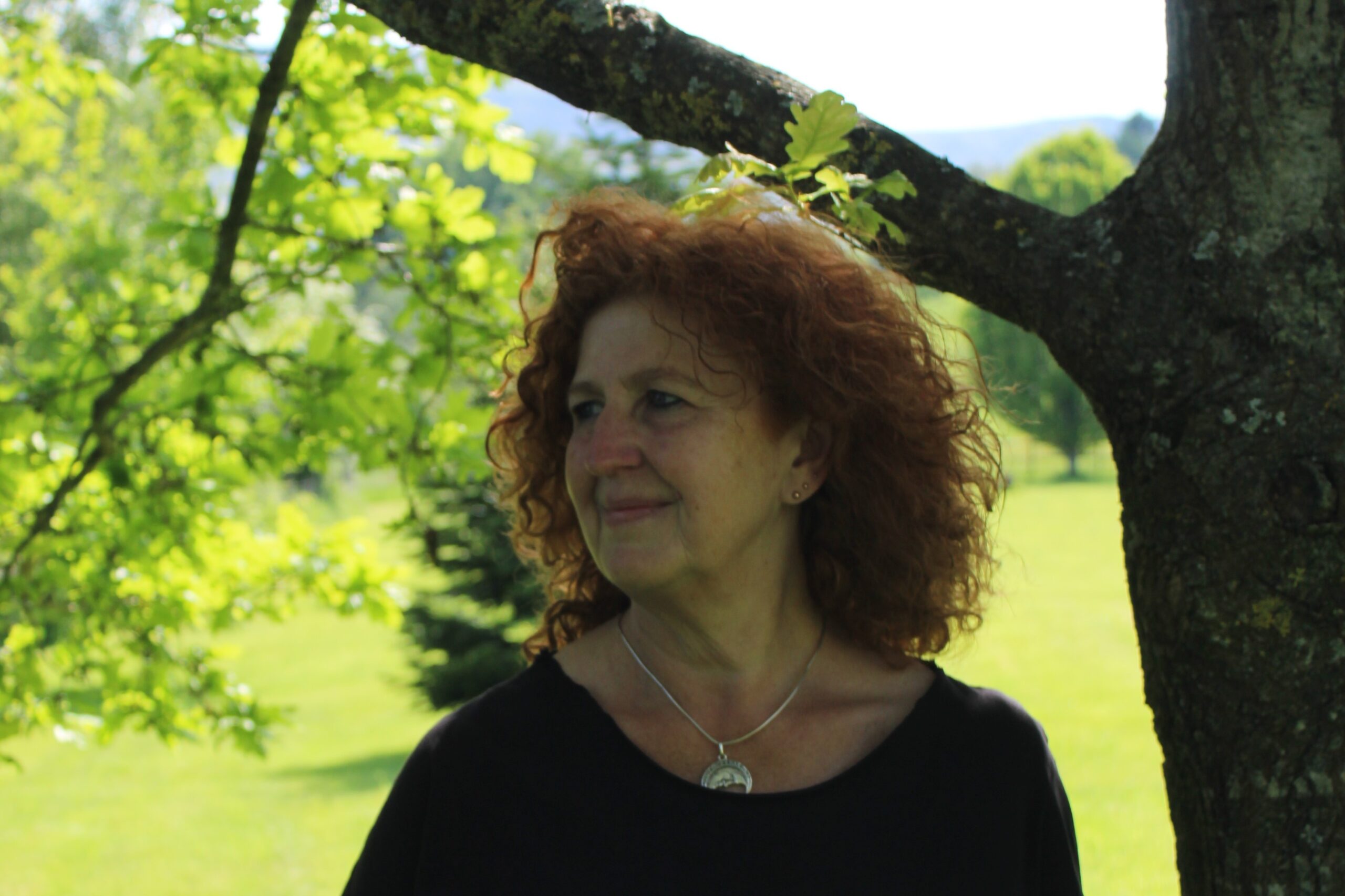
Alistair Daniel

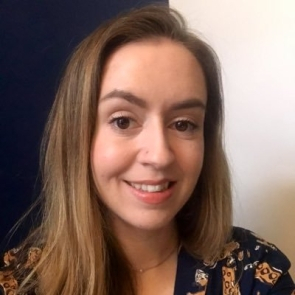
Alistair Daniel is an Associate Lecturer in Creative Writing at the Open University, where he is completing a PhD in Creative Writing. He has an MA in Creative and Life Writing from Goldsmiths and has taught at the University of the Arts London and the University of East Anglia, where he held the Charles Pick Fellowship. His short stories have been published in magazines and journals including The Missouri ReviewThe Stinging FlyNarrative, LitroThe Irish Times and Stand. He was shortlisted for the Bridport Prize in 2011 and 2020.

From PhD Thesis to Monograph: Tips for Editing Your First Book

Heather Hind is a Lecturer in English Literature with research interests in Victorian literature and material culture. She is currently turning her PhD thesis into a monograph. In this post, the second in our series on the PhD and beyond, she shares her hints and tips for getting started with this process.

Motivation

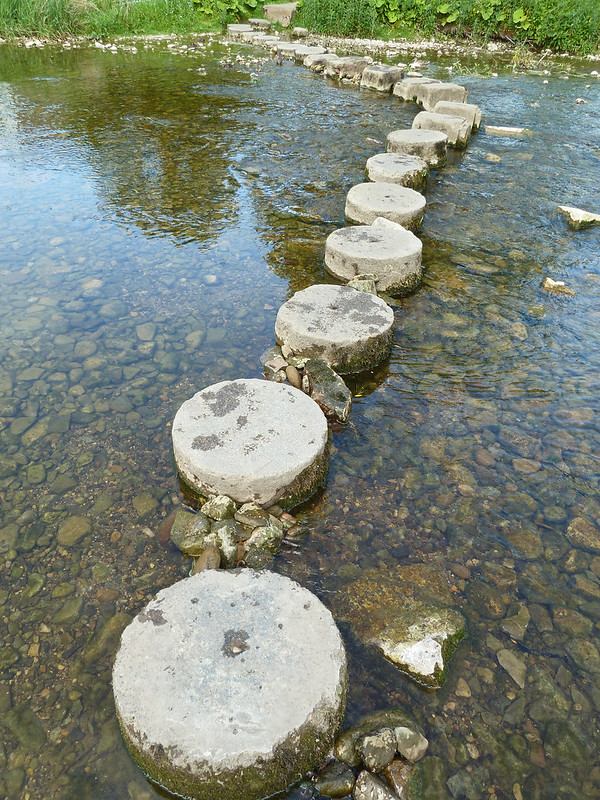
Steppingstones across the River Aire, Gargrave” by Tim Green aka atoach is licensed under CC BY 2.0.

Why do you want to publish a book? And how, in broad terms, do you want to go about it? These questions are worth asking yourself early on. Perhaps you see a monograph as a steppingstone in an academic career. Or maybe you want to disseminate your research to a wider audience. Or publication might be a personal goal. Quite likely, your reasoning is a combination of all of these and more.

There are alternatives to the book route, such as publishing your research via academic journals or public-facing media outlets. In any case, practical life matters need to be factored in too. The post-PhD period can be tricky in terms of employment, access to resources and mentoring, and time.Even if you plan to lightly edit your thesis, the timeline from writing your proposal through to seeing your book being published can be surprisingly lengthy – not to mention busy and uncertain.

My best advice is to keep in mind a clear sense of your motivation for publishing your book, and to create a realistic editing schedule. For me, that has meant being more ambitious than I initially intended with my revisions (because my motivation is academic impact) and assigning plenty of time to do them (acknowledging that I have other demands on my time).

Proposal

The next step, after deciding to publish your book, is to get a proposal and sample chapters in order. I’d highly recommend checking out Laura Portwood-Stacer’s Manuscript Works Archive. Laura is the author of The Book Proposal Book and her website contains guidelines, templates, prompts and all kinds of proposal-writing information.

The broad questions I found useful to think about while writing my proposal, and working out the new shape and emphasis of my monograph, were:

  1. What new perspective/s will my book offer?
  2. What ideas does it connect, or what story does it tell?
  3. How might it inform and influence my field and discipline?

Initial edit

First, remove any thesis-y phrasing and heavy-handed signposting, such as ‘In this thesis…’. Next, revise or cull your footnotes and any extraneous references. One of my PhD supervisors advised me to ‘wear my learning heavily’ in the thesis or, in other words, include plenty of references to show the full breadth and depth of my reading and research. While your monograph should be detailed and well-researched, it doesn’t want quite the same ‘heaviness’ as a thesis. During this initial edit, pay extra attention to the clarity of your writing and flow of your argument. As with your footnotes and references, consider cutting any tangential sentences or paragraphs. It’s a good idea to make space for new material before it’s written, rather than adding and adding to an increasingly baggy monster of a manuscript.

Content and structure

Hot Air Balloon Inflating” by ajagendorf25 is licensed under CC BY-NC 2.0.

Next, you might rethink your monograph’s overall content and structure. Your examiners’ reports can be very useful here! You may well plan to cut as well as add material, though identifying areas to expand—whether to include unused thesis research or new post-PhD developments—can make for a major selling point in a book proposal. I have heard that some publishers want to see an entirely new chapter for the monograph, though another approach (which I’ve adopted) is to add sections of new material to your existing chapters.

You might also consider restructuring your chapters so that they make more sense (or are more marketable) as a book. For example: would splitting your chapters up into shorter ones help to guide your reader through the material with more ease? Is there a current or emerging topic that you might engage with in a new chapter or sub-section? Can you retitle your chapters (or overall book) to appeal to a wider audience?

With these points in mind, I found it helpful to reread some monographs that I admire to reflect on what works well, especially in terms of structuring the introduction and conclusion.

Academic writing guides

These can also be sources of inspiration. Helen Sword’s books on academic writing are excellent and she also has some free writing tools and videos. Here are two more resources I’ve found helpful for writing and editing:

The Thesis Whisperer – This site is useful for thesis writing pointers as well as general academic writing tips.

Publish Not Perish / Jenn McClearen – A newsletter with a back catalogue of posts that includes tips on all aspects of academic writing.

Valuable tips

Picking up on my earlier point about recognising the pressures of the post-PhD period, here’s the advice I’ve found most helpful.

  • Carve out writing and editing time
Mechanical Clock 9 – by Eric Freitas” by Kotomi_ is licensed under CC BY-NC 2.0.

I have found online writing retreats vital to gaining momentum with my editing because they force me to sit down, focus, and work in regular blocks. I even volunteered to run a series of them to squeeze more into my calendar. Even if you don’t join a writing group, you could try marking out blocks of writing and editing time in your calendar as well as planned deadlines for chapters or sub-chapters (which work even better if you tell someone about them for accountability!).

  • Look into post-PhD funding and other kinds of support

While there are major postdoctoral funders that provide longer-term fellowships (e.g. Leverhulme, British Academy), these almost exclusively require you to start work on a new project. However, your period or discipline may have societies or associations that provide small pots of research funding to early career academics for developing existing projects or publications (e.g. the Royal Historical Society). Some will cover expenses for research trips (ideal if needed for expanding your monograph), while others may fund proposal writing or even monograph editing. Some have early career memberships and fellowships that provide other benefits to recent PhD graduates, such as academic affiliation, library access, or networking and mentoring opportunities.

  • Keep connected to others

I’ve found academic and peer networks in the form of writing groups, societies, conferences, and PhD/Early Career Researcher friends even more important in the post PhD-period. Whether it’s through presenting and getting feedback on your research, swapping proposals or chapter drafts with someone, or just venting about how it’s all going, don’t underestimate the value of sharing your work-in-progress with others.

Heather Hind

Heather Hind’s monograph will be the first book-length study of Victorian hairwork – the crafting of decorative objects from human hair – and its presence in British literature of the period, with chapters that focus on works by Charlotte and Emily Brontë, Wilkie Collins, and Margaret Oliphant. Her broader interests are in nineteenth-century literature, material culture, textiles and handicrafts, and object-led and embodied methodologies.