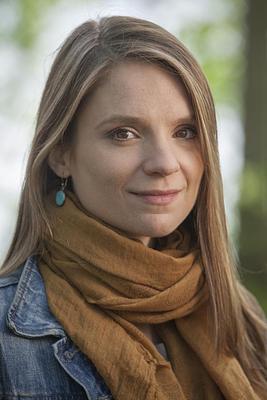
Insurgent Press’s recent take over of the Barbican Library featured readings from Brian Kelly’s debut Murph – a novel about a virus that reveals everyone’s internet search histories, and a joke shop owner who finds himself swarmed with customers seeking disguises.
Here, Brian lets us into his own journey from dissatisfied company employee to founder of his own press, host of longstanding literary night, novelist and PhD student. And he tells us about the crucial role played by the OU along the way.
At twenty-three I left Dublin to become a rock star in London. The big smoke kicked my ass for a couple of years and when the band eventually broke up on a rainy night in Liverpool (pathetic fallacy right on cue), I was left working as a software tester with no real creative output. It was around the time of the financial crisis, and I remember the CFO calling us in for our quarterly report. He advised us that money rarely disappears from the market but rather changes hands. As people in the know, he claimed, we stand to make large gains. At home, Ireland was going through a terrible time, unemployment and immigration back with a vengeance. I left the office and walked along the Thames to Vauxhall where I was renting a room over a pub. I sat down on my sofa-bed and decided I needed to do something else with my life.
My girlfriend at the time (now my partner of sixteen years) had given me a wrecked old computer from her parents’ attic and I had a vague impulse to write. Maybe it was the position above the pub, listening to voices below in the beer garden, the weird atmosphere of that bit of Vauxhall where gas towers stand cheek-by-jowl with cricket grounds and twenty-four hour gay clubs. I wanted to put down some words and make sense of it all, but I had no idea how to go about it.
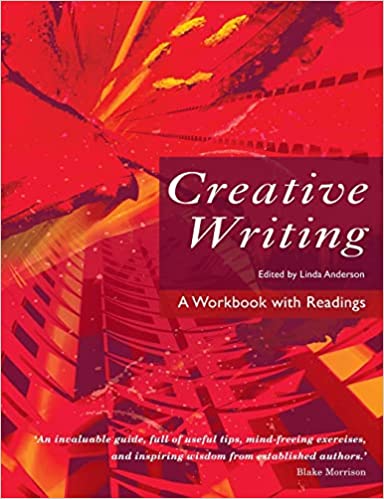
Creative Writing: A Workbook with Readings, Ed. Linda Anderson
I remember the day I finally signed up for A215: Creative Writing and the little shot of adrenaline I felt. Would I have the discipline required to finish the course? How would it feel to have a proper writer reading my work?
Doing the daily writing exercises in my room every night, I came to a Colin Powell-esque realisation about all the things I didn’t even know I didn’t know. Step by step, the material demystified the various elements of the writer’s craft, and I was writing in unexpected and exciting ways. About halfway through the course, there was an exercise about eavesdropping on people’s discussions and using that to create characters. I was on a plane back to Dublin and a few rows ahead of me was a man from Roscommon giving out yards about something or other. The best material went in my notebook.
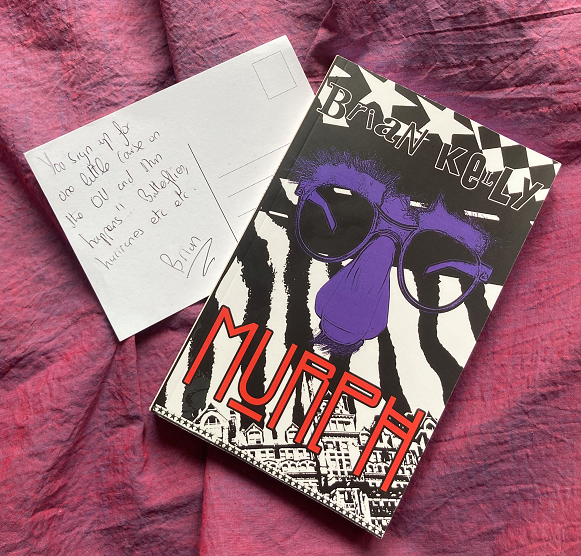
Murph by Brian Kelly
Back in London, I quit my job and was plotting a move to Korea to do a stint as an EFL teacher. While waiting for my visa to come through, I was spending my days in Stoke Newington Library reading and writing. My next OU assignment came up and the decrepit atmosphere of Stokey’s library merged with our man from Roscommon to create a short story about a psychedelic steam-of-consciousness librarian on the West Coast of Ireland. I remember feeling like I’d opened a door to a room I didn’t know existed. Could writing really be like this?
The guidance and encouragement from my tutor Emma Claire Sweeney egged me on. Moving to Seoul, I continued my writing and Emma started receiving pieces of work all the way from the Korean peninsula. I finished that first module and instantly signed up for the next, A363: Advanced Creative Writing. Life in Asia was fun, and I enjoyed teaching. The kids, the colleagues, the sense of purpose. I decided to pursue a BA in English at the OU.
I changed Seoul for Beijing but kept studying. Six years after starting my odyssey, I remember sitting my final exams in the British Embassy. The plan was to return to the UK to do a PGCE and start teaching in London, but the funding for third level had changed and unless I got a good degree from the OU my bursary was not going to cover my living costs. I studied like my life depended on it. In the end I got the grades and returned to London where I started my career as an inner-city teacher in Camden Town.
But the OU was not done with me yet. I had stayed in touch with my first tutor and when I mentioned being back in London, she encouraged me to apply for a novel writing course at City University. The people I met on that course were some of the most talented people I had ever met and became lifelong friends. The novel I wrote was a finalist in Penguin’s WriteNow competition and I continued on to do a Masters in Creative Writing, with the novel I finished winning an Irish Writers Centre award in 2022.
Verbal Discharge anthology launch
Along the way, I had met so many brilliant writers and wanted to create a space where we could all share work in progress and chew the cud. Club Verbal Discharge was born and has been running in the Perini & Perini bar, Oxford Circus on the first Friday every month for four years in a row. We publish an anthology each year and this in course led to the creation of The Insurgent Press. Our mighty little press has now published three anthologies, one collection of short stories by Tara Basi and my novel Murph. I sent a copy to my first OU mentor to say thanks, and on the card I wrote:
You sign up for one little OU course and looks what happens!! Butterflies, hurricanes etc. etc.
Next month I start a PhD in English Literature at Kings and so the wheel continues to turn…
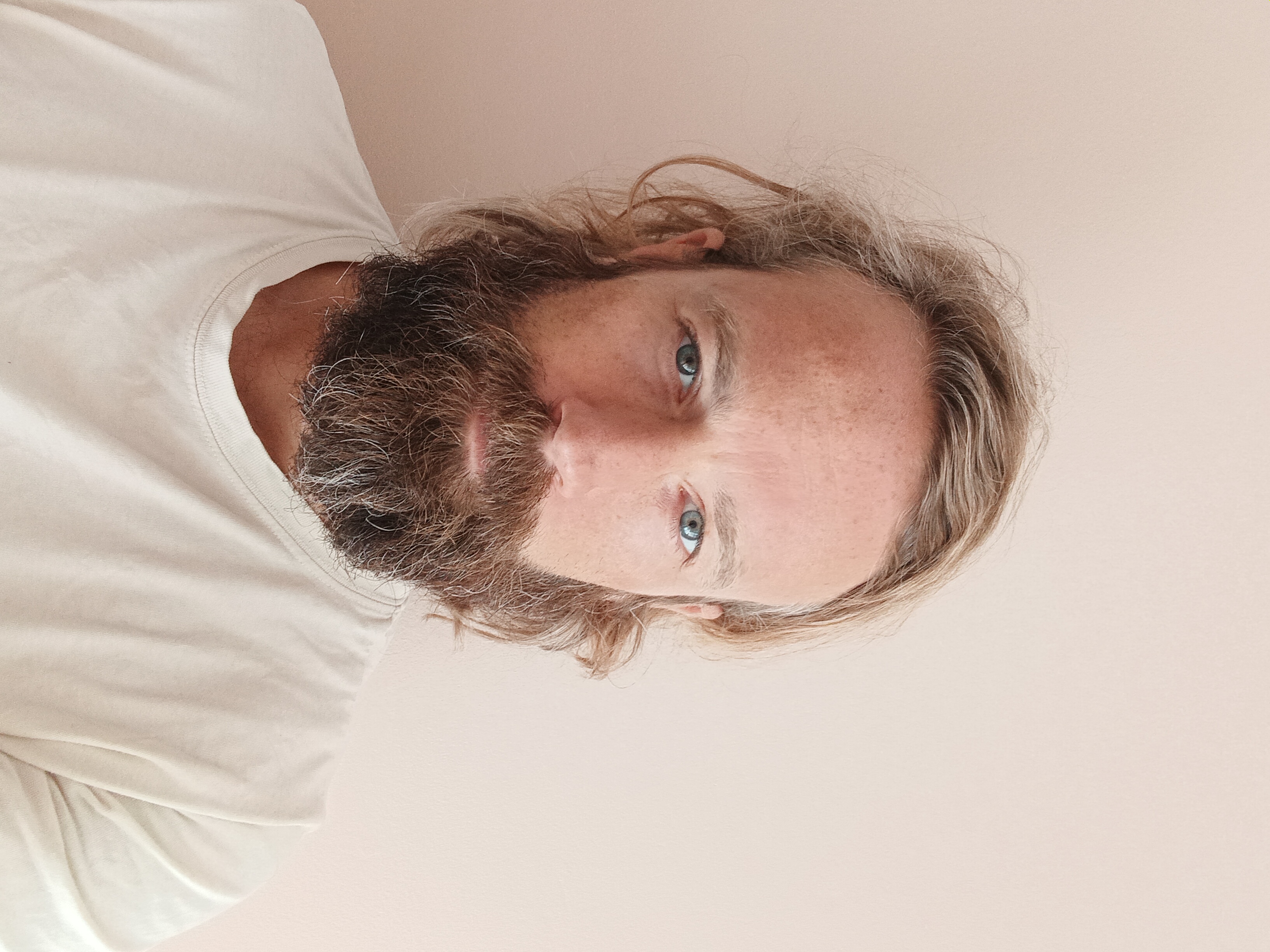
Brian Kelly
Born in Dublin, Brian Kelly now lives in London with his partner and daughter where he works as an English teacher. After graduating from the OU with a BA in English, Brian continued to write fiction. In 2019, he was a finalist in Penguin’s WriteNow competition. In 2021, he received a Masters in Creative Writing from City University. In 2022, he won the Irish Writer’s Centre Novel Fair prize. He runs the monthly spoken word night Verbal Discharge, which publishes its third anthology this spring. He also runs the Insurgent Press, which does tiny runs of strange books and generally tries to cause trouble.
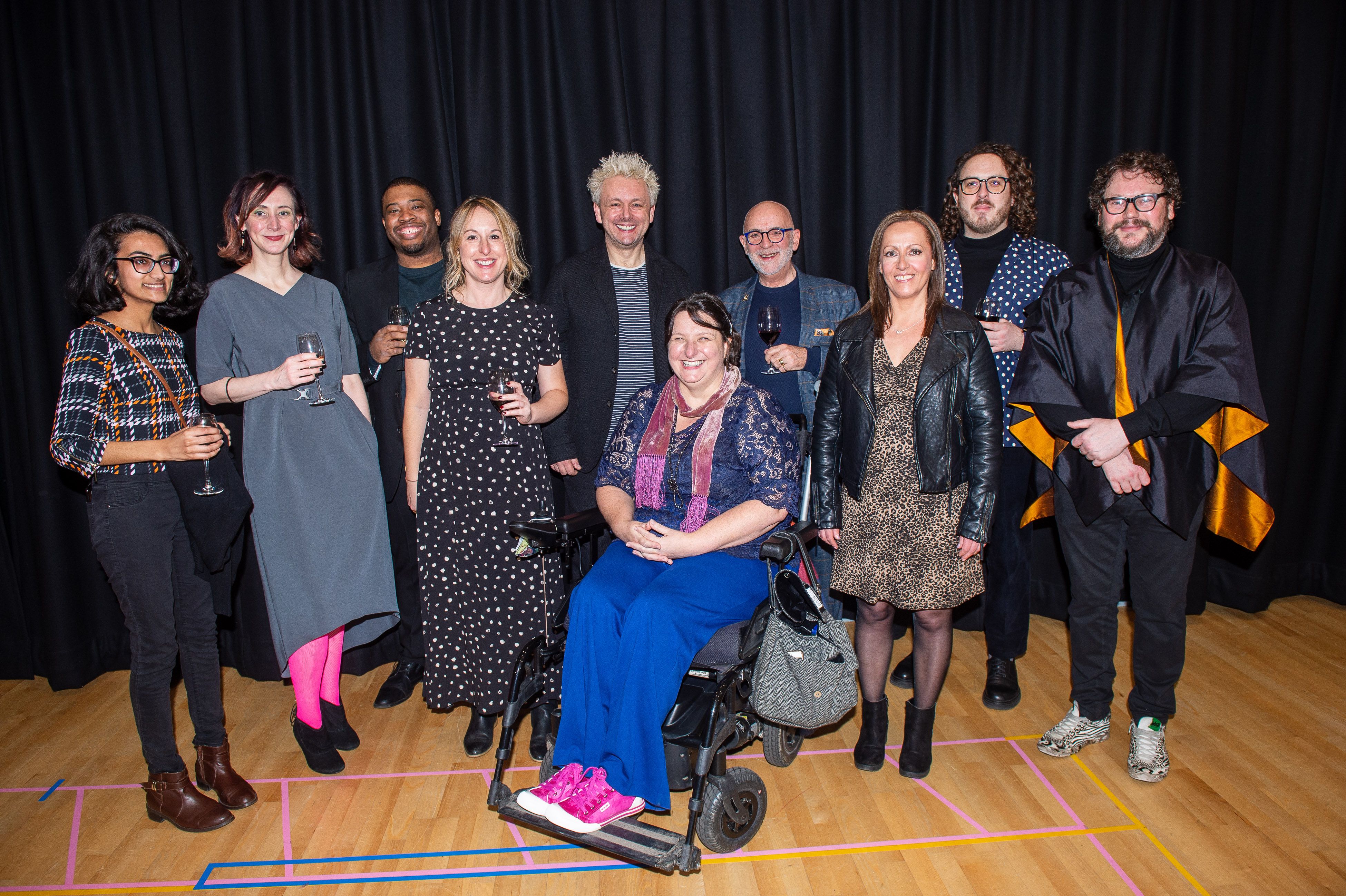
Stephen Tuffin, Associate Lecturer on OU Creative Writing courses A215 and A363, has recently won A Writing Chance bursary – an award that celebrates fresh perspectives and great stories from people whose voices have not historically been heard in publishing and the media. This UK-wide project is co-funded by actor Michael Sheen and the Joseph Rowntree Foundation, and supported by the New Statesman and Daily Mirror, with research into barriers to publication being conducted by Northumbria University
Recipients of Writing Chance bursaries
We asked Steve to tell us about how his own class background and experience of disability have both helped and hindered his journey into publishing and academia.
I first started writing when I was a road worker. I wrote on bits of paper in the days before PCs. I didn’t write much or very often because much of the time I was too exhausted. The days were very long and very tough.
But, knackered or not, I had this urge to write. I wrote fiction. Short fiction. I didn’t write poetry because I didn’t like it. I didn’t understand it, and, in any case, only posh people read or wrote poems.
Despite not having enough the money, I signed up for the Writers Bureau, and set about learning to write. I paid in instalments, completed several assignments, and was thrilled to receive feedback. But I defaulted on the payments and so was unable to continue. I believe I still owe the Bureau so I’m hoping they don’t read this.
My life took me to Swindon in search of employment. I did a City and Guilds apprenticeship and became a carpenter. I worked on sites all over the place and eventually found myself working at The Institute of Directors in The Mall. I worked there as the lone maintenance man and so found plenty of time to read. I read thrillers and novels about barrel-chested men, with firm chiselled jaws, and women with hour-glass figures and names like Storm. In my spare time, I continued to write. I only ever shared my writing with my wife. No one else. I had trouble with my spelling – and still do.
One day I acquired an electric typewriter – it was being replaced with a new model. I set it up at home and imagined myself to be Hemingway even though I’d never read a word he’d written. I smoked while I wrote. One roll-up after another. I hung doors in the daytime and typed words out at night. Hanging doors is hard physical work but isn’t anywhere near as knackering as digging trenches.
Time passed and the PC came along. Now I could see my words on a screen, as if they were in print, and I could correct my spelling as I went along. I wrote short stories about working-class people – café workers, shop workers, road workers. I wrote what I know.
I fell ill. I was diagnosed with Ankylosing Spondylitis and so my life on site was over. I lost my job, my income and my dignity. I had no idea what I would do next. I considered work in B&Q or as a storeman at the building firm where I’d worked as a carpenter. But my wife had started a course at our local college, and I decided to follow suit.
I wrote my first full length play in the 2002. It was called Roger and Gerald and I didn’t have a clue what I was doing, but I did it. I sat up late into the night and I wrote. I heard their voices in my head, these two men, talking, laughing, arguing, loving. I finished the play and I sat back, and I rolled a cigarette and I felt good.
My college studies took me to Bath Spa University where I gained a BA and an MA in Creative Writing. Later on, I taught there on their undergraduate programme, and it was then that I saw an advert for Associate Lecturers with the Open University. And here I am.
It’s been an interesting journey.
If I am being honest, I’ve always felt a little apart from my colleagues. They are all lovely, but they seem very posh to me. And so much smarter than me, and well educated. In a nutshell, middle-class. And I, well, I was a road worker masquerading as a clever person.
I still am.
I lived too long in that world to suddenly become something else. And I am proud of that world too. I don’t see why, as a working-class man, I can’t enjoy these things that I’ve been led to believe can only be appreciated by the middle-classes. But don’t get me started on that.
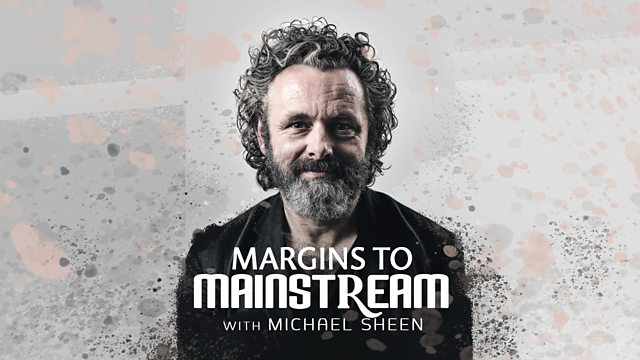
You can listen to Martin Sheen read Steve’s work on the BBC’s Margins to Mainstream (about 14 minutes into the programme). This episode also features the work of another awardee, Maya Jordan, who studied creative writing at the OU.
Now I am on this wonderful programme fronted by Michael Sheen for underrepresented writers, and I am seeing my writing take off in a way it never has before.
And the thing is, I have my arthritis to thank for it. So, good things can come in painful packages. Had the AS not got a hold of me I would still be out on site. I wouldn’t be writing this and would never have met all the fine and good people I have taught and worked with over the 16 years I’ve been employed by the OU.
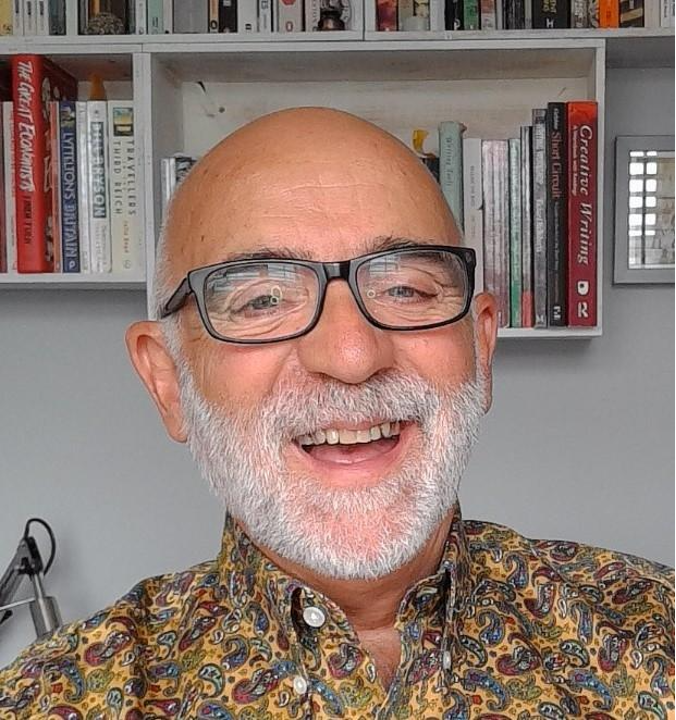
Stephen Tuffin
Stephen Tuffin was born in 1958 on a council estate on the south-east coast of England. A former butcher’s boy, cook, cab driver, door-to-door salesman, care home assistant, road worker and builder, he now lives in Swindon and teaches creative writing at the Open University. He is a working-class writer writing working-class stories inspired by the remarkable and raw world he has lived and worked in for most of his life.
Meghan Flaherty, Associate Lecturer on A215, has recently been awarded a Scottish Book Trust Ignite Fellowship. The fellowship offers talented professional authors practical and financial support for exploring new avenues or making new breakthroughs. Meghan will be working on her second book, a memoir about motherhood, memory, and the self – the stories we tell each other in order to live and how those narratives define us. We asked her to tell us about juggling her roles as mother, writer and OU tutor.
Motherhood is hard. It’s even harder (I tell myself) when your children are small and the world has gone haywire. The pandemic has forced so many of us to juggle so much, and in such claustrophobic space. How can you possibly be a person, a writer, a mother, a pre-school teacher, a playmate, a chef, a maid, a student, a professional and keep your family safe and healthy all at once? (Not to mention keeping up with all the latest parenting advice on Instagram—and falling ever short.)
I say this and I’ve had it easy. My family has weathered its particular challenges, but we’ve managed to tread water for the past two years. In all of the uncertainty, we’ve never feared for a roof over our heads, and despite a few nursery colds (when nursery is open) and the persistent stress, we’ve managed to fend off harm. We’re lucky. My husband and I have jobs that don’t require us to leave the house in lockdowns. Our kids are young enough to not mourn what they have lost in this new normal. (And young enough, thank heaven, not to require help with any maths homework.) We are not high risk (in any category), and so we’ve managed fine, despite the occasional storm clouds of depression and that niggling, insurmountable anxiety, the fatigue of functioning in so much flux.
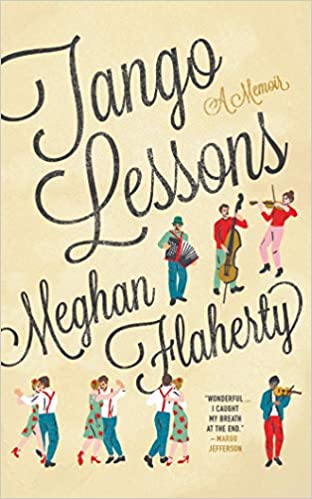
Tango Lessons: A memoir by Meghan Flaherty
What I haven’t managed to do (apart from keeping my skirting boards clean and being perfectly patient with my children) is write. I sit here typing this beside a pile of pages—the mess of which I hope to call my second book. This lump of untouched draft, this tome of half-baked words, is the albatross of my pandemic, of my past five years. Granted, during that time, I also had two children under two (both of them nutters), moved across the world, and lost a beloved parent to leukemia. (Not to mention: made it through the Trump administration.) I’ve had my share of good excuses.
My kids came first. Then lockdowns. Then the move. More lockdown. Toilet training. The purchase of our first house. Another move. My husband’s thyroid surgery. Working to pay the bills. Grieving. More bills. When was there time to sit down at my desk and do art? And if I’d found the time, where was the energy? The inspiration (from the Latin ‘in’/‘spirare’, to inhale, to breathe in)?
I’ve recently been given the gift of an Ignite Fellowship from the Scottish Book Trust, which includes a much-appreciated bursary, the promise of a week’s retreat (!!!), and mentorship, but above all else: a vote of confidence. Someone outside of my house, my head, telling me to put my bottom in my chair and get this done. A reason to pick up this doorstop on my desk and make a book of it. Even when I think I’m too exhausted to access the part of me that writes. The part I’ve shaded over with these other roles, back-burnered and forgotten. You’ll understand why I fumble here for words; my gratitude feels inexpressible.
Since I started teaching at the OU, I’ve been so impressed by the tenacity of my students. Most of whom, I note, are juggling so much more than I. That they manage to keep pace against the current of this pandemic, managing their own families and jobs and stresses, their own mental health and learning challenges, to pursue their degrees (and churn out stories, essays, poems) is remarkable. As I steer them through their module this year, I hope to channel some of their resolve and pluck.