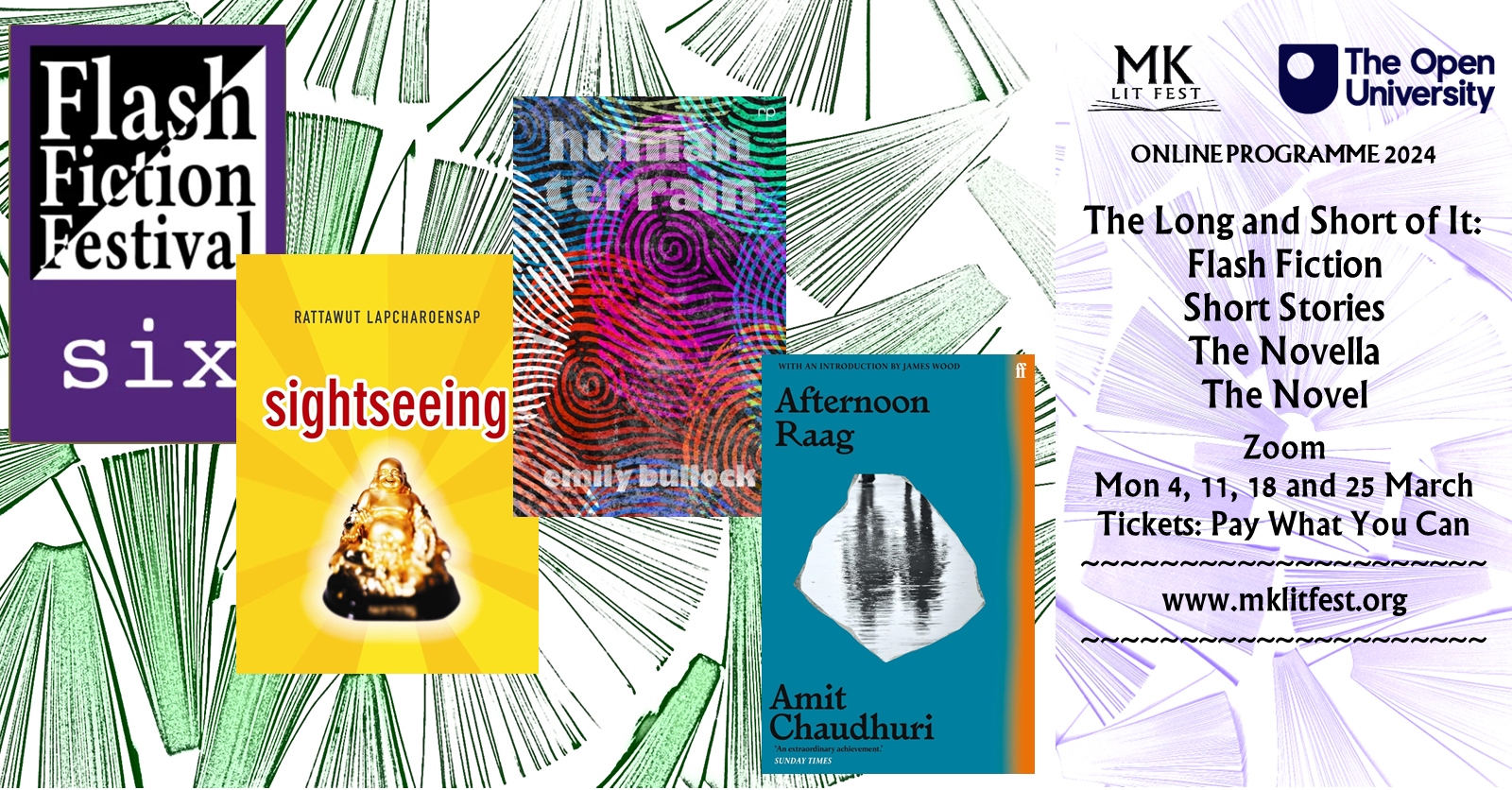
This past Monday, 5 March 2024, acclaimed flash fiction writer, Electra Rhodes kicked off the series events we are putting on for MK Lit Fest. Electra was in conversation with OU PhD student Jupiter Jones, herself a prize-winning author of flashes – complete stories told in just a few hundred words.
PhD student, Grace Kempster, offers here a potted version of the event for those of you who couldn’t make it.
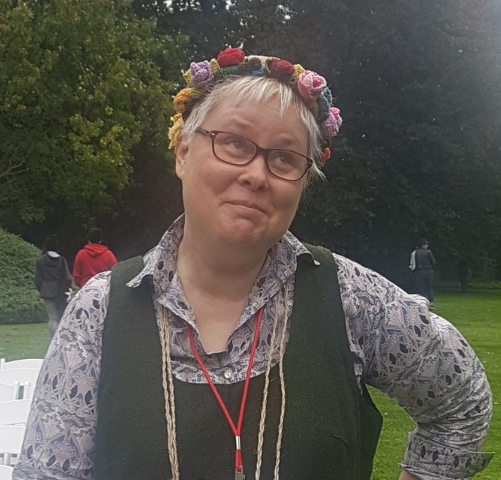
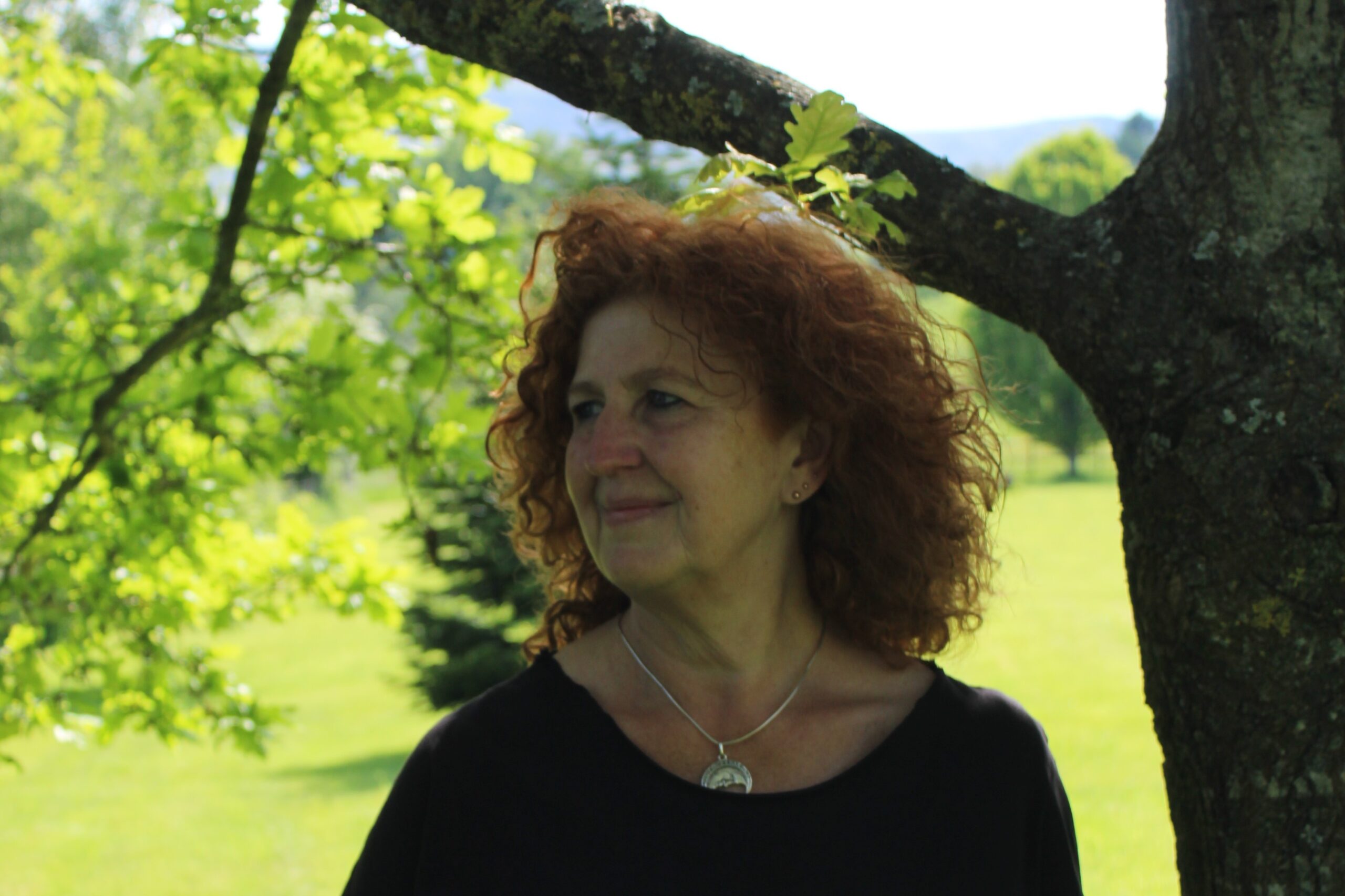
Electra RhodesJupiter Jones
Just like a piece of flash, the session was compressed with wisdom about writing and enjoying this difficult but rewarding form. Electra’s ‘In Momma’s Shoes’ packed such a punch in three short paragraphs. Who knew that everything about child neglect and poverty could be contained in a 300 word capsule of flash – travelling at speed to the pinpoint precision (quite literally) of the end.
Electra gave us 11 quickfire features of the short, compressed narrative that is flash:
Under 1,000 words
Distinctive form – hermit crabs, for instance, are flashes made of different forms such as menus or surveys
The title really works, doing the heavy lifting
Compression and intensity
Language that is tight, bright and right
Like the after-image of a camera/phone flash
Use of image, metaphor, archetypal trope, fable and fairy tale to draw in extra layers of meaning
An ending that lands – if a story is like sewing, this is the thread pulled taut with a twang
Experimental
Plot involves a shift of some kind
Lots of stuff happens off the page
Like a balloon, you feel your way to the right length of the thing, containing just the right amount of air. Electra advises ‘Start late and get out as early as you can!’ Look for a chewy satisfying landing . It is the briefest invitation into a world, requiring intimacy to ‘read’ the space between the lines and off the page, to let go and trust the reader will get it.
Flash is thriving, many anthologies to read full of wonderful examples of form, style and length – and infiltrating other forms with its fracture, compression and oomph!
A final tip that stays with me: read it out loud, record it, play it back in your own and different voices, then you will see what lands, the final form. When you write something and someone else gets it, it is just the best feeling.
As Electra and Jupiter both say, read it, jump in, try it, be experimental … What’s the best that can happen?
Grace Kempster
Grace Kempster’s full-time PhD explores the representation of cloth and stitch in the mid-Victorian novel (1845-75). She is examining 6 key texts by Thackeray, Dickens, Oliphant, Yonge , Eliot and Trollope to explore the tropes and consider a new paradigm of textile fluency affecting the novel. Her supervisors are Professor Delia Da Sousa Correa and Professor Nicola Watson.
Clips from the event will be included in the OU’s updated Advanced Creative Writing course (A363) launching in October. The series continues with events on the short story and novella, at 7.30pm on Monday 11 and 18 March, and one on the novel at 5pm on Monday 25 March. The series will conclude with an in-person panel event at Milton Keynes Central Library at 11am on Saturday 6 April.
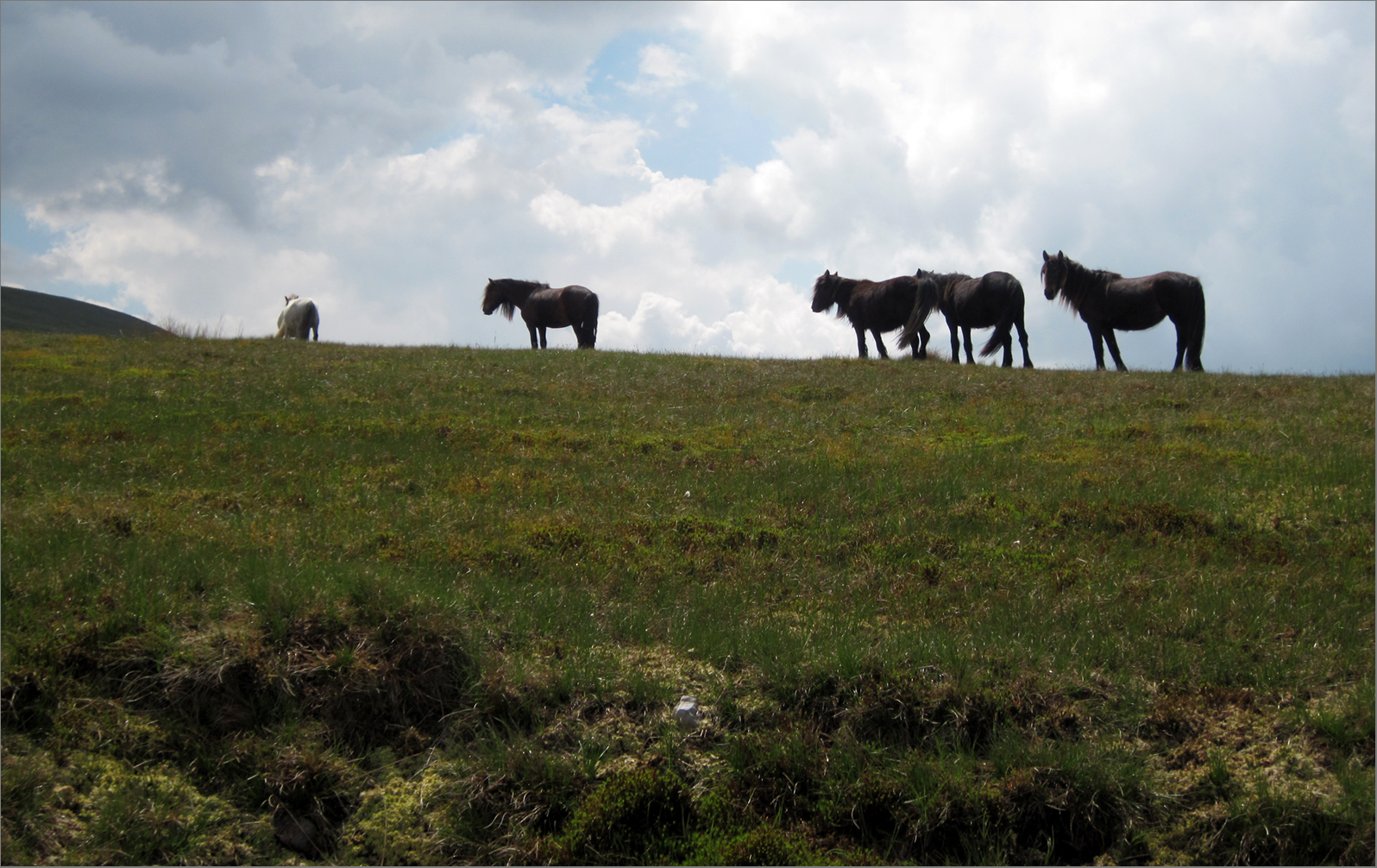
When the world opened again after lockdown, my steadfast companion was the view out my home office window of a fell in Cumbria. Fell ponies often arranged themselves along the ridge of the commons above grazing sheep, backlit by low winter sun. I would gaze at their silhouettes when I needed a break from my computer screen. Former colleagues at brick-and-mortar universities in the US and UK began heading back to campus as COVID restrictions were lifted. I’d taken a job at the OU working from home during the pandemic, and I’d moved five hours north in search of an affordable house with a garden. My ‘new’ office was in a converted bedroom. I couldn’t go to campus or meet colleagues face-to-face for several months after lockdown eased, so I dug in and reconciled myself to living and working in what I came to think of as my ‘fast-moving cloud,’ the western slope of the Howgills.
Fell ponies
Working at the OU has transformed my life as an academic. Moving into a home-based role that is part operational, part distance learning, and part research has provided time for reflection. Most days after lunch, I walk a different lane or track or public footpath in my tiny village where sheep outnumber humans, and I think about things. I live on the edge of the Lake District, countryside that writers Dorothy and William Wordsworth and their friend Samuel Taylor Coleridge would have found familiar. At first, the reality of experiencing the romantic notion of the ‘sublime’ was quite a shock, and it took months to connect with the land in a way other than fear (of high winds, low clouds, and gusting rain) or dread (of same). With time, though, I settled in and got on with work and with writing and connecting with local writers and artists, which has made everything better, especially the low-lying clouds.
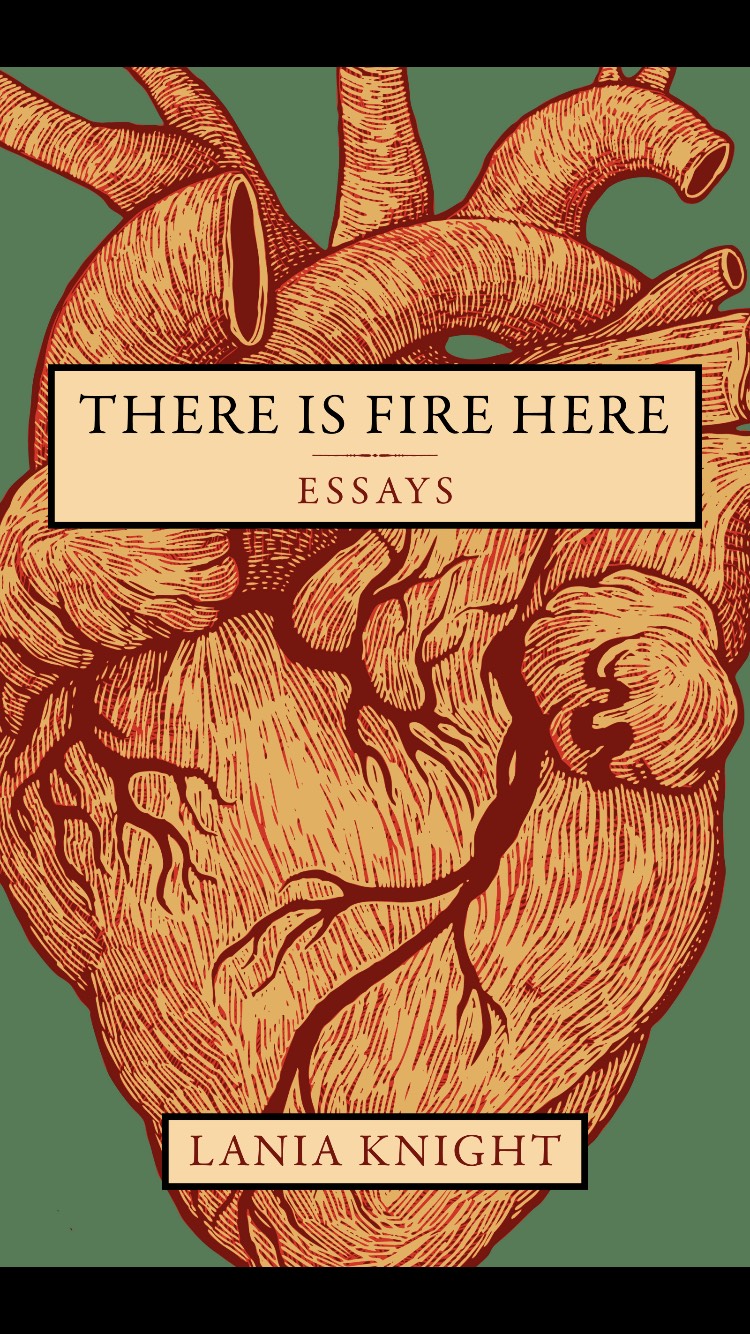
Like other writers who have lived in isolated landscapes, I’ve found this time fruitful. A collection of personal essays There is Fire Here was published in September by a small UK publisher, Signal 8 Press. I have long been a fan of the ‘fourth genre,’ and There Is Fire Here has been a satisfying opportunity to bring together fifteen essays spanning the day I dropped out of high school in Texas and left home on the back of a motorbike at sixteen, to my move across the Atlantic to the UK, where I learned how to write poetry.
Some of the joys of being a writer and an academic are the connections between your research, your teaching, your colleagues, and public outreach. My work in creative nonfiction includes my own writing, my teaching, and public engagement—a circle which is finely balanced within my role at the OU.
While I was working on finalising the manuscript for There Is Fire Here, I was asked to serve on the panel that would be revising the third-year Arts & Humanities module, A363 Advanced Creative Writing. I proposed that we expand the teaching on life writing.
Emma Claire Sweeney, the discipline’s Media Lead and a fellow course author, asked if I might like to interview Kit de Waal for the Milton Keynes Literary Festival. De Waal’s debut memoir Without Warning and Only Sometimes had recently been released and the festival needed someone to interview her. It was a dream role. I was sent all her previous books to read, which included several novels and an anthology she edited, Common People. I set those on my bedside table and devoured them.
Kit de Waal
During my conversation with de Waal at Milton Keynes Lit Fest, I confessed in front of the festival audience that I had cried on the train finishing one of de Waal’s novels,My Name Is Leon. In the same way that she had wowed me with her stories, Kit wowed the crowd, made them laugh and cry, held them enthralled for the entire hour. An OU camera team were there to record it all.
Soon, clips from that conversation with Kit de Waal will be part of the next iteration of A363 Advanced Creative Writing, a culmination of research, teaching and public engagement woven through bespoke teaching materials for the OU. I’ve sent Kit a copy of my book, and fingers crossed, she’ll be attending my online book launch on Wednesday 8th November, when I’ll be in conversation with brilliant UK writer, Zoe Lambert.
Tickets are free and it will be a relaxed evening. I’ll be joining from Cumbria, in a comfy spot by the woodstove. Grab your favourite drink, settle in somewhere cozy and join us.
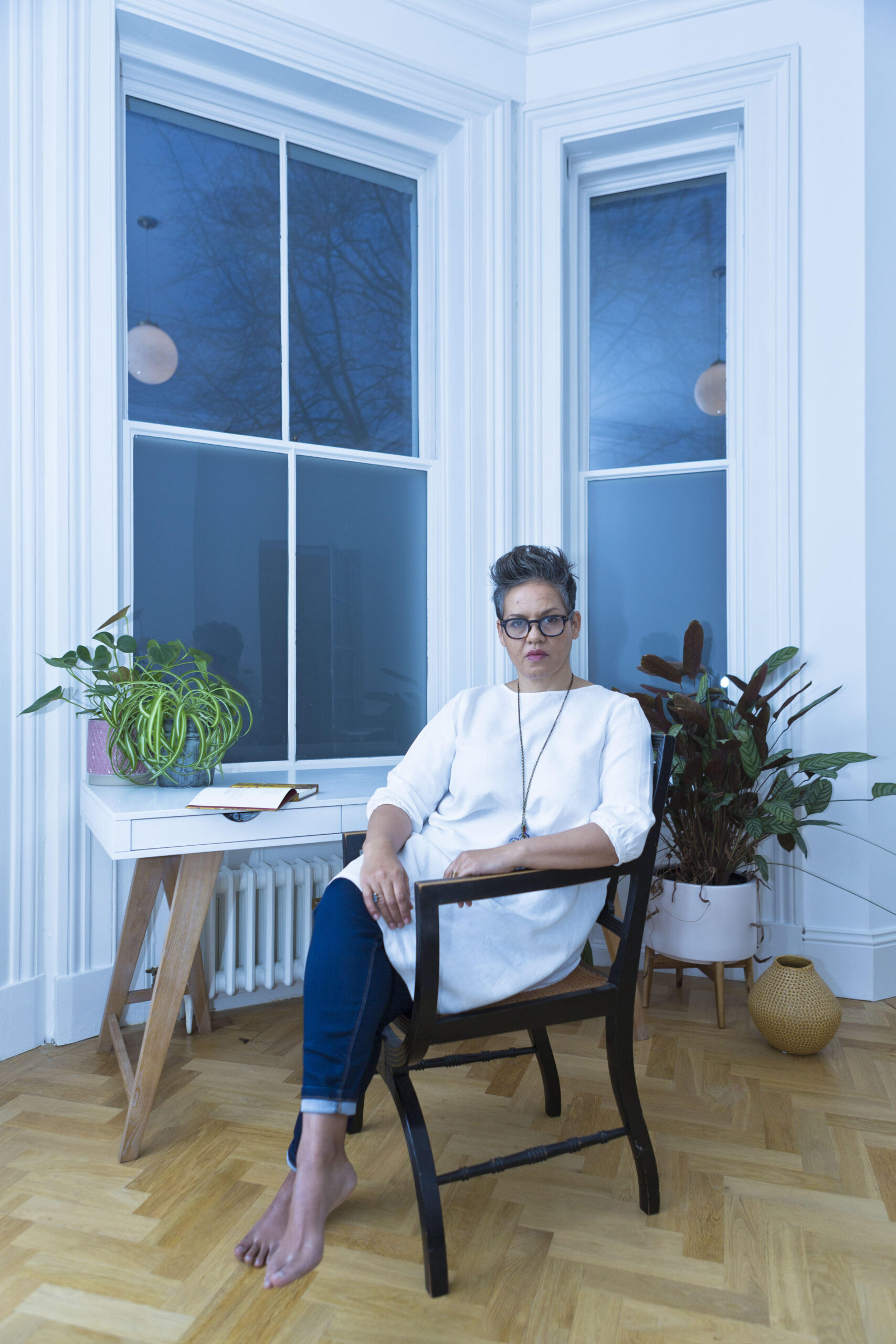
Lania Knight
Lania Knight holds a BSc in Plant Science and Environmental Conservation from the University of New Hampshire, and an MA and PhD in English Literature and Creative Writing from the University of Missouri. She is the author of four books, including two novels, Three Cubic Feet, shortlisted for the Lambda Literary Award in Debut Fiction, and Remnant, a dystopian novel set in the American Midwest, as well as a poetry pamphlet Single-Track B-Road, and a collection of personal essays There Is Fire Here.
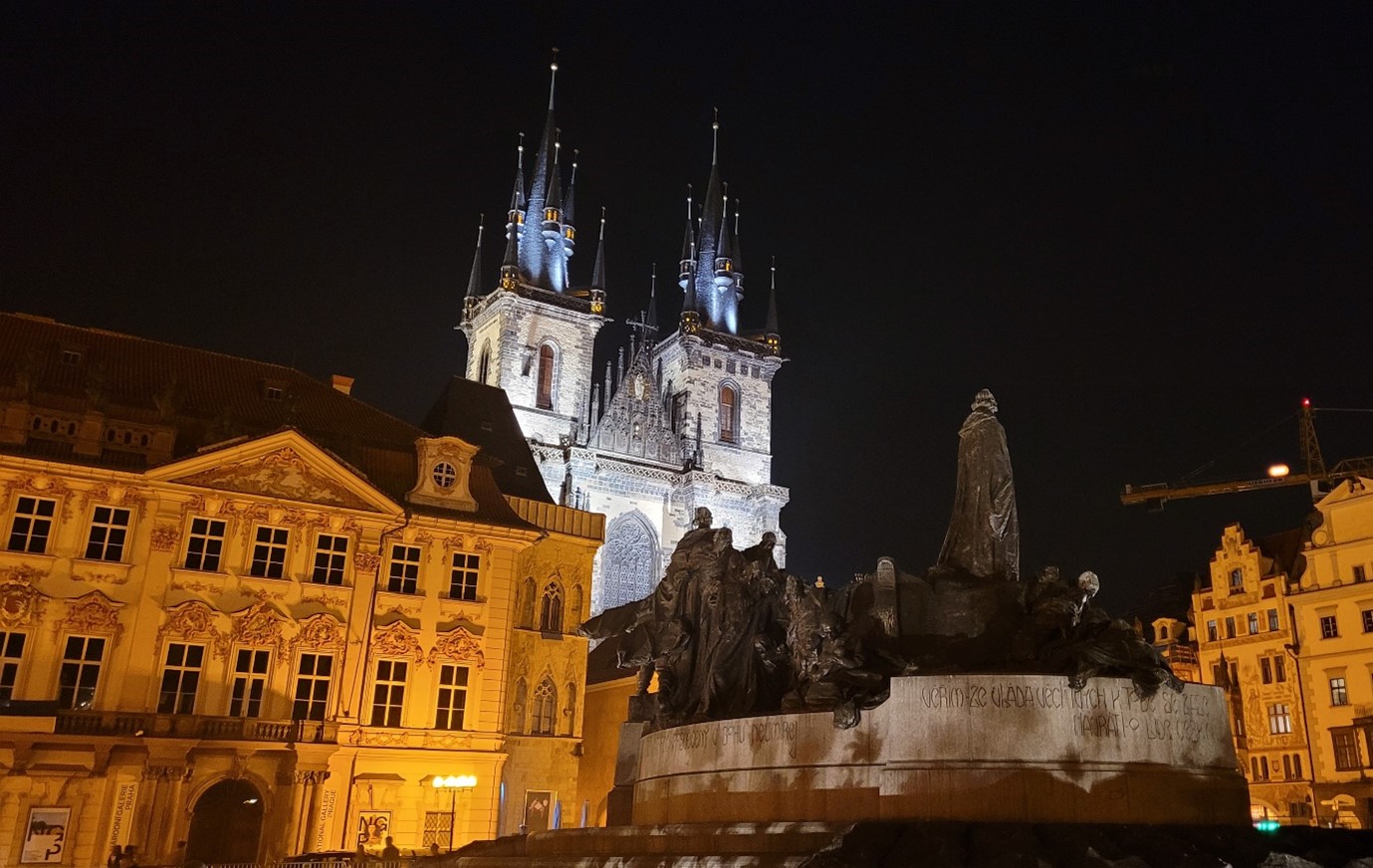
Staff Tutor and Associate Lecturer, Jennie Owen, travelled to Prague to present at a conference on the theme of Global Horror. The conference was run by Progressive Connexions, an organisation that supports sustainable global interdisciplinary research, and promotes collegiate exchange of ideas, experiences, and points of view.
Prague
This emphasis on curiosity, open-mindedness, and collaboration is also at the heart of our Contemporary Cultures of Writing conference on 20th April, which Jennie is organising. You can book here for tickets to this London-based one-day conference: Writing place: what haunts the landscape of modern Britain?
At the Darkness at the Edges conference, delegates spoke on varied topics, from the gothic and dystopic in Indigenous fictions to fairy tale motives in German post-war literature.
I’ve long had an interest in horror, as well as the gothic and dystopian. My particular fascination with cursed paintings began as a distraction from the more challenging sociological aspects of my PhD research into traumascapes in the northwest of England.
The notion of the modern-day curse is often propagated through social media, and I was fascinated by how these urban legends become fragmented as they are retold online on websites and community forums.
But the idea of the curse is not a new one. We can trace its path through ancient history: it’s discussed in the Bible, linked inextricably to our perceptions of ancient Egypt, and a common inciting incident in the fairy-tale narrative. In common folklore, a portrait that falls to the ground may foretell the death of a loved one; whilst anyone who was a fan of the cartoon Scooby Doo will be aware of the risk of the eyes in a portrait following you around the room.
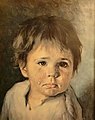
The Crying Boy by Giovanni Bragolin. This image is in the public domain.
One of the most famous cursed paintings in the UK is The Crying Boy by Giovanni Bragolin (1911-1981) – an image of a smudge-faced toddler looking sadly out at the viewer, tears running down his face.
In 1985, the Sun issued a warning that around 50 houses in Yorkshire had burned to the ground, leaving only this painting intact. This created a mild panic, reflected in a series of subsequent articles with headlines such as ‘Crying Flame’ and ‘Crying boy curse strikes again’. Such was the panic that on Halloween the Sun burned dozens of these paintings, which had been sent to their offices, and quoted a fire officer who stated: ‘I think there will be many people who can breathe a little easier now’.
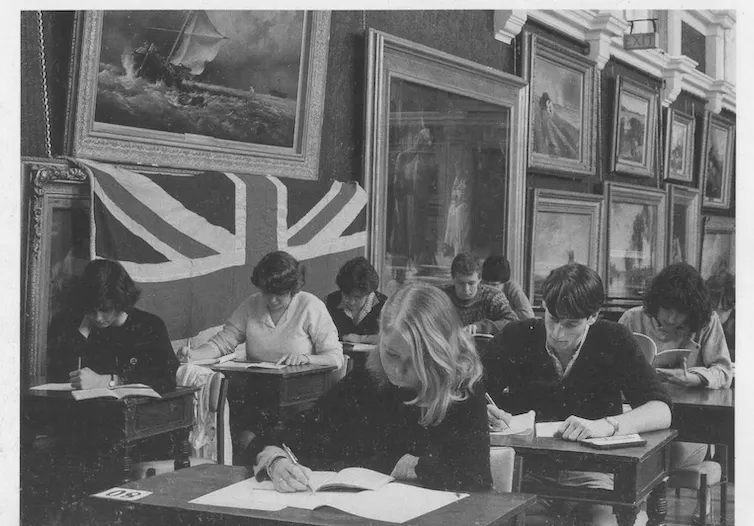
There is a rich vein of allegedly cursed artworks. Man Proposes, God Disposes by Sir Edwin Landseer (1802-1873), which hangs in Royal Holloway University, has to be covered with a Union Jack during exam season to allay students’ fears that they might fail or lose their minds if they spend too long staring at the painting. Indeed, its subject matter is rather gruesome: two polar bears fighting over the remains of the 1845 Franklin expedition. This infamous expedition was designed to locate the northwest passage in the Artic, and resulted in the loss of two ships and all men aboard (and rumours of cannibalism).
There are dozens of mysterious contemporary pieces too: having once seen it, for instance, who can forget the Momo Whatsapp curse, which featured a distorted wide-eyed sculpture by Japanese artist Keisuke Aiso?
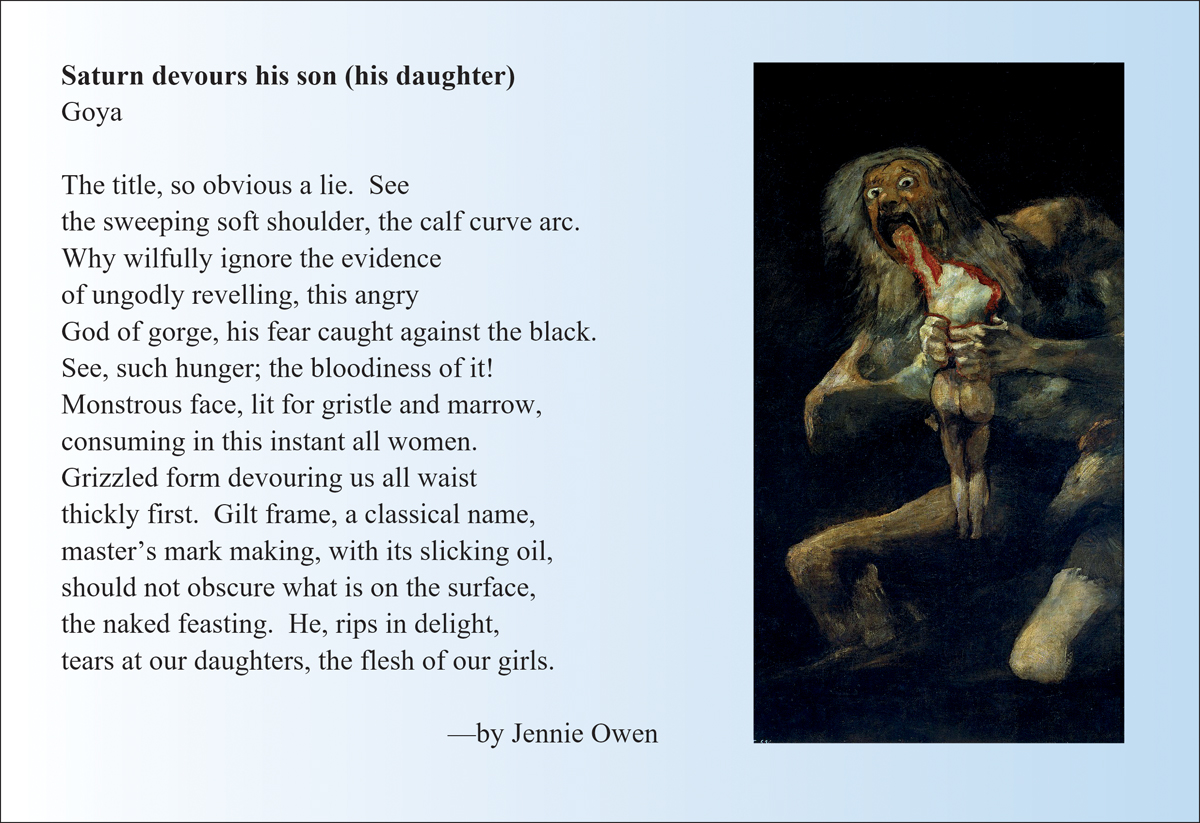
Using close examination of supposedly cursed art in the public domain, I used an ekphrastic methodology to create a series of poems.
The Poetry Foundation defines an ekphrastic poem as ‘a vivid description of a scene or, more commonly, a work of art. Through the imaginative act of narrating and reflecting on the “action” of a painting or sculpture, the poet may amplify and expand its meaning.’ It is hardly a new form of poetry – just think of Percy Bysshe Shelley’s ‘On the Medusa of Leonardo Da Vinci in the Florentine Gallery’ or ‘Ode on a Grecian Urn’, by John Keats. But ekphrastic poetry does appear currently to be celebrating a kind of renaissance in popularity.
With international colleagues from a wide variety of disciplines, I shared my practice-based research by discussing my own creative process of using art as a means of inspiration for poetry. I explored how this approach has had an impact on both the form and content of my writing, as well as how the writing of these pieces both celebrates and challenges the concept of cursed art.
My presentation was received, I hope, without any undue residue of curses.
Jennie Owen
Jennie E. Owen’s cursed poems will be featuring in an anthology pamphlet published by Nine Pens Press later in 2023. Jennie has worked as an Associate Lecturer here at the OU for nearly 20 years. She is now also a Staff Tutor in Creative Writing, and lead Cluster Manager for A363, our level three undergraduate creative writing module. Jennie is working towards her PhD with Manchester Metropolitan University. She is a Forward– and Pushcart-prize nominated poet and writer of short stories, whose work has been widely published in anthologies, journals and magazines.
Insurgent Press’s recent take over of the Barbican Library featured readings from Brian Kelly’s debut Murph – a novel about a virus that reveals everyone’s internet search histories, and a joke shop owner who finds himself swarmed with customers seeking disguises.
Here, Brian lets us into his own journey from dissatisfied company employee to founder of his own press, host of longstanding literary night, novelist and PhD student. And he tells us about the crucial role played by the OU along the way.
At twenty-three I left Dublin to become a rock star in London. The big smoke kicked my ass for a couple of years and when the band eventually broke up on a rainy night in Liverpool (pathetic fallacy right on cue), I was left working as a software tester with no real creative output. It was around the time of the financial crisis, and I remember the CFO calling us in for our quarterly report. He advised us that money rarely disappears from the market but rather changes hands. As people in the know, he claimed, we stand to make large gains. At home, Ireland was going through a terrible time, unemployment and immigration back with a vengeance. I left the office and walked along the Thames to Vauxhall where I was renting a room over a pub. I sat down on my sofa-bed and decided I needed to do something else with my life.
My girlfriend at the time (now my partner of sixteen years) had given me a wrecked old computer from her parents’ attic and I had a vague impulse to write. Maybe it was the position above the pub, listening to voices below in the beer garden, the weird atmosphere of that bit of Vauxhall where gas towers stand cheek-by-jowl with cricket grounds and twenty-four hour gay clubs. I wanted to put down some words and make sense of it all, but I had no idea how to go about it.
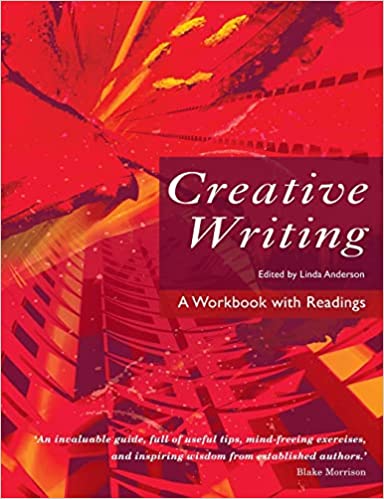
Creative Writing: A Workbook with Readings, Ed. Linda Anderson
I remember the day I finally signed up for A215: Creative Writing and the little shot of adrenaline I felt. Would I have the discipline required to finish the course? How would it feel to have a proper writer reading my work?
Doing the daily writing exercises in my room every night, I came to a Colin Powell-esque realisation about all the things I didn’t even know I didn’t know. Step by step, the material demystified the various elements of the writer’s craft, and I was writing in unexpected and exciting ways. About halfway through the course, there was an exercise about eavesdropping on people’s discussions and using that to create characters. I was on a plane back to Dublin and a few rows ahead of me was a man from Roscommon giving out yards about something or other. The best material went in my notebook.
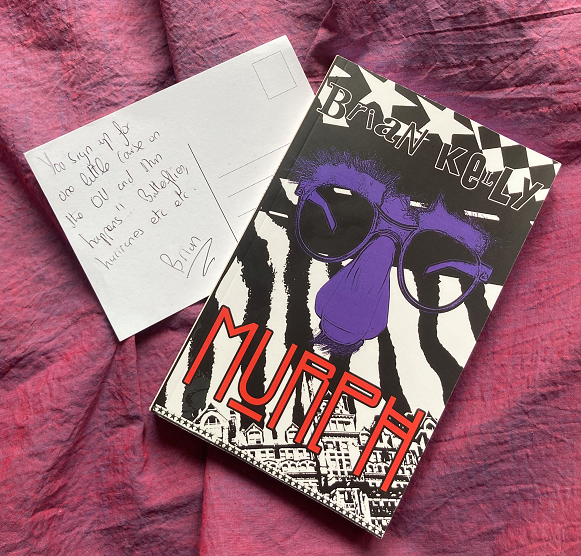
Murph by Brian Kelly
Back in London, I quit my job and was plotting a move to Korea to do a stint as an EFL teacher. While waiting for my visa to come through, I was spending my days in Stoke Newington Library reading and writing. My next OU assignment came up and the decrepit atmosphere of Stokey’s library merged with our man from Roscommon to create a short story about a psychedelic steam-of-consciousness librarian on the West Coast of Ireland. I remember feeling like I’d opened a door to a room I didn’t know existed. Could writing really be like this?
The guidance and encouragement from my tutor Emma Claire Sweeney egged me on. Moving to Seoul, I continued my writing and Emma started receiving pieces of work all the way from the Korean peninsula. I finished that first module and instantly signed up for the next, A363: Advanced Creative Writing. Life in Asia was fun, and I enjoyed teaching. The kids, the colleagues, the sense of purpose. I decided to pursue a BA in English at the OU.
I changed Seoul for Beijing but kept studying. Six years after starting my odyssey, I remember sitting my final exams in the British Embassy. The plan was to return to the UK to do a PGCE and start teaching in London, but the funding for third level had changed and unless I got a good degree from the OU my bursary was not going to cover my living costs. I studied like my life depended on it. In the end I got the grades and returned to London where I started my career as an inner-city teacher in Camden Town.
But the OU was not done with me yet. I had stayed in touch with my first tutor and when I mentioned being back in London, she encouraged me to apply for a novel writing course at City University. The people I met on that course were some of the most talented people I had ever met and became lifelong friends. The novel I wrote was a finalist in Penguin’s WriteNow competition and I continued on to do a Masters in Creative Writing, with the novel I finished winning an Irish Writers Centre award in 2022.
Verbal Discharge anthology launch
Along the way, I had met so many brilliant writers and wanted to create a space where we could all share work in progress and chew the cud. Club Verbal Discharge was born and has been running in the Perini & Perini bar, Oxford Circus on the first Friday every month for four years in a row. We publish an anthology each year and this in course led to the creation of The Insurgent Press. Our mighty little press has now published three anthologies, one collection of short stories by Tara Basi and my novel Murph. I sent a copy to my first OU mentor to say thanks, and on the card I wrote:
You sign up for one little OU course and looks what happens!! Butterflies, hurricanes etc. etc.
Next month I start a PhD in English Literature at Kings and so the wheel continues to turn…
Brian Kelly
Born in Dublin, Brian Kelly now lives in London with his partner and daughter where he works as an English teacher. After graduating from the OU with a BA in English, Brian continued to write fiction. In 2019, he was a finalist in Penguin’s WriteNow competition. In 2021, he received a Masters in Creative Writing from City University. In 2022, he won the Irish Writer’s Centre Novel Fair prize. He runs the monthly spoken word night Verbal Discharge, which publishes its third anthology this spring. He also runs the Insurgent Press, which does tiny runs of strange books and generally tries to cause trouble.
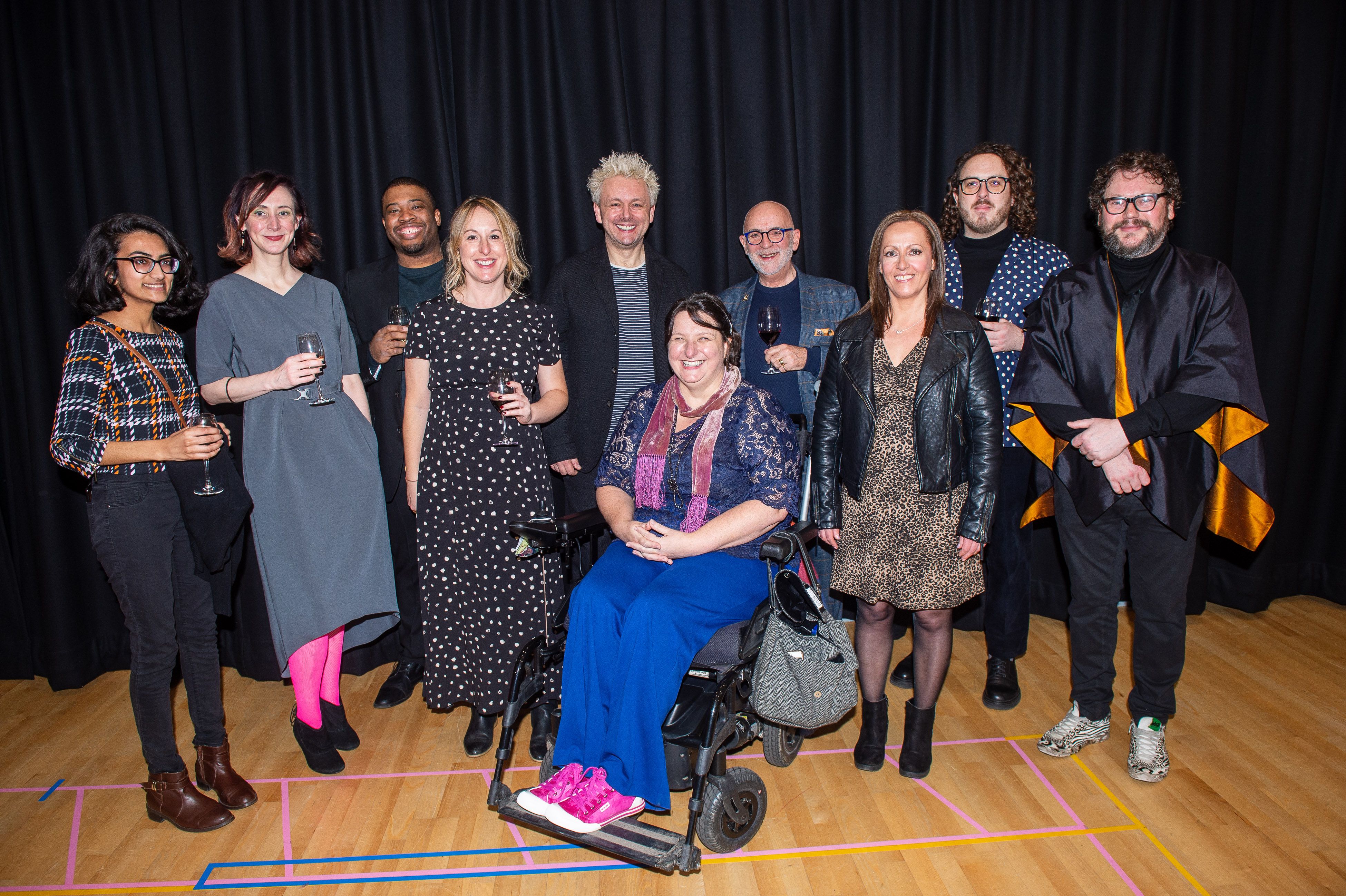
Stephen Tuffin, Associate Lecturer on OU Creative Writing courses A215 and A363, has recently won A Writing Chance bursary – an award that celebrates fresh perspectives and great stories from people whose voices have not historically been heard in publishing and the media. This UK-wide project is co-funded by actor Michael Sheen and the Joseph Rowntree Foundation, and supported by the New Statesman and Daily Mirror, with research into barriers to publication being conducted by Northumbria University
Recipients of Writing Chance bursaries
We asked Steve to tell us about how his own class background and experience of disability have both helped and hindered his journey into publishing and academia.
I first started writing when I was a road worker. I wrote on bits of paper in the days before PCs. I didn’t write much or very often because much of the time I was too exhausted. The days were very long and very tough.
But, knackered or not, I had this urge to write. I wrote fiction. Short fiction. I didn’t write poetry because I didn’t like it. I didn’t understand it, and, in any case, only posh people read or wrote poems.
Despite not having enough the money, I signed up for the Writers Bureau, and set about learning to write. I paid in instalments, completed several assignments, and was thrilled to receive feedback. But I defaulted on the payments and so was unable to continue. I believe I still owe the Bureau so I’m hoping they don’t read this.
My life took me to Swindon in search of employment. I did a City and Guilds apprenticeship and became a carpenter. I worked on sites all over the place and eventually found myself working at The Institute of Directors in The Mall. I worked there as the lone maintenance man and so found plenty of time to read. I read thrillers and novels about barrel-chested men, with firm chiselled jaws, and women with hour-glass figures and names like Storm. In my spare time, I continued to write. I only ever shared my writing with my wife. No one else. I had trouble with my spelling – and still do.
One day I acquired an electric typewriter – it was being replaced with a new model. I set it up at home and imagined myself to be Hemingway even though I’d never read a word he’d written. I smoked while I wrote. One roll-up after another. I hung doors in the daytime and typed words out at night. Hanging doors is hard physical work but isn’t anywhere near as knackering as digging trenches.
Time passed and the PC came along. Now I could see my words on a screen, as if they were in print, and I could correct my spelling as I went along. I wrote short stories about working-class people – café workers, shop workers, road workers. I wrote what I know.
I fell ill. I was diagnosed with Ankylosing Spondylitis and so my life on site was over. I lost my job, my income and my dignity. I had no idea what I would do next. I considered work in B&Q or as a storeman at the building firm where I’d worked as a carpenter. But my wife had started a course at our local college, and I decided to follow suit.
I wrote my first full length play in the 2002. It was called Roger and Gerald and I didn’t have a clue what I was doing, but I did it. I sat up late into the night and I wrote. I heard their voices in my head, these two men, talking, laughing, arguing, loving. I finished the play and I sat back, and I rolled a cigarette and I felt good.
My college studies took me to Bath Spa University where I gained a BA and an MA in Creative Writing. Later on, I taught there on their undergraduate programme, and it was then that I saw an advert for Associate Lecturers with the Open University. And here I am.
It’s been an interesting journey.
If I am being honest, I’ve always felt a little apart from my colleagues. They are all lovely, but they seem very posh to me. And so much smarter than me, and well educated. In a nutshell, middle-class. And I, well, I was a road worker masquerading as a clever person.
I still am.
I lived too long in that world to suddenly become something else. And I am proud of that world too. I don’t see why, as a working-class man, I can’t enjoy these things that I’ve been led to believe can only be appreciated by the middle-classes. But don’t get me started on that.
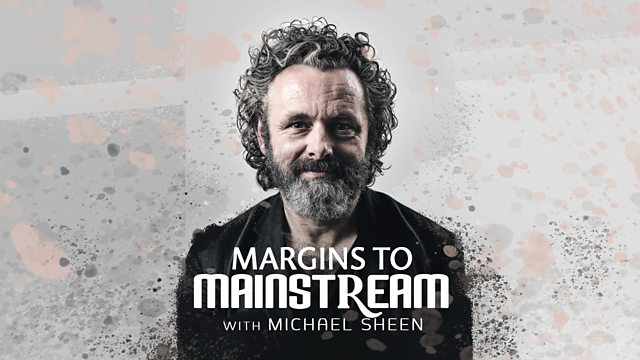
You can listen to Martin Sheen read Steve’s work on the BBC’s Margins to Mainstream (about 14 minutes into the programme). This episode also features the work of another awardee, Maya Jordan, who studied creative writing at the OU.
Now I am on this wonderful programme fronted by Michael Sheen for underrepresented writers, and I am seeing my writing take off in a way it never has before.
And the thing is, I have my arthritis to thank for it. So, good things can come in painful packages. Had the AS not got a hold of me I would still be out on site. I wouldn’t be writing this and would never have met all the fine and good people I have taught and worked with over the 16 years I’ve been employed by the OU.
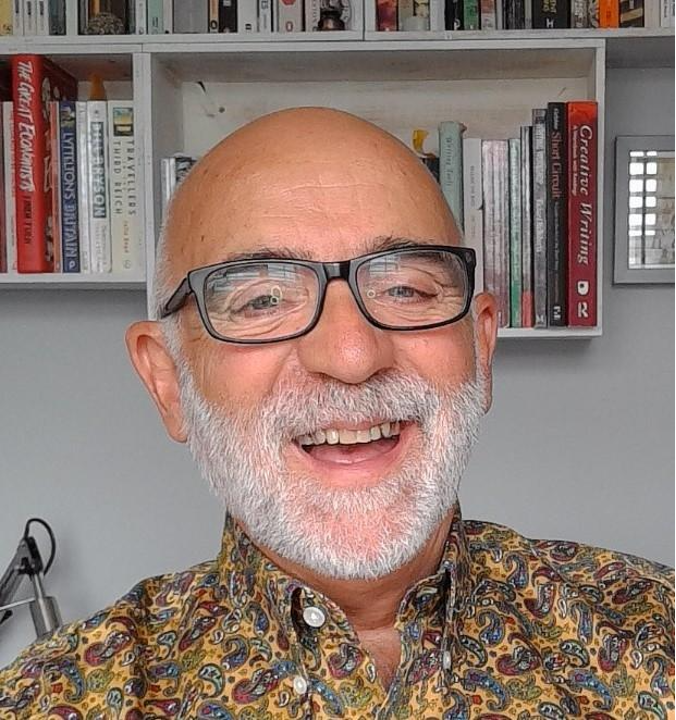
Stephen Tuffin
Stephen Tuffin was born in 1958 on a council estate on the south-east coast of England. A former butcher’s boy, cook, cab driver, door-to-door salesman, care home assistant, road worker and builder, he now lives in Swindon and teaches creative writing at the Open University. He is a working-class writer writing working-class stories inspired by the remarkable and raw world he has lived and worked in for most of his life.