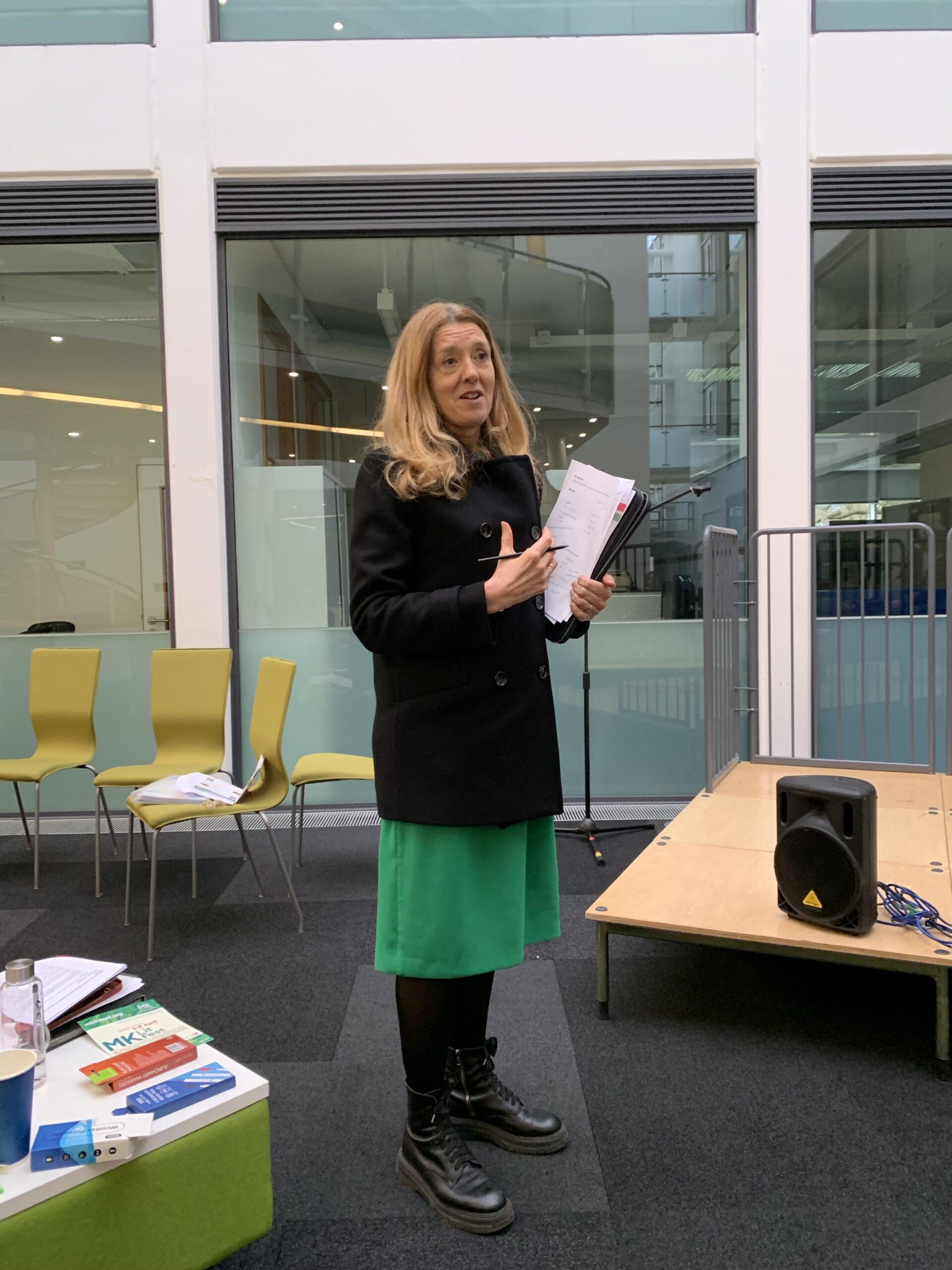
The Open University’s Art’s Research Centre collaborated with Milton Keynes Literary Festival to train OU staff and MK Lit Fest volunteers to chair conversations with authors ahead of our joint events series, The Long and Short of It: From flash fiction to the doorstop novel.
Here, part-time PhD student, Antonia Saunders, who attended the training on campus, shares with us what she learnt.
The training was led by Julia Wheeler, a writer, journalist and interviewer who worked for the BBC for more than fifteen years. Julia chairs discussions at festivals across the UK as well as in the Middle East and North America. She has moderated events at The British Library, The Royal Geographical Society and onboard Cunard’s Queen Mary 2.
What’s the role of a moderator?
A great moderator is hardly noticed. You are offering a space for the author to shine. This includes asking relevant, interesting and concise questions. It’s your job to judge and manage the energy of both the audience and the author. A good sense of timing is crucial. Give the author the chance to respond engagingly to your conversation-starters, and leave time for questions from the floor. When an event is going well, you hardly notice the moderator.
How should a moderator prepare?
The weeks before: be the class swot. Become acquainted with the author’s latest work or the book they are promoting. A close reading will help you to form relevant questions related to central themes. It’s also beneficial to have some knowledge of the author’s backlist. Reading reviews can help to open up ideas from another perspective, and previous interviews can help you to avoid well-trodden ground and come up with some fresh and insightful questions. Follow the author on social media. Have they posted something recently that you can ask them about? Tailor your questions to the audience and event. Keep your questions focused on the guest as a writer. Remember, you aren’t revising for an exam, you are preparing for a fascinating conversation. What do you hope to discover about the author and their work?
One week before:be a safe pair of hands.
Contact the author to remind them of the event blurb, time and place. Include your own short bio so that they have a sense of who you are. Tell them how much you are enjoying the book and pull out something specific to praise.
Confirm whether the author is planning to read from their work, making clear that a reading should not last for more than two minutes. With a poet, you might weave a few short readings throughout the conversation, and you might end with a reading too. With prose, one short reading is sufficient.
Be upfront about certain themes you’ll need to cover to be true to the event description. Ask if there is anything the author would especially like you to ask – that dream question, perhaps, that no one has asked about before. Don’t close the conversation down by asking if there’s anything they do not want to cover. If the author happens to raise any no-go areas, though, be sure to respect them.
The hour before: You’re in charge!
Arrange the chairs so that you are angled towards one another while facing the audience. Bring a cookbook stand to position the book the author is promoting. Engage technical staff to check the audio equipment is working. Ensure the stage is clear of any trip hazards. Pour out the water before. Brief any volunteers who might be holding the roving mics. Ask them to keep hold of the mics where possible to prevent an audience member from hogging it, and to allow the volunteer to move quickly to the next question to avoid delays. Show the space to the author and advise them that you will enter the stage first and motion them to their place. Be confident and politely assertive.
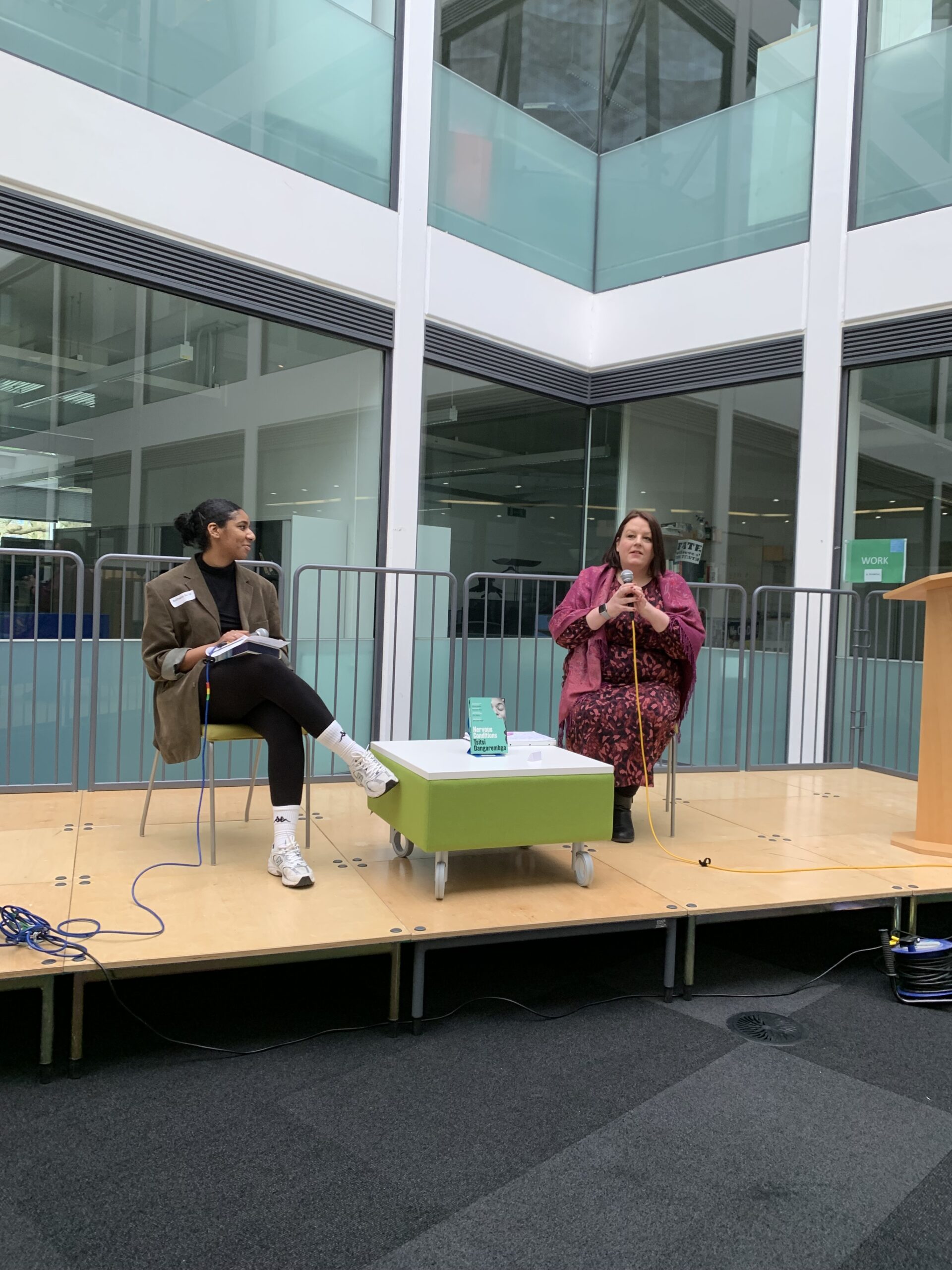
OU PhD student Antonia Saunders (right) is interviewed on stage by an MK Lit Fest volunteer.
How should a moderator handle the event itself?
Introductions: Short and punchy
Your introduction should include your name, the name of the event, and a brief description of the author and their work, ensure you mention their latest book. Three or four lines should do the trick. The audience is there to hear from the author so segue swiftly into your first question.
The conversation: Wear your research lightly
Distill your research into a one-page cheat sheet, which you can hide behind a copy of the author’s book! You should avoid referring to this too often, but it can offer a crutch to remind you of important quotations, or to jog your memory with a question to keep a conversation on track. But it’s important to listen to your guest and respond to their answers appropriately, rather than stick to a pre-formulated list of questions. It should be a conversation not an interrogation! By briefly summarising the author’s answer you can segue into a deeper exploration of that topic, or you can close it off and move onto another area of interest. Don’t necessarily ask your best question first, rather give the author the chance to warm up. Ask open questions (what, why, how, tell us about, to what extent) to encourage the author to open up. Be prepared to keep the conversation going if the author is a little timid or to anchor the conversation if the author is very talkative. Have a phrase to bring things back if things go wrong. Responses like ‘people always ask that’ or ‘That’s wrong’ can be disconcerting, so have a very open question up your sleeve. ‘What would you like readers to take from the book?’ or ‘What inspired you to write about…?’ Try to maintain eye contact and ensure your body language conveys that you are engaged by what the author has to say.
Handling a panel: Create a dinner party vibe
You’ll need knowledge of one or two texts by each author. Keep in touch with all guests on an email chain. Set up the chairs in a curve, with you at one end and the author you expect to be easiest to work with at the other end. Ensure you give each panellist equal opportunity to speak, regardless of status. A question like ‘how does that resonate with you?’ can be a good way of acknowledging one response before moving onto the next author. Allow the conversation to flow, and don’t be afraid of a little controversy. Set some hares running!
Online events: The same but different?
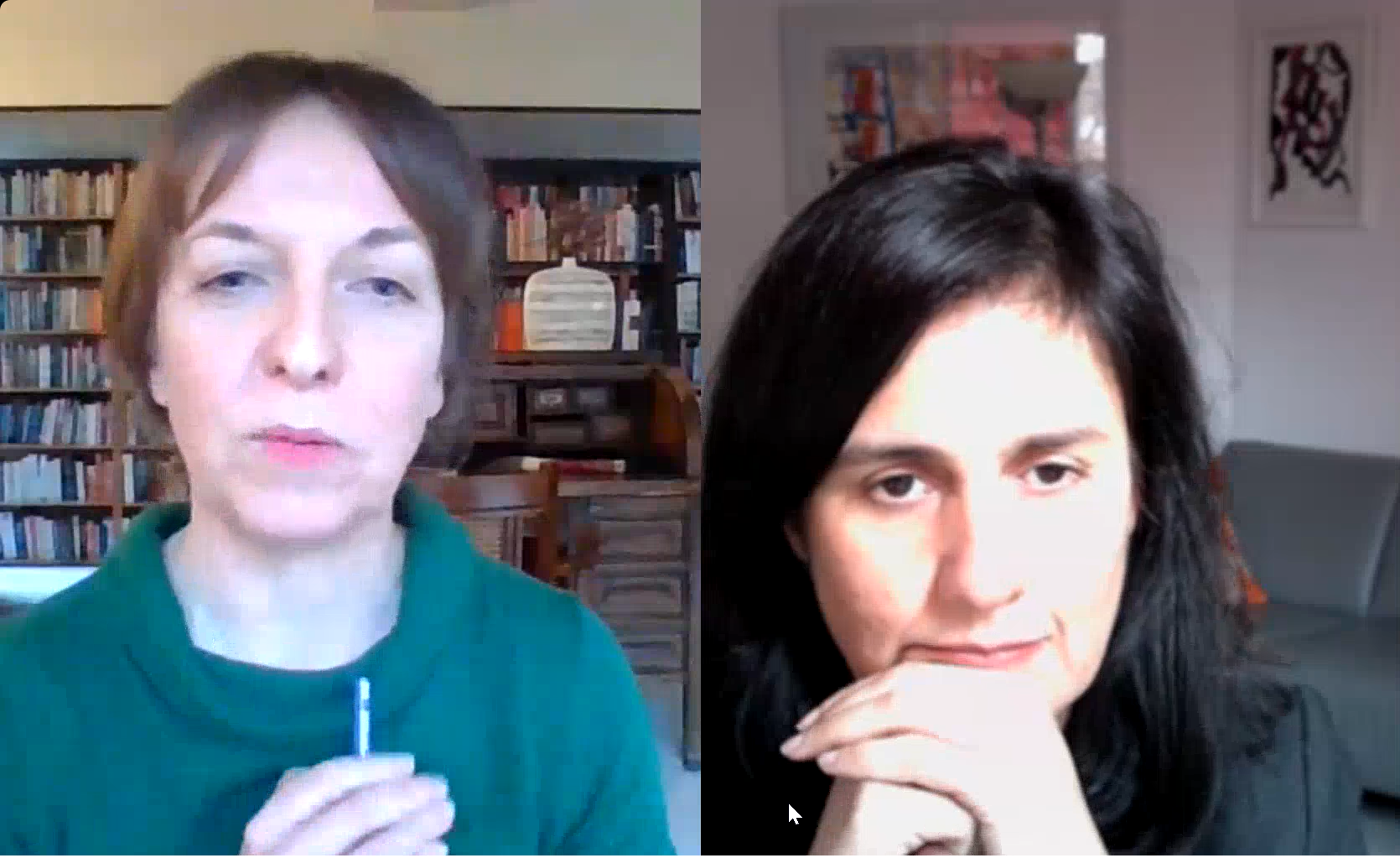
Kamila Shamsie (right) in conversation with Emma Claire Sweeney. Spot the deliberate mistake?…They are not similar distances from the screen!
Check your download speed to ensure your WiFi is working at sufficient speed, and switch off any alerts. Think about the aesthetics of the screen. Lighting should be in front of you, and the author’s book visible behind you. Log in with the author ahead of time to position yourselves a similar distance from the screen. Wear bold un-patterned clothing. Give yourself enough time right before the event to ensure everything is working. Mute and turn off audience cameras during the main discussion. If an event is hybrid, direct one of your first questions to the author dialling in to ensure their voice enters the room early on.
You will need to make extra effort to inject energy into an online conversation to keep it lively and engaging. It’s a good idea to pull questions out of the chat as you go along, rather than saving them all for the Q&A. Remember to nod and smile as the author is talking to show your engagement.
The Q&A: The question in that is…
Establish boundaries at the beginning of the session. Ask the audience, for the sake of time, to keep questions short and punchy. If the audience member gives a comment rather than a question, try to rephrase it as a question. If a question is particularly long, then announce your intention by saying ‘I’m just going to interrupt you there’. This takes the heat out of the interaction. Avoid saying that you have time for one more question in case that question is a dud! And have a supplementary question ready in case the discussion dries up.
Closing: End on a high
Keep to time. Audience members might have other places to be, and event organisers often have a swift turnaround between events. Put as much thought into your closing word as your opening ones. Thank the audience for coming. Give clear directions about where the book is on sale. Thank the author too, of course.
Afterwards: Be kind to yourself
There are almost always things you might have done differently in hindsight. But if you’ve kept your own ego in check, and helped the author take centre stage, then it will have been a job well done.
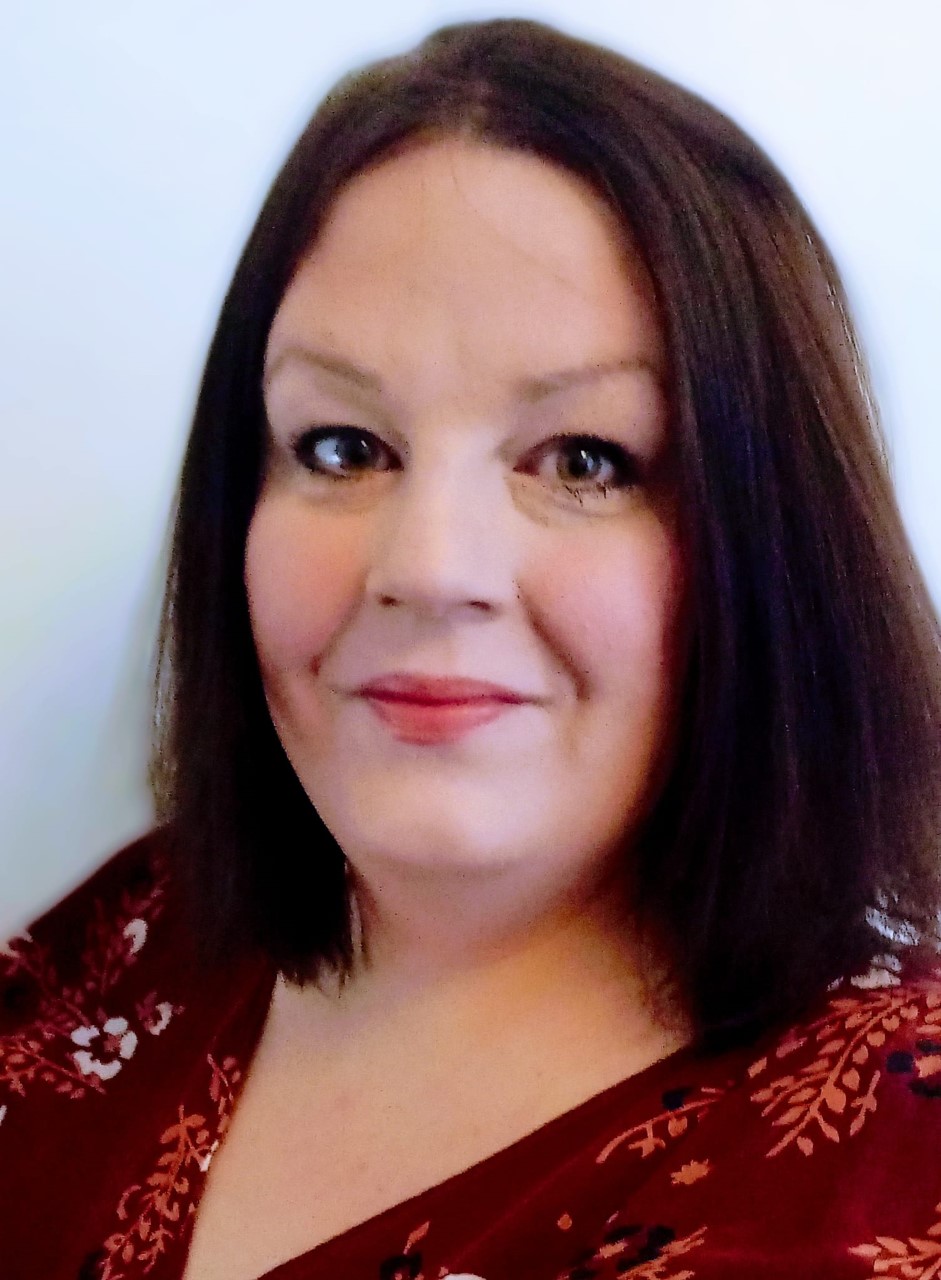
Antonia Saunders
Antonia Saunders studied for both her BA and MA at The Open University. Her part-time PhD looks at the construction of a Jewish Identity in histories and novels of the nineteenth century, and considers the literary and historiographical contexts of representations of Jewish people and Jewish Identity. She is co-convenor of the GOTH (Gender and Otherness in the Humanities) Postgraduate Forum, and she’s chaired discussions on the trope of the ‘Madwoman in the Attic’, gender fluidity in the arts and humanities, the non-human as other, and most recently, feminist readings of fairytales. Her supervisors are Prof. Delia Da Sousa Correa and Prof. Suman Gupta.
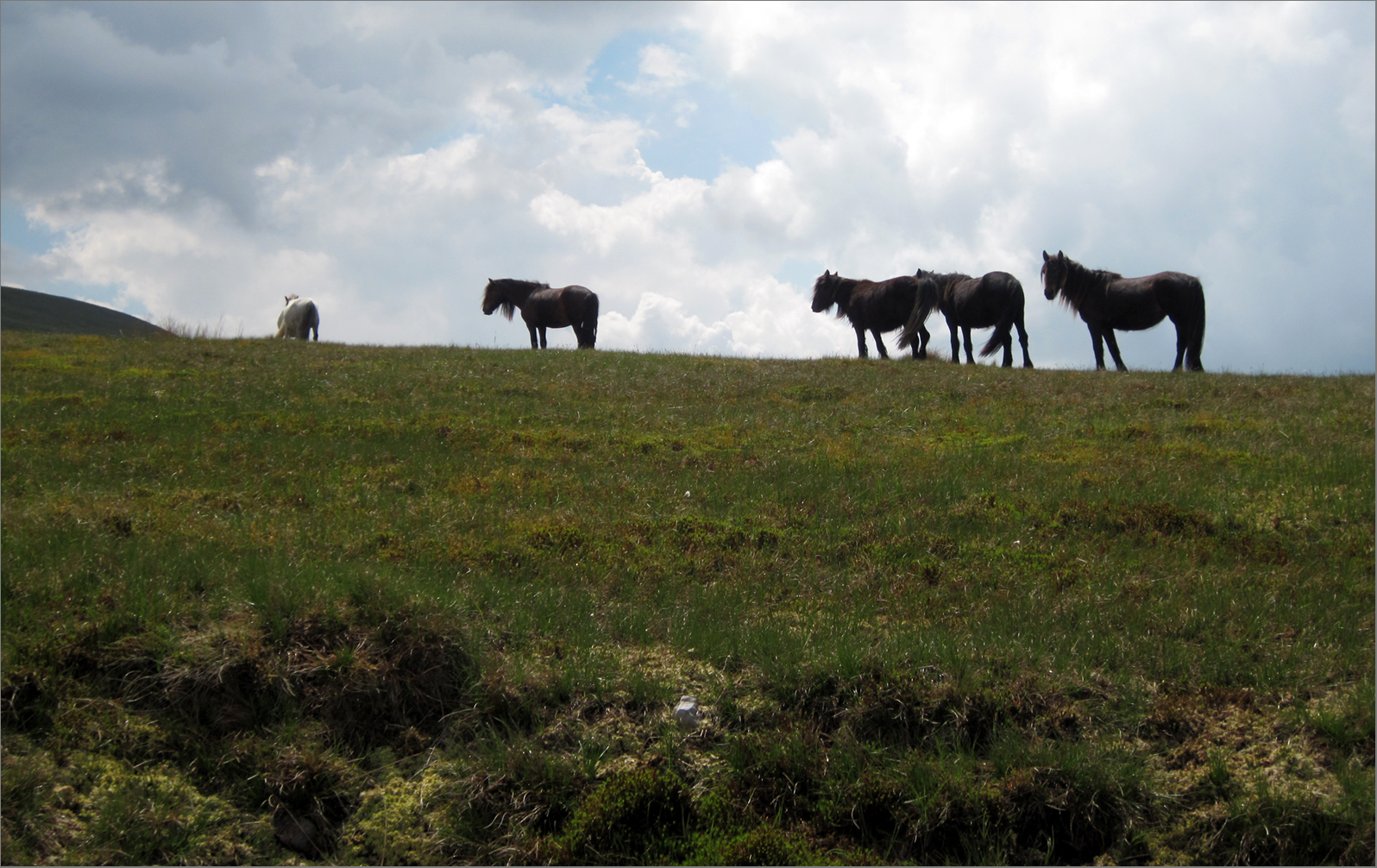
When the world opened again after lockdown, my steadfast companion was the view out my home office window of a fell in Cumbria. Fell ponies often arranged themselves along the ridge of the commons above grazing sheep, backlit by low winter sun. I would gaze at their silhouettes when I needed a break from my computer screen. Former colleagues at brick-and-mortar universities in the US and UK began heading back to campus as COVID restrictions were lifted. I’d taken a job at the OU working from home during the pandemic, and I’d moved five hours north in search of an affordable house with a garden. My ‘new’ office was in a converted bedroom. I couldn’t go to campus or meet colleagues face-to-face for several months after lockdown eased, so I dug in and reconciled myself to living and working in what I came to think of as my ‘fast-moving cloud,’ the western slope of the Howgills.
Fell ponies
Working at the OU has transformed my life as an academic. Moving into a home-based role that is part operational, part distance learning, and part research has provided time for reflection. Most days after lunch, I walk a different lane or track or public footpath in my tiny village where sheep outnumber humans, and I think about things. I live on the edge of the Lake District, countryside that writers Dorothy and William Wordsworth and their friend Samuel Taylor Coleridge would have found familiar. At first, the reality of experiencing the romantic notion of the ‘sublime’ was quite a shock, and it took months to connect with the land in a way other than fear (of high winds, low clouds, and gusting rain) or dread (of same). With time, though, I settled in and got on with work and with writing and connecting with local writers and artists, which has made everything better, especially the low-lying clouds.
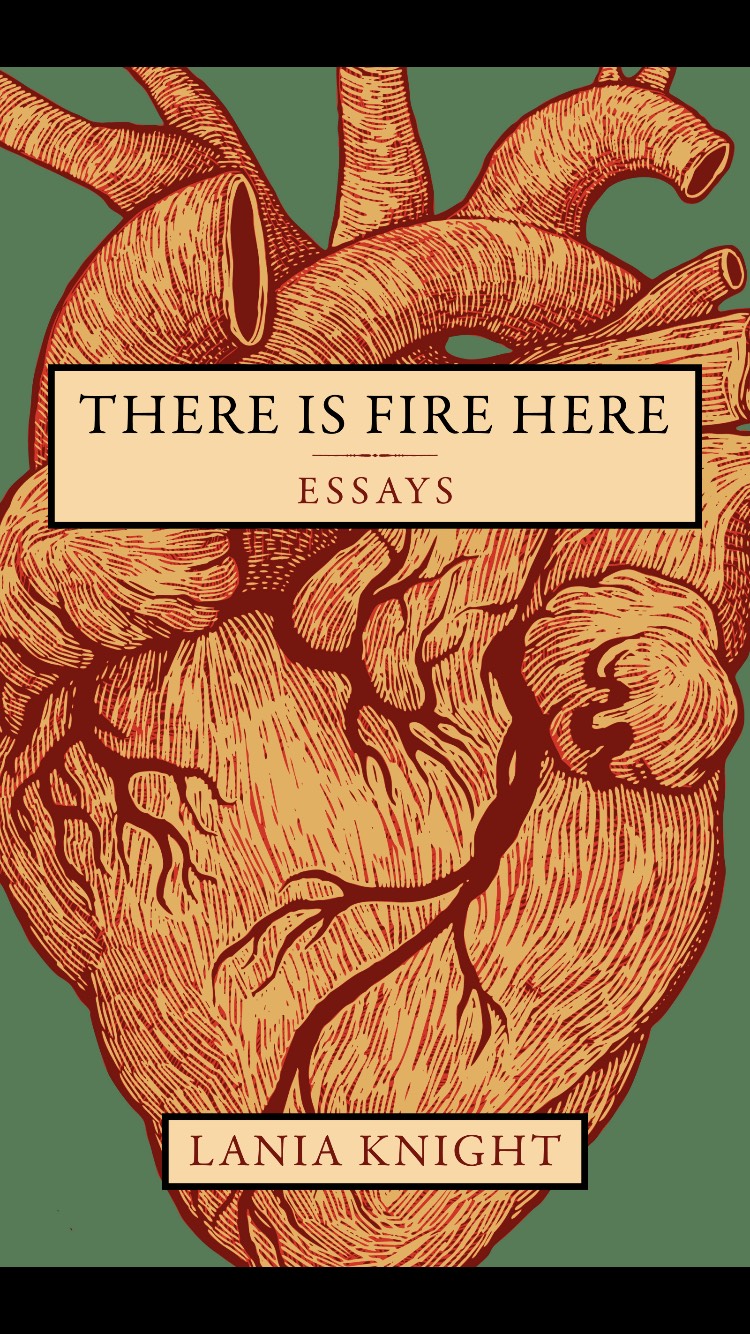
Like other writers who have lived in isolated landscapes, I’ve found this time fruitful. A collection of personal essays There is Fire Here was published in September by a small UK publisher, Signal 8 Press. I have long been a fan of the ‘fourth genre,’ and There Is Fire Here has been a satisfying opportunity to bring together fifteen essays spanning the day I dropped out of high school in Texas and left home on the back of a motorbike at sixteen, to my move across the Atlantic to the UK, where I learned how to write poetry.
Some of the joys of being a writer and an academic are the connections between your research, your teaching, your colleagues, and public outreach. My work in creative nonfiction includes my own writing, my teaching, and public engagement—a circle which is finely balanced within my role at the OU.
While I was working on finalising the manuscript for There Is Fire Here, I was asked to serve on the panel that would be revising the third-year Arts & Humanities module, A363 Advanced Creative Writing. I proposed that we expand the teaching on life writing.
Emma Claire Sweeney, the discipline’s Media Lead and a fellow course author, asked if I might like to interview Kit de Waal for the Milton Keynes Literary Festival. De Waal’s debut memoir Without Warning and Only Sometimes had recently been released and the festival needed someone to interview her. It was a dream role. I was sent all her previous books to read, which included several novels and an anthology she edited, Common People. I set those on my bedside table and devoured them.
Kit de Waal
During my conversation with de Waal at Milton Keynes Lit Fest, I confessed in front of the festival audience that I had cried on the train finishing one of de Waal’s novels,My Name Is Leon. In the same way that she had wowed me with her stories, Kit wowed the crowd, made them laugh and cry, held them enthralled for the entire hour. An OU camera team were there to record it all.
Soon, clips from that conversation with Kit de Waal will be part of the next iteration of A363 Advanced Creative Writing, a culmination of research, teaching and public engagement woven through bespoke teaching materials for the OU. I’ve sent Kit a copy of my book, and fingers crossed, she’ll be attending my online book launch on Wednesday 8th November, when I’ll be in conversation with brilliant UK writer, Zoe Lambert.
Tickets are free and it will be a relaxed evening. I’ll be joining from Cumbria, in a comfy spot by the woodstove. Grab your favourite drink, settle in somewhere cozy and join us.
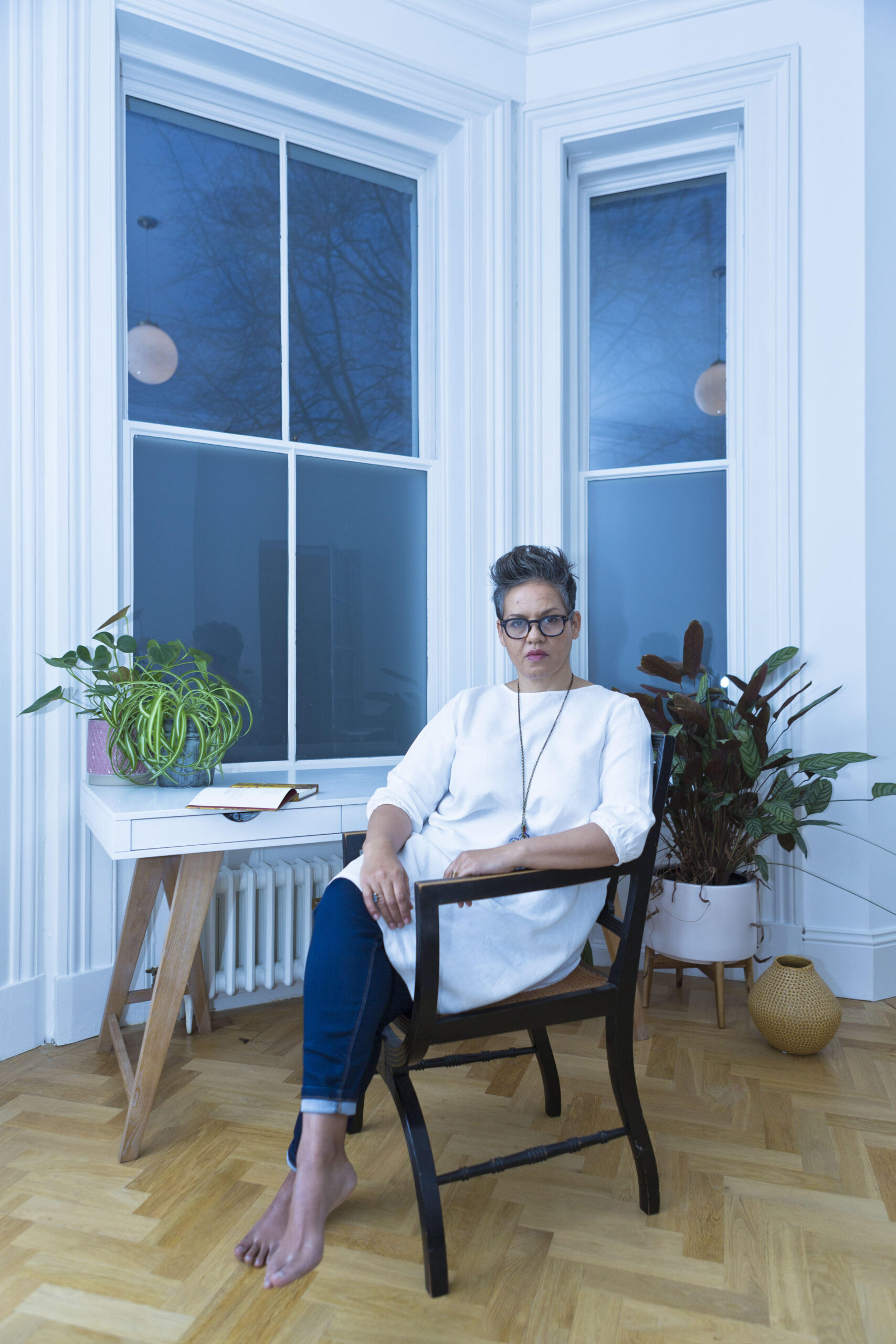
Lania Knight
Lania Knight holds a BSc in Plant Science and Environmental Conservation from the University of New Hampshire, and an MA and PhD in English Literature and Creative Writing from the University of Missouri. She is the author of four books, including two novels, Three Cubic Feet, shortlisted for the Lambda Literary Award in Debut Fiction, and Remnant, a dystopian novel set in the American Midwest, as well as a poetry pamphlet Single-Track B-Road, and a collection of personal essays There Is Fire Here.
Insurgent Press’s recent take over of the Barbican Library featured readings from Brian Kelly’s debut Murph – a novel about a virus that reveals everyone’s internet search histories, and a joke shop owner who finds himself swarmed with customers seeking disguises.
Here, Brian lets us into his own journey from dissatisfied company employee to founder of his own press, host of longstanding literary night, novelist and PhD student. And he tells us about the crucial role played by the OU along the way.
At twenty-three I left Dublin to become a rock star in London. The big smoke kicked my ass for a couple of years and when the band eventually broke up on a rainy night in Liverpool (pathetic fallacy right on cue), I was left working as a software tester with no real creative output. It was around the time of the financial crisis, and I remember the CFO calling us in for our quarterly report. He advised us that money rarely disappears from the market but rather changes hands. As people in the know, he claimed, we stand to make large gains. At home, Ireland was going through a terrible time, unemployment and immigration back with a vengeance. I left the office and walked along the Thames to Vauxhall where I was renting a room over a pub. I sat down on my sofa-bed and decided I needed to do something else with my life.
My girlfriend at the time (now my partner of sixteen years) had given me a wrecked old computer from her parents’ attic and I had a vague impulse to write. Maybe it was the position above the pub, listening to voices below in the beer garden, the weird atmosphere of that bit of Vauxhall where gas towers stand cheek-by-jowl with cricket grounds and twenty-four hour gay clubs. I wanted to put down some words and make sense of it all, but I had no idea how to go about it.
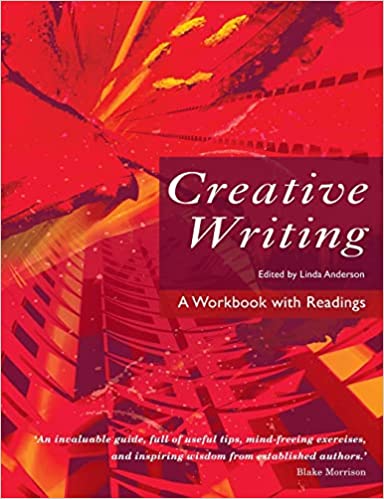
Creative Writing: A Workbook with Readings, Ed. Linda Anderson
I remember the day I finally signed up for A215: Creative Writing and the little shot of adrenaline I felt. Would I have the discipline required to finish the course? How would it feel to have a proper writer reading my work?
Doing the daily writing exercises in my room every night, I came to a Colin Powell-esque realisation about all the things I didn’t even know I didn’t know. Step by step, the material demystified the various elements of the writer’s craft, and I was writing in unexpected and exciting ways. About halfway through the course, there was an exercise about eavesdropping on people’s discussions and using that to create characters. I was on a plane back to Dublin and a few rows ahead of me was a man from Roscommon giving out yards about something or other. The best material went in my notebook.
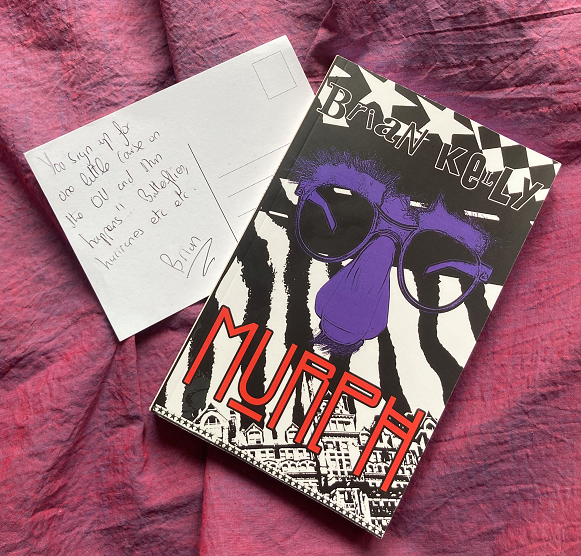
Murph by Brian Kelly
Back in London, I quit my job and was plotting a move to Korea to do a stint as an EFL teacher. While waiting for my visa to come through, I was spending my days in Stoke Newington Library reading and writing. My next OU assignment came up and the decrepit atmosphere of Stokey’s library merged with our man from Roscommon to create a short story about a psychedelic steam-of-consciousness librarian on the West Coast of Ireland. I remember feeling like I’d opened a door to a room I didn’t know existed. Could writing really be like this?
The guidance and encouragement from my tutor Emma Claire Sweeney egged me on. Moving to Seoul, I continued my writing and Emma started receiving pieces of work all the way from the Korean peninsula. I finished that first module and instantly signed up for the next, A363: Advanced Creative Writing. Life in Asia was fun, and I enjoyed teaching. The kids, the colleagues, the sense of purpose. I decided to pursue a BA in English at the OU.
I changed Seoul for Beijing but kept studying. Six years after starting my odyssey, I remember sitting my final exams in the British Embassy. The plan was to return to the UK to do a PGCE and start teaching in London, but the funding for third level had changed and unless I got a good degree from the OU my bursary was not going to cover my living costs. I studied like my life depended on it. In the end I got the grades and returned to London where I started my career as an inner-city teacher in Camden Town.
But the OU was not done with me yet. I had stayed in touch with my first tutor and when I mentioned being back in London, she encouraged me to apply for a novel writing course at City University. The people I met on that course were some of the most talented people I had ever met and became lifelong friends. The novel I wrote was a finalist in Penguin’s WriteNow competition and I continued on to do a Masters in Creative Writing, with the novel I finished winning an Irish Writers Centre award in 2022.
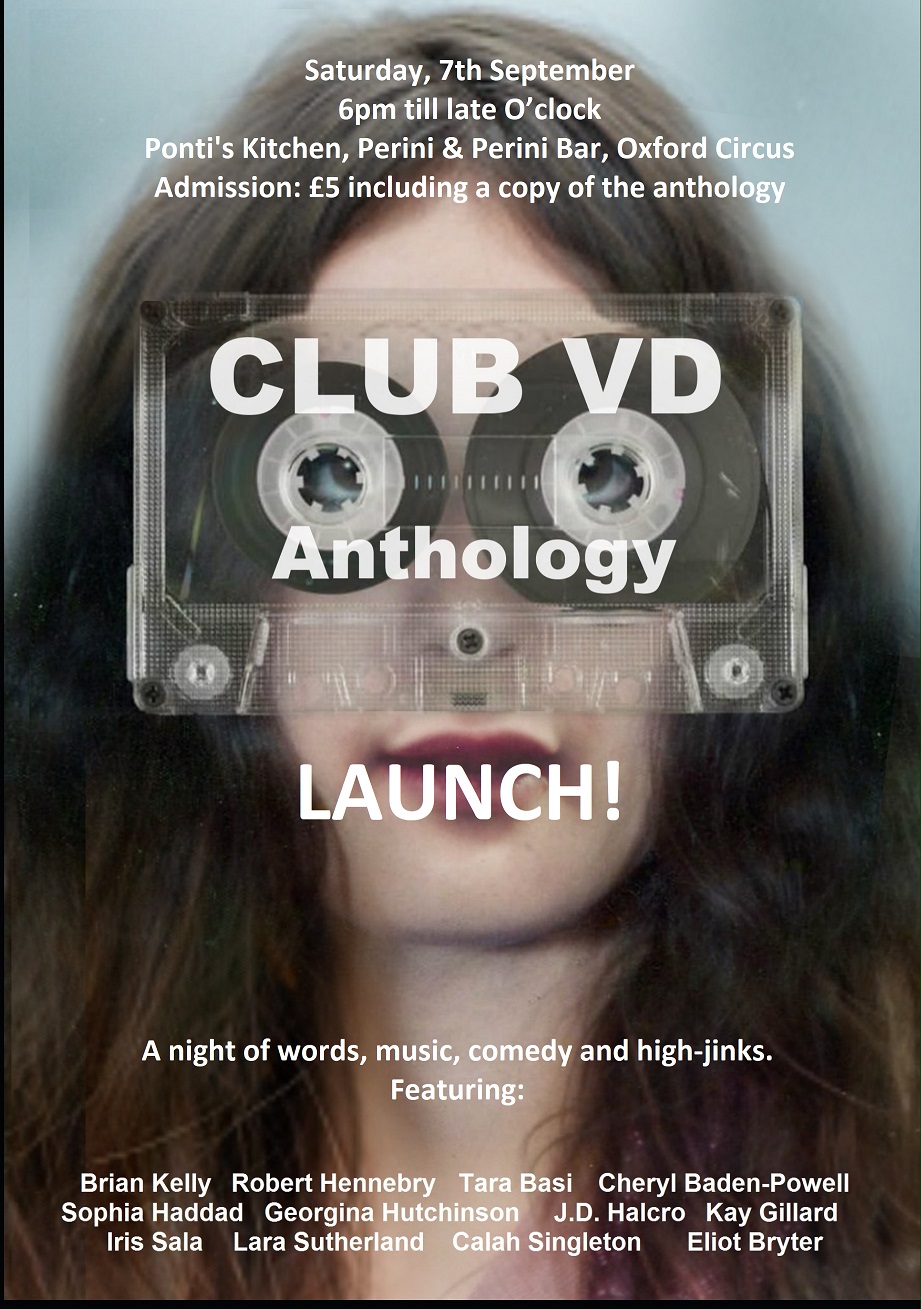
Verbal Discharge anthology launch
Along the way, I had met so many brilliant writers and wanted to create a space where we could all share work in progress and chew the cud. Club Verbal Discharge was born and has been running in the Perini & Perini bar, Oxford Circus on the first Friday every month for four years in a row. We publish an anthology each year and this in course led to the creation of The Insurgent Press. Our mighty little press has now published three anthologies, one collection of short stories by Tara Basi and my novel Murph. I sent a copy to my first OU mentor to say thanks, and on the card I wrote:
You sign up for one little OU course and looks what happens!! Butterflies, hurricanes etc. etc.
Next month I start a PhD in English Literature at Kings and so the wheel continues to turn…
Brian Kelly
Born in Dublin, Brian Kelly now lives in London with his partner and daughter where he works as an English teacher. After graduating from the OU with a BA in English, Brian continued to write fiction. In 2019, he was a finalist in Penguin’s WriteNow competition. In 2021, he received a Masters in Creative Writing from City University. In 2022, he won the Irish Writer’s Centre Novel Fair prize. He runs the monthly spoken word night Verbal Discharge, which publishes its third anthology this spring. He also runs the Insurgent Press, which does tiny runs of strange books and generally tries to cause trouble.
Co-directors Professor David Johnson and Dr Philip Seargeant founded the new research group to give oxygen to interdisciplinary research conversations and initiatives, and they see it as an exciting opportunity for new and interesting synergies to emerge.
The group launched with an online literary event featuring author Jim Crace, who read from his Booker-shortlisted novel, Harvest, and spoke to OU Lecturer in Creative Writing and fellow novelist, Dr Emma Claire Sweeney, about the interrelationship between politics and language in his own work.
A conversation between Jim Crace and Emma Claire Sweeney
This year, LLP will kick off with a series of public talks that take inspiration from Raymond Williams’s hugely influential ‘Keywords’ book to examine the terms and concepts that act as touchstones for today’s society.
Williams describes a keyword as one for which ‘the problems of its meanings seem inextricably bound up with the problems it’s being used to discuss.’ So the act of defining the word is part of the process of exploring and arguing for the values that the concept represents.
An animated video essay about Raymond Williams’s ‘Keywords’, and the relevance of the idea for today’s society.
With speakers spanning disciplines from philosophy to political science and lexicography to literature, the series will look at how Williams’s project is still highly valid today, and at what words – and the arguments around them – define society and culture in 2022.