Category Archives: Uncategorised

New short CPD courses launching soon!

The Open University’s Institute of Educational Technology (IET) is launching a new suite of short CPD courses, covering skills essential to designing and delivering equitable and innovative digital teaching:

  • Generative AI in Education.
  • Teaching with eXtended Reality.
  • Teaching climate action: empower students to tackle the climate crisis.
  • Blended learning innovations for teachers and trainers.

The courses go live for registration on 7 January 2026. They’re 20 study hours long, entirely online and you can start at any time. A digital badge is awarded for successful study of each course. The courses are designed to develop knowledge and skills that you can immediately apply to your practice and draw on the pioneering research of IET’s ed-tech experts. They cover all education sectors and subject areas, and cost £150 each.

The courses are now LIVE!

Teaching with eXtended reality (XR) | Open University | HG087

Teaching for climate action | Open University | HG089

Blended learning innovations for teachers and trainers | Open University | HG090

Generative AI in education | Open University | HG091
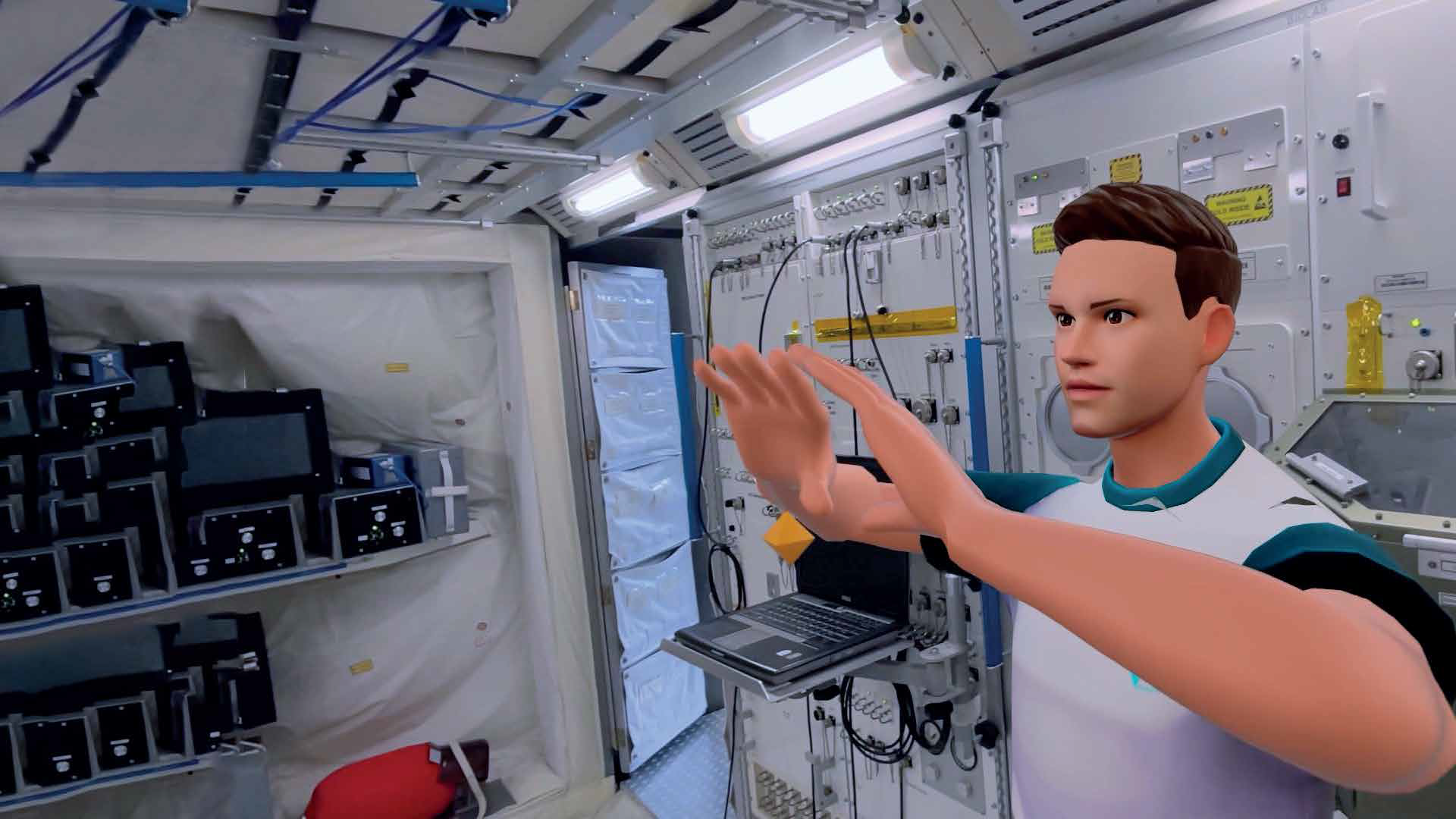
A screenshot from an Extended Reality feature, showing an animated character (controlled by a real life user) in a laboratory of some kind, with cabling, switches and electronic equipment in the background.

An eXtended Reality experience for astronaut training, demonstrated in HG087.

HG087: Teaching with eXtended Reality

Enhance your teaching with XR (eXtended Reality) by creating immersive, interactive learning that increases engagement, improves study outcomes, and prepares students for the future. Learn about Extended Reality tools, Virtual Reality and Augmented Reality methods, 3D modelling, Artificial Intelligence, and inclusive teaching strategies. Teaching with eXtended reality (XR) | Open University | HG087

Hundreds of canoes and kayaks surrounded a small inflatable dingy on greenish water.

A climate-related protest featuring hundreds of canoes gathered on a green water body.

HG089: Teaching climate action: empower students to tackle the climate crisis

Gain skills to integrate climate crisis-related teaching in your practice and empower students for action. Learn cross-disciplinary strategies for addressing climate change in your teaching and develop an action plan for your practice. Teaching for climate action | Open University | HG089

Two contrasting buildings side by side, one built in yellow stone and the other covered entirely in glass.

An image from course HG090 showing two contrasting buildings side by side, one built in yellow stone and the other covered entirely in glass. The HG090 ‘Blended Learning innovations for teachers and trainers’ course will show you ways of blending your existing teaching practice with innovative distance learning approaches to provide effective methods of educational delivery for the future.

HG090: Blended learning innovations for teachers and trainers

Build confidence to plan, deliver, and evaluate blended learning, using innovative tools and techniques and step-by-step strategies to enhance your teaching or training practice. Blended learning innovations for teachers and trainers | Open University | HG090

A view looking down inside a 'well' created from layering books and other paper documents round and round in a circle leaving a space in the middle.

An image from course HG091 showing a ‘well’ created by paper documents and books.

HG091: Generative AI in Education

Learn how to use Generative Al to enhance teaching, support learners, and make informed decisions while avoiding common pitfalls. Learn Generative AI basics, explore key themes, and discover practical ways to apply Generative AI ethically and equitably in all education sectors. Generative AI in education | Open University | HG091



Responsible use of GenAI in Education – webinar report

On Wednesday (29th October 2025) members of our Masters in Online Teaching Community of Practice were invited by our colleagues at the Open University of Sri Lanka to join them for the final event in their ten-webinar series on the use of GenAI in education.

The speaker was Professor Helen Crompton, Executive Director of the Research Institute for Digital Innovation in Learning at ODUGlobal, Professor of Instructional Technology, and Director of the Virtual Reality Lab at Old Dominion University, Norfolk, Virginia, USA.

Photo of Professor Helen Crompton

Professor Helen Crompton, Old Dominion University, USA

Professor Crompton gave a fascinating insight into the pace of development of GenAI, and compared its significance in causing a complete shift in educational practices commensurate with the development of the printing press, and the world wide web. She spoke about the various major players at the current moment – ChatGPT, Claude, Gemini and DeepSeek, for example, with more appearing all the time – and how their availability needs to revolutionise how we approach education, and in particular assessment within education. The notion of rote learning and assessing by memory is becoming a thing of the past (‘Hurrah’ some might say!). We need to think about how assessment can work with these tools, rather than trying to ban or avoid them. We can ask students to critique the outputs of GenAI in response to particular prompts, demonstrating their understanding of the topic, or to write a piece in parallel to GenAI and comparing the two responses. We need our learners to understand how to use GenAI, and to be conversant with the fallibility of these tools. Rather than copying and pasting the AI output and submitting it, we need learners to engage with the output, critique it, find the flaws, and in the process realise that these tools are not perfect and cannot be relied upon without checks.

A recording of the webinar will soon appear on the YouTube channel for the GenAI webinar series run by the Open University of Sri Lanka’s Open Education unit. All ten of the webinars have a home here: https://www.youtube.com/playlist?list=PLd4ezLHf_qqcK-c-SfOuzlO_6M_AePgRG 


Commonwealth Scholar & MAODE alumnus gains prestigious fellowship

Congratulations to Stephanie Akinwoya, graduate of IET’s Masters in Online and Distance Education (MAODE), who has been successful in gaining a prestigious Atlantic Fellowship for Social and Economic Equity.

Stephanie, based in Nigeria, studied for the postgraduate qualification at the OU’s Institute of Educational Technology between 2019-2021, funded by a Commonwealth Distance Learning Scholarship, and has since taken significant strides forward by gaining a respected Atlantic Fellowship, contributing to a community of Fellows focused on tackling persistent global inequities.

Commenting on being awarded the Fellowship for Social and Economic Equity, Stephanie shared:

“It feels amazing to be selected for this prestigious fellowship. I am deeply grateful for this opportunity as it will give me the necessary leverage that I need to address the challenge of inequity in the education space in my country in terms of providing the resources, expertise and network I need to further pursue my research in mobile learning as a means of providing access to education for students in IDP [Internally displaced person] camps.”

The appointment comes after Stephanie graduated with the OU’s Masters in Online and Distance Education and joined a global network of alumni who share a responsibility for implementing online and distance learning across sectors, contexts, and nations. The Masters in Online and Distance Education programme is soon to be replaced by a new Masters in Online Teaching which, together with IET’s suite of credit-bearing postgraduate microcredentials, offers students a unique opportunity to study leading contemporary theory and practice across the field of online and distance education, and technology-enhanced learning.

IET has long led pedagogical development in digital learning and teaching, building a history of exploring innovative ways to drive developments in education and educational technologies. These developments feed into university practice at the OU and showcase our expertise to educational institutions globally, informing innovation worldwide.

Dr Leigh-Anne Perryman, IET’s Associate Director for Curriculum, commented on Stephanie’s achievement in gaining the fellowship: We are very proud of her and are humbled by her achievements. Stephanie has taken the skills she has gained from the MAODE and has applied them in Nigeria to increase educational equity for people typically excluded from education”.

Reflecting on how studying online and distance educational practice at the OU has supported her journey, Stephanie shared:

“As I look back I can confidently say that my studies for IET’s Masters in Online and Distance Education have shaped me into the educator that I am today, every milestone, every achievement so far is tied to the knowledge acquired in one of my offered courses, most especially from my TMA [tutor-marked assignment] and EMA [end-of-module assessment], even my teaching methodology changed as a result of learning acquired in my Master’s course.”

While studying with the OU, Stephanie’s research explored the displacement of people and challenges to educational access in Africa. Building on her experiences and prior research, Stephanie investigated how displacement can challenge access to education. Speaking about these challenges in the context of Africa, Stephanie commented:

“Insurgency, terrorism, religious conflict, as well as natural disasters brought about by climatic change, are some of the causes of displacement.”

Adding further, commenting on how mobile technology can address access-related barriers to learning, Stephanie explained:

“With the mobile evolution in Africa, mobile technology can be used for instruction and learning to provide access to education for students in IDP [Internally displaced people] camps as it enables the delivery of knowledge anytime and anywhere.”

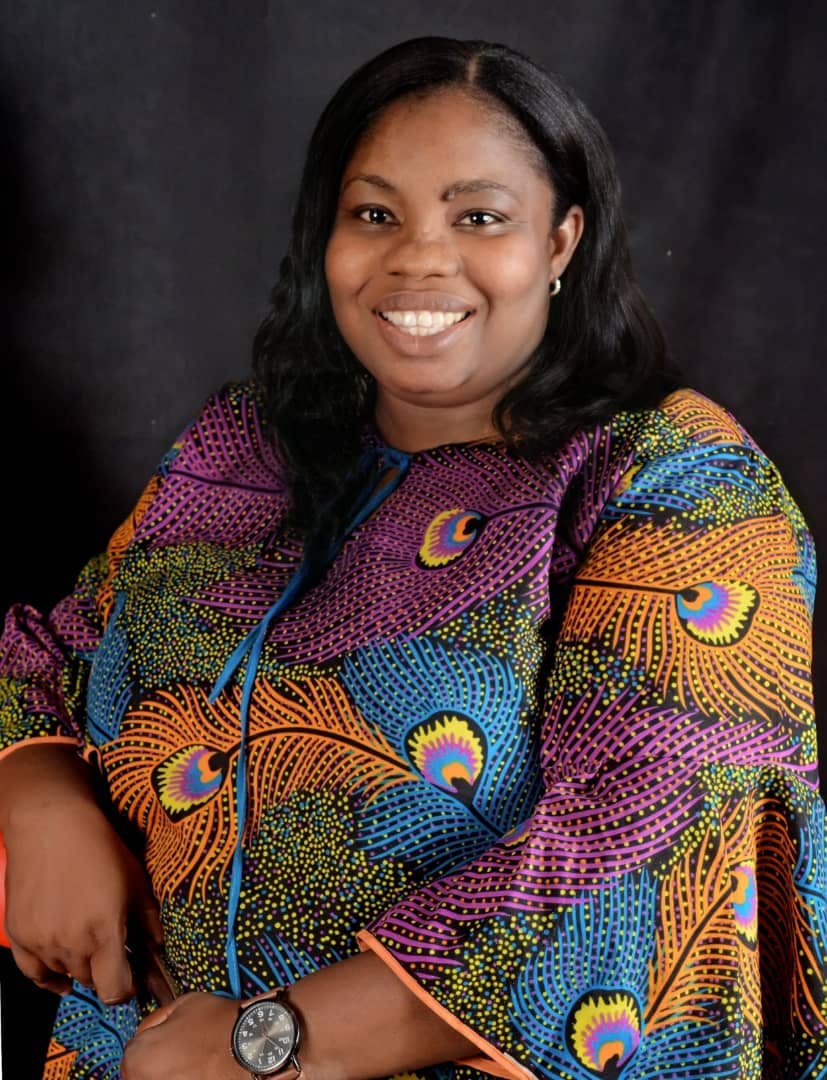
Image of Stephanie Akinwoya
Stephanie, pictured above, completed her Master’s in Online and Distance Education from The Open University in 2021, while developing a passion for education, gender, migration and refugee rights.

Further steps towards improving educational outcomes

Stephanie’s commitment to research and scholarship in learning and teaching extends to her support of fellow OU students, and she features in video and case study content within IET’s suite of innovative microcredential courses, including the IET-led microcredential, Online Teaching: Embedding Social, Race and Gender-Related Equity.

Discussing the value of her research and scholarship contributing to fellow learners’ experiences in education, Stephanie detailed:

“I feel so elated and honoured. I have read and studied other people’s work, and to know that other students will also be reading and reviewing my scholarly work is deeply humbling. I am also happy for the diversity that my work will bring to the course, as that was something I longed for during my master’s course, as most of the content was based on the global south.”

Looking towards the future, and the future impact intended for her research to bring, Stephanie closed:

“So far, I have been able to create awareness and start the creation of the learning platform to be used. I intend to partner with award-winning teachers to create culturally appropriate educational content in line with the national curriculum. and partner with international bodies to deploy mobile learning in two IDP camps in Nigeria.”