Here is the latest instalment in a series of letters from one of our Classical Studies PhD graduates, Paul Jackson, who now lives in Provence, sharing more news on his ongoing project on ‘Classical Dumas’. We love keeping in touch with our graduates, and would welcome other letters like this from our OU Classical Studies alumni. You can email us on [email protected]
It’s been little over a year since I last wrote to you all. In my last letter, I announced the publication of the first volume of the first edition of my Classical Dumas Series, Isaac Laquedem: A Tale of the Wandering Jew (Volume I: The Wandering Jew). Well, since then, the other three volumes have been published in monthly instalments: The Son of God, The Passion of the Christ, and Apollonius of Tyana, all in paperback, hardback, and eBook formats, and all with introductory material from Professor Lisa R. Lampert-Weissig (Katzin Endowed Chair of Jewish Civilisations at the University of California San Diego) and illustrations from the Le Vasseur and Vizetelly editions as well as from Pierre Dupont’s La Légende de Juif Errant. Then, swiftly following on from these, came the second edition in the series, Acte: A Tale of Greece and Rome, in all three formats as well, and with extensive notes from Edward Forman (Professor Emeritus, University of Bristol) and illustrations from the Le Vasseur, Typois Voutyra, and Michel Lévy Frères editions. And now, as of October 1, the third edition in the series is available, initially in paperback format but with hardback and eBook versions to follow, The Memoirs of Horace: A Tale of Rome, which comes with an introduction from Marco Fucecchi (Associate Professor of Latin Language and Literature at the University of Udine) and illustrations from Bartolomeo Pinelli’s Istoria Romana.
This was a work that first came out in 1860, so, towards the end of Dumas’s life, and, as so often, en feuilleton, this time in Le Siècle. Incredibly, it only made it into book format in 2006 through Les Belles Lettres, and it has never been translated into English. Until now! This despite the fact that it was very highly regarded amongst Dumas’s peers at the time, admired by the painter Delacroix, no less. In The Memoirs of Horace, Dumas makes us imagine that he has found a long-lost manuscript in the Vatican Library, the autobiography of the Roman poet, in which way he can assume the mask of the poet and bring to life the characters and events of the first century BC: Sulla, Marius, Pompey, Julius Caesar, Catiline, Cicero, Crassus, Octavian, and Agrippa; the crossing of the Rubicon, Pharsalus, Actium, and the deaths of Antony and Cleopatra. Drawing again from a wide range of source material, the great storyteller also introduces us to daily life in Rome, the food and wine, the literature and philosophy, and the games, all in vivid detail. The paperback, including all four volumes of the original, runs to almost 700 pages, so there is plenty there to keep you going, and through it, we are once again able to come to a much deeper appreciation of the great French author.
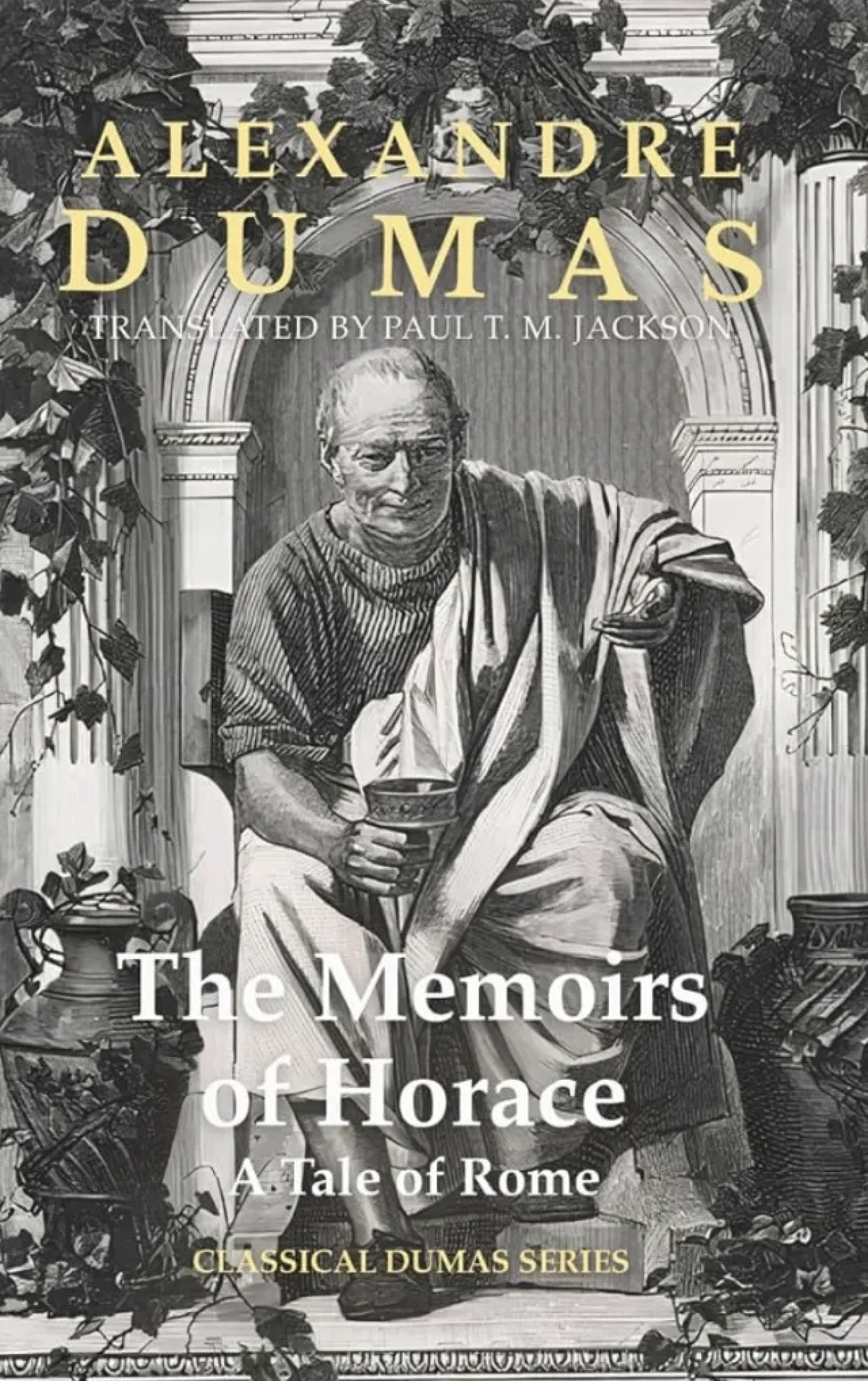
The Memoirs of Horace
In addition, over this past year, I have also been trying to promote the Classical Dumas Series as best I can, presenting a paper late last year for the Democritus University of Thrace as part of their EPEL / WoPoLiS: Classical Voices Now! Emerging International Research Voices series, From Homer to the Musketeers: The Reception of Greek Literature in the Works of Alexandre Dumas, and indeed, this was subsequently adapted into an article for the Ad Familiares journal, From Homer to the Musketeers; and I also presented a paper at this year’s Classical Association UK Conference held at Manchester Metropolitan University and Manchester University, From Virgil to the Musketeers: The Reception of Latin Literature in the Works of Alexandre Dumas.
The next edition in the Classical Dumas Series will be my translation of Dumas’s biography, Octavian Augustus: Another Tale of Rome, but before that, I am taking a little step away in order to complete a separate, collaborative project, an illustrated selection of translated poems from the young Provençal writer Marcel Pagnol. Do keep yourself updated about this and the Classical Dumas Series on my website, www.paultmjackson.com, but for now, as I hear a baby starting to cry, Valete!, and Vive Dumas!