The podcast from the English and Creative Writing department at The Open University is available to listen on Apple Podcasts, Spotify, Amazon, PocketCasts, and all major providers.
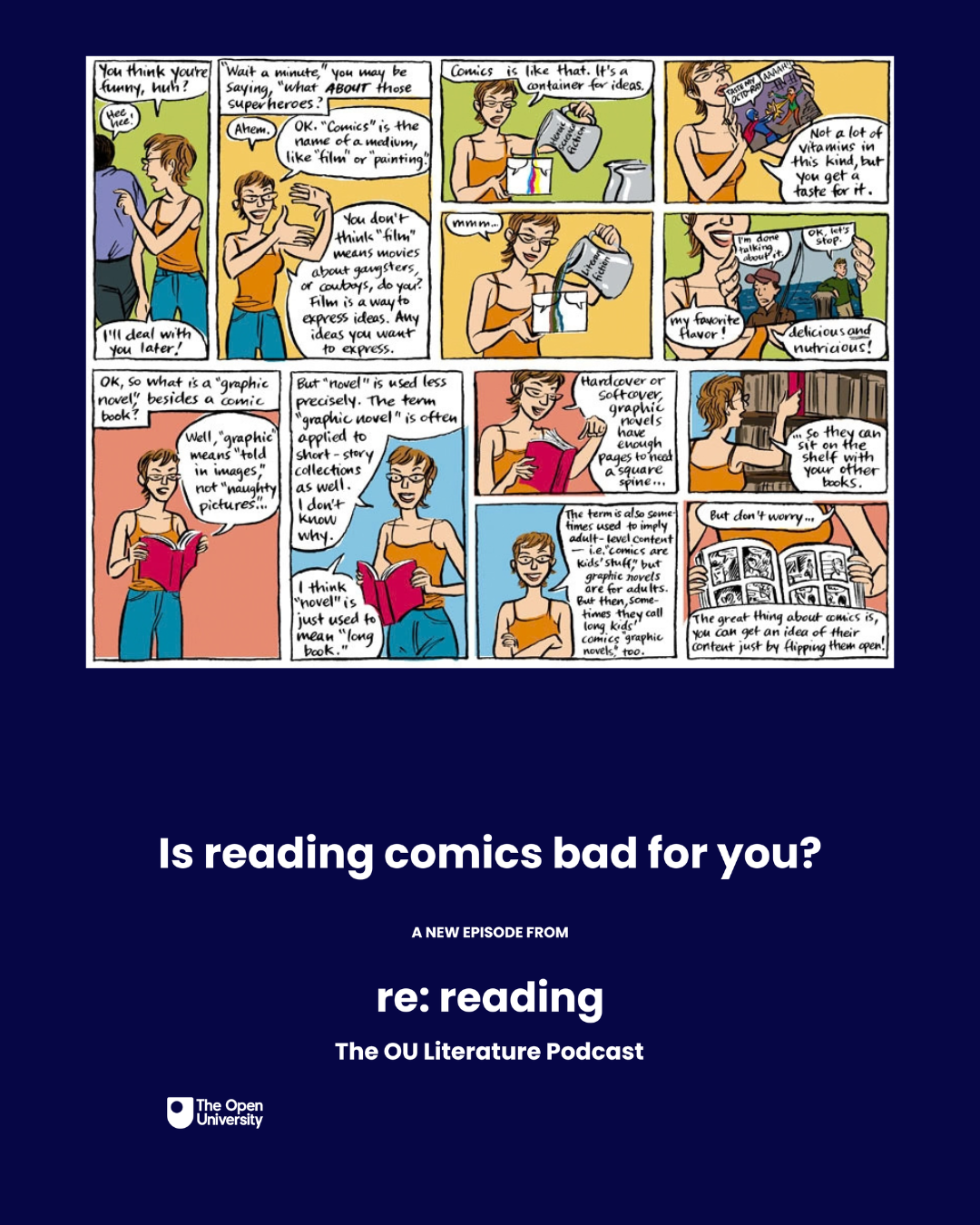
Our new episode features Dr Francesca Benatti and Dr Shafquat Towheed discussing comics.
Are they are good quality reading material?
Search ‘OU Literature Podcast’ on Apple, Spotify, Pocketcast, and all major podcast providers.
The podcast from the English and Creative Writing department at The Open University is available to listen on Apple Podcasts, Spotify, Amazon, PocketCasts, and all major providers.
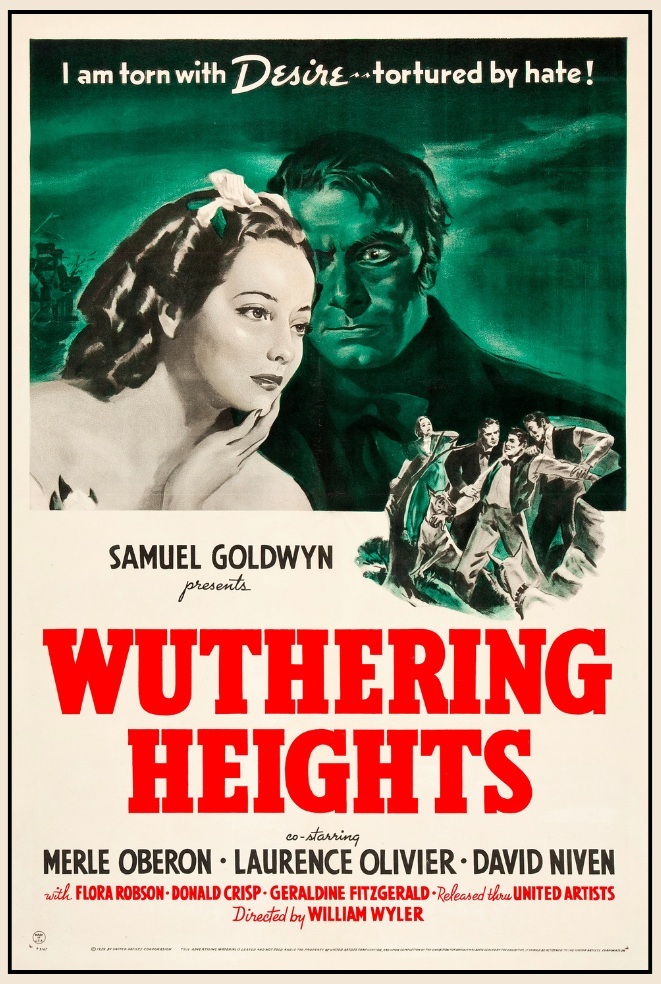
In Episode 1 Dr Jennifer Shepherd and Dr Anna Clarke discuss Emily Brontë’s novel, Wuthering Heights, and the recent film adaptation directed by Emerald Fennell. This is the transcript of Episode 1.
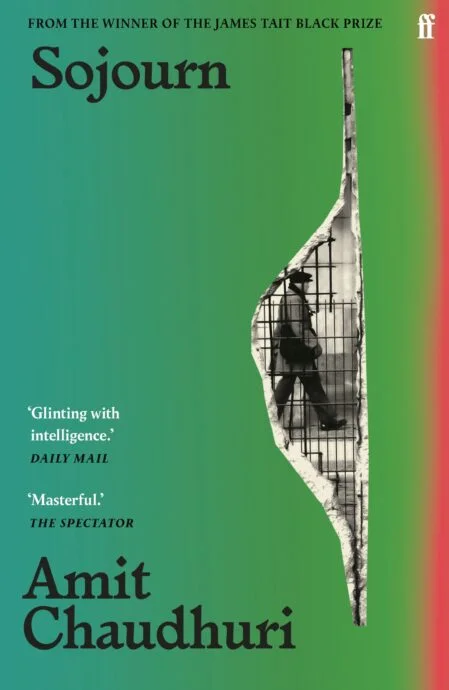
The concluding interview in the MK Lit Fest series, The Long and the Short of It, took place on Monday 25th March 2024, and focused on the novel form. Amit Chaudhuri was in conversation with OU PhD student, Rebekah Lattin-Rawstrone, in a discussion that touched on diverse topics such as the influence of Indian classical music on his writing, the (un)conventional novel, and the importance of the inconsequential. PhD student, Anita Schwartz, offers here a summary of the discussion for those of you who couldn’t make it.
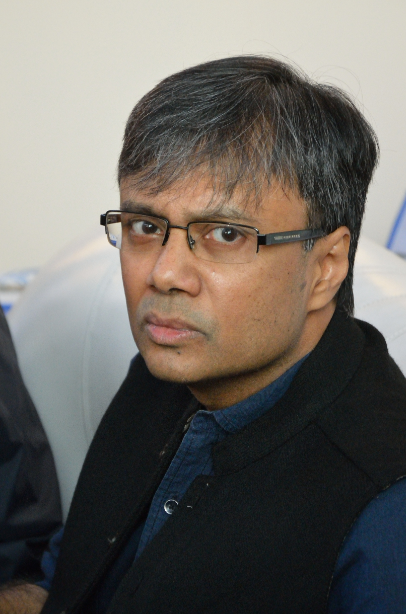
Amit Chaudhuri
Amit Chaudhuri is the author of eight novels, the latest of which, Sojourn, was published in 2022. His novels have won numerous awards, including the Commonwealth Writers’ Prize, the Los Angeles Times Book Prize, and the Sahitya Akademi Award. He is also an acclaimed musician, poet, and essayist.
Rebekah Lattin-Rawstrone opened the discussion by asking how the structure of Chaudhuri’s novels has been influenced by his musical interests? Chaudhuri revealed that he is unaware of being a singer when he writes, and equally unaware of being a writer when he sings. For him, a model of ‘multifaceted’ creativity, the suggestion of unity between co-existing creative selves, just does not work. He likened this internal detachment to life in India, which for him is always decentred. Wherever you may be, you are listening (and therefore linked) to what is happening in another flat, or on the street outside, but are not distracted by the sounds. It is a disconnection, Chaudhuri said, that he finds fascinating.
Yet, he pointed out, his novels follow a similar framework of improvisation that is present in the Indian classical musical form, the Raga. The musician moves up and down the octave, elaborating and expanding the scale, and finally arriving at the note in a ’round about way’. This, he says, is how he approaches his novel writing, the narrative trajectory is constantly deferred through an avoidance of ‘coming to the point’ that the reader may expect in a novel.
As a teenager, Chaudhuri revealed, his novel-writing began as a rebellion ‘against my own interiority’. Never comfortable with the realist novel as a form, or with the idea that you pour an ‘inner life’ into a character, he instead narrates the modes of being which could have happened. His novels, he explained, depict unimportant everyday events where nothing of consequence has occurred, exploring how the senses inhabit or partake in life, rather than presenting the ‘sensational’ itself. Even objects – or the life of objects – are of great importance in his narratives. The novel as a genre, he elaborated, accommodates the possibility of the object playing a part in the milieu of the character, as they exceed the room where they are placed.
In answer to Lattin-Rawstrone’s question about reader engagement, Chaudhuri explained that he rarely thinks of his audience, as to do so would cause him to freeze, or deliver a novel that wouldn’t please them. Every work, therefore, is based on immediate impulses and stimuli. However, Chaudhuri has a ‘vague sense’ of how the novels will unfold, a theme that is to be investigated. For example, in The Immortals (2010), Chaudhuri explores the precarious position of the artist after the onset of the free market through the relationship between the ‘puritan’, privileged and unkempt teenager, Nirmalya, and the ‘ambivalent’, unprivileged, knowledgeable teacher, Shyam Lal. The comedy and irony of that relationship, Chaudhuri says, ‘went to the heart of life as far as I was concerned’. In his latest novel, Sojourn (2022), a visitor to Berlin is absorbed in the city, feeling both a sense of recognition and a loss of himself and memory. As Chaudhuri explained, the character of the unnamed man emerges into the city as a ‘product’ of the end of the Cold War, and the novel is an exploration of the new world of market forces that energises the narrative.
I will finish with Chaudhuri’s fascinating answer to a question on the personal process of writing and revision. When composing a novel, Chaudhuri reflected, he constantly asks himself, which sentences have a ‘future’ in terms of direction, that somehow hold a promise? He works, he explained, paragraph by individual paragraph, re-reading and deciding if they are ‘dreadful’ or not, and once again questioning: What am I doing? What has future? Every sentence and paragraph, he concluded, must have a life and sense of direction outside of the story. Pluck it out of the narrative, and it should possess the potential for a myriad of directions. It was a perfect note on which to end such an engaging discussion.
Anita Schwartz
Anita Schwartz is a part-time PhD student in the Department of English. Her thesis explores little-known texts in English by Indian women between 1870 and 1947, and the complex debates taking place around reform, nationhood, and women’s position in late colonial Indian society. Her supervisors are Prof. Alex Tickell and Prof. Suman Gupta.
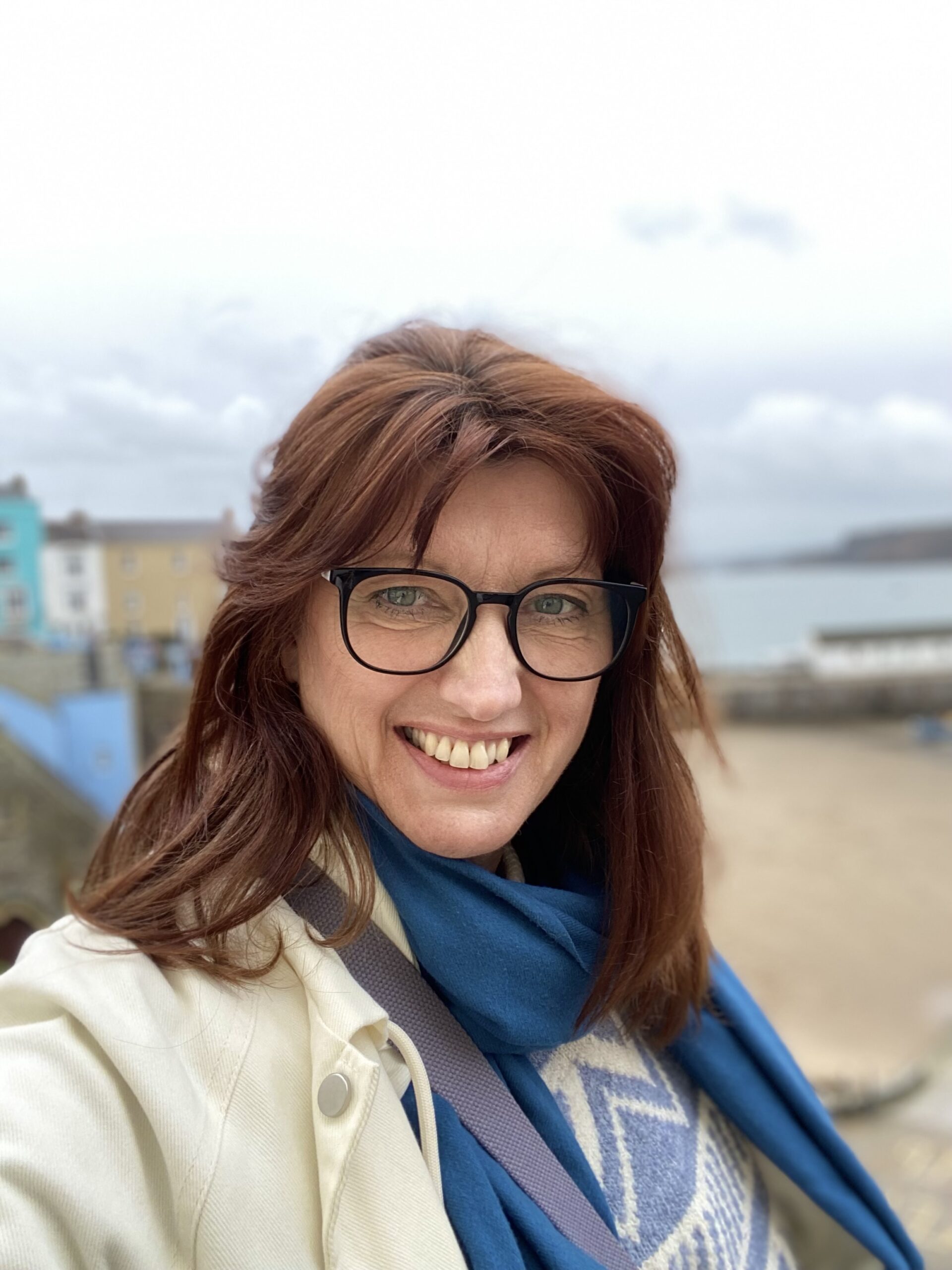
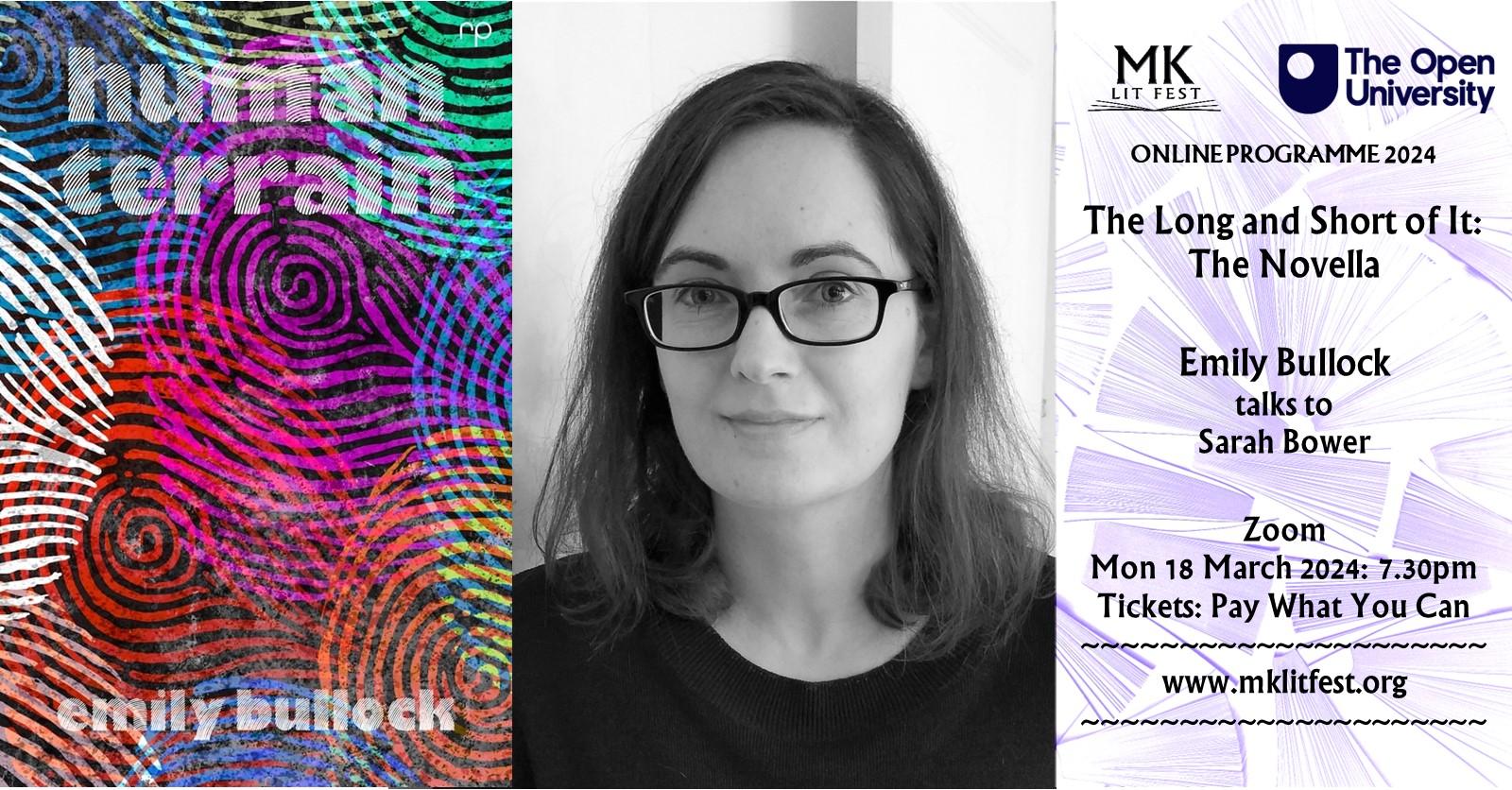
On Monday 18 March 2024, in the third instalment of the MK Lit Fest series The Long and Short of It, acclaimed writer Emily Bullock was in conversation with OU Associate Lecturer and PhD student Sarah Bower discussing the novella, sometimes dubbed literature’s ‘awkward middle child’.
Emily BullockSarah Bower
The novella is for some a bit of a puzzle; too long to be a short story and too short to be a novel. For many mainstream publishers it is a headache to be avoided. For some readers the novella represents poor value for money, for others, it is the most perfect literary form. Although shorter than novel in terms of word count, a novella is not necessarily easier to write, and to write well requires the intense control and refinement perhaps more often associated with poetry.
Interviewing Emily Bullock about her forthcoming publication For Always Only and the form of the novella, Sarah Bower (herself the author of a novella) asked questions that got right to the heart of the matter.
For Always and Only is about the process of reading James Joyce’s Finnegan’s Wake, or at least it is partly about that because a novella is no one-trick pony and is never only about just one thing. There is a degree of irony, noted Bower, in using Joyce’s sprawling and notoriously difficult work as the organising principle for a short, tightly controlled novella. To explain how this works, Bullock gave an account of her own process of reading Joyce, not entirely for meaning, but as a kind of readerly ‘beach combing’, and how she makes Finnegan’s Wake her own by frequently interrupting Joyce with her own lines of thought. Roland Barthes also remarked on this aspect of reading in The Rustle of Language:
Has it never happened, as you were reading a book, that you kept stopping as you read, not because you weren’t interested, but because you were: because of a flow of ideas, stimuli, associations? In a word, haven’t you ever happened to read while looking up from your book? (1986, p29).
In the light of these descriptive accounts of reading and reading while looking up, the connection with Joyce begins to make perfect sense as the backbone of writing that is very much ‘about’ reading.
The process of writing this novella was notable for the amount of cutting Bullock found she was willing to do, such as cutting out her character’s backstory, cutting flashbacks, stripping back description, and ending chapters abruptly. All this cutting, she explained, leaves the remaining gaps to do more work and leaves space for the reader who must invest in the reading process. The reader needs to be particularly alert to what is not on the page. Writers often talk about the balance between showing and telling, but in the case of the novella, according to Bullock, what the writer is not showing and not telling become highly significant.
Bullock’s forthcoming novella is set in a claustrophobic bedsit in Bloomsbury, a location that gives a wry nod to Virginia Woolf’s ‘A Room of One’s Own’ and which is also perfectly sized to provide a counterpoint to Joyce’s Dublin. And yet, the setting offers a similar intensity to Dublin but, of course, achieved in far fewer words. In the reading Bullock gave, her use of lists of items economically created a whole world whilst leaving scope within the tight frame of narrative to express bigger ideas.
In answer to Bower’s question about how a writer might know that the novella is the literary form that would best serve the story they want to tell, Bullock explained that whilst a short story is very often the synthesis of two ideas, and a novel gives ample room for complexities of character chronology, and worldbuilding, stories that are of an experimental nature, stories with strong ideas and those requiring considerable reader engagement might find their ideal form in the pithy perfection of the novella.
In a lively Q&A session Bullock fielded questions on For Always Only (to be published later this year by Reflex Press) and on the form of novella more generally. Enthusiastic audience involvement would suggest that despite the lacklustre support from mainstream publishers, there is an enduring appetite for the intriguing form of novella, and many of the questions and comments raised could have kept us all talking long into the night.
The series will conclude with the novel form on Monday 25 March.
Gwyneth Jones
Gwyneth Jones is a writer of short and flash fictions under the pen name Jupiter Jones, and her work has been widely anthologised. She is currently a PhD candidate at the Open University researching (dis)connectivity in the literary hybrid form of the novella-in-flash. Her supervisors are Dr Jane Yeh and Dr Emma Claire Sweeney.
The Open University’s Art’s Research Centre collaborated with Milton Keynes Literary Festival to train OU staff and MK Lit Fest volunteers to chair conversations with authors ahead of our joint events series, The Long and Short of It: From flash fiction to the doorstop novel.
Here, part-time PhD student, Antonia Saunders, who attended the training on campus, shares with us what she learnt.
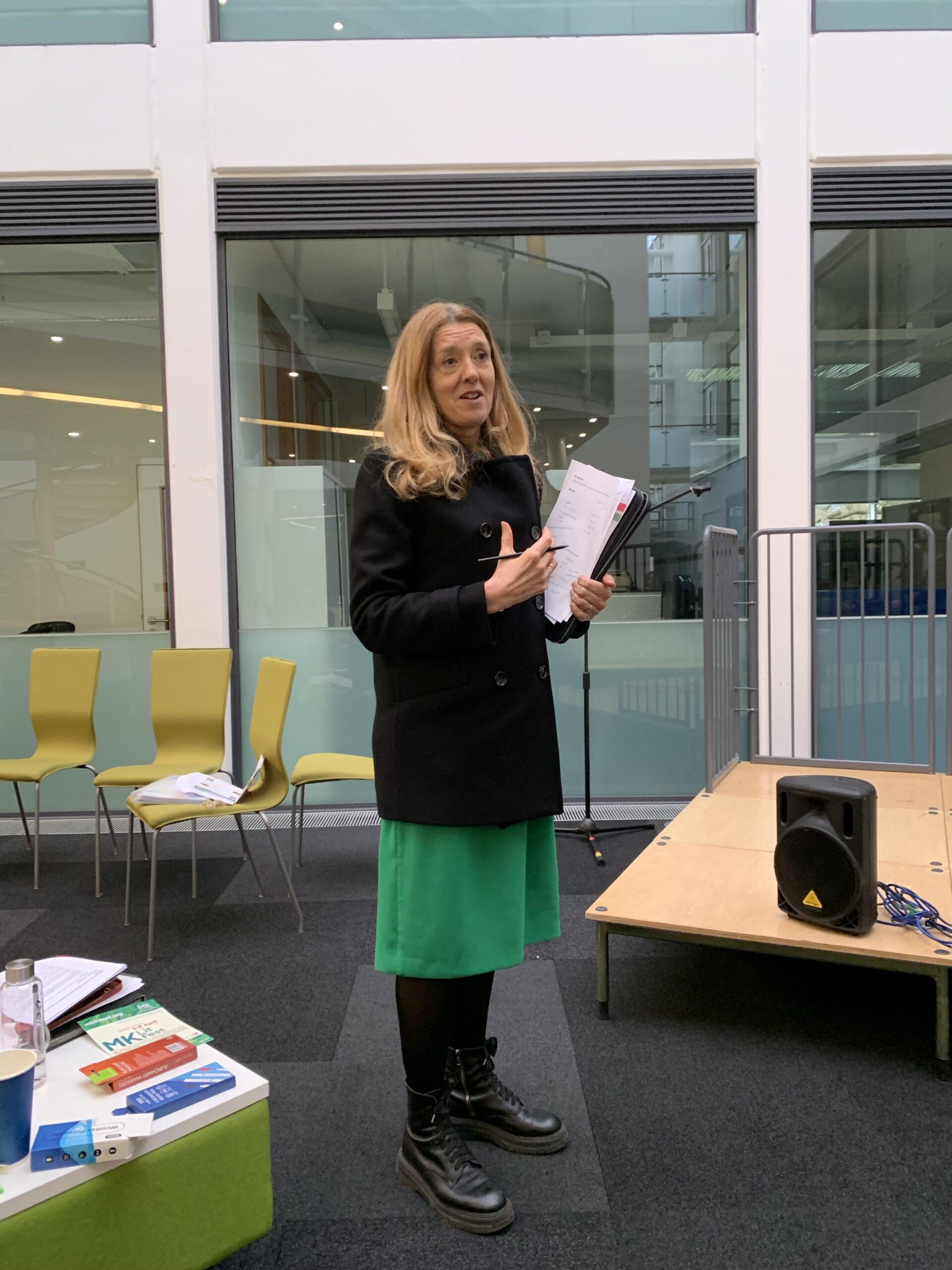
The training was led by Julia Wheeler, a writer, journalist and interviewer who worked for the BBC for more than fifteen years. Julia chairs discussions at festivals across the UK as well as in the Middle East and North America. She has moderated events at The British Library, The Royal Geographical Society and onboard Cunard’s Queen Mary 2.
What’s the role of a moderator?
A great moderator is hardly noticed. You are offering a space for the author to shine. This includes asking relevant, interesting and concise questions. It’s your job to judge and manage the energy of both the audience and the author. A good sense of timing is crucial. Give the author the chance to respond engagingly to your conversation-starters, and leave time for questions from the floor. When an event is going well, you hardly notice the moderator.
How should a moderator prepare?
The weeks before: be the class swot. Become acquainted with the author’s latest work or the book they are promoting. A close reading will help you to form relevant questions related to central themes. It’s also beneficial to have some knowledge of the author’s backlist. Reading reviews can help to open up ideas from another perspective, and previous interviews can help you to avoid well-trodden ground and come up with some fresh and insightful questions. Follow the author on social media. Have they posted something recently that you can ask them about? Tailor your questions to the audience and event. Keep your questions focused on the guest as a writer. Remember, you aren’t revising for an exam, you are preparing for a fascinating conversation. What do you hope to discover about the author and their work?
One week before:be a safe pair of hands.
Contact the author to remind them of the event blurb, time and place. Include your own short bio so that they have a sense of who you are. Tell them how much you are enjoying the book and pull out something specific to praise.
Confirm whether the author is planning to read from their work, making clear that a reading should not last for more than two minutes. With a poet, you might weave a few short readings throughout the conversation, and you might end with a reading too. With prose, one short reading is sufficient.
Be upfront about certain themes you’ll need to cover to be true to the event description. Ask if there is anything the author would especially like you to ask – that dream question, perhaps, that no one has asked about before. Don’t close the conversation down by asking if there’s anything they do not want to cover. If the author happens to raise any no-go areas, though, be sure to respect them.
The hour before: You’re in charge!
Arrange the chairs so that you are angled towards one another while facing the audience. Bring a cookbook stand to position the book the author is promoting. Engage technical staff to check the audio equipment is working. Ensure the stage is clear of any trip hazards. Pour out the water before. Brief any volunteers who might be holding the roving mics. Ask them to keep hold of the mics where possible to prevent an audience member from hogging it, and to allow the volunteer to move quickly to the next question to avoid delays. Show the space to the author and advise them that you will enter the stage first and motion them to their place. Be confident and politely assertive.
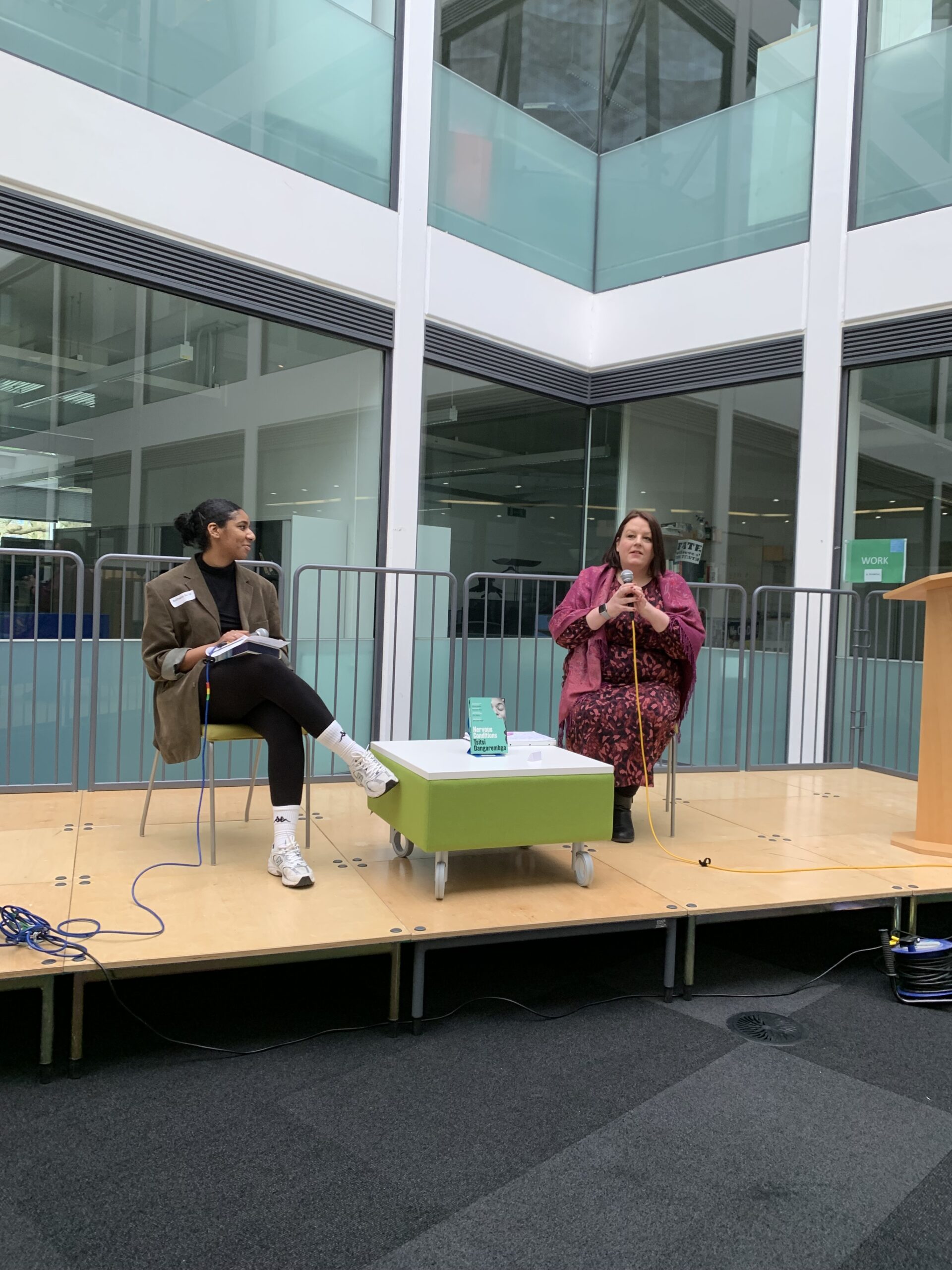
OU PhD student Antonia Saunders (right) is interviewed on stage by an MK Lit Fest volunteer.
How should a moderator handle the event itself?
Introductions: Short and punchy
Your introduction should include your name, the name of the event, and a brief description of the author and their work, ensure you mention their latest book. Three or four lines should do the trick. The audience is there to hear from the author so segue swiftly into your first question.
The conversation: Wear your research lightly
Distill your research into a one-page cheat sheet, which you can hide behind a copy of the author’s book! You should avoid referring to this too often, but it can offer a crutch to remind you of important quotations, or to jog your memory with a question to keep a conversation on track. But it’s important to listen to your guest and respond to their answers appropriately, rather than stick to a pre-formulated list of questions. It should be a conversation not an interrogation! By briefly summarising the author’s answer you can segue into a deeper exploration of that topic, or you can close it off and move onto another area of interest. Don’t necessarily ask your best question first, rather give the author the chance to warm up. Ask open questions (what, why, how, tell us about, to what extent) to encourage the author to open up. Be prepared to keep the conversation going if the author is a little timid or to anchor the conversation if the author is very talkative. Have a phrase to bring things back if things go wrong. Responses like ‘people always ask that’ or ‘That’s wrong’ can be disconcerting, so have a very open question up your sleeve. ‘What would you like readers to take from the book?’ or ‘What inspired you to write about…?’ Try to maintain eye contact and ensure your body language conveys that you are engaged by what the author has to say.
Handling a panel: Create a dinner party vibe
You’ll need knowledge of one or two texts by each author. Keep in touch with all guests on an email chain. Set up the chairs in a curve, with you at one end and the author you expect to be easiest to work with at the other end. Ensure you give each panellist equal opportunity to speak, regardless of status. A question like ‘how does that resonate with you?’ can be a good way of acknowledging one response before moving onto the next author. Allow the conversation to flow, and don’t be afraid of a little controversy. Set some hares running!
Online events: The same but different?
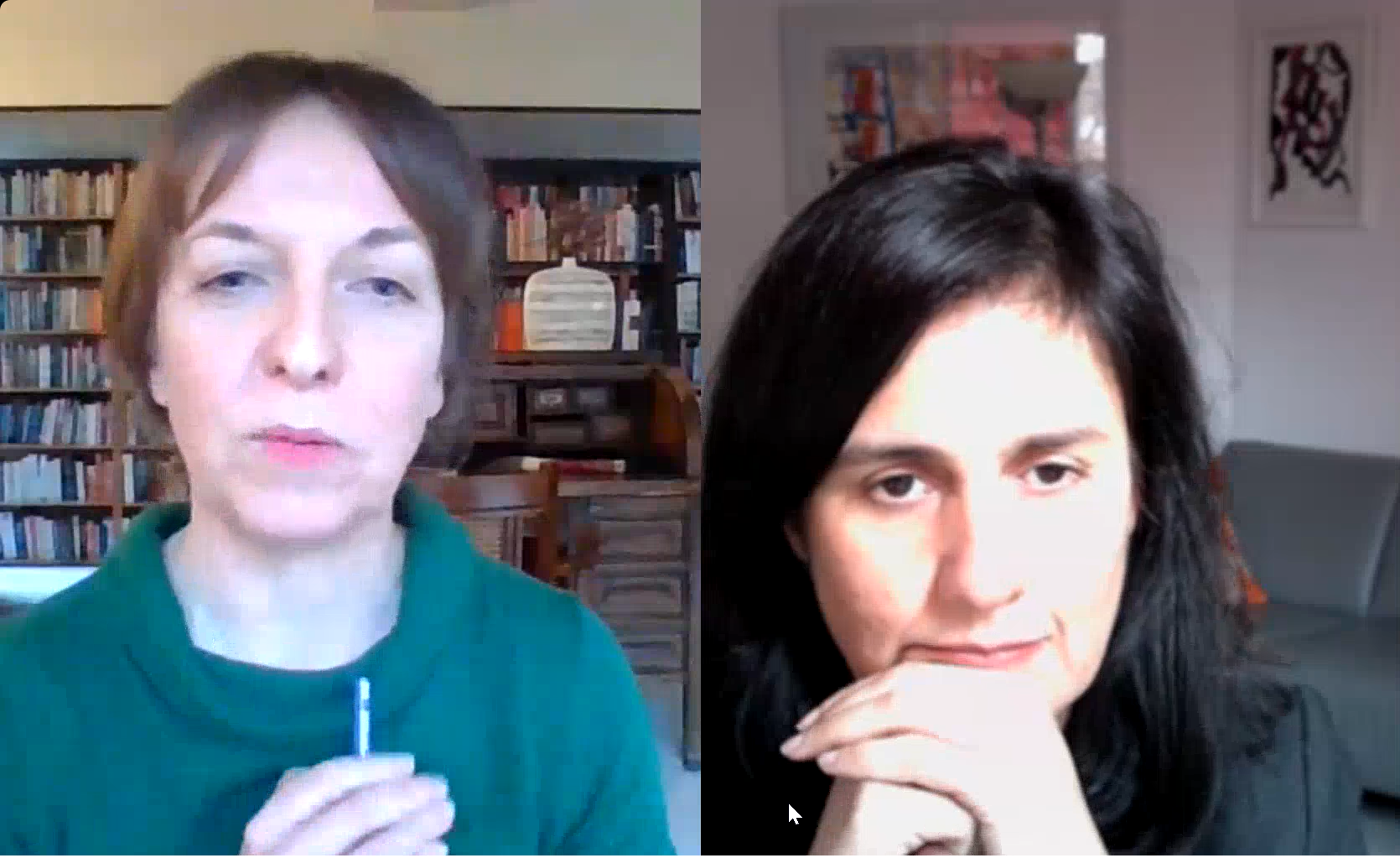
Kamila Shamsie (right) in conversation with Emma Claire Sweeney. Spot the deliberate mistake?…They are not similar distances from the screen!
Check your download speed to ensure your WiFi is working at sufficient speed, and switch off any alerts. Think about the aesthetics of the screen. Lighting should be in front of you, and the author’s book visible behind you. Log in with the author ahead of time to position yourselves a similar distance from the screen. Wear bold un-patterned clothing. Give yourself enough time right before the event to ensure everything is working. Mute and turn off audience cameras during the main discussion. If an event is hybrid, direct one of your first questions to the author dialling in to ensure their voice enters the room early on.
You will need to make extra effort to inject energy into an online conversation to keep it lively and engaging. It’s a good idea to pull questions out of the chat as you go along, rather than saving them all for the Q&A. Remember to nod and smile as the author is talking to show your engagement.
The Q&A: The question in that is…
Establish boundaries at the beginning of the session. Ask the audience, for the sake of time, to keep questions short and punchy. If the audience member gives a comment rather than a question, try to rephrase it as a question. If a question is particularly long, then announce your intention by saying ‘I’m just going to interrupt you there’. This takes the heat out of the interaction. Avoid saying that you have time for one more question in case that question is a dud! And have a supplementary question ready in case the discussion dries up.
Closing: End on a high
Keep to time. Audience members might have other places to be, and event organisers often have a swift turnaround between events. Put as much thought into your closing word as your opening ones. Thank the audience for coming. Give clear directions about where the book is on sale. Thank the author too, of course.
Afterwards: Be kind to yourself
There are almost always things you might have done differently in hindsight. But if you’ve kept your own ego in check, and helped the author take centre stage, then it will have been a job well done.
Antonia Saunders
Antonia Saunders studied for both her BA and MA at The Open University. Her part-time PhD looks at the construction of a Jewish Identity in histories and novels of the nineteenth century, and considers the literary and historiographical contexts of representations of Jewish people and Jewish Identity. She is co-convenor of the GOTH (Gender and Otherness in the Humanities) Postgraduate Forum, and she’s chaired discussions on the trope of the ‘Madwoman in the Attic’, gender fluidity in the arts and humanities, the non-human as other, and most recently, feminist readings of fairytales. Her supervisors are Prof. Delia Da Sousa Correa and Prof. Suman Gupta.
What initially motivated you to reconsider notions of realism, reality and the novel?
I was interested in exploring a number of potentially inter-related phenomena: the rise of auto/biography and memoir; the seeming rejection, on the part of some writers, of the novel – or at least current novelistic forms and expectations; and a sense on the part of some critics and writers that post-modernism had run its course, and that it was necessary to turn elsewhere for a literature fit for the 21st century.
I was also intrigued by comments made by Karl Ove Knausgaard and Rachel Cusk that seemed to echo a desire for an end to fakery and fabrication, which they associated, rightly or wrongly, with novelistic conventions (the need for plot, a narrative arc, a focus on ‘showing’ rather than ‘telling’). I wanted to investigate their desire to find forms of writing more attentive to the realities and complexities of experience. There did, in some senses, seem to be what writer David Shields terms a reality hunger (2010).
I have spent the best part of 30 years engaging with literature and particularly the novel. So Knausgaard’s dissatisfaction with invention and rejection of the kind of novel writing in which he had previously engaged, alongside Cusk’s experiments in a new kind of writing following the ‘creative death’ (The New Statesman, 2021) she felt she had undergone in the aftermath of her memoirs, prompted me to consider what was happening on the fiction/auto/biography/memoir front.
I wanted to understand the motivations of some successful writers who appeared to have turned their backs on fiction and were keen to stay closer to the outline, if not the substance, of their own lives. Rather than make things up, writers such as Knausgaard and Cusk felt the need to engage with the particulars of the world around them, seeing writing as a way of thinking through some of the big questions such as the impact of death and/or divorce on family life, what it means to be in love, the toll that having children can take on one’s ambitions to be a writer, and what it means to be a man or a woman at a particular life-stage in the 21st century.
Can you tell us a bit more about the terms ‘radical realism’ and ‘autofiction’?
The term ‘radical realism’ derives from prior usage in other disciplinary contexts (eg. politics, philosophy and art). I was particularly interested in its application by Caroline Levine (2000) to the work of John Ruskin; and to an article by Philip Tew (2001) on the work of B. S. Johnson. Bringing together ideas about predominantly literary realism/s with a focus on what might be seen as ‘radical’ in relation, for example, to Karl Ove Knausgaard’s My Struggle series was of course tricky, given the already wide-ranging literature on various realisms (eg. social realism, psychological realism, hyper-realism, to mention but a few). However, in helping to situate Knausgaard’s seemingly radical attention to detail and to the minutiae, some would say trivia, of everyday life alongside his concern to overthrow conventionalized ideas about the novel and its investment in storied fictions, the term helped make sense of what otherwise seems like a contradiction in terms: the notion of ‘a non-fictional novel’, Knausgaard’s own description of his work which he deploys to confront and interrogate fiction as the creation and maintenance of a sustained illusion, while seeking to get as close as possible to the realities of lived experience.
The term ‘autofictional narratives’ in the book title was a way of flagging up current interest in ‘autofiction’, another contentious and increasingly widely used term that goes beyond its initial application by Serge Doubrovsky, academic, literary theorist, critic and writer, to his self-designated autofictional novel, Fils. I begin by rehearsing the history of autofiction as a primarily French phenomenon before looking briefly at the way in which its usage as a neologism in English has increased exponentially in the last 5 years. So, for example, if you plug the term autofiction into the library search function, you’ll find 4,506 entries across the period 1976 to 2023, a 47-year span. Of these, 3,464 entries span the last 10 years, while 2,421 relate to the just last 5 years. These figures constitute evidence of a boom in (talk about) autofiction and the autofictional.
Your monograph engages in detail with the work of four writers – Rachel Cusk, Xiaolu Guo, Karl Ove Knausgaard, and Jeanette Winterson. What led you to focus on these particular writers?
My case studies centred on writers who have written both novels and works either classified as memoirs or autobiographies or works that appear to ‘document’, at some level, aspects of their own lives.
Knausgaard and Cusk provide an interesting pairing as they share a rejection of conventionalized novel forms, and have each set out to get closer to lived experience in their work. They also share an interest in contesting societal and culturally sanctioned views of ‘masculinity’ in Knausgaard’s case and ‘femininity’ in Cusk’s case. And they have both managed to antagonize members of their own families as well as many readers through their painfully honest accounts, as they would see it, of aspects of their lives.
In the case of Jeanette Winterson and Xiaolu Guo, I didn’t anticipate many parallels, given their very different cultural and linguistic backgrounds. However, insofar as they both hail originally from humble origins and have had to forge their own literary paths, sometimes in the face of fierce opposition, and have both been, from the off, unconventional novel writers who have produced, unsurprisingly perhaps, unconventional ‘memoirs’, they turned out to have quite a bit in common. Indeed, their work as a whole can be seen to reflect a number of self-projections or versions of self along a fact-fiction continuum and their so-called memoirs unsettle ideas of what a memoir might be.
Fiona Doloughan
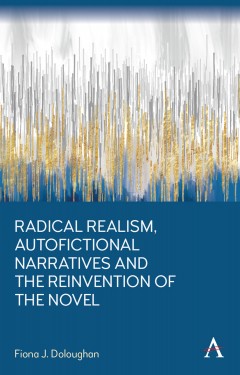
Fiona Doloughan’s research revolves around the development of the novel and on the forces (societal, cultural, technological, linguistic) shaping that development. She has published three monographs, the most recent of which is Radical Realism, Autofictional Narratives and the Reinvention of the Novel (Anthem Press, 2023).
On September 13, she’ll be delivering a lecture entitled Crisis? What crisis?: Rachel Cusk’s Reinvention of the Novel for the Twenty-first Century at Salve Regina University, Newport, Rhode Island.
On September 20, she’ll be at Agnes Scott College, Decatur, Georgia, giving a talk co-sponsored by the departments of English, French, and Spanish on what it means to be a female writer today.
In this bonus summer post, Jennifer Shepherd, Chair of the Faculty of Arts and Social Sciences team in Ireland, shares a behind-the-scenes glimpse into the Open University’s partnership with the John Hewitt Society’s annual Summer School.
What does summertime mean to you?
For me, it’s festival time.
Each summer, I find myself in the picturesque cathedral town of Armagh, Northern Ireland at the Marketplace Theatre, home to the annual John Hewitt International Summer School. Now in its 36th year, the festival is hosted by the John Hewitt Society, established to celebrate the legacy of local poet, art historian and social activist John Hewitt.
Hewitt’s legacy is everywhere in evidence here in Armagh in late July, as a diverse group of writers, visual artists, musicians, political commentators and social entrepreneurs gather to celebrate the power of story to explore some of the most pressing social issues we face today on the island of Ireland.
It’s warm and unpretentious and full of surprises.
One day the mainstage hosts eminent Irish playwright Frank McGuiness, sharing the wit and wisdom of a literary career spanning over 4 decades; another day finds bestselling crime writer Denise Mina discussing her take on hard-boiled crime fiction; still another, a round table of political commentators and journalists pitch ideas for engaging citizens meaningfully in the Northern Ireland political system.
Everywhere there’s story, whether it takes the form of images – such as Nigel Swann’s haunting photographs of the ‘Yellow Star’ houses of Budapest – or music, provided by award-winning folk artist Jack Warnock.
As an OU academic based in Northern Ireland, I have the pleasure of managing a partnership with the John Hewitt Society on the delivery of the Summer School. It’s a natural fit since the Open University has much to offer local conversations around politics, history, and creativity.
Collaborating with the John Hewitt Society for the last decade has allowed the Open University in Ireland to showcase the incredible quality of our teaching and research, particularly in the area of creative writing.
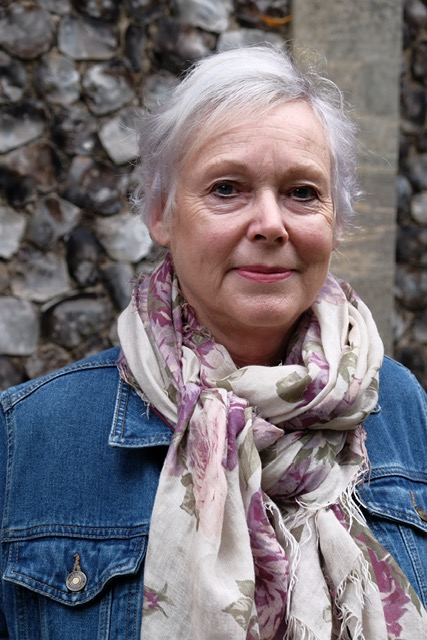
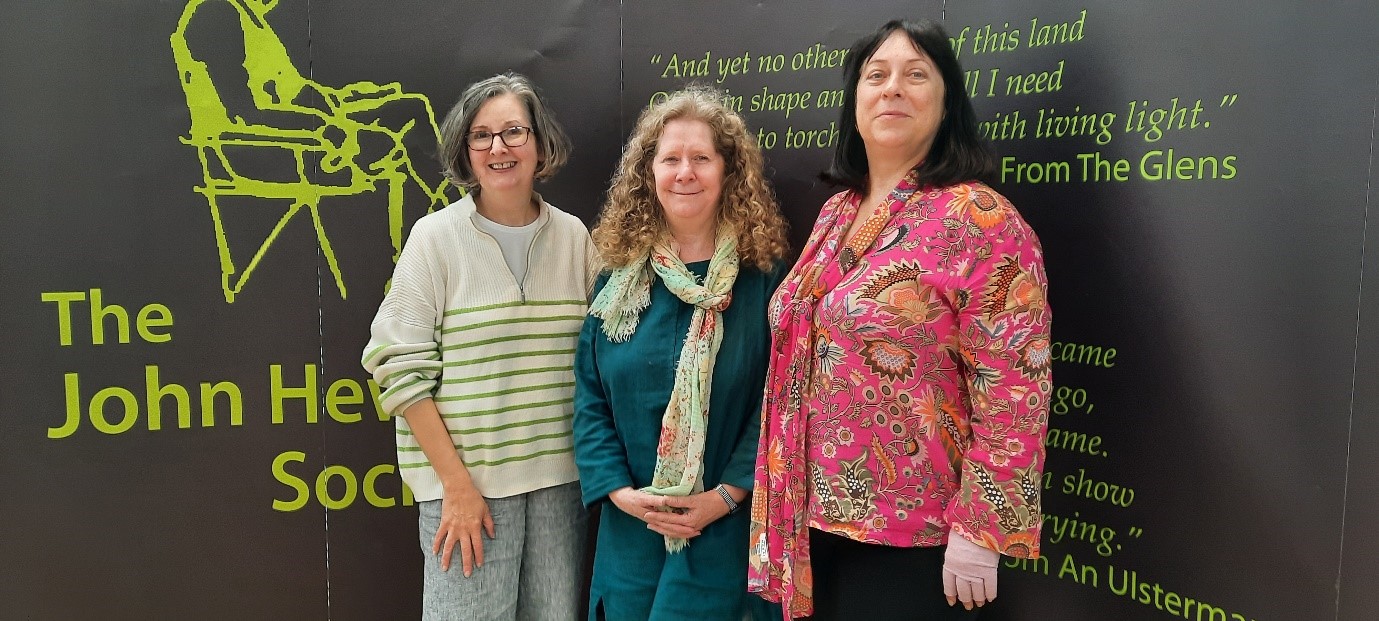
Heather Richardson, Nessa O’Mahony, and Siobhan Campbell
It’s a pleasure to meet festival-goers during the week who have signed up for workshops led by OU writers – this year, we were joined by novelist Heather Richardson, and poets Nessa O’Mahony and Siobhan Campbell. Festival-goers are full of praise for our teachers, noting that OU writers really ‘see’ each student and bring out the very best in them and their writing.
‘Oh, you’re with the OU,’ is how I’m often greeted when I introduce myself in the busy foyer between events—because if there’s a proverbial zero degrees of separation in Ireland, the same holds true here for the Open University.
Jennifer Shepherd (right) with former OU student
At the local book vendor’s festival stall, a man tells me his friend is studying on the new English Lit MA and really enjoying it. I encounter a woman at the OU pop-up stand who confides that she’s already got a place reserved on an MA programme and wonders if she can get further details. Another man lingers over the OU leaflets on display and tells me a long story about a professional life that took many unplanned turns. He always wanted to study law but never got the chance – did I think it was too late for him? A former OU student of my own waves from across the crowded foyer and makes her way over for a catchup and selfie.
She reminisces fondly about her first OU module and grins at the memory of her debut at an Open University open mic night, the first of many engagements over the years as an accomplished poet and flash-fiction writer.
And maybe this is what I like most about my annual pilgrimage to Armagh each summer: to see the power of story at work in unexpected places. While speakers on the mainstage are inspiring us with tips for master storytelling or compelling new visions for a shared future in Ireland, I’m seeing something just as exciting at my Open University pop-up stand. People talk about their daily lives and, when they do, I get a glimpse of the way in which OU study allows people to write new futures for themselves and shape the story of their own lives in fresh and exciting ways.
Jennifer Shepherd
Originally from Canada, Jennifer Shepherd completed her PhD at the University of Alberta and post-doctoral fellowship at the University of Hull. She is a Senior Lecturer and Staff Tutor in the Department of English Literature and Creative Writing at the OU. As chair of the FASS team in Ireland, she is responsible for facilitating local knowledge exchange and engagement opportunities, as well as maintaining partnerships with Ireland-based organisations which include the John Hewitt Society, the Belfast Book Festival, and Dublin/Belfast Culture Nights.
In recent months, several members of our Creative Writing team have been collaborating with our local bookish friends at Milton Keynes Literary Festival.
On Saturday 15th April, lecturer Lania Knight interviewed fellow novelist and life writer Kit de Waal about the extraordinary journey she has made since first voluntarily reading a novel at the age of 22.
Saturday was also be a big day for those writers who have been shortlisted for MKLitFest’s MinK2023 Writing Competition. In the leadup to tomorrow’s announcement of the winners, we caught up with Open University PhD graduand, Patrick Wright, who acted as a judge for the poetry categories.
Tell us a little about your first encounters with poetry and your journey to becoming a poet.
My mother used to recite quite a bit of poetry around the house when I was growing up — poems such as ‘Night Mail’ by W.H. Auden and William Wordsworth’s ‘Daffodils’. This was my first introduction to rhythm and rhyme. We also had a few anthologies lying around that I’d dip into. I recall studying poems by Norman Nicholson at school and I was especially taken by ‘Windscale’.
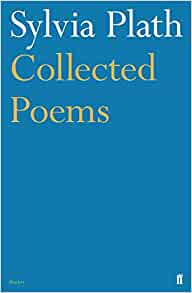
My interest was only really piqued though by my discovery as a teenager of Sylvia Plath. I saw then what poetry could do in terms of confessionalism and free verse. I began to experiment with writing my own poems at this time — without a clue about what I was doing. It wasn’t until I studied for an MA in Creative Writing, at the Centre for New Writing, University of Manchester, that I truly started to learn the craft and see myself as a poet.
How has winning awards and having poems selected for anthologies affected your writing life?
It’s given me encouragement. Poetry can be a solitary activity and there are times when I wonder if it’s worth the investment. Is it too rarefied or self-indulgent? However, moments of praise and recognition always make the sacrifice worthwhile. There can also be a tinge of glamour at times. Though I’ve learnt to not feel too intensely about the ups and the downs. I can’t rely on the fruits at the end of the process: writing must be enjoyed for its own sake; and yet there’s certainly a kick that comes with having work accepted by a magazine or anthology, and that feeling can be quite addictive. I’m now more confident too and willing to take additional risks: with form for example or having the courage to break the rules I was taught. With the success that’s come my way, I’m also persuaded that my poems can sit alongside the poets I admire.
You are an award-winning poet yourself, and now you have judged MK Litfest’s flash fiction competitions. From your experience on both sides of the process, what would you say makes for a prize-winning poem?
I suppose it must tick several boxes at once. Technical elements should be considered; but there’s also the theme, the way a poem strikes at the heart of something in the zeitgeist, or how it leaves an impression. There’s also the inevitable subjective aspect, and what I think works best at a given moment. It’s often fine margins — and I have no doubts that my thoughts as a judge might have changed if I’d read the same poems again another time or in a different mood. Taste and a complex set of characteristics that the reader values (some of which are hard to pin down) will often shape the final verdict. So, my message to poets is: Don’t be discouraged and keep writing. There’s every chance that next time you will have your work chosen.
Tell us a bit about some of the poems you shortlisted for MK Litfest.
In the 14-19 group I enjoyed ‘My Roots’, ‘To all you ash-grey men’, and ‘The Aftermath’. I thought that ‘My Roots’ was particularly impressive with the poet’s clear adherence to the theme (Milton Keynes and green spaces), awareness of form, organised stanzas, and memorable images.
In the 20-plus group, I liked ‘The Green’, ‘The Other One’, and ‘Covid Spring’. Each of these had a distinctive voice and demonstrated a striking or unusual use of language. ‘The Green’ stood out for me with its neat couplets and appreciation of sound.
How has your work and research at the OU shaped you as a poet?
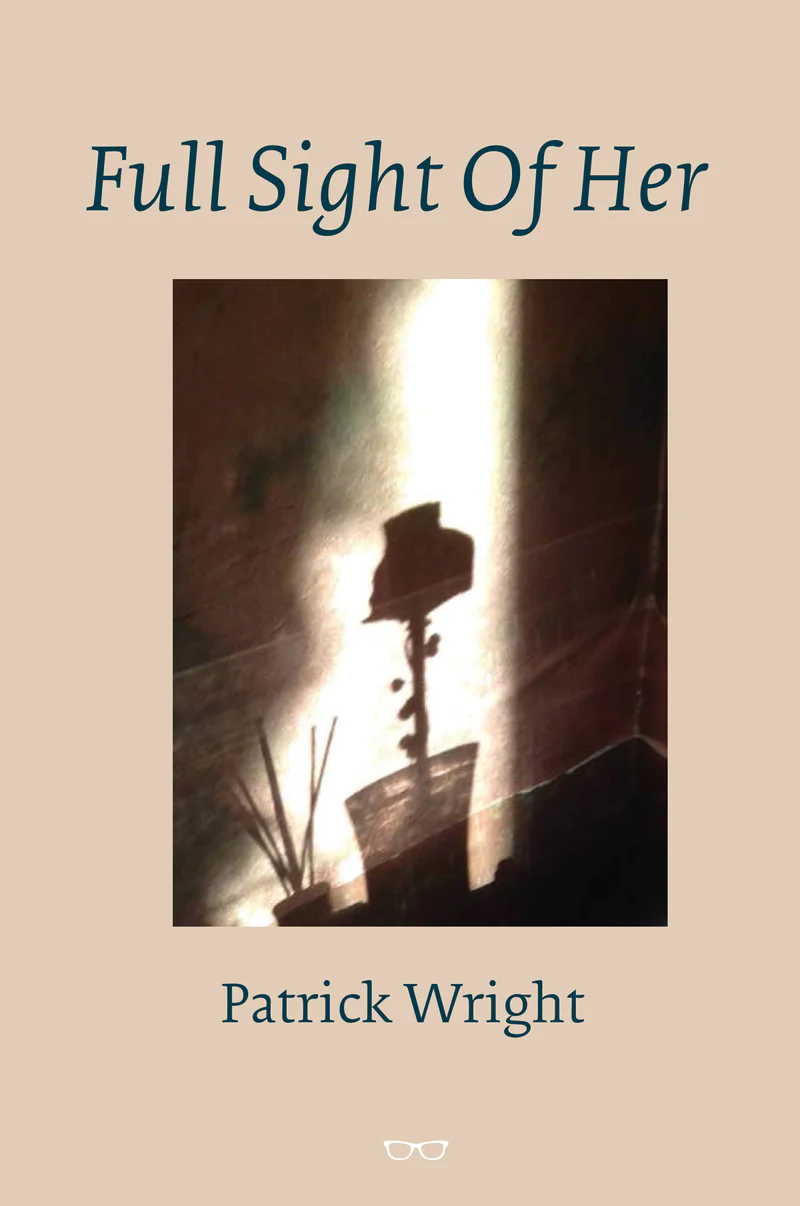
Looking back, my PhD in Creative Writing (Exit Strategy: Ekphrasis through the lens of the abstract and the formless) was a way of going in another direction from my first collection (Full Sight of Her). I was clear from the start that I wanted to be open to new forms, constraints, and feedback — always in the hope of allowing me to find a new voice and not sound like myself. This striving to get away from what I’d done before is one reason the collection is called Exit Strategy. It was about having a book of poems that could be expressive of a new identity, and I achieved that. The critical part helped me become more aware of other poets and where my writing fits in the present landscape.
Aside from new ways of making a poem in response to modern art (the focus of my thesis), I’m particularly interested in aligning myself with the current trend of exploring hybrid forms, such as the prose poem or the lyric essay. My current project follows in this vein: a memoir that includes prose poems.
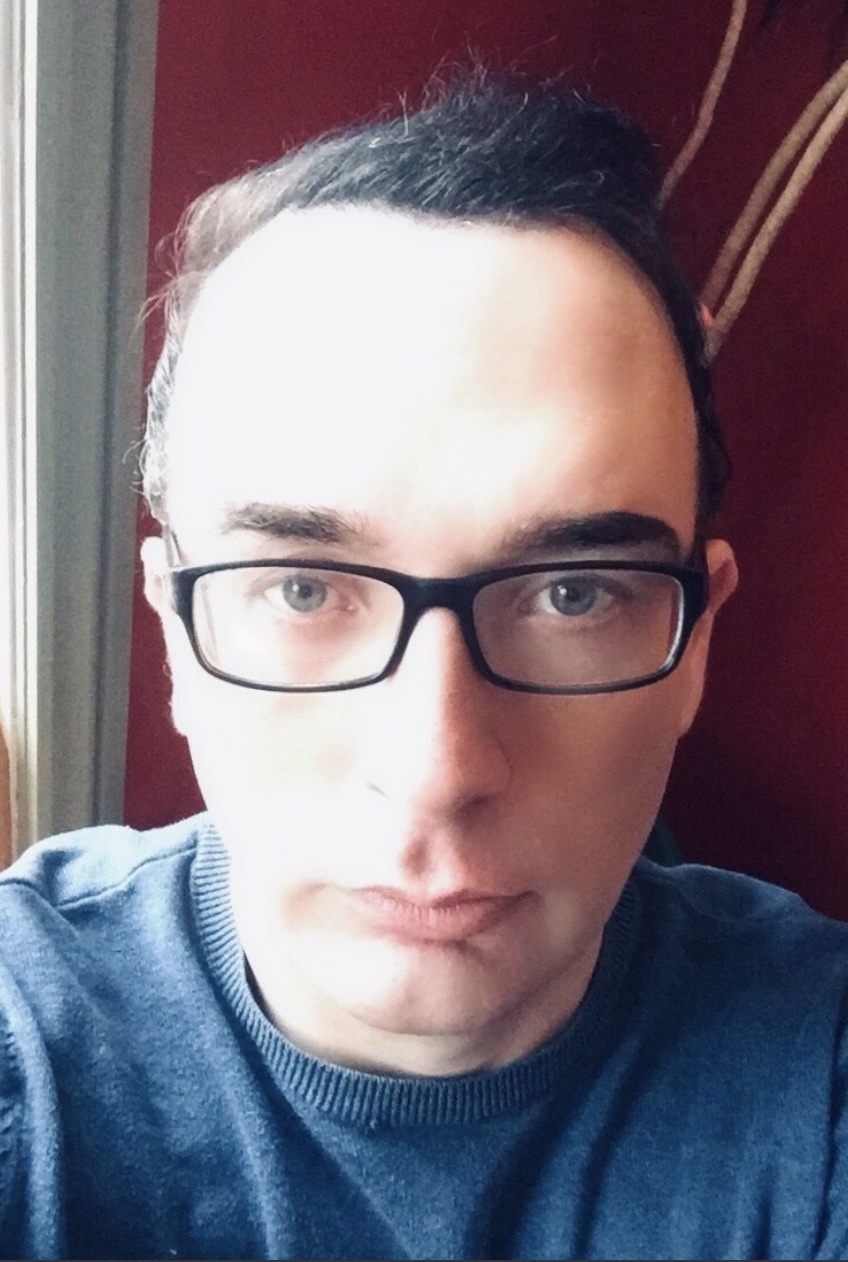
Patrick Wright has a poetry collection, Full Sight of Her, published by Eyewear and nominated for the John Pollard Prize. He has been twice shortlisted for the Bridport Prize and teaches English Literature and Creative Writing at the Open University. He has just completed a PhD in Creative Writing on the ekphrasis of modern and contemporary art, supervised by Jane Yeh and Siobhan Campbell.