Category Archives: Uncategorized

PhD in Religious Studies: funding opportunities

If you are interested in doing a PhD in Religious Studies at the OU, then you might consider applying for funding through the CHASE Consortium. The new round for entry in October 2016 is now open.

The CHASE Consortium (which alongside the OU, includes the Courtauld Institute of Art and Goldsmith’s College at the University of London and the Universities of East Anglia, Essex, Kent and Sussex) offers fully funded PhD studentships for UK students. (For EU students the award covers fees only.) Up to 75 studentships (part-time or full-time) are available across the consortium for October 2016 entry. The studentships include excellent opportunities for skills training and networking with other students.

To apply for a CHASE studentship, you will need to go through the standard Open University application process, with submission of the application form no later than 13 January. Early application is strongly encouraged. For more information about the application process, please visit http://www3.open.ac.uk/events/jobs/2015113_49612_o3.pdf . To find out more about CHASE, visit the consortium website at http://www.chase.ac.uk/

If you are interested in making an application, we encourage you to contact potential supervisors in the department as soon as possible – please visit http://www.open.ac.uk/Arts/religious-studies/staff.shtml


Towards a global history of American evangelicalism

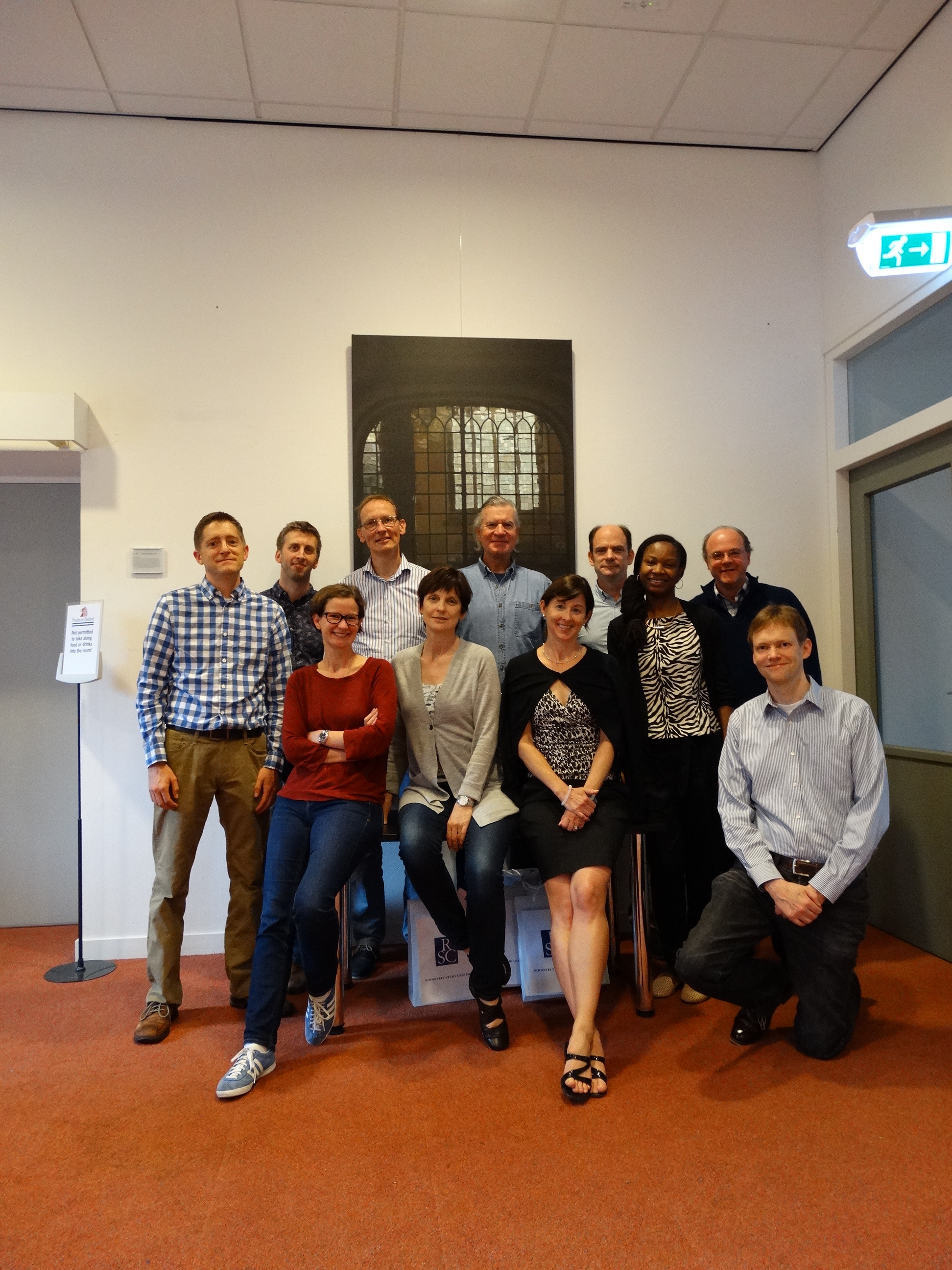
One of my highlights of the summer was taking part in the  ‘Towards a global history of American evangelicalism’ workshop at the Roosevelt Study Center, Middelburg, Netherlands. This workshop, funded by the Luce Foundation, followed up from a conference, of the same name, at the University of Southampton in 2014. The workshop was to discuss the planned production of a special issue of Journal of American Studies on the same theme. You can see what a happy and intellectually stimulated group of folks we were in the picture (courtesy of Hans Krabbendam: from left to right, David Swartz , John Maiden, Uta Balbier, Hans Krabbendam, Melani McAlister, John Corrigan, Heather Curtis,  Timothy Stoneman, Brandi Hughes, Axel Schäfer  and Kendrick OliverMiddelburg conference).


The American foreign missionary enterprise expanded from the 1820s, alongside the nation’s economic and imperial growth. During the Cold War period, evangelical missionary work expressed a universalist vision of American power, with Christianity often understood and utilized  as a  spiritual bulwark against the perceived global threat of Communism. In the later part of the 20th century, the numerical balance of Christianity in the world – and evangelicalism and Pentecostalism – has increasingly shifted to the global south. Scholars have highlighted the emergence of ‘world Christianity’ and the ‘diffusion’ of evangelicalism; and with it indigenous evangelical leaderships and practices, resistance to western paternalism, the reflexivity of missions, and increasingly transnational exchanges and flows of resources. What have been the changes and continuities in  American evangelicalism’s engagement with the wider world during this long period?

There were papers here on conferences (1966 Congress on World Evangelism and Lausanne 1974) and organisations (e.g. Prison Fellowship International; Sharing of Ministries Abroad USA); print and radio media; gender and mission; race and civil rights; foreign policy and international aid. The paper I presented concerned ongoing research on an US Episcopalian charismatic mission network, and its activities in Latin America and Africa since the 1980s. I argued that this network displayed a strong emphasis on the mutual sharing of resources and responsiveness to local priorities and leaderships in its work with dioceses abroad; and this reflected both and a growing emphasis in evangelical theology and practice of mission on interdependence and a blurring of lines between ‘sender’ and ‘receiver’. I’ll keep you posted on developments with the special issue as they emerge.

“So much universe, so little time”: honouring Terry Pratchett

Terry Pratchett 2Terry Pratchett, creator of the Discworld and co-creator of the Long Earth died at home on Thursday 12th March 2015, aged 66. His award winning books and talks have amused and inspired many. They have also sometimes provoked new thoughts and even awed or humbled us. How do you tell people that you are dying, slowly as parts of you fail? Terry Pratchett, inspired by Richard Dimbleby’s taboo-breaking announcement of his struggle against cancer, told the world. His support for dementia research was more than financial – although he was more than generous financially too. His efforts were of a piece with the kind of thing his Discworld characters would do: naming a demon as a first step in slaying it. Terry was also a vociferous supporter of the right to live and die with dignity. He insisted that being able to chose when to die was a matter of decency and respect for life.

Continue reading

CHASE Studentships in Religious Studies

The Department of Religious Studies at the Open University invites applications for October 2015 entry to our PhD programme (for information on our areas of expertise and research interests, please see http://www.open.ac.uk/postgraduate/research-degrees/research-areas/religious-studies). The Open University is part of the CHASE AHRC Doctoral Training Partnership (alongside the Courtauld Institute of Art, Goldsmith’s College at the University of London and the Universities of East Anglia, Essex, Kent and Sussex) and successful applicants for PhD study will be able to apply for studentship funding. For UK students, these awards cover both fees and maintenance. For EU residents awards are on a fees only basis. The funding is also designed to enable professional development opportunities, including public engagement skills and placements with CHASE partner organisations in the UK and overseas.

Research in the department is characterised by a strongly interdisciplinary approach and ethos. The Department hosts the Cross-Cultural Identities research group (http://www.open.ac.uk/arts/research/cross-cultural-identities/) and we currently have ten full-time and part-time PhD students working on a range of subjects. The Open University offers excellent provision for new PhD students. Each student is supported by two supervisors as well as a strong programme of university-wide and Faculty-specific training in research skills. In addition, students have the opportunity to participate in a lively research culture and to contribute to regular seminar programmes, conferences and workshops held in Milton Keynes, London and other Open University national/regional centres.

The Religious Studies Department has a successful track record in winning external research funding, leading large-scale collaborative research projects and supporting individual research. On-going research projects include ‘Re-Assembling Democracy: Ritual as Cultural Resource’ funded by the Norwegian Research Council http://www.tf.uio.no/english/research/projects/redo/; ‘Religion, Martyrdom and Global Uncertainties’ funded by RCUK http://www.open.ac.uk/arts/research/religion-martyrdom-global-uncertainties/ and ‘Pilgrimage and England’s cathedrals, past and present’ http://christianityandculture.org.uk/ground-breaking-project-investigates-role-pilgrimage-past-and-present.

The department also has strong links with a range of learned societies including BSA Soc-Rel (the Sociology of Religion Study Group of the British Sociological Association), the BASR (British Association for the Study of Religion), EASR (European Association for the Study of Religion), the Ecclesiastical History Society (EHS) and scholarly journals including Critical Research on Religion, Culture and Religion, Fieldwork in Religion and Folklore.

Informal enquiries re studentships should be made to [email protected] in the first instance. Applications will be considered by the Faculty of Arts on a competitive basis and forwarded to four CHASE panels for further assessment and ranking. For full details of all subject areas and how to apply, please see the CHASE website: http://www.chase.ac.uk/. Please note that the deadline for all Postgraduate Research applications, including the CHASE Studentships, is January 14, 2015. It is anticipated that interviews at the Open University for shortlisted candidates in Religious Studies will take place in late January 2015

Dr Paul-Francois Tremlett

Religion, Security and Global Uncertainties

A recent commentary on this blog (Violence, Information and the Radicalisation of the Last MenbyDr Paul-Francois Tremlett) offered some fascinating insights on radicalisation and associated violence, and questioned whether they are necessarily motivated by religion. A recently published report from our department further explores this assumed connection between religion, radicalisation and violence, and more broadly, the commonly assumed link between religion and security.

Continue reading

‘Welcome’ from Dr Graham Harvey

graham-harveyWelcoming new students is one of the greatest pleasures of being Head of Department. So, along with my colleagues in Religious Studies, I’m pleased to welcome nearly 300 students now starting on A217 “Introducing religions” and nearly 400 on A332 “Why is religion controversial?”. Although the team the Open University’s Milton Keynes campus doesn’t often meet the undergraduate students for whom we’ve prepared teaching and learning materials, we are honoured to know that so many are interested in studying with us. We don’t know how many OU students studying at level 1 will continue with Religious Studies in later stages of their studies, but we’re enthusiastic about our involvement with the various modules available there too (i.e. AA100 “The Arts past and present” and A105 “Voices, texts and material culture”). We are equally pleased that we have students completing their Masters degrees with us and look forward to reading their dissertations and, we hope, discussing possible PhD projects with them. This year, we also have four new students commencing research towards their PhDs. These are Aled Thomas researching “The Transition of Auditing from Psychiatric Practice to Religious Ritual: Social and Religious Developments in the Church of Scientology”,Claire Wanless researching “Secularisation and Religious Transmission: Communities of Practice, Networks and the Rise of Postmodern Religion“, Theo Wildcroft researching “Yogic-animist ritual: witnessing emergent embodiment” and Kasia Kowalska researching “Universalism and Particularism in Jewish Prayer in the Orthodox, Reform and Liberal Movement in the United Kingdom”. They will join a community of existing PhD students at various stages of their research. We wish all our students every success in their studies with us.

We are also celebrating the nomination of researchers within our team for a Times Higher Education award under the the “Widening Participation or Outreach Initiative of the Year” category. You can read more about the Building on History: Religion in London project at https://www.open.ac.uk/blogs/boh .

IHR modern religious history seminar

Two members of the department, John Maiden and John Wolffe, co-convene the IHR Modern Religious History seminar. The programme for 2014-15 will be as follows. 22 October 2014, Kristan Tetens (University of Leicester), ‘Hall Caine’s Mahomet: Religion, Empire, and Dramatic Censorship in Late-Victorian Britain’.

5 November 2014, Dr Robert Saunders (Queen Mary, University of London), ‘“Come to pray on referendum day”: The Church and the European Referendum, 1975’.

19 November 2014, Dr John Maiden (Open University), ‘An “anticipation of heaven”? Black and white Christian relations in England during the 1970s’.

3 December 2014, Professor John Coffey (University of Leicester), ‘Missionary Millennialism and British Antislavery, 1790-1840’.

11 February 2015, Dr Alana Harris (Oxford), ‘”The Writings of Querulous Women”: Contraception, Conscience and Clerical Authority in 1960s Britain’.

25 February 2015, Dr Maria Power (Liverpool), ‘A new model of ecumenism: the practice of the Common Good in the partnership of Bishop David Sheppard and Archbishop Derek Worlock’.

11 March 2015, Dr Alexander Lock (British Library), ‘The Grand Tours and Conflicting Identities of Eighteenth-Century English Catholic Travellers: Sir Thomas Gascoigne (1745-1810) and Henry Swinburne (1743-1803)’.

25 March 2015, Dr Andrew Atherstone (Oxford), ‘Farewell to Anglicanism: Evangelical Seceders from the Church of England 1964-76’.

The seminars are held in room 104, 1st floor, IHR, Wednesdays, 5.15.pm. It would be good to see you!


The BSA Sociology of Religion Annual Conference (2-4 July 2014, University of Sussex)

This was my first Socrel Conference and I have to say that I found it such a valuable and engaging experience that I joined the group straight away on my return. It certainly was an intensive programme with early starts and late finishes, and I must admit that I wondered beforehand whether I would find enough to interest me. However I actually found myself facing very hard decisions about which panel to miss.

  Continue reading

PhD successes!

One of the vital features of the life of a department of religious studies (and of every other field or subject) is supervising PhD students. Since 2001 we have celebrated the successful completion of PhDs by twenty of our students. Our most recent PhD graduates were awarded their degrees at a ceremony in London’s Barbican Centre in March 2014. They were Dr Sarah Flew and Dr Max Fras. Sarah’s thesis was about the finance of Anglican home missions in late Victorian London. Max’s was about the Catholic Church and public life in post-Communist Poland. We look forward to seeing publications arising from these theses soon.

Welcome!

Welcome to our blog. ‘Contemporary Religion in Historical Perspective’ is the broad research theme of the Religious Studies department at The Open University.

As a department we seek to apply a range of approaches and methods to a wide array of religious and other-than-religious phenomena. We are interested in contemporary religion, and its interactions with culture, society and politics. However, we are also fascinated by issues of continuity and change, and seek to inform our study and understanding of religion with historical perspective. Last year we ran an international conference on this theme, and this blog will encourage further reflection on the various themes and issues explored.

Contributors to this blog will include department members, Associate Lecturers from the Open University’s regions and nations, and our various Ph.D students. We’ll talk about ourselves and our work and interests, we’ll comment or contribute to news-worthy discussions, and we’ll celebrate developments in the study of religions.

Dr Graham Harvey (Head of Department) and Dr John Maiden (Director of Teaching)