Category Archives: scholarships

Another successful H890 Research and Scholarship in Digital Education Conference!

Four cartoon penguins seemingly attending a video conference with each in a separate location break the fourth wall by passing a cake from one to another outside of the cartoon frames.

H890 Conference image featuring cartoon penguins.

The 2026 edition of the H890 Research And Scholarship in Digital Education Conference has come to a close. With 27 superb presentations over 3 days, it has become an extremely diverse and rich event.

Day 1

The first conference session kicked off with a lovely welcome from IET Director Professor Bart Rienties in his ‘casual Friday’ blue hoodie, explaining how the conference and associated module align with the research interests of the Institute of Educational Technology.
We then welcomed our alumnus Sukaina Walji, now Director of the Centre for Innovation in Learning and Teaching (CILT) at the University of Cape Town, South Africa, for a wonderful keynote presentation describing a ‘research as storytelling’ innovation to gather a rich picture of how staff and students view the use of AI in assessments.

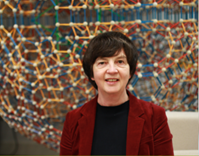
Sukaina Walji

Sukaina Walji, Day 1 keynote speaker

Given the unenviable task of being first student presenter to take the floor, Robert Nixon impressed us with a project on evaluating the use of technology in supporting dyslexia. Next up was Carol-Anne Beardmore, with her project on the potential of ‘citizen humanities’ (as opposed to ‘citizen science’) to transform history education. Our first Commonwealth Scholar followed, with Aliyu Akilu Barau discussing the use of mobile learning to develop health literacy in rural Nigeria. The first part of the day was rounded off by Pam Geraldine, explaining her use of Augmented Reality to create a cultural heritage app.

The second part of Day 1 kicked off with Janix Asare, another Commonwealth Scholar, and his use of a systematic literature review to uncover the use and potential of AI coding assistants. He was followed by Millie Glazebrook and her investigation of the use of Virtual and Augmented Reality to enhance primary students’ learning. This was followed by Onick Gwayi, using his Commonwealth Scholarship opportunity to investigate the impact on student outcomes of enhancing accessibility and inclusive practice features of online courses for trainee social science teachers. Next we had Commonwealth Scholar Walusungu Ngulube giving us an insight into her development of a mobile-first careers guidance resource for students in sub-Saharan Africa who traditionally have very little access to careers advice. And rounding off the first day we heard from Rashida Newbill, and her analysis of how we as educators can balance the omnipresence of AI with the need for students to develop critical thinking skills.

Day 2

Our Saturday session kicked off with a keynote from our very own Professor Tim Coughlan, Professor of Learning Innovation and Accessibility at the Institute for Educational Technology, Open University, UK. Tim spoke to us about the opportunities afforded by AI for accessibility and supporting disabled students.

Tim Coughlan

Professor Tim Coughlan

Following Tim was not an easy task but Claire Walder rose to the challenge, describing her project to investigate the usefulness and value of interactive online feedback resources for nursing students. Claire was followed by ChiaoYuan Chang, giving us an insight into teaching in Taiwan and teachers’ attitudes towards digital competency and technology use in the classroom. Then we heard from Commonwealth Scholar Michael Ngala and his project at Jaramogi Oginga Odinga University of Science & Technology (JOOUST)​ in Kenya to determine whether the choice of online versus face to face business management programmes is affecting learner outcomes. The first part of the session was rounded off by Helen Shepherd, and her investigating into ’emotional labour’ in a nursing degree, and whether online study and online spaces can help nursing students process emotionally difficult subject areas.

After the break we were listening to Professor Sammy Mutisya and his Commonwealth Scholarship opportunity to investigate the role of AI-powered Assistive Technologies to support disabled and traumatised students in two large refugee camps in Kenya. Andrea Mills then had us thinking about the use of tablet-based activities for enhancing the agency of under-fives and her investigation into this area. Zoe Dawson spoke next about Foreign Language Speaking Anxiety and how Immersive Virtual Reality may help students to overcome it. Then Commonwealth Scholar Keisha Campbell presented to us her project on using a Blended Learning MOOC to enhance STEM educators’ competencies. And finally we heard from Kim Froehler at some unholy hour in the Canadian morning, talking to us about the AI readiness of educators in British Columbia and her study to assess and support that readiness via online materials.

Day 3

Our planned keynote speaker for Day 3, Allison Littlejohn of University College London, had to step aside at a late stage due to health issues (Allison we wish you well for a speedy recovery!) and so we were extremely fortunate when Professor Emerita Rebecca Ferguson willingly stepped into Allison’s shoes and delivered us a fascinating keynote presentation on Research Futures and Grand Challenges, through the lens of the Learning Analytics community.
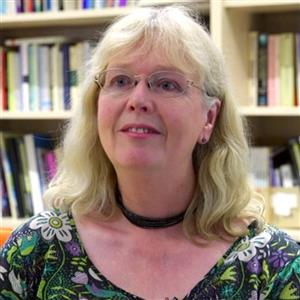
Rebecca Ferguson

Professor Emerita Rebecca Ferguson

Following Rebecca is never an easy task but Commonwealth Scholar Florence Kamonjo rose to the challenge with an explanation of her work to evaluate the use of WhatsApp for equitable academic engagement of staff and students at the University of Kabianga, Kenya. Next to go was Lee Lindsay, talking us through his project to use introductory pre-courses to support retention, by providing accurate ‘tasters’ of full courses to ensure that students are in the right place for what they want to achieve. Finally in the first part we heard from Commonwealth Scholar Salima Sewani and her use of AI with teachers of disabled students in Pakistan, to produce colouring books, songs, poems and other teaching resources for student learning and engagement.

After the break we heard from Marta Asensio, describing her project to investigate the use of social learning activities to improve the retention of asynchronous online learners. This was followed by Megan Hyndman’s presentation on the retention and attainment of non-traditional students (those from low socio-economic backgrounds, first-in-family university students etc) on online distance learning undergraduate courses. And finally we heard from Emma-Louise Hague, wrapping up the conference with a presentation on the use of audio to support memorisation in adult learners – nobody present will ever spell the word ‘bananas’ without thinking of a certain song now!

To read the students’ abstracts and communicate with them directly through the comments function, please see the conference programme here: https://www.open.ac.uk/blogs/H890Conference/index.php/2026-h890-research-scholarship-in-digital-education-online-student-conference/ 

Commonwealth Scholarship applications now open for the MAOT


Commonwealth Scholarships 2026

The Institute of Educational Technology, The Open University, UK

The Institute of Educational Technology building, The Open University, UK

Do you have a serious interest in online teaching, technology-enhanced learning and educational technology?

Commonwealth Distance Learning Scholarships available for The Open University’s Masters in Online Teaching

The Open University’s Institute of Educational Technology (IET) has been awarded 5 fully funded Commonwealth Distance Learning Scholarships for citizens of the following countries to study IET’s Masters in Online Teaching (MAOT):

Bangladesh, Belize, Botswana, Cameroon, Dominica, Eswatini, Fiji, Gabon, The Gambia, Ghana, Grenada, Guyana, India, Jamaica, Kenya, Kiribati, Lesotho, Malawi, Malaysia, Maldives, Mauritius, Montserrat, Mozambique, Namibia, Nauru, Nigeria, Pakistan, Papua New Guinea, Rwanda, Saint Helena, Saint Lucia, Saint Vincent and the Grenadines, Samoa, Sierra Leone, Solomon Islands, South Africa, Sri Lanka, Tanzania, Togo, Tonga, Tuvalu, Uganda, Vanuatu, Zambia

We are pleased to invite applications for these scholarships. The closing date for applications is 16.00 (GMT) on Tuesday 31 March 2026.

The Scholarships are funded by the UK Foreign, Commonwealth & Development Office (FCDO) and are intended to contribute to the development needs of Commonwealth countries by enabling talented and motivated individuals to access training and skills required for sustainable development by undertaking part-time Masters study with UK universities while remaining in their home countries.

Intended beneficiaries

High-quality candidates from eligible Commonwealth countries who wish to access training not available in their home countries, who wish or need to remain in their home country while they study, and who have the potential to enhance the development of their home countries with the knowledge and leadership skills they acquire.

About the Masters in Online Teaching

The Open University’s Masters in Online Teaching (MAOT) is studied entirely online. The MAOT develops skills in the theory-informed design of technology-enhanced, blended and online learning. The MAOT is designed to address educational inequity in all its forms and, as such, is relevant to achieving inclusive, high quality, equitable blended and online education.

The Commonwealth Distance Learning Scholarships are for three years’ part-time distance learning, commencing in February 2027. The scholarships will cover the full cost of tuition fees but no other expenses. You will need daily access to a computer and a good Internet connection to study the MAOT programme.

It is likely that Commonwealth Distance Learning Scholarship holders will study the following modules, in the order stated. However, there may be some variation in the exact content offered.

Stage 1 – February-October 2027:

·       Compulsory module H880 Technology-enhanced learning: foundations and futures.

Stage 2 – October 2027 – September 2028
60 credits from the following 15-credit microcredentials, currently presented twice annually:

•     Online teaching: Evaluating and improving courses.

•     Teacher development: Embedding mental health in the curriculum.

•     Online teaching: Accessibility and inclusive learning.

•     Online teaching: Embedding social, race and gender-related equity.

Stage 3 – October 2028 – May 2029:

Who can apply?
To be eligible for a Commonwealth Distance Learning Scholarship to study the Masters in Online and Distance Education you must:

  • Be a citizen of, or have been granted refugee status by one of the eligible developing Commonwealth countries listed above, or be a British protected person; and
  • Be permanently resident in one of the eligible developing Commonwealth countries listed above; and
  • Hold a first degree of at least upper second class (2:1) standard. A lower qualification and sufficient relevant experience may be considered in certain cases; and
  • Be unable to afford to study the programme without this scholarship.

You will also need access to a computer with reliable broadband internet access. You do not need to be working in technology-enhanced learning, but you should be interested in developing expertise in this area.

General conditions for the Scholarships are available here: https://cscuk.fcdo.gov.uk/scholarships/commonwealth-distance-learning-scholarships-candidates/.

How to apply

  • Visit the Masters in Online Teaching website to find out more about the programme. Do not attempt to register for any of the modules. There is no need to acquire or upload an offer letter from The Open University.
  • Read the Commonwealth Distance Learning Scholarships Information for Candidates and the Advice for applicants pages
  • If you have any questions, please contact [email protected] in the first instance, giving the subject ‘2026 Commonwealth Scholarships query’.
  • Complete the Commonwealth Distance Learning Scholarship application form by 16.00 (GMT) on 31 March 2026 and submit it online. You should complete all sections of the application form as fully as possible as the form will be the basis for selection of candidates. Pay particular attention to describing in detail how you intend to achieve in-country benefit as a result of your study of the Masters in Online Teaching.
  • You should not use Generative AI to complete your form as we are assessing candidates on demonstrable experience and realistic, context-specific plans for the future. All applications will be checked for Generative AI use.
  • Shortlisted candidates will be invited for an online interview.


About the Institute of Educational Technology

IET is a leader in the field of pedagogy, advancing distance learning globally with innovative technology.

Since it was established in 1970, IET has been central to The Open University’s mission to be the world leader in every aspect of delivering supported, open and distance learning.

Explore our Research and Innovating Pedagogy reports.

About The Open University

The OU is the largest academic institution in the UK and a world leader in flexible distance learning.

Since 1969, the OU has taught more than 2 million students worldwide. The OU has more than 170,000 current students, including over 15,000 from overseas.

Keynote speakers announced for H890 ‘Research and Scholarship in Digital Education’ Conference 2026!

Much excitement! Three excellent keynote speakers have been announced for the 2026 edition of the H890 Research and Scholarship in Digital Education online conference due to take place in April. Alongside presentations from every one of our current students on the module, we are honoured to announce the following:

  • On Friday 10th April 2026 (starting at 09:00 BST) the conference will be opened by Sukaina Walji, Director Centre for Innovation in Learning and Teaching, University of Cape Town, South Africa (and one of our very own alumni).
Sukaina Walji

Sukaina Walji

  • On Saturday 11th April 2026 (starting at 13:00 BST) we will enjoy a keynote from Tim Coughlan, Professor of Learning Innovation and Accessibility, The Open University, UK.
Tim Coughlan

Tim Coughlan


  • And on Monday 13th April 2026 (starting at 18:00 BST) the final session of the conference will begin with a keynote from Allison LittlejohnProfessor of Learning Technology at University College London, UK.

    Allison Littlejohn

    Allison Littlejohn

The conference is free to attend and open to anyone, but you must please register in advance. You can do that on the conference web page here: https://www.open.ac.uk/blogs/H890Conference/index.php/2026-h890-research-scholarship-in-digital-education-online-student-conference/ 
The student presentation titles and abstracts will also appear on the same page once they have been finalised in March.


Commonwealth Scholarship applications now invited for The Open University’s Masters in Online Teaching


Commonwealth Scholarships logo

Do you have a serious interest in online teaching, technology-enhanced learning and educational technology?

Would you like to gain a Master’s degree with one of the UK’s leading providers of digital education, for study commencing in February 2026? Are you a citizen of one of the following developing Commonwealth countries, a refugee from one of the following countries, or a British Protected Person?

Bangladesh, Belize, Botswana, Cameroon, Dominica, Eswatini, Fiji, Gabon, The Gambia, Ghana, Grenada, Guyana, India, Jamaica, Kenya, Kiribati, Lesotho, Malawi, Malaysia, Maldives, Mauritius, Montserrat, Mozambique, Namibia, Nauru, Nigeria, Pakistan, Papua New Guinea, Rwanda, Saint Helena, Saint Lucia, Saint Vincent and the Grenadines, Samoa, Sierra Leone, Solomon Islands, South Africa, Sri Lanka, Tanzania, Togo, Tonga, Tuvalu, Uganda, Vanuatu, Zambia

Are you permanently resident in one of the above countries?

The Open University’s Institute of Educational Technology (IET) has been awarded 10 fully funded Commonwealth Distance Learning Scholarships for citizens of the countries listed above who wish to study IET’s Masters in Online Teaching (MAOT). We are pleased to invite applications for these scholarships.

The closing date for applications is 16.00 (GMT) on Tuesday 20 May 2025.

These Scholarships are funded by the UK Foreign, Commonwealth & Development Office (FCDO) and are intended to contribute to the development needs of Commonwealth countries by enabling talented and motivated individuals to access training and skills required for sustainable development by undertaking part-time Masters study with UK universities while remaining in their home countries.

Intended beneficiaries

High-quality candidates from eligible Commonwealth countries who wish to access training not available in their home countries, who wish or need to remain in their home country while they study, and who have the potential to enhance the development of their home countries with the knowledge and leadership skills they acquire.

About the Masters in Online Teaching

The Open University’s Masters in Online Teaching (MAOT) is studied entirely online. The MAOT develops skills in the theory-informed design of technology-enhanced, blended and online learning. The MAOT is designed to address educational inequity in all its forms and, as such, is relevant to achieving inclusive, high quality, equitable blended and online education. The Commonwealth Distance Learning Scholarships are for three years’ part-time distance learning, commencing in February 2026. The scholarships will cover the full cost of tuition fees but no other expenses.

It is likely that Commonwealth Distance Learning Scholarship holders will study the following modules, in the order stated. However, there may be some variation in the exact content offered.

Stage 1 – February-October 2026:

Stage 2 – October 2026 – September 2027
60 credits from the following 15-credit microcredentials, currently presented twice annually:

  • Online teaching: Evaluating and improving courses.
  • Teacher development: Embedding mental health in the curriculum.
  • Online teaching: Accessibility and inclusive learning.
  • Online teaching: Embedding social, race and gender-related equity.
  • Online teaching: Addressing the climate emergency (first presentation date to be confirmed).

Stage 3 – October 2027 – May 2028:

Who can apply?
To be eligible for a Commonwealth Distance Learning Scholarship to study the Masters in Online and Distance Education you must:

  • Be a citizen of, or have been granted refugee status by one of the eligible developing Commonwealth countries listed above, or be a British protected person; and
  • Be permanently resident in one of the eligible developing Commonwealth countries listed above; and
  • Hold a first degree of at least upper second class (2:1) standard. A lower qualification and sufficient relevant experience may be considered in certain cases; and
  • Be unable to afford to study the programme without this scholarship.

You will also need access to a computer with reliable broadband internet access. You do not need to be working in technology-enhanced learning but you should be interested in developing expertise in this area.

General conditions for the Scholarships are available here: https://cscuk.fcdo.gov.uk/scholarships/commonwealth-distance-learning-scholarships-candidates/.

How to apply


From the MAODE to a PhD: Moses Mwebaze in focus

We are delighted to learn that one of our MAODE graduates has been successful in applying for a PhD scholarship.

Photo of Moses Mwebaze

Moses Mwebaze, MAODE alumnus and now PhD scholar.

Moses Mwebaze studied with us from 2019 to 2021. His MAODE studies were facilitated by achieving one of the highly sought-after Commonwealth Scholarship places funded by the UK government (which we have been fortunate to also receive for the first two years of the new Masters in Online Teaching). Studying online from his home region in Uganda brought issues of connectivity, time zones, and fitting study around an already demanding role as an eLearning Specialist.

Since graduating, Moses has been an active member of our MAOT Community of Practice, continuing to support our present students and in particular the current group of Commonwealth Scholars. His inputs to our live events have always been valued, and he brings interesting and fresh perspectives to our discussions.

Now his talents have taken him on to the next step in his academic journey. Moses has successfully achieved a place at the University of Eldoret in Kenya to study for a PhD. His area of research focus will be instructional design and development. He has recently worked with a group of rural university campuses of Uganda’s Busitema University to promote online learning through the eLearning Initiative-Uganda project facilitated by the Mastercard Foundation. Moses’ roles include building capacity in digital pedagogy, instructional design, and content development, finding solutions to unstable internet connectivity, and supporting the Learning Management System (LMS) operations.

We are so proud of everything Moses has achieved and wish him every success with his PhD. We are looking forward to directing our future MAOT students to his thesis and research papers!

MAOT Commonwealth Distance Learning Scholarships – 2025 entry

Commonwealth Scholarships logo

Do you have a serious interest in online teaching, technology-enhanced learning and educational technology?

Would you like to gain a Master’s degree with one of the UK’s leading providers of digital education, for study commencing in February 2025? Are you a citizen of one of the following developing Commonwealth countries, a refugee from one of the following countries, or a British Protected Person?

Bangladesh, Belize, Botswana, Cameroon, Dominica, Eswatini, Fiji, Gabon, Ghana, Grenada, Guyana, India, Jamaica, Kenya, Kiribati, Lesotho, Malawi, Malaysia, Maldives, Mauritius, Montserrat, Mozambique, Namibia, Nauru, Nigeria, Pakistan, Papua New Guinea, Rwanda, Saint Helena, Saint Lucia, Saint Vincent and the Grenadines, Samoa, Sierra Leone, Solomon Islands, South Africa, Sri Lanka, Tanzania, The Gambia, Togo, Tonga, Tuvalu, Uganda, Vanuatu, Zambia

Are you permanently resident in one of the above countries?

The Open University’s Institute of Educational Technology (IET) has been awarded 10 fully funded Commonwealth Distance Learning Scholarships for citizens of developing Commonwealth countries who wish to study IET’s Masters in Online Teaching (MAOT). We are pleased to invite applications for these scholarships.

The closing date for applications is 16.00 (GMT) on 28 March 2024.

These Scholarships are funded by the UK Foreign, Commonwealth & Development Office (FCDO) and are intended to contribute to the development needs of Commonwealth countries by enabling talented and motivated individuals to access training and skills required for sustainable development by undertaking part-time Masters study with UK universities while remaining in their home countries.

Intended beneficiaries

High-quality candidates from eligible low and middle-income Commonwealth countries who wish to access training not available in their home countries, who wish or need to remain in their home country while they study, and who have the potential to enhance the development of their home countries with the knowledge and leadership skills they acquire.

About the Masters in Online Teaching

The Open University’s Masters in Online Teaching (MAOT) is studied entirely online. The MAOT develops skills in the theory-informed design of technology-enhanced, blended and online learning. The MAOT is designed to address educational inequity in all its forms and, as such, is relevant to achieving inclusive, high quality, equitable blended and online education. The Commonwealth Distance Learning Scholarships are for three years’ part-time distance learning, commencing in February 2025. The scholarships will cover the full cost of tuition fees but no other expenses.

It is likely that Commonwealth Distance Learning Scholarship holders will study the following modules, in the order stated. However, there may be some variation in the exact content offered.

Stage 1 – February-October 2025:

Stage 2 – October 2025 – September 2026
60 credits from either four of the following 15-credit microcredentials, currently presented three times annually:

  • Online teaching: Evaluating and improving courses.
  • Teacher development: Embedding mental health in the curriculum.
  • Online teaching: Accessibility and inclusive learning.
  • Online teaching: Embedding social, race and gender-related equity.
  • Online teaching: Addressing the climate emergency (first presentation date to be confirmed).

Or one 60-credit postgraduate module chosen from:

  • Social justice, equity and equality: inclusive practice for all.
  • Exploring educational leadership: values, context and strategy.
  • Learning and teaching: educating the next generation.

Stage 3 – October 2025 – May 2026:

Who can apply?
To be eligible for a Commonwealth Distance Learning Scholarship to study the Masters in Online and Distance Education you must:

  • Be a citizen of, or have been granted refugee status by one of the eligible developing Commonwealth countries listed above, or be a British protected person; and
  • Be permanently in one of the eligible developing Commonwealth countries listed above; and
  • Hold a first degree of at least upper second class (2:1) standard. A lower qualification and sufficient relevant experience may be considered in certain cases; and
  • Be unable to afford to study the programme without this scholarship.

You will also need access to a computer with reliable broadband internet access. You do not need to be working in technology-enhanced learning but you should be interested in developing expertise in this area.

General conditions for the Scholarships are available here: https://cscuk.fcdo.gov.uk/scholarships/commonwealth-distance-learning-scholarships-candidates/.

How to apply

Time is running out to register for autumn start modules!

The banner from the top of the H890 module website, including a photo of two female students examining a paper document.

The module website for H890.

The brand new module H890 ‘Research and Scholarship in Digital Education’ begins in early October and registration closes imminently!  This is a fantastic module with some great practical experiences including designing a detailed research proposal OR undertaking your own piece of scholarship, and on either track you will present your work at our brilliant student online conference in April! It can be taken as an integral part of the Masters in Online Teaching or as a standalone unit that is ideal for anyone about to launch into a postgraduate research degree.

Similarly registration closes soon for our October-start micro-credentials, all of which take 12 weeks with an assignment submission date in early January. These usually run three times a year, with starts also in March and June. These include:
HZFM881 Online Teaching: Creating Courses for Adult Learners (Learn the practical skills you need to create online courses successfully, and develop your ability to teach adults online)
And four (soon 5) micro-credentials that can be used as part of the Masters in Online Teaching pathway (or taken as standalone courses):

(Launching in early 2024 we also have HZFM889 Teacher Development: Addressing the Climate Emergency which will form another option for the Masters in Online Teaching).

Sign up now to avoid missing out!

Global community led by award-winning MAODE student

Since 2018 The Open University’s Institute of Educational Technology (IET) has hosted Commonwealth Distance Learning Scholarships for citizens of low- and middle-income Commonwealth countries to study IET’s Masters programme, fully funded. Pakistan-based Munir Moosa Sewani was in the first cohort of Commonwealth Scholars, commencing his study of IET’s Masters in Online and Distance Education (MAODE) in 2018. Since then Munir has led numerous initiatives in his home country, and beyond, intended to support social justice and educational equity, drawing on the knowledge and skills he gained from studying the MAODE.

In March 2023 Munir was awarded The British Council’s UK Alumni Award for Pakistan in the Social Action Category as recognition for his socioecoethical model of human rights education in addition to Munir’s leadership of the Global Forum for Teacher Educators (GFTE), which he created and runs voluntarily.

Photo of Munir Moosa

The GFTE now has over 22,000 members from over 65 countries around the globe. As Director of the GFTE Munir brings the community together online for regular knowledge-sharing activities, utilising crowdsourcing and his socioecoethical vision to build capacity and advance techniques that utilise technology in the most effective ways in education settings around the world. The forum also works to enhance access to education for elderly citizens and to increase drug literacy around the globe.

Recently, the GFTE 2023 International Symposium brought together a range of keynote speakers and educator stories to create an event that attracted over 3500 attendees. IET’s own Associate Director (Curriculum) and Qualifications Director Dr Leigh-Anne Perryman, and Associate Lecturer Dr Simon Ball, were both honoured to be invited as keynote speakers, alongside the distinguished guest speaker Jennifer Hancock, founder of Humanist Learning Systems. In addition Rosa Zubizaretta and Dr Patricia Omidian spoke together on “From Conflict to Creative Collaboration: Tips for Teachers”. A range of vignettes from educators around the globe were presented to highlight the passion and commitment of teachers to making their profession better at every turn. The event was extremely well received with many hundreds of positive comments from audience members.

Everyone at IET would like to congratulate Munir on his British Council award, and we wish the Global Forum for Teacher Educators every success as it grows and strengthens.

Commonwealth Scholarships logo

Commonwealth Scholarships available for Masters in Online Teaching

Do you have a serious interest in online teaching, technology-enhanced learning and educational technology?

Would you like to gain a Master’s degree with one of the UK’s leading providers of digital teaching and learning, for study commencing in February 2024? Are you a citizen of one of the following developing Commonwealth countries, a refugee from one of the following countries, or a British Protected Person?

Bangladesh, Belize, Botswana, Cameroon, Dominica, Eswatini, Fiji, Gabon, The Gambia, Ghana, Grenada, Guyana, India, Jamaica, Kenya, Kiribati, Lesotho, Malawi, Malaysia, Maldives, Mauritius, Montserrat, Mozambique, Namibia, Nauru, Nigeria, Pakistan, Papua New Guinea, Rwanda, Saint Helena, Saint Lucia, Saint Vincent and the Grenadines, Samoa, Sierra Leone, Solomon Islands, South Africa, Sri Lanka, Tanzania, Togo, Tonga, Tuvalu, Uganda, Vanuatu, Zambia

Are you permanently resident in one of the above countries?

The Open University’s Institute of Educational Technology (IET) has been awarded 10 fully funded Commonwealth Distance Learning Scholarships for citizens of developing Commonwealth countries who wish to study IET’s Masters in Online Teaching (MAOT). We are pleased to invite applications for these scholarships.

The closing date for applications is 16.00 (GMT) on 28 March 2023.

These Scholarships are funded by the UK Foreign, Commonwealth & Development Office (FCDO) and are intended to contribute to the development needs of Commonwealth countries by enabling talented and motivated individuals to access training and skills required for sustainable development by undertaking part-time Masters study with UK universities while remaining in their home countries.

Intended beneficiaries

High-quality candidates from eligible low and middle-income Commonwealth countries who wish to access training not available in their home countries, who wish or need to remain in their home country while they study, and who have the potential to enhance the development of their home countries with the knowledge and leadership skills they acquire.

About the Masters in Online Teaching

The Open University’s Masters in Online Teaching (MAOT) is studied entirely online. The MAOT develops skills in the theory-informed design of technology-enhanced, blended and online learning and is designed to address educational inequity in all its forms and, as such, is relevant to achieving inclusive, high quality, equitable blended and online education. The Commonwealth Distance Learning Scholarships are for three years’ part-time distance learning, commencing in February 2024. The scholarships will cover the full cost of tuition fees but no other expenses.

It is likely that Commonwealth Distance Learning Scholarship holders will study the following modules, in the order stated. However, there may be some variation in the exact content offered.

Stage 1 – February-October 2024:

Stage 2 – October 2024 – September 2025:
60 credits from either four of the following 15-credit microcredentials, currently presented three times annually:

  • HZFM882 Online teaching: Evaluating and improving courses.
  • HZFM883 Teacher development: Embedding mental health in the curriculum.
  • HZFM884 Online teaching: Accessibility and inclusive learning.
  • HZFM885 Online teaching: Embedding social, race and gender-related equity.
  • HZFM889 Online teaching: Addressing the climate emergency (first presentation date to be confirmed).

Or one 60-credit postgraduate module chosen from:

  • EE845 Social justice, equity and equality: inclusive practice for all.
  • EE842 Exploring educational leadership: values, context and strategy.
  • EE830 Learning and teaching: educating the next generation.

Stage 3 – October 2025 – May 2026:

  • Compulsory module H890 Research and scholarship in digital education. This module develops skills in critically evaluating and conducting digital education-related research and scholarship and is suitable preparation for future doctoral study.

Who can apply?
To be eligible for a Commonwealth Distance Learning Scholarship to study the Masters in Online and Distance Education you must:

  • Be a citizen of, or have been granted refugee status by one of the eligible developing Commonwealth countries listed above, or be a British protected person; and
  • Be permanently in one of the eligible developing Commonwealth countries listed above; and
  • Hold a first degree of at least upper second class (2:1) standard. A lower qualification and sufficient relevant experience may be considered in certain cases; and
  • Be unable to afford to study the programme without this scholarship.

You will also need access to a computer with reliable broadband internet access. You do not need to be working in technology-enhanced learning but you should be interested in developing expertise in this area.

General conditions for the Scholarships are available here: https://cscuk.fcdo.gov.uk/scholarships/commonwealth-distance-learning-scholarships-candidates/.

How to apply