

- Home
- Make an impression at interviews – the iced coffee debate
Make an impression at interviews – the iced coffee debate
Posted on • Interviews and assessments
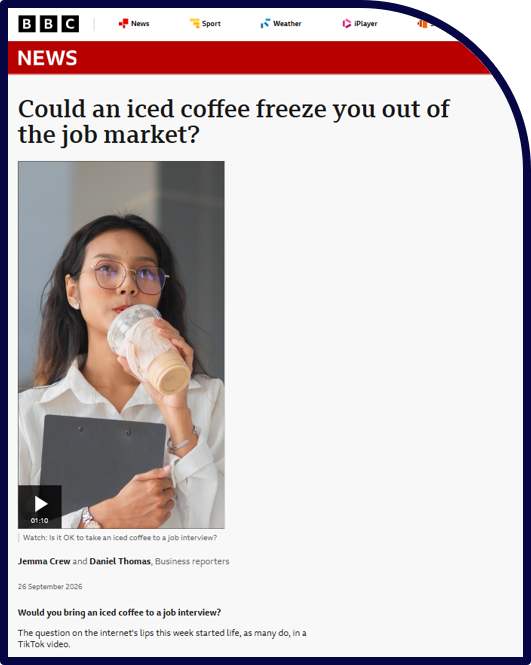
A recent BBC News article highlighted an unexpected hot debate on social media: should candidates bring an iced coffee to a job interview? Some recruiters suggested it can appear too casual, while others questioned whether something as simple as a drink should matter at all. The challenges of unwritten expectations can be felt all the way from application to interview stage, and in employment itself.
It’s actually not about the coffee
It seems like a strange thing to argue about. Employers recruit people for their skills, experience and potential, not their choice of coffee. Right? Well yes… and no. When employers talk about professionalism, they usually mean an awareness of context. Can you read the room? Do you understand the culture you’re stepping into? Can you adapt your approach when needed?
Present yourself as a good fit, without losing yourself
So, you’ve done all your interview preparation, got the STAR technique nailed and gathered examples that demonstrate your skills. Here our top 5 things to think about on the day of the interview itself:
1. If in doubt, smarter is better
Dress smarter than the general dress code of the workplace you’re interviewing for (employers often expect interviewees to be smarter than everyday wear).
- Safe options: Smart trousers, shirts, blouses, skirts or dresses, smart shoes (if formal dress is the norm in the organisation, choose black over brown). A blazer if you have one.
- Avoid: Denim jeans, slogan t-shirts, clothes that show underwear, flip flops and trainers. Discreet jewellery is probably safe but if you tend to wear big earrings, necklaces or have a lot of piercings, think about editing down for the day.
2. Body talk can build your confidence
Awareness of your body language can help you look and feel more confident and open.
- Posture: Sit upright – it helps convey engagement.
- Position: Avoid folding your arms, it’s a ‘closed’ position and can give the impression you’re being defensive. Consciously open your arms and place them on the handrests of your chair, or on your lap. Try uncrossing your legs if that feels comfortable to you (but only if it feels natural).
3. Eye contact or not
Make eye contact occasionally if you’re comfortable with that. If not, try looking above the interviewer’s eyes, at their forehead. It can help give the impression of making a connection.
4. Think before you speak – you’re allowed
Nerves can make us speak too quickly, which can trip up our words and can reduce our confidence. If you think you’re speaking too slowly and pronouncing every word… it probably sounds normal speed to the interviewer. Also, don’t be afraid to pause and consider your next answer if you need a moment.
5. If in doubt, leave it out
Maximise your chances by avoiding things that may or may not be controversial. We’re back to the iced coffee: many interviewers wouldn’t mind… but some would. Why risk it when going in with nothing in your hands could never offend?
The bigger lesson
Whether it’s an iced coffee, what to wear to an interview, or what to expect on your first day, success is about feeling confident enough to navigate different environments and make informed choices.
About the authors

Helen Powell is an Employability Adviser in the OU’s Careers and Employability Services. She helps students and alumni achieve their ambitions and fulfil their potential through one-to-one appointments and email advice.

Penny Beecroft is an OU Careers and Employability Consultant specialising in supporting students in Wales. Penny helps students navigate their futures, figure out their goals and build their confidence through one-to-one appointments and by designing career learning events and resources for the OU.
Explore the rest of the Careers Stories page for more articles from the Careers and Employability Services team.


-
Follow us on Social media
-


