
A blog about design at the OU.
-
Beyond the Green House: Reflecting on Design, Climate Resilience and Reciprocity After the Nepal Flooding
When news broke of the devastating flash floods along Nepal’s Trishuli River in Nuwakot in September, one image immediately captured global attention: a four-decade-old, mint-green house standing completely solitary amidst a sea of mud and debris in Dunge Bazaar. While surrounding unreinforced stone masonry collapsed under the lateral surge of floodwaters, this single building held…
-
How is the Open University making sense of the changing relationship between students, learning and generative AI?
A few colleagues and I are working on a Pan-University scholarship project exploring GenAI in learning at the Open University (OU). The first part of the project involved a scoping review of research and scholarship publications, reports, and initiatives from across the OU between 2023 and 2026. We are interested in three interconnected dimensions: student…
-
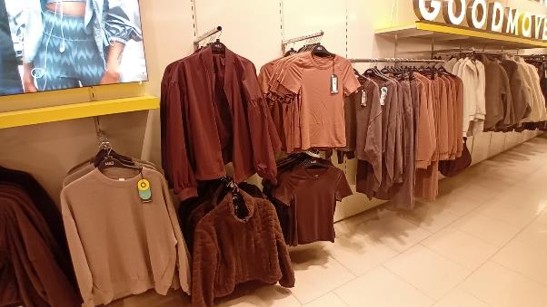
Brownwashing (and brown washing)!
Clinging onto summer last month, I wore a colourful short dress whilst visiting a butterfly farm. It proved a hit with the residents, although I somewhat regretted my choice as I felt the creep of spindly legs crawling up my own. Colour attracts, whether we are humans, animals or insects. John Lewis knows its power…
-
Takeaways from Research Room #9: Community Research Hubs
Last week, we gathered online for Research Room 9: Community Research Hubs, where one of our long-standing partners, ISRAAC Somali Community Association in Sheffield, led a conversation on the opportunities and challenges of developing community research and innovation hubs. The discussion brought together representatives from ISRAAC, The Glass-House Community Led Design, the Open University Design Group…
-
The progressive designer’s dilemma
A recent bit of Milton Keynes motorist online anger got me to reflect on a key design dilemma. What happens when you design something but those implementing and using that design simply do not share your design ethos? Faced with increasing serious traffic accidents on several sections of the main ‘grid’ roads in Milton Keynes,…
-
Takeaways from Research Room #8: Prototyping Utopias
Research Rooms are informal online spaces for discussion with members of research teams from academia, practice and communities, organised by The Glass-House Community Led Design and the Design Group. We kicked-off the 2026-2027 series with a look back on the project Prototyping Utopias and explored a variety of topics and questions around the value of future thinking, and how creative…
-
Is Everything Starting to Look Like a Nail?
What Maslow’s hammer and design fixation has taught me about methods, power, and adaptive design practice by Rachel A.Wood Most of us know Maslow’s hierarchy of needs. Less familiar, but equally useful for designers, is Maslow’s hammer: the tendency to treat every problem as if it can be solved by the tool already in hand.…
-
Narrative Beyond the Page
Reflections on Professor Karen Ferreira-Meyers’s Visit to The Open University From 1 to 4 September 2026, The Open University had the pleasure of hosting Professor Karen Ferreira-Meyers, a leading scholar of autofiction, life writing, autobiographical research and open education. The visit was organised through the Visiting Professor Programme and gave Professor Ferreira-Meyers the opportunity to…
-

Rethinking Feedback: Supporting Engagement in a Neurodiverse Higher Education Landscape
It’s late in the evening; a student prepares to open their feedback; they hesitate… For many students, receiving formative feedback is routine, expected, perhaps even welcomed. For others, it can be accompanied by tension, uncertainty, or fear. Formative feedback remains one of higher education’s most powerful teaching tools, shaping learning and supporting development. Yet despite…


