
October is Black History Month. This year the theme is “Standing Firm in Power and Pride”, honouring the resilience, leadership, and cultural identity of Black communities while marking key anniversaries such as 60 years since the Race Relations Act and the death of Malcolm X.

Black History Month.
Mathematics and Statistics are often thought of as neutral or objective subjects, but the way we teach, learn, and engage with them is shaped by our experiences, cultures, and opportunities. The act of doing mathematics is a human activity that is universal, shared, and also deeply personal.
We recognise the limitations of our mathematics and statistics curriculum, which draws on mathematical ideas from across the globe, but is rooted in Eurocentric traditions. As we celebrate Black History Month, it is important to spotlight the extraordinary contributions of Black mathematicians: those individuals whose brilliance and perseverance have shaped not only the field of mathematics but also the course of history.
One such trailblazer is Katherine Johnson, whose story reminds us that mathematics is not just about numbers, it’s about courage, precision, and breaking barriers.
Katherine Johnson: The Mathematician Who Sent Us to the Moon
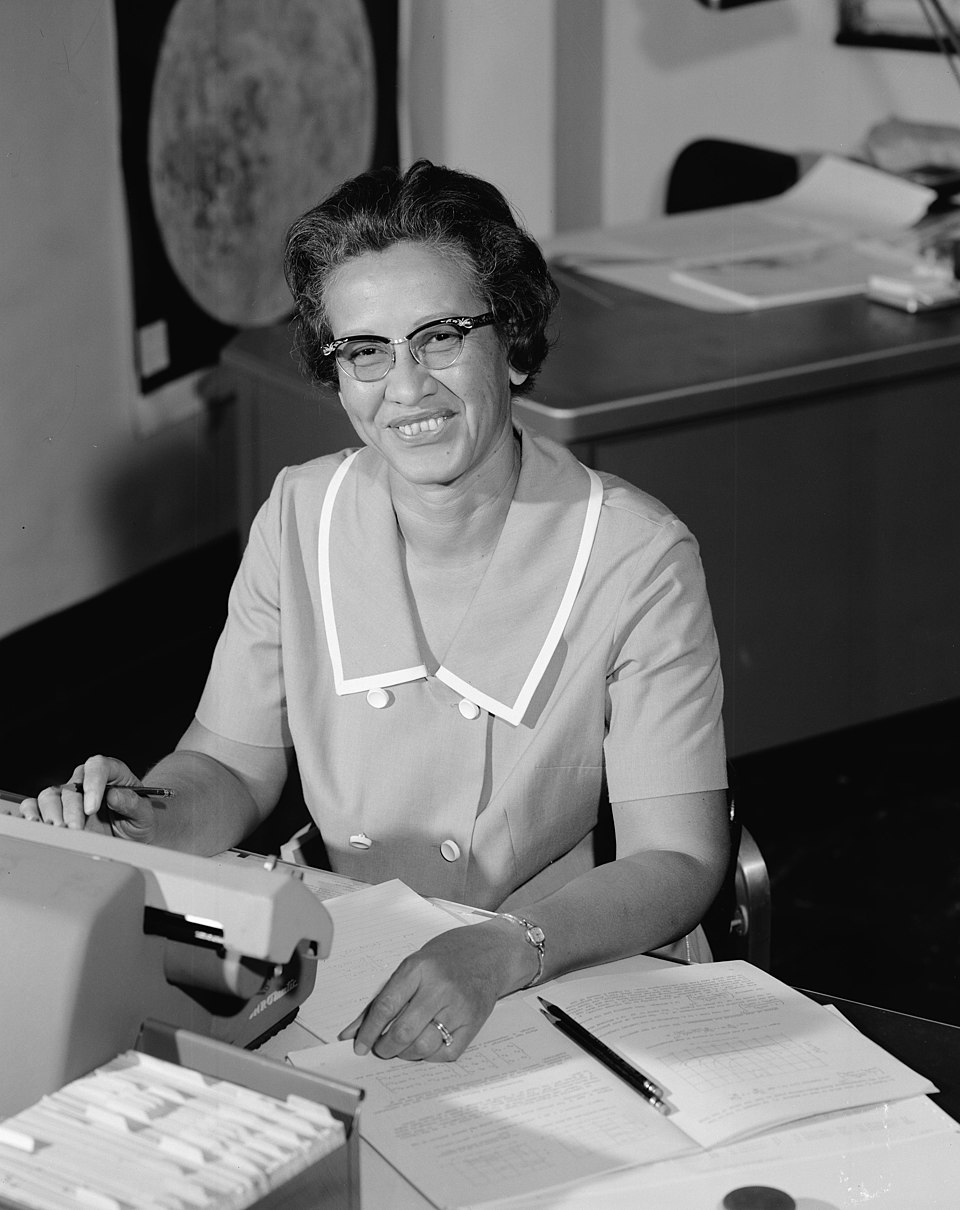
Katherine Johnson working at NASA in 1966.
(Photo credit: NASA)
Katherine Johnson (1918–2020) was a pioneering NASA mathematician whose calculations were critical to the success of major space missions. She performed trajectory analysis for Alan Shepard’s 1961 flight, the first American in space, and famously verified the computer-generated calculations for John Glenn’s 1962 orbital flight at Glenn’s personal request. Her work also contributed to the Apollo 11 Moon landing in 1969.
Johnson’s career spanned over three decades at NASA, where she broke racial and gender barriers in a segregated America. Her story, along with those of Dorothy Vaughan and Mary Jackson, was popularized in the book and film Hidden Figures, bringing long-overdue recognition to the Black women who helped launch the space age.
Her legacy is not just in the missions she helped succeed, but in the inspiration she provided to generations of students, especially young Black girls, who saw in her a reflection of their own potential.
Read more about Katherine on Open Learn here: Katherine Johnson: NASA mathematician and much-needed role model | OpenLearn – Open University
Dr Nira Chamberlain: Modelling the Future of Mathematics
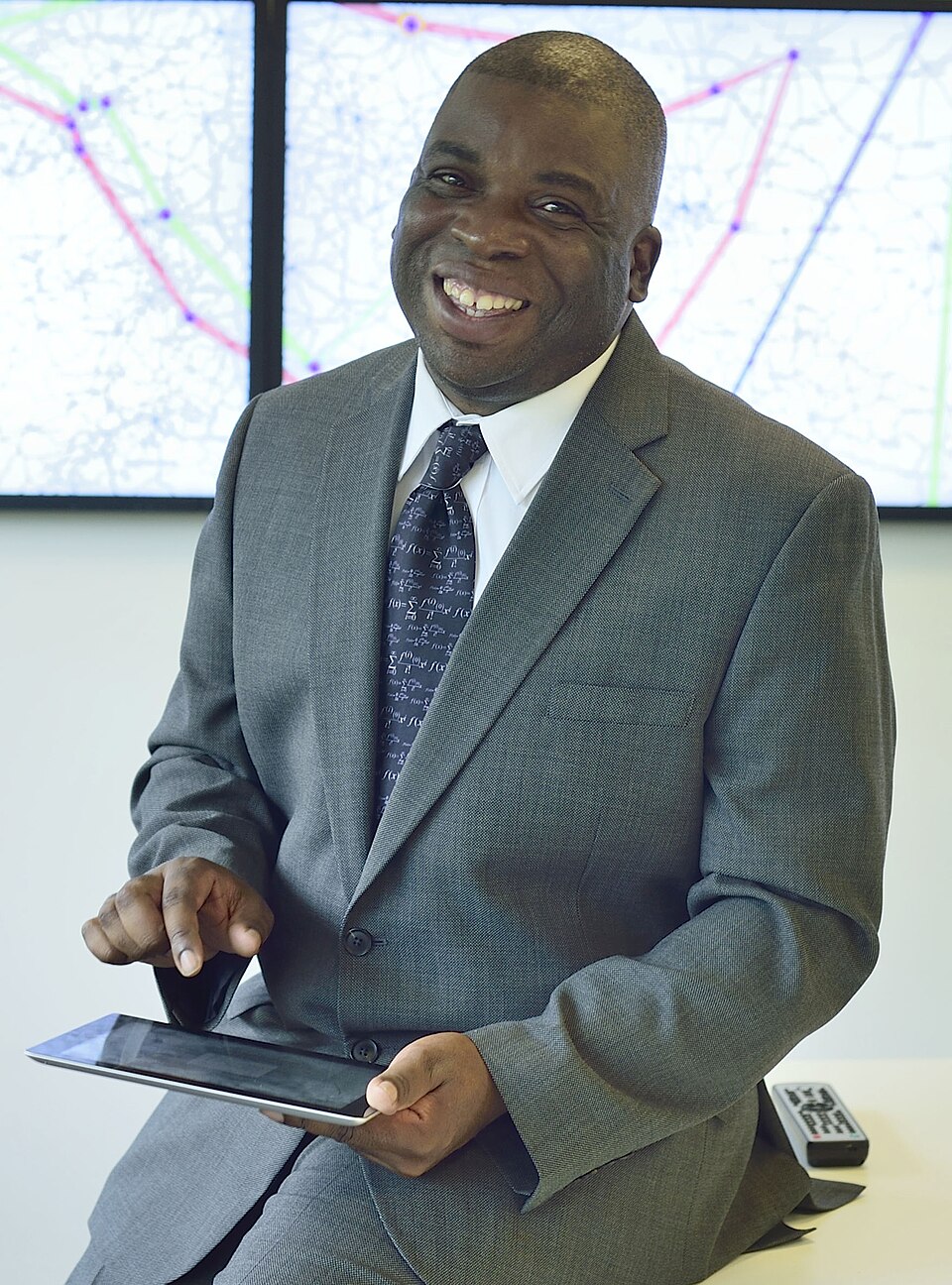
Professor Nira Chamberlain OBE
(Photo credit: Nira Chamberlain)
While Katherine Johnson’s legacy reminds us of the power of mathematics to break barriers and reach new frontiers, today we continue to see that same brilliance in mathematicians like Dr Nira Chamberlain, a leading figure in British mathematics.
Dr Chamberlain is an award-winning mathematician known for applying complex mathematical modelling to real-world problems, from predicting the lifetime costs of naval ships to solving industrial challenges across Europe and Africa. He holds a PhD in mathematical modelling and was named one of the UK’s top scientists by the Science Council. In 2020, he became President of the Institute of Mathematics and its Applications. Beyond his technical achievements, Dr Chamberlain is a passionate advocate for diversity in STEM, regularly speaking to young people about the power of mathematics and the importance of representation.
Read more about Nira’s work here: Professor Nira Chamberlain OBE CMATH FIMA CSc – Professional Mathematician
A legacy of Black excellence in mathematics
While Katherine Johnson and Dr Nira Chamberlain offer powerful examples of Black excellence in mathematics from the past and present, they are part of a much wider legacy. From Benjamin Banneker, who predicted solar eclipses in the 18th century, to David Blackwell, a pioneer in statistics and game theory whose work led to the Rao-Blackwell theorem, Black mathematicians have made profound contributions across centuries and continents.
In the UK, figures like Francis Williams, a pioneering mathematics scholar in the 18th century who taught mathematics, and Dr Maggie Aderin-Pocock, a space scientist and science communicator who uses mathematical modelling in her work today and inspires young people through outreach and media, show how mathematical thinking continues to shape our understanding of the world.
This Black History Month, I invite you to explore these stories further. Whether you are an educator, student, or simply curious, take time to discover the lives and legacies of Black mathematicians whose work deserves to be known, celebrated, and taught.
An excellent place to start at would be The Open University Black STEM hub: created by and for Black STEM students as a dedicated space by and for Black STEM students. You can find out more about the students and staff involved here: Black STEM Hub | Faculty of Science, Technology, Engineering & Mathematics

OU Black STEM hub
Resources and further reading
- BHM Open Learn resources: Black History Month | OpenLearn – Open University
- Open University library resources: Black History | Library Services | Open University
- The OU Race and ethnicity hub resources: Race and Ethnicity Hub | OpenLearn – Open University

Race and Ethnicity Hub