50 years in the OU – by Lorna Hardwick

This is the first in a series of blog posts that will look back at the history of the Department of Classical Studies at the Open University, on the occasion of the OU’s 50th anniversary. 

Lorna Hardwick was a part-time tutor on the very first OU Arts Foundation course in 1971 and was appointed as a Staff Tutor in Arts in the East Anglian Region in 1976. When Classical Studies became a separate department she was its first HoD (‘Head of Department’). She was made Professor of Classical Studies in 2002. Lorna was an author on all the Classical Studies courses as well as on several interdisciplinary ones up until her retirement in 2010 when she was appointed as Professor Emerita. She has supervised many PhD students in the OU and other universities and is the joint series editor of Classical Presences (Oxford University Press). She directed the research project on the Reception of Classical Texts in Drama and Poetry, c.1970-2005, was the founding editor of the Classical Receptions Journal (Oxford) and of the OU online journals Practitioners’ Voices and New Voices. She is currently the Convenor of an international research group Classics And Poetry Now, which works collaboratively to explore the range of relationships between ancient and modern poetry. Here she reflects, not entirely reverently, on some of the key aspects in the history of CS in the OU.

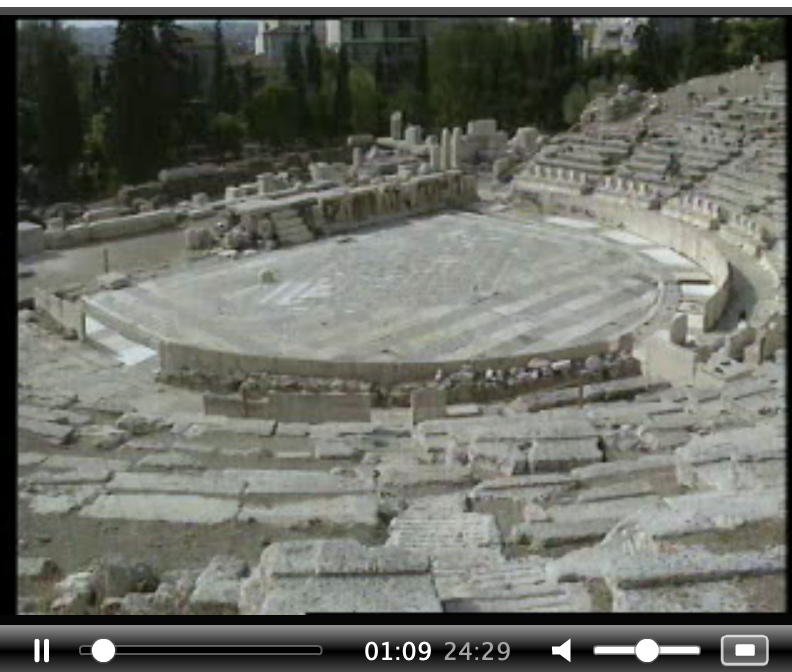
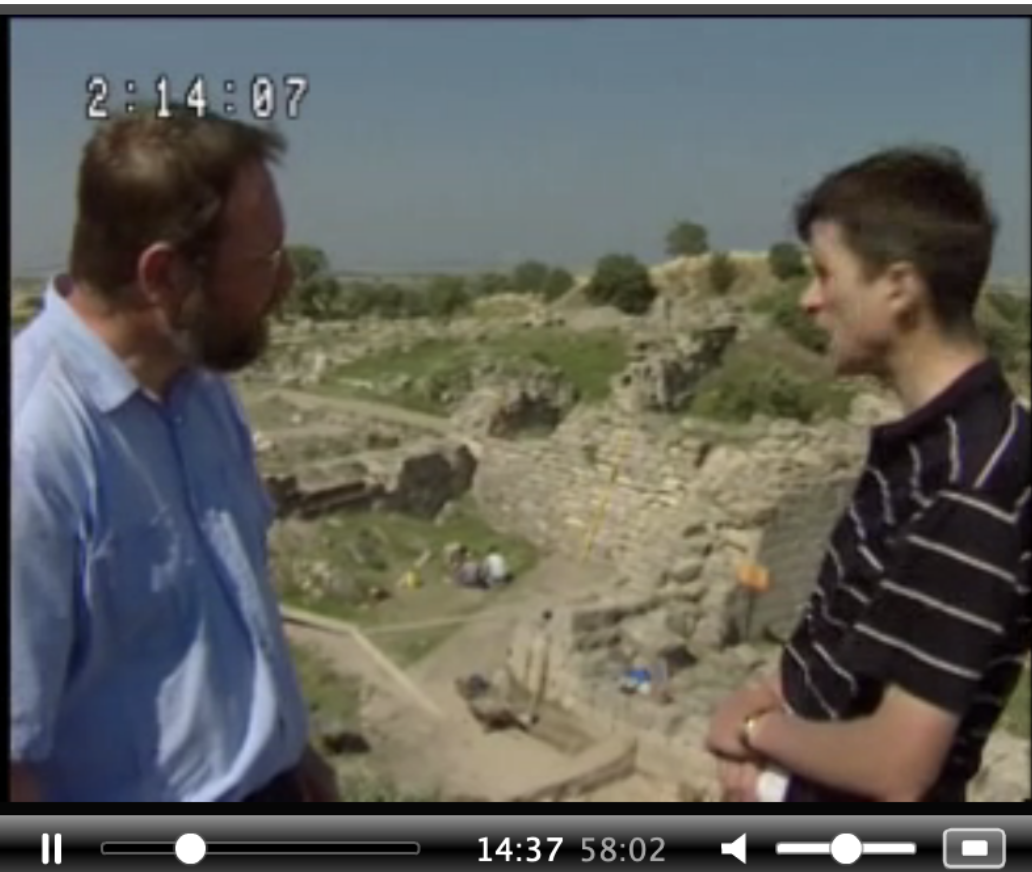
The history of Classical Studies in the Open University has been well documented (Ferguson 1974; Hardwick 2003). There have been highs and lows as well as moments when we might have thought we were in the Theatre of the Absurd. A whole essay could be written about the contributions of students and tutors and the collaborations with the BBC that included the stunning overhead film of Masada (Roman Judaea), the commissioning of Tom Paulin’s play Seize the Fire (a version of Aeschylus’ Prometheus Bound) and the extensive material on the archaeology of Troy.  However, in my contribution to this 50 Years Blog I’d like to stand back and focus on what is revealed by the social history of Classical Studies and its environment inside and outside the OU.

The founding Dean of the Arts Faculty, John Ferguson was a classicist and insisted that the subject was embedded in early courses (now called modules). The effects, especially when seen from a distance, were paradoxical.  Ferguson was a liberal scholar who in many ways was ahead of his time, especially in his determination that classical study should be open to all and that it had a big part to play in dialogue with other subject areas. He had spent time teaching in Nigeria and had a strongly internationalist outlook, insisting that the Arts Faculty’s inaugural first level course (which started in 1971) included a study of Yoruba history and culture. This was widely ridiculed at the time as an eccentric aspiration (and in hindsight its execution might have reinforced polarities between European traditions and those of the exotic ‘Other’), but the insight that students should be made aware of pluralism was sound. Ferguson’s global perspective also sat paradoxically with his view (set out in his Greece and Rome article of 1974) that classical studies was at the root of what he called ‘our western culture’. There has subsequently been extensive work to analyse the forms and implications of such perspectives (see most recently Mac Sweeney et. al., 2019). The limits of liberal humanism were also revealed in the strongly masculine staff profile of the OU at its inception, especially in senior posts. Ferguson’s Greece and Rome article even managed to refer to a female ancient historian in terms of her husband’s career. Those beginnings offer a salutary warning that even the most prescient can be unwitting prisoners of the norms of their own time, which they then transmit to others. Celebrations of progress are best tempered by a critical look at underlying assumptions and that is as true today as it was then.

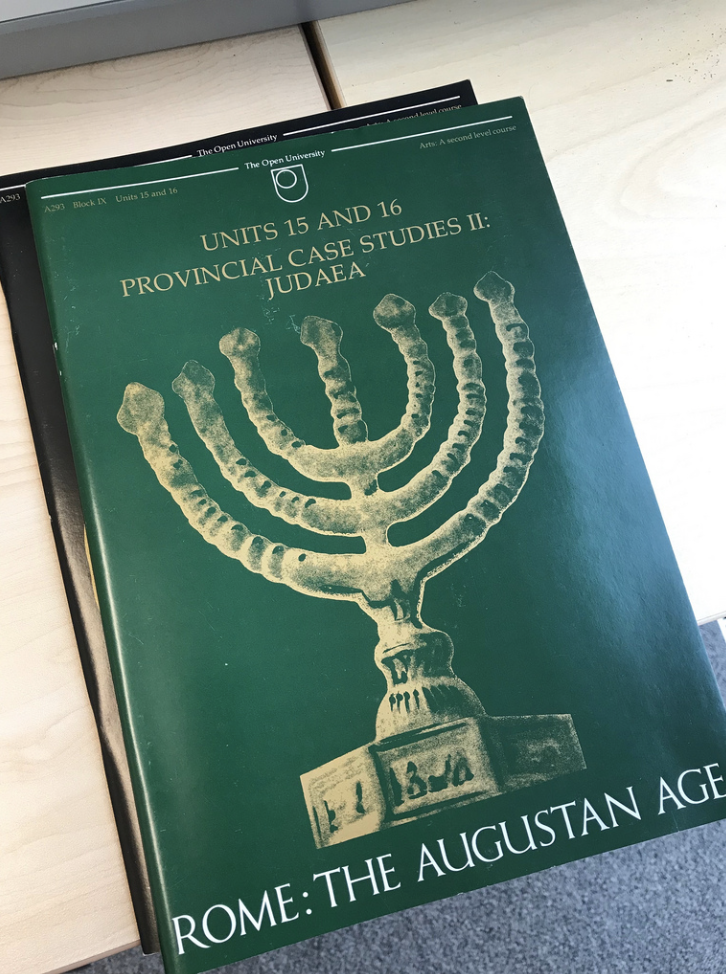
Seven Branched Candlestick. Cover for Units 15-16, case study of Judaea for A293: Rome the Augustan Age (1982-1992). The course included case studies of Provinces in the Roman Empire (including Roman Britain) enabling students to compare and contrast the experience of resistance to Rome and incorporation into the Empire. The seven branched candlestick is a symbol of Jewish religion and cultural identity. It was used by the Romans on their coinage to advertise their victory.

Cover for Units 15-16, case study of Judaea for A293: Rome the Augustan Age (1982-1992). The course included case studies of Provinces in the Roman Empire (including Roman Britain) enabling students to compare and contrast the experience of resistance to Rome and incorporation into the Empire. The seven branched candlestick is a symbol of Jewish religion and cultural identity. It was used by the Romans on their coinage to advertise their victory.

I felt the full force of the unreconstructed gender prejudice of the time when I was interviewed in 1976 for a full time post and the bulk of both the interviews I had was spent quizzing me on why I was prepared to move when I was the mother of a small child and whether this meant that ‘the marriage had broken down’ (sic). Astonishingly, perhaps, I was appointed. My euphoric assumption that this must have been because of my intellectual merit was quickly shattered when I discovered soon afterwards that the decisive factor was that it was considered that I might be able to stand up to a troublesome (non-Classicist) colleague. This was a small example of the power of internal politics to open or close doors and I soon found that this was a big factor in the place of CS in the OU as a whole. When Ferguson left the OU there was a big backlash against CS – its dependence on the Dean’s patronage was perhaps summed up in the metaphor used to describe Ferguson’s relationship with senior management elsewhere in the university; ‘the Barons at the court of King John’. Ferguson’s successor as Dean wanted CS abolished and systematically excluded it from the next two Arts Foundation courses. Much had to be done by stealth, including making sure that CS contributed to the high population interdisciplinary courses.

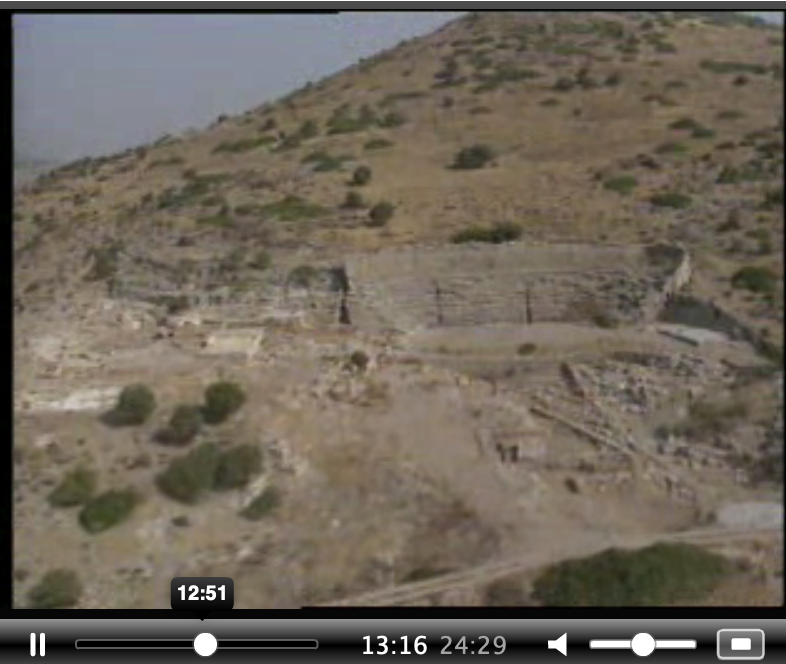
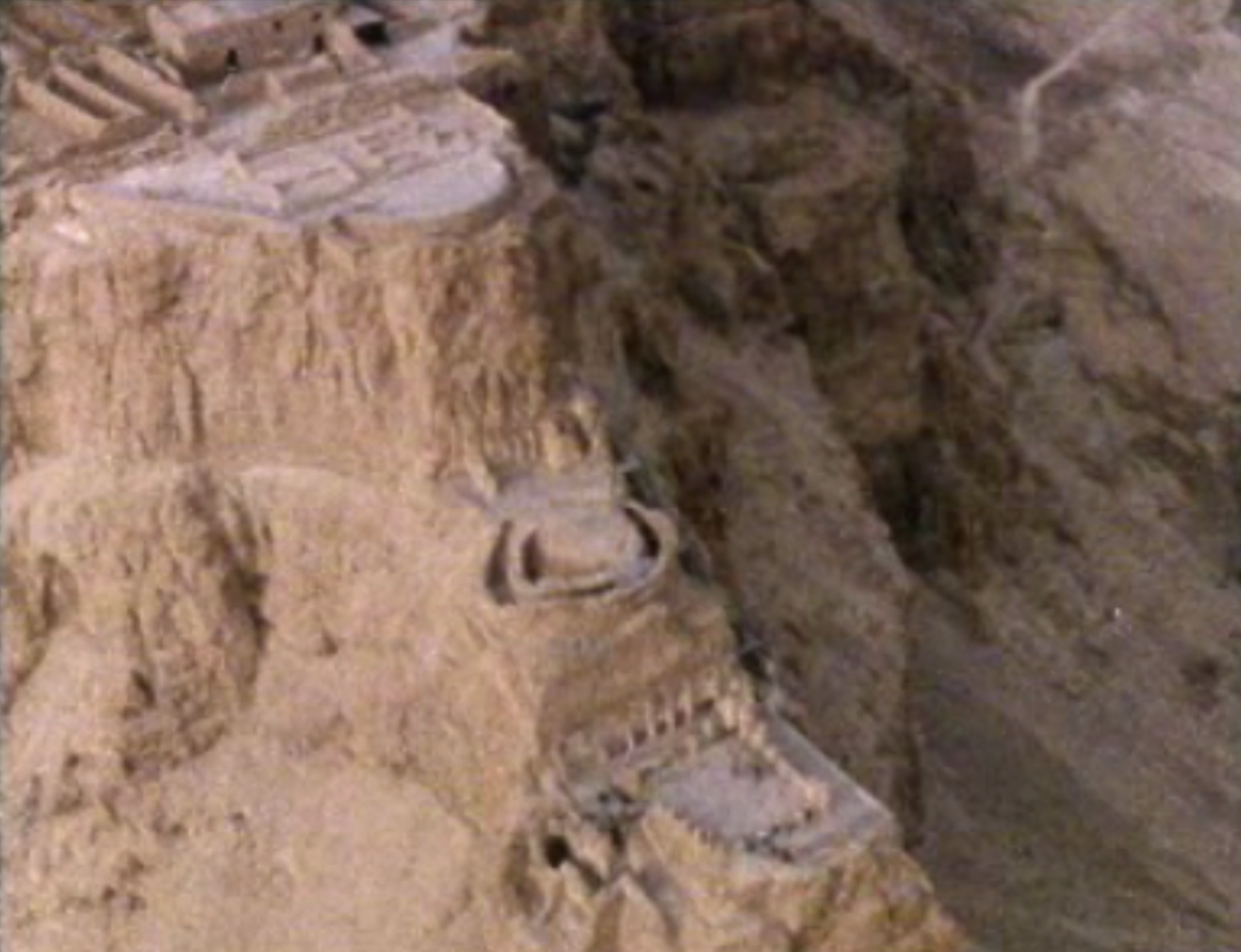
Aerial shots of the fortress of Masada, the site of Jewish resistance in the revolt against Roman rule 66-74CE. Masada had been built by King Herod in the first century CE on a plateau overlooking the Dead Sea and is now a UNESCO World Heritage site. The Roman siege of Masada and the last stand of the Sicarii defenders was described by the Jewish historian Josephus. The course reviewed the written and archaeological evidence relating to his account.

Aerial shots of the fortress of Masada, the site of Jewish resistance in the revolt against Roman rule 66-74CE. Masada had been built by King Herod in the first century CE on a plateau overlooking the Dead Sea and is now a UNESCO World Heritage site. The Roman siege of Masada and the last stand of the Sicarii defenders was described by the Jewish historian Josephus. The A293 course reviewed the written and archaeological evidence relating to his account.

I also discovered in the early days that class prejudice, even in the OU, mirrored the assumptions of its time. For example, I had to fight a hard battle to prevent the faculty from stipulating, when Ferguson retired, that for the relatively junior appointment that was then permitted the short-list should be confined to candidates who had attended Oxford or Cambridge universities. Many part-time tutors were women and, in the light of this and because they were paid on a ‘piece-work’ basis, they were sometimes disparaged by senior management as ‘pin-money tutors’ (although never by Ferguson, who gave impeccably courteous responses to suggestions and criticism sent in by tutors). Classical Studies at that time was not a separate department but with other smaller disciplines was characterized as a ‘working area group’ (this was the first and, I hope, the last time in my career when I have been a WAG).

Changes in the Classical Studies curriculum over the last 50 years have been partly evolutionary, partly achieved through challenging dominant norms and partly responsive to the broadening of its constituency of students. In the 1970s and 1980s the study of Greek and Roman antiquity was largely thought to include two aspects: study of literary and historiographical texts in the original languages and the study of society in terms of politics and war. Social History, as opposed to military and political history, was frequently marginalised as a ‘soft’ option (what might be called ‘ladies’ history without the hoplites’). Nowadays Social History is central to the subject area nationally and internationally. The early OU Classical Studies courses contributed to that development but trod gently. They did include Social History but as separate sections with revealing headings such as ‘Women’ and ‘Slaves’.  This gradualism in acceptance and then mainstreaming of new areas of study is a characteristic of Classics and Ancient History in general, a more recent example being Reception Studies (Brockliss et al., 2012).

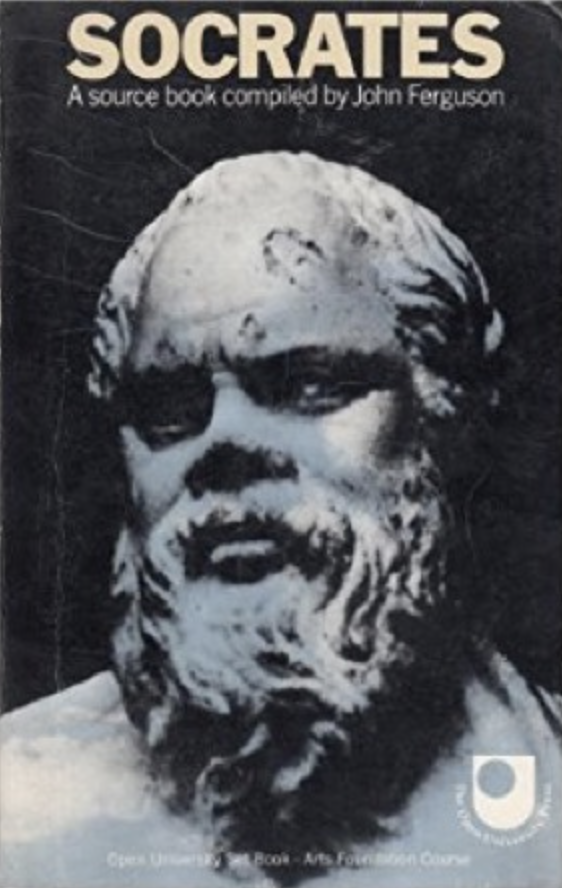
Cover of the source book that accompanied the ‘Which was Socrates?’ section of the very first Arts Foundation course, A100 (1971 – 1977). This substantial source book, edited by John Ferguson contained translations of virtually all the ancient sources that referred to Socrates and students were taught how to evaluate and compare these.

Cover of the source book that accompanied the ‘Which was Socrates?’ section of the very first Arts Foundation course, A100 (1971 – 1977). This substantial source book, edited by John Ferguson contained translations of virtually all the ancient sources that referred to Socrates and students were taught how to evaluate and compare these.

Also marginalised in the subject community as a whole (and associated with both gender and class assumptions) was the reading of ancient texts through translations. The attitude of OU course approval committees, both in the Faculty and in the wider university, to the introduction of classical language teaching was a bizarre mixture of incredulity and patronizing contempt for mature students. It was argued that OU students wouldn’t want to learn the languages as these were irrelevant and elitist (note the conjunction) and, even if they did so wish, OU students would not be intellectually capable (at their age and with their lack of access to classical languages at school……). That hot-potch of prejudices was then deployed to argue that since the OU taught CS through translation the discipline would not have the respect of other universities and so should wither away. The outcome of much determination and support from the more enlightened Deans of the 1990s was that after a few years the OU was teaching Greek to more students than the rest of the UK universities put together. However, attitudes in the wider community to adult and life-long learning could still be ignorant and dismissive. One Minister for Higher Education commented when he addressed the Council of University Classical Departments that ‘all adult education is merely remedial’ and that it should therefore be of no interest to universities. He got a rough ride from the CUCD, which I found encouraging.

Gaining the respect of other universities was important for CS in the OU in the 1980s and into the 90s. There were positive sides to this – for example, distinguished classicists and ancient historians agreed to be examiners and course assessors. We and our students benefited enormously from this (although my plagiarism from Swallows and Amazons that ‘if duffers better drowned and if not duffers won’t drown’ was not universally appreciated). Nevertheless, approval from the classics community did not always bring rewards from the OU. When we gained a maximum score in the Teaching Quality Assessment in 2001, the response of the OU leadership was to cancel an additional post that we had already been allocated, on the basis that we clearly didn’t need any additional staff!  It was unfortunate that national teaching assessments did not bring with them any resources – in contrast to research assessment, which (as I found when I was a member of an assessment panel) actually rewarded successful departments.

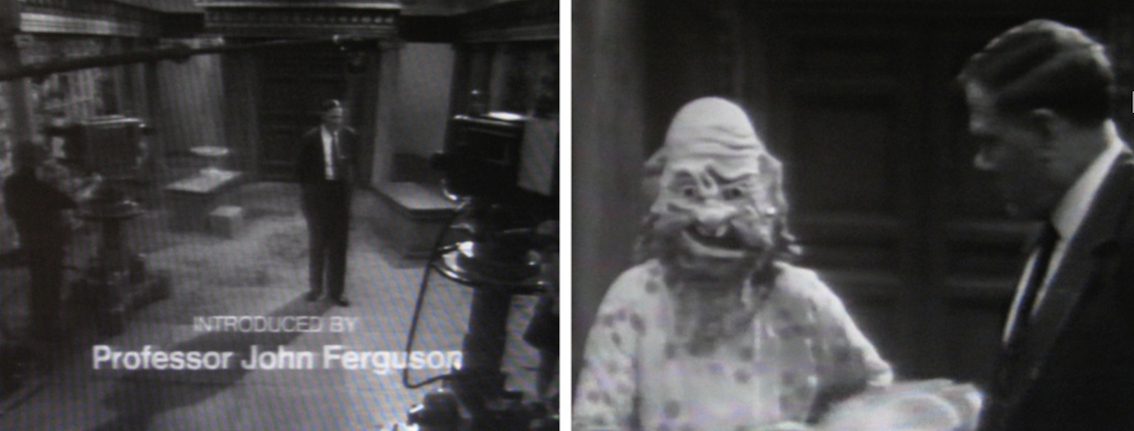
7.John Ferguson with masked actor. Aristophanes’ comedy The Clouds was one of the sources read by students for their study of Socrates. A BBC TV programme dramatized extracts from the play, including the scene in which Socrates is suspended from a basket. The programme was shown on TV in the early evening and provoked protests from general viewers who objected to the scatalogical language of Aristophanes’ play. Some even wrote to the national press to complain that OU students were getting their degrees by sitting in their armchairs watching obscene drama on TV.

John Ferguson with masked actor. Aristophanes’ comedy The Clouds was one of the sources read by students for their study of Socrates. A BBC TV programme dramatized extracts from the play, including the scene in which Socrates is suspended from a basket. The programme was shown on TV in the early evening and provoked protests from general viewers who objected to the scatalogical language of Aristophanes’ play. Some even wrote to the national press to complain that OU students were getting their degrees by sitting in their armchairs watching obscene drama on TV.

Emphasis on gaining the approval of our colleagues elsewhere in the HE system had its drawbacks as well as its advantages.  I think we were too slow, and perhaps too timid, to push ahead with a fully integrated pedagogy of language learning and translation. This can work effectively in both directions by including ‘language awareness’ strands in courses taught through translation and by teaching students how to compare different translations of key passages. I wish now that we had grasped the nettle earlier and challenged the entrenched belief (which still persists in some quarters) that reading through translation was essentially inferior, rather than different. Reading through translation is now an accepted strand in CS in all universities, although it is not systematically taught everywhere. Eventually, OU second level modules did explore this but we should have done it sooner. We could have used our courses more adventurously to transform perceptions by enabling students, and tutors, to experience how translation and text can inform one another. This is just one example of how research and pedagogy can work together. Translation Studies research has brought forward new models of how source languages, epistemology and translation interact. The nexus between classical languages and translation has played a significant part in this (Bassnett 2014).

The other area in which I wish we could have made swifter progress is in helping our students to explore and understand how study of antiquity is not the preserve of any one cultural tradition.  The cultures of antiquity are pre-Christian (to a large extent) and pre-Islamic but are transmitted by and important for both traditions. They provide not only critical distance from the present but also a field where different perspectives and world-views can be studied in a non-polarized way. The OU course Homer: Poetry and Society included a ground-breaking section that compared performance of story-telling in Indian and Homeric oral poetry. The performance of Greek plays around the world has provided excellent primary material that has been included in OU courses at Honours and Masters level (Mee and Foley, 2011). Taking Classics out of its nervously ‘niche’ closet and re-engaging with the study of cultures and their interactions provides a substantial challenge but also an opportunity for developing the lines of enquiry and working methods that are imperative in the modern world. After all, the plural and diverse threads in ‘European culture’ are rapidly transforming it and there are radical questions to be asked about the extent to which classically derived traditions have been at worst instrumental and at best complicit in racialising and marginalising others.

I realise that emphasising the substantial potential of Classics for deepening critical analysis and comparison does run the risk of collapsing into a claim of ‘exceptionalism’, an approach associated with the imposition of special authority. So I prefer to use the word ‘distinctive’. There are indeed distinctive ways in which the study of Greek and Roman antiquity and its reception can not only ensure that future generations get to experience these exciting texts and material culture, it can also provide critical comparisons for other times, places and languages right up to the present. It has become a mantra to say that the ancient texts are ‘good to think with’. I think this is true, provided that we do not suppress the darker sides. They also make us think! Given the current public debates about suppressing or erasing the unacceptable aspects of the relatively recent past and its texts and monuments, the study of antiquity and of how its various aspects have been eulogised and repressed provides a critical field for addressing contentious questions, without either sanitizing or demonising the past.

Looking ahead to the next few years of teaching and research in CS, I can see that the study of ancient religion and its material and social manifestations would be a growth area.  There is also a pressing need to analyse more critically the history of scholarship and to explore how, throughout the history of the subject, the often unexamined assumptions and norms of the most influential scholars have shaped not only the interpretations of the texts but also the values that have accreted around them and which have seeped across disciplines and into society at large. Perhaps as it embarks on the next 50 years, CS in the OU can push that agenda too?

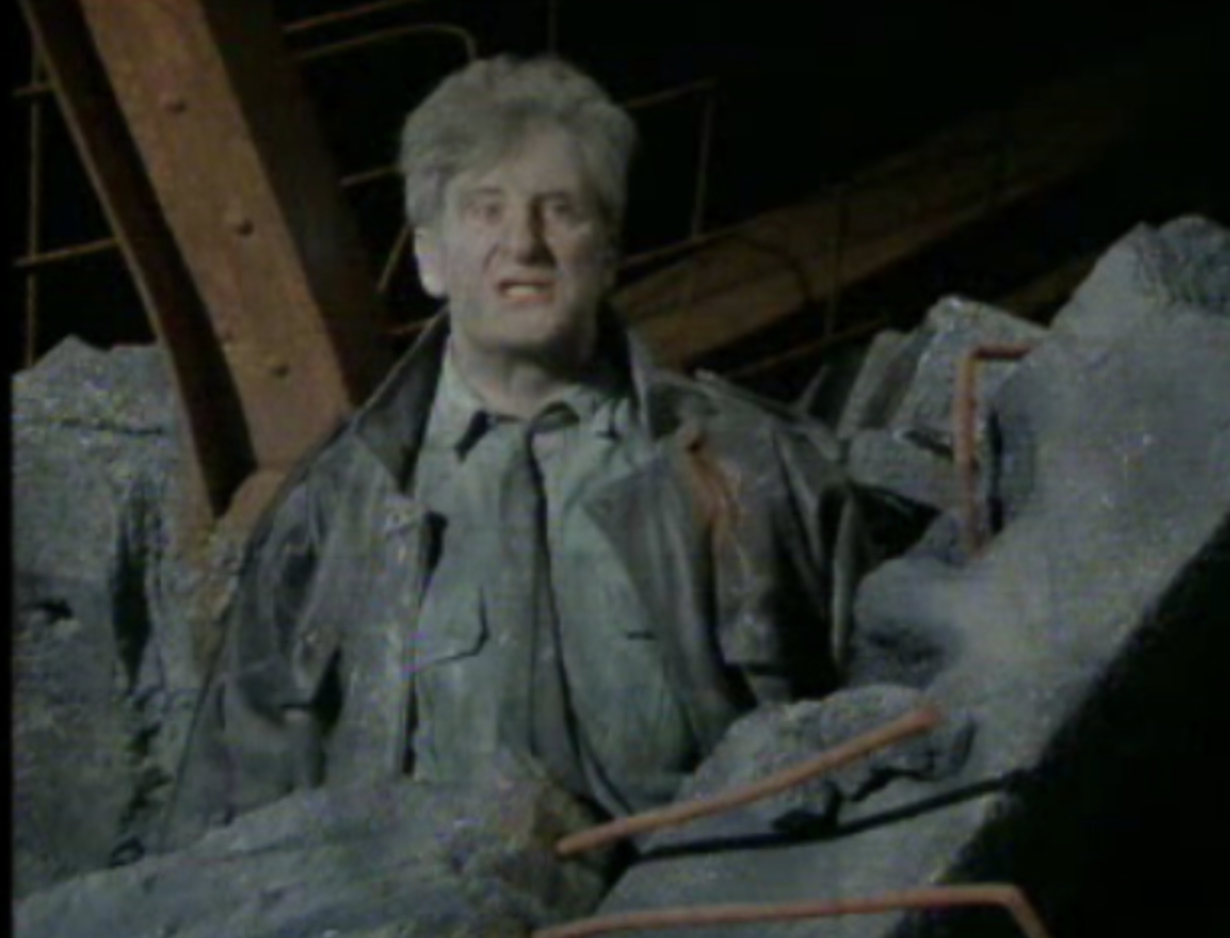
Opening scene from Seize the Fire, an adaptation by Tom Paulin of the fifth-century BCE tragedy Prometheus Bound, attributed to Aeschylus. John Franklyn-Robbins is shown as Prometheus, chained to a rock (set design by George Wisner). In the myth, Prometheus had offended the gods who retaliated by chaining him to a rock where an eagle pecked out his liver, which regenerated overnight so that the torture could continue the next day. The adaptation was commissioned by the BBC for the course A209 Fifth-century Athens: Democracy and City State (dates). The staging was directed by Tony Coe (BBC producer for the course). Published text: Tom Paulin, 1989, Seize the Fire, London: Faber and Faber. The production is documented on the database of productions of Greek drama, www.open.ac.uk//arts/research/greekplays/drama (data base number 217)

Opening scene from Seize the Fire, an adaptation by Tom Paulin of the fifth-century BCE tragedy Prometheus Bound, attributed to Aeschylus. John Franklyn-Robbins is shown as Prometheus, chained to a rock (set design by George Wisner). In the myth, Prometheus had offended the gods who retaliated by chaining him to a rock where an eagle pecked out his liver, which regenerated overnight so that the torture could continue the next day. The adaptation was commissioned by the BBC for the course A209 Fifth-century Athens: Democracy and City State (1995-2005). The staging was directed by Tony Coe (BBC producer for the course). Published text: Tom Paulin, 1989, Seize the Fire, London: Faber and Faber. The production is documented on the database of productions of Greek drama, www.open.ac.uk//arts/research/greekplays/drama (data base number 217)

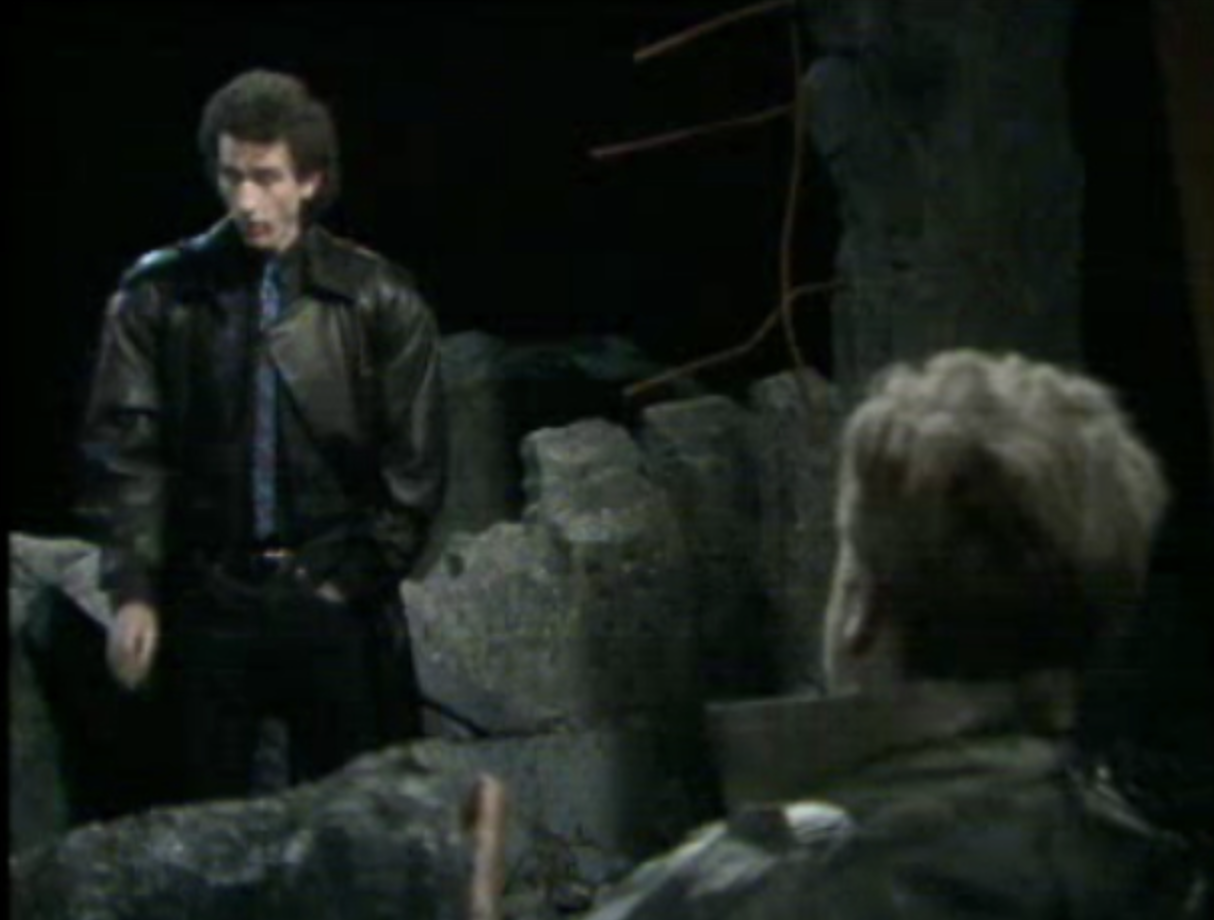
The gods’ messenger Hermes visits the chained Prometheus. Stephen Earle played Hermes as a spiv, dressed in leather jacket. His role was to try to persuade Prometheus to compromise with the gods and secure his release.

The gods’ messenger Hermes visits the chained Prometheus. Stephen Earle played Hermes as a spiv, dressed in leather jacket. His role was to try to persuade Prometheus to compromise with the gods and secure his release.

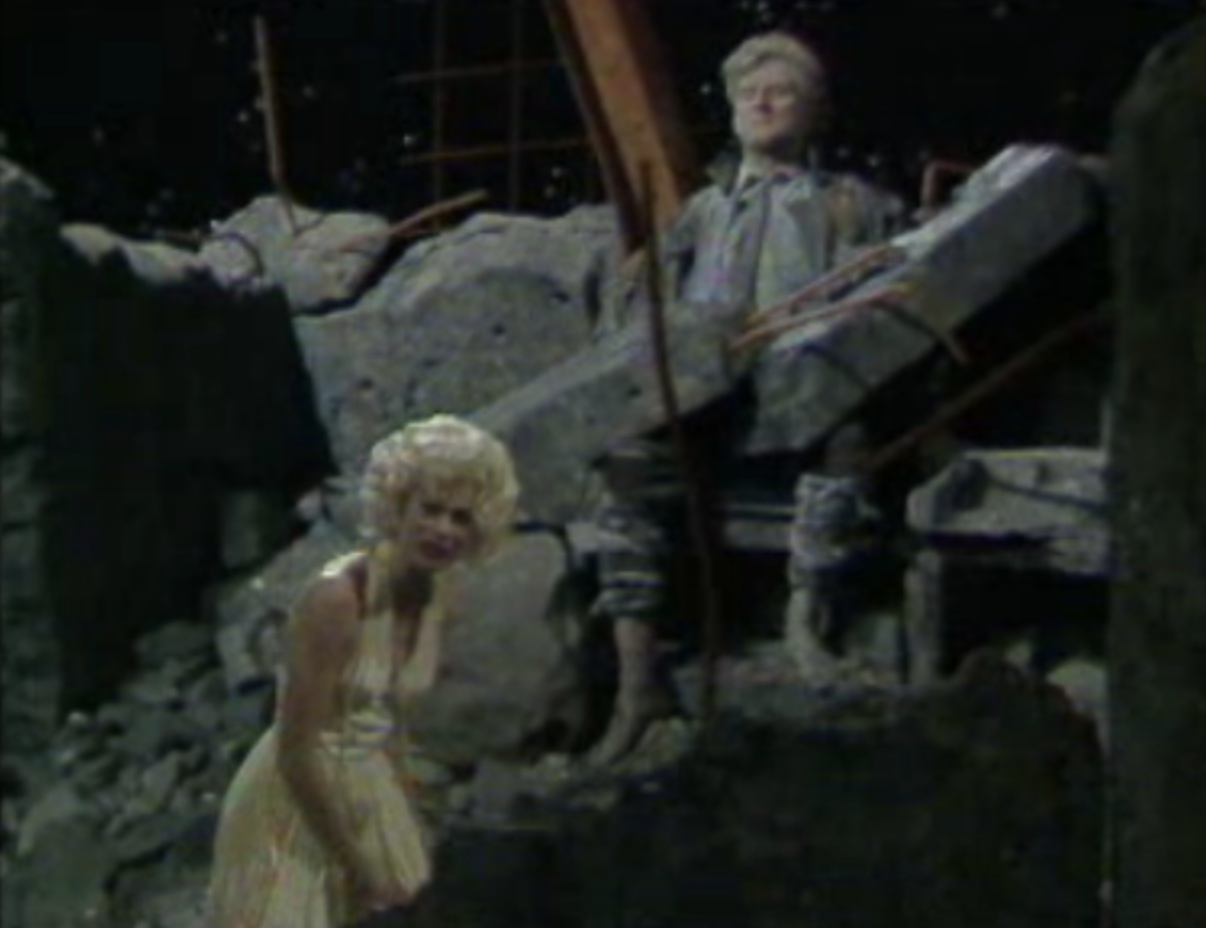
Io is shown visiting Prometheus and telling the story of her torment by Zeus who sent gadflies to pursue her round the world. Played by Julia Hills, Io was costumed as a Marilyn Monroe look-alike. Ancillary material to the course included a video clip of Marilyn Monroe singing ‘Happy Birthday Mr President’ at a birthday party held for President John F Kennedy.

Io is shown visiting Prometheus and telling the story of her torment by Zeus who sent gadflies to pursue her round the world. Played by Julia Hills, Io was costumed as a Marilyn Monroe look-alike. Ancillary material to the course included a video clip of Marilyn Monroe singing ‘Happy Birthday Mr President’ at a birthday party held for President John F Kennedy.

References:

Bassnett, S., 2014, Translation, London and New York: Routledge.

Brockliss, W., Chauduri, P., Lushkov, A.H. and Wasdin, K., eds., 2012, Reception and the Classics: An Interdisciplinary Approach to the Classical Tradition,Cambridge: Cambridge University Press.

Ferguson, J., 1974, ‘Classics in the Open University’, Greece and Rome, 21.1 (April), 1-10.

Hardwick, L, 2003, ‘For ‘Anyone who wishes’: classical studies in the Open University, 1971-2002’, in J. Morwood, ed., The Teaching of Classics, Cambridge: Cambridge University Press, 149-158.

Mac Sweeney, N., et al, 2019, ‘Claiming the Classical: the Greco-Roman World in Contemporary Political Discourse’, CUCD Bulletin 48, https://cucd.blogs.sas.ac.uk/bulletin)

Mee, E. and Foley, H.P., eds., 2011, Antigone on the Contemporary World Stage, Oxford: Oxford University Press.

The Womens Classical Committee campaigns and organises workshops on all aspects of gender and equality in teaching, research and university employment practices.

Opening Up Classical Studies – ACE Event For Schools

We are pleased to announce a rescheduled date for our livestreamed Classical Studies event for schools, hosted by the Open University and the Advocating Classics Education project. This event will be held on 1st April from 1pm-4pm.

We invite you to join us for a live and interactive online broadcast in which you can learn more about Greek drama, listen to an interview with Professor Edith Hall about her recent book Aristotle’s Way and the relevance of Aristotelian philosophy in the modern world, and join in a discussion of ancient religion and votive objects. There will also be a Q&A session for teachers interested in developing the provision of classical civilisation in their schools.

If you would like to get involved, please find our more here, or email us for full information ([email protected] or [email protected]).

Celebrating a new article by MA student Ben Cassell

We’re delighted to share this post by one of our current MA students – Ben Cassell – who has just published his first article on The Monumental Configuration of Athenian Temporality: Space, Identity and Mnemonic Trajectories of the Periklean Building Programme (full text available online, open access). In this post, Ben writes about his study journey with the Open University, and his particular interest in the academic field of Memory Studies. Congratulations on the publication of your article, Ben! 

—-

Ben Cassell writes…

“Entering my fifth year of studying Classics with the Open University has, for me, found an appropriate celebration in my having been published for the first time. This is something I consider an important personal achievement, that I know would never have been possible without my time at the University.

In relative terms I recognize my coming to Classics late. This is not to say that I ever had a disinterest in antiquity, rather it was the medieval period that always held my most fervent attention. Yet come to Classics I did, as many of us can claim I’m sure, through Homer, Euripides and Plato, and my decision to study Classics with the Open University was born out of a genuine desire to know the contexts and audiences that produced and consumed these great literary works. I studied for the BA in Classical Studies full time, with two modules in tandem, and moved straight into the MA in October 2017. I’ve done this while running my own business, and though of course both life and study have produced challenges, the time I have thus far spent studying Classics with the Open University has been the most genuinely rewarding of my life. I have made friends I know I will keep for life, and developed a genuine passion for academia.

Over this time, I have developed a keen interest in the application of Memory Studies to ancient contexts, in order to study aspects of social history, identity and power relations. I am fascinated by the methods and actions that facilitated the identities and self-perceptions that made up the cultures of Classical antiquity, and the role of memory is central to all my research. This also, naturally, includes an interest in the manner in which time itself was both constructed and experienced by differing cultural groups in antiquity. Major inspiration for me has come from the works of Aleida and Jan Assmann, especially in in their illustrating the applicability of Memory Studies to the study of ancient contexts, whilst Archaic and Classical Athens have become the focus of my research. It is on this subject that I decided to compose an entry into the Kassman Memorial Essay Prize run by the Open University in 2017, looking at the mnemonic potential exhibited in the Periklean building programme. This in turn underwent drastic expansion, including the consideration of spatial relationships and phenomenological experience, to become the first draft of my now published article last September.

The article was itself motivated by what I perceive as being an underdeveloped approach to the socio-cultural context of Athens: an analysis of the modes, means and arenas of cultural remembering, the essential mechanism for cultivating group identities, in this period. The process of writing was itself a genuine learning curve, with the first round of peer reviews being both exhilarating and imposing. I also enjoyed maintaining a working relationship with the editorial staff over the course of what became several months. Being published marks a truly significant turning point for me both as a person and a Classicist, and has solidified a theoretical direction for my future research. Indeed, for me any study of antiquity is now framed by memory. After completing my MA with the Open University I aim to complete my PhD thesis on the mnemonic trajectories afforded by Athenian ritual and space, and my proposal is presently under consideration.

While I may have come late to field, my future is in Classics. My time with the Open University has cultivated what was an interest into a passion, a lifestyle even, and my intention is use my MA and future PhD qualifications in pursuing a career in academia. My future research will include an examination of the role of Theseus in the cultural memory and temporality of Classical Athens, including his overt presence in the ritualistic landscape. I shall be discussing the general content of the research that became my article at University of the City of London’s Lyceum event in March, and the article itself can be found at http://helenskestudije.me/ojs/index.php/jhs/issue/view/2

I would like to thank all the members of the Department of Classics at the Open University for generating course material, events and an atmosphere that has truly engendered my love of Classics, and also, every one of my past and present tutors, without whose support this small achievement of mine would not have been possible.”


A letter from Provence – Alexandre Dumas and the Classics

Paul Jackson – one of our recent Open University PhD graduates – writes from Provence with exciting news of his forthcoming translations of Alexandre Dumas’ work. Thanks for keeping in touch, Paul! 

For the best part of five years I was juggling my day job as head of classics, a second master’s degree in teaching and learning in which I was investigating active learning in the Latin classroom, and a PhD on the theology of the Epicureans under the supervision of Dr Naoko Yamagata and Professor Sophie-Grace Chappell. With the master’s degree completed, my thesis was then examined by Professor Tim Whitmarsh and Dr Carolyn Price on 21 May 2015 and was passed without any corrections. The day after I handed in my notice at work, and when the term ended I followed my heart and took myself off to Provence, and there have been ever since.

Here I have been teaching literature, stuff like Sophocles’ Oedipus Rex, Shakespeare’s Julius Caesar, and Marlowe’s Doctor Faustus, and I am also an associate member of Le Centre Transdisciplinaire d’Épistémologie de la Littérature et des Arts vivants at the Université Nice-Sofia-Antipolis. Alongside this I have been publishing parts of my thesis, travel diaries, and translations of French poetry, and in 2018 a little collection of some of my own pastoral poetry was launched over here in Valbonne. However throughout all of this I have been engaged in a much bigger project, a project that first occurred to me during my PhD.

The project, I suppose, is one of classical reception, and more specifically the reception of the classical world in French literature, in particular in the works of that great feuilletoniste Alexandre Dumas, père. Now I have been an aficionado of his since reading his stories of high adventure like Captain Pamphile and The Corsican Brothers as a child, but especially so when, as a classics scholar, I learnt of his historical writings and his novels set in antiquity, works which have yet to be rendered into English despite the enduring popularity of the author beyond the borders of France, being one of the most widely read of French authors whose books have been translated into many languages and adapted for film, television, theatre, and opera on numerous occasions.

So it is then that I am engaged in producing a new series of English editions of these works through Noumena Press, in the hope of revealing a perhaps hitherto unknown side of Dumas to the English-speaking world, a perhaps more erudite side, and of showcasing the enormous range and sheer genius of Alexandre Dumas, père, who wrote some 650 books and 100,000 pages but who is of course associated more with those swashbuckling Napoleonic epics like The Count of Monte Cristo and The Three Musketeers than anything else.

The first of these editions will be published this year in 2019, namely Isaac Laquedem: A Tale of the Wandering Jew. This sweeping, sprawling epic remains largely unknown beyond the borders of France, and curiously so, because the author himself, having spent over two decades on it, claimed that this, not The Count of Monte Cristo or The Three Musketeers, was his magnum opus, and he truly thought that it would one day be recognised as a classic alongside the likes of the Iliad, Odyssey, and Aeneid! And it was indeed a hugely ambitious, and it must also be said controversial, undertaking, for in it Dumas attempts to tell, through the eyes of his Wandering Jew, the whole history of the world! It is then an epic on the grandest of scales, with Odyssean voyages and Virgilean descents down into the Underworld thrown in there and with huge philosophical and theological questions being posed throughout. It is deeply rooted in antiquity and the author draws from an unusually large pool of sources even for him, from Apuleius’ Golden Ass, Pausanias’ Description of Greece, Herodotus’ Histories, Aeschylus’ Prometheus Bound, and Philostratus’ Life of Apollonius of Tyana, for instance. I should perhaps also add that, unlike The Three Musketeers and The Count of Monte Cristo, both of which Dumas’ chief collaborator Auguste Maquet had a big hand in, it can be safely said that Isaac Laquedem represents Dumas unassisted, for the manuscript, all in Dumas’ own handwriting, was later presented by his son to the town of his birth, Villers-Cotterêts. Isaac Laquedem, this historical work set in antiquity, is then perhaps a better example of the ‘real’ Dumas than those other two.

Further information about this edition and indeed the series will be published on my website, http://paultmjackson.com, as well as on my social media pages, links to which can also be found on the website.

I hope that you enjoy discovering the classical Dumas as much as I have!

All the best for now,

Paul.

Studying for the MA in Classical Studies: a schoolteacher’s view

We’re delighted to introduce this guest post from Tim Ayre, a current student on our Classical Studies MA. Tim teaches Classical Civilisation and English at a secondary school in Dorset, and is a recipient of the MA scholarships that we have been able to offer to teachers looking to introduce or enhance the provision of Classical Studies in their schools. This is one aspect of our role as a partner in the Advocating Classics Education project – watch this space for news of our 2019 ACE event, which we will be publicising very soon. In this post, Tim explains how his work on the MA has helped him to develop his skills as a Classical Civilisation teacher. 

I began teaching A Level Classical Civilisation five years ago, almost by accident. On interview for my current role as an English teacher in a large upper school in Dorset, I was asked whether I’d be willing to teach A Level Classical Civilisation as well. My knowledge of the ancient world was limited at best, but having fallen in love with the school I replied that I’d be more than happy to teach what was then a completely unknown subject to me. Since that moment, I’ve had to get to grips with a wide range of authors, texts and topics, from Homer and Virgil to Aristophanes, the Persian Wars, the poems of Sappho and more. Although I have worked hard to gain a respectable level of knowledge, I always felt something was missing. As a ‘non-specialist’ I think I’ve always felt as if I have been pretending or faking it in some way. The MA in Classical Studies has enabled me to make this transition from non-specialist to someone who has, or will have, a recognised qualification in the subject, and I will always be grateful to the Open University for such a rare opportunity. Continue reading

‘Institute in Ancient Itineraries’ – a report by Sarah Middle

Sarah Middle is a PhD student in the Department of Classical Studies. She tweets at @digitalshrew

—-

During the first two weeks of September I took part in the Institute in Ancient Itineraries, an international collaborative research project funded by the Getty Foundation and led by King’s College London. The main aim of the project is to develop a digital proof of concept to facilitate the study of Art History in general, and the art of the Ancient Mediterranean in particular. This prototype will draw strongly on the concept of object itineraries, the journeys that objects take through space and time, including their interactions with people and organisations.

Project participants came from all over the world and had a wide range of academic backgrounds, specialising in areas such as Art History, Archaeology, and Computer Science. Everyone had some Digital Humanities experience, which included spatial analysis, data modelling and 3D visualisation. At the start of the two weeks, we divided ourselves into three groups – Geographies, Provenance and Visualisation – based on our previous skills and experiences. However, these terms turned out to be more problematic than anticipated, with considerable overlap between the three groups.

I was part of the Geographies group with four other participants. We fairly quickly renamed our group to Space, as we felt that this term encompassed more than the notion of Geographies. Spaces we discussed included those in the physical world, imaginary spaces, museum/gallery spaces, and the spaces depicted in artworks, as well as the conceptual space of intellectual networks. We then discussed ways of bringing these spaces together digitally to provide an effective representation of the ‘itinerary’ of an art object.

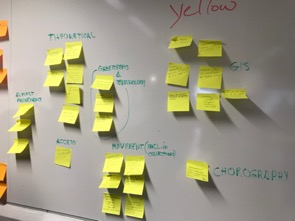
We wrote our ideas on post-it notes, then grouped them into themes.

We wrote our ideas on post-it notes, then grouped them into themes.

Many of our discussions centred on the idea that there is a huge amount of Ancient Art related data online already, which is held by different institutions and represented using different standards and formats. What we hoped to do was to develop a specification for how this data could be connected, along with documentation about how it could be used, written clearly enough as to be understandable by people with varying levels of technical experience. We felt that finding a way to bring existing material together might be more sustainable in the long-term than building something completely new.

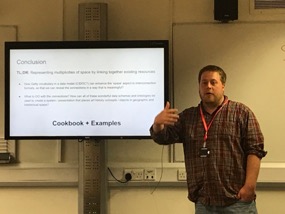
Ryan Horne presents our ideas to the group

Ryan Horne presents our ideas to the group

The Provenance group created a mock-up image of an online resource to find provenance details of art objects (incorporating information about related people, places, dates and materials), and had thought about renaming their group to Context. The Visualisation group had discussed different methods and meanings of representation, including appealing to senses other than sight; as such, they considered renaming their group to Representation. All three groups, therefore, realised early on the limits of the terms that defined them, and sought to develop ideas relating to a much broader context. Additionally, all groups discussed the idea of how best to digitally represent uncertainty about any of the information associated with an object and the reasons why particular interpretations have been suggested.

Our group discussions were informed by excursions to the Soane Museum, Leighton House and the British Museum. During the second week, we formed four new groups, which each selected three well-documented items from these collections and discussed the information that is known about them, as well as how this information should be represented. My group decided to base our choices on the theme of whether the object had been taken from the place where it was created – our three objects incorporated:

  1. An object that remains in situ (for this we visited the London Amphitheatre)
  2. An object that has been taken from its place of creation (Ephesian Artemis at the Soane Museum)
  3. An object that has been taken and then returned (Leighton’s painting of Clytie)

In addition to each object’s relationship with the place where it is currently situated, we also discussed the places and people depicted, the objects’ itineraries through space and time, and the people involved.

Visiting London’s Roman Amphitheatre

Visiting London’s Roman Amphitheatre

As well as discussions among ourselves, over the course of the two weeks we heard talks from staff at King’s Digital Lab, the National Galleries in London and Washington, and the Institute of Classical Studies. These introduced us to existing projects in a similar subject area and issues they had faced, which often related to technology and sustainability, as well as access, usability, and the representation of complex ideas within the restrictions imposed by metadata and cataloguing systems.

We ended the two weeks with the seed of an idea to bring together the findings from all three groups, which will possibly take the form of an interactive online publication. This will be developed further at the next Institute in April 2019 to produce a specification for our proof of concept, to be built by King’s Digital Lab. In the meantime, we are in the process of producing a set of white papers that outline the issues identified by each of the Geographies/Space, Provenance/Context and Visualisation/Representation groups.

As well as having this incredible opportunity to take part in an international research project, I came away from the first Institute having made new friends, and with new ideas about how to approach my PhD topic. I would like to thank King’s College London and the Getty Foundation for their support and funding and am looking forward to seeing what the next Institute brings.

By Sarah Middle

Sensory Experience in Rome’s Northern Provinces – a report by Colin Gough and Kirstie Morey

On the 6th October 2018, several members of the department, current and former PhD students, and a handful of MA Classical Studies students attended a conference hosted by the Roman Society at Senate House in London. The theme for the day was Sensory Experience in Rome’s Northern Provinces and here, fresh from submitting their dissertations for A864, OU Classical Studies MA students Colin Gough and Kirstie Morey share their multisensory impressions of the day.

Colin Gough

The one question that unites students, academics and anyone interested in Classical Studies is ‘what was it like in classical times?’ At the Senate House conference last Saturday we had the opportunity to experience some of the sensations of a Roman. What does the Roman ketchup that is garum, made from putrefying fish, smell like? To this modern, westernised nose – not pleasant, and it would have taken real courage to use it as an edible additive. Yet it was so popular in Roman times that there was mass production. Did Roman men wear perfume? Thomas Derrick (Leicester) not only gave a presentation on the multisensory approach to the impact of Roman settlements in the north but, during lunch demonstrated his (real) passion for Roman scents and perfumes. There is nothing like pouring olive oils with rosemary and pepper, scaping off the excess with a strigil to get the authentic Roman post-bathing experience, even though I spent the rest of the afternoon smelling like focaccia. Patty Baker (Kent) not only gave an interesting presentation on archaeological data to explore retrieving indigenous conceptions of flora but introduced the concept of experimental archaeology in recreating floral crowns from mosaic images in Britannia. These were passed around to give the sensory feel of manufacture and wearing resulting in some new profile pictures on social media. We were treated to a fabulous talk by the author Caroline Lawrence who, with a range of ‘props’ not only gave an insight into how she uses the sensorium to develop her books but gave us a hands-on experience of some of the sights, sounds, smells and feels of the Roman world.

https://twitter.com/bigfridge224/status/1048530332868329472

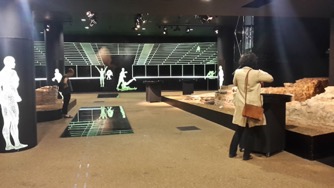
This brings me onto an important point, the value to Classical Studies of experientialism, that is, personally experiencing a location, environment or object. Naturally, our experiences will not be the same as an individual or group in classical times but it does give an opportunity to consider sociological changes and responses and, indeed, help formulate questions to be addressed. But it goes further. It opened my understanding of the different applications of Classical Studies. This was underpinned by the excellent talk by Mike Bishop. Twitter users may know him as @perlineamvalli. He has walked the length of Hadrian’s Wall over fifteen times and has produced two-minute soundtracks at each milecastle prompting the discussion of how the soundscape has changed (Editor’s note: you can listen to them here!). This approach not only focusses the mind on the establishing a temporal frame but allows reconstruction of a likely soundscape in Roman times. Nicky Garland (Newcastle) suggested physiological responses not available from empirical evidence that can be gained by a personally experienced, multisensory approach to the partially re-constructed Commanding Officers House at South Shields. Sophie Jackson (MOLA) gave an interesting presentation on the modern history of the Bloomberg Mithraeum and how consultants, design teams and scholars approached interpreting the archaeology to translate the atmosphere and ritual into a sensory experience for the 21st Century audience.

Unfortunately, because of space constraints, I have not named all the presenters or the subjects tackled (for more see Caroline’s own blog). However, to finish, I have two abiding memories. The enthusiasm of all who presented and the generosity they have in sharing their experience and knowledge. Using our imagination, new methodologies can be developed giving a greater insight into the past and engaging students of the future and the wider public. It has never been a better time to study classical times and sensory studies can be at the centre of all disciplines. Along with OU postgrad and WiP days, I think everyone should experience conferences – if nothing else it makes you appreciate how good we all are and how approachable and helpful other people can be.

Kirstie Morey

As an A864 OU Master’s student, October 1st was a significant date for me. The culmination of two years of hard work and my dissertation was finally submitted. But I had mixed feelings: I was extremely proud of both what I had written, and of how far I had come. I was incredibly relieved to know that it was in and that I had managed to finish it on time and within word limits. But, I was also very sad. Studying for my Masters had been such a journey and had become such a big part of my life, I simply didn’t want it to end. So, I booked myself onto a Roman Society workshop that I’d had my eye on since reading about it on Twitter, and on Saturday last, ventured to the Senate House for the Sensory Experience in Rome’s Northern Provinces workshop. I was nervous at first as I didn’t think I’d know anybody and I wasn’t sure how ‘interactive’ I would be expected to be at a workshop. But, a couple of familiar faces appeared in the room and we were off. It was great.

Having been introduced to the idea of sensory studies in A864, the concepts were easy enough to follow. And the speakers were very engaging and interesting. Some papers were quite theoretical, like Thomas Derrick (Leicester) and Andrew Gardner (UCL); and some were very much more practical. We wore, felt and smelled our way through various coronas, courtesy of Patty Baker (Kent) and heard our way through the milecastles along Hadrian’s Wall, thanks to Mike Bishop. We oiled and ‘strigilled’ ourselves during lunch with ‘authentic’ Roman perfumes and we chewed on mastic chewing gum.

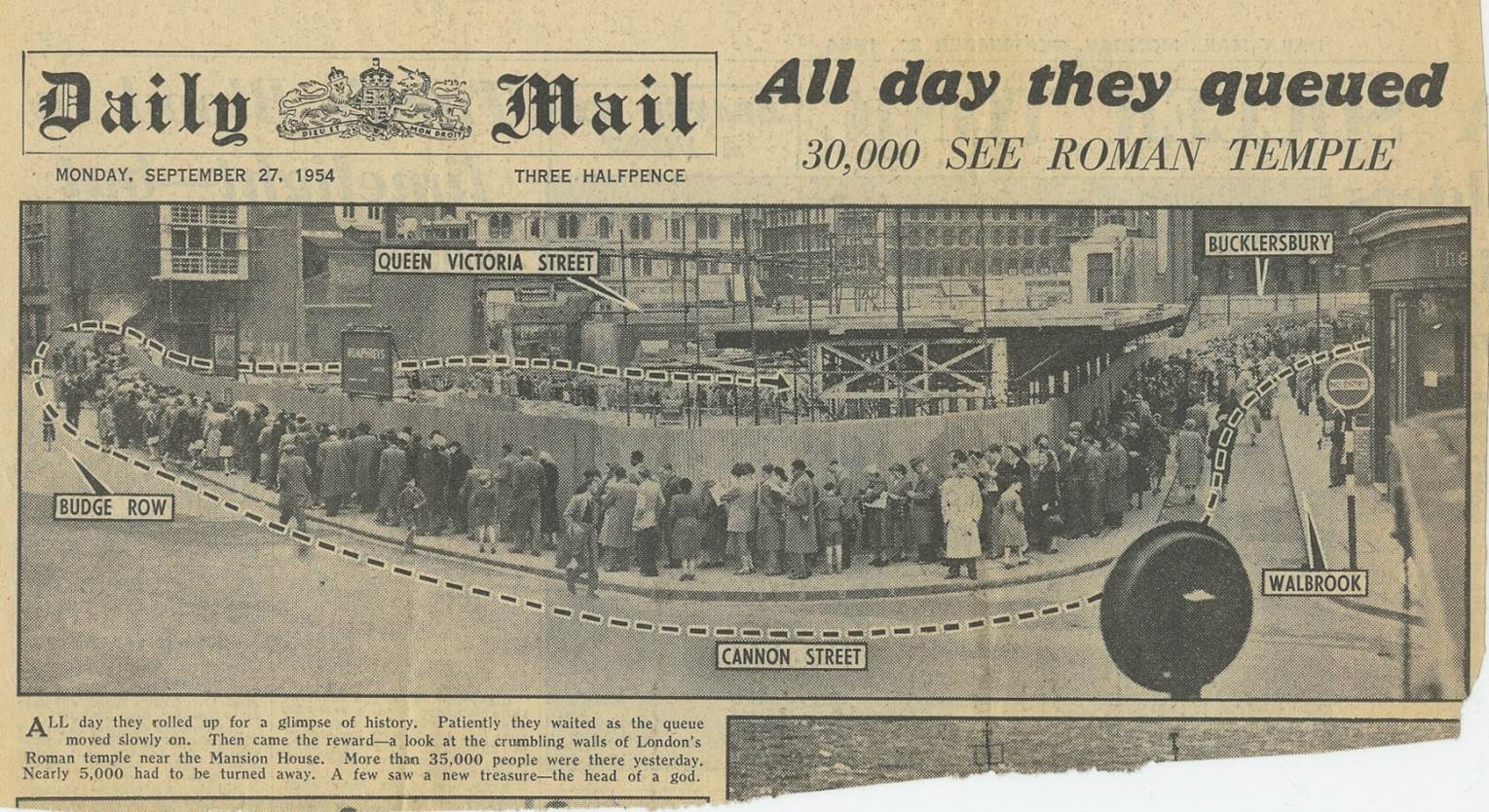
The highlights for me were Stuart McKie’s (Durham) talk on curse tablets and the connection between them and votive offerings and author Caroline Lawrence’s explanation of how she tries to evoke every sensual experience for the readers of her Roman Mysteries series of children’s books.  I wish she had been available for my kids’ birthday parties – she was brilliant! While Sophie Jackson from MOLA was talking about the history of the London Mithraeum, she showed us a newspaper photograph showing the thousands of people who queued daily in the 1950s to see the original ruins. A lady in the audience shared with us her memories of being in that queue and how it inspired her to become an archaeologist.  That was the icing on the cake.

I am told that this conference may not have been typical and that others aren’t usually so ‘touchy feely’ but, while that may have been the case, the fact that the theme was so interesting, and the speakers were so engaging was secondary to my enjoyment of just being there. It made me realise that my academic journey is not over and that there is plenty more to be involved with, to listen to and, maybe even one day, to contribute to.

By Colin Gough (@saddad52) and Kirstie Morey (@K33Morey)

Classical Encounters

Last summer, we ran a blog post that included some suggestions from colleagues in Classical Studies for classically-themed ‘days out’ in the UK; this year, we thought we’d catch up with a few colleagues on their ‘classical’ adventures over the summer vacation. So, as the nights begin to draw in, we look back at some of our recent encounters with the classical world through archaeological sites, theatre, films, and more. We’d love to hear about your recent classical encounters too … why not tweet us over at @OU_Classics?

————

Eleanor Betts

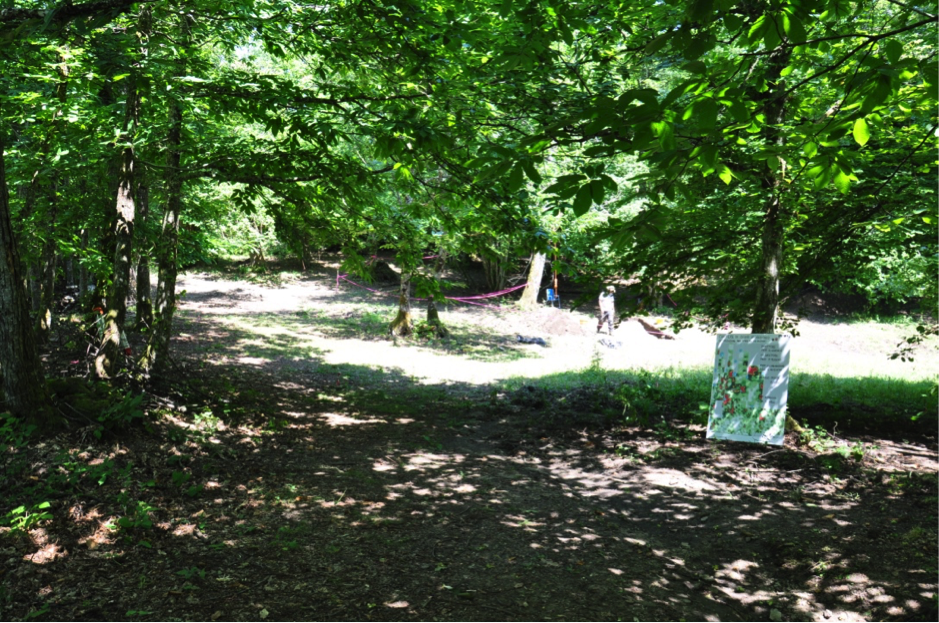
I’ve meant to visit Tuscany for years, and finally made it this summer. If you haven’t visited, do! First, I was digging on the Albagino Sacred Lake Project. Beautiful location for an excavation, despite the mosquitoes!

The Albagino Sacred Lake Project

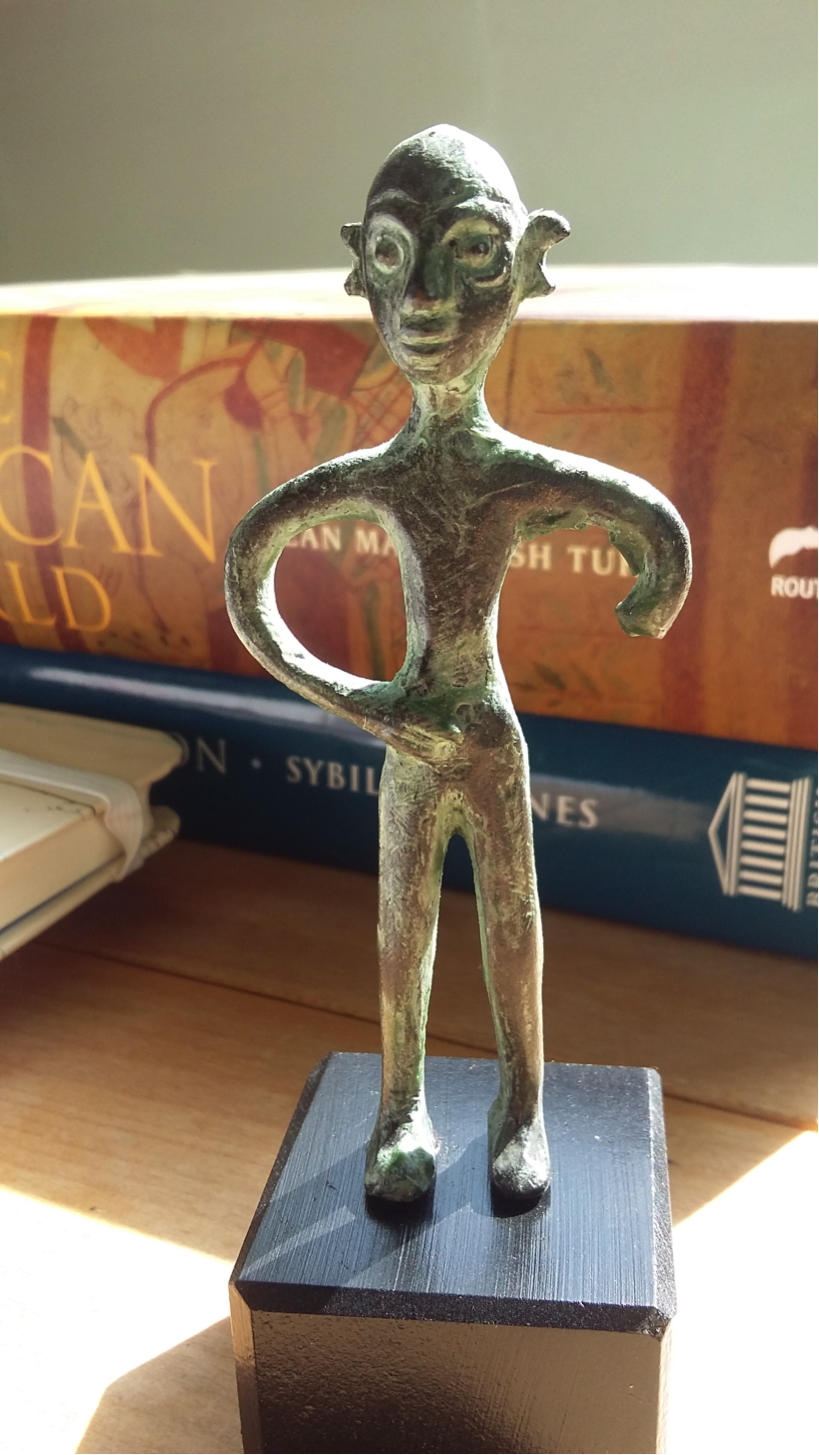
Aside from trowelling clay, my role was to make a phenomenological survey of the site. Why were people in the middle of the first millenium BCE leaving bronze figurines in the countryside? We recorded the sights, sounds, temperatures, birds and beasts in and around Albagino. Our working hypothesis is that people travelling between Prato and Marzabotto may have passed through Albagino, taking advantage of the fresh water and ample provisions there.

After the dig I made a whistle-stop tour of Tuscany. My first, and favourite, stopping place was Volterra … where I found this chap:

Replica of an Etruscan votive figurine

Votives aside, Volterra was one of the significant settlements of Etruria, and is well worth a visit. Enjoy the archaeological museum, Palazzo Priori and wandering the town’s medieval streets. From there I went to Vetulonia (3rd– 2nd century BCE), which has another lovely archaeological museum and the best basalt street I’ve seen outside Rome!

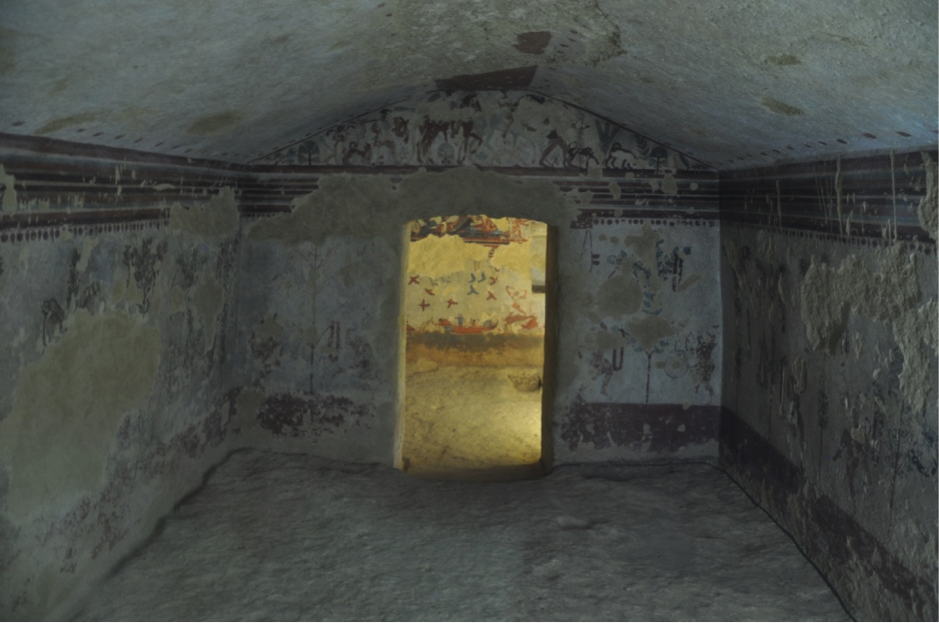
Most of what we know about the Etruscans is from their tombs. Each place has its own character, suggesting localised beliefs and practices. I visited Volterra, Vetulonia, Populonia, Chiusi, Tarquinia, Orvieto and Cerveteri, and can recommend them all. I found the house tombs at Crocofisso del Tufa (Orvieto) and Cerveteri the most resonant. Going inside any of these tombs feels like walking into someone’s house – and they’re homely! Oh, and Tarquinia has amazing painted tombs, such as the Tomb of Hunting and Fishing (Tomba della Caccia e della Pesca).

The Tomb of Hunting and Fishing

————

Elton Barker

I confess: I’m not much of a theatre-goer, even though I love (and research) Greek tragedy. I much prefer cinema, perhaps because it comes with less class baggage. But this trip to see a staging of Sophocles’s Electra at the end of August was going to be different, since the play was being performed outside in a semi-circular theatrical space (thus appealing to my classical sensibilities) in the forest that overlooks Greece’s second city, Thessaloniki.

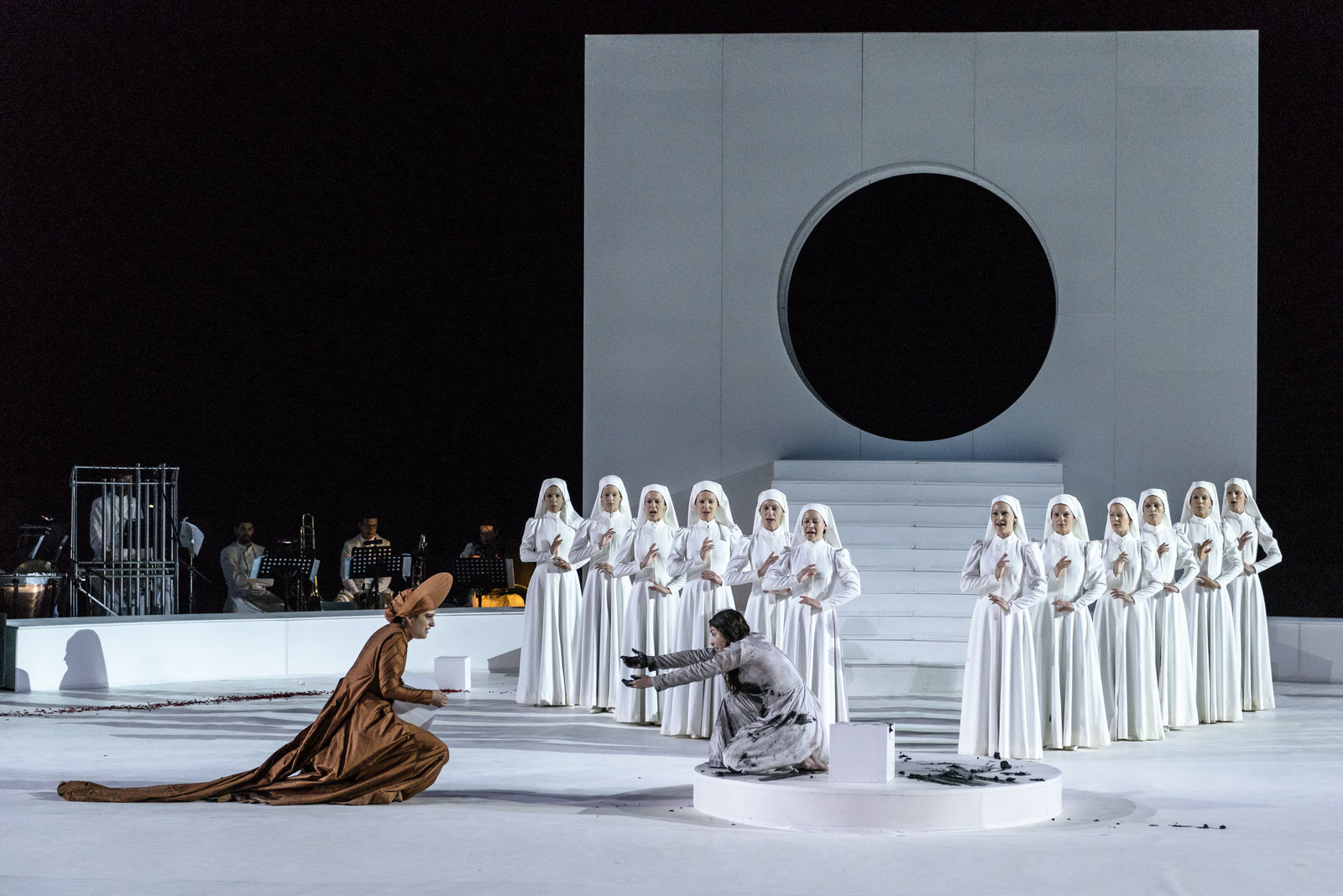
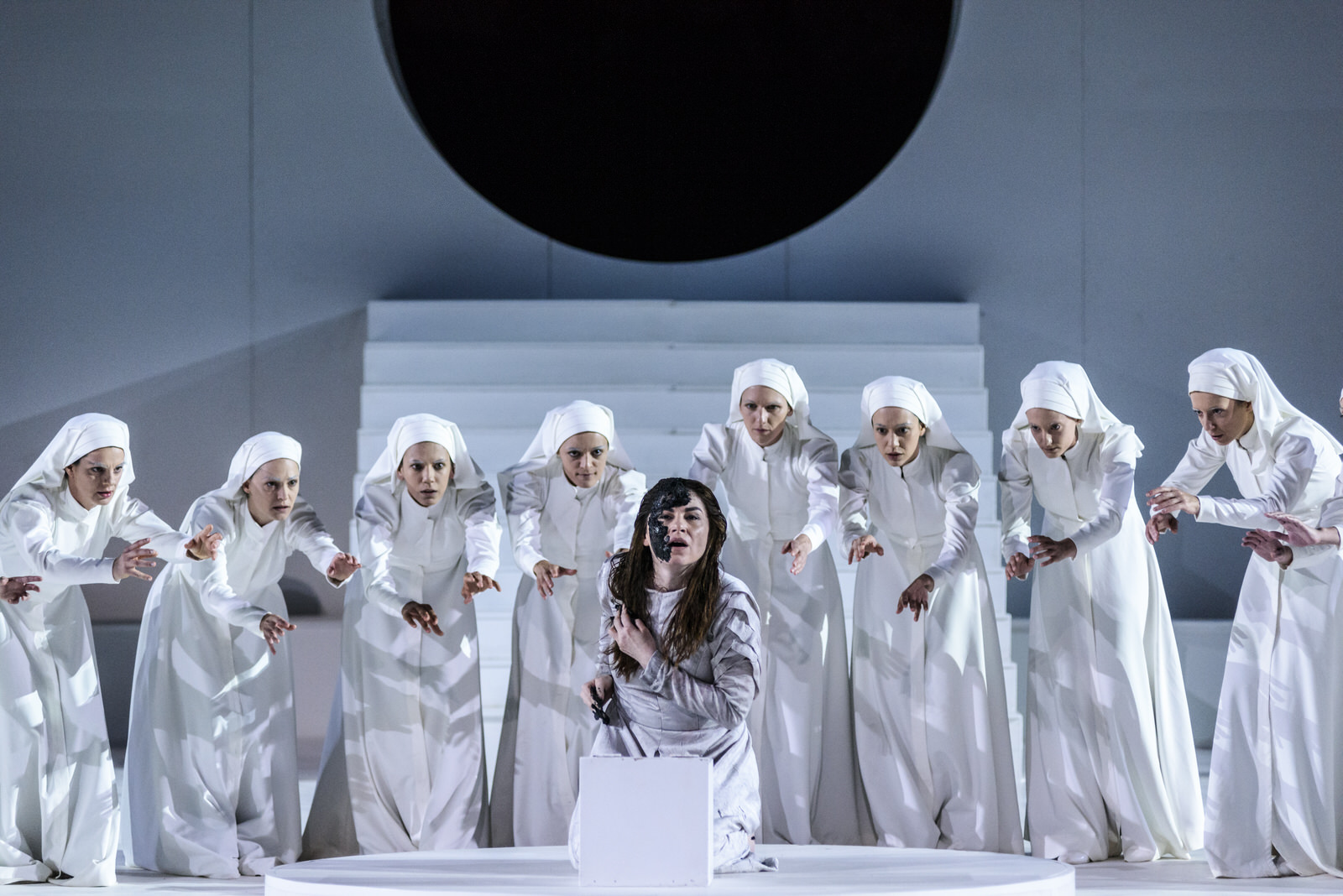
In a word: Wow. This adaptation by the National Theatre of Greece (under the direction of Thanos Papakonstantinos) was something else! At one level, it appeared quite traditional: the play wasn’t located in a contemporary setting; the costumes were simple, bordering on the stylised; it used music throughout; the chorus sung *and* danced; the text wasn’t excised or adapted in any way (other than it being the modern Greek translation). But it was like nothing else I had seen. As you’ll see from the photographs, the stage was stark in its simplicity, an effect that was further amplified by the simple, almost abstract costuming of all the actors. Not only did this help focus attention on the gestures, movement and interactions of the actors; it also helped to defamiliarise the action and detach it from any particular setting, whether classical or modern. This is something, I think, that Greek tragedy generally manages to do: that is, to speak to audiences not bound by space or time. But one costume did possibly have a contemporary resonance: the clothing of the chorus seemed to me to be a pristine white version of the clothing worn by the handmaids in renowned TV adaptation of Margaret Atwood’s Handmaid’s Tale.

Electra reachers out to her sister Chrysothemis

Controlled and in control, this was a chorus of and for our time, gaining power through their collective action. A *spoiler alert* #metoo movement. Unlike every other chorus I’ve ever seen, this chorus sung and chanted in metre throughout in unison. They also moved as one, like polished mannequins, often with minimal gesture of forefinger touching the thumb, like a Greek orthodox Christ blessing his congregation. Then, as the play hurtles towards its terrifying climax (the matricide; the forever deferred murder of Aegisthus), they transform, as Electra’s hatred and bitterness finally comes to affect and infect them. They transform, indeed, into those terrifying presences who are notably (notoriously) absent from Sophocles’s play. As this performance made real what is only ever hinted at in the text, the chorus take up Electra’s murderous, blood-curdling calls for her brother to strike down her mother, for vengeance to strike down Aegisthus, by transforming into screaming, writhing Erinyes (the Furies). This wasn’t so much a tragedy as a full-on horror show. It was, quite simply, thrilling and has stayed with me, goading me to think and to respond, ever since.

Electra and the Chorus

————

Jan Haywood

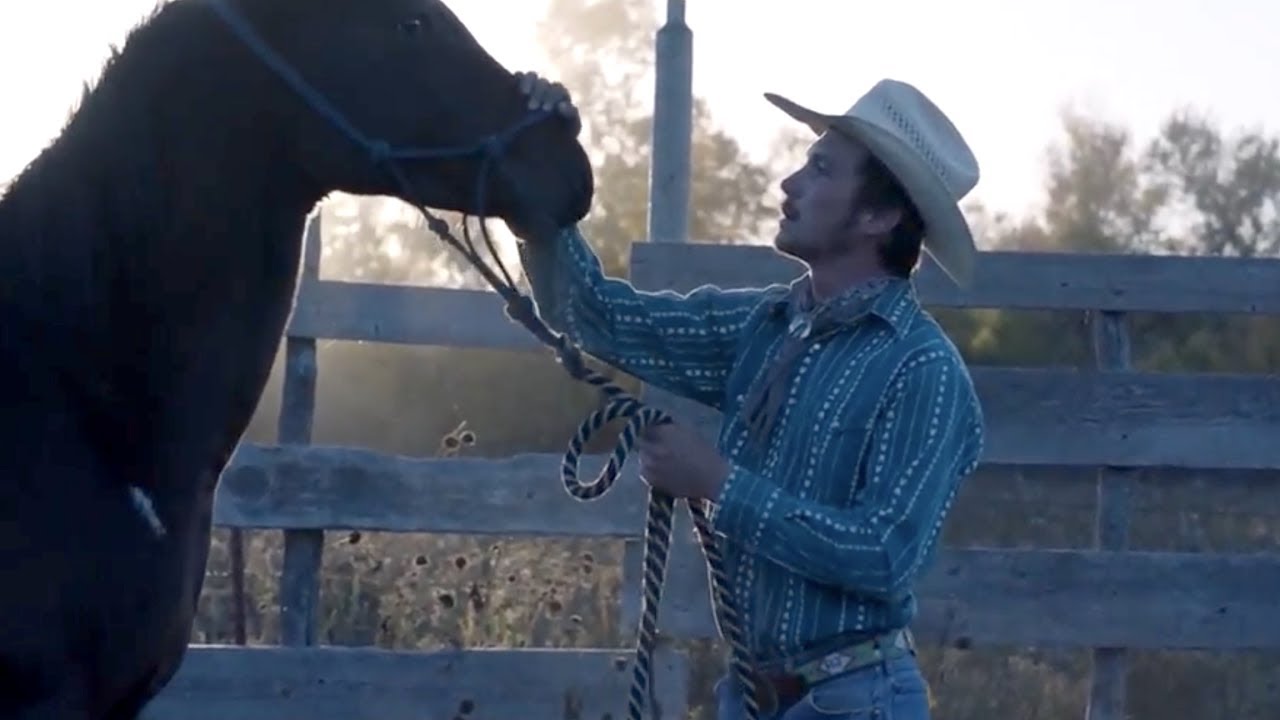
Towards the end of the summer break I went to see an incredible new film by Zhao Ting entitled The Rider. The film tells the story of a hippophile named Brady, who recently suffered a major head injury after his horse fell on him while he was bronc riding at a rodeo event. As the film begins, we follow Brady’s troubled road to recovery, and remain on tenterhooks throughout, wondering whether or not he will choose to ride again. Although the film bears no obvious resemblances to any specific source text from the ancient world, I found myself continually transported to the literature of classical antiquity; for instance, in one of several stunning sequences, Brady is shown wrangling a particularly stubborn horse, aptly named Apollo. The scene captures powerfully the profound trust between horse and human protagonist, who communicate with each other silently through a series of dance-like movements.

Brady comforts Apollo in The Rider

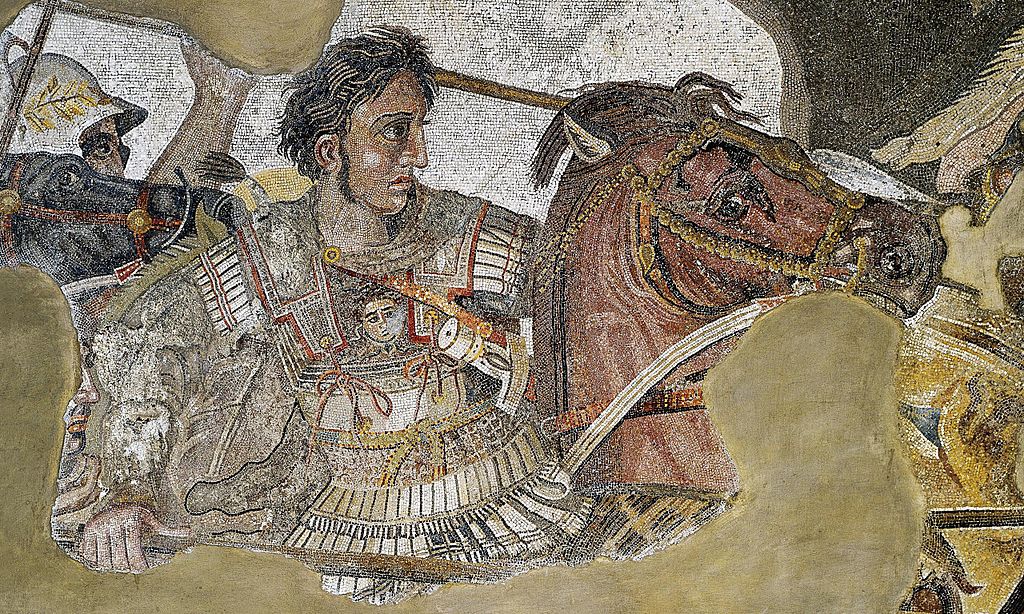
This kind of special devotion to and care for one’s horse is deeply ingrained in ancient Greek culture; one only need think of Alexander the Great’s famous steed Bucephalus who purportedly served the Macedonian King in several battles, or indeed the Trojan hero Achilles and his immortal horses, Balius and Xanthus, who, in Book 17 of the Iliad, weep at the sight of mutilated Patroclus. Watching the film, I was also reminded of the fourth century BCE Athenian writer Xenophon and his equestrian treatises, namely the Peri Hippikes (‘On Horsemanship’) and Hipparchicus (‘The Cavalry Commander’). In the former of these two works especially, Xenophon includes precisely the kind of exacting details on how to achieve the ‘best of himself and his horse in riding’ that is so vividly depicted throughout the film’s delicate, long takes of Brady and his beloved Apollo. So, a film that is not about equines in antiquity, but nonetheless one that lends itself to contemplation on the values of horsemanship that were deeply ingrained in the classical world.

Alexander and Bucephalus, detail from a Roman floor mosaic, Pompeii

————

Jessica Hughes

This summer I continued my travels around the sacred sites of Campania, this time exploring the regions of Cilento and Vallo di Diano. It was a wonderful trip, and now – back in England as the autumn leaves turn gold and brown – my mind keeps returning to one place in particular: the Early Christian baptistery of San Giovanni in Fonte, which is located just a few hundred metres from the Charterhouse (‘Certosa’) of San Martino in Padula. I’m sharing some video footage that I took at the site, which is thought to have been built on top of an earlier Roman site, perhaps a nymphaeum. In this short sequence, you can see the spring water which the sixth-century writer Cassiodorus described as “a marvellous fountain, full and fresh, and of such transparent clearness that when you look through it you think you are looking through air alone” (Variae 8.33). The camera then moves into the interior of the building, towards the huge ‘font’ in which those receiving baptism may have been fully immersed. You’ll get a brief glimpse of some fragmentary frescoes of Saints, which have been dated to the tenth century, and which may originally have surrounded an image of Jesus. I love the way that the water casts its dappled reflections on the ceiling – and I can’t wait to visit this ‘marvellous fountain’ again in the winter.

(Don’t) judge a book by its cover

This blogpost by Elton Barker was originally posted on the blog Sententiae Antiquae, and republished here with minor alterations.

As some of you on the Twitterverse may have seen, all this month @OU_Classics has been celebrating the books that members of the department have published over the past few years. This has been a great way to find out what colleagues spend their “spare” time on, as well as to enjoy how the books look and to speculate on the choice of image—that arboreal skeletal hand gripping E-J’s book Death Embodied, for example, or the implied dialogue between Aristotle and Homer in Jan’s Homer’s Iliad and the Trojan War.

When my own book on debate in Homer, historiography and tragedy was tweeted, I was reminded of a couple of things about the title: specifically why I had chosen to treat those genres in that order (wouldn’t historiography have been better discussed after tragedy?), and my then students’ game, when Google was just becoming a thing, of typing “Entering the Agon” into the search box and returning the result “Do you mean Enter the Dragon?”. But it also got me thinking about my choice of cover …

With the possible exception of writing acknowledgements, I find choosing a cover image for a book arguably the most pleasurable, and most difficult, of the final tasks that needs accomplishing before I can happily pack off my manuscript on its merry way to the press. Even if we are told otherwise (in the famous axiom not to judge a book by its cover), how a book looks can play a decisive role in its purchase; after the subject matter and author, it’s the one thing that may determine whether I buy book a book or not. If I look on my bookshelves, for example, the dust jackets that stand out for me are: the famous image (from the so-called François vase) of Ajax carrying the dead body of Achilles that emblazons Greg Nagy’s 1979 classic The Best of the Achaeans (and Michael Lynn-George’s equally ground-breaking Homeric criticism Epos: Word, Narrative and the Iliad); the contemplative Regarding Penelope by Nancy Felson; the highly wrought, yet seductive, Medea of James Clauss and Sarah Iles Johnston; the satirical depiction of famous classicists playing characters from Aristophanes (!) on Martin Revermann’s Comic Business; and the striking pose of Gertrude Eysoldt captured in the role of Electra that advertises Simon Goldhill’s Who Needs Greek?. The arresting contemporary nature of this image (though the photograph dates back to 1903) hints at Goldhill’s thesis of the continuing legacy of Victorian attitudes to, and contests over, the Classics that shape and inform our own implicated relationship with the subject.

As these examples suggest, aesthetic looks isn’t the only desideratum when it comes to choosing a book cover. For sure we want something that looks good; but it’s equally, if not more, important for that image to say something about the book itself (a picture is worth a thousand words, right?), though perhaps not in an obvious or straightforward way. Let me explore this issue by reflecting on my own choice of three covers that I’ve had the pleasure to be able to choose.

The image I chose for my first book—Entering the Agon: Dissent and authority in Homer, Historiography and Tragedy (Oxford, 2009)—is in many ways very traditional. It’s the famous image (on the black-figure amphora by Exekias) of Achilles and Ajax playing dice. But it’s an image that worked for me not only because of its beauty—though hats off here to the team at OUP who extended the pot’s gleaming background (which sets off the black figures) to cover the entirety of the book’s cover in a fiery golden afterglow. Figure4This image also spoke to my book’s subject matter: namely, the idea of contest (agōn) and its representation in ancient Greek literature. In truth, I had a hard time finding an image that worked for me. I wanted some kind of ancient Greek artistic representation; perhaps because it was my first book (the “book of the thesis”), I felt it needed to be unambiguously classical. It should have been easy, right, to find an image from the whole corpus of ancient Greek ceramics, right? Wrong. I could find none of the scenes of debate in epic, history and tragedy, which were the core focus of my argument, that had been illustrated, not even—as one may have expected—the quarrel between Achilles and Agamemnon that starts off the Iliad with such a bang. There is a fresco, highly fragmented, from Pompeii’s House of the Dioscuri (on exhibition at the National Archaeological museum in Naples), which shows Achilles going for his sword; and of course there are later Renaissance paintings depicting the quarrel (such as Giovanni Battista Gaulli’s baroque rendering). But I could find none from the world of ancient Greek ceramics or friezes—perhaps because, as Robin Osborne pointed out to me, Greek artists simply were less interested in illustrating literary stories than in creating their own. (It is striking that the wall paintings from Pompeii *do* look like illustrations of early Greek literary narratives, including the moment Euripides’s Medea ponders killing her children.) What Exekias’s scene of gaming heroes gave me was a hint not only of the formalisation of contest, but also of the prominence of Achilles (who in my argument institutionalises contest in the arena of debate) and, moreover, of his pairing with Ajax (whose story in Sophocles’s tragedy formed one of my chapters).

The second book I needed to choose an image for presented a rather different challenge. This was for an edited volume entitled: New Worlds out of Old Texts: Revisiting Ancient Space and Place (Oxford, 2016). Figure7The book derived from an interdisciplinary project that I had led called Hestia, which investigated representations of space and place in Herodotus, as well as the spatial construction underpinning his Histories. At the heart of the book was a discussion of the different disciplinary approaches that we undertook, spread over three chapters (which I co-authored with different team members), exploring: digital annotation and mapping (with Leif Isaksen and Jessica Ogden), geographical spatial theory (with Stefan Bouzarvoski), and philological close reading (with Chris Pelling). Our resulting book included other contributors working in this space (pardon the pun), who had presented at our conference in Oxford, and who, like our team, represented an array of disciplines—not only Classical Studies, but also archaeology, digital humanities, and the history of thought. The image I wanted, then, needed to respect these different disciplinary approaches while at the same time hinting at ways in which they might be combined and intertwined (for interdisciplinary research). And, of course, it needed to be in some way spatial, to suggest the complexity of trying to represent and unpick spatial entities and relations. A web-designer friend (a shout-out here to Richard Rowley of Agile Collective) put me on to London-based artist Emma McNally, whose work attempts to “portray essence not as substance… but rather as the result of a process of reciprocal determination, where individual lines, markings, and trajectories are brought to significance through their interrelations with those around them” (https://www.flickr.com/people/emmamcnally/). After getting her approval (she was very happy for us to use her work provided that she got a copy of our book: gold armour for bronze, as Homer would say!), I chose her scratches, traces, spaces. This work on graphite (“a medium that lends itself perfectly to [a] sort of rhythmic making and unmaking. It is a material for palimpsest”: ibid) seemed to me to perfectly capture the spatial palimpsests that many of us were striving to reveal and more closely examine in our texts, while also being provocatively new and overtly relational. Emma later informed me that the very same artwork was used by Ridley Scott as a navigation map in his latest Alienprequel Convenant. If it’s good enough for Ridley…!

Figure8

All this brings me to the last image—the one that Joel had invited me to write about in the first place… Our book, Homer’s Thebes, sets out to argue that the Iliad and Odyssey (mis)represent heroes and themes from the Theban tradition to set out and realise the unique superiority of these texts in performance. In arguing this, we are attempting to view the Homeric poems in a new light, by emphasizing a non-hierarchical model of “reading” them and the Epic Cycle together within the framework of oral-formulaic poetics and artistic rivalry. With this in mind, we wanted an image that suggested Homer in some way (epic poetry, heroes, etc.) but that wasn’t a straightforward classical take on that. From a very early stage I was convinced that a cubist painting of some kind would work, with that central idea of taking something familiar (for us, reading Homer; for Homer’s audience, the Troy story and the siege of Thebes) and, by viewing it from different perspectives, producing a radically different picture (a Troy story that emphasises internal conflict among the Achaeans, for instance). For me, cubist works echo the type of violent reception and adaptation that our book is about. But here we ran into a significant problem that meets anyone looking to reuse a contemporary image, whether that is a museum photograph of an ancient artefact or a modern painting in a gallery’s collection: copyright. For all the cubist paintings that I could find that seemed to dialogue with our approach, the answer kept coming back from our publishers that we couldn’t use them because of the copyright and/or the costs involved. Out went The Thebaid by Wyndham Lewis, along with his Composition; we fared no better with Barbara Hepworth’s Two Heroes; we couldn’t even use Le Poèteby Picasso, even though I had sourced it from Wikipedia.

Just as I was beginning to despair, and I thought that we would have to give up on this idea of a cubist-style makeover for our Homer, I had the inspiration to look for works by modern Greek artists. I knew that ever since the twentieth century, Greek writers and painters alike have been grappling with the problem of their country’s complicated (and often times suffocating) classical legacy. And thus I had the fortune to come across the work of Nikos Engonopoulos. He’s the painter most famous in Greece for revisiting classical themes in a distinct modern style (tending towards surrealism). Having found a number of post-classical images that I thought that we could use, I contacted the person responsible for his website and who owns the copyright to his works, his daughter Errietti Engonopoulou. Like Emma, Errietti could not have been more accommodating, and immediately allowed us to use a high-resolution image of the image that we decided on.

I present to you Engonopoulou’s 1939 oil on canvas The poet and the muse. We hope that you like it as much as we do.

Figure9

Elton

Studentships: MA in Classical Studies

We are delighted to be able to offer two fully-funded scholarships for our MA in Classical Studies:

  • One scholarship will be awarded through an open competition, on the basis of the academic excellence of the applicant.
  • One scholarship, generously funded by the A.G. Leventis Foundation, will be awarded to a UK schoolteacher who intends to introduce or develop the provision of Classical Civilisation in the curriculum of the school where they work.

The Open University’s MA in Classical Studies:

The MA in Classical Studies at the Open University focuses on the question ‘How do we know what we know about the ancient world?’ It is designed both to introduce you to key concepts and themes in Classical Studies and to allow you to explore some of these in more depth. Over the course of the two modules that make up the qualification, it gradually builds up your knowledge and the skills you need to explore ancient visual and written material, while also training you to become an independent researcher. This is the ideal qualification for anyone who wants to know more about the ancient world and the ways in which we can approach it as researchers. It also offers an excellent starting-point for those wishing to teach classical subjects in secondary school. It is a two-year qualification requiring approximately 16 hours of study time a week, which means that it can be completed alongside employment, and it is taught entirely online. No specific prior knowledge is assumed, and there is no requirement to have studied Latin or Ancient Greek, but an undergraduate degree in a cognate discipline is recommended as a basis. By consultation other arrangements can sometimes be made if you do not hold a degree in such a discipline. This usually involves preparatory reading. Further information about the MA is available on the OU website, and on our departmental website. The scholarship covers full fees for the MA.

How to apply:

To apply for the scholarship, please complete the MA-scholarship-application-form 2018 and send it, completed, to [email protected]. With the form you should also send:

  • a separate curriculum vitae (CV) of no more than two pages;
  • a copy of your latest degree certificate;
  • a transcript of your degree that makes clear the level of your academic achievement;
  • the name of an academic referee who would be prepared to support your application if you are shortlisted (this should be someone who has taught you or worked with you);
  • a statement from your headteacher indicating that they are willing to support your plans to develop Classical Civilisation, if you are applying for the Leventis scholarship.

The application form includes a section for a personal statement.

  • Applicants for the Leventis scholarship should use this section to outline their teaching experience to date and to provide a clear indication of the way in which they propose to develop the provision of Classical Civilisation in their school. The successful applicant will be selected on the basis of this statement, and on academic excellence in their studies to date.
  • Applicants for the open competition scholarship should use the personal statement to give an account of their prior experience of studying the ancient world, and to explain why they want to study for the MA in Classical Studies at the OU.

The scholarships will not be awarded to students receiving full funding from other funding bodies. It is not necessary to register for the MA degree before making this application.

The Open University promotes diversity in education and we welcome applications from all sections of the community. If it would help to have the application in an alternative format please contact [email protected].

The deadline for applications is 4pm on Monday 2nd July and we intend to inform all applicants of the outcome in mid-July.

Informal enquiries can be made to Joanna Paul ([email protected]).