
‘An Agreement Born of Impossible Conversations’: Imagine! Festival of Ideas and Politics, Belfast, 25-31 March 2019


Patricia Ferguson, PhD student, English Literature

I have taken as my title this arresting phrase with which the poet Matt Kirkham, writing in ‘The Belfast Agreement: Twentieth Anniversary Issue’ of Irish Pages, sums up the Good Friday Agreement, an anniversary which is also the theme of this year’s Imagine! Festival.[1]  In his preface to the programme, the director Peter O’Neill invites us to enjoy ‘a unique way of imagining the future of this great city [ … ] as we try to make sense of this volatile world’. It builds on last year’s theme of restorative justice, which asked, ‘How do you change a punitive mindset into a restorative one?’

On that occasion I learned about friendship clubs, integrated schools, and heard Loyalist and Republican ex-prisoners speak from the same platform. I thought this last the most heartening of all. I thought that this Irish genius for conversation, which they call the craic, might prove sufficient to heal the city’s wounds. I realise now that none of last year’s conversations could suffice, because not one of them was impossible, not even that between the ex-prisoners. That conversation, I now see, was not in fact between them; they told their stories to us, the audience, not to each other, and left the stage unreconciled.

The conflict lasted so long that ‘only people of my age, pensioners, can recall what the peace was before the Ulster Troubles. We can speculate what life might have been like, had we not had our thirty year war’.[2]  Given such a history, that the Agreement ever happened is something of a miracle, but the brittle accord which it achieved might yet be shattered by Brexit into nothing more than a twenty year truce, because, as Mary Robinson warned, it institutionalized sectarianism. Can there be any irony more bitter than this, that ‘when a cross-party delegation visited South Africa, even Nelson Mandela had to address Unionists and Republicans separately’?[3]  If the peace is to survive, let alone grow stronger, they must learn to talk to each other.

The poet Damian Gorman (‘What Rhymes with Conflict?’), who spent ten years working with young people from both sides of the Israeli/Palestinian conflict, understands this perfectly. He read to us from his poem ‘If I was us, I wouldn’t start from here’, which is a reflection on the Agreement. He exhorted us to ‘tell your story until it’s told’, but no less vitally, to listen to the other person’s story – and he means listen; to do that, he said, you must clear a space inside yourself and let your enemy in, because ‘Each generation has a sacred task – |To tell a better story than it was told’.
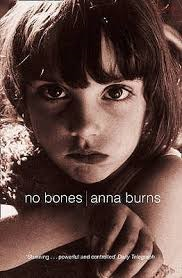

I helped facilitate the Open University’s event, ‘Reading in Conflict’. The members of my group got no further than the first extract, a passage from Anna Burns’s novel, No Bones, set in Belfast in 1983, and bringing back the most searing memories of growing up as children of the Troubles. I wish I could have recorded their stories! But as with the ex-prisoners, Catholic and Protestant talked to us, the visitors, not to each other. As the week went on I became ever more aware of the Belfast people’s urgent need to find ways of talking to each other across the sectarian divide – but how can they, when the very geography of the city is designed to stop them? The Peace Walls are obvious enough, but a multi-disciplinary research project at Ulster University, (‘Hidden Barriers’) has been able to prove that, in redeveloping the city, the authorities closed off former thoroughfares, divided through-streets into cul-de-sacs, and put in ‘a proliferation of dead-end alleyways and courtyards with a single entry-exit point’ with the express purpose of keeping Catholic and Protestant apart, a policy which defines Belfast to this day.[4], [5]

We saw some of this for ourselves, looking at Ligoniel through virtual reality headsets, and then properly on the ‘History of Terror Walking Tour’. Like Damian Gorman, our guide Paul Donnelly has spent years as a mediator; ever since the ceasefire he has been working on dialogue projects between Loyalist and Republican ex-prisoners. The interview he gave to Chris Luecke for ‘Pubcast Worldwide’ can be found here  It’s well worth a listen!

Perhaps it is because of the Brexit frenzy that the divide seems deeper than ever this year. When on the one hand I heard the poet Pádraig Ó Tuama of the Corrymeela Community use a story from the Bible (‘The Book of Ruth, the Moabites and Brexit’) to illustrate his plea for generosity and a more civic discourse; then on the other heard Ruth Dudley Edwards, quoting her friend Lionel Shriver, dismiss Sinn Féin as a ‘cancer’ (‘How Violent Republicanism Entrenched Partition’), I think I was the only person who had attended both talks. The question and answer sessions made it quite clear that neither group was there to learn; they were there to be comforted in the views they held already. Here are a few more lines from Damian Gorman’s poem on the Agreement:

The kind of myth my generation supped
Was, ‘We have better heroes than they’ve got.
For ours are much more decent – to a fault,
And if we’ve a rotten apple, they’ve the Rot’.

I burn to point out which side it is that has the Rot, but I know that until I can be cured of that, I am not part of the solution but part of the problem. I too must learn, in the poet Moya Cannon’s delightful phrase, ‘the nobility of compromise’.[6]

[1]     ‘Mission Impossible’, Irish Pages, 10, no. 2 (2019), 148-60 (p. 159)

[2]     Robert McDowell, ‘On Educating Memory’, ibid. 138-40 (p. 119)

[3]     John Gray, ‘A November Night’, ibid. 61-68 (p. 64)

[4]     David Coyles, Brandon Hamber and Adrian Grant, Hidden Barriers and Divisive Architecture: The Case of Belfast (Belfast: Ulster University, 2018), p. 10

[5]     To this day, indeed: a headline in the Belfast Telegraph, 9 April 2019, reads: ‘It should be renamed Sectarian Street – [Orange] Order questions building of houses near Belfast Orange Hall’.

[6]     Title of Moya Cannon’s article, ‘On the Nobility of Compromise’, Irish Pages, 10, no. 2 (2019), 76-83
Reflections on Critical Thinking in Italy, France and Scotland

Judith Gorham former MAED (Applied Linguistics) student

My summer 2018

Critical thinking is a term much bandied about. Undergraduate and postgraduate degree course programmes tend to include it in their aims, though how this plays out differs. We know it when we see it – when a student essay shows a stance on what has been read – and we know it when we don’t see it – in endless descriptive regurgitating of reading.  I’ve even heard of an Italian university offering a single lesson on it, which ticks the box.

How do we actually get students to integrate critical thinking into an iterative working process? This was what led me to my dissertation main research question: Can student dialogue during group-based activities act as a medium for joint critical thinking?

Dialogue seemed a good place to start because of its potential for many-voiced texts, aka different ways of looking at a problem. In an Action Research study with a C1 (advanced) English for Academic Purposes class, I asked students to plan group presentations over three weeks, using discussion of sources to develop and refine slides. I decided to consider face-to-face and online dialogue, where distributed collaboration could lead to knowledge evolving over more extended time. I hoped for cross-multiplication of modes, where a multimodal text forges original meanings.

This was my plan. Then I started working with the students…

Half the class didn’t consent to their data being used – despite assurances, they believed it would take up too much of their time. In the first lesson, half (a different half!) were absent, so my carefully planned groupings had to be reworked on the hoof during the lesson. The next lesson everyone came, so all original groups of three had to accept a latecomer. Some groups viewed this positively, but others less so, and some latecomers remained ‘on the edge’. It also meant that the online threads got off to a rather haphazard start, and remained the weakest mode of discussion, critically speaking.

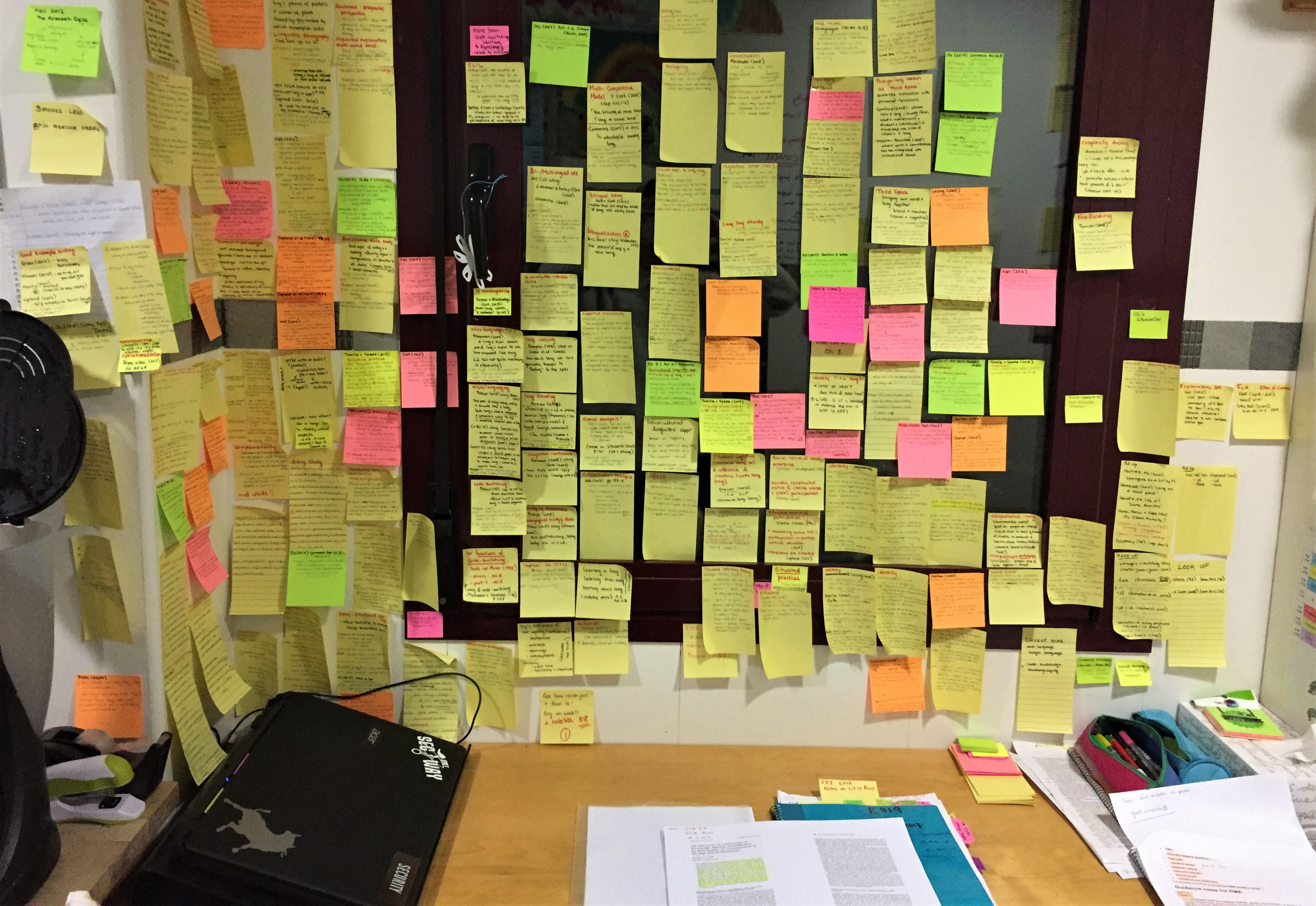
My carefully planned intervention was not as absorbing for students as I’d hoped, and I was surprised by how meandering some of their discussion was. More unsettling was the way some groups used superficially friendly interaction, apparently welcoming contributions before quickly contracting the interaction, and redirecting the discussion. This was only really apparent through my later Exchange Structure Analysis, adapted from North et.al (2008), and SFL analysis of interpersonal metafunction. I related these analyses to my critical thinking categories, which were developed from Krathwohl’s (2002) reworking of Bloom’s taxonomy of educational learning objectives.

It was not all bad news. Some face-to-face discussion really did lead to critical thinking, and one group built on each others’ ideas productively, using grammatical metaphor particularly effectively to open out space for critical thinking to emerge.

But the data where critical thinking was least evident was in the slides (visual language), and there was very limited exploitation of the cross-multiplication of modes that had seemed so full of potential. Groups were keen to paste images from the internet into their slides, transferring adverts with minimal recontextualisation, so endorsing wholesale the voices implicit in them, with a negative impact on the coherence of their own critical stance.

It was quite disappointing.

Eventually my analyses led me to two complicating factors that I had underestimated. These were external motivation in the form of a grade for the presentation, and internal motivation in the form of empathy. Negative past experiences of group-work had led to a lack of trust in the process, as well as a kind of persistent ‘novice’ approach, where tasks are divided up and then brought together without any real collaboration.

What did I learn?

Certainly that people are unpredictable. Also that my Spring 2018 data collection was about no more than Spring 2018. I wrote the dissertation last summer and by the end felt I knew the students better than they knew themselves. By September I had met many of them again in new courses and had to rethink my conclusions. The student who had shone in data analysis had become lazy; one group villain turned out to be a really creative thinker.

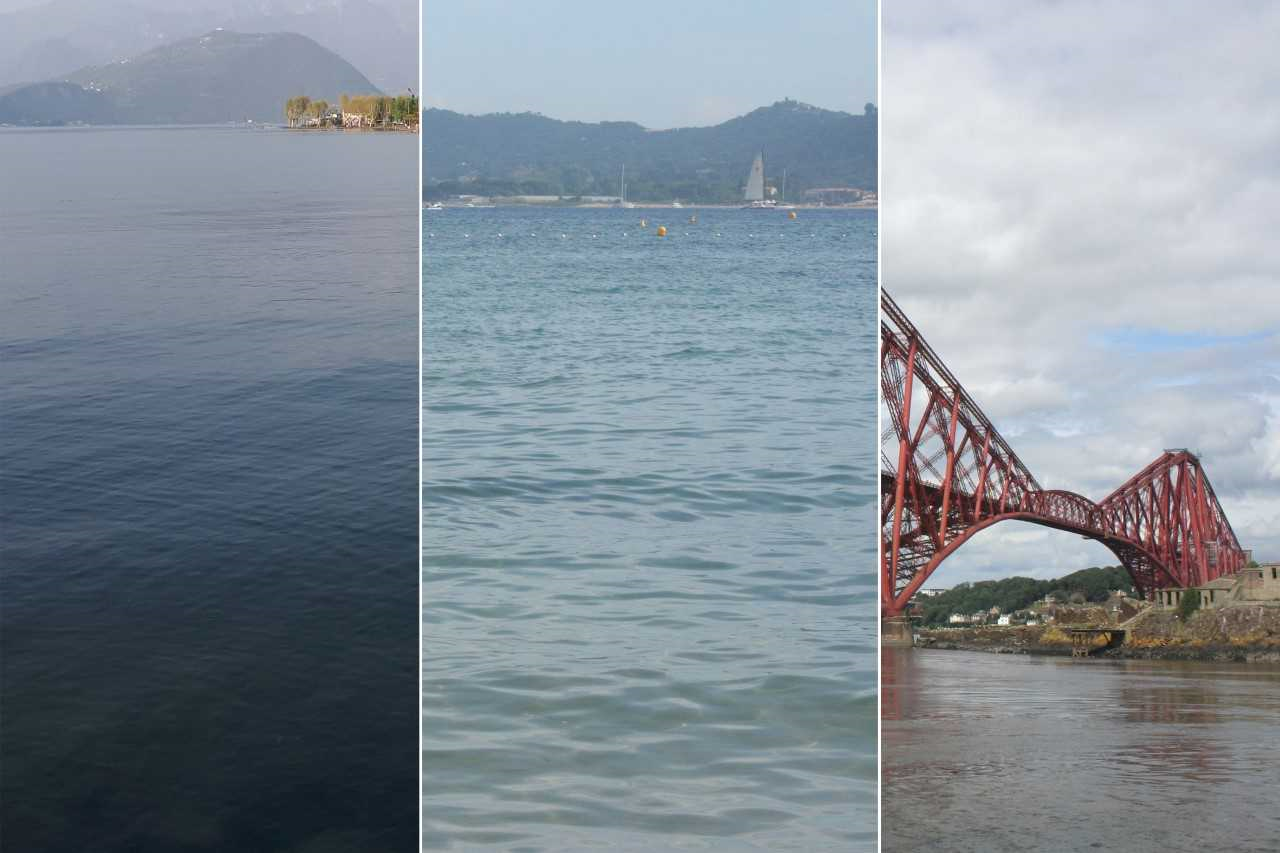
When I read the dissertation now, it takes me back to the places I worked on it last summer: our basement in Italy, a French campsite, someone else’s study during a house swap in Scotland. Moving about might seem a recipe for losing focus, but I found it actually helped to create deadlines. Data analysis had to be completed in France; writing up was during the month-long house swap. It was a bit like chapters. I think there’s some French beach in the data analysis and some Scottish weather in the writing up, though hopefully not cloud cover!

North, S., Coffin, C. and Hewings, A. (2008) ‘Using exchange structure analysis to explore argument in text-based computer conferences’, International Journal of Research and Method in Education, vol. 31, no. 3, pp. 257 -276.

Krathwohl, D.R. (2002) A Revision of Bloom’s Taxonomy: An Overview, Theory into Practice, vol. 41, no. 4, pp. 212-218.

Inspiration in the Third Space

Marielle Meulenberg, Former Masters Student, Applied Linguistics, WELS


“It was the best of times, it was the worst of times…” While inspiration nodded its acknowledgement, anxiety reared its ugly head to taunt me on a regular basis. I had spent the module previous to EE819 panicking about a research topic. Being a private language teacher didn’t lend itself to extensive study of formal learning and provided little material to work with – or so I thought. As we progressed through the initial stages of EE819, I felt like there might yet be a glimmer of hope as ethnographic study took a front seat in our syllabus.

Then BOOM – enter centre stage, ‘The Third Space’. This is where lines are blurred and any combination along the formal-informal continuum has its merits (and faults, but let’s focus on the positives, shall we?). I found I was able to allocate my teaching environment to the Third Space, and that this too was a valid area of study. Having wrestled at length with doubts about the benefits of my teaching to my learners, my EE819 research project provided the perfect platform from which to begin systematic and critical study of this question. It would either assuage my guilt, or kick it up a gear.

I conducted a qualitative single case study that incorporated action research. It involved video and audio recording, participant journals, and (follow-up) interviews. Despite having only one participant (acknowledgement to said participant for being so dependable, committed, and patient), the amount of data produced over our ten-week data collection period was impressive. I spent many hours at my kitchen table transcribing and studying video data, poring through participant journals, reviewing and revising my literature review, and catering to the demands of two very rambunctious little monkeys. Oh, did I say monkeys? I meant my daughters…

Being a wife and mother as well as a private language teacher, I would spend the daylight hours living my ‘normal’ life, and then, come evening, I would retire to the solitude of the kitchen where I had my caffeine within arm’s length (literally), and the solution to most of my girls’ requests easily obtainable (let’s face it, water, food, and a first aid kit solve most daily child-related issues). But despite the division of actions between ‘normal’ and ‘study’ life, I admit that I was hard-pressed to halt thoughts on my research. Wherever I went, whatever I did, I was constantly thinking about how to condense and prioritise my findings, how to structure my interpretations in a clear and systematic way, and how to take the findings from my very informal teaching environment and make them relevant to formal pedagogical discussions.

I was battered by a combination of ‘eureka’ moments and self-deprecating thoughts of inadequacy. I experienced the highs of a well-formatted descriptive sentence that further served to link themes and the anxieties of staring at my computer screen while wondering whether I could ever pull it all together. Nonetheless, as I gradually approached the submission deadline, I was on track with my self-imposed writing schedule (summer holidays with two young children required an adapted timeline). As my data interpretation was iterative and ran parallel to data collection, I had the advantage of kick-starting the writing process early on. I wrote far more than 12,000 words over a period of three months, and the most painful challenge was to mercilessly cut themes from my discussions. With files full of data and a stack of literature at my side, I returned religiously to my research questions to ensure that the findings I included were the most relevant and evidentiary.

It literally hurt (okay, more emotionally than physically) to exclude themes – especially in relation to the action research aspect of my project. My limited teaching environment had suddenly expanded into a much larger world of potential learning, for myself as much as my learners. The act of reviewing videos and studying learner journal reflections enhanced my awareness and criticality of self as teacher while permitting me an appreciation of the environment I created for my learners. The EE819 research project became much more than an academic obligation. It was the confirmation I needed to accept that I was indeed teaching, but even more importantly, it evidenced how ‘Third Space’ learning fomented my roles as mentor and motivator to my learners.

It’s one thing to teach formal language structures, it’s another to inspire and motivate others to put aside their self-consciousness and be willing to engage in the target language outside of the language classroom. It took me almost ten years of teaching, three years of part-time Masters study, and a few months of research and manic writing, but I now proudly state that the latter has become my personal benchmark for success in my language teaching.


Thinking Aloud: Ethical Research

Shafquat Towheed, Senior Lecturer in English

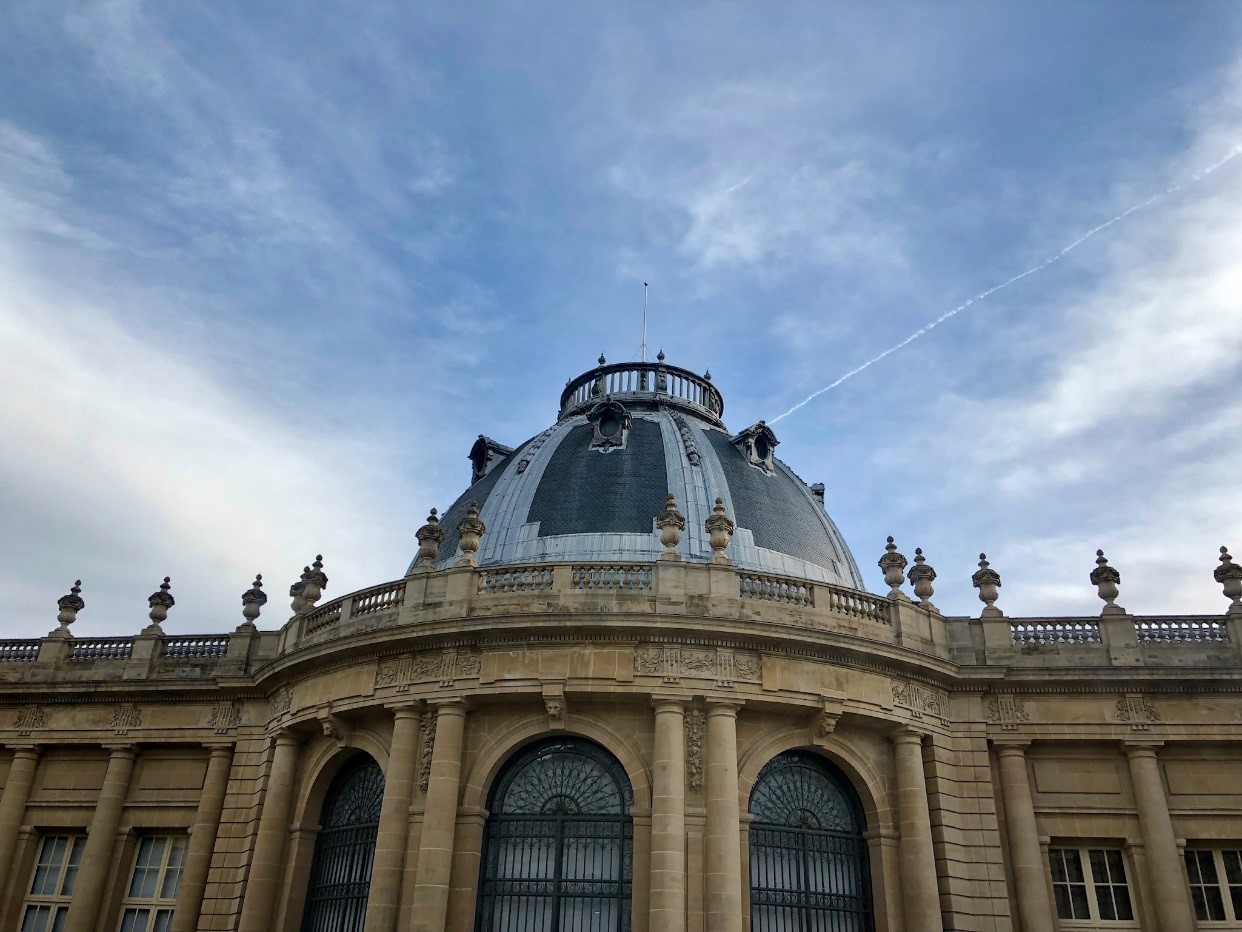
[Image 1: The Africa Museum, Tervuren, Belgium]

‘In a very few hours, I arrived in a city that always makes me think of a whited sepulchre’, said Conrad’s Marlow about his return to Brussels in Heart of Darkness (1899). Following in Marlow’s (and Conrad’s) footsteps and carrying with me a well-thumbed copy of Joseph Conrad’s Heart of Darkness to re-read on the journey, I recently stopped in Brussels on the way to Africa. For me, this was a trip with special significance, for perhaps more than any other single work, it was Conrad’s searing indictment of colonial exploitation, fashioned in the form of a quest romance, which first introduced my teenage mind to the possibilities of literary fiction. Before encountering Conrad, as a child I had been an avid reader of encyclopaedias, National Geographic magazine, books of adventure and factual travel writing, but not of high ‘literary’ fiction. In essence, Conrad was my introduction to the literary canon.

I had been waiting to visit the now rebranded Africa Museum (formerly the Royal Museum for Central Africa) in Tervuren, just outside Brussels, for a long time. The Africa Museum is the largest single collection of objects, artefacts and archives relating to Central Africa (Congo, Rwanda and Burundi) anywhere in the world, with over 10 million zoological specimens, 170,000 photos, 120,000 ethnographic items, 8,000 musical instruments and some 3 kilometres of historical archives; only 1% of the collection is on permanent display. Initially conceived as a propaganda exercise for the Brussels International Exposition of 1897, the museum moved to its grandiose, purpose built palace (modelled on the Petit Palais in Paris) in 1910.

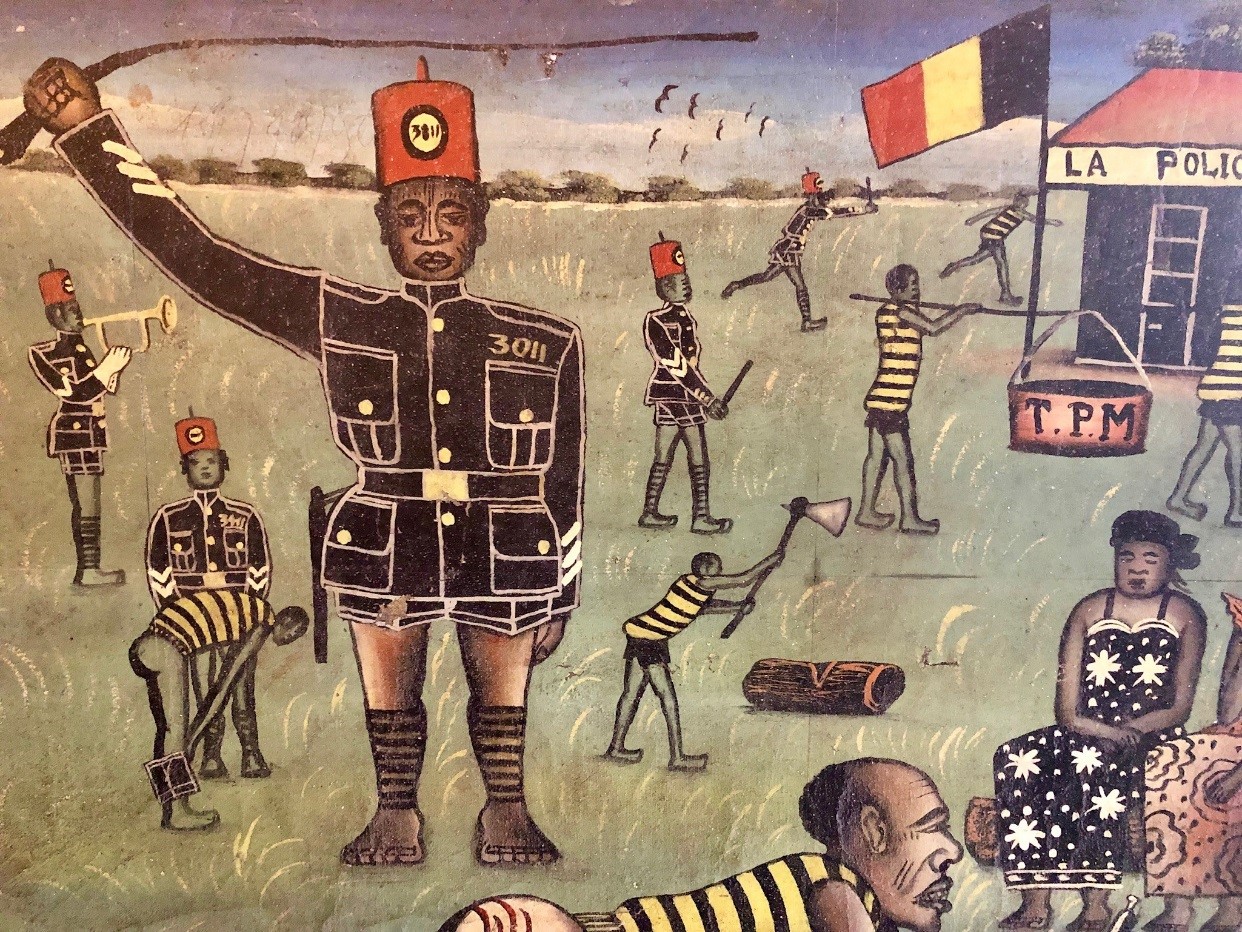
The collection represents in material form, the staggering acquisitiveness of high 19th century European colonialism: the stolen natural and manmade treasures of Central Africa on display at the heart of Europe, a display that has been called ‘a monument to the worst excesses of European plunder’. Even more disturbingly, during the Belgian colonial period, human exhibits were a standard feature of the museum; Congolese men and women brought to ‘animate’ the collections during colonial expositions lie buried in unmarked graves in its grounds.

Over the course of the last decade the museum has been the subject of an extensive refurbishment, opening on 8 December 2018 after a five year period of closure. The refurbishment (and indeed, the reimagining) of the museum was long overdue; the Royal Museum of Central Africa had become an embarrassingly large colonial relic.

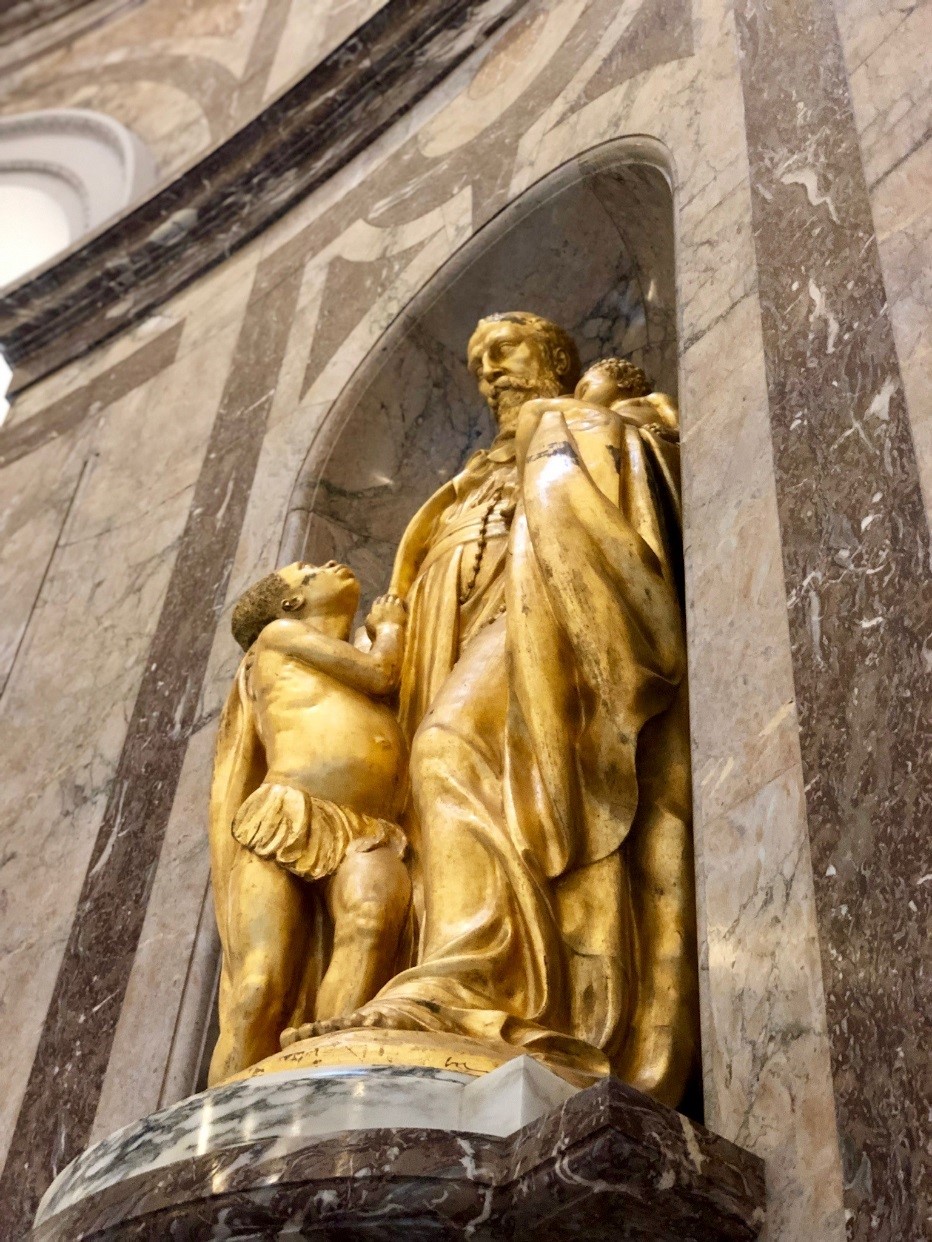
[Image 2: gilded statue of King Leopold II inside the Africa Museum]

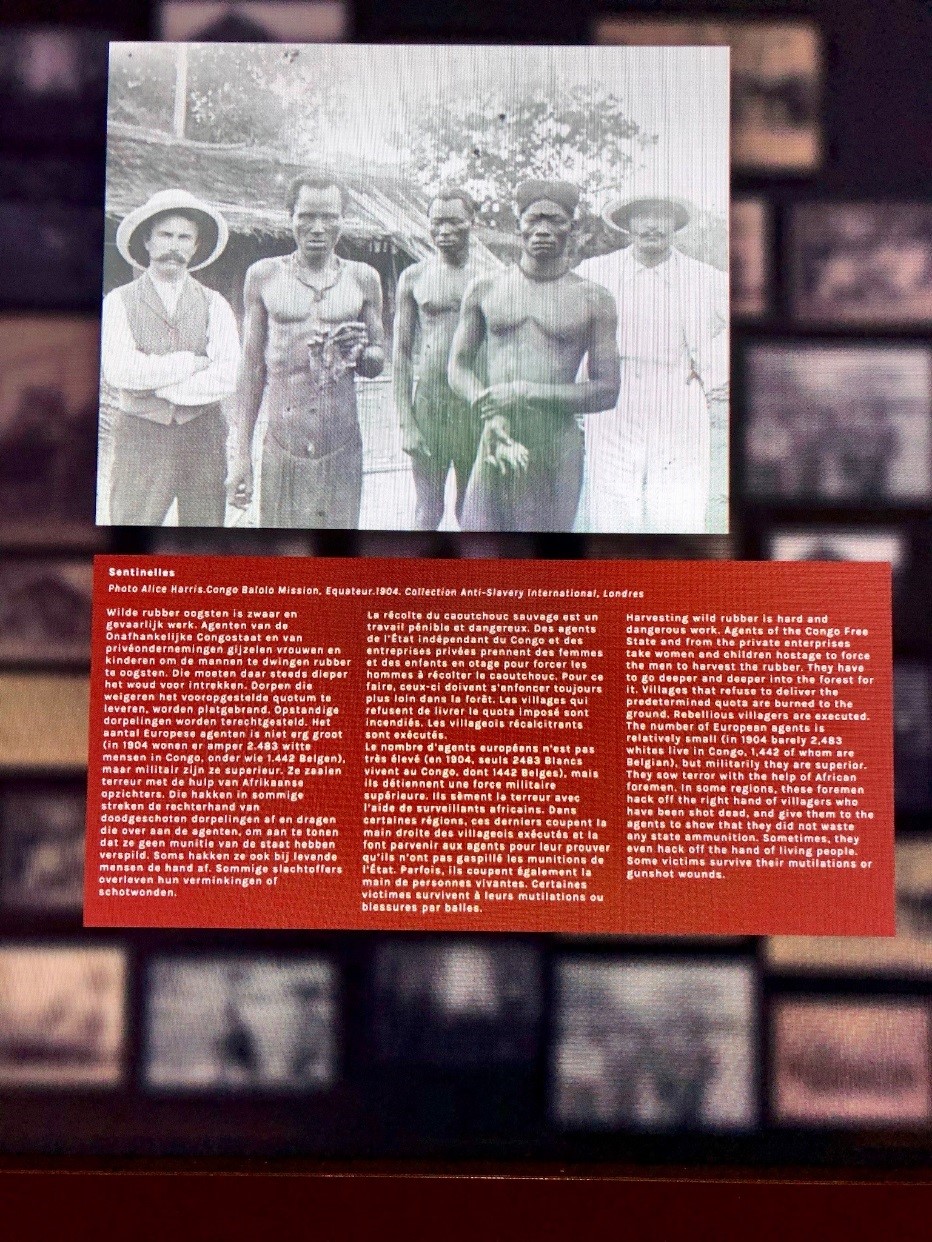
Nothing can disguise the naked paternalism and casual assumption of racial superiority at the heart of King Leopold’s venture, demonstrated most viscerally in the gilded statutes of the Belgian monarch engaged in the civilising mission that dot the marble clad interior of this palace museum. But the refurbished museum is now making a start at acknowledging some of the unpalatable truths from which visitors had been shielded for over a century. As Adam Hochschild’s King Leopold’s Ghost (1998) has shown a century after Conrad, the sheer brutality of forced labour in the Belgian Congo resulted in the deaths of over 10 million people and has been called a ‘hidden holocaust’. The Africa Museum now features a new educational centre and information that begins the conversation about how an archive such as this, constructed as an unrepentant celebration of imperialism, can be used to interrogate and confront in the past – and be of relevance to new, multicultural generations growing up in Europe’s political capital.

[Image 3: forced labour in the Congo Free State, c.1904 – on display in the Africa Museum]

So, why should any of this matter to us today? Conrad’s writing on colonial atrocities in Africa in Heart of Darkness had a clear impact in terms of shaping my early literary interests, and proved pivotal in my choice of subject to study at university; eventually, this led to a career as an academic in English Literature. Likewise, visiting the newly reopened Africa Museum after a lengthy period of closure represented the fulfilment of a personal wish; but curiously enough, there is also a particular relevance to my own practice as a researcher which I should like to reflect upon, something it is relevant to anyone researching in the humanities and social sciences today.

Academic research (like the rest of life) does not exist in a vacuum, but is always shaped by historical, political and economic forces. I have recently been awarded a British Academy/Leverhulme Small Research Grant to support my research. I am of course, delighted to be the recipient of this prestigious small grant, which will allow me to develop over the course of two years (October 2018-October 2020) a current research interest of mine, the reading (and engagement with reading cultures) of the explorer and travel writer, Dame Freya Stark (1893-1993) . Like almost all funding councils, the British Academy is bound by a code of ethical standards and is committed to supporting excellence in research; it really is as it claims, a ‘voice that champions the humanities and social sciences’. But where did the money for my research project actually come from?

The Small Research Grant scheme is funded in partnership with the Leverhulme Trust; founded in 1925 as a bequest by the industrialist William Hesketh Lever, 1st Viscount Leverhulme (1856-1925), this registered charitable trust provides annual research funding of over £80 million. Leverhulme, like Cecil Rhodes (1853-1902) whose tainted legacy is now the focus of the ‘Rhodes must fall’ campaign, was both an extraordinary philanthropist, and a ruthless imperialist. Leverhulme’s business empire (Unilever) was substantially based on the exploitation of African land, labour, and raw materials. As the historian Jules Marchal has demonstrated in Lord Leverhulme’s Ghosts: Colonial Exploitation in the Congo, Lord Leverhulme was a personal friend of King Leopold of Belgium and an unapologetic supporter of imperialism in Africa. Unilever massively depended upon forced labour in Congolese plantations for its guaranteed supply of palm oil for the production of soap (this practice continued uninterrupted until Congolese independence in 1960). Incidentally, the British Academy was first proposed in 1899, the same year in which Conrad’s Heart of Darkness was first serialised in the pages of Blackwood’s Magazine; it received its Royal Charter from King Edward VII in 1902, the year in which Conrad’s novella was published in volume form, and is currently based at Number 11, Carlton House Terrace, which from 1856 to 1874 was the home of W.E. Gladstone, Prime Minister at the time of the Berlin Conference (1884-1885) that formalised the European colonial carve-up of Africa (and confirmed King Leopold’s personal fiefdom of the Congo Free State).

[Image 4: forced labour during the Belgian colonial period. Africa Museum]

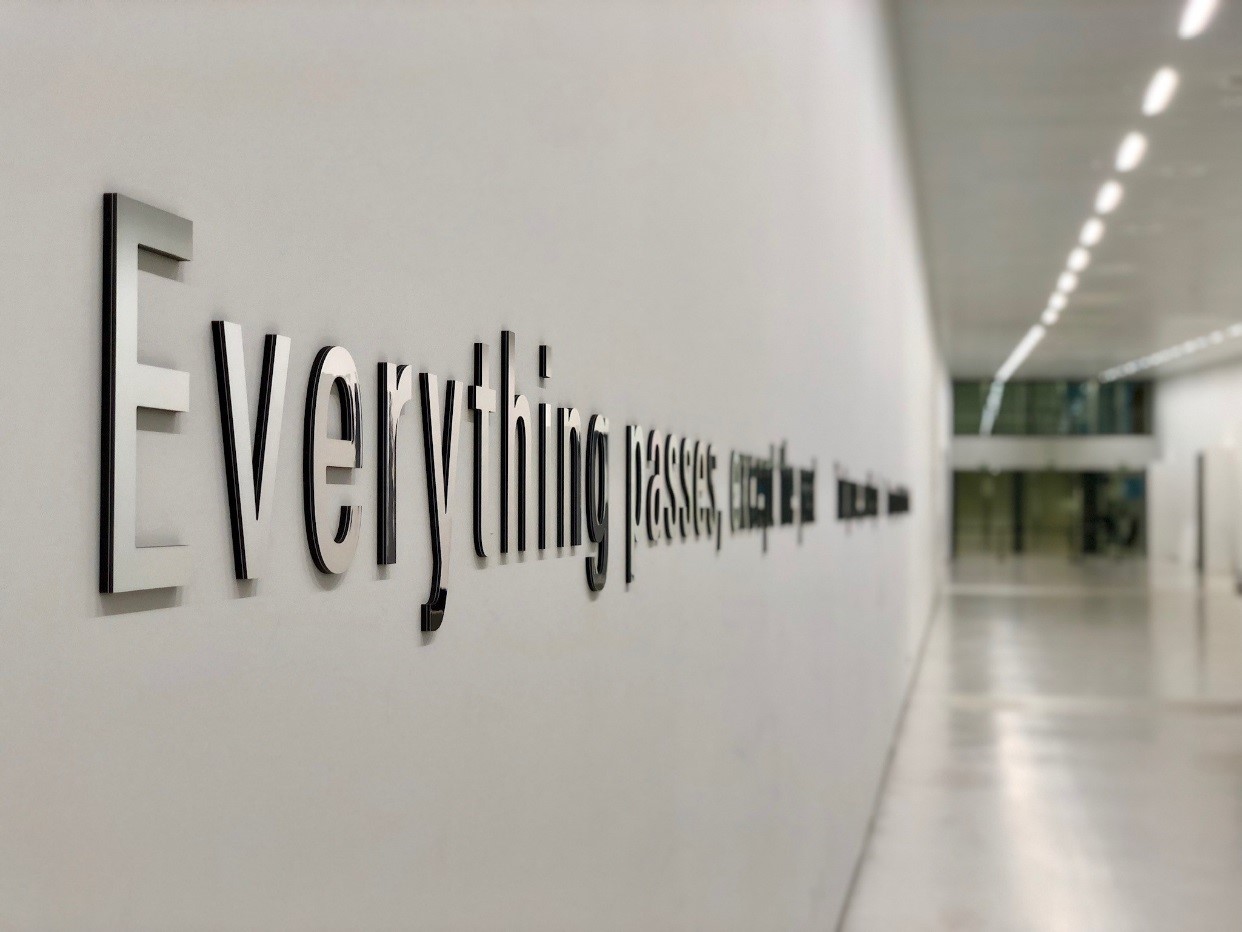
As the motto in the welcome hall of the Africa Museum reminds us, ’everything passes, except the past’. This first admission of the brutality of the colonial past means that the decolonisation of the Africa Museum has only really started in 2018, and may take some decades to reach fruition. Sadly, the exploitation of Congo’s natural resources by corporate and neo-colonial external powers with the connivance of successive regimes, exemplified in the 30 December 2018 elections, continues to this day. A century ago, it was rubber, timber, ivory and palm-oil; today, it is gold, diamonds, and especially columbite-tantalite (coltan) ore to extract tantalum, the metal that powers the smart phones of the world.

[Image 5: welcome hall, Africa Museum]

We cannot change the past – but we all have a duty to acknowledge its pervasive influence on us today, for we are all, whether we like it or not, the products of European imperialism and colonialism. My visit to the newly refurbished Africa Museum as a grant holder of money, derived in part from the forced exploitation of Congolese labour, provided a salutary reminder about the personal responsibility we all bear in terms of ethical research: we must conduct our research in accordance with the ethical guidelines of funding councils, but also, and more importantly, openly acknowledge the source of that funding and the human exploitation and misery that created it. To do any less, would be to dishonour the countless victims of imperial exploitation, and be a grave disservice to ethical research.


Notes

The Africa Museum reopened to the public on 9 December 2018. It is open for visitors everyday apart from Mondays and the standard closure dates of 1 January, 1 May and 25 December. Shafquat Towheed is a Senior Lecturer in English at The Open University, and visited the museum on 18 December 2018.

On writing a diary of literary terms

Richard Jones, Lecturer in English Literature

Daisy, I say, it’s time to put you in a blog post.

Not likely, she says and starts to squeeze out of it.

I don’t mind this. The whole point of the blog post is to see how Daisy gets out of it.

I’m just an experiment to you, she says, not an animal at all.

Let’s try rhyme, I say, or sonnet or perhaps something more Heideggerian like being thrown into the kitchen.

You’re lucky I’m not a cat, she says.

Daisy hates cats.

The cat that was put in a box was pretty cheesed off, she adds.  Whipping about like a mad thing.  It wouldn’t tolerate this.

A blog post is not a box, I say.

Speak for yourself, she says.

*

We are silent for a while as I try to think of a way to coax Daisy towards the blog.  The trouble is that her eyes are full of the outside.  That was Rilke’s insight about the face of an animal: we know what is out there only from its gaze. That’s the starting premise.

*

Daisy, it seems, has become fixated on the cat.  That Dear Reader chap, you like so much, she is saying, had a cat.  An insistently real one.  It unsettled him by padding about and following him into the bathroom.  We can try that out, if you like, she says.  Would you like to get undressed?

She is getting cross now.  Little by little, I find she is stepping onto the page.  Is that how the outside comes in?

*

Hey Daisy! I say. Have you ever wondered what Shakespeare would sound like on a kazoo?  Daisy raises an eyebrow.  She is curious.  So I pick up a kazoo (doesn’t everyone own a kazoo?) and speak a few lines of Hamlet into it.  Famous lines. Lines everyone would know. That gets Daisy’s attention. It turns out that Hamlet on a kazoo sends her wild.  It’s not because of the words, she says. It’s because they have been taken back to the borders of meaning. To be or not to be? is Hamlet’s question – but on a kazoo it’s a more pressing matter. To mean or not to mean? The suspense keeps me playing all afternoon.

*

That’s an example of a blog post.  One animal at the mercy of language and one who is not.

*

You are talking about the cat again, says Daisy. (She doesn’t like to be tricked like this.) I wish it would just die, she adds matter-of-factly.

The whole point about the cat, I say, is that it is in two states at once.

Like your precious Literature, says Daisy.

Exactly, I say.

*

We proceed like this.  Daisy trots up and runs on (enjambement), brings me a rag (a text), jumps at her own farts (the ghosts of her desire) and props herself at the bar (well, Saussure’s). We work our way through everything: images, shadows, beginnings, translation and interpretation, poetic feet and poetic fallacy, rhythms, excesses and lacks, machines and nature and wonder. What have we discovered?

*

You know, says Daisy, you remind me of one of your eighteenth-century friends: Very Stern. Didn’t he give a macaroon to a mule just to see what it would do with it?

I’m sorry about that, I say.

That’s just what he said, she replies.

*

I’m glad Daisy has brought up the eighteenth century. I wasn’t sure how to go about it. I muse upon its gruff critical spirit.  Its experimentation.  It was a time when a writer could be a critic but (because of an enthusiasm for quotation) not a real critic, or a historian who (because of a talent for abridgement) was not a true historian or a novelist who (because of a love for borrowed plot lines) was not a true novelist.  It was a time of writers who (because some Victorians did not think so) turned out not to be real writers.

I sum up these musings by saying: talking to a dog is not real critical work.

Now it’s Daisy’s turn to take pity. Her eyes are full of the force of somewhere else.

The only way to find out, she says, is to look in the blog.

We tiptoe up to it.  Prepare to take a look.

Wait, she says all of a sudden. (Or was it woof?) Best stop here, she says.

__________

Note

The cause of this commotion is the blog antiphysis.com, on which a new post can be found from time to time. Even though a link to the blog has been provided, there is perhaps more to be gained by not clicking on it.


Teaching for the OU – having the time of my life!

Dr Lynda Morgan, Associate Lecturer

It is February 1976. I am 23 years old, recently graduated with a degree in English and a teaching certificate, and I am about to walk into a shabby classroom at Sarah Siddons school, Paddington. I have no idea what to expect; I am both excited and nervous. Balancing on rickety chairs in front of graffitied desks eleven students are poised to begin, among them the wife of a leading politician, a prominent woman designer, a young Egyptian man from Paddington’s bedsit-land who is struggling with his English, a woman who lives in one of the most expensive squares in London, an elderly man who left school at fourteen and fought in the First World War, and a middle-aged tube driver who tells us he reads the teaching material in his cab while the train drives itself. What unites this disparate group is hope – the dream of achieving something they all thought was beyond their reach. They are also all dreading the first assignment; it’s almost the first thing they mention. I am daunted, but struck by the realisation that they are more nervous than I am. I am also touched that they think the tutorial is worth coming out for on a cold wet night, and I am determined to make it so. That is my first lesson: it is about them, not me.

They take it for granted that I know what I am doing. By the end of the evening I think I have made a reasonable job of appearing to, but the reality is that I was learning a lot myself that first evening. The one thing I could not know, however, was that in going into that classroom to teach my very first OU tutorial I was stepping into what would be the most important and fulfilling element in a long and varied teaching career. 43 years later I am still stepping into classrooms – some real, and, these days, some virtual – to teach OU students, and still valuing every minute of it.

The course I was teaching was A100 – known in those days as the Arts Foundation course. It was a wonderful module, packed full of material on philosophy, art history, history, literature and music, all brought together by Oswald Hanfling’s regular input on logic. Students tussled with Sophocles and Shakespeare, form and meaning in music, and, amazingly, D. H. Lawrence’s The Rainbow. The amount and complexity of material they took on at level 1 was breathtaking. On TV, usually at unsocial hours, they could listen to discussions of poetry (with the text of the poem scrolling across the screen), hear lectures on sound and a recording of Bertrand Russell’s memories of Lawrence, and watch scenes from Aristophanes’ Clouds. It is hard to realise now how groundbreaking all this was. I thought it was marvellous, and I realised how little I knew. Yes, I knew a bit about literature, but I was ignorant of all sorts of other things. In a way A100 began what I think of as my ‘real’ education – a rigorous schooling in argument, a bringing together of disciplines into a rich interplay of ideas, and a questioning approach that was to inform all my subsequent teaching, as well as my later postgraduate studies. I was introduced to things I had no idea about, and I can honestly say that teaching A100 took me at least as far in my own education as my first degree had done.

A100 also taught me how to teach. I began to realise that OU teaching wasn’t in essence about how much you know – though knowing things is obviously essential – but about bringing mixed groups of people together, and engendering an atmosphere in which they feel they belong and are safe to try out ideas and ask questions. It is about finding ways of rendering complicated ideas accessible, making apparently arcane material relevant, and empowering people with the belief that they, too, can understand and have a right to respond. It is about enthusiasm and excitement, helping students to think independently, and being able to tolerate it when their ideas are different from your own. Perhaps most importantly it is about thinking on your feet. In the early days I was constantly faced with questions I had never considered, things I had taken for granted in my own very traditional education: Why do we bother to study Shakespeare? Why do we write essays like this and not like that? Shouldn’t good literature be easy to understand? Isn’t making things difficult just showing off? I was also learning how to deal with awkward situations: the student whose first words were, ‘I hate poetry; what are you going to do about it?’; the student who sat in the corner with his back to the rest of the group, tutting loudly, and refusing to speak until he suddenly said, ‘I have never heard so much twaddle in my life’. Who knows whether he was referring to me, or to Jan Kott’s material on A Midsummer Night’s Dream!

A100 was replaced by A101, another demanding course with Hamlet and Jane Eyre as the literature texts, and then in 1982 I was appointed to teach A312, The nineteenth-century novel and its legacy. I was thrilled to be teaching level 3 literature, and the richness of this course enchanted me. This was in the days of summer schools, where we had the privilege of spending a whole day on Anna Karenina, and another on Middlemarch, and in between we fitted in Mansfield Park, Wuthering Heights, Great Expectations, Tess of the D’urbervilles, Cousin Bette, Germinal, On the Eve, and Huckleberry Finn. Bliss! We ended each week with an entertainment put on by tutors and students – the result of rehearsals squeezed into coffee breaks, and ‘brilliant’ ideas generated late at night in the bar. There were spoofs of Miss Havisham, and unlikely meetings between Pip and Count Vronsky, alongside inevitable jokes about the geese that left droppings everywhere on the lake-filled campus of the University of York; many a skit began with the actors examining the soles of their shoes. Every year I longed to be cast as the seductive Rosamond – every year I was the serious Dorothea … I can’t overstate how wonderful the many weeks I spent at York were, seeing the excitement and discoveries of students who were experiencing full-time study for at least one week of their lives, and benefiting from the dedication and support of marvellous colleagues who all taught me a great deal. Indeed, I met my fellow bloggers Dennis Walder and Richard Allen there, as well as many others I still think of.

I went on to teach a series of other courses, all of which did something new and exciting: A319, Literature in the modern world (which taught high-level critical theory alongside the literary texts. Many said the students wouldn’t cope with it – they did!);  AA316, The nineteenth-century novel (which gave students the opportunity to have fun with Dracula, and to read lesser known novels like The Awakening); A300, 20th century literature: texts and debates (which asked questions about the construction of meaning and the role of readers, as well as including many texts that students loved and said they would never otherwise have read – Do Androids Dream of Electric Sheep?, Kiss of the Spiderwoman; poetry of O’Hara and Ginsberg); and currently A334, From Shakespeare to Austen (which particularly gives value to students’ own voices and their chosen research). I also played a part in the development of Creative Writing in the OU, teaching the first two 10-credit creative writing modules, A174, Start Writing Fiction, and A175, Start Writing Poetry, as well as acting as what was grandly and somewhat improbably called a ‘supermonitor’ for the award board.  After that I shared with my colleague Lynne Dixon the moderation of the national student and AL online forums for the new 60-credit modules, A215 and A363. We worked on those forums together for 10 years, and we would both agree that it wasn’t always an easy job. It was, however, a privilege to work with and advise so many students and colleagues, and also to work so closely with one another. Not many days passed without numerous emails between us discussing how to resolve this or that problem!

So much has filled my OU years that inevitably a lot has to be omitted. But there is one topic that I can’t leave out: what the OU has offered, especially in its early days, to women. Of course it has been important for men too, but as a woman myself I can’t help but be forcibly struck by the opportunities it made available to women, and its contribution to changing how they saw themselves. It is difficult to remember how unusual it was when the OU started for women to be educated to degree level. In the early years my groups were full of women of all ages and backgrounds who had not had the chance of an education beyond the age of sixteen. They talked about how no-one had thought it was important for them to do anything other than get a job and/or marry and have children. Many said that now their children were at university they wanted to prove they could do it too. It was not unusual for a student to pour her heart out about how her husband resented her study and tried to prevent her doing it. Others said they could only do it without complaints from their families if the study came last after every detail of cooking and housework had been completed. Some were studying secretly, with their study materials sent to a friend’s house – I would be instructed not to telephone them or write to them at home. Some arrived at summer school terrified because they had never been away from home on their own before. In the days before mobile phones there would be queues of women waiting to use the telephone every evening so they could tell their husbands what they needed to do the next day to keep things going at home. Most of them had filled the freezer with cooked meals for the week and had left lists of the order in which meals were to be taken out and put in the oven; they anticipated arriving back to piles of unwashed dishes. Newspapers sometimes reported on the so-called wild goings on at summer schools; but behind the sensational headlines there often lay moving stories of deeply unfulfilled women discovering that there was more to life than hoovering. A week away from home, with like-minded people and the excitement of full-time study, was a heady experience. Some women realised they needed to make substantial changes to their lives; I remember more than one woman refusing to go home at the end of the week unless her husband agreed to a divorce. This was a time of radical social shifts, and although the OU was often blamed for breaking up marriages it was not responsible for the changes taking place. It did, however, play its part in the shifting social landscape by giving women educational opportunities they had never expected to have. Of course plenty of women lived contented lives with families that were proud of them, and they were just thrilled to have gained a degree; others, however, needed the OU to help them lay claim to a different way of living. I received numerous letters from women students thanking the OU for opening up their lives in ways they could never have imagined.

Sarah Siddons, where this all started for me, has been demolished and replaced with luxury flats, and the OU itself has changed tremendously. It is, however, still staffed by people dedicated to offering an opportunity for excellent education to everyone who wants to try it, and it is still full of students excited by academic study who work their socks off to gain a degree. I hope this will remain the case for many years to come. But whatever happens to the OU in the future, nothing can change the fact that it is one of the most important educational developments to have taken place in the twentieth century. I am very proud to have been part of it, and grateful to it for the joy and fulfilment it has given me.

Reading as a writer: ‘Offshore’

Sally O’Reilly, Lecturer, Creative Writing

As creative writing academics, we constantly remind students about the importance of ‘reading as a writer’, and in my own reading I sometimes wonder to what extent this should be a conscious process, and to what extent something that I try to sublimate, reading as a reader, enjoying the book in a naïve way on first reading at least. In an ideal world, I would read everything twice, but as we know, this world is not ideal. Therefore, the way I consume books is a compromise, shifting between immersive engagement with the narrative and awareness of the techniques the author is using. As with the business of writing, novel reading is protracted, sometimes disrupted, sometimes seeming like a professional duty.

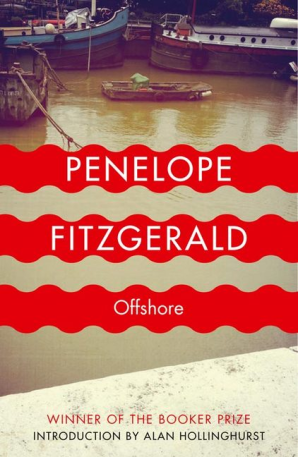
So looking back on my reading in 2018, what stands out? The novel which made the greatest impression on me was Penelope Fitzgerald’s Offshore, which won the Man Booker prize in 1979. The narrative focuses on a group of misfit Londoners, on the posh side of classless, who live in a row of semi-derelict boats on the Thames during the 1960s. None of them quite know what they are doing, or are entirely honest with themselves, and their compromises and misdemeanours drift with the ebb and flow of the river.

It’s hard to identify a protagonist, or a clear narrative through-line. But chaotic Nenna James comes closest to being its heroine, and her haphazard, wilfully disordered life presumably reflects that of Penelope Fitzgerald herself, who lived on a houseboat with her children after her first marriage collapsed. The point of view shifts among numerous characters including Maurice, a romantic and part-time rent boy, elderly marine painter Willis and Richard, an ex-naval man now working in insurance. All live half-way lives, at the edge of both land and water.

Nenna is incapable of doing anything practical, even a trip to Stoke Newington on public transport seems to faze her. Her visit ends in near disaster, shoeless in a rainstorm, pursued by a lecherous stranger. Yet at the same time, she is resilient and stoical, her expectations of life heroically low. In contrast, her young daughters Martha and Tilda are bizarrely precocious and competent, managing their bohemian lives with pragmatic ingenuity.

What I love about the book is its wry, strange humour, and Fitzgerald’s evocation of a lost London, not the place that we would associate with the Swinging Sixties, but more like the city that Dickens would have recognised. This metropolis is a post-war ruin not yet obliterated by developers, the river still a thoroughfare as it has been since Roman times. Fitzgerald evokes the inner lives of all these drifting, dreaming characters with intense precision as their stories unfold on the leaking vessels that the river will soon reclaim.

So what did I take from this book that will inform my writing? Initially, I was resistant to the way in which the point of view shifts are handled, with the narrative spinning around so much that I felt disorientated. But the effect builds over time, so that some scenes are focused intensely in the point of view of one character, and others achieve a choral effect. I also realised, by the time I finished the novel, that this kaleidoscopic perspective is consistent with the subject matter. The characters’ moods, desires and allegiances are in constant flux, just as the Thames is never still. Any piece of writing must similarly find its own shape, and the narrative mode should emerge organically from the material. And yet there is always the temptation to force a work of fiction into an already familiar format, to make it recognisable.

In addition, this book informs my knowledge of writing as an occupation, as this was a notoriously controversial Booker winner. The judges (Asa Briggs, Benny Green, Michael Ratcliffe, Hilary Spurling and Paul Theroux) failed to make a unanimous decision, unable to agree on whether William Golding should win with Darkness Visible or V.S Naipaul with A Bend in the River and so they gave the prize to Offshore which was ‘everyone’s second choice’, according to Spurling in a Guardian review of Fitzgerald’s collected letters. Spurling writes: ‘The presenter of the BBC’s book programme told her angrily that he’d been promised she would lose. Drunken reporters upbraided her for making them rewrite copy citing the favourite… according to her editor, the misery of this episode and its repercussions haunted her ever afterwards.’

What interests me here is the arbitrary nature of literary awards, and the way that they have increasingly become a measure of esteem and status. There is no reason to suppose that Offshore was inferior to the two books that caused the dispute between the judges, but Fitzgerald was made to feel that winning the Booker was a compromised achievement, that not being ‘the favourite’ meant that she was a writer of lesser quality.

Reading her novel today, it flashes with brilliance and strange insights. I’m inspired by her quiet eccentricity and her determination to pare her work down, creating something elliptical and magical in the midst of the chatter and turmoil of the book industry. The noise seems even louder now, so quiet eccentricity is even more important.

‘Of These and Other Worlds’: Reflections on the C. S. Lewis Festival, Belfast

Patricia Ferguson, PhD student, English Literature

Saturday November 3 is described in the brochure as ‘The Day of Magical Thinking’, but it seems to me that we were privileged to enjoy a whole week of magical thinking. The title of this year’s C. S. Lewis festival ‘Of this and Other Words’ (November 3 – 7) is adapted from Of Other Worlds, a collection of Lewis’s essays and stories in which this theme is explored. He gives warning that it is a serious matter: a sojourn in fairy land, ‘far from dulling or emptying the actual world, gives it a new dimension of depth [ … ]. It is an askesis, a spiritual exercise’.[1]  #

When, in the spring of 1916, he first read George Macdonald‘s Phantastes: A Faerie Romance for Men and Women, he found that a light from the other world came shining into this one, adding cheer to mundane things like ‘the bread upon the table’.[2]  This is Belfast, a city unrivalled for its hospitality, and that is how the festival begins, with bread upon the table (‘Festival Launch Breakfast’ at the Park Avenue Hotel), and yes, it is enchanted, both by its quality and by an inspirational speech made by Damian Smyth, Head of Literature at the Arts Council, and also a poet known for his ‘search for the uncanny, and how the local becomes the universal’.[3]

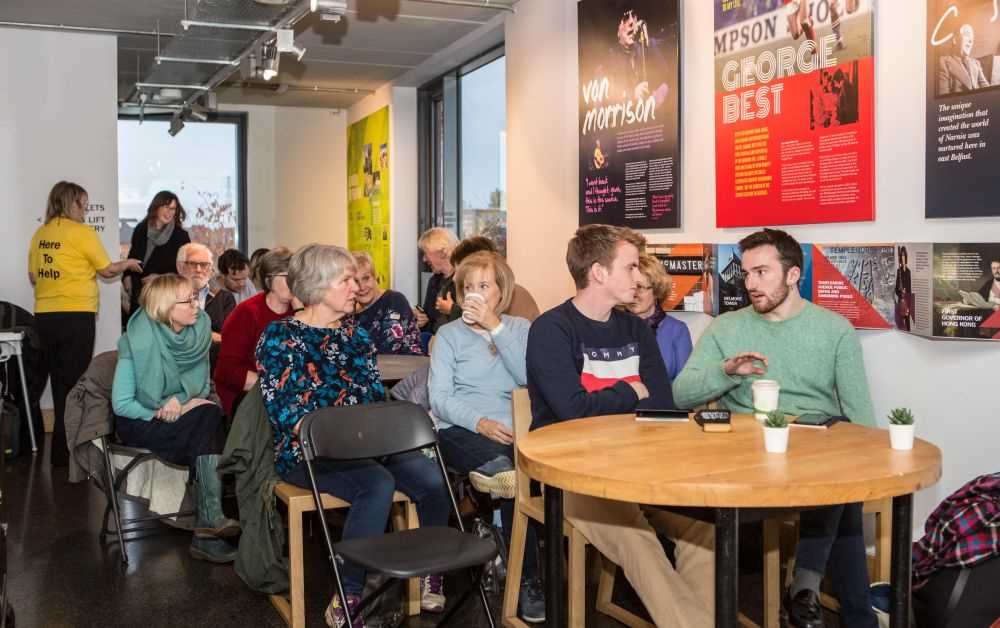
Audience members in conversation. Credit: Nurse Ratched Photography.

There are workshops in crafts and creative writing, activities for children, concerts, lectures, and book discussions, some seventy events in all. I choose from the list of lectures and book discussions, and soon I begin to notice something unexpected: a reversal of the usual meaning of ‘safe space’ as a venue, or an event, in which controversy is forbidden. It’s unexpected because, in this deeply divided society, a dangerous courtesy has developed which treats the whole city as a safe space of the usual kind. It obliges people to avoid saying anything that would identify their position as Catholic or Protestant. I’ve fallen into it myself. Because I’m Scottish, everyone assumes that I’m Protestant; I seldom correct the mistake. It’s dangerous because, although the violence has subsided, the reasons for it have not, and the words spoken are not the words that are meant, which are these: ‘I can’t ask, but I need to know, and all the time we talk I am looking for the clue that will tell me whether you are one of us or one of them’.

This being so, what is likely to happen when the Socratic Debate is given the motion: This House Believes that Churches are Holding Our Society Back, attracts a capacity audience, and has together on the same stage, the editor of the Irish Freethinker, the pastor of an ‘alternative’ church denounced as heretical by most of the others, an uncompromising Catholic, and the director of the Evangelical Alliance, all of whom speak, with passion and eloquence, the words that are meant?

There was no debacle, but plenty of fierce argument, focusing on Conor Cruise O’Brien‘s indictment of ‘the harsh re-emergence in recent years [ … ] of “sacral nationalism”’.[4]  It was pointed out that sacral politics had bedevilled Northern Ireland for four hundred years, but that evening people hammered out their views on abortion and same-sex marriage without compromise, but with good humour. Someone remarked on the relief of having a ‘safe space’ in which to do so. The motion was carried by a small majority; such an outcome would have been unthinkable just a few years ago.

This atmosphere prevailed throughout the festival. In ‘Faith and Fiction Readings’, Jan Carson, who was brought up in an exceptionally strict Presbyterian setting, spoke of her love for the Catholic writer Flannery O’Connor; academic Andrew Cunning chose novelist and essayist Marilynne Robinson, a Congregationalist with a liking for Calvin; Pádraig Ó Tuama, Irish speaker, poet and leader of the Corrymeela Community read to us from the poems of Emily Dickinson.

Corrymeela works tirelessly for reconciliation. I warm to its description of sectarianism as ‘belonging gone bad’.[5]  Then there was ‘Exploring the Protestant Imagination’, addressing tough words to both sides: to the Republicans that their works are not works of art, they are merely defensive, because art must imagine beyond itself; to the Unionists that that name is a misnomer, because they are not Unionists at all if they refuse the citizens of Northern Ireland the same rights as are enjoyed everywhere else in the United Kingdom.

I postpone writing about the ‘Till We Have Faces Book Discussion’ because that needs a whole piece to itself, which leaves me just enough space for one final reflection. Emma Must read to us from some of her engaging and delicate poems, including Belfast Pastoral which describes a city transformed from that of the Troubles. The last line goes round and round in my head: ‘And this is no longer the city you’ve read about’.[6]  Alas, it is, but hidden under the courteous veneer I spoke about earlier.

As the new Glider bus passes the small Catholic enclave of Short Strand, I look at the network of ‘Peace Walls’, and remember that Emma Little-Pengelly, DUP Member of Parliament for South Belfast, was so concerned about its name being given to the bus stop that she set up a petition to try and change it.[7]  But despite her best efforts, there is hope. Sometimes the peace walls open, as happened two months ago on Townsend Street when the heavy metal barrier that separates the Shankill from the Falls was opened for a street party.[8]  This year’s was the sixth C. S. Lewis Festival. It will take many more, and many other festivals and family fun days, but the determination is there to fulfil Emma Must’s vision at its deepest level, and it will prevail.


References

[1]     Clive Staples Lewis, Of This and Other Worlds: Essays and Stories, ed. by Walter Hooper (London: Bles, 1966), pp. 29-30.

[2]     C. S. Lewis, Surprised by Joy: The Shape of my Early Life (London: Fontana, 1959), p. 145.

[3]     ‘Nessa O’Mahony in conversation with Damian Smyth’ (2018) <http://theatticsessions.tv/the-attic-sessions-25-in-conversation-with-damian-smyth/> [accessed 19 November 2018]

[4]     Ideas Matter: Essays in Honour of Conor Cruise O’Brien, ed. by Richard English and Joseph Morrison Skelley (Lanham, MD: University Press of America, 2000), p. 17.

[5]     <https://www.corrymeela.org/programmes/sectarianism> [accessed 19 November 2018]

[6]     The Future Always Makes Me So Thirsty: New Poets from the North of Ireland, ed. by Sinéad Morrissey and Stephen Connolly (Belfast: Blackstaff Press, 2016), p. 214.

[7]     Gareth Cross, Belfast Telegraph Digital, 27 July 2018 <https://www.belfasttelegraph.co.uk/news/northern-ireland/dup-mps-short-strand-belfast-bus-stop-serious-concerns-but-its-traditional-says-translink-37160029.html> [accessed 19 November 2018]

[8]     Maurice Fitzmaurice, Belfast Live, 22 September 2018 <https://www.belfastlive.co.uk/news/belfast-news/shankill-falls-coming-together-interface-15185175> [accessed 19 November 2018]

The Book as Cure: Bibliotherapy and Literary Caregiving from the First World War to the Present

Jenny Cattier
PhD student, Anglia Ruskin University

When I saw the conference programme for The Book as Cure: Bibliotherapy and Literary Caregiving from the First World War to the Present, I genuinely could not believe my luck.  As a creative writing PhD student researching bibliotherapy, there were so many compelling paper titles it was difficult to decide which panels to attend.  In fact, it was the ‘Reading and Self-improvement’ event, part of the AHRC funded ‘Reading Communities: Connecting the Past and the Present’ project (also run by The Open University) in March 2016 that inspired me to pursue both my own creative writing and this field of academic research. Since then I have been immersed in existing scholarship on bibliotherapy and have started to design my own empirical research in the area. However, as every PhD student knows too well, independent research can be isolating and lonely. There really is no substitute for a conference and the opportunity to listen to and question experts in your field.  Fortunately for me The Book as Cure appeared on my radar just as I was beginning to feel the need for peer input very keenly.

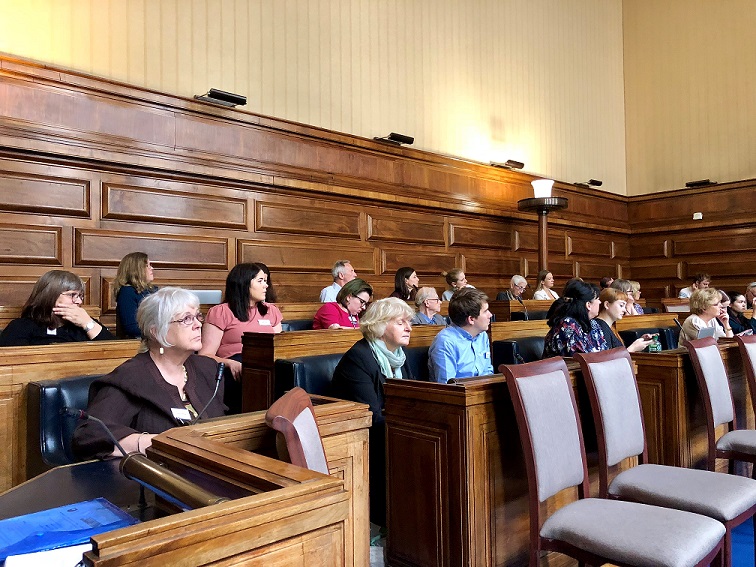
Under the aegis of the Open University’s History of Books and Reading (HOBAR) research collaboration and organised by four English and Creative Writing academics at The Open University – Shafquat Towheed, Siobhan Campbell, Sara Haslam, and Edmund King – supported by plenary speakers Dr Jane Potter (Oxford Brookes University) and Dr Peter Leese (University of Copenhagen), the event marked the centenary of the war’s end and guided attendees on a bibliotherapeutic journey from wartime to the present.

Photo: Shafquat Towheed

Dr Potter opened the sessions by describing some of the perceptions surrounding bibliotherapy during the First World War; not only in terms of its importance to traumatised and injured soldiers, but also for those left waiting at home for loved ones. Her keynote lecture: ‘The Solace of Literature: Reading and Writing in the Great War’ noted that psychiatrists, nurses and surgeons became increasingly convinced of the therapeutic benefits of reading and quoted one wartime caregiver who observed that until this point “We protected his [the soldier’s] stomach but forgot his brains.” She also highlighted the importance placed on the hospital librarian who “understood both books and men”, a highly esteemed and respected role, that was remarked upon across several of the day’s presentations.

As was acknowledged on Twitter, a number of key themes emerged early on: we repeatedly heard the terms ‘administering’, ‘prescribing’, and ‘dispensing’ used in relation to the provision of books for their curative properties. Mary Mahoney’s research suggests that the adoption of a very scientific or medical approach to bibliotherapy was particularly prevalent in America in the 1920s and 1930s. These analogies were echoed throughout the day, with references to reading acting as medicine for the troubled mind. An excellent example of this came from the journal of the writer and scientist (and MS sufferer) W.N.P. Barbellion (1889-1919), who wrote in his journal the phrase: ‘what I do is drug my mind with print’. We heard doctors of the day cautioning on reading the ‘wrong’ kind of novels, and how the consumption of these could cause ‘overdose’ and lead to ‘hysteria’.

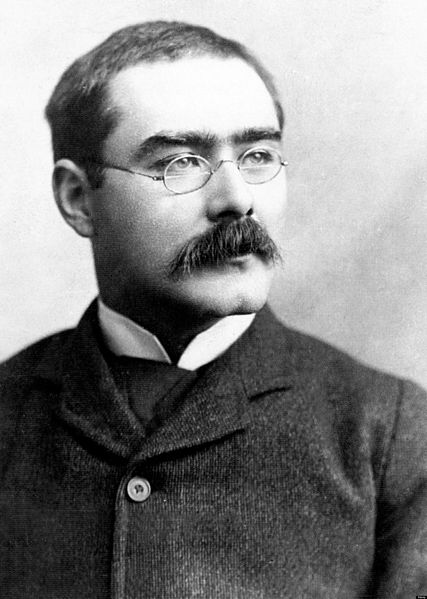
This leads us to the books used in bibliotherapy: there have been many differing opinions over the last two centuries about what is considered suitable reading material. Should specific books be prescribed, or avoided, based on a particular illness or condition? One wartime writer noted that ‘Jane Austen has taken her fragrant way into a surprising number of dug-outs’ which stood in contrast to the advice of some medical professionals of the time, who recommended literature that promoted ‘detachment, elevation, and mental economy’.  Kipling’s ‘The Janeites’ also refers to Austen’s, perhaps unexpected, popularity with those in the trenches. On this subject, Laura Blair’s presentation: ‘Reading, Asylum Libraries, and the Asylum War Hospital Scheme’, we heard how asylums and their libraries were turned over to war hospitals and how strong concern was voiced regarding ‘appropriate’ reading material and particularly the fear of encouraging ‘addiction to novels’.  Yet, from soldiers’ diaries and hospital librarians’ records we can see that reading tastes were eclectic, with detective stories, poetry and romance very much in demand.

Portrait of Rudyard Kipling from Rudyard Kipling by John Palmer.  Used under Wikipedia:Text of Creative Commons Attribution-ShareAlike 3.0 Unported License

The subject of the detective tale used in bibliotherapy was broached several times; first in George Simmer’s paper “Kipling’s ‘Fairy-Kist’: Bibliotherapy Gone Haywire?”. Simmer reviewed what may have been Kipling’s own experience of bibliotherapy, making the case that Kipling’s childhood reading of Julia Ewing influenced the writing of his only detective story, Fairy-Kist (1928), about an ex-serviceman who hears voices, and ends up the prime suspect in a murder case. Simmer suggests that Ewing was the Jacqueline Wilson of the nineteenth century, taking difficult subjects and making them accessible, this being why she would have appealed to the troubled young Kipling.

An especially emotive case study demonstrating the efficacy of bibliotherapy for children suffering from post-traumatic stress disorder came in the final session of the day from Wendy French who read a poem from an adolescent boy. His writing expressed the depths of his self-loathing by listing all the ways ‘shit’ served more purpose in life than he did.  This particular boy related to Michael Morpurgo’s illustrated book Not Bad for a Bad Lad in his counselling sessions and this enabled an on-going and positive dialogue with French.

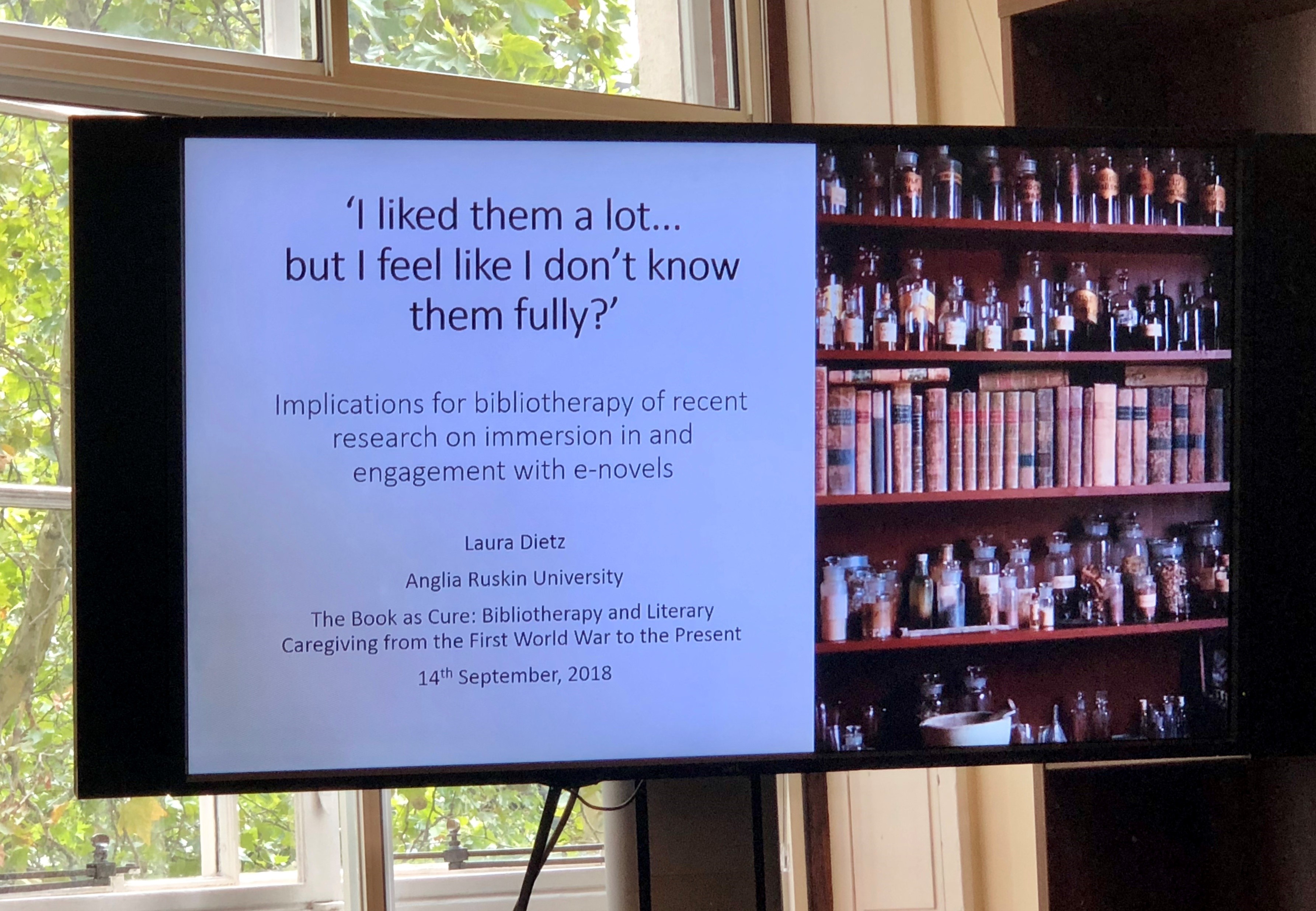
A particular highlight for me was the chance to hear in detail the important research being undertaken by Laura Dietz, my second supervisor at Anglia Ruskin University.  Her work into immersion and engagement with e-novels, suggests that screen reading, on devices such as Kindles and iPads, may see the reader equally immersed in the narrative as with a printed book. For many reasons, most notably their accessibility, digital books are critical to bibliotherapeutic practice. Dietz’s research used a wider range of e-book formats compared to earlier studies, which is perhaps one of the reasons her findings reveal narrative immersion to be a more nuanced or complex phenomenon than was initially believed.

On a personal level, one of the standout aspects of conference was the friendliness and generosity of the organisers, experts and panellists. All of the presentations I attended were insightful and persuasively communicated. I am delighted to have already exchanged emails, received papers and references for further reading that will enrich my research, which explores the place of short and fantasy fiction in bibliotherapy for women with depression.

Photo: Shafquat Towheed

In the summary session we mused over the key questions that had arisen over the course of the day: Is reading inherently good? Does the genre of the literature make a difference? Is the term ‘bibliotherapy’ itself a valid or helpful one? What does the future hold for the field and who should be advocating and delivering bibliotherapy? Is the future digital? Is the efficacy of bibliotherapy limited to specific audiences? For each of these questions the conference provided empirical indicators, anecdotal evidence and qualitative findings, all of which deserve further, deeper, and broader exploration. I, for one, hope that there is a follow up conference for The Book as Cure and I expect this sentiment is shared by the majority of attendees.

I’ll end my account with a quote from my own paper where Alan Bennett, in William Seighert’s The Poetry Pharmacy, encapsulates the essence of a good book but also that of successful bibliotherapeutic intervention:

“The best moments in reading are when you come across something – a thought, a feeling, a way of looking at things – which you had thought special and particular to you. Now here it is, set down by someone else, a person you have never met, someone even who is long dead. And it is as if a hand has come out and taken yours.”

Jenny Cattier is a PhD researcher at Anglia Ruskin University examining the therapeutic potential of short fantasy fiction for female depression. Her thesis will be fifty percent research and critical commentary, and fifty percent of her own creative writing which will take the form of a collection of short stories. 

Light Documents: The Personal Inspiration for a Research Project

Patrick Wright
PhD student, Creative Writing

It has always struck me as peculiar that academics tend to conceal personal origins or motives for their research. More often than not our deep investment in a subject or area of study appears to have emerged out of a vacuum or with disinterest. Little is said of how intellectual concepts bear a significant and abiding relation with, or are even a sublimation of, our innermost vulnerabilities or concerns.

As a response to this observation, I wish to present a kind of prequel to my area of research (the ekphrasis of dark or near-black paintings), one that will share with the reader how such a rarefied focus developed, organically, in and through my personal life; how, for instance, my recent poem on Kasimir Malevich’s Black Square is beyond any casual or highbrow interest, related with what is most intimate and precious (for the poem click here). Moreover, by writing in this way my hope is to present a hybrid piece of writing that blends academic and confessional registers.

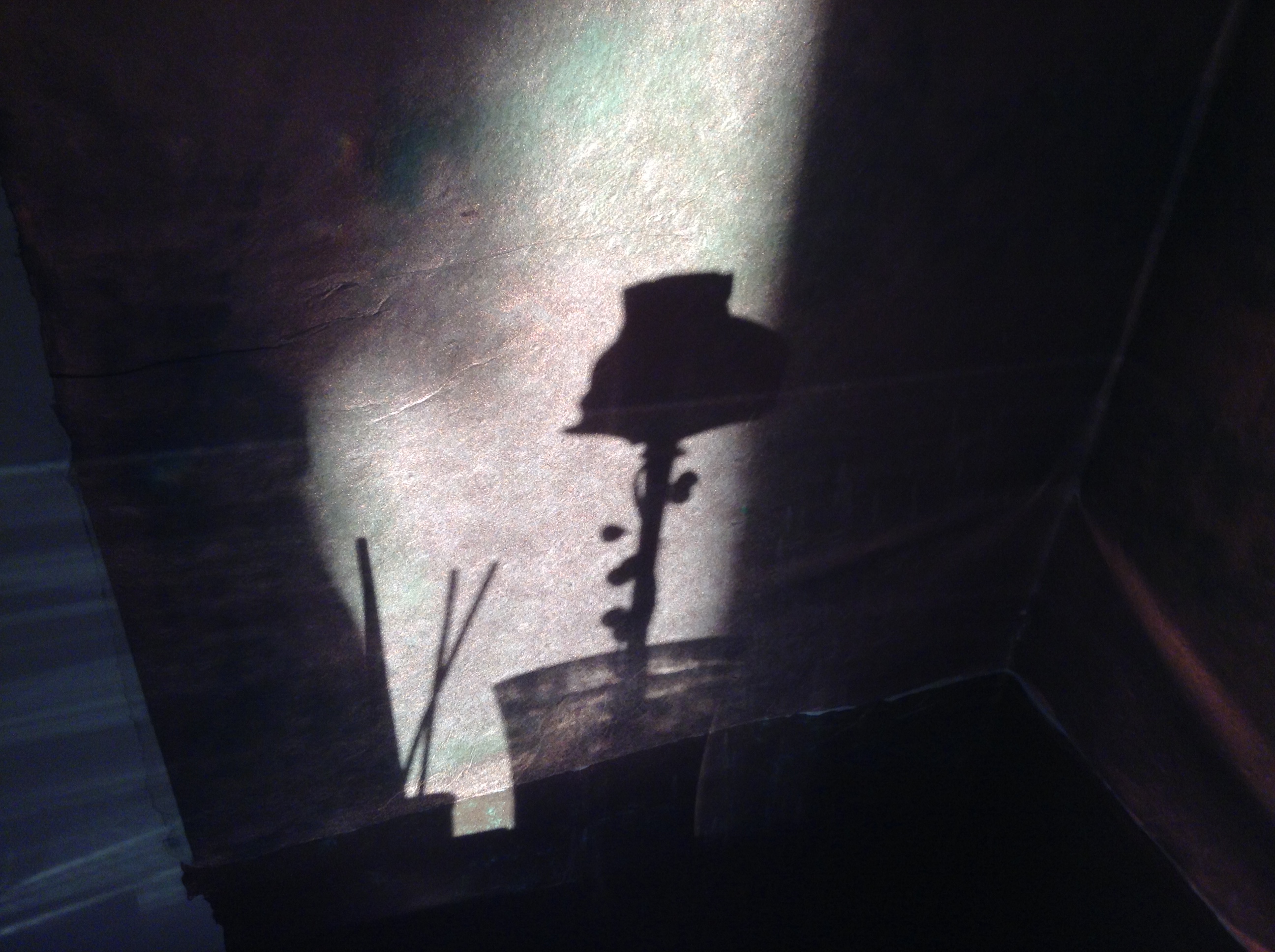
My late wife who passed away in the summer of 2017 was a phenomenally talented photographer and artist; what makes her talent all the more noteworthy is that she was visually impaired. Born blind in her right eye, Kim developed retinitis pigmentosa in her late thirties, and before long she was left with what she described as her ‘two O-clock aperture’ in her left eye, through which she could still discern the odd colour, some contrast and movement. This limitation did not deter her though; her imagination thrived and she advanced a genre of photography which she called ‘light documents’: chance shadows or sun beams thrown on walls or other parts of the domestic space:


Light Document # 2 Image: Kim Parkinson.


I think my interest in ekphrasis (writing poems in response to visual art) was born out of my role as a partner, often tasked with describing how two-dimensional things appeared, from dresses to wallpaper. Essentially, each day, I was engaged in a verbal ekphrasis, as a means of conveying to Kim what aspects of the visual world looked like, particularly patterns, shapes and colours. I was also, with melancholy, striving to reach into her darkness – or to bring her darkness into the light – evoking the Orpheus myth. Her blindness often seemed like a limitation on our closeness; and so I struggled with words to reduce the distance between us. Poetry is about this kind of struggle for me: representing how we continually fall short in our efforts to describe.

I was especially inspired though by Kim’s ability to find so much in the darkness and in shadows (her favourite book was In Praise of Shadows by Jun’ichirō Tanizaki). She discovered such ethereal beauty in random glints of light, spectral colours on walls, or numinous shapes on the ceiling. As a student of Art History, she also had recollections of art works she had previously seen, and was thus able to make comparisons. Her visual acuity was also informed by learning about optics and ideas such as the Golden mean and compositional balance, in anticipation of a condition that she knew to be hereditary.

Now, carrying the burden of grief and the honour of her legacy, I feel it is important to not only acknowledge Kim’s influence upon me – a catalyst in the development of a PhD on writing with dark or near-black paintings in mind – though also to continue to write poems with a heightened awareness that the Orphic task has, if anything, intensified: to insist her vision, in spite of death, is not lost; to allow her presence to live once more in and through my writing. Her lesson for all, as I see it (and encapsulated in the premise of my thesis), is that meaning can be found in even the darkest of images; and, more pertinently, life can be affirmed even after all appears lost.