
~~ By Catriona Matthews and Paul Astles, Learning Designers
When it comes to the challenges facing our planet, no single institution, country, or discipline has all the answers. Creating a more sustainable and equitable future requires collaboration, shared expertise, and a willingness to learn from one another across borders.
That’s why we are delighted to have contributed to Teaching and Researching for a Just Transition: Planetary Boundaries and Ethics 2026, an international symposium that brought together hundreds of educators, researchers, and practitioners from around the world to explore how education can support a just and sustainable transition.
Showcasing Open University expertise
For the Learning Design team, participation in events like this is about much more than presenting our work. It is an opportunity to join a global community of people who are passionate about using education to address some of society’s most pressing challenges. The conversations, ideas, and partnerships that emerge from these events help us all move forward together. A personal note of celebration for our team is that colleagues Paul Astles and Catriona Matthews were part of the organising committee this year.
As part of the symposium, colleagues from across The Open University (OU) hosted a series of online sessions that highlighted different aspects of the University’s work in sustainability education and support for educators.
Session overviews and links to recordings
Learning Design as a Foundation of Education for Sustainable Development
In this session, Learning Design colleagues from The OU shared practical approaches to embedding sustainability within teaching and learning experiences. A series of lightning talks explored:
- An award-winning AI focused toolkit ‘Responsible by Design’,
- Digital Badging for Sustainability 21st Century Competencies,
- The Sustainability Words of Wisdom Compendium,
- The work of the Learning Design Sustainability Group.
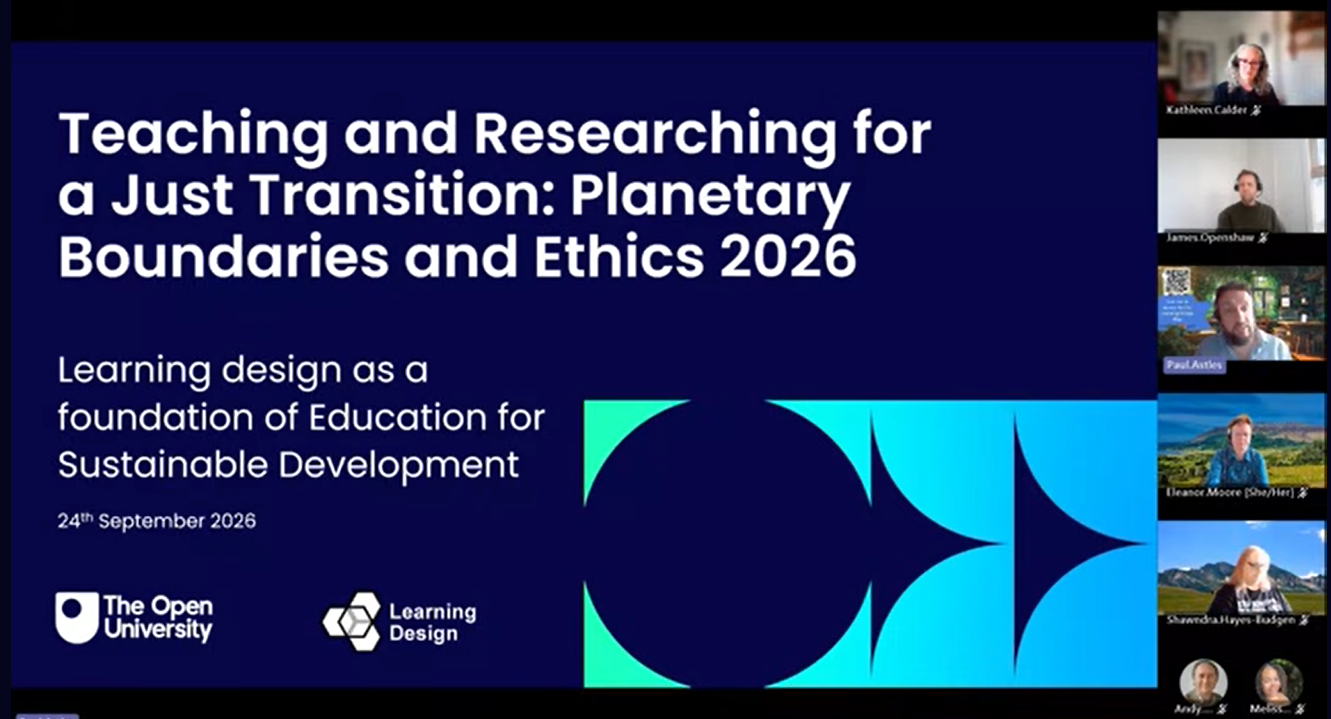
A panel discussion following the lightning talks considered the role of learning design as a product, practice and process within transformative education. Using themes including hope, green skills, assessment and eco-anxiety, participants reflected on current practice, exchanged ideas and identified actions that can help them to meaningfully bring sustainability into educational design.
How the OU Supports Sustainability Knowledge, Sharing and Advocacy
The Floodplain Meadow Partnership’s mission is to address the urgent need to conserve Britain’s rare floodplain meadows and enable them to deliver more for both beauty and utility. The Partnership fills a nationally significant niche by providing a forum for organisations and individuals involved in the conservation and restoration of this special habitat, to pool their knowledge and resources.
Throughout the Partnership’s 20-year history the OU has supported and hosted the FMP project. In this session members of the FMP team shared how they have utilised research, evidence and their networks’ practical experience to influence policy, raise awareness and deliver effective knowledge exchange, advice and training.
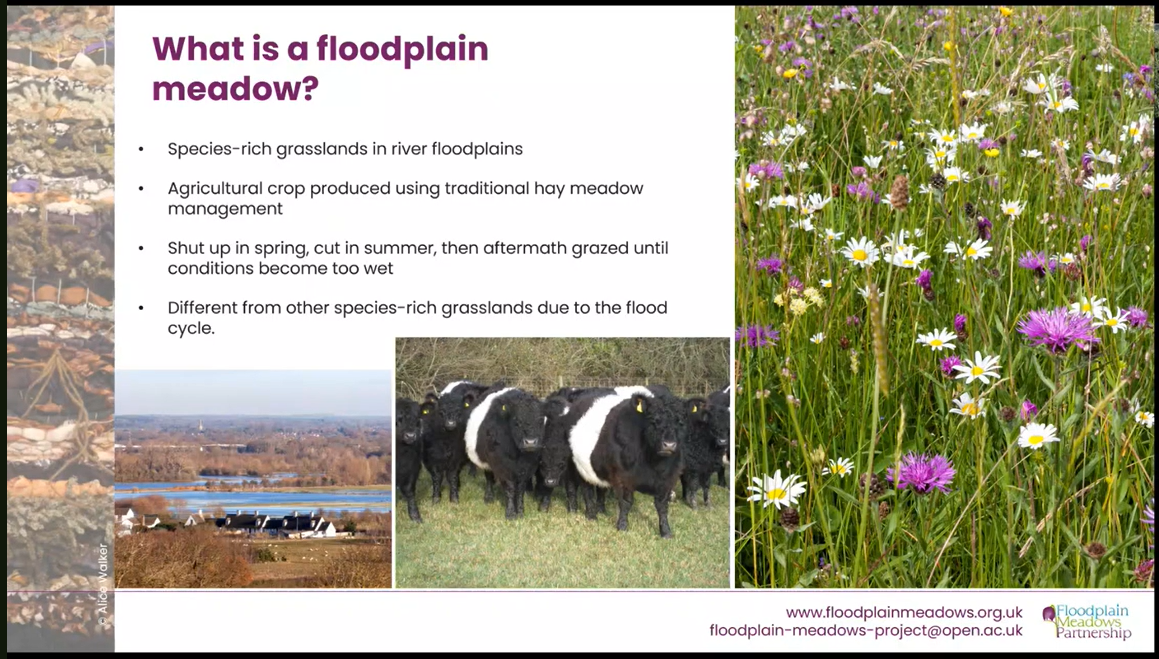
The team reflected on how long-term collaboration with the OU has played a significant role in building trust, reputation and expertise, including the contribution from the OU’s Open Societal Challenges programme, which supports and enables those outside the OU to work with our researchers to address society’s most pressing issues. The talk explored the model of the project, how it works and what has been achieved to increase the target for habitat restoration, and secure recognition of floodplain meadows as a nature-based solution.
Climate Education Curriculum and Support for Educators
Climate education needs to do more than develop understanding of climate science. The European Commission’s GreenComp framework identifies broader sustainability competences, including systems thinking, futures literacy, adaptability, collective action and political agency.
Translating these ambitions into teaching practice, however, presents challenges for educators. This session explored how interdisciplinary curriculum design can support a shift from learning about climate change towards learning for climate action. Drawing on climate education curriculum developed by The OU’s Institute of Educational Technology (IET), the session showcased approaches bringing together science, social sciences, arts and humanities.
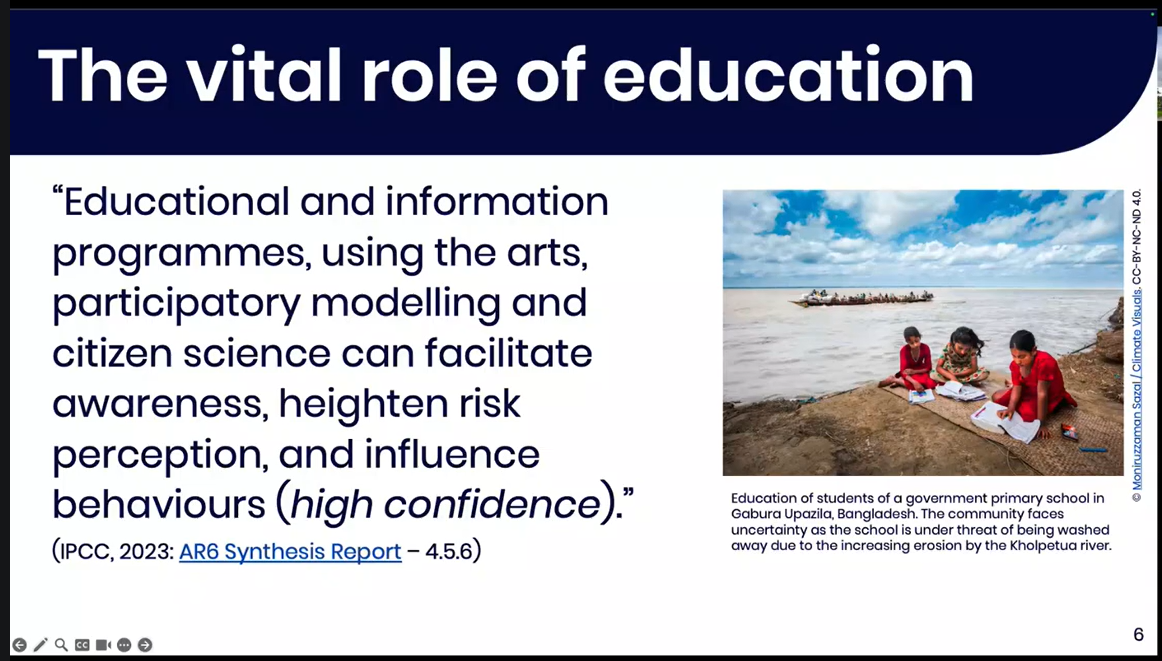
Examples demonstrated how creative and participatory approaches can enable learners to explore the social, ethical and emotional dimensions of climate change, engage with uncertain futures, and develop different forms of agency. The session also considered what educators need to facilitate interdisciplinary, action-oriented climate learning, particularly when working with uncertainty, competing perspectives, topics beyond their disciplinary expertise and topics which can generate anxiety and distress.
Together, these sessions demonstrate the breadth of expertise across the OU and our commitment to ensuring learners and educators are equipped to engage with the complex environmental and social challenges of our time.
Learning from a global community
One of the most exciting aspects of an international symposium is the opportunity to both share and learn. While we are proud to showcase work taking place at the OU, we are equally excited to hear from colleagues around the world who are tackling similar challenges in different contexts. Learning design has always been strengthened by collaboration.
Whether we’re discussing curriculum innovation, sustainability education, or supporting educators, the best ideas often emerge when diverse experiences and perspectives come together. Events like this remind us that educational challenges are shared globally and that the solutions are often richer when developed collectively.
As a distance learning institution with learners and partners across the world, the OU understands the value of international knowledge exchange. Being part of this symposium reflects our commitment to contributing to a wider conversation about how education can help create a fairer, more sustainable future for everyone.
Join the conversation
By sharing knowledge, challenging assumptions, and learning from one another, we can collectively increase the impact of our work and support meaningful change. If you’re interested in sustainability education, community partnerships, or innovative approaches to teaching and research, and want a platform to showcase this to learning design colleagues across the globe we would love to collaborate with you.
If you’d like to talk with the Learning Design team at The Open University about any design related support you’d find useful for your organisation or department, we would love to hear from you. Please contact us at: [email protected].