By Hugh Beattie
Hostility has generally characterised relations between Iran and the USA since the establishment of the Islamic Republic in 1979, with the Iranian government perceiving the USA as an ‘existential threat’ (Milani, 2026: 4). As an ally of the USA, Israel has attracted Iranian hostility too, though sympathy for the Palestinian cause has also influenced Iran’s attitude. At the same time religious and ideological considerations have also played a part. Indeed it’s been argued that ‘the emotional heart of the ruling regime’s regional policy’ is the ambition to capture Jerusalem, Islam’s third most holy place (Ostovar, 2024: 24). This is why the section of the Islamic Revolutionary Guards Corps in charge of foreign operations is known as the Quds Force (al Quds is the Arabic name for Jerusalem). Indeed, for some Muslims, freeing Jerusalem from Israeli control is linked with a complicated ‘end-time’ narrative which will see Islam triumph over its enemies before the end of the world. A figure who often appears in this scenario is a man referred to as the Khorasani. It is interesting therefore to see references in the news to Mojtaba Khamenei (b 1969) the late Ayatollah Khamenei’s son (who has reportedly been chosen as the Ayatollah’s successor) as the Khorasani.
It is not clear that Mojtaba Khamenei actually sees himself in this role, but it appears that some of his supporters think that he may be the Khorasani. Mojtaba Khamenei is reported to be close to senior Iranian clerics who take this apocalyptic scenario seriously. In this blog therefore I explain who the Khorasani is believed to be and locate him in Muslim narratives of the end times.
The name Khorasani, the ‘man of Khorasan’, comes from the word Khorasan, an Arabic term used to refer a former province in eastern Iran, and more widely to a region of Central Asia comprising present-day eastern Iran, Afghanistan, and parts of Turkmenistan, Uzbekistan and Tajikistan. It is this region to which the Sunni Islamic State group based in Afghanistan refers in its designation of itself as Islamic State-Khorasan Province.
End-times or ‘last days’ scenarios involving a figure referred to as the Mahdi are found in both Sunni and Twelver Shi’a Islam. Both versions share some features, including the idea that the appearance of the Khorasani is an important sign or portent that the end of the world is approaching. Little is known about him, but it is said that he will have a mark on his right hand, and he will appear in Khorasan at the head of an army carrying black flags. The army will move west and there will be battles in Iraq and Syria and various cataclysmic events will occur such as floods and swarms of locusts. Then the Mahdi will appear and announce his arrival in the Great Mosque in Mecca.
There are however some important differences between the Sunni and Twelver Shi‘a understandings of the end times. Probably the most important concerns the identity of the Mahdi himself. Both Sunni and Twelver Shi‘a regard him as a descendant of the Prophet Muhammad, but for the Twelver Shi‘a he is the Twelfth Imam, the awaited or expected Imam, who disappeared but did not die in c.879 ce and will return after a long period during which he has been concealed by God. For Sunnis the Mahdi will be an ordinary human being. Another difference is the emphasis Twelver Shi‘a put on the belief that after the Mahdi’s reappearance and the triumph of Islam, humanity will enjoy an era of justice, peace and plenty before the world comes to an end. Their view is that this may well continue for several hundred years, whereas Sunnis mostly seem to have believed that it will last for only seven.
There are also some differences of opinion about the exact order of events and some of the key players, but according to the Twelver Shi‘a account, it seems that when the Twelfth Imam makes himself known, a malevolent figure referred to as the Sufyani will lead an army against him. But a supporter of the Twelfth Imam, known as the Yemeni, will defeat the Sufyani and the Imam’s followers will go on to conquer Iraq, take Jerusalem and defeat the Byzantine Empire. This will be followed by a messianic age of prosperity, peace, justice in which Twelver Shi’s Islam will triumph. After some time, the Dajjal, the ‘false messiah’ or ‘false Jesus’, the Antichrist, will appear and attempt to persuade the Muslims to renounce Islam. Jesus himself will also appear at this time on the side of the Imam and the Imam will kill the Dajjal. The dead will be raised from their graves and the day of judgement will take place. There is no mention in the Qur’an itself of the Mahdi or the Dajjal, though they are referred to in the hadiths (traditions – reports of things that the Prophet Muhammad said or did).
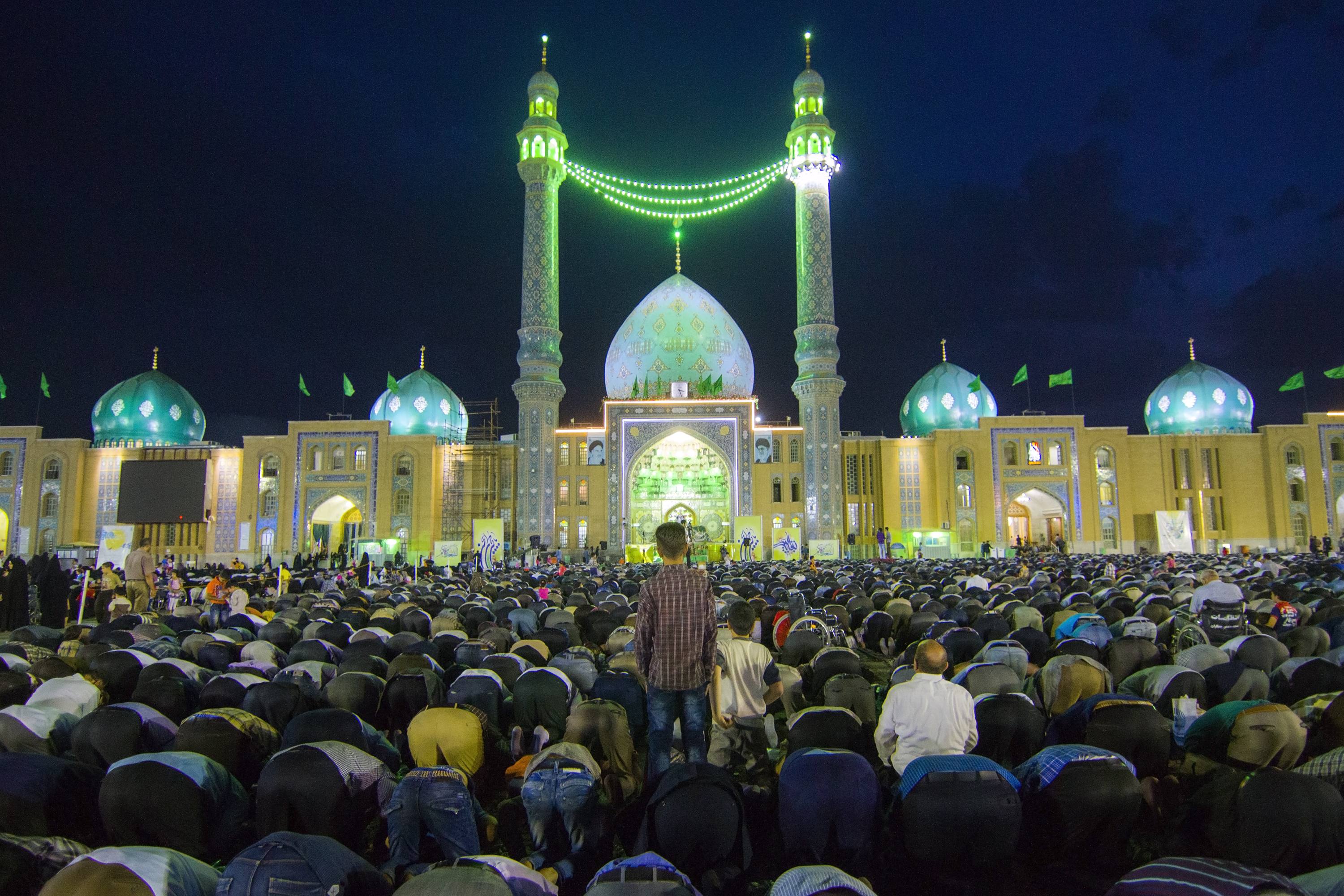
What is current Twelver Shi‘a thinking about the Mahdi’s return? From the 16th century until the later 20th century ce the dominant view was that Twelver Shi‘a Muslims should wait patiently for the return of Imam Muhammad al-Mahdi because there was nothing they could do bring it about. However, since the early 2000s the importance of what has been called political Mahdism, ‘the messianic belief that [Iranian] … political and military victories can hasten the Imam’s reappearance’, has grown (Kosc, 2024: 2). This has been fostered in particular by former President Mahmoud Ahmadinejad (2005-2013) who was obsessed with ‘finding ways to speed up the return of the Twelfth Imam’ (Golkar and Aarabi, 2022: 9). During his presidency, in order to encourage apocalyptic expectations the government devoted a great deal of money to building a large mosque in front of a well near Qom known as Jamkaran because the Twelfth Imam is supposed to have briefly become visible to a local man there in the late 10th century ce. Pilgrims may request the Twelfth Imam’s assistance by writing letters to him and throwing them into the well.
Factions within the increasingly powerful Islamic Revolutionary Guards Corps have also begun to promote Mahdism and its apocalyptic end times scenario, and the belief that Israel is the biggest obstacle in the way of the Imam’s reappearance. Some argue that Iranians have a special role to play in the Twelfth Imam’s reappearance. Contemporary world events may be viewed through the prism of the end times. Speculation that Mojtaba Khamenei may be the Khorasani is a good example. Another is the identification of the Yemeni with the Houthis in Yemen, while the civil war in Syria from 2011 to 2024 has been seen as linked with the emergence of the Mahdi’s opponent, the Sufyani. President Trump has been identified with the Antichrist (the Dajjal mentioned above). Some analysts argue that political Mahdism plays little part in the activities of the Iranian government, but some influential figures in the Iranian establishment do seem to take it seriously, and it should not be dismissed as being of no importance.
Jamkaran Mosque مسجد جمکران قم 21 – Jamkaran Mosque – Wikipedia

Sources:
Golkar, Saied and Aarabi, Kasra (2022). Middle East Institute. Irans-Revolutionary-Guard-and-the-Rising-Cult-of-Mahdism-Missiles-and-Militias-for-the-Apocalypse-.pdf Accessed 15 March 2026.
Kosc, Jozef Andrew (2024) Iran’s Enduring Apocalyptic Political Mythology – Providence. Accessed 1 March, 2026.
Milani, Mohsen (2025) Iran’s Rise And Rivalry With The US In The Middle East, One World, London.
Ostovar, Afshon (2024) Wars of Ambition: The United States, Iran and the Struggle for the Middle East, Oxford University Press, New York NY.
Sinaiee, Maryam (2025) The expected one: Shi’ite messiah animates and divides Islamic Republic | Iran International Accessed 3 March 2026.
For further reading see for example:
Beattie, Hugh (2013) ‘The Mahdi and the End-Times in Islam, in Sarah Harvey and Suzanne Newcombe (ed.s) Prophecy in the New Millenium When Prophecies Persist, pp.89-103, Ashgate, Farnham.
Beattie, Hugh (2022) Dajjal’, in James Crossley and Alastair Lockhart (eds.) Critical Dictionary of Apocalyptic and Millenarian Movements. Available at www.cdamm.org/articles/dajjal. Accessed 30 March 2026.
Cook, David (2026) ‘Islamic’ in Tristan Sturm and Andrew Crome (ed.s) The Bloomsbury Handbook of Apocalypticism and Millennialism, Bloomsbury Academic, London, pp.51-65.
Filiu, Jean-Pierre (2011) Apocalypse in Islam, University of California Press, Berkeley, CA.