
Recently, I attended a conference, just two hours away. It required two trains, a fifteen-minute car journey and twenty minutes of walking, each way. The travel, alone, cost me three days of health. Often, disabled people are taxed for travel – payable in pain, fatigue and inflammation.
Disabled people often travel through urban environments with heightened vigilance. Many participants describe constantly scanning spaces in advance: checking where lifts are, avoiding particular stations, planning energy expenditure, preparing for delays, or anticipating hostile interactions.
Which raises an important question: How do our experiences of transport design vary and how does this influence our travel choices? And more specifically: How does design encourage (or discourage) movement within travel networks?
Transport research often prioritises efficiency, speed, flow and optimisation. It tends to measure movement quantitatively: journey times, accessibility scores, ridership data, network performance. But what gets lost when we focus only on measurable efficiency?
Inequalities are not only spatial. They are sensory. They are embodied. And they are deeply relational.
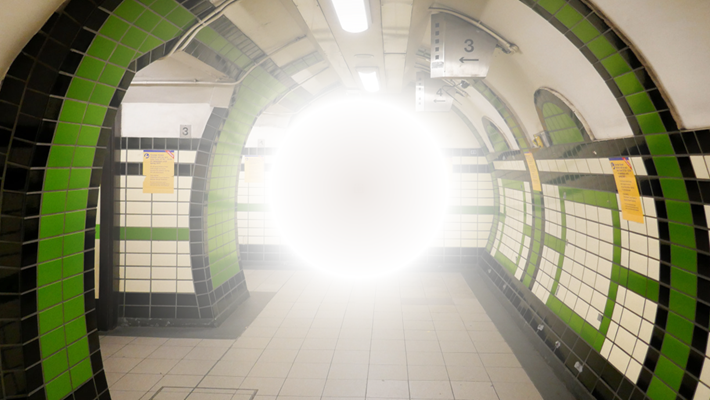
Many participants spoke about the anxiety of transfer points – moments where one mode of transport becomes another. Not because of distance alone, but because transitions require rapid decisions, physical exertion and negotiation with unfamiliar environments. Transfer points matter because they expose vulnerability. A journey might technically be accessible in policy terms, but inaccessible in practice if connections are rushed, signage is confusing, or sensory environments become overwhelming.
To explore these experiences, I use subjective videography and reflexive co-design practices like sensory mapping. Rather than observing participants from a distance, I accompany people during real journeys. Participants narrate their experiences in situ – but while moving through stations, interchanges and public spaces. This allows us to capture things that traditional methods often miss. Multimodal ethnography communicates sensory urban experiences that are difficult to capture through conventional academic language or via reliance on one mode alone.
What would transport look like if different rhythms of movement were genuinely valued? What if waiting was designed with care? What if navigation prioritised reassurance rather than urgency? What if accessibility extended beyond minimum compliance?
This is where the idea of “unreasonable adjustments” becomes important. Rather than settling for the minimum required accommodation, “unreasonableness” celebrates more imaginative and caring forms of design. Not simply asking: “How do we include disabled people?” But: “How might disabled ways of sensing and navigating improve transport for everybody?”
Stations are not isolated spaces. They are relational nodes within wider networks of movement. At every stage, bodies encounter different sensory demands. Travel is therefore not a single experience. It is a chain of interconnected negotiations.
Ultimately, accessibility cannot be reduced to ramps, lifts or technical compliance alone. Inclusion is also emotional. Sensory. Relational. Embodied. Transport hubs, themselves, may shape care, dependence, vulnerability and belonging. Situated co-design concerns whether people feel safe. Whether they feel welcome. Whether they can conserve energy. Whether they can travel without fear of humiliation, exhaustion or exclusion.
By centring disabled people as co-researchers rather than passive participants, this work reframes urban mobility as something collectively shaped through care, collaboration and lived expertise. Because transport systems do not simply move bodies. They shape whose bodies are expected, whose bodies are supported, and whose bodies are made to struggle.

My PhD project is funded by the Motability Foundation, who work to build transport equity by making all journeys accessible.


Leave a Reply