
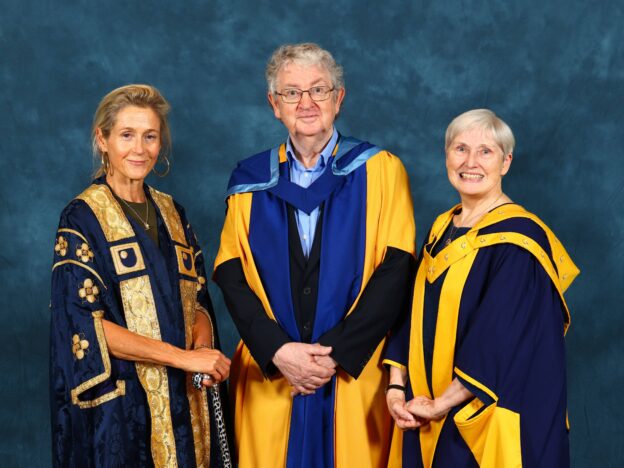
Last week, during the Open University Graduation Ceremony at the Birmingham Symphony Hall on October 30, I had the enormous pleasure of delivering the Oration in honour of Steve Roud, after which our Chancellor, Baroness Martha Lane-Fox of Soho, presented him with the honorary degree of Doctor of the University.
The Open University has a noble tradition of awarding honorary degrees to individuals recognised for outstanding achievements aligned to the University’s values. I have often been part of the platform party when we have presented an honorary degree, for instance to Martha Lane Fox in 2011 and to Terry Pratchett in 2013, so it was fascinating to actually participate in this process. Working with Steve’s daughter Kate Faulkner and his longterm academic collaborator Dr Julia Bishop (University of Sheffield), OU ethnomusicologist Professor Byron Dueck and I proposed Steve for the honorary degree; we were delighted that the nomination was successful.
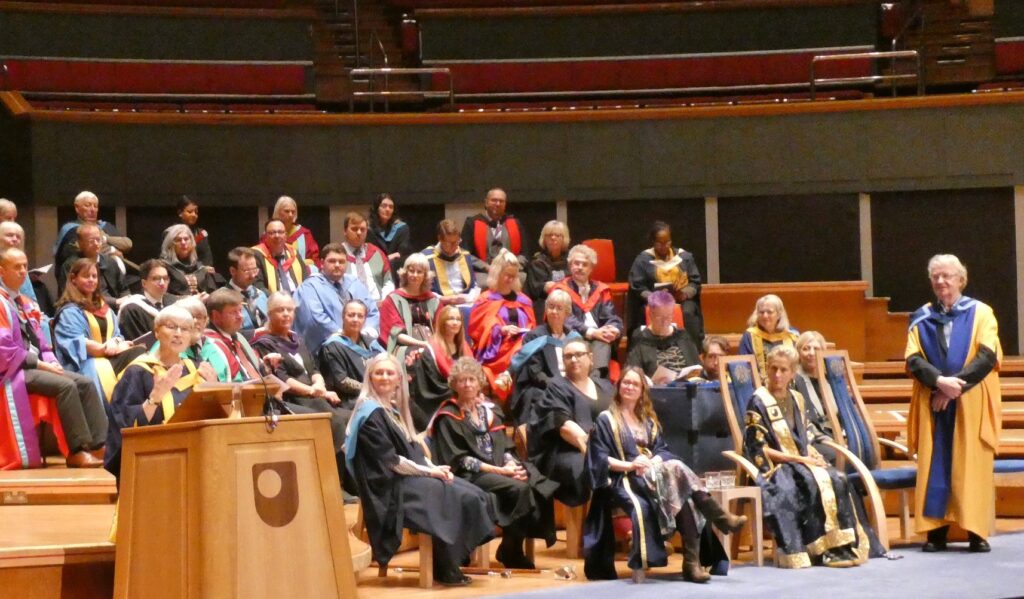
Figure 1. Marion orating while Steve had to stand and listen! Photo by Leslie Currie (2025)
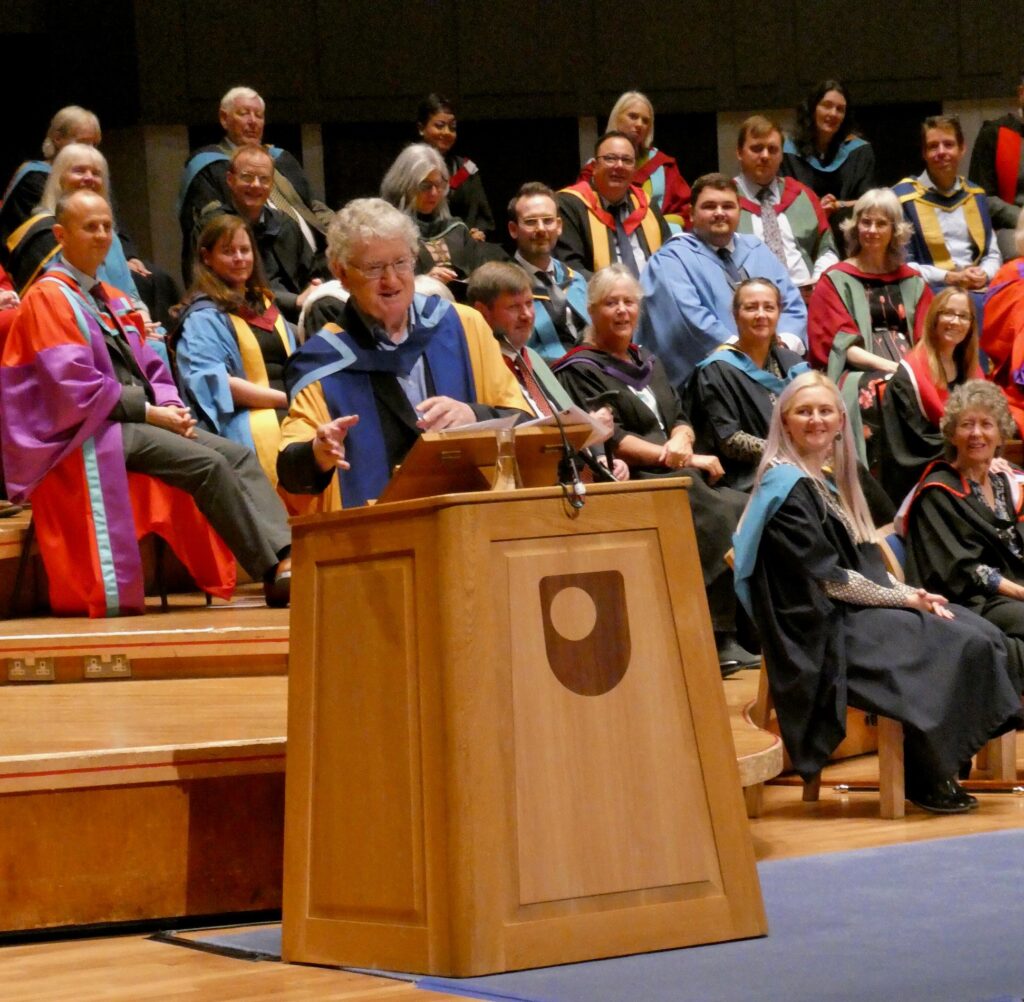
Figure 2. Steve responding to Oration and award. From the smiles, this was the moment he said ‘Indexers don’t get out much!’ Photo by Leslie Currie (2025)
So, what had Steve done to deserve this? Steve spent many years as local studies librarian in Croydon and also served as the honorary librarian of the Folklore Society. However, Steve Roud is best known as the creator of the Roud Indexes: an extraordinarily comprehensive record of traditional English-language folk songs from around the world. His passion for documenting and cataloguing the genre has transformed both scholarly research and popular understanding.
The Folk Song Index records key details of traditional songs in English, and features a comprehensive numbering system, called ‘Roud numbers’, to identify and bring together variants of songs across time and place. This is essential in a field where there are many different renditions of songs and no single, definitive version of them. For instance, clicking on Roud 12 in the Folk Song Index, Scarborough Fair, will take you to 355 entries detailing the song’s different titles and versions, and citing evidence of the song, and its performance, in myriad sources. In relation to Vernacular Religion, you can explore the index for references to ghosts, Wassailing, May Day and other calendar customs.
Because of its size and reach, the Index allows researchers to undertake comparative studies, chart song histories, investigate the role of women as performers, and many other aspects of vernacular culture. The Folk Song Index sits alongside Steve’s Broadside Index, which documents songs in cheap printed formats and early recordings, which are essential to understanding the sources and histories of vernacular song.
The Roud Indexes began life around 1970 on a series of index cards kept in a shoebox and were eventually transferred to Steve’s personal computer. More than 50 years later, there are over three quarters of a million entries, linking thousands of songs, from Australia to the Americas, as well as the British Isles. Today, the Roud Indexes are hosted online by the Vaughan Williams Memorial Library at the English Folk Dance and Song Society and are available free of charge. They are an indispensable resource for researchers of all kinds around the world, utilised by academics, practitioners and enthusiasts alike.
Based on his extensive research, Steve has published widely on folk music, including Folk Song In England, a comprehensive history of the subject, highlighting the social context of the songs. With Julia Bishop, Steve created the award-winning New Penguin Book of English Folk Songs. In recognition of his outstanding scholarship, Steve has received the Folklore Society’s Coote Lake Medal and has been elected an International Fellow of the American Folklore Society.
As I said in my Oration, the Roud Indexes are ground-breaking resources, democratic and scholarly, comprehensive and co-operative. This ethos resonates powerfully with our own belief at The Open University in the importance of making knowledge inclusive and accessible. It seemed entirely appropriate that the OU should honour Steve’s extraordinary contribution to the history of vernacular song and folk traditions.

Figure 3. Steve signing the Register of Honorary Graduates. Photo by Leslie Currie (2025)
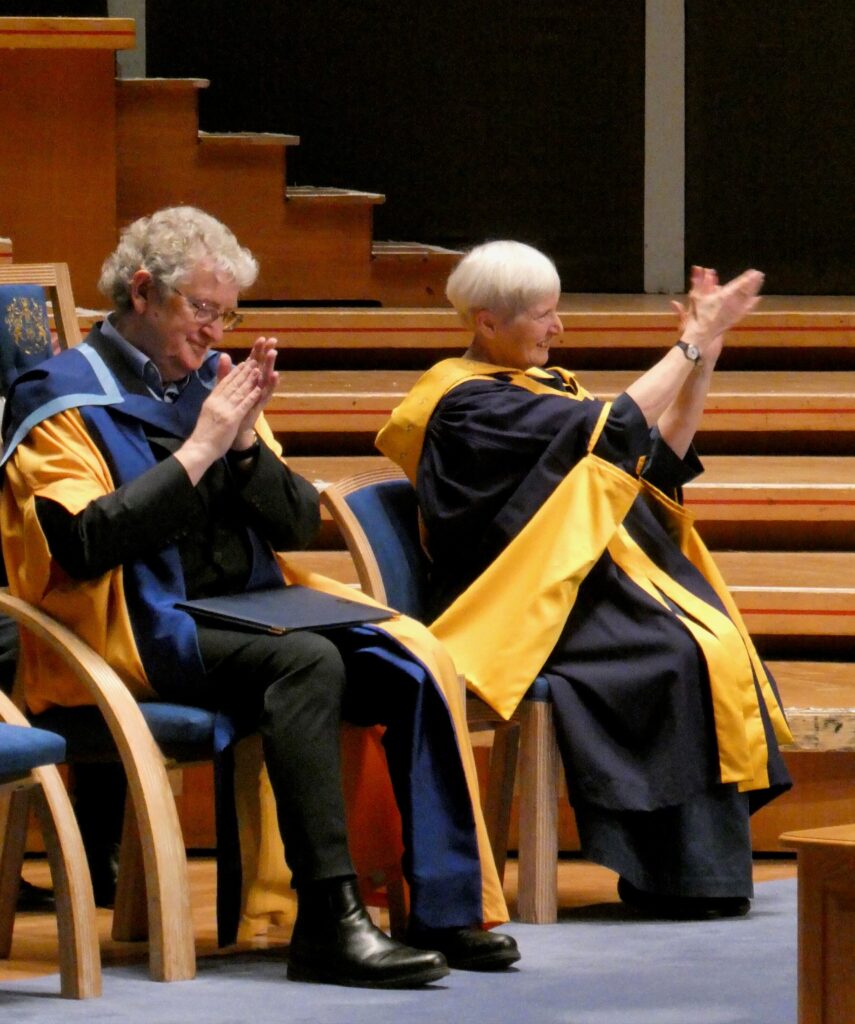
Figure 4. A lot of time at graduation ceremonies spent clapping, smiling and enjoying proceedings! Photo by Leslie Currie (2025)
The Graduation Ceremony itself was a joy, as I always find OU graduations to be. There was an enormous range of students, and enthusiastic friends and family present; the shouts of ‘mum’ or ‘dad’ might come from toddlers or grown-ups. These are truly events that always leave me thinking ‘Yes, we do change lives’. There was also a certain poignancy to this ceremony, as it was the last one at which Martha Lane Fox was officiating. There was a standing ovation for her, and the work she has done for the University in her time as Chancellor. A good time was had by all.
If you have a spare moment, go and explore the Roud indexes – there are hours of harmless fun to be had there. And here’s a wonderfully esoteric trivia quiz question: What do Joan Armatrading, Tanni Grey-Thompson, Terry Pratchett and Steve Roud all have in common?
Yes, as you’ve probably guessed – they are all Open University honorary graduates.