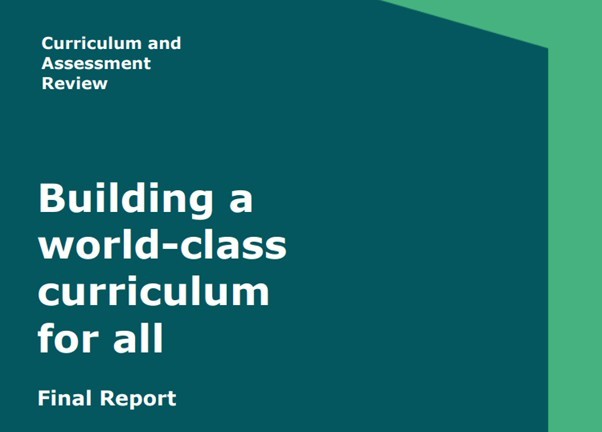
We’re at the cusp of potentially major changes in Religious Education in England. Last month, the Department for Education published the final independent report it commissioned on Building a World-Class Curriculum for All. This strongly recommends that Religious Education should be added to the national curriculum in England to address inconsistencies in the quality of the provision of RE and “prevent further diminishment” of this subject (Curriculum and Assessment Review, 2025, p. 109). Deborah Weston, Chair of the Religious Education Policy Unit for NATRE, the Religious Education Council and RE Today, has described this as “the most important opportunity for the subject in decades” (cited in Kahn-Daniels, 2025).
On the 9th of December at 4.30pm, Deborah Weston will speak at a webinar on’ The Curriculum and Assessment Review and the future of Religious Education in England ‘. This free online event will be hosted by the BASR (British Association for the Study of Religions) and the Open University. It is open to anyone who would like to find out more about the report’s recommendations and their potential impact on the future of RE. In particular, the event will also explore how colleagues at universities and schools can work together to support next steps, join the conversation about future curriculum content and raise the status of the subject. Speakers will also include Rachael Jackson-Royal, Exams and Higher Education Officer at the National Association of Teachers of RE (NATRE) and Head of RE at a large multi-academy trust in Birmingham.
To find out more about this event and register, please click here:
BASR webinar:
The Curriculum and Assessment Review and the future of Religious Education in England
9th of December at 4.30-5.30pm
Background
Currently, RE is a basic, compulsory school subject. Its content is not nationally defined, but locally agreed, with independent SACREs (Standing Advisory Councils on Religious Education) advising local authorities. The recent Curriculum and Assessment review acknowledges that it is “vital for children and young people to have access to high-quality RE” and stresses the subject’s “important role in children and young people’s intellectual, personal, spiritual, moral, social and cultural development” (Curriculum and Assessment Review, 2025, pp. 106-7). However, it concludes that while “there are undoubtedly pockets of excellent practice […], the evidence suggests that provision for RE in many schools is not good enough and does not prepare pupils adequately for life beyond school” (Curriculum and Assessment Review, 2025, p. 108). While RE remains popular at GCSE, despite not featuring in the EBacc, there are great inconsistencies in the quality of provision, exacerbated by critical shortages of RE subject specialist teachers. These conclusions very much resonate with those of the 2024 Ofsted subject report for RE in England (Ofsted, 2024).
There is widespread agreement across the sector that change is urgently needed. However, in its response to the recommendations of the Curriculum and Assessment Review, the government has stressed how essential it is that “a clear shared position from the sector on the future of RE” is established first (UK Government, 2025, p. 35). Previous attempts at reform (since 1988) did not manage to do so.
However, there are significant factors in place that make the achievement of a shared position a realistic prospect now. The report’s recommendation to add RE to the National Curriculum has been welcomed across the RE subject community, including the executive committees of NATRE, the Religious Education Council in England and Wales (REC) and the Association for University Lecturers in Religion and Education (AULRE) (see: AULRE, 2025; Kahn-Daniels, 2025; REC, 2025).
Furthermore, the REC has already developed a National Content Standard for RE in England (REC, 2023) which is explicitly mentioned in the final report of the Curriculum and Assessment Review as a good foundation for the establishment of a national curriculum for RE (Curriculum and Assessment Review, 2025, p. 109). As a next step, the government has tasked Vanessa Ogden, who led the ‘deep dive’ consultation for RE in the context of the Assessment and Curriculum Review, to set up and convene a task and finish group, aiming to co-create a draft national curriculum for RE by March 2026, building on the REC’s National Content Standard for RE.
If consensus on a draft can indeed be reached, next steps would involve the DfE conducting a formal consultation regarding the details of the content and proposed changes to the legislative framework. This would also include the review’s recommendation to repeal the current requirement that learners between the age of 16 and 18 study RE at school sixth forms.
These developments are also likely to have very significant implications for study of religion in Higher Education, not least as they concern the provision of subject-based training for RE teachers and will affect how potential future university students experience and perceive the subject at school. This is indeed a very important opportunity to collaborate and strengthen the quality and public profile of the study of religion across the sector.
Come and join the conversation on the 9th of December!
References
AULRE (2025) “AULRE Statement on the UK Government DfE Curriculum and Assessment Review Final Report”, Available at: AULRE Statement on the UK Government DfE Curriculum and Assessment Review Final Report – AULRE (Accessed: 3 December 2025).
Curriculum and Assessment Review (2025) Building a World-Class Curriculum for All. Available at: https://assets.publishing.service.gov.uk/media/690b96bbc22e4ed8b051854d/Curriculum_and_Assessment_Review_final_report_-_Building_a_world-class_curriculum_for_all.pdf (Accessed: 22 November 2025).
Kahn-Daniels, Mubina (2025) “ ‘New era‘ for Religious Education as panel recommends subject added to National Curriculum for the first time”, NATRE. Available at: https://natre.org.uk/news/new-era-for-religious-education-as-panel-recommends-subject-added-to-national-curriculum-for-the-first-time/ (Accessed: 25 November 2025).
Ofsted (2024) Deep and meaningful? The religious education subject report. Available at: Deep and meaningful? The religious education subject report – GOV.UK (Accessed: 22 November 2025).
REC (2023) National Content Standard for Religious Education in England. Available at: https://religiouseducationcouncil.org.uk/rec/wp-content/uploads/2023/09/RE-Council-National-Content-Standard-for-Religious-Education-for-England-July23.pdf (Accessed: 22 November 2025).
REC (2025) “ ‘New era‘ for Religious Education as panel recommends subject added to National Curriculum for the first time”. Available at: “New era” for Religious Education as panel recommends subject added to National Curriculum for the first time – REC (Accessed 3 December 2025).
Supreme Court UK (2025) Judgement: In the matter of an application by JR87 and another for Judicial Review (Appellant). 19 November 2025. Available at: In the matter of an application by JR87 and another for Judicial Review (Appellant) (Accessed: 22 November 2025).
UK Government (2025) Government Response to the Curriculum and Assessment Review. Available at: https://assets.publishing.service.gov.uk/media/690b2a4a14b040dfe82922ea/Government_response_to_the_Curriculum_and_Assessment_Review.pdf (Accessed: 22 November 2025).