
Category: Design comment
-
A curatorial perspective on urban transformation
During our research within the Future Urban Environments group we study the processes through which various actors, including planners, architects, policymakers, technology developers, community groups and many others engage in the collective creation and re-creation of cities. Cities are constantly being remade as their fabric becomes receptive to globally circulating ideas, technologies and narratives – for…
-
Discovering the Smallest Particle of Design and how that Pleases Santa
A bit of a festive post to end the year on how the smallest atom of design is and Santa are related. But first: What is the smallest possible particle of design process? At The Open University Design Group, this question has baffled at least one design education researcher for at least a minute. In…
-
Design education in the open
In the recently published edition of the Open Arts Journal, Nigel Cross, Emeritus Professor of Design and myself have written a review of design education at the Open University in the past 50 years of teaching. The challenge for Nigel and his contemporaries, in the 1970s was to find a way to teach design to…
-

An Extra Slice: Thinking through cakes & cities with images
An extra slice? Yes, an extra slice. This is perhaps an odd thing to write in this blog, but I genuinely think An Extra Slice: The Great British Bake Off is one of the best and hilariously entertaining tv-formats of this decade. I belief it is better than the bake-off itself. The programme somehow manages…
-
Two Barriers to Inclusive Design
Inclusive Design is broadly defined as the advocacy for and participation of often overlooked or marginalised people in the design process. While the concepts of participation, inclusion, fairness, and accessibility seem well known in our everyday, there seem to be significant barriers to their use in design projects. Amongst others, two barriers are proposed below…
-
Civic action during and beyond COVID – challenges and opportunities
It is without doubt true that the coronavirus pandemic has disrupted our ‘normal’ way of life, our work and the way we communicate and socialise with others. Many people now increasingly face important economic, health and mental wellbeing challenges and some groups within our society are hit worse than others (e.g. women, and BAME groups).…
-
Can Artificial Intelligence (AI) become a creative friend?
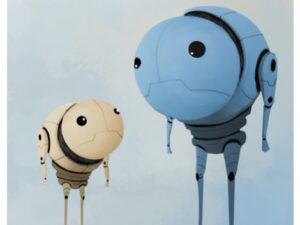
Blog Post by Lisa Bowers & Elouise Huxor In his article ‘Crafting an Artificial Intelligence I‘, Yatharth argues that there are parallels to be drawn between the craft process and the development of machine learning through engagement with the data as material. The word technology has its roots as a Greek word roughly translated as ‘a…
-
Why is design education white?
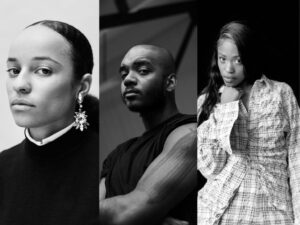
UK Black History Month is drawing to an end and this year, in particular, with all of the events that led to Black Lives Matter protests I have, once again, found myself reflecting on the ethnocentric nature of design teaching. The teaching of design in western culture is based on a narrative of design which…
-
Necessity is the mother of invention
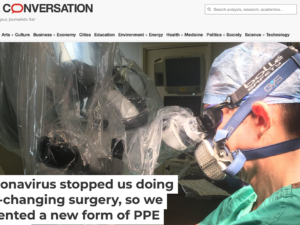
In the Socratic dialogue ‘Republic’, Plato famously wrote: “our need will be the real creator” (Wikipedia.org, 2020) which was moulded over time into the English proverb ‘Necessity is the mother of invention’. Having read multiple articles of inventions and innovations in medicine, technology, or supply chains over the last 6 months, more than once a…
-
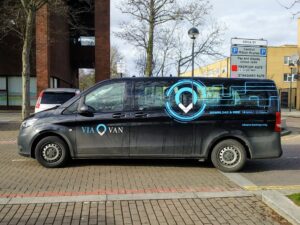
Covid-19: a catalyst for redesigning transport services?
Among his plethora of typically journalistic sound bites, last week the Prime Minister expressed the desire that the Covid-19 pandemic could be a “catalyst for change”. He was picking up the growing desire not to return to the ‘old normal’ but shift to a new, more sustainable and regenerative trajectory. There’s a lot of this…