
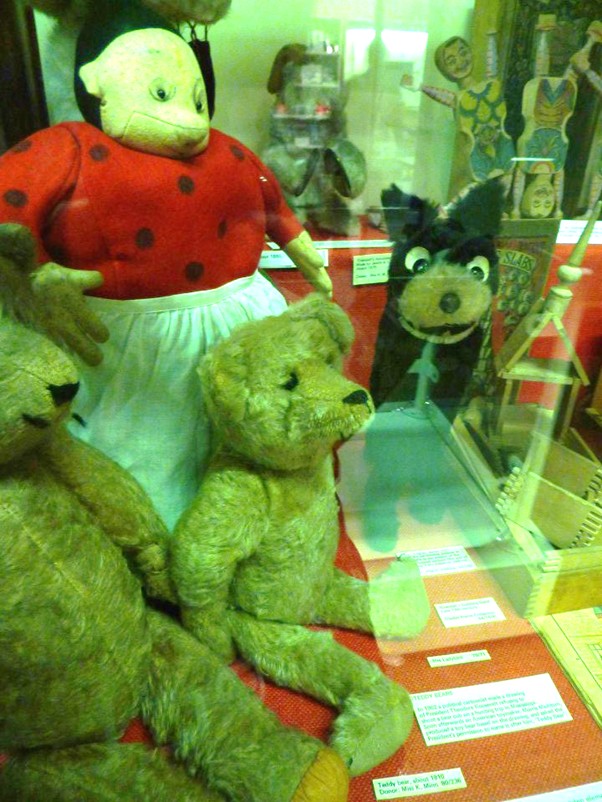
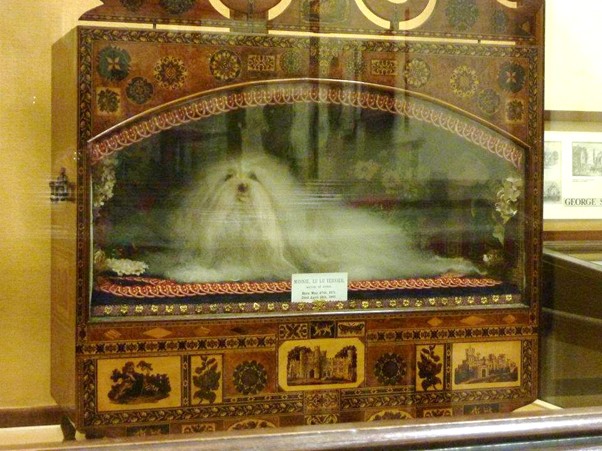
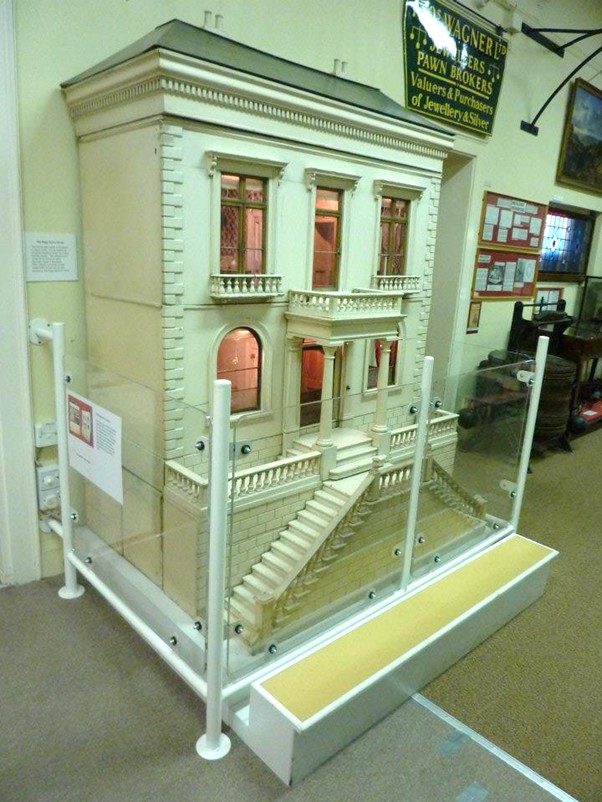
I have always enjoyed visiting museums. I’m not alone.1 They were, and still are, special ‘grounding’ places where I could return to favourite exhibits, like a much-loved storybook. At my childhood local museum, the exhibits were more domestic; a large dolls house that you could press a switch to light up and then climb little stairs to peer in the windows, a sedan chair, a well-loved ‘Felix the cat’, and a roomful of beautiful ‘Tunbridge Ware’ marquetry goods.
In London there was the greater excitement of catching a tube, then walking along the seemingly long tunnel to pop up at the Science and Natural History Museums where the favourites were far more exotic. What child wouldn’t be awed standing at the feet and looking up at the unimaginable magnitude of a diplodocus, seeing a space capsule or an actual piece of the moon. There was interactivity too: turning handles to make machinery whirr, and the excitement and trepidation of stepping onto the earthquake simulator in the Geological Museum.
There is a magic to museums that sets them apart from other social spaces. Even their historical names reveal this: cabinets of curiosities, Wunderkammers, and the word ‘museum’ itself: ‘the seat of the muses’. I liked the echoey hush; the opportunity to contemplate; to be curious; to be inspired.
Things change.
Some 35 years later, I took my own children to the Natural History Museum. There were walkways high up around the dinosaurs’ heads, destroying that sense of wonder you got as you looked up at them in isolation. Screens jangled throughout the galleries drawing my children to them like moths, but once there, they found little to engage them. That joy of discovery of seeing real things and appreciating scale or detail had been denied them and my disappointment was immense. Although an avid museum goer, it’s the one museum my daughter hasn’t yet returned to as an adult.
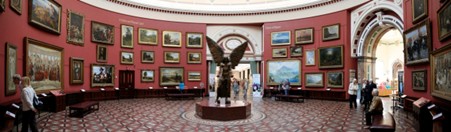
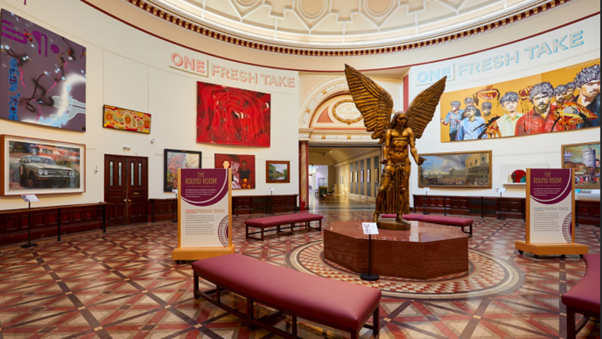
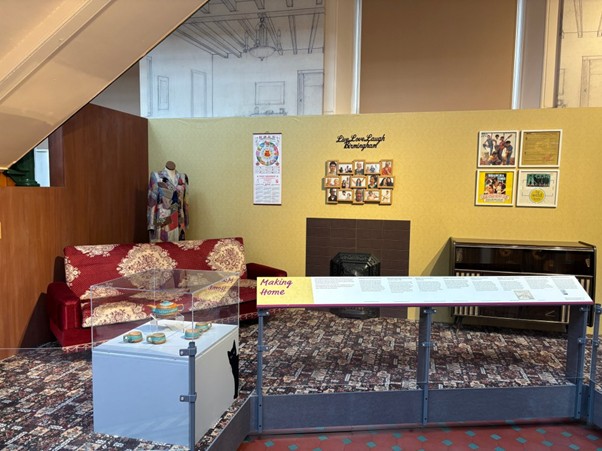
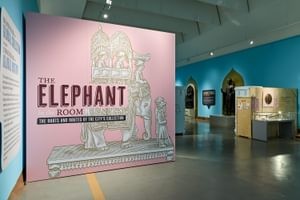
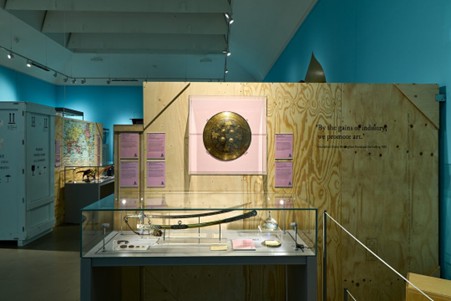
Over recent years the Birmingham Museum and Art Gallery has been undergoing a multi-million pound renovation and I was excited to see the transformation as parts of it re-opened. The fantastic collection of paintings in the Round Room has been thinned out and typography, painted onto the walls, shouts its new theme, ‘One Fresh Take’, reflecting the contemporary art that has replaced most of the originals. The lofty Industrial Gallery that once held a wealth of beautifully crafted objects celebrating this ‘City of a Thousand Trades’, the workshop of the world, has been turned into what one visitor described as looking “like a bad 6th form project!!”2 “WHAT HAVE THEY DONE?” said another.3 An installation of orange plastic café chairs and a table to recreate a typical 70s ‘caff’; a dark ‘Brummie’ sitting room, and a tongue in cheek sign that reflects the comments of so many residents saying “a city that will be nice when it’s finished”, creates a less than inspiring vision of a fabulously successful city that that produced some of the most glittering jewels in history . Where rooms of curiosities once sat, there is now a space devoted to explaining and apologising for objects procured in less than laudable circumstances along with packing cases that might have transported them. Entitled ‘The Elephant in the Room’, the exhibits are very sparse, looking more like work in progress with things waiting to be unpacked, and the ‘Elephant’ labels are very teachery- preachery rather than provoking intelligent debate. Although I fully appreciate the intention, you feel like you’re walking through a school worksheet as you visit each spaced-out case.
There are play areas for children in at least two of the galleries, one of them displaying children’s framed paintings on the walls alongside, again, very sparsely hung artworks. Some of the old masters are mounted on painted backdrops, destroying their individual impact, as though we can’t understand a landscape painting unless it is literally hung on a tree. Animal-themed paintings are grouped in a deliberately childlike manner, accompanied by information panels shaped like giant paw prints. I get that this is a family space, but I’m unconvinced. In this ‘Wild City’ space, children are encouraged to roll around on the floor.
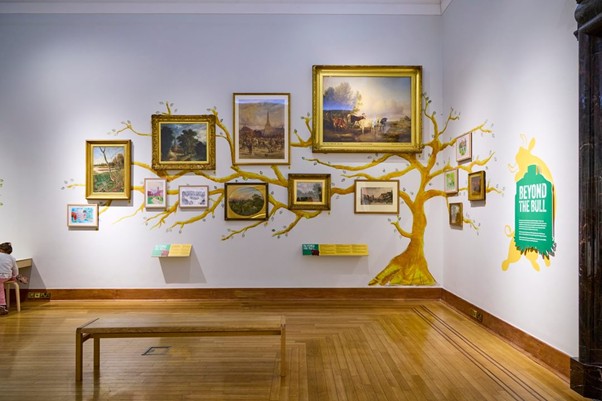
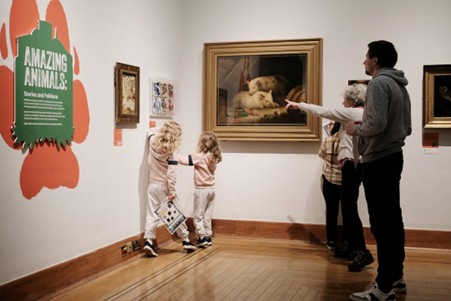
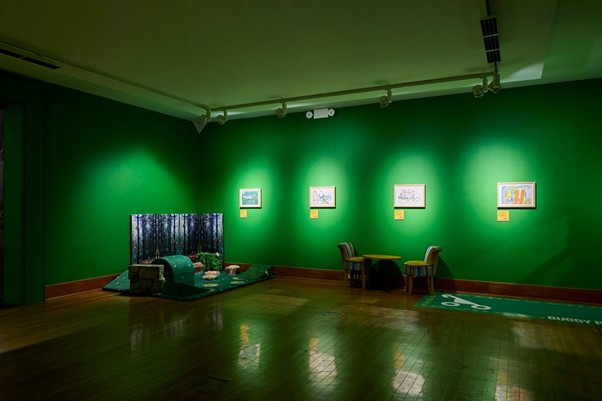
Part of the attraction of museums, even as a child, was that they were special places, along with libraries and churches, that inspired behaviour that was different from that in everyday locations. They were ‘grown up’ spaces, but ones where everyone belonged and could engage in their own way. They gave the opportunity to ‘look together’, to be shown things by your parents, and, in turn, to show them something you had discovered for yourself. Today, however, many museums seem to be designed primarily with children in mind. The signage is frequently simplistic and the exhibits thin. And the noise! With the loss of the encyclopaedic fascination of the Wunderkammer, museums increasingly resemble a form of daytime childcare, with children running wild through spaces once associated with calm attention and curiosity.
When it was suggested that the crazily cramped Victorian Pitt Rivers Museum (so densely packed that visitors are offered torches to peer into its cases) should be modernised, there was a public outcry – and quite rightly so! Part of its fascination lies precisely in the visible evidence of collecting, an impulse deeply ingrained in human behaviour. Seeing a wide array of similar things side by side sharpens the eye. It teaches us about evolution, difference, taste and cultural values. It is a museum of a museum; a relic of a past age and certainly worth preserving.
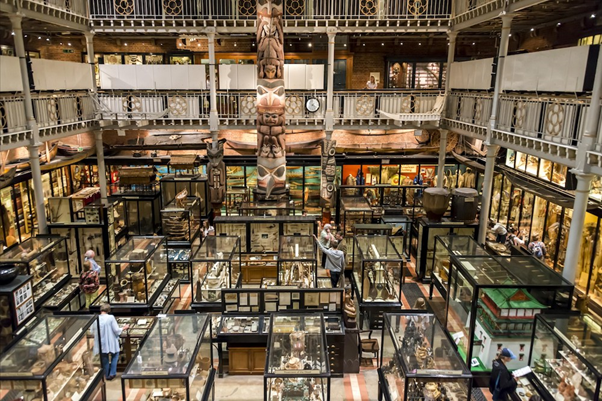
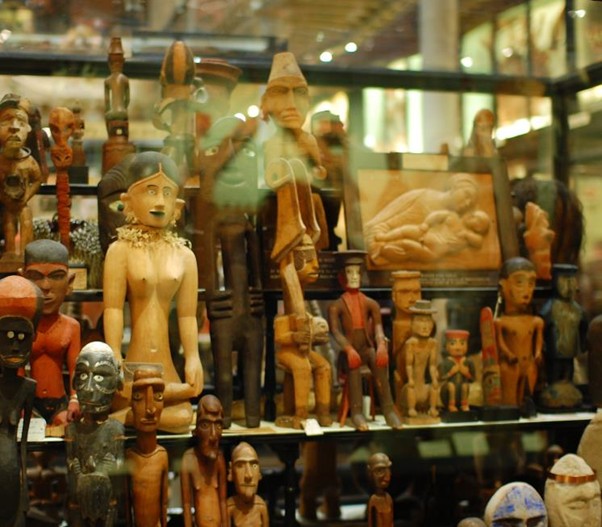
Museums developed from a research tradition: collecting, classifying and theorising. Over time, their galleries grew crowded with thousands of objects. By the turn of the twentieth century, Berlin’s Royal Museum of Ethnology possessed a staggering collection, acquired through means that were often ethically questionable, which was described as a ‘monstrous mass’ (Zimmerman, 2014, p. 185). This density was not considered a flaw, but a necessity for the museum’s academic purpose rather than for the visiting public. For those visitors, there was little attempt at interpretation. They were expected to gain ‘understanding through viewing’, aided only by the briefest of labels, an intellectually demanding task that frequently left them in the dark.
This model attracted criticism, and alongside improvements in education, was steadily revised to make museums accessible and demonstrably public facing. The shift from the research museum to the curated ‘experience’ has replaced the intellectual demands (and opportunities) of the Wunderkammer with a didactic one. Objects are thinned out, hand‑picked, and framed by explanatory narratives that tell the visitor not only what to look at, but what to think. So has this now gone too far?
I’m glad I made a pilgrimage to my childhood museum before it got a ‘glow up’. Revamped as ‘The Amelia Scott’; or just ‘The Amelia’ to locals, (apparently the ‘Tunbridge Wells Museum’ sounded too fusty), it’s all light and flow. Library spaces, which bizarrely even contain a much played grand piano!, merge seamlessly with museum galleries. Like in Birmingham, the walls are painted with artwork, rather than there just being art on the walls, and the objects are again sparsely curated. Visitors see what the curator wants you to see rather than inviting discovery. One Trip Advisor reviewer described it as “an ex-museum”. Instead of a room of my beloved Tunbridge Ware, only four examples are now shown. The cases that had exhibits jostling for attention have been emptied in favour of a few hero pieces. But what if we want to see their poorer relations and learn from the stories they tell. What is lost is not simply quantity, but comparison; the ability to see variation, anomaly and repetition; to understand craft, thinking, taste, culture and value.
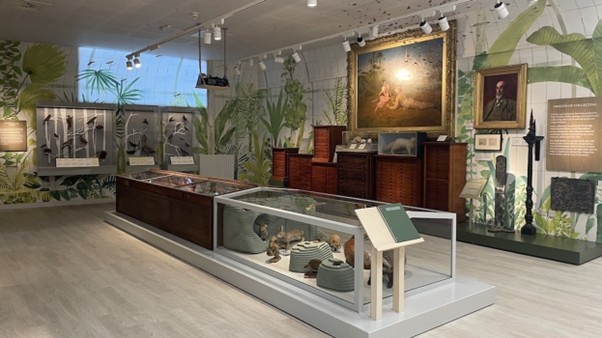
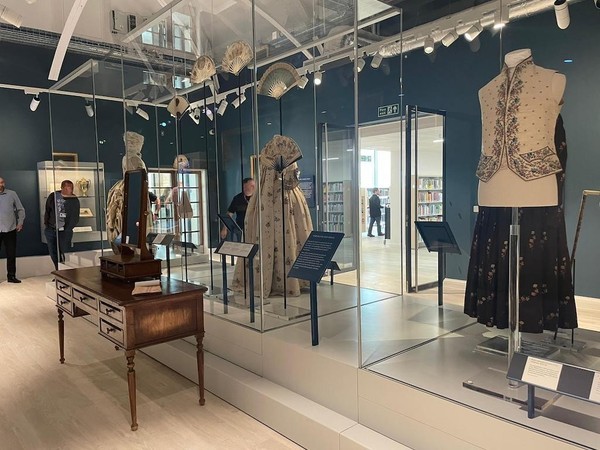
Fortunately museums haven’t yet become totally homogenised. Some museums get it right. The fabulous Young V&A manages to provide an experience that engages both adults and children in equal measure, along with play areas for variously aged children that don’t impact on the cross-generational museum experience. Like the Pitt Rivers, Sir John Soane’s house preserves the wonder-fully bonkers juxtaposition of objects that make it difficult to sometimes even move amongst them! The queues outside are testament to its appeal.
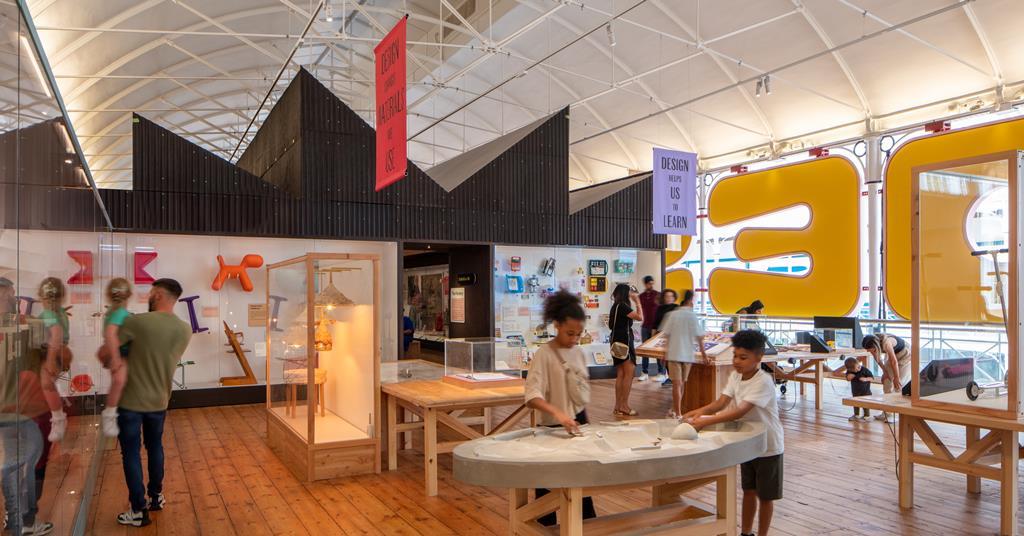
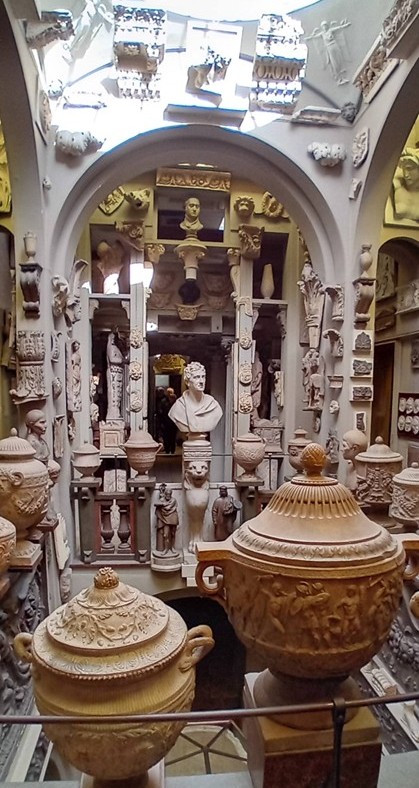
At the end of the day, we are all different. It may well be that I am one of those dinosaurs who ought, by now, to be packed away in storage. Of course I want children to feel drawn to museums, to find inspiration there, and to gain the kind of education that can lay foundations for future careers and a lifetime of intellectual curiosity. I am forever grateful to my wonder-ful parents, who understood the importance of expanding a young mind. And despite how it might sound, I really do like children. I have two delightful specimens of my own! But museums should be inclusive for everyone, and that inclusivity must still allow for challenge, provocation and serious engagement. The irony is that the German museums once criticised for their chaos were criticised precisely because they demanded effort from their audiences. Today, some museums demand almost nothing at all. In abandoning that wondrous, strangely ordered, chaos in favour of curated scarcity, they have quietly forfeited the conditions under which wonder, curiosity and genuine understanding once flourished.
References:
- www.nationalmuseums.org.uk/news/yougov-survey/#:~:text=A%20YouGov%20survey%20commissioned%20by%20Art%20Fund,if%20their%20local%20museum%20were%20to%20close
2) GoPlaces00421829961 (@GoPlaces00421829961) – Profile – Tripadvisor
3) It’s a disgrace!!!!!! – Birmingham Museum & Art Gallery, Birmingham Traveller Reviews – Tripadvisor
4) Zimmerman, A. (2014) Anthropology and antihumanism in Imperial Germany. Chicago, Ill.: University of Chicago Press
Leave a Reply