Skip to primary content
Skip to secondary content

Engaging Research

An Open Research University: Embedding public engagement within the research culture of the OU

Engaging Research

Main menu

  • Home
  • About
  • Engaging opportunities
    • Giving public lectures about research
      • School-University Lectures 2016
      • School-University Lectures 2015
      • School-university lectures 2014
      • School-University Lectures 2013
    • How to organise a research café
      • Possible topics for research cafés
    • Communicating partnerships creatively
    • Resources
    • People
  • An open research university
    • 2015 Engaging Research Award Scheme
      • 2014 Engaging Research Award Scheme
    • Participation Now
    • Evidencing Engaged Research
    • People
  • Resources
    • Digital practices of engaged researchers
    • Snakes and Ladders of Social Media
    • Designing public-centric forms of public engagement with research
    • Evidencing impacts from engaged research
      • Collecting evidence from research-informed practices
      • Juxtalearn: capturing engagement processes
      • Special Educational Needs: The impact of key working
    • School-University Engagement
      • Planning for school-university engagement
      • Open Lectures
      • Open Dialogues
      • Open Inquiry
      • Open Creativity
    • Reports, publications, posts
    • Researching and Practicising Science Communication
    • Postgraduate Science Resources: Open Learn
  • NERC Training
  • Contact

Post navigation

← Older posts
Newer posts →

Engaging research and the ‘Our Story App’

Posted on Friday, 4 April 2014 by Natalia Kucirkova
Natalia Kucirkova, The Open University

Natalia Kucirkova, The Open University

I recently won one the the OU’s first ever Engaging Research Awards. When I heard about the engaging research awards, I thought ‘hmn…How can there be an award for something which ought to be integral to any good piece of research? Isn’t engagement with publics the defining characteristic underlying all research endeavours? And how can one judge a piece of research to be more engaged than another?’

The more I thought about it, the more I realised how engagement with publics has been an underlying principle of the Our Story project. The story-making tablet/smartphone app (called “Our Story”) was developed in parallel with my PhD research and has led to a number of projects integral to my doctoral work but also expanding it to other areas, research institutions and publics.

Continue reading →

Posted in Engaging Research Awards, Projects, Recognition | Tagged An open research university, Digital engagement, engaging research, engaging with school students, Media, postgraduate research, Public engagement with research

Evolving Science Communication: theory and practice

Posted on Tuesday, 1 April 2014 by Clare Wilkinson
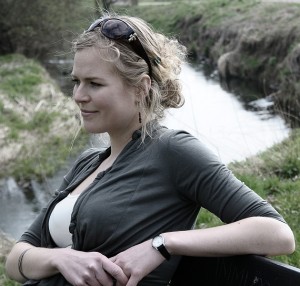
Photograph of Dr Clare Wilkinson

Dr Clare Wilkinson

On Friday 4th April 2014 I’ll be involved in hosting the second conference in our Evolving Science Communication series. You can find details of the first, held five years ago, in this report.

This conference celebrates 10 years of science communication programmes based at the Science Communication Unit (SCU), University of the West of England, Bristol. We’ve been delighted to work with our graduates to design a conference programme that we hope appeals to them, as well as to others currently working in and/or researching the ‘field’.
Continue reading →

Posted in Communication, Events, Publications | Tagged conference, engaging research, NCCPE, PER Catalyst, public engagement, Public engagement with research, science communication, University of the West of England

Assessing seed funding applications

Posted on Wednesday, 19 March 2014 by Richard Holliman
Dr Richard Holliman, Chair of the Review Panel

Dr Richard Holliman, Chair of the Review Panel

Evidencing Engaged Research: The closing date for applications has passed and we are not accepting further applications.

Contact
Dr Richard Holliman, Chair of the Review Panel.
Fiona McKerlie, Secretary to the Review Panel.

Purpose of this call: To support active researchers in the generation and systematic collection of evidence of the impacts from engaged research, demonstrating effects, changes and/or mutual benefits to those participating.

Continue reading →

Posted in Evaluation, Projects | Tagged An open research university, Catalyst, catalyst project, culture change, PER Catalyst, Public engagement with research

A shared purpose for engaging research

Posted on Friday, 7 March 2014 by Richard Holliman
Dr Richard Holliman, OU Champion for Public Engagement with Research

Dr Richard Holliman, OU Champion for Public Engagement with Research

Leadership; Mission; Communication
Champion’s blog; star date 2014.03.10 (in effect, an update on the first post on this blog, ‘An open research university‘).

Nearly two years of the mission completed; 14 months of funding left. “Where do we boldly go from here?”

I was interviewed late last year by Lucian Hudson, the OU’s Director of Communications, to explore this question. We also discussed progress with the core mission of the OU’s Public Engagement with Research Catalyst.

You can see the results of our discussion in the video below. If you’d prefer to read the text of the interview, select transcript.


Continue reading →

Posted in Communication, Projects, Resources, School-University Engagement | Tagged An open research university, Catalyst, catalyst project, culture change, Denbigh school, dialogue, Digital engagement, Engaging opportunities, engaging research, engaging with school students, Media, NCCPE, open access, PER Catalyst, PER Mandate, Public engagement with research, RCUK, SUPI, Web video

Plan for diversity and inclusion

Posted on Tuesday, 4 March 2014 by Richard Holliman
Richard Holliman

Dr Richard Holliman, The Open University

Teamwork is key to successful planning
When we’re producing courses at the Open University we tend to work in teams; many of them are multi-discplinary and almost all of them combine academics with other forms of professional expertise (e.g. editors and media professionals). For example, the last course I chaired (with the catchy code, SH804) involved more than 70 people during the production phase (including academics, media professionals, editors, librarians and web developers).

Over the years I’ve been lucky enough to work with some excellent colleagues in various course teams. You might expect me to say that. But it’s not always straightforward working as a social scientist in a Faculty of Science. One of the many colleagues I’ve really valued working with is Professor Simon Kelley. We worked together as part of a larger course team on Science in Context.
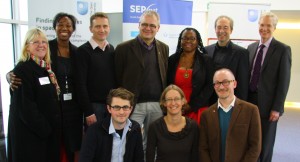
The team who organised and delivered the Science Matters School Lectures.

Back row, l-r: Janet Goss, Diane Ford, Gareth Davies, Andrew Norton, Janice Ansine, Simon Kelley and Tim Blackman. Front row, l-r: Frazer Bird, Clare Warren and Richard Holliman. Photo: Kate Bradshaw

Serendipity meets planning for diversity and inclusion
Spin forwards several years: I’d been working on the Engaging Opportunities project for about nine months when we began to think seriously about organising the first of the three annual lectures that we’d promised RCUK we would deliver.

A conversation with Simon Kelley at the regular departmental coffee morning led to a collaboration with colleagues from the Denbigh Teaching School Alliance, Centre for Physical and Environmental Sciences (CEPSAR), eSTEeM, the OU’s AV team and our Research, Scholarship and Quality Unit.
Continue reading →

Posted in Events, School-University Engagement | Tagged CEPSAR, culture change, Denbigh school, Engaging opportunities, engaging with school students, lecture, Public engagement with research, Science Matters, SUPI, Web video

The Open University and the development of a researching public

Posted on Monday, 3 March 2014 by Dan Weinbren
Dr Dan Weinbren, The Open University

Dr Dan Weinbren, The Open University

The Open University is over 40 years old. To celebrate this anniversary the university decided to document the rich social history of the OU. 

As a social historian I was delighted to be given the opportunity to lead this project. Below I document some of the contributions Open University students have made to an open research agenda. 

Constructing distributed publics of learners
Since it was opened to students in 1971 The Open University’s structures and pedagogies have shifted the notion of public research. A ‘public’, Michael Warner argued, is formed when texts (in the broadest sense) circulate among strangers and enable those people, through those texts, to organize together and to have experiences in common. Continue reading →

Posted in Communication, Projects | Tagged An open research university, citizen science, dialogue, engaging research, Open inquiry, open research, OU students, PER Catalyst, Public engagement with research

Re-imagining the future of citizen-led social innovation

Posted on Friday, 28 February 2014 by ErinmaOchu
Photo of Erinma Ochu

Erinma Ochu, Public Engagement Fellow, Wellcome Trust

Change takes time, persistence, commitment, care, collective action. How does this fit with academic pressures to produce journal publication after journal publication and busy teaching commitments?

If you’re into social and environmental change, there’s a tension, a challenge with coming at change from an academic perspective where your contributions to wider society and the environment might not be valued. For me, the reward, is a feeling – not money, not promotion – but a sense that day-by-day a different world is crafted when our work is shaped by outside influences and we are ourselves open to change.

Continue reading →

Posted in Presentations | Tagged citizen science, public engagement, social innovation

Exoplanets and how to find them

Posted on Thursday, 6 February 2014 by Andrew Norton
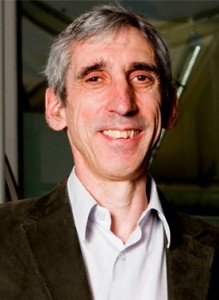
Professor Andrew Norton, The Open University

Professor Andrew Norton, The Open University

I’m an astrophysicist and my research is mainly concerned with what may be called the “time domain universe”, or simply: stars whose brightness varies with time.

Stars can have a variable brightness for one of several reasons: they might be intrinsically variable due to pulsations of the star’s atmosphere; they might be in orbit with another object that periodically passes in front of it; or they might suffer some form of catastrophic change that causes flaring or outburst behaviour, for instance.

One way to carry out research in time domain astrophysics is simply to monitor the brightness of all the stars in the sky and see what you find. This is, in effect, what is done by the WASP (Wide Angle Search for Planets) project, of which I and others at the Open University are part.

Continue reading →

Posted in Events, Presentations, School-University Engagement | Tagged astronomy, CEPSAR, culture change, Denbigh school, Engaging opportunities, engaging research, engaging with school students, lecture, Public engagement with research, SUPI, Web video

Sweat, mud and leeches

Posted on Wednesday, 5 February 2014 by Clare Warren
Dr Clare Warren, The Open University

Dr Clare Warren, The Open University

A day in the life of a field geologist
Earth Scientists like me study the Earth: how it formed, how it changed over geological time, and how all the different ‘bits’ such as the atmosphere, oceans, soil and rocks interact with each other.

In detail, I’m a geologist – I specifically try to understand the rocks beneath our feet. And in even more detail, I’m a field geologist. Nothing excites me more than the prospect of getting to spend weeks in a tent up a remote mountain somewhere (although preferably not in the rain), collecting rock samples for analysis back in the lab.

Continue reading →

Posted in Events, Presentations, School-University Engagement | Tagged CEPSAR, culture change, Denbigh school, Engaging opportunities, engaging with school students, lecture, Public engagement with research, RCUK, SUPI, Web video

‘Like asking a child to drive a bus …’

Posted on Wednesday, 22 January 2014 by Beverley Gibbs

‘Like asking a child to drive a bus …’: on seeing the publics of public engagement as citizens, not children

Beverley Gibbs

Beverley Gibbs, University of Nottingham and University College London

Last Monday (13.1.14), I joined the Open University’s ‘Engaging Research’ seminar series to share some research I’ve been doing on Scotland’s transition to a low-carbon society. Energy has always been a hugely important part of Scotland’s identity, and is set to continue to be a key part of the debates in advance of the Referendum for Scottish Independence in September 2014.

My particular interests lie in what the public engagement landscape has to say about, or how it contributes to, this ambitious transition. Fairly quickly, we can identify a disjunction between public policy priorities and the public engagement taking place from universities and the science communication infrastructure (by which I mean science centres, science festivals and informal science engagement practice). This gap is really interesting when you think about it, and in the discussion at the end of the talk we explored it a little further.

Continue reading →

Posted in Events, Presentations | Tagged engaging research, Public engagement with research, scientific citizenship

Post navigation

← Older posts
Newer posts →

Categories

Recent Posts

  • Careering BEYOND jobs in the environment
  • Broadening the engagement of young people in environmental science
  • Denbigh Geography students help to map future research priorities
  • Talking hay while the sun shines
  • Identifying, disentangling and reflecting on traditions in science communication

Archives

Blogroll

  • NCCPE: Exploring how universities engage with the public
  • Nottingham University: Making science public
  • Open University: Creating publics
  • QMUL Engagement Blog

Other stuff

  • Log in
  • Entries feed
  • Comments feed
  • WordPress.org
Proudly powered by WordPress