CHASE Studentships in Religious Studies

The Department of Religious Studies at the Open University invites applications for October 2015 entry to our PhD programme (for information on our areas of expertise and research interests, please see http://www.open.ac.uk/postgraduate/research-degrees/research-areas/religious-studies). The Open University is part of the CHASE AHRC Doctoral Training Partnership (alongside the Courtauld Institute of Art, Goldsmith’s College at the University of London and the Universities of East Anglia, Essex, Kent and Sussex) and successful applicants for PhD study will be able to apply for studentship funding. For UK students, these awards cover both fees and maintenance. For EU residents awards are on a fees only basis. The funding is also designed to enable professional development opportunities, including public engagement skills and placements with CHASE partner organisations in the UK and overseas.

Research in the department is characterised by a strongly interdisciplinary approach and ethos. The Department hosts the Cross-Cultural Identities research group (http://www.open.ac.uk/arts/research/cross-cultural-identities/) and we currently have ten full-time and part-time PhD students working on a range of subjects. The Open University offers excellent provision for new PhD students. Each student is supported by two supervisors as well as a strong programme of university-wide and Faculty-specific training in research skills. In addition, students have the opportunity to participate in a lively research culture and to contribute to regular seminar programmes, conferences and workshops held in Milton Keynes, London and other Open University national/regional centres.

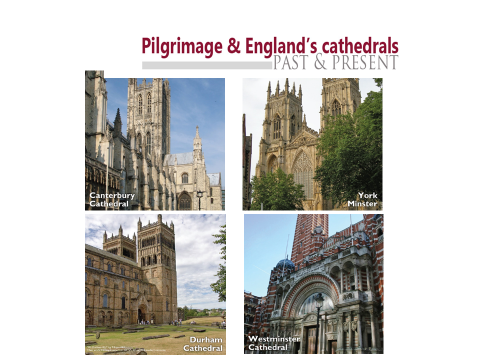
The Religious Studies Department has a successful track record in winning external research funding, leading large-scale collaborative research projects and supporting individual research. On-going research projects include ‘Re-Assembling Democracy: Ritual as Cultural Resource’ funded by the Norwegian Research Council http://www.tf.uio.no/english/research/projects/redo/; ‘Religion, Martyrdom and Global Uncertainties’ funded by RCUK http://www.open.ac.uk/arts/research/religion-martyrdom-global-uncertainties/ and ‘Pilgrimage and England’s cathedrals, past and present’ http://christianityandculture.org.uk/ground-breaking-project-investigates-role-pilgrimage-past-and-present.

The department also has strong links with a range of learned societies including BSA Soc-Rel (the Sociology of Religion Study Group of the British Sociological Association), the BASR (British Association for the Study of Religion), EASR (European Association for the Study of Religion), the Ecclesiastical History Society (EHS) and scholarly journals including Critical Research on Religion, Culture and Religion, Fieldwork in Religion and Folklore.

Informal enquiries re studentships should be made to [email protected] in the first instance. Applications will be considered by the Faculty of Arts on a competitive basis and forwarded to four CHASE panels for further assessment and ranking. For full details of all subject areas and how to apply, please see the CHASE website: http://www.chase.ac.uk/. Please note that the deadline for all Postgraduate Research applications, including the CHASE Studentships, is January 14, 2015. It is anticipated that interviews at the Open University for shortlisted candidates in Religious Studies will take place in late January 2015

Dr Paul-Francois Tremlett

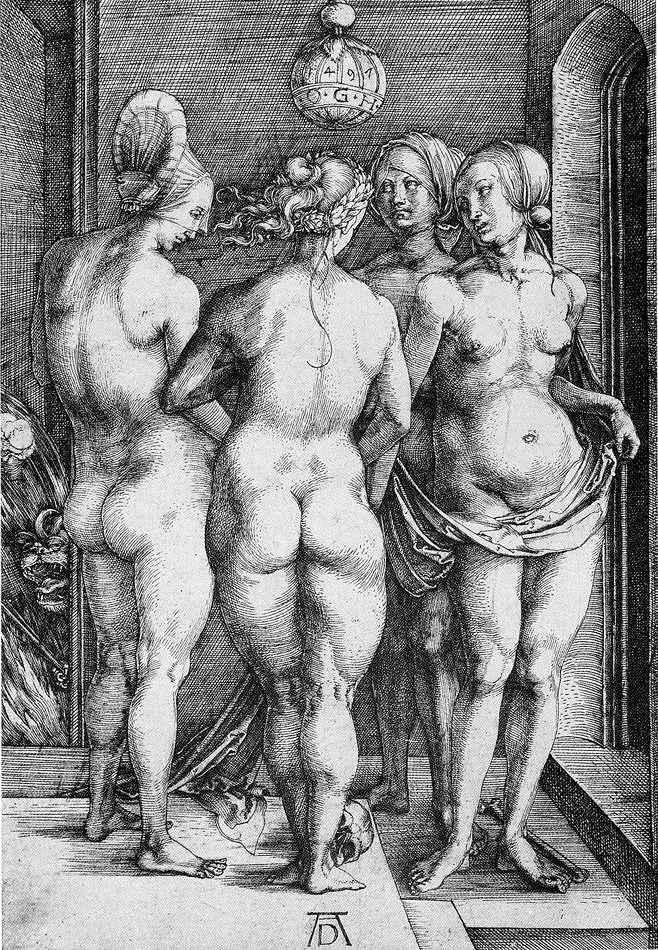
Witch-hunting at the British Museum

The Four Witches

The Four Witches

Every era has its witches. At least, that’s how it seems from the British Museum’s current exhibition Witches and Wicked Bodies, which is showing in Room 90 until January 11th 2015 (entrance free). Here, ancient sorceresses like Medea and Circe mingle with Eve, Lilith and the Witch of Endor, while the nameless crones of the Early Modern witch-hunts cackle alongside the Weird Sisters of Macbeth.

  Continue reading

A very spirited project!

Let me introduce to you my great grandmother – who was a practicing Spiritualist medium at a time when she could still have been convicted under the 1735 Witchcraft Act. Police officers would regularly attend her séances undercover, trying to prove she was up to no good. Unfortunately for them, her guides would always draw her attention to the fact that there was someone with ‘big feet’ in the room who shouldn’t be there – and she would calmly welcome ‘the police officer amongst us’ and scare the living daylights out of them!

Continue reading

Religion, Security and Global Uncertainties

A recent commentary on this blog (Violence, Information and the Radicalisation of the Last MenbyDr Paul-Francois Tremlett) offered some fascinating insights on radicalisation and associated violence, and questioned whether they are necessarily motivated by religion. A recently published report from our department further explores this assumed connection between religion, radicalisation and violence, and more broadly, the commonly assumed link between religion and security.

Continue reading

‘Welcome’ from Dr Graham Harvey

graham-harveyWelcoming new students is one of the greatest pleasures of being Head of Department. So, along with my colleagues in Religious Studies, I’m pleased to welcome nearly 300 students now starting on A217 “Introducing religions” and nearly 400 on A332 “Why is religion controversial?”. Although the team the Open University’s Milton Keynes campus doesn’t often meet the undergraduate students for whom we’ve prepared teaching and learning materials, we are honoured to know that so many are interested in studying with us. We don’t know how many OU students studying at level 1 will continue with Religious Studies in later stages of their studies, but we’re enthusiastic about our involvement with the various modules available there too (i.e. AA100 “The Arts past and present” and A105 “Voices, texts and material culture”). We are equally pleased that we have students completing their Masters degrees with us and look forward to reading their dissertations and, we hope, discussing possible PhD projects with them. This year, we also have four new students commencing research towards their PhDs. These are Aled Thomas researching “The Transition of Auditing from Psychiatric Practice to Religious Ritual: Social and Religious Developments in the Church of Scientology”,Claire Wanless researching “Secularisation and Religious Transmission: Communities of Practice, Networks and the Rise of Postmodern Religion“, Theo Wildcroft researching “Yogic-animist ritual: witnessing emergent embodiment” and Kasia Kowalska researching “Universalism and Particularism in Jewish Prayer in the Orthodox, Reform and Liberal Movement in the United Kingdom”. They will join a community of existing PhD students at various stages of their research. We wish all our students every success in their studies with us.

We are also celebrating the nomination of researchers within our team for a Times Higher Education award under the the “Widening Participation or Outreach Initiative of the Year” category. You can read more about the Building on History: Religion in London project at https://www.open.ac.uk/blogs/boh .

Times Higher Education awards

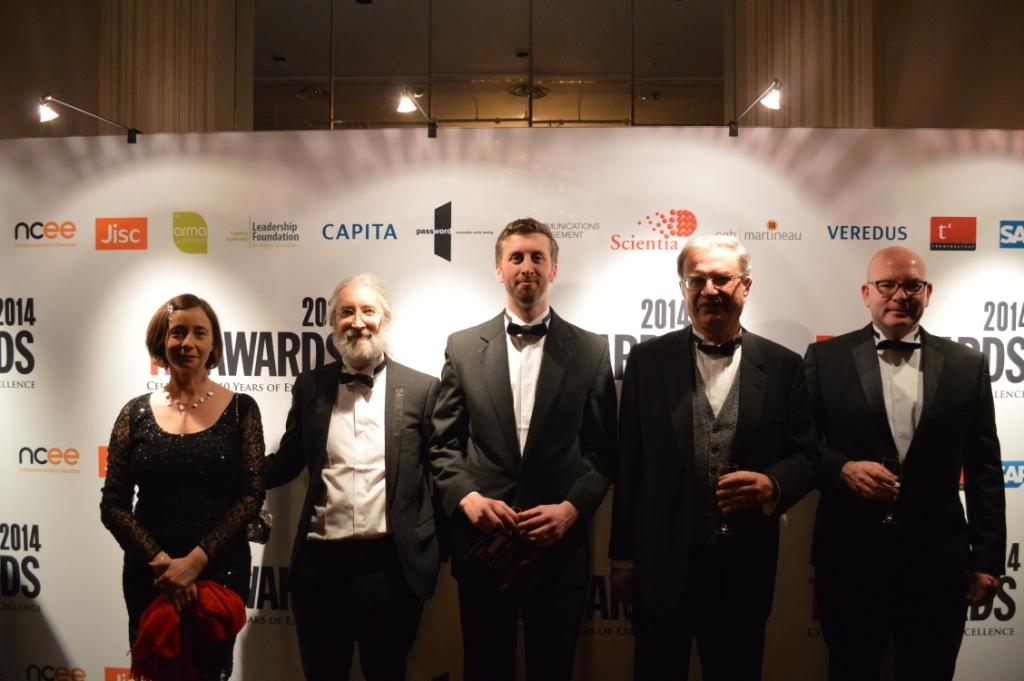
We have excellent news – the Building on History: Religion in London project, which involves John Wolffe, John Maiden and Gavin Moorhead from the department, has been shortlisted for the ‘Widening Participation or Outreach Initiative of the Year’ category of the Times Higher Education Awards 2014! Many thanks to all our project collaborators and stakeholders who made it such as success. See more details at: www.the-awards.co.uk.

For more details on the project please visit http://www.open.ac.uk/arts/research/religion-in-london/

‘Wars of religion’: A career opportunity in Religious Studies?

 For those who maintain that Religious Studies has an identity and concerns distinct from those of Theology, it is galling to find the higher education sector and the media, which reports it, subsuming Religious Studies under Theology. I came across this again most recently in a Sunday newspaper supplement on UK university places available through the clearing scheme. I doubt whether it would have helped recruitment to Religious Studies – catching the attention of prospective students who might be ill-advised enough actually to look for places under Religious Studies. But then a number of other disparate reports that bear upon the prospects and concerns of Religious Studies have made me ponder of late. For example, a recent, routine emailing about research opportunities headlined a new career direction for researchers in the study of religions – charting the decline of religion in Western Europe; hardly new waters, more back to familiar debates about secularisation theory. It is not, perhaps, the career opportunity to persuade a new generation of potential researchers that Religious Studies is a vibrant and durable discipline, which offers new, unfolding frontiers to explore.

Continue reading

Opinion: Violence, Information and the Radicalisation of the Last Men

Between Friedrich Nietzsche’s despair at the Last Men (1961) who revere nothing and who have fallen into nihilism, and Francis Fukuyama’s crass celebration that the Last Men’s wants have been satisfied under the liberal democratic settlement (1992) – between in short, cynicism and complacency – there is a lesson. How will the government respond to a British citizen apparently beheading two American journalists in Islamic State (IS) propaganda videos? What is it that draws British citizens to fight in Syria and Iraq for organisations like IS? What is radicalisation and how does it occur?

Continue reading

IHR modern religious history seminar

Two members of the department, John Maiden and John Wolffe, co-convene the IHR Modern Religious History seminar. The programme for 2014-15 will be as follows. 22 October 2014, Kristan Tetens (University of Leicester), ‘Hall Caine’s Mahomet: Religion, Empire, and Dramatic Censorship in Late-Victorian Britain’.

5 November 2014, Dr Robert Saunders (Queen Mary, University of London), ‘“Come to pray on referendum day”: The Church and the European Referendum, 1975’.

19 November 2014, Dr John Maiden (Open University), ‘An “anticipation of heaven”? Black and white Christian relations in England during the 1970s’.

3 December 2014, Professor John Coffey (University of Leicester), ‘Missionary Millennialism and British Antislavery, 1790-1840’.

11 February 2015, Dr Alana Harris (Oxford), ‘”The Writings of Querulous Women”: Contraception, Conscience and Clerical Authority in 1960s Britain’.

25 February 2015, Dr Maria Power (Liverpool), ‘A new model of ecumenism: the practice of the Common Good in the partnership of Bishop David Sheppard and Archbishop Derek Worlock’.

11 March 2015, Dr Alexander Lock (British Library), ‘The Grand Tours and Conflicting Identities of Eighteenth-Century English Catholic Travellers: Sir Thomas Gascoigne (1745-1810) and Henry Swinburne (1743-1803)’.

25 March 2015, Dr Andrew Atherstone (Oxford), ‘Farewell to Anglicanism: Evangelical Seceders from the Church of England 1964-76’.

The seminars are held in room 104, 1st floor, IHR, Wednesdays, 5.15.pm. It would be good to see you!


Some points on the Caliphate Past and Present

For non-Muslims the word caliph might bring to mind Harun al-Rashid, a caliph who features in a number of the fantastical tales of The Thousand and One Nights, as well as in for instance poems by Alfred Tennyson (‘Recollections of the Arabian Nights’) and W.B. Yeats (‘The Gift of Harun al-Rashid’), and in James Joyce’s novel Ulysses. The office of caliph and the institution of the caliphate have a complex and fascinating history. The recent proclamation by Abu Bakr al-Baghdadi, leader of the Islamic State of Iraq and the Levant (ISIS), of a caliphate in Syria, prompted me to say a bit about this and comment on its current significance.

Continue reading