A PGR-led blog featuring Open University writers. We talk, think and write about everything with a leaning towards innovations in teaching and learning online in Higher Education
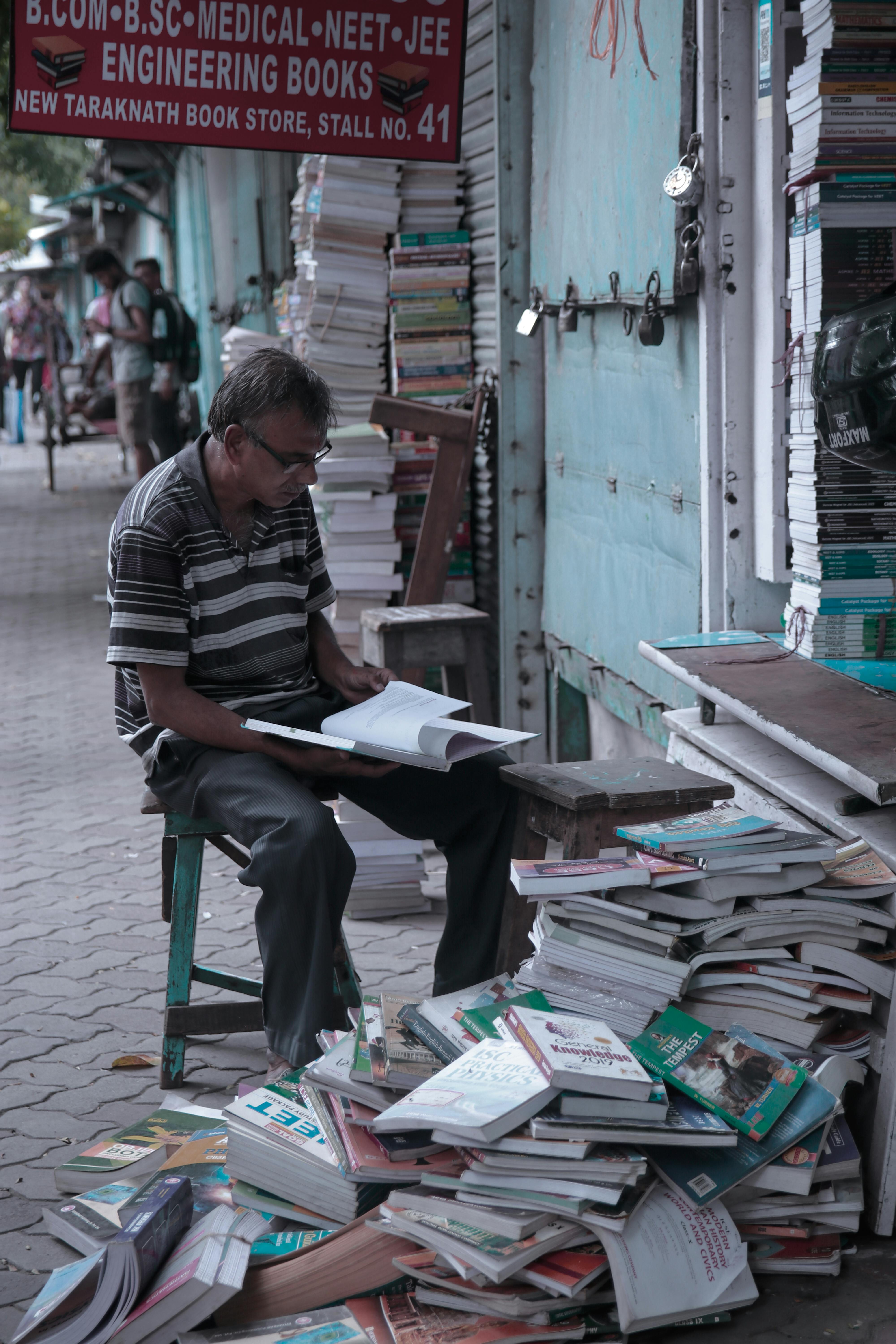
Alain de Botton (1997:46) in How Proust can change your lifenotes that Marcel Proust’s Maurice Duplay said that when Proust couldn’t get to sleep, he most liked to read a train timetable.
De Botton continues:
The departure time of the St Lazaire train was not the point for the man who found no reason to leave Paris for the last 8 years of his life. Rather the timetable was read as though it were a gripping novel about country life, because the mere names of the provincial train stations provided Proust’s imagination with material to elaborate entire worlds, to picture domestic dramas in rural villages, shenanigans in local government and life out in the fields (1997:47).
In this spirit I offer a list of my current reading (unlike the provincial French train stations in no order, but as they occur to me):
Articles in Aeon including a recent one (by Julian Baggini) about how we are losing track of doing things for intrinsic purposes, including being ‘in’ nature and prayer.
Articles in The Guardian, especially in the wake of ‘Hannah the plumber’s’ win in the Gorton and Denton by-election.
My own notes on West Northants Local Plan Consultation which I then ‘AI’ed’ to produce a report which I circulated to fellow parish councilors to read.
I did find that there was a Proust effect of the sort mentioned by De Botton. For the three Portuguese books, for example, including them in the list took me back to the context where I bought the book. For Assim Se Pariu O Brasil (This is how Brazil was born), this was a book stall in Lisbon last October. For Filosofias Africanas (African Philosophies) a new book shop in Rio de Janeiro that served excellent coffee. For História do Rio de Janeiro através da Arte (History of Rio de Janeiro through Art) the shop after we had visited the Botanic Garden in Rio de Janeiro with our grandson.
Putting each item on the list meant that it became linked with a set of memories. It also means that I have created links between some, perhaps even most of the reading I’ve listed. Some of these spring to mind very easily (such as between the Brooke Newman and Akala books, Assim Se Pariu O Brasil and Filosofias Africanas). Others are less obvious but I’m sure they are there.
There are so many questions inspired by Johnathan’s post. We met and went round the room with those questions that inspired us:
Why do you read what you read?
What do you read when you can’t sleep because your brain has an excess of energy that needs soaking up?
Where do you find you reading material (I have been banned from every library I have ever joined) so – I’m reduced to buying?
What influences your reading choices – I’m a functional reader; I read for information and relaxation?
I read with a sense of nostalgia; re-reading my A’ level texts, I find them (#coughs) challenging – what texts have you recently revisited: what was it like?
Recently, I felt more angst than usual around my role as an editor when editing someone else’s research report as a post for our blog. Initially, I identified my key question as:
What are the ethical concerns around representing someone else’s research through your own lens?
We discussed this issue as a blog editorial team, considering that, whilst the report of another academic’s research aims, methodology, findings and recommendations is not a critique, how much of the editor’s own viewpoint should be allowed to seep into this, and how much should be purely descriptive? As our discussion reached no conclusion, our team suggested I write my reflections around this issue…
Firstly, I was reminded of a friend and colleague who lamented that his lengthy interview given for BBC radio was then clipped into a few seconds. I suggested, and he agreed, that when something is ‘out there’, it becomes someone else’s property. But to what extent can this apply here? This research was not my academic property; yet I needed to edit it to fit the requirements of our blog post, particularly in relation to its length and accessibility for a wider audience. And, of course, there aren’t just personal ethics to consider, but those attached to data protection law.
Around this time, we had the big editing scandal – the editing for BBC’s Panorama of Donald Trump’s Washington speech of 6th January, 2021, which led to the resignation of Director General, Tim Davie and Chief Executive, Deborah Turness and resulted in the threat from Trump of a lawsuit. The legal claim, I understand, is that in juxtaposing two separate parts of Trump’s speech without explanation, Panorama misrepresented Trump’s meaning. So, of course, accurate representation of intended meaning – as far as the editor understands it – should be paramount.
However, in snipping, paraphrasing, sifting and explaining, through the lens of their own personal and professional viewpoint, to meet length and accessibility requirements for the wider audience, is it perhaps inevitable that the editor misrepresents the original, intended meaning – at least to an extent?
My search for further insight into this issue led me to the research of Ken Hyland and Hay Zou (2022), investigating how authors represent themselves in academic blogs to non-specialist audiences, based on a corpus of 75 such cross-genre blogs. They see what I termed (above) “viewpoint” as “stance”, defining stance as a means of the researchers promoting themselves to a wider readership, for which they need to repurpose their original research to project towards the expectations of the new audience. They comment: “There is no ‘faceless’ discourse as we always take some position as to what we say, even if we present it in an impersonal and objective way.” For example, they found that repurposing for an academic blog meant employing less definite language to create space for those with opposing viewpoints to debate issues raised.
However, Hyland and Zou’s study concerned authors repurposing their own research for a blog post. In my context, I am acting as an intermediary, presenting the stance on behalf of the researcher.
I then abandoned my search amongst academic sources to enquire how Chat GPT would answer my specific question: What are ethical concerns when editing someone else’s work for a blog post? (As a blog editorial team we’ve debated our feelings around Artificial Intelligence (AI) here and in particular Chat GPT.)
Chat GPT’s answer was specific to my context and appeared to advise what had seemed obvious to me, in summary, to credit the original author, obtain their consent and then, the thorny issue, to preserve original intent and meaning, to avoid “altering the tone, message, or context in a way that could misrepresent the author’s ideas”.
I then realised that, whilst the answer to my initial question regarding the ethics of the editing process seems clear, it raises a key problem of how; in an attempt to ethically edit someone else’s research for my blog post, how do I avoid misrepresentation of original intention, or, at least, Hyland and Zou’s forever taking some position about what we say?
I considered and adopted two potential practical solutions to this problem. My first might be considered a ‘cop out’, to include brief quotations from the original. Secondly, as advised by our blog editorial team, I appended my own response in relation to how the research resonates with my experience, so declaring my own interpretation and stance, but separating this from the edit itself.
Any thoughts?
Blog By Dr Jane Cobb
Photo by Mikhail Nilov from Pexels: https://www.pexels.com/photo/person-in-black-and-white-checkered-shirt-using-laptop-6894007/
“It’s not just that we are somehow morally weaker for using AI to do our work for us, but we will be the lesser for it. On a large human scale, human knowledge will be lesser for it; we are not going to be creating new things because large language models only know about the stuff that is already out there.” Sophie Scott, BBC ‘A Good Read’ podcast.
This quote was a reaction to people using AI to summarise texts they did not want to read or did not have time to read. It made me think of my earlier blog, Print or digital: that is the question, which I wrote in response to Pat Thomson’s thought-provoking post, “About the unread.” At the time, I was interested in access, format, and abundance, but this quote led me to reflect upon not how we read, but whether we persist in reading at all.
The issue: Are we justified in stopping reading
When I was younger, books were expensive, less available, and harder to replace. If I started a book, I tended to finish it, sometimes out of stubbornness, sometimes out of guilt, and sometimes because there was simply nothing else to read. Persevering with a text I did not immediately enjoy was normal, and I was usually able to enjoy what I was reading for some aspect or another anyway. However, as I get older, time has become more precious, and the vast abundance of texts, digital articles, books, reports, and novels means that not finishing feels less like failure and more like selectivity. In fact, when a text does not engage me, I increasingly feel entitled to stop and ask AI to summarise it for me. These summaries are efficient, pragmatic and time-saving. However, Scott argues that creativity is born from texts we struggle with, and that if we bypass that conflict, we lose the most essential part of what makes us human: our personal, unique interpretation.
Solution 1: AI as a legitimate tool for selective survival
Firstly, should we accept AI summaries as a rational adaptation to contemporary academic life? Reading everything in depth is no longer feasible, and strategic skimming has long been part of scholarly practice. In this sense, AI simply accelerates an already familiar behaviour, as noted by Baron (2015), who argues that skimming and summarising have always been part of academic practice. From this perspective, AI tools allow readers to manage overload and prioritise what deserves deeper attention. For scholars balancing teaching, research, administration, and care, AI can function as a filter, not a replacement for reading, but a way of deciding what is worth reading and what is not. In this way, and used critically and transparently, AI could help us survive abundance without drowning in it.
Response 2: Reading as creative misinterpretation
On the other hand, Scott argues that creativity does not emerge from efficiency but from conflict. She points out that reading is not a neutral act of extraction, but it is interpretative, emotional, and often messy. Indeed, when we misunderstand a text, we read something into it that the author might not have intended. This misinterpretation can be considered creativity (Wolf, 2018). Therefore, when we struggle with unappealing or difficult texts, we are not failing but creating meaning. Additionally, Scott says that when AI summarises a text for us, it not only removes productive misreading but also delivers clarity without confusion, coherence without resistance, and excludes the reader’s imaginative labour. It is this labour where new ideas, connections, and even writing voices are formed.
A question to readers
So, my question to you is, in an age where texts are endless and time is not, how do we decide what deserves to be read and what can be safely summarised? And more provocatively, what kind of reader, writer, and thinker are you?
Blog written by Dr Lesley Fearn
Dr Lesley June Fearn is a secondary school English teacher in southern Italy. She is also an affiliate researcher at the Open University’s (UK) Faculty of Well-being, Education, and Language Studies (WELS), where her research centres on linguistics and sociocultural theory.
This blog post is another in our series of scholarship-focused posts and summarises a report of this project, which investigates minoritised students’ experiences of assessment in higher education. The project lead was Dr Judy Chandler, and the co-researchers were Bob Hallawell and Rhiannon Moore. The project was funded by Praxis – WELS Centre for Scholarship and Innovation.
This blog post been edited by Dr Jane Cobb based on a Praxis project report by Dr Judy Chandler et al.
The Supporting Minoritised Students co-creation project found evidence of disparities in outcomes for minoritised PostGraduate Taught students and highlights the importance of students’ feedback literacy and existing capital.
“The general module assessment guidance… I seldom check that guidance because that’s too long and sometimes I think the information for me there is…is like too…too abstract, too general (interview participant).”
This study uses a change laboratory (a type of participatory, collaborative research within which ideas are tested) and case study methodology, in combination with analysis of quantitative data from outcomes of two Open University Master’s Programmes (in Education and in Childhood and Youth) and builds on existing literature.
The project reports the following key findings:
Many minoritised students do less well in qualifications than their counterparts. (The project defines minoritised students as: “students minoritised by language, social processes or institutions”.) For example, Black, Asian and students who choose to share mental health conditions were awarded the lowest outcomes on certain courses. Further, black students completed their taught postgraduate studies with the lowest course outcomes of these three minoritised demographic groups.
Application of feedback requires feedback literacy and is associated with students’ prior experiences and expectations. (I understand feedback literacy as being required to interpret the guidance and feedback around assessed work, which students have gained from previous study, and which would then feed forward to future assessed work.) The project finds that feedback literacy is associated with students’ prior (and cultural) experiences and expectations.
Existing assessment support contributes to the replication of patterns of existing capital and academic identity. Credit transfer students, those with prior experience of study or work within similar domains, and those who were already familiar with the Open University systems, are more able to navigate their assessment experience and emerge with positive course outcomes. For students without pre-existing sources of this capital, strategies of navigation or resistance were more limited, as they were less able to draw on existing knowledge and experience to navigate the interpretation of assessment requirements, documentation, or feedback.
Data highlights the impact of negative feedback on a student’s confidence and view of their own ability. Further, a lack of clarity and specificity meant that feedback was sometimes difficult for students to apply, particularly for those for whom English is an additional language.
The project makes the following recommendations:
Academic teams should consider assessment data across courses, pathways and qualifications.
When designing assessment guidance and support, it is important to consider any assumptions made about students’ existing knowledge and skills and to ensure that support is in place for those students without this experience.
At a qualification level, endeavour to provide some consistency in tutor support.
Students declaring mental health conditions should receive continued support throughout their course, not just at its outset, in preparation for final assessment.
Create ways for all students to feel a sense of belonging during their course.
This project provides insight and empirical data which can be drawn upon by practitioners interested in improving student experience of assessment in higher education, particularly in a distance and online setting.
In so doing, it supports, for example, the ongoing work of the Anti-Racist and Inclusive Assessment.
The project team states that future iterations of this project will incorporate the experiences of course team members and tutors working on the Master’s in Education and Master’s in Childhood and Youth, alongside those of minoritised students. There will be a continued emphasis on the co-creation of inclusive and accessible assessment support, which builds upon the varied experiences of this diverse group of co-collaborators.
“The proposal to develop this project to investigate the experience of all participants (tutors, course team and students), viewed as co-collaborators, seems an interesting way to strengthen and illuminate the data further. Both the concept of feedback literacy itself and the fact that it is associated with prior experience resonate with me as an ex-OU tutor (of many years!). Moreover, I have experienced that feedback can (unintentionally) affect a student’s confidence, and there is evidence to support this. Finally, the recommendation that a sense of belonging is created for students is something that, as tutors, we have been continually trying to achieve with varying degrees of success, such as by encouraging an active online student forum.” Dr Jane Cobb.
What are your thoughts on the findings and recommendations of this project?
‘There are more unread and book questions I could ask and answer, of course. Which book have I put down and won’t pick up again? Which books do I most often recommend to students? What books influenced me most? If I had to choose only one book to keep what would it be and why? What books are likely to stay unread?’ (Thompson, 2025).
Anyone reading this blog will agree that reading is a central part of academic life. During our last bloggers’ meeting, we spoke about the books and papers that most influenced us. Although I happily reminisced about many moments that shaped my doctoral thesis, for example, the discovery of Stake’s (2006) Multiple Case Studies and Rogoff’s (2003) Guided Participation, among others. I realised that each was tied to its own time and context. Therefore, instead of revisiting those influences, I want to reflect on a seismic change in my reading life: the shift from print to digital.
I have embraced digital reading with passion. Living in a country where English is not the first language, I appreciate being able to buy an eBook in seconds rather than carrying heavy suitcases of books across borders. A Kindle device stores thousands of texts, spares my eyesight with adjustable font sizes, and avoids the damp that damaged many of my treasured print editions. However, when it comes to proofreading, I still need paper. Indeed, research confirms that printed text encourages slower, more careful reading, provides stable spatial cues, and reduces skimming and eye strain, making it easier to catch mistakes (Baron, 2015). Despite these advantages, research shows that people still prefer print over digital for both study and pleasure (Charry & Roje Tomic, 2023). Therefore, two concerns came to mind.
How Do Academics Balance Convenience with Depth?
Digital formats offer unmatched convenience, speed, portability, and instant access, but print still supports greater focus and accuracy (Singer & Alexander, 2017). The challenge for academics is not choosing one over the other but knowing when to use which. I have found that working to each format’s strengths is the answer: use digital for access and portability and print for tasks that demand deep concentration and precision, such as proofreading. Institutions can support this balance by maintaining resources in both formats and by helping readers develop strategies for enriching digital reading.
Is Digital Disrupting Reading for Pleasure?
Leisure reading remains more immersive and relaxing in print and Kindle devices. In contrast, smartphones, computers and tablets often encourage distraction through scrolling, notifications, and skimming (Quintero & Brennan-Gac, 2024). If these habits replace sustained reading, academics risk losing a key source of curiosity, renewal, and imaginative thought. Therefore, institutions should protect print-based leisure reading by providing quiet, book-friendly spaces and by encouraging the use of dedicated e-readers over multipurpose devices supporting both wellbeing and scholarly creativity.
To conclude, I would like to relaunch Pat Thompson’s questions cited at the beginning of this blog post and add the following: What is your position on digital reading? How do you overcome the issues reported here? Have you embraced it, or do you reject it?
by Lesley Fearn (PGR Blogger Editorial Team)
Dr Lesley June Fearn is a secondary school English teacher in southern Italy. She is also an affiliate researcher at the Open University’s (UK) Faculty of Well-being, Education, and Language Studies (WELS), where her research centres on linguistics and sociocultural theory.
Every year, teachers and academics are expected to dedicate time, energy, and ideas, but often without any additional support or compensation. In academia, researchers are expected to publish regularly, review peers and even pay high open-access publishing fees. Expectations vary in schools, but educators are still taken advantage of, nevertheless. They are expected to implement new programmes, reshape curricula, and take on responsibilities that reach well beyond the classroom, resulting in a quiet but widespread form of exploitation.
Teachers
As an EFL teacher in Italy, I have seen this unfold year after year. Policies shift, priorities change, and teachers have to adapt. For example, since 2010, the government has implemented CLIL (Content and Language Integrated Learning) in the final-year curricula of technical schools (DPR 88, 2010) and licei state secondary schools(DPR 89, 2010) and teachers must integrate a CLIL module into their curricula without providing adequate training or structural support. More recently, teachers have had to find considerable time to incorporate ‘Civic Education’ (MIUR, 2019) and ‘Orientation’ (MIUR, 2022). Although the school is given funds to nominate a coordinator for any new method, it is the teachers who put these ideas into practice and are expected to do it as an extended part of their already full workload. Moreover, although there are training courses, they are seldom focussed on single subjects or contexts. I, like many colleagues, feel underqualified to do these things, and it takes us an enormous amount of time to organise, carry out and assess on top of our existing responsibilities. Each reform promises innovation, but in practice, it often means unpaid overtime, rushed adaptation, and mounting stress. That is without counting the emotional labour we need to perform in supporting students who face increasing personal and social challenges (Day & Gu, 2010).
Academics
Meanwhile, in higher education, academics are under pressure to research and publish regularly. Also, many journals charge high publication fees for the privilege of publishing open access (Eve, 2014). That means academics are writing in their spare time, self-funding their articles, and balancing research with full-time teaching and administrative responsibilities. Additionally, academics altruistically peer review these journals, so while publishers profit, scholars are left financially and emotionally drained (Tennant, 2020).
Possible solutions:
Firstly, schools and universities need to formalise and compensate for extra responsibilities. If a new reform or initiative is introduced, there should be dedicated time within working hours, appropriate training, and financial recognition. These considerations are both reasonable and necessary for the meaningful and sustainable implementation of this initiative (OECD, 2020).
Secondly, higher education institutions and academic publishers could take joint responsibility for developing equitable publishing models by reducing excessive article processing charges (APCs), increasing support for open-access models that do not penalise authors, and ensuring that publishing remains an integral part of academic life. Scholars should be able to share knowledge without being demoralised (Tennant, 2020).
Question
Finally, my concern extends beyond money and hours. It is about dignity, autonomy, and respect for our profession. When passionate professionals are treated like unpaid volunteers, everyone loses, especially our students and future specialists.
When Passion Becomes Exploitation
Problem
Every year, teachers and academics are expected to dedicate time, energy, and ideas, but often without any additional support or compensation. In academia, researchers are expected to publish regularly, review peers and even pay high open-access publishing fees. Expectations vary in schools, but educators are still taken advantage of, nevertheless. They are expected to implement new programmes, reshape curricula, and take on responsibilities that reach well beyond the classroom, resulting in a quiet but widespread form of exploitation.
Teachers
As an EFL teacher in Italy, I have seen this unfold year after year. Policies shift, priorities change, and teachers have to adapt. For example, since 2010, the government has implemented CLIL (Content and Language Integrated Learning) in the final-year curricula of technical schools (DPR 88, 2010) and licei state secondary schools(DPR 89, 2010) and teachers must integrate a CLIL module into their curricula without providing adequate training or structural support. More recently, teachers have had to find considerable time to incorporate ‘Civic Education’ (MIUR, 2019) and ‘Orientation’ (MIUR, 2022). Although the school is given funds to nominate a coordinator for any new method, it is the teachers who put these ideas into practice and are expected to do it as an extended part of their already full workload. Moreover, although there are training courses, they are seldom focussed on single subjects or contexts. I, like many colleagues, feel underqualified to do these things, and it takes us an enormous amount of time to organise, carry out and assess on top of our existing responsibilities. Each reform promises innovation, but in practice, it often means unpaid overtime, rushed adaptation, and mounting stress. That is without counting the emotional labour we need to perform in supporting students who face increasing personal and social challenges (Day & Gu, 2010).
Academics
Meanwhile, in higher education, academics are under pressure to research and publish regularly. Also, many journals charge high publication fees for the privilege of publishing open access (Eve, 2014). That means academics are writing in their spare time, self-funding their articles, and balancing research with full-time teaching and administrative responsibilities. Additionally, academics altruistically peer review these journals, so while publishers profit, scholars are left financially and emotionally drained (Tennant, 2020).
Possible solutions:
Firstly, schools and universities need to formalise and compensate for extra responsibilities. If a new reform or initiative is introduced, there should be dedicated time within working hours, appropriate training, and financial recognition. These considerations are both reasonable and necessary for the meaningful and sustainable implementation of this initiative (OECD, 2020).
Secondly, higher education institutions and academic publishers could take joint responsibility for developing equitable publishing models by reducing excessive article processing charges (APCs), increasing support for open-access models that do not penalise authors, and ensuring that publishing remains an integral part of academic life. Scholars should be able to share knowledge without being demoralised (Tennant, 2020).
Question
Finally, my concern extends beyond money and hours. It is about dignity, autonomy, and respect for our profession. When passionate professionals are treated like unpaid volunteers, everyone loses, especially our students and future specialists.
Therefore, the question I pose is: How can we, as educators and academics, reclaim our time and value without sacrificing the passion that brought us here in the first place?
Blog post written by Lesley Fearn
I recently achieved my EdD regarding learning and teaching English as a Foreign Language (EFL) using online community projects in secondary schools. This interest stems from more than thirty years of experience teaching English (as a Foreign Language) and English literature in state schools in the south of Italy. During this time, I have continually experimented with new approaches and techniques, especially with technology, to motivate students in their schooling. Other areas of interest include Fine Art and English literature that I studied as a BA and MA. As far as research is concerned, I am particularly interested in Action Research and sociocultural paradigms.
In early 2025, the blog editorial team comprised Professor Carol Azumah Dennis, Doctors Jonathon Hughs, Jane Cobb, Adele Creer, Madeleine Pilcher, and Lesley J. Fearn discussed the managerial and institutional expectations placed on academics. Among the various definitions, we recognized a presumption that much of our work would be done for ‘love’ and unpaid. Inspired by this subject, we decided to all write a paragraph entitled ‘Labour of Love’, and Jonathon would put it together. Jonathon decided to link this collaborative work with one we did in the past on AI, specifically Chat GPT, in academia and compare the results with the definitions we had given. The outcomes showed that Adele, Jane and Madeleine’s notes resonated with ChatGPT, while Lesley and Azumah differed slightly.
As we have had previous discussions about the use of AI, specifically Chat GPT, in academia, I began by asking Chat GPT to explain ‘labour of love’. It suggested:
‘A ‘labour of love’ refers to work done out of passion, dedication, or deep personal satisfaction rather than for financial gain or obligation. It often involves significant effort but is pursued because of genuine interest or affection for the task cause or people involved’.
Adding:
‘Despite its idealistic appeal, the ‘labour of love’ in academia can sometimes lead to exploitation, where passion is used to justify long hours, precarious contracts, and under-compensation’.
This idea resonates with Adele, who says, ‘I’m happy to go over and above what is expected, oodles of marking, tutorials, preparing work, emails, forum activities…. All a labour of love. I sometimes put in more hours than I wish to count and got involved in extra projects. This work is what fires me; it’s challenging and interesting. I try to stay within the working hours allocated – but it is impossible; it always takes longer than planned, and I can be found at my desk late in the evening; this is, of course, my choice’.
Additionally, Jane wrote about the way that pursuing her doctoral thesis led to a feeling of separation from those close to her – ‘The doctoral thesis and my compulsion to achieve it was, indeed, a labour of love and looking back a major milestone for me, a transformative journey (see Savva and Nygaard, 2021). It was also a particularly personal journey, separating me from those I saw day-to-day. Perhaps studying and working at a distance enhanced this feeling of separation, as the much-valued sharing of ideas and experience with my dedicated supervisors, fellow journeying academic friends, and colleagues, generally occurred remotely, online.’
Likewise, Madeleine also describes her EdD studies ‘as a labour of love because it was a piece of hard work you do because you enjoy it and not because you will receive money or praise for it or because you need to do it (Cambridge Dictionary, 2024). She notes: The task ahead of me felt insurmountable at times, but I was determined to overcome the difficulties I faced to continue my research and fulfil my potential. My EdD has proved to be a fantastic opportunity for learning and an enlightening experience. It truly was a labour of love.
In contrast, Lesley compares the Italian approach of ‘dolce far niente’ (the sweetness of doing nothing) with her ‘need to fill every moment with something worthwhile. In my case, I like to do something that will help me learn.’ She wonders whether ‘when I retire in a few years, I will be able to enjoy ‘dolce far niente’, but if not, I will continue learning new things and loving every moment’.
Finally, Az outlines her situation as a central OU academic where, nominally, 40% of her time is study or research time, which we can control … and devote … to our passion projects. ‘But the reality is, I find it hard to recall a holiday in which I simply holidayed. However, Az accepts that […] it (is) hard to complain about this since I appreciate how privileged I am to work in academia: a job that allows me space for autonomy and creativity. Az recognizes that there is a significant downside to academics in the toxic university, about stress, micro-aggressions and associated ill-health; I really wonder – I may well love my job, but does the job love me, or is it a sad case of unrequited love?’’
In conclusion, are some nested paradoxes at the heart of the ‘labour of love’ notion? Can something be both a ‘labour’ and done ‘out of love’? Is this only possible if a ‘free’ individual choice is untainted by the context in which that choice is made (Gill, 2016)? It may be difficult for individual academics to make a real choice in a toxic university (Guardian, 2000).
A follow-up blog is planned to interrogate some other ideas identified by ChatGPT. In the meantime, what does a ‘labour of love’ mean to you?
Video technology offers a range of benefits as a pedagogical tool to support student-teacher learning. The challenges identified are not related to the use of the tool for effective student-teacher learning but are practical or personal.
Photo credit (1)
This blog post is another in our series of Scholarship focused blog posts and summarises the Open University, Wales-PGCE Team study, funded by Praxis – WELS Centre for Scholarship and Innovation. the team found the use of video technology for reflection on lessons to be inconsistent. They reports that there is a need to support embedding the use of video technology in student-teacher reflection.
It can be difficult to remember how things have gone, so the video is another ‘thinking’ device, as I can’t take it all in at the moment.
Student teacher
Introduction
The potential for and application of video technology in Initial Teacher Education is constantly evolving. This project established the current level of schools’ engagement, the activities video technology is used for, and the perceived benefits and challenges to all involved. More than 100 participants, including student teachers, mentors, school senior managers and pupils, contributed their views on the use of video technology in lessons. These views were collected using an online survey, interviews and group discussions.
Results
The findings from focus group participants/mentors overall indicated that the use of video technology is reported to be inconsistent, whilst conversations with mentors and school colleagues are reported to be the most effective approach for reflecting on practice. There were both benefits and challenges of using video technology in lessons. Benefits included their role in supporting the identification of improvements and strengths and facilitating the observation of different techniques, which then provided a basis for mentoring discussions. The challenges of using video technology in classrooms involved the missing of aspects of learning, safeguarding concerns, and feeling self-conscious while filming.
The results of this study showed that there is a clear need to embed support to encourage the effective use of video technology in lessons for it to have a positive impact on reflecting practice. The project then led to increased awareness of two important needs. Firstly, there was an increased awareness of the need to provide further training and support to use video technology for reflection in lessons for both student teachers and for the school staff who support them. Secondly, the project led to an increased awareness of the need to provide scaffolding to support reflective practice using video technology. It was then decided that support mechanisms and resources would be developed to address the challenges that had been identified by the project.
Proposed outcomes
A bank of video recordings has been collected and is currently being edited. Further clips will be sourced to ensure that a broad range of themes are included in the resource bank. This will be made available to the Open University Partnership schools. The resource bank will showcase effective examples of using video technology alongside content and a training tool that will support how to video record lessons and use the video technology to support reflection of teaching practice.
For further information on this project, please contact [email protected].
What are your own thoughts around the use of video technology as a means of reflection on teaching practice? Do you think the use of video technology would benefit reflection on practice in Further and Higher Education? How far do you feel that the practical and personal challenges that Alison reports would outweigh the advantages in comparison with other methods of reflection on teaching practice available?
(1) Photo by George Milton: https://www.pexels.com/photo/happy-young-black-woman-setting-up-smartphone-before-shooting-podcast-6954220/
Marilyn Long is currently undertaking a doctorial degree with the Open University exploring: ‘Autistic students and online higher education: an investigation into equity and inclusion within a non-autistic majority group paradigm’
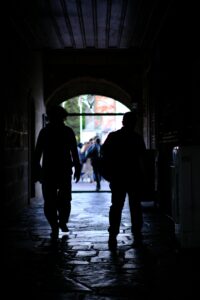
Photo by Kağan Karatay: https://www.pexels.com/photo/people-walking-in-tunnel-25051324/
PGR Blogger editorial team discussed this contribution over several weeks before publishing. It does not fit in with the format of our usual posts – there are no refences and, well – it’s a poem. But it is clearly engaging with the doctoral / research journey. We liked hearing Marilyn’s voice in the literal as well as figurative sense. We felt that the poem highlighted the anxieties experienced by so many PGRs and academics (seasoned and emerging) about the value of their contribution. Academic self worth. Amidst the emotionality of these thoughts is a diagnosis of autism and the experience of being autistic in an environment dominated by neurotypicals. This is a densely packed poem which inspired unexpected depths of thought and discussion.
my research journey: reliable routes, untried tributaries
I am a Year 3 doctoral research student in the WELS Faculty, Institute of Educational Technology. The focus of my investigation is equitable and inclusive provision and support for autistic students in HE, underpinned by the premise that the online education platform has potential to maximise autistic student potential. I am working with autistic students and staff who are allies of this student group, and am passionate about my role as an autistic researcher and as an OU Accessibility Champion Advocate. In the 1980s I gained my B.Ed (Hons) degree and worked as a Primary school teacher, with responsibility as Early Years Co-ordinator and Staff Development Manager. I have also been awarded the MA in English Literature and MA in Online Education, both from the OU.
Photo by Anh Nguyen: https://www.pexels.com/photo/artistic-portrait-woman-message-hands-face-29504304/
“Those things I told you were just [false]statements. Isn’t it I was representing girls who live like that?” –
Participant X
I had just finished data analysis and was about to write up my findings for my study, which explored the education experiences of six girls in Sub-Saharan Africa (SSA) who were characterised as ‘marginalised’. These girls had been recruited onto a vocational education and training programme by an international organisation, which sought to improve their lives through training them in skills for their livelihood. The findings were, to me at the time, a compilation of a neat and compelling narrative about these girls’ lives, which resonated a lot with the broader literature on girls’ education – mostly how vulnerable they are, how they lack access to important resources and how they lack voice and agency. I drew this narrative from these girls’ stories told in their own voices, a very important part of my methodology in this study. Nothing prepared me for the moment when one of the participants in my study (Participant X in the excerpt above) revealed to me in a WhatsApp message that all she had told me during my two long interviews with her was a misrepresentation and her narrative about being a ‘marginalised’ girl was not true!
To say I was shocked and confused is an understatement. In that state of panic, I went back to the data, carefully observing my conversation with her and all the girls in this study, and to my horror, I realised that the stories of five out of six girls had inconsistencies and contradictions. At that point, disappointment set in, and I felt disappointed with myself, the participants, and my study. How did I miss that?
My claim to having taken a constructivist stance in this study was tested by this revelation. I had gleaned from authors like Guba (1990) and others that constructivism denotes a relativist ontology, whereby there are multiple realities that are socially based and local and depend on the one who holds them. In this instance, my approach as a researcher was to (subjectively) interpret the participants’ experiences and perspectives, thereby taking an interpretivist epistemology (Cohen et al., 2007; Creswell, 2007;Crotty, 1998). What I had not anticipated was whether it matters if what the participants report is true or not and if the intention is to tell their story through their own voices, how this can be achieved when the participants have misrepresented themselves.
After I recovered from my initial shock, I discovered that there were many important lessons from this experience, lessons which have shaped me as a researcher. For now, I will share this one: it is important for us as researchers to remember that the interview process is not neutral, and this has far-reaching consequences than we are consciously aware of. There are power dynamics at play, which are negotiated by the interviewer and interviewee both during and after the interview. For instance, as posited by others like Kvale (2006), typically, it is the interviewer who rules the interview, where the interview is an instrumental, even manipulative dialogue, in which the researcher has a goal and an agenda and maintains the exclusive privilege to interpret and report what the participant has said. Inherently, the expectation is that the interviewee will tell the interviewer what they want to hear. However, less emphasised, and often assumed during research, is the power that the participant holds. Not only do participants have the power to consent or not to the study, to choose to respond to a question or not, but they also have the power to select and transform details of their lives to suit the narrative that they want the researcher to remain with (Gubrium and Holstein, 2011). In my case, the participants exercised their power by presenting the persona they wanted to present and telling me the stories that they wanted to tell me, whether the stories were misrepresented or not. Their power certainly impacted me during data analysis and how I interpreted and reported the findings.
Now, to the golden question: when it comes to reporting the findings, does it matter whether what the participants said is true or not? I think this is subjective to the researcher and their goals. For instance, I realised in revisiting what it meant for me to take a constructivist approach that my goal as a researcher was not to find or tell the truth because truth is indeed relative. I discovered when I engaged this line of thinking that the contradictions and inconsistencies of the participants in my study told an even more powerful story (Watson, 2006) though different from what I initially thought. In her work about ‘hearing’ girls’ voices, Khoja-Moolji (2006) emphasised that it is important to be open to diverse narratives about their lives rather than to reduce their voices to a homogenous narrative. For me, the complexity that came from the unexpected discovery underscored one of my strongest contributions about ‘marginalised’ girls, as I interpreted and reported all the stories – the truth, the half-truths, the outright misrepresentation.
Does it matter to you if what your participants tell you is true or not?
blog post by Jane Doka, a Research Associate in WELS – Faculty of Well being, Education and Language Studies.
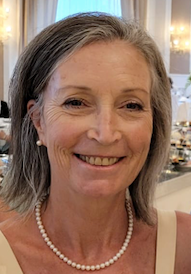
Dr. Jane Doka is a skilled researcher with expertise in Comparative and International Education, specializing in the areas of youth transitions, inclusion, and gender within educational contexts. Her work emphasises the nuanced experiences of adolescents, particularly girls/young women characterised as marginalised within development frameworks, with an extensive background in both applied research and practical project implementation in the Global South. Her current and past projects underscore her commitment to ethical, culturally responsive research and the development of inclusive education systems. Jane is a member of the Centre for the Study of Global Development (CSGD) and is part of the Faculty of Wellbeing, Education and Language Studies (open.ac.uk)





 research within which ideas are tested) and case study methodology, in combination with analysis of quantitative data from outcomes of two Open University Master’s Programmes (in Education and in Childhood and Youth) and builds on existing literature.


 early 2025, the blog editorial team comprised Professor Carol Azumah Dennis, Doctors Jonathon Hughs, Jane Cobb, Adele Creer, Madeleine Pilcher, and Lesley J. Fearn discussed the managerial and institutional expectations placed on academics. Among the various definitions, we recognized a presumption that much of our work would be done for ‘love’ and unpaid. Inspired by this subject, we decided to all write a paragraph entitled ‘Labour of Love’, and Jonathon would put it together. Jonathon decided to link this collaborative work with one we did in the past on AI, specifically Chat GPT, in academia and compare the results with the definitions we had given. The outcomes showed that Adele, Jane and Madeleine’s notes resonated with ChatGPT, while Lesley and Azumah differed slightly.
 I am a Year 3 doctoral research student in the WELS Faculty, Institute of Educational Technology. The focus of my investigation is equitable and inclusive provision and support for autistic students in HE, underpinned by the premise that the online education platform has potential to maximise autistic student potential. I am working with autistic students and staff who are allies of this student group, and am passionate about my role as an autistic researcher and as an OU Accessibility Champion Advocate. In the 1980s I gained my B.Ed (Hons) degree and worked as a Primary school teacher, with responsibility as Early Years Co-ordinator and Staff Development Manager. I have also been awarded the MA in English Literature and MA in Online Education, both from the OU.
 Dr. Jane Doka is a skilled researcher with expertise in Comparative and International Education, specializing in the areas of youth transitions, inclusion, and gender within educational contexts. Her work emphasises the nuanced experiences of adolescents, particularly girls/young women characterised as marginalised within development frameworks, with an extensive background in both applied research and practical project implementation in the Global South. Her current and past projects underscore her commitment to ethical, culturally responsive research and the development of inclusive education systems. Jane is a member of the Centre for the Study of Global Development (CSGD) and is part of the