
on the ethics of editing someone else’s research for a blog post

Recently, I felt more angst than usual around my role as an editor when editing someone else’s research report as a post for our blog.  Initially, I  identified my key question as: 

What are the ethical concerns around representing someone else’s research through your own lens?  

We discussed this issue as a blog editorial team, considering that, whilst the report of another academic’s research aims, methodology, findings and recommendations is not a critique, how much of the editor’s own viewpoint should be allowed to seep into this, and how much should be  purely descriptive?   As our discussion reached no conclusion, our team suggested I write my reflections around this issue… 

Firstly, I was reminded of a friend and colleague who lamented that his lengthy interview given for BBC radio was then clipped into a few seconds.   I suggested, and he agreed, that when something is ‘out there’, it becomes someone else’s property.  But to what extent can this apply here?  This research was not my academic property; yet I needed to edit it to fit the requirements of our blog post, particularly in relation to its length and accessibility for a wider audience.  And, of course, there aren’t just personal ethics to consider, but those attached to data protection law. 

Around this time, we had the big editing scandal – the editing for BBC’s Panorama of Donald Trump’s Washington speech of 6th January, 2021, which led to the resignation of Director General, Tim Davie and Chief Executive, Deborah Turness and resulted in the threat from Trump of a lawsuit.  The legal claim, I understand, is that in juxtaposing two separate parts of Trump’s speech without explanation,  Panorama  misrepresented Trump’s meaning.   So, of course, accurate representation of intended meaning – as far as the editor understands it – should be paramount. 

However, in snipping, paraphrasing, sifting and explaining, through the lens of their own personal and professional viewpoint, to meet length and accessibility requirements for the wider audience, is it perhaps inevitable that the editor misrepresents the original, intended meaning – at least to an extent? 

My search for further insight into this issue led me to the research of Ken Hyland and Hay Zou (2022), investigating how authors represent themselves in academic blogs to non-specialist audiences, based on a corpus of 75 such cross-genre blogs.  They see what I termed (above) “viewpoint” as “stance”, defining stance as a means of the researchers promoting themselves to a wider readership, for which they need to repurpose their original research to project towards the expectations of the new audience.  They comment: “There is no ‘faceless’ discourse as we always take some position as to what we say, even if we present it in an impersonal and objective way.”  For example, they found that repurposing for an academic blog meant employing less definite language to create space for those with opposing viewpoints to debate issues raised. 

However, Hyland and Zou’s study concerned authors repurposing their own research for a blog post.  In my context, I am acting as an intermediary, presenting the stance on behalf of the researcher. 

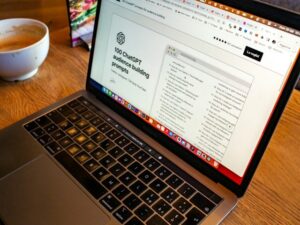
I then abandoned my search amongst academic sources to enquire how Chat GPT would answer my specific question: What are ethical concerns when editing someone else’s work for a blog post? (As a blog editorial team we’ve debated our feelings around Artificial Intelligence (AI) here and in particular Chat GPT.) 

Chat GPT’s answer was specific to my context and appeared to advise what had seemed obvious to me, in summary, to credit the original author, obtain their consent and then,  the thorny issue, to preserve original intent and meaning, to avoid “altering the tone, message, or context in a way that could misrepresent the author’s ideas”. 

I then realised that, whilst the answer to my initial question regarding the ethics of the editing process seems clear, it raises a key problem of how; in an attempt to ethically edit someone else’s research for my blog post, how do I avoid misrepresentation of original intention, or, at least, Hyland and Zou’s forever taking some position about what we say? 

I considered and adopted two potential practical solutions to this problem.   My first might be considered a ‘cop out’, to include brief quotations from the original.  Secondly, as advised by our blog editorial team, I appended my own response in relation to how the research resonates with my experience, so declaring my own interpretation and stance, but separating this from the edit itself. 

Any thoughts? 

Blog By Dr Jane Cobb



Photo by Mikhail Nilov from Pexels: https://www.pexels.com/photo/person-in-black-and-white-checkered-shirt-using-laptop-6894007/  

Print or Digital: that is the question!

bookshelf at dusk
Photo by Lesly Juarez on Unsplash

‘There are more unread and book questions I could ask and answer, of course. Which book have I put down and won’t pick up again? Which books do I most often recommend to students? What books influenced me most? If I had to choose only one book to keep what would it be and why? What books are likely to stay unread?’ (Thompson, 2025).

Anyone reading this blog will agree that reading is a central part of academic life. During our last bloggers’ meeting, we spoke about the books and papers that most influenced us. Although I happily reminisced about many moments that shaped my doctoral thesis, for example, the discovery of Stake’s (2006) Multiple Case Studies and Rogoff’s (2003) Guided Participation, among others. I realised that each was tied to its own time and context. Therefore, instead of revisiting those influences, I want to reflect on a seismic change in my reading life: the shift from print to digital.

I have embraced digital reading with passion. Living in a country where English is not the first language, I appreciate being able to buy an eBook in seconds rather than carrying heavy suitcases of books across borders. A Kindle device stores thousands of texts, spares my eyesight with adjustable font sizes, and avoids the damp that damaged many of my treasured print editions. However, when it comes to proofreading, I still need paper. Indeed, research confirms that printed text encourages slower, more careful reading, provides stable spatial cues, and reduces skimming and eye strain, making it easier to catch mistakes (Baron, 2015). Despite these advantages, research shows that people still prefer print over digital for both study and pleasure (Charry & Roje Tomic, 2023). Therefore, two concerns came to mind.

How Do Academics Balance Convenience with Depth?

Digital formats offer unmatched convenience, speed, portability, and instant access, but print still supports greater focus and accuracy (Singer & Alexander, 2017). The challenge for academics is not choosing one over the other but knowing when to use which. I have found that working to each format’s strengths is the answer: use digital for access and portability and print for tasks that demand deep concentration and precision, such as proofreading. Institutions can support this balance by maintaining resources in both formats and by helping readers develop strategies for enriching digital reading.

Is Digital Disrupting Reading for Pleasure?

Leisure reading remains more immersive and relaxing in print and Kindle devices. In contrast, smartphones, computers and tablets often encourage distraction through scrolling, notifications, and skimming (Quintero & Brennan-Gac, 2024). If these habits replace sustained reading, academics risk losing a key source of curiosity, renewal, and imaginative thought. Therefore, institutions should protect print-based leisure reading by providing quiet, book-friendly spaces and by encouraging the use of dedicated e-readers over multipurpose devices supporting both wellbeing and scholarly creativity.

To conclude, I would like to relaunch Pat Thompson’s questions cited at the beginning of this blog post and add the following: What is your position on digital reading? How do you overcome the issues reported here? Have you embraced it, or do you reject it?

by Lesley Fearn (PGR Blogger Editorial Team)


Dr Lesley June Fearn is a secondary school English teacher in southern Italy. She is also an affiliate researcher at the Open University’s (UK) Faculty of Well-being, Education, and Language Studies (WELS), where her research centres on linguistics and sociocultural theory. 

Generative AI: Friend or Foe? 

image by Emiliano Vittoriosi on unspalsh

During a meeting in July of this year, we, the editing team of this blog, discussed the topic of generative AI in education. We all had completely different perspectives. Jane and Azumah were wary. Jonathon was interested, but I loved it because it made my professional life much easier (I recently read that other teachers felt the same (BBC News). So, we decided to each write a blog post to report our viewpoints and to start a conversation. So, six months after our original discussion, I would like to add to and respond to Jonathon and Jane’s blog questions: ‘What is all the fuss about?’ (Hughes, 2023) and ‘How far is AI plagiarism?’ (Cobb, 2023). 

How far is AI plagiarism? 

We cannot possibly know where generative AI models such as ChatCPT are getting their information from (Pride, 2023). However, as academics, we must acknowledge the information we obtain from any source. Most guidelines, including the OU, advise scholars to cite and reference the material they use from generative AI. Additionally, various AI plagiarism detectors, such as AI Content Detector, can help teachers detect the use of AI tools in assignments or tests, but they are often inefficient. On the other hand, plagiarism detectors are not always necessary because research has shown that students choose not to use AI tools in essay writing because they not only waste a lot of time producing good prompts, but they waste even more time reworking the essay, making the language neutral and believable (Alexander et al., 2023).  

What is all the fuss about? 

Although generative AI models afford considerable advantages to the world of education for English-speaking users, non-English users are underprovided. This fact could potentially widen the education gap. Therefore, the United Nations Educational, Scientific and Cultural Organization (UNESCO) (Fengchun & Wayne, 2023) urges responsible and fair access to AI technology to limit educational divides within and among countries. Moreover, many communities lack the resources and infrastructure to access AI, resulting in increased AI data wealth over the past few years, primarily concentrated in the global north. This growing divide could significantly disadvantage data-poor communities, who ‘have been further excluded and put at long-term risk of being colonised by the standards embedded in the GPT models.’ (Fengchun & Wayne, 2023, p.14). Therefore, we must know how these powerful tools can benefit our professional practices. Additionally, guidance and training are needed regarding how AI uses our data and its effects on other social and cultural communities.  

Using AI  

My respect for AI developed from how much it relieved my workload. For example, I am an English teacher working in Italy, and I often use ChatCPT to correct my writing in Italian, which is not my mother tongue. Before I discovered this tool, I would have to ask a friend to check my writing, but ChatCPT does it in a split second and helps language learning. However, generative AI has no concept of social and cultural contexts, so the user needs to keep that in mind. Nevertheless, Kasneci et al. (2023) claim that generative AI can revolutionise language learning and teaching. Apps such as Memrise already offer one-to-one conversation lessons with ‘virtual’ teachers. However, there is still much work to be done. 

 Zhai (2022) points out that the language ability of AI far exceeds a human being’s proficiency in a foreign language. But AI models cannot yet think critically or be creative in the same way as humans. So, to take advantage of generative AI in the classroom, we need to improve our students’ critical thinking and creativity skills. Until now, the attraction for AI has been mainly superficial, but there is a growing awareness of some of the complexities involved. 

In conclusion, generative AI tools might not be as damaging to our practices as initially thought, but they could be harmful on a much deeper level. We need to rethink our curricula as educators to favour creativity and raise awareness of how the data we feed into AI models is used. In light of these reflections, if you are a PG student, how aware are you of generative AI tools? Do you use any in your professional practice, and what advantages do they bring? 

by Lesley Fearn

Dr Lesley June Fearn is a secondary school English teacher in southern Italy. She is also an affiliate researcher at the Open University’s (UK) Faculty of Well-being, Education, and Language Studies (WELS), where her research centres on linguistics and sociocultural theory.