
experimenting, taking risks, and testing the boundaries

“Creativity doesn’t come from laughter and fun: It comes from experimenting, taking risks, and testing the boundaries.”                                                   (Resnick, 2017, p. 128)

Photo by Steve Johnson: https://www.pexels.com/photo/multicolored-abstract-painting-1269968/


This is the first of several posts intended to celebrate the fun, enjoyment and creativity in research unleashed by all who participated in the recent WELS PGR conference (21st May 2022). Over the next few months the blog will host abstracts, images and bios of each willing presenter. But before we get started with that, I want to say just how fantastic our key note #creativeHE were.

#creativeHE provided an abstract for their key note: 
We will take you on a journey of exploration on how experimentation, creativity and play can add that special ingredient to your research recipe and transform your experience and outputs as a doctoral researcher. Openness of mind, practice and research helps us make novel connections and see what we have in front of us in a new light as we use our individual and collective curiosity and imagination to un- and discover hidden gems based on our own inquiry, connecting with others and their ideas and perspectives. We will share some of our work within the international and cross-boundary Creativity for Learning in HE community (#creativeHE) for educators, researchers, students and the wider public, to illustrate the power of the community for experimentation and risk taking, the connections we have made and what we have achieved together. We hope to provide food-for-thought and help (doctoral) researchers consider creative approaches in their research for deeper and more diverse inquiry and illustrate how community and networks can be fundamental in creating connected experiences, boost experimentation and risk taking and build researcher confidence and competencies.

About #creativeHE
Members of #creativeHE share a common interest in creativity and innovation in learning, teaching and research. They are members of staff and students. The #creativeHE team consists currently of 15 members in 14 different institutions and organisations in 3 countries (10 core and 5 wider team members). The community is open to anybody who is interested in exploring creativity in learning and teaching within and beyond the UK.

Website: #creativeHE (wordpress.com)
Twitter: #creativeHE

#creativeHE are hosting their

The 4th Annual #creativeHE Jam – Quiet Creativity on

8th June 2022, 12.30-14.00 UK time

Why not join them. More info here: The 4th Annual #creativeHE Jam – Quiet Creativity – #creativeHE (wordpress.com)

and the winners are ….

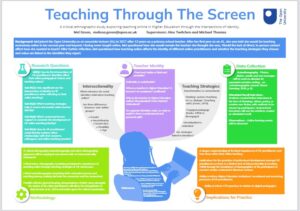
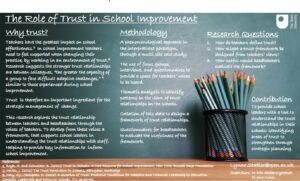
Congratulations to the winners of the second Open University WELS Professional Doctorate (EdD and DHSC) Poster Competition, 2022. Poster are a great way to represent your research creatively using images, shape and colour.  

Mel Green, Teaching through the Screen in 3rd place

Lynne Stabler, The role of Trust in School Improvement, in 2nd place

Jon Leer, The practice of Seclusion Room Use in Secondary Schools, in 1st place

Finding Your Space

Finding Your Space 

Photo by Marián Šicko from Pexels

‘There is no gate, no lock, no bolt that you can set upon the freedom of my mind.’ 

― Virginia Woolf, A Room of One’s Own 

Some people can write anywhere, in coffee shops, in hotel reception rooms, in parks on a sunny day, or wherever they find themselves in their free time. However, this kind of freedom is not universal, and many people find themselves restrained by their emotional and occupational responsibilities and a lack of physical space.  


I have been a better writer since I have had an area to write and keep my writing tools, such as my books, notepads, computer (with two screens), printer, large desk, and comfy chair. These are all things that I find are necessary for me to get anything worth reading written. However, I have only had this space since one of my children moved out. Before then, I would set up my computer wherever I could, in the kitchen, in the garden, on the sofa. The problem was that people would be in and out, the television would come on, the door would ring, and my thoughts and writing would be continually interrupted. Being a writing nomad led me to waste precious time. I was constantly losing things, and the disturbances would make me lose my thread and procrastinate. I would usually have to go back to the beginning and start again. Another, probably more serious, issue of not having a proper place to write was that the inadequate seating gave me back problems. Nowadays, I have an ergonomic writing chair, but alas, the damage is done, and so I urge you younger academics not to take your health for granted.  

Unfortunately, it is not easy to find a solution to this issue. Years ago, I cleared out a tiny store-room/cupboard and used that, but the lack of windows gave me a headache. I know other people who have done the same thing. Rowena Murray suggests that it might be more productive learning to write at the doctor’s, dentist’s, on a coffee or lunch break and so on. Tara Brabazon agrees that we do not need expensive equipment, but we do need our own space. Virginia Woolf highlighted this issue in 1935 with her iconic essay A Room of One’s Own, which pointed out the difficulties many women had both metaphorically and physically relating to the lack of independence and physical space. Society has changed since then, but privacy is still an issue for many people.  

My question is, how and where do other people write? How many people can genuinely compose their thoughts and create wherever they find themselves? It would be great if other people could share their ideas and experience on this matter.  

Dr Lesley Fearn @lesleyfearn

I recently achieved my EdD regarding learning and teaching English as a Foreign Language (EFL) using online community projects in secondary schools. This interest stems from more than thirty years of experience teaching English (as a Foreign Language) and English literature in state schools in the south of Italy. During this time, I have continually experimented with new approaches and techniques, especially with technology, to motivate students in their schooling. Other areas of interest include Fine Art and English literature that I studied as a BA and MA. As far as research is concerned, I am particularly interested in Action Research and sociocultural paradigms.

Reconceptualising how social workers learn in the workplace

Photo by cottonbro from Pexels

Rhetoric, guidance and regulation have shifted over time to firmly acknowledge all modes of learning as valid for social workers and other professionals. Much is said about recognising formal, informal, self-directed and even incidental learning for continuing professional development. However, reliance on, and value ascribed to, direct training, or organised learning activities are the default for many. There remains in my view a response in policy and organisational responses, to specific professional issues, a drive for tangible, measurable and visible learning opportunities of this type. The problem resulting from this is that some of the most significant learning experiences that social workers have can be the least acknowledged or valued. 

There is an understandable dilemma for those involved in supporting social workers’ learning at local and national levels. Social work as a profession, role or task is characterised by multiple ambiguities. There are well documented challenges to how social work is articulated. Roles are multiple, diverse and dynamic. Every task has within it myriad sub-tasks that are often superbly complex and difficult to describe. If the role and task is difficult to describe, articulating how and what a social worker learns is more so. Further to that, planning how to facilitate or support that learning needs to wrestle with those ambiguities.   

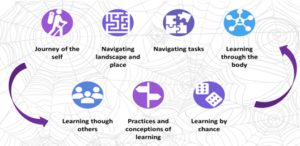
My recent research into the lived experiences of social workers’ learning through work led to me reconceptualising what is involved in workplace learning for social workers. Learning within this context is a complex web of key elements and interwoven threads, each web unique to the individual social worker. In terms of workplace learning, there are rich and diverse opportunities for social workers to learn through the direct work that they do. The study highlights that learning in social workers’ workplaces can be incredibly potent in relation to the kind of work they are doing, yet it is not a primary focus in planning for continuing professional learning.  

Social workers’ learning in the workplace as a complex web (Ferguson, 2021) 

Possible solutions to supporting workplace learning for social workers include acknowledging the intensity of the emotional and embodied aspect of social workers’ learning. Learning through direct work with real people who use services is also absolutely vital. Direct practice equips social workers with the kind of learning opportunities that they need to undertake the job they have. We need to understand and value learning through work tasks and consider how we allocate tasks to social workers that optimise learning.  

The question is how can understanding the nature and complexity of individual social workers’ experiences help us design more effective workplace continuing professional learning opportunities. As part of this how do we increase the value and recognition of the kinds of significant learning that happens for social workers in their everyday work.  

You can find out more about the research and findings here “When David Bowie created Ziggy Stardust” The Lived Experiences of Social Workers Learning Through Work (Ferguson, 2021).  


Dr Gillian M. Ferguson

I’ve worked in diverse settings as social worker, community learning worker and various other roles in practice, HE and learning/development. Keen to be inspired and inspire others to learn. My doctoral research explored lived experiences of social workers learning through work.

@learnventurer

Talking about your research – your take away message

The delightful Mr Grebo

Talking about your research

As a PG researcher, you will inevitably have to give presentations on your research. An opportunity came up in July for me to do just that with an international group of doctoral students as an audience. Hosted by Liverpool John Moores Centre for Educational Research, I recommend you take a look.

Although I had only just completed my 1st year and so had not yet carried out any research, I was still excited to share my many ideas and thoughts.

This was the problem! How to condense a complex subject I really care about so that I can share something interesting with people who nothing about my topic or context. In about 15/20 minutes, when I had enough trouble cutting my summative assessment on the subject down to 10,000 words.

Scene setting

I needed to introduce myself and provide enough about my context that the audience could appreciate the situation. This was the (relatively!) easy part; a bit about me and my background and then linking into the work I am researching with a few headline statistics showing its scope and scale.

Narrowing the focus

Then came the hard part; deciding what to focus on – what the simple “message” was that I wanted the audience to take away with them.  I decided at this early stage my message should be

I am researching if we can use predictive analytics in Toastmasters.

We have all sat through presentations or speeches where the focus is unclear because the speaker wants to tell you everything or doesn’t really have a clear idea what their message should be. My focus was so that if someone in the audience was asked, “what was that talk about?” they could respond with that one simple message.

Content

I decided that I would use a piece of work I had recently done as the basis for my presentation. My summative assessment began with a literature review and ended with my research questions.

Constructing the narrative

Clearly, a well-constructed, academic literature review is too complex to get across in a presentation, but this is not my intention. In my 15/20 minute presentation I just want to get across my one simple message.

I approached this by working backwards.

  • What do you want the audience to know?
    • I am researching PA in Toastmasters
  • How do you get them to that conclusion?
    • Show how my journey led me there
  • What were the key steps/milestones?
    • The research gaps I found
  • How did I find these?
    • Key findings/discoveries (studies) that led me there

Remember less is more! You are just trying to get your audience to remember your one message. Do not overcomplicate as they won’t be able to process it.

If you were asked to present on your research tomorrow, what would your central message be?

You can see a recorded version of my presentation  here.


Written by

 Selina Griffin @Psylina

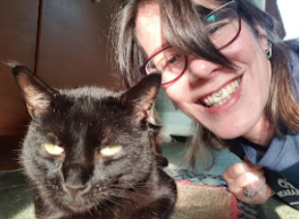
After completing my BA (in Classics) in the usual way at a bricks and mortar university, I discovered the Open University and completed an MA. Years later after some soul-searching, I switched fields and completed an MA in Online and Distance Education which has led to me pursuing my EdD in the realm of learning analytics. I am fortunate enough to now also work for the Open University. I also have my own personal blog where I discuss my research, running and my cat @MrGrebo

Engaging Distance Learners in an Academic Community: Student Hub Live

Photo by Ingo Joseph from Pexels

Congratulations to Dr Karen Foley for successfully competing her doctoral thesis. You can read it here: Engaging Distance Learners in an Academic Community: Student Hub Live – Open Research Online

This is the abstract.

Abstract

In higher education (HE), studies of effective practice relating to student retention, progression and attainment suggest that student engagement is a major factor in terms of success, and this involves a sense of belonging to a community. Studies have identified initiatives that have proved successful in traditional HE contexts, however ideas of belonging and community are problematic when translated to distance-learning contexts. Many distance-learning students, who are often mature and part-time learners, appear to be successful in their studies without identifying as a student or interacting socially with others, which calls into question the way in which belonging is conceptualised in distance-learning settings. The focus of this research was to identify the value of attending specific, live, online, interactive events at Student Hub Live (SHL) which were designed by the Open University to facilitate academic community and to provide a space outside of the curriculum for students to socialise and perform other aspects of student identity that require interaction with others. Using an ethnographic approach and grounded theory methods, chatlogs of four SHL events were analysed and the emergent themes informed semi-structured interviews which were carried out with six participants, all of whom had attended SHL events. Both sets of findings were combined and further analysed using thematic network maps. The finding was that communities of practice with shared repertoires enabled students to feel a sense of belonging through participating in discussions which created a conducive learning environment to develop skills, share experiences and feel validated. Community and belonging enabled students to deeply apply learning to their studies through sharing the experience and their experiences with others. In this sense, belonging and community matter to distance-learning students but for different reasons than for face-to-face students. The findings are relevant to other distance and face-to-face HE providers who are keen to engage students in virtual extracurricular spaces to support learning and facilitate community.

What do I mean by participants’ perspectives: do I take their word for it?

The context

When I began my EdD studies, as an OU insider researcher, I knew that I wanted to explore multiple perspectives around feedback practices and to focus non-judgementally on participants’ own perspectives.

Feedback emerges as a concern throughout the literature Carless et al, 2011 and amongst colleagues.  Empirical studies and pedagogical discussions around feedback practices tend to focus on one perspective, usually students’.  I aimed to consider all perspectives, without foregrounding one, a challenge from my ‘insider’ position Hellawell, 2006 as an OU tutor of many years.

In considering which perspectives were essential to explore to understand feedback practices within this context, three distinct participant groups emerged clearly in terms of their allocated roles within the feedback process.  These comprised those who study and pay for tuition (students), those who facilitate and deliver a pedagogical service by working directly with students (tutors) and those who design and write the module and monitor the process of its delivery and assessment, manage staff and appoint tutors (central academics).


Further, the literature tends to take a ‘problem/solution’ approach and in so doing makes prescriptive recommendations about how participants ‘should’ behave, such as what tutors should be trained to do, to make feedback effective Wakefield et al, 2014I wanted to explore perspectives without imposing solutions to identified ‘problems’, considering multiple viewpoints, rather than a single dominant one.

In order to stand back, to be non-partisan, I chose a broadly ethnographic methodology, informed by the principles of being exploratory, interpretive and concerned with context Blommaert, 2007.  I elicited participants’ perspectives via their questionnaire responses and semi-structured interviews conducted via telephone.

My problem

Although being an insider meant, to an extent, I was a participant, my in-depth exploration of participants’ perspectives through their own accounts did not meet ethnographic tendencies to use the multiple methods of data collection Lillis, 2008 available, such as actual tutor feedback.  I did not view events in situ, like Tuck’s ethnographic study Tuck, 2012, considering the context of tutors’ feedback production.  Yet, I could not see how to achieve this immersion in the lived experiences of participants, without imposing, as I saw it, my interpretation of their actions; I wanted to stay with participants’ own accounts of their perspectives.

Two alternative solutions

I considered identifying a case study of one student/tutor experience to allow me to explore observations of behaviour and associated documents alongside my data from semi-structured interviews and open questionnaire questions.

Another option was to stay true to my original intention and to continue to focus on an in-depth exploration focusing only on my participants’ declared perspectives.  This is what I chose to do.

My question/s

Therefore, what do I/we mean by participants’ perspectives?  What leads to the greater ‘truth’, to rely on participants’ own accounts, inevitably filtered through the researcher’s lens, or must we make potentially intrusive ‘checks’ on what participants do in practice to achieve an in-depth exploration of their perspectives?

by  Dr Jane Cobb

I have been an Associate Lecturer at the Open University since 2002, tutoring mainly English Language modules.  I live in Stourbridge in the West Midlands with my husband, two adult children and three Romanian rescue (street) dogs.  My recent EdD and my current research interests concern the multiple perspectives around feedback practices around assessed writing in HE.  This is my first venture into blogging, and I am looking forward to this creative space, where colleagues can share, debate, and discuss issues arising around their research.

Academia through the lens of a secondary school teacher

Students working on a professional doctorate such as an EdD usually have to juggle work, family and study. It is not an easy task because, as practitioners, research is a whole new area, and we have less time to come to terms with it than our PhD peers. On the other hand, we have the knowledge and expertise of our practices that no one outside of them could have. Of course, in principle, combining theory and practice would be ideal for research, but in reality, combining the two presents a myriad of problems.

My transition into academia was challenging because of a long career in teaching in secondary schools. Having completed my EdD, I can now see that Action Research (AR) has been critical in my EdD journey as a researcher, guiding me in the correct direction for each mistake I made (and there were many).

The two reasons that AR helped me were:

  • AR follows a spiral of iterative steps encouraging the researcher to reflect upon the research process and observe it from an outsider’s point of view;
  • The research questions arise directly from practice rather than from the literature, as with more theoretical studies and allows for change, modification and progress in all areas, including the research questions.

Although there are many kinds of AR, my research focused upon two collaborative methods:

  • Participatory Action Research (PAR) is a large-scale study aiming at emancipation and change within organisations or communities (Cresswell, 2003).
  • Collaborative AR is when the researcher and a group of like-minded colleagues work together, often (and in my case) as research participants.

For example, I used Burns’s (1999) eleven-phase spiral framework when I needed a detailed analysis, and Altrichter, Kemmis, McTaggart and Zuber-Skerritt’s (2002) four-phase one when I needed a more comprehensive summary of what was happening

Using the AR methodology to organise notes and findings regularly throughout my research clarified what was happening and the best course of action. Measures included changing research questions, discarding unnecessary data and even changing the method of data analysis from a case study to a multiple case study towards the end of the study.

In conclusion, combining research and work has not been easy, but the most challenging thing was to perceive my practice through the eyes of an academic and not a teacher. In my experience, together with my excellent supervisors, AR was the solution. What challenges have other practitioners come across in their quest to combine work and research?

We would be grateful if you could let us know by sending a blog post to: [email protected], please put BLOG as your subject.

by Dr. Lesley June Fearn @lesleyfearn

I achieved my EdD in 2021 regarding learning and teaching English as a Foreign Language (EFL) using online community projects in secondary schools. This interest stems from more than thirty years of experience teaching English (as a Foreign Language) and English literature in state schools in the south of Italy. During this time, I have continually experimented with new approaches and techniques, especially with technology, to motivate students in their schooling. Other areas of interest include Fine Art and English literature that I studied as a BA and MA. As far as research is concerned, I am particularly interested in Action Research and sociocultural paradigms.

Congratulations: Dr Stafford

Celebrating Dr Mary Stafford’s successful completion of her doctoral thesis.

Doctoral researchers abroad: negotiating language and identity in a multilingual context

colourful balloons and ribbon to say well done
Photo by Gaelle Marcel on Unsplash

Abstract

This research explores how language and identity are negotiated by study abroad doctoral researchers originally from China, Brazil, Iran and Ukraine whilst studying in France. The research questions investigated the language choices made in the contexts encountered by the SA doctoral researchers, how these choices were negotiated and the potential impacts of the use of both French and English on their identities.

To address the three research questions posed in this study I have used a case study framework to explore the SA doctoral researchers’ use of language, their possibilities of negotiation of language choice as well as how these experiences impact their identities using both emic and etic perspectives. A framework was developed from the literature review, using Bourdieu’s concepts of social and linguistic capital as well as habitus. Byram’s work on intercultural awareness was also of relevance, as was Lave and Wenger’s legitimate peripheral participation. For identity the Block, Norton and Ting-Toomey’s work provided a framework. A series of three semi-structured interviews were undertaken with SA doctoral researchers on an individual basis as the main research method, research with further individual interviews with supervisors to explore the questions from another
perspective. Other methods included questionnaires and observations of language use in context.

The findings show the uses and potential linguistic capital for both English and French often vary depending on the community, affecting access, even with the same members participating and impacting on identities. This can influence the investment of the participants in both languages and ultimately their experience in France. To improve participation SA doctoral researchers should learn a minimum of the local language prior to undertaking three years of study in a non-English speaking country. Investment in social English for local and study abroad doctoral researchers could contribute to better understanding through third space and communication.

You can read Dr Stafford’s Thesis here: EdD mary stafford.pdf (open.ac.uk)

Congratulations to Dr Gill Ferguson

Photo by katy hardman on Unsplash

Congratulations to Dr Gill Ferguson for the successful completion of her EdD Thesis

“When David Bowie created
Ziggy Stardust”
The lived experiences of social
workers learning through work


Abstract

The findings from this qualitative study sit at the intersection of knowledge about
workplace and professional learning, offering new insights into how social workers
learn through work. The study explored the unique lived experiences of social
workers’ learning through an Interpretative Phenomenological Analysis (IPA) study
(Smith et al., 2009).

IPA was selected to focus on the nature of the social workers’ lifeworld and their
lived experiences of learning in the workplace. In-depth individual interviews
gathered rich descriptions from sixteen social workers. The double-hermeneutic
cycle, a feature of IPA, explored the meaning that the social workers drew from
their experiences and the researcher making sense of the participants’ sensemaking. Individual and unique experiences of the participants were explored,
generating themes for the social workers through an immersive process of
analysis for each case in turn.

Superordinate themes were then identified across the group that revealed the
complexity of social workers’ learning experiences. These were, Journey of the
self; Navigating landscape and place; Navigating tasks; Learning through the
body; Learning through others; Practices and conceptions of learning; and,
Learning by chance. These aspects of the social workers’ lived experiences weave
together in a complex and enmeshed web, each thread connected to the others as
part of the learning process. Striking metaphors were used by social workers to
convey the meaning they associated with their learning in the workplace.
The thesis shows the nature and complexity of individual social workers’
experiences and how understanding these can help design more effective
workplace continuing professional learning opportunities. Drawing on rich
theoretical ideas from phenomenology and workplace learning, the thesis offers a
hybrid conceptual web model for social work professional development. This model acknowledges the unique experience of social workers within a complex
context involving navigation of task, place and embodied learning.

You can read Gillian’s thesis here: Gillian Ferguson theses.pdf (open.ac.uk)


Dr Gillian Ferguson @learnventurer

I’ve worked in diverse settings as social worker, community learning worker and various other roles in practice, HE and learning/development. Keen to be inspired and inspire others to learn. My doctoral research explored lived experiences of social workers learning through work.

@learnventurer

Linkedin