
Photo by Siora Photography on Unsplash
“It’s not just that we are somehow morally weaker for using AI to do our work for us, but we will be the lesser for it. On a large human scale, human knowledge will be lesser for it; we are not going to be creating new things because large language models only know about the stuff that is already out there.” Sophie Scott, BBC ‘A Good Read’ podcast.

This quote was a reaction to people using AI to summarise texts they did not want to read or did not have time to read. It made me think of my earlier blog, Print or digital: that is the question, which I wrote in response to Pat Thomson’s thought-provoking post, “About the unread.” At the time, I was interested in access, format, and abundance, but this quote led me to reflect upon not how we read, but whether we persist in reading at all.
The issue: Are we justified in stopping reading
When I was younger, books were expensive, less available, and harder to replace. If I started a book, I tended to finish it, sometimes out of stubbornness, sometimes out of guilt, and sometimes because there was simply nothing else to read. Persevering with a text I did not immediately enjoy was normal, and I was usually able to enjoy what I was reading for some aspect or another anyway. However, as I get older, time has become more precious, and the vast abundance of texts, digital articles, books, reports, and novels means that not finishing feels less like failure and more like selectivity. In fact, when a text does not engage me, I increasingly feel entitled to stop and ask AI to summarise it for me. These summaries are efficient, pragmatic and time-saving. However, Scott argues that creativity is born from texts we struggle with, and that if we bypass that conflict, we lose the most essential part of what makes us human: our personal, unique interpretation.
Solution 1: AI as a legitimate tool for selective survival
Firstly, should we accept AI summaries as a rational adaptation to contemporary academic life? Reading everything in depth is no longer feasible, and strategic skimming has long been part of scholarly practice. In this sense, AI simply accelerates an already familiar behaviour, as noted by Baron (2015), who argues that skimming and summarising have always been part of academic practice. From this perspective, AI tools allow readers to manage overload and prioritise what deserves deeper attention. For scholars balancing teaching, research, administration, and care, AI can function as a filter, not a replacement for reading, but a way of deciding what is worth reading and what is not. In this way, and used critically and transparently, AI could help us survive abundance without drowning in it.
Response 2: Reading as creative misinterpretation
On the other hand, Scott argues that creativity does not emerge from efficiency but from conflict. She points out that reading is not a neutral act of extraction, but it is interpretative, emotional, and often messy. Indeed, when we misunderstand a text, we read something into it that the author might not have intended. This misinterpretation can be considered creativity (Wolf, 2018). Therefore, when we struggle with unappealing or difficult texts, we are not failing but creating meaning. Additionally, Scott says that when AI summarises a text for us, it not only removes productive misreading but also delivers clarity without confusion, coherence without resistance, and excludes the reader’s imaginative labour. It is this labour where new ideas, connections, and even writing voices are formed.
A question to readers
So, my question to you is, in an age where texts are endless and time is not, how do we decide what deserves to be read and what can be safely summarised? And more provocatively, what kind of reader, writer, and thinker are you?
Blog written by Dr Lesley Fearn
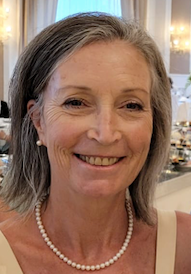
Dr Lesley June Fearn is a secondary school English teacher in southern Italy. She is also an affiliate researcher at the Open University’s (UK) Faculty of Well-being, Education, and Language Studies (WELS), where her research centres on linguistics and sociocultural theory.