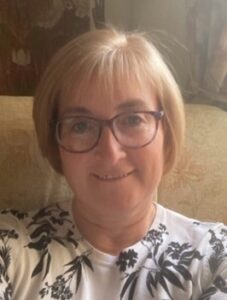

As an experienced social worker and lecturer in social work education, I am very comfortable with the requirement of both self-reflection (asking thoughtful questions about self) and reflexivity (asking thoughtful questions about self and others) (Finlay in Kalu 2019:97). Indeed, to some degree the process of considering my practice and how it impacts others feels like a skill that is built-in to who I am – I am a deep thinker who considers what something might mean for me or someone else.
Problem: the risk of a tick-box approach to self-reflection using known theories
Due to the familiarity of self-reflection, I was blasé about what it would mean for myself as a researcher. The requirement didn’t faze me; it all seemed routine because I have practised and taught it many times! Donald Schön talks about reflection ‘in-action’ and ‘on-action’, and reflection ‘for-action’ has been added more recently. I was happy to engage in this reflective process – before, during and after my research.
Kolb’s model provides a helpful reflective cycle which moves from concrete experience, reflective observation and abstract conceptualisation to active experimentation (Kolb 1984). Yet, often, students inaccurately apply this model to their practice; they aren’t specific enough with the experience and then spill off in different directions, possibly because they have more to say than the confinements of this logical model. Neither practice nor research is neatly cyclical, and a more honest illustration of self-reflection might be a page of colourful scribble or a tangled ball of wool.
My preference is to use Gibbs’ reflective model (1998). Although still cyclical, it points explicitly to considering personal feelings as a discreet element, and it is accessible and straightforward: description, feelings, evaluation, analysis, conclusion, and action plan. However, these approaches didn’t inspire me. Therefore, in my methodology section, I felt I was simply responding to a requirement to cover these topic areas rather than investing in the process. That is until I found Peshkin…
Solution: an alternative approach to self-reflection
Peshkin’s article is worth a read (Peshkin 1988). He explains how he, as a researcher, could personally impact the research process and outcomes in different ways and moments. He documents his ‘subjectivity audit’ and coins the term ‘Subjective-I’ to describe how different elements of his ‘self’ impacted his research (Simons 2009: 81).
I allowed my self-reflection to be guided by Peshkin: to look for the ‘warm and cool spots, the emergence of positive and negative feelings’ (Peshkin 1988: 18) and to honestly connect with my personal qualities which may have the capacity to ‘filter, skew, shape, block, transform, construe and misconstrue what transpires from the outset of a research project to its culmination in a written statement’ (Peshkin 1988: 17). This approach seemed simple and honest:
- Embrace the gut reaction and follow the physical sensations to locate positive and negative feelings;
- Consider what these feelings might mean for me as the researcher;
- Consider what these subjective elements might mean for my research process, participants, and outcomes.
Solution: examples of Subjective-I’s in practice
Two articles assisted my understanding of Peshkin’s approach to reflexivity, particularly as a practitioner-researcher. As a physiotherapist researcher, Kalu shares his ‘multicultural-I’, ‘holistic-I’ and ‘professional-advocates-I’ (Kalu 201). His article is helpful because he considers his research interest, theoretical approach and research question (Kalu 2019: 99). Secondly, Bradbury-Jones et al. (2009) present a collaborative study between lecturer and nursing students, providing excerpts from student reflective diaries which include illustrations explaining the ‘angry-I’, ‘impatient-I’, ‘invisible-I’ and ‘passionate-I’.
As a practitioner-researcher planning to offer a series of workshops to social work students to introduce them to a self-help tool called Emotional Freedom Techniques (EFT), this new find appeared as a good fit for my developing research. It allowed me to own my feelings, and I soon had to start my own ‘subjectivity audit’: ‘overwhelmed-I’, ‘responsible-I’, ‘vulnerable-I’, ‘creative-I’, ‘collaborative-I’. Rather than keep a reflective diary, I decided to chronicle my research journey using this audit tool, which I could add to as my research evolved.
“Question: How important is it to align your method of self-reflection with your research topic area and your attributes as a researcher? I am pleased to have come across a process that is a good fit for my research topic and design, but I wouldn’t have consciously thought to look for a sense of alignment.”
Blog written by:
Jo Strang is a Staff Tutor in Social Work at the OU and a second year EdD student. Jo is qualified as a social worker, reflexologist and Emotional Freedom Techniques (EFT) practitioner and has worked in Higher Education as a lecturer since 2010. Her research combines her professional interests and aims to explore social work students’ experiences of learning about EFT, a self-help tool often more easily referred to as ‘acupuncture without needles’. This simple tapping technique can reduce the fight-flight response to situations we experience as challenging and assist in processing a variety of emotions.
 Artificial Intelligence (AI), notably




 The OU’s conference on professionalism and posthumanism fascinated me as someone who has worked in campaigning around literacy and education in England and Scotland. I now work in early years practice while pursuing an education doctorate. During this time, I have witnessed policy changes come and go. Despite the frustrations of governments and institutions, I remain optimistic that we can work through them because we have to, especially with the looming challenges of the climate crisis. In my experience, the short-term illusion that the neo-liberal world offers can be alluring, but there is no silver bullet to anything. I have been influenced by Vivian Gussin Paley’s (reference) storytelling approach to literacy, which is subtle and complex and has stayed with me much longer than England’s national literacy hour policy. Therefore, the problem I focus on is balancing the demands of professionalism and posthumanism in the early years’ sector.
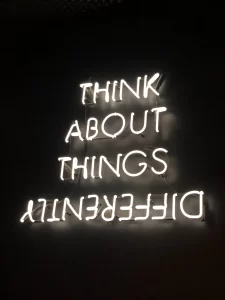 I am now at the end of Year 2 of my Professional Doctorate, and whilst I have learned loads about methodology, methods, literature searches, alongside this has been a very significant personal learning journey. I realised in the October of my first year, because of many posts on Facebook for ADHD awareness week, that I had an ADHD brain. An absolute clanger at the age of 48 years, but all suddenly made sense! Time blindness, executive functioning difficulties, procrastination, emotional dysregulation, poor working memory were all things I could identify with and
 I am a first year, full-time PGR student in the IET school. I am an autistic researcher, and my focus is to investigate inclusive provision and support for autistic students in higher education. I first studied with the OU in 1980 and since then gained my B.Ed degree and worked as a Primary school teacher, Early years co-ordinator, and staff development manager. After a gap of almost 20 years I enrolled for PG study with the OU in online and distance education before applying for a place as a PGR student.
 Youth mentoring, where young people (mentees) work with adult mentors to achieve change, is a popular government and third sector intervention. Past research, concentrating on quantitative analysis of US programmes, concludes that mentoring achieves significant but modest change. Such research assumes that changes from mentoring can be externally identified and measured, often without hearing the views of those involved.