We have reached Phase 2 of our seed funded impact project; on time and budget. (Have a look at my previous post for an overview of Phase 1.) This progress is very pleasing for all the obvious reasons but also because it has been fairly straightforward so far. In our mini-team, we identified appropriate sites and site managers to target with our first phase of requests for interviews. We also had a good round of emails working out which questions to ask and in what order. We got ethical approval from the university and set out the email that we would send to interviewees to explain the background to the project. And we have now invited our first phase of interviewees.
Imagining scientists in popular culture
By Francesca Brooking and Nicole Luwaca
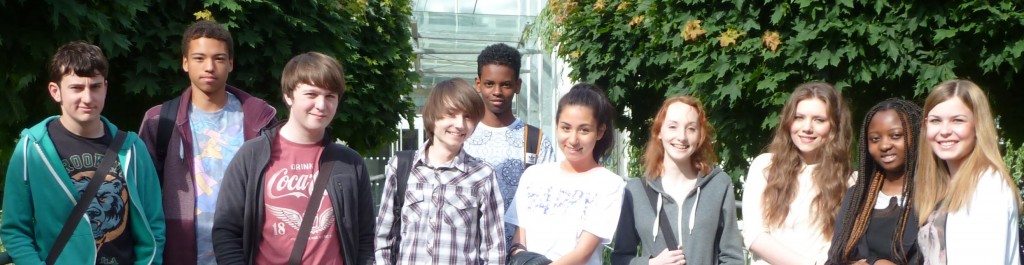
Back in July this year, we were part of a group of ten students selected to participate in a week long attachment at the Open University. Our aim at the start of the week was to produce two short films, exploring how scientists have been represented in popular culture. To do this, we split into two groups; each group produced one film.
‘Science in the making’: the BBC’s first engagement with engagement?
In spring 1931, the BBC transmitted six weekly radio programmes, under the title Science in the Making, as part of its adult education provision.
Each week a different scientist outlined his area of research, and in five cases invited listeners to report their observations of phenomena described in the programme.
Topics included the factors affecting the start of breeding season of birds, the advance of the grey squirrel in Britain, the perception of sound, and the pervasiveness of certain types of dream.
Science in the Making was thus an early venture into ‘citizen science’ and one broadcast led to an academic-journal article. This presentation gives the story of Science in the Making, and looks at a second series the following year that concentrated on social science.
Allan Jones is a Lecturer in the Department of Computing and Communications, part of the Faculty of Mathematics, Computing & Technology in the Open University.
MK students are go for launch…
Following the success of last year’s competition, July 2014 once again saw bottle rockets launching from the school field of Denbigh Teaching School in Milton Keynes.
Four teams of six year 9 students, each representing a different Milton Keynes school competed on the day to build two successful rockets 2 litre plastic bottles and simple craft materials.
I was working on the competition as one of the organisers, working with a team that included: Richard Holliman, Ben Dryer, Vic Pearson, and Diane Ford from the Open University, Mark Russell and Val Hawthorne from Denbigh Teaching School, and Jessica Carr who was working as an intern.
Here’s how the day went…
San Francisco calls: please vote for us
As postgraduate researchers at the Open University with an interest in communication and engagement, Frazer Bird and I are looking for your support. We’ve entered a video competition and we’ve been selected as finalists.
To win the prize – a trip for four people to the biggest geosciences conference in the world – our videos must receive the most likes on You Tube so we need all the help we can get.
If you’d like to know more about the type of research we do as paleoecologists, and to help one of our dreams come true, please follow the links in our post and like and share the videos. Read on for further details…
International Public Communication of Science and Technology Conference
Thanks to financial support from the NCCPE’s Public Engagement Ambassador (PEA) programme and the Santander Universities scheme, I was able to attend the 13th Public Communication of Science and Technology (PCST) conference, held earlier this year in Brazil.
The NCCPE has published my post about the conference here on their website.
Engaging religious practitioners in London
Earlier this year members of the Religious Studies department – Dr John Maiden, Professor John Wolffe and Dr Gavin Moorhead – were awarded an ‘Engaging Research’ award by the Open University for their work on the ‘Building on History: Religion in London’ project. With this in mind, now seemed a good moment to reflect on the project.
The project was a knowledge exchange initiative, running between January 2012 and January 2013, which engaged religious publics in London with recent scholarship on the the city’s modern religious history.
The story of cafe scientifique at TedX UoN

Ann Grand
I’ve been involved with Cafe Scientifique for over ten years now and supported volunteer organisers to set up cafes all over the world. Closer to home, we’ve used the cafe scientifique model to develop a series of research cafes in schools in Milton Keynes as part of our Engaging Research project.
Continue reading
School-University Engagement: What’s in it for schools?
In this post Andy Squires (Director of Denbigh Teaching School) and Helen Brown (Assistant Headteacher – Denbigh Teaching School) talk about partnering with the Open University on their SUPI Project: ‘Engaging Opportunities’.
Partnership working
It was with great enthusiasm that we partnered with the Open University to submit our Engaging Opportunities SUPI project bid, some 21 months ago, and we have accomplished so much in this time.
The life of an OU intern – Engaging Research Week 3
Week 3 of my internship on the OU’s PER Catalyst was a bit quieter, but it doesn’t mean I wasn’t busy!
Monday
I spent this day working from home. For a 21 year old this is a very novel idea and it meant that I had to have some serious self control. I have to say that it went very well though, as I hope can be seen in my previous blog.
I also got to comment on the media training film made by OU postgraduate researchers. The piece of OU research they focused on, the field network system, is a collaboration between the OU’s Knowledge Media Institute and the Field Studies Council. The videos was very high quality. I have to say the presenter, Frazer Bird, was very impressive.