The Snakes and Ladders of Social Media World Tour…
In Australia as elsewhere, researchers are increasingly facing demands to open up and discuss their research in the public sphere. The issue of ‘research with impact’ is also live here – the new National Research and Innovation Agenda includes planning for a pilot impact assessment exercise in 2017.
Milton Keynes students are out of this world
On Tuesday 12th July seven teams of Year 9 students from five local schools across Milton Keynes battled it out to win the fourth annual Water Rocket Competition.
Inspired by the OU/BBC co-production Rough Science, each team of six students was provided with the same kit. From this they were asked to design and build two water rockets, one to fly the furthest horizontal distance, the other to hit a target.
Guided by two OU postgraduate researchers from the School of Physical Sciences, Alice Dunford and Matthew Lewis, the students adapted their designs incrementally based on data collected from each test launch.
Are social media work?
Digital media are changing researchers’ roles and simultaneously providing a route for a more engaging relationship with stakeholders throughout the research process. But are they work?
Over the last couple of years I’ve been working with colleagues at the Open University (Ann Grand, now at the University of Western Australia, Trevor Collins and Anne Adams) to explore this issue and how it relates to questions of strategy, operational practices, training, support, and reward and recognition (Holliman et al., 2015).
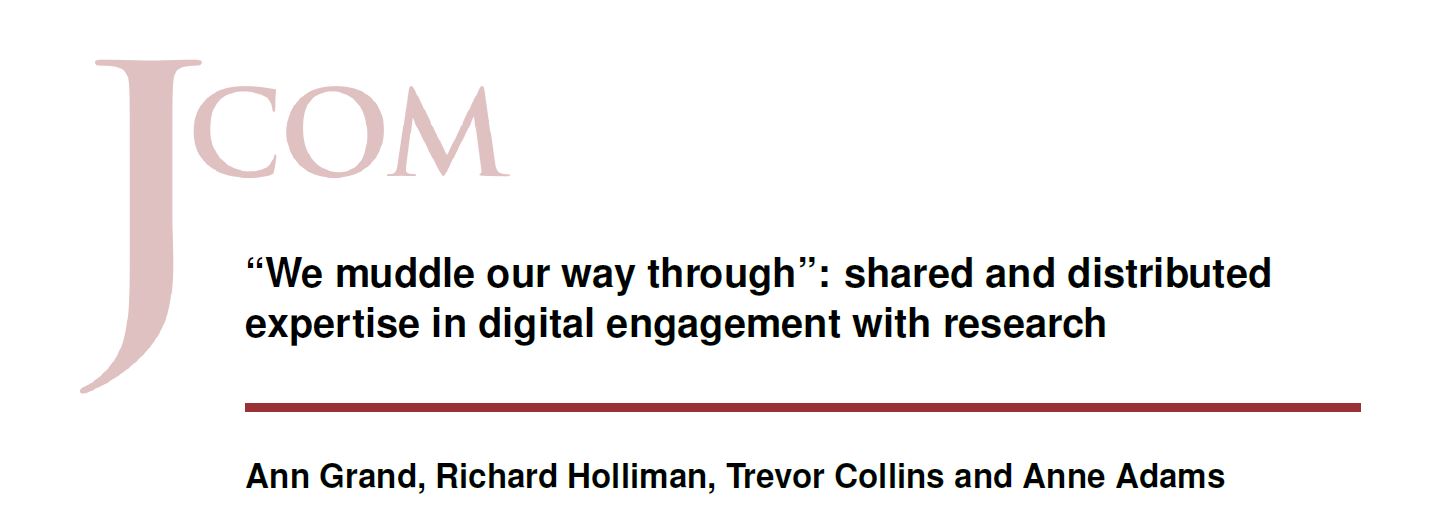
In attempting to address the overarching question of whether social media are work, we recently published a paper arising from one aspect of a project exploring how university research and professional practices are evolving as researchers engage with stakeholders via digital media to create, share and represent knowledge together (Grand et al., 2016).
In that paper we review the extent to which they are developing multiple identities and functions in their engaged research through digital media. You can access the paper from the following link:
“We muddle our way through”: shared and distributed expertise in digital engagement with research

“We muddle our way through” (Grand et al., 2016)
What have science communication (and engagement) ever done for us?
“What have the Romans ever done for us?” John Cleese’s famous line from Monty Python’s Life of Brian is a question that has resonated with me over the last couple of weeks.
Back came the answer, “The aqueduct.”
“Oh, yeah, yeah. They did give us that.”
“And there’s sanitation…”
You get the picture.
Why, you may ask, is Monty Python featuring on the Open University’s Engaging Research blog? You can thank the House of Commons Select Committee on Science and Technology. They recently called for evidence to be submitted to an inquiry into science communication. In effect, they asked “What has science communication ever done for us?”
Border crossings in science communication and engagement
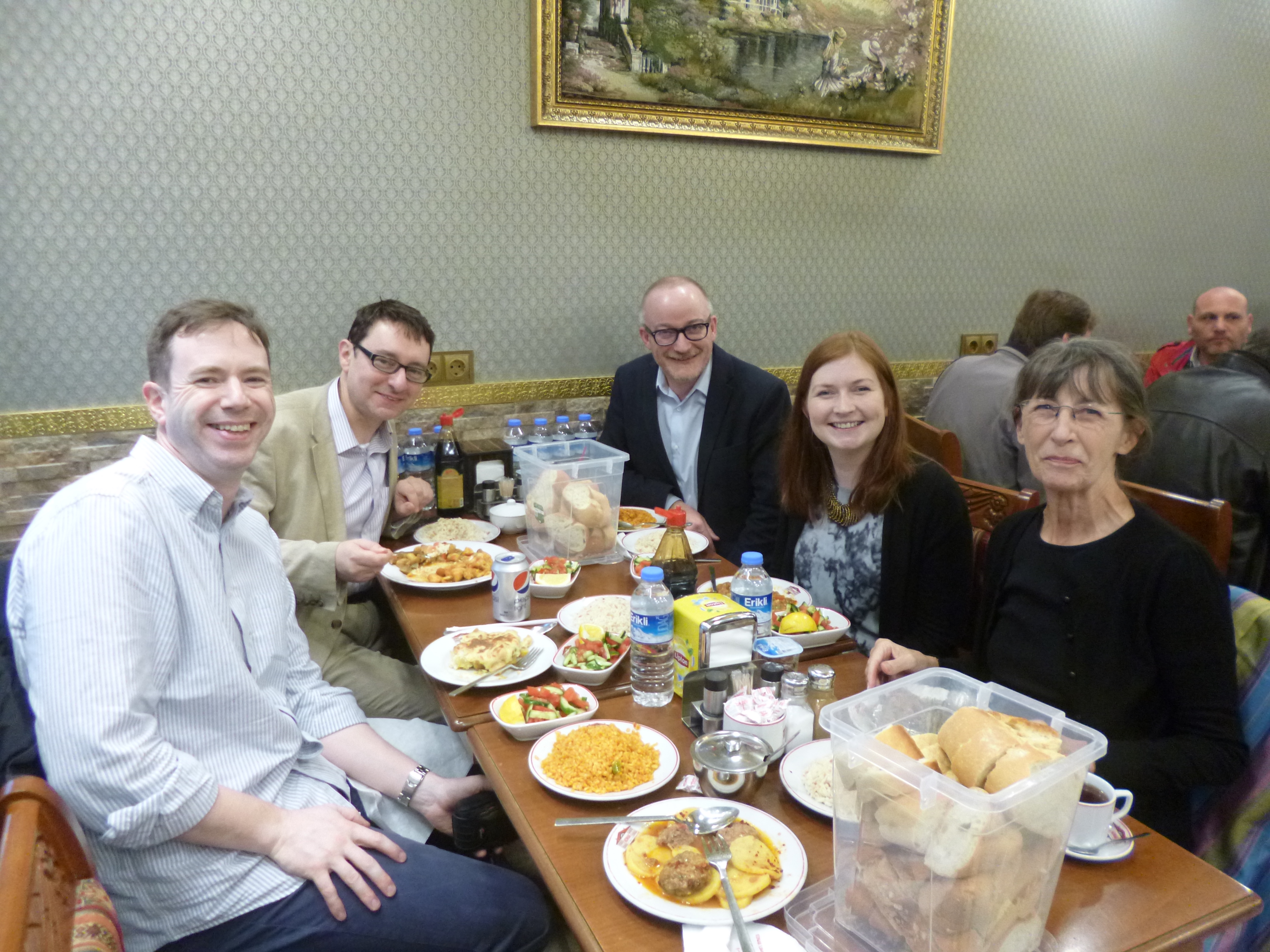
I’ve just returned from the Public Communication of Science and Technology (PCST) Conference in Istanbul, Turkey. It was, in almost every sense of the term, a most extraordinary event, organised with courage, solidarity and warm hospitality in the face of a devastating refugee crisis and political unrest.
The spirit of the conference was captured beautifully by the PCST President Brian Trench at the start of the event. “Let’s talk, let’s laugh, let’s listen”, and we did.
If you haven’t seen Brian’s opening address, you can find the text here (Opening Address).
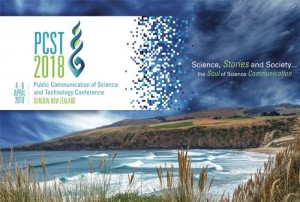
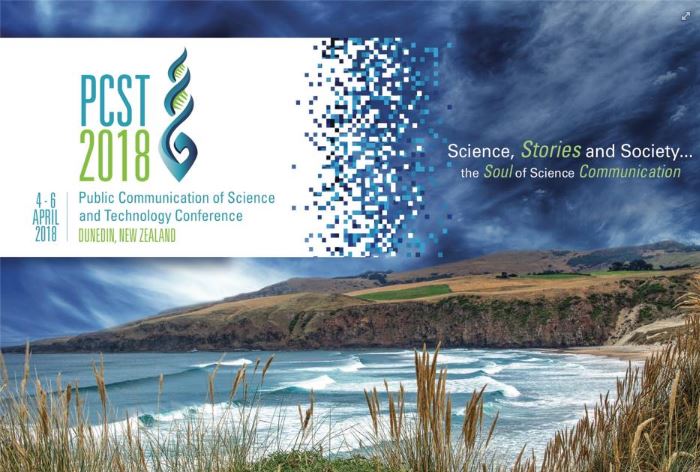
And if you think this is for you, start saving your [insert name of currency here] and come along to the 15th International PCST Conference in April 2018.
The PCST community will meet again at the University of Otago in Dunedin, New Zealand; #hugahobbit
Appropriating Social Media: Public engagement with science and technology online
Today at the Public Communication of Science and Technology conference we’ll be running a workshop on the use of social media channels to support engaged research. We’ll discuss the challenges and benefits of using social media as part of an engagement strategy, and consider the roles digitally engaged researchers adopt and the motives that drive their activities. Richard Holliman (standing in for Jamie Dorey), Ann Grand, Heather Doran and Ken Skeldon are bringing a set of example scenarios to discuss, along with related case studies that demonstrate how these challenges have been played out in practice. We’re hoping that this session will provide an opportunity to hear about the diverse experiences across the PCST community in order to consider effective practices in a range of contexts.
Resources
Supporting researchers in public engagement
On Monday morning I set off at an obscenely early hour for the PCST Conference in Istanbul, Turkey. As ever, this was an opportunity to catch up with old friends, make new ones, and share learning in science communication and engagement.
But why leave home in the middle of the night? My early start was down to an invitation to run a workshop for postgraduate and early career researchers.
Due to unforeseen travel disruptions I didn’t make it on time. I’m therefore writing this post for anyone who missed the session.
The post includes an overview of the workshop I’d planned with links to a set of resources that can be used as a self-reflection activity to assess and evidence your skills and competencies in public engagement.
Labcasts: Bringing cutting edge science to the classroom
Dr Vic Pearson led the organisation of a ‘Labcast’, connecting Open University researchers with teachers and students from Denbigh School in Milton Keynes. Vic worked on this project with Dr Simon Sheridan, Dr Trevor Collins, Dr Gareth Davies and Professor Richard Holliman from the Open University; and Jenny Hallam, Helen Brown and Mark Russell from Denbigh School in Milton Keynes.
What is a Labcast?
A ‘Labcast’ is an interactive, live web broadcast that integrates video streaming and instant messaging to enable a conversation between two or more locations.
A short video explaining the concept of a Labcast can be viewed in the short video below.
Access to ‘cutting edge’ research
Initially developed for Open University (OU) undergraduate teaching, the Labcast model offers a number of advantages:
- 1. Provides access to a working laboratory and researcher.
- 2. Provides more opportunities for curriculum links than a ‘lab tour’ format;
- 3. Does not require students to be taken off timetable or transport costs to be found.
- 4. Has fewer implications for laboratories that are heavily used.
- 5. Contextualises researchers and their science in an authentic working environment.
The Last Survivors of Hiroshima, an interdisciplinary PhD
In a recent talk at the British Sociological Association Conference at the British Library in December 2015, I outlined how I developed a research methodology which allows for the voices of survivors of Hiroshima, known as ‘hibakusha’, to be heard, and their subsequent written-up texts to be analysed within the framework of ‘coercion and consent’.
The discussion resulted in an forthcoming article tentatively titled ‘Telling the narratives of Hiroshima’ in the Auto/biography Yearbook for the British Sociological Association for June 2016.
Engaging schools with research opportunities
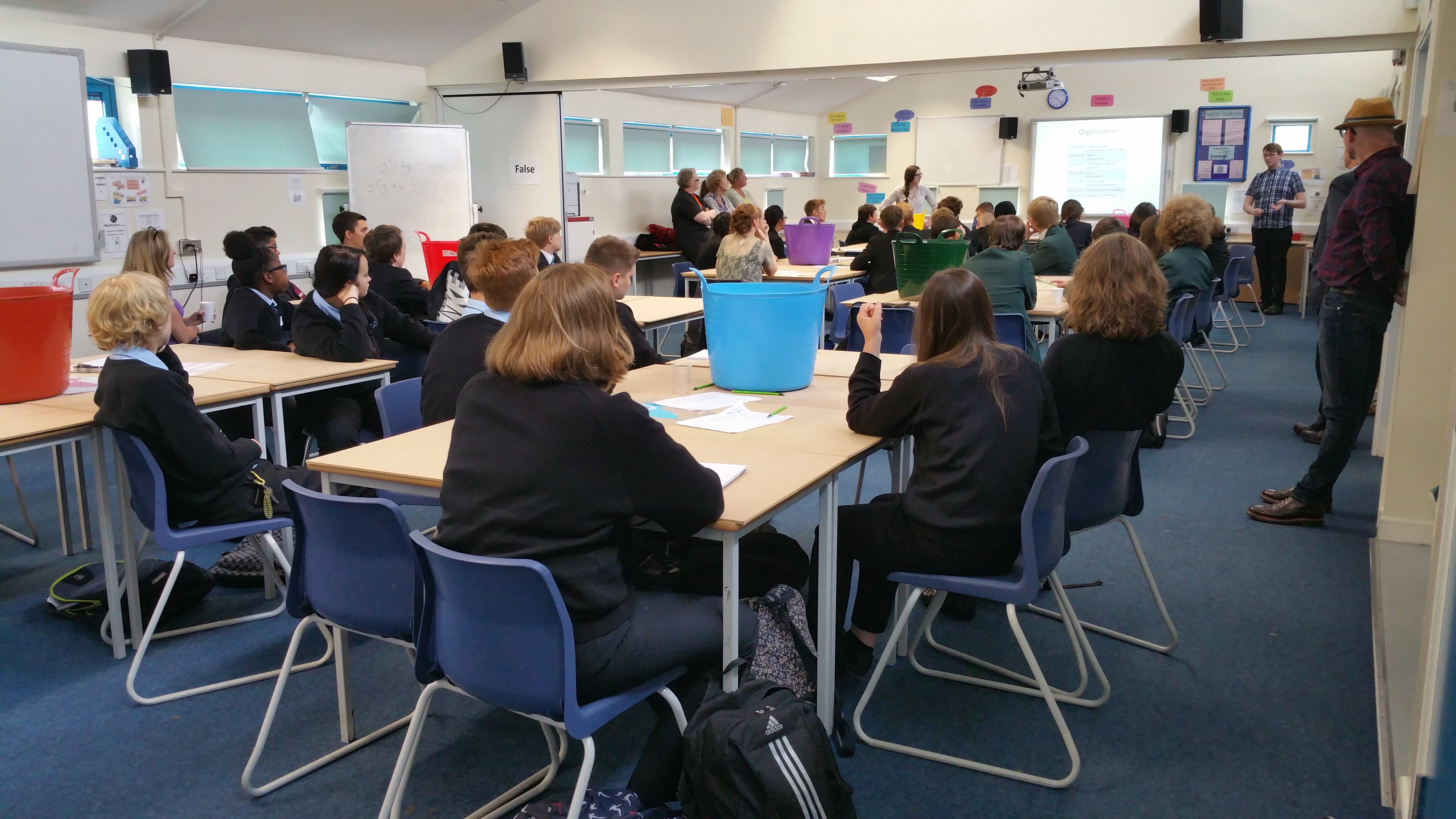
Through my role in leading Denbigh Teaching School Alliance, I’ve been overseeing the school end of the Engaging Opportunities Project. Through the teaching school, we’ve tried to engage as many schools and students as possible from across Milton Keynes in activities working alongside Open University researchers.
We want to increase knowledge and understanding of a range of research, but also of the researcher’s working experience. We want to create opportunities for young people to be inspired by research so that one day in the future, they may look back and think, “I took part in Activity X or Y with a real researcher and that made me want to….” In education, impact is often measured by results and short-term gains, but for us, the aim of this project is to plant seeds in young peoples’ minds.