Kassman essay prize 2016 – winner announced!

In Classical Studies we have an annual essay competition. The John Stephen Kassman Memorial Essay prize is an annual award based on the income from a donation given by the late Alec Kassman in memory of his son. Alec was an Arts Faculty Staff Tutor in the London Region and a contributor to Classical Studies modules. The purpose of the prize is to develop and foster study of classical antiquity in the Open University.

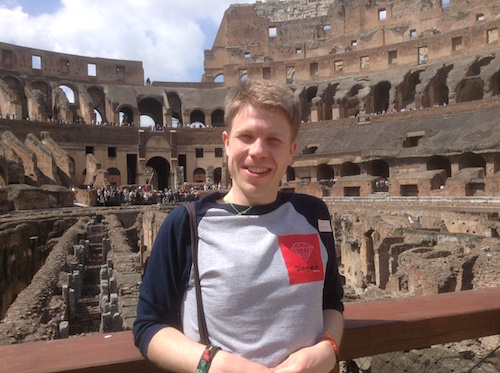
We’re delighted to announce that this year’s winner is Westley McCallum.

From Glasgow, Westley has been studying with the Open University since 2013, and is on the Classical Studies degree pathway. So far he has completed the two broad-based level 1 humanities modules, A219 (Exploring the Classical World), and A276 (Classical Latin). Westley is currently studying A330 (Myth in the Greek and Roman Worlds) and will finish his degree next year with A340 (The Roman Empire). After that Westley hopes to apply for an MA in the field of Classical Studies.

Westley tells us: ‘I have had a great experience on the OU Classics degree so far. My main area of interest, and accordingly the part of my studies which I have most enjoyed, is Roman social history. I am especially interested in uncovering voices and perspectives which have been ignored or erased; ranging from the socially suppressed voices of women, children and slaves, through to the maligned and crude elements of entertainment forms such as Atellan farce. I also have interest in Roman Scotland, particularly the Antonine occupation.’

Westley’s winning essay was centred on an analysis of one of Cicero’s letters (Fam. 7.1) in which Cicero writes to Marcus Marius about Pompey’s recent shows. The essay explored the contextual and emotional circumstances that shaped the letter, and highlighted the importance of these factors in modern reappraisals of Cicero’s work.

The annual competition is open to all current OU undergraduates, with a notification date usually at the end of June, with submission at the end of September.  This year’s winner is keen for other students to enter in future, and says, ‘For me, working on my submission for the Kassman essay competition helped to keep my essay skills sharp during the summer break between modules, and allowed me to begin developing my own interests within the field of classics. I’d encourage any and all OU Classics students to enter next year, because it is a fantastic experience.’

Warm congratulations to Westley from everyone here at OU Classical Studies.

A celebration of Mair Lloyd’s ‘Living Latin’

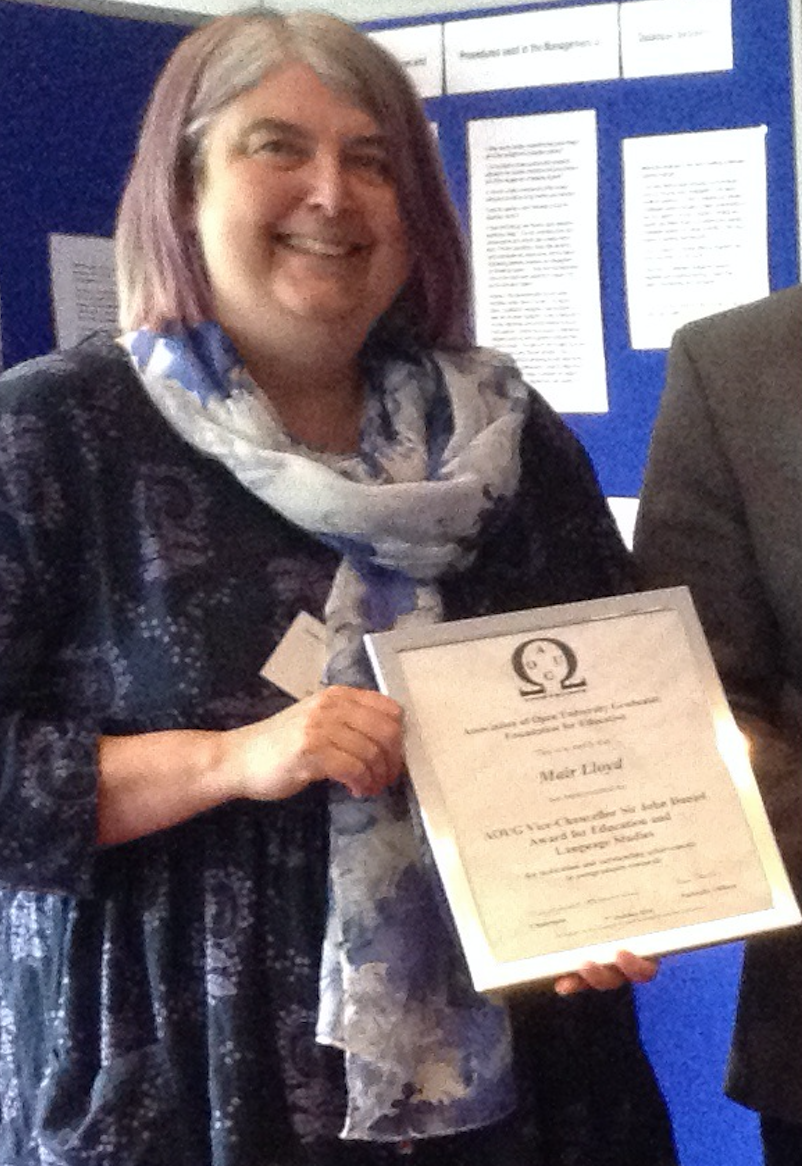
Many of you know Mair and the enthusiasm she has for reminding us that Latin was, and can be, a real language, more than grammar grind and reading a bunch of fusty old texts…! I hope you’ll join with me and Mair’s other supervisors – Regine Hampel, Uschi Stickler, Linda Murphy – in congratulating Mair on her amazing achievement of winning the prestigious AOUG Vice-Chancellor Sir John Daniel Award for Education and Language Studies (2016).

AOUGMairMair, with her enthusiasm and dedication, has bridged boundaries and brought a lot of people and ideas together. By sharing supervision between the Classical Studies and Modern Languages departments we have learned much from each other (and the ways we work with language and think about language). By asking pertinent questions in her research, Mair has made Latinists across the country aware of the value of technology for teaching and learning, and by travelling to the US and participating in a Latin immersion course as a student, Mair has herself experienced the power of Living Latin for real communication.


The award Mair has received is in the name of Sir John Daniel, an educator who has always encouraged the use of technology, and promoted learning in unconventional ways and places, so it is quite fitting! Mair’s research is about making learning better and more enjoyable. She has discovered that ‘good Latin learners’ read with engagement and with fluency, and has demonstrated that Latin is a language that can be brought to life and can be used.

‘Tweeted’ reactions to her organisation of the ‘Living Latin’ panel at the 2016 Classical Association conference in Edinburgh (for which she secured the attendance of leading exponent of Living Latin, Prof. Tunberg from the University of Kentucky) illustrate this point:

@MairLloyd‘s enthusiasm makes Vygotsky accessible even at 9am in the morning. Great introduction to the theory behind Living Latin #LL#CA16

#CA16@MairLloyd is absolutely brilliant. There are many layers to language learning. Learners can help each other in the process.

This panel on spoken Latin as a learning method (with taster lesson from Terence Tunberg) was absolutely brilliant

The Living Latin panel. It has been mind-blowing. And we all spoke some Latin!

The panel on Living Latin is so mesmerising and inspiring it is difficult to tweet… sorry! Blog to follow. #CA16

Mair’s exploration of learning to read in Latin has highlighted aspects of reading that have not been extensively explored in modern languages either  – i.e. exploring reading with comprehension in the target language without resorting to translation or checking unknown vocabulary, and reading with engagement. She has used an innovative approach to evaluation of this type of reading that includes reading and drawing.

Her research has been far more extensive than that which is presented in her final thesis, and she will be submitting a range of further papers and conference presentations outlining findings related to learning of Ancient Greek and the development of interaction and collaborative Latin learning through Information and Communication Technology.

Mair’s thesis, Living Latin: Exploring the communicative approach to Latin teaching through a sociocultural perspective on Latin learning, is an investigation of the current approach to the ab initio teaching of Latin in Classics departments in UK universities and how this aligns with the aims and aspirations of students. Drawing on Second Language Acquisition theory and practice in Modern Language teaching she has examined how the implementation of methods and activities based on a communicative approach to Latin teaching can help students to attain their ab initio Latin-learning goals. She then explored the explanatory value of a Vygotskian sociocultural theoretical perspective (as applied to modern language learning) in the analysis of learning events during communicative Latin teaching and interpersonal interaction in Latin. The research forges new links between the Department of Classical Studies and the Department of Languages.

Mair came to the research having noticed her own difficulties as a beginner getting to grips with reading Latin, compared with the faster progress she felt that she had made as a beginner learner of French. She intuitively felt that the more interactive use of French might actually be helping her to read more easily in French, and that Modern Language theory and practice might have some benefits in the teaching of Latin. Like many learners of Latin and their teachers, her aim was to be able to read and enjoy original texts in order to be able to gain insight into and appreciate the life and perspectives of the writer and the ancient world.

Although a number of classicists have previously looked to Modern Language theory and pedagogy to inspire their approach to Latin teaching, Mair has established that little or no attention has been paid to demonstrating the benefits of these approaches for Latin teaching or determining how well their effects are explained by language learning theories. The results of her survey of UK University Classics departments showed no evidence of awareness of curricula underpinned by theoretical positions. Despite having no previous knowledge of language learning theories herself before beginning her research, Mair has analysed current approaches and classified them according to the theoretical and pedagogical concepts drawn from Modern Language research. To achieve this, she has drawn on research conducted by fellow postgraduate students and brought together a range of different perspectives on theory, history of language teaching and methodology, supplemented by her own insights into the field. She has demonstrated that much current Latin teaching practice can be classified as behaviourist and structuralist with a heavy emphasis on cognitive skills, but shows very little evidence of developments in modern language teaching which focus on interaction, context, collaboration and emotional response and have been strongly influenced by a Vygotskian sociocultural theoretical perspective.

Mair therefore sought out examples of Latin teaching and learning that resembled more closely the situation in modern language teaching where interaction through oral communication involving both speaking, listening comprehension and negotiation of meaning in the target language is a regular component. She found them in the form of a week-long ‘immersion’ programme at Lexington in the USA. This ‘Conventiculum’ proclaimed the benefits of learning Latin through interaction in Latin and collaboration with other learners as well as interaction with original texts, though once again this seemed to be based on an intuition of the benefit rather than having a firm theoretical perspective. As a participant observer at this event, Mair was able to gather data on the experience of beginner and more experienced learners, including her own reactions, to their ‘immersion’ in Latin and the types of activity and interaction and they engaged in.

Data collection at the Conventiculum included asking participants to read a short passage in Latin and to make a drawing of what this passage evoked for them. They were asked to do this both before and after the event. They were encouraged to envision the scenes described in the passages without making a translation into English. This represented an innovative way to examine readers’ responses to the passages. It enabled readers to avoid the mediation of another language (as would have been the case if comprehension questions in English were given) or adding complexity by questioning in Latin. It also allowed a more personal response to the text. Readers noted the mood of the scene evoked, for example. This method has not been employed to any extent in modern language learning, where despite attention to so-called ‘intensive’ and ‘extensive’ reading (for specific information or for gist), there has been little attention to reading and understanding entirely within the target language and in understanding what is meant by ‘engagement’ in reading.

In her analysis of the data gathered from the communicative Latin teaching and interpersonal interaction in Latin at the Conventiculum, Mair explored the explanatory value of a Vygotskian sociocultural theoretical perspective (as applied to modern language learning). Her findings indicate that this may be a positive way forward in understanding how reading in Latin and engagement with original texts can be facilitated and become more enjoyable for learners of Latin and other ancient languages.


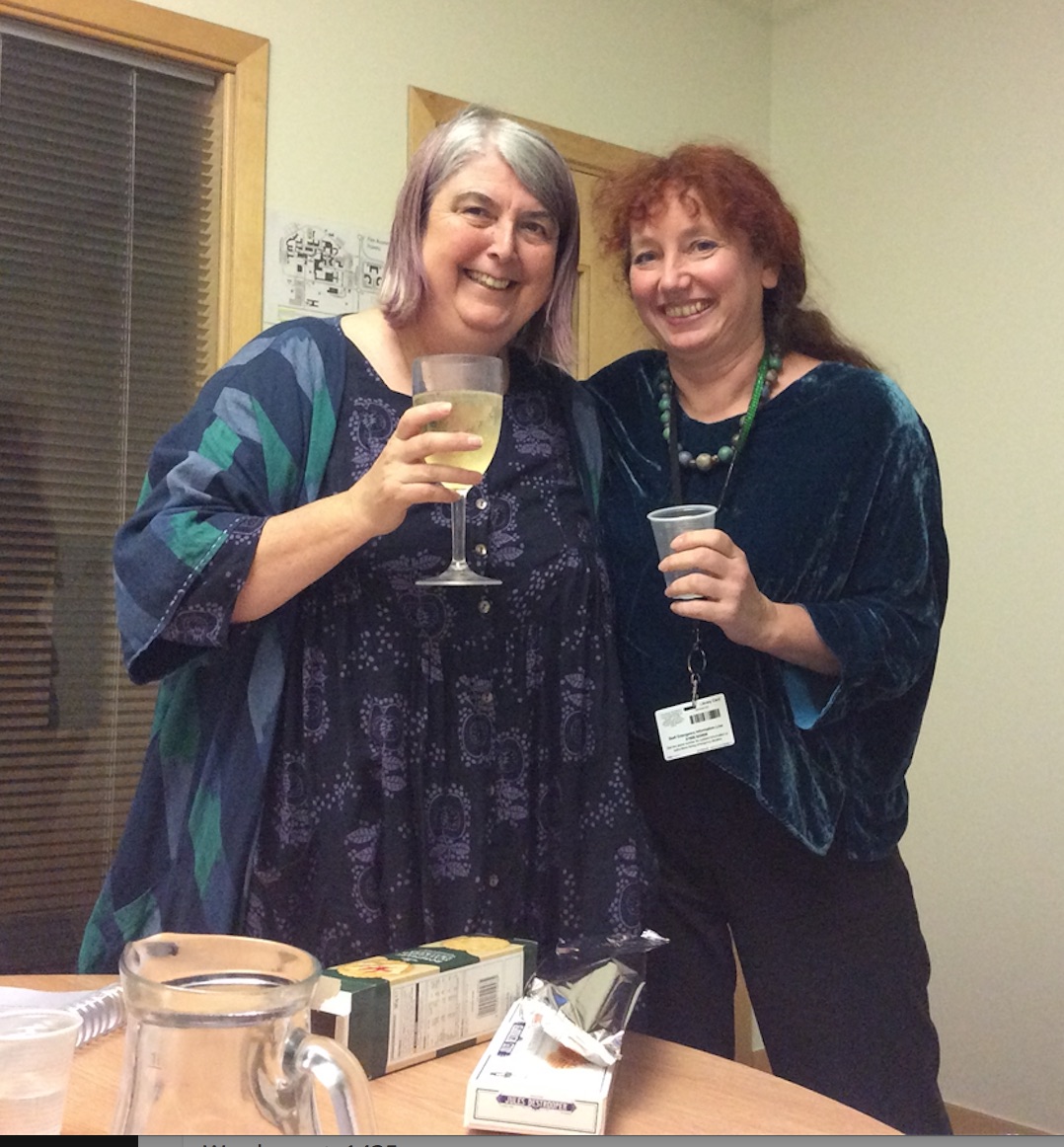
MairUschiVivaSince receiving her award, Mair has passed her viva and can look forward to soon being Dr Lloyd, author of Living Latin: Exploring a Communicative Approach to Latin Teaching through a Sociocultural Perspective on Language Learning. Look out for more from Mair, as she has no intention of stopping here, with publications in the pipeline and Ancient Greek to deal with next…

On behalf of the OU Classical Studies department and CREET, and especially from the four of us who supervised you, congratulations Mair, and bona fortuna! As Uschi put it at the AOUG Award Ceremony, Mair fabulosa est!

Reflections on ‘Married to the Military: Soldiers’ Families in the Ancient World and Beyond’ (OU in London, November 11th-12th 2016)

by Emma Bridges

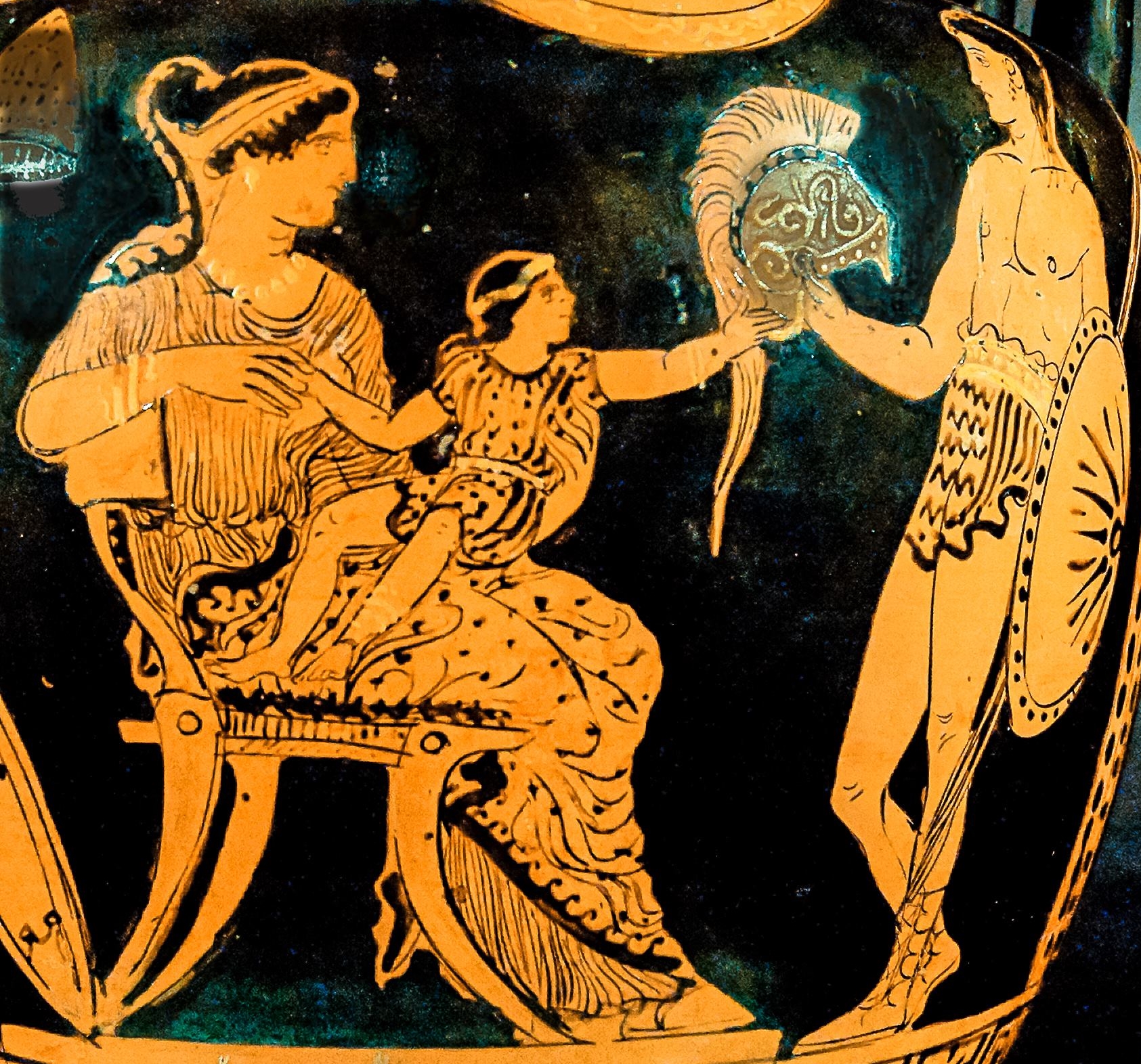
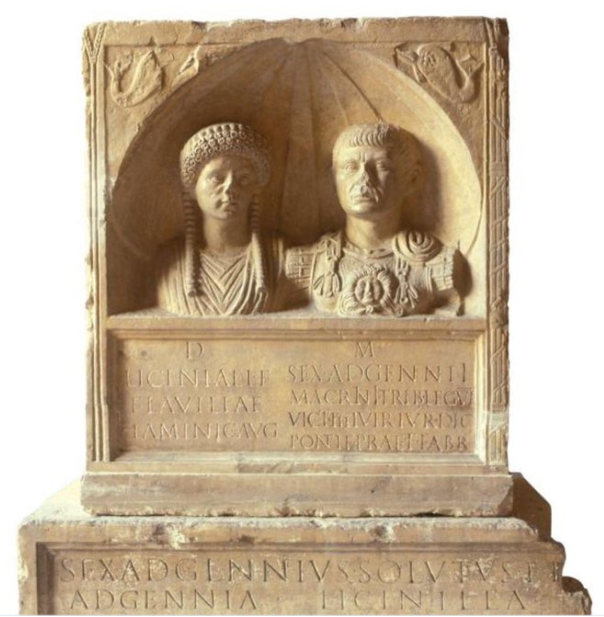
Earlier this month, to coincide with Remembrance Day, Classical Studies at the OU hosted a two-day international conference in London on the theme of ‘Married to the Hector Andromache Astyanax vaseMilitary: Soldiers’ Families in the Ancient World and Beyond’. The idea of thinking about ways in which we might compare the experiences of soldiers’ families in the ancient Greek and Roman worlds with those of their post-classical counterparts was born several years ago when my own marriage to a serving member of the armed forces led me to reflect on the ‘military spouses’ of ancient myth (think of, for example, the Homeric Penelope as the waiting wife of the Odyssey, or Andromache as a war widow in the Iliad). It was as a result of a conversation with my OU colleague Ursula Rothe, however, that the possibility of taking a broader view, in order to consider other areas of the classical world where we might explore the theme of military families, presented itself.

While my own work tends to focus primarily on literary texts, and is grounded in the ancient Greek world, Ursula’s research looks at material culture, and has a decidedly Roman emphasis. By bringing together our complementary approaches to our discipline, and our expertise in different areas of the classical world, Ursula and I were able to put together a conference programme which drew on a cross-section of the range of sources, historical periods and geographical areas with reunionwhich classicists work. For a flavour of what was discussed at the event, take a look at the conference programme and abstracts, and the Storify of livetweets (#OUMTTM) from across the two days. The conference took in ancient perspectives on military families drawn from a variety of different types of evidence, ranging from Greek epic poetry and classical Athenian rhetoric through historiography and ancient material culture, including epigraphic and archaeological sources. Papers ranged across the whole geographical and chronological spread of the classical world, with case studies looking at material not just from Greece and Rome but from locations across the Roman empire, including the provinces of Pannonia, Dacia and Egypt. The topics of presentations extended beyond the field of Classics too, and included an overview of the development of modern attitudes towards the military family from the period before the First World War to the present,military family which opened up the possibilities for rich discussions relating to comparative study and a consideration of where our own area of specialism might sit in relation to other historical periods up to the modern day.

We were also treated to two keynote lectures which highlighted elements of the range of possible approaches which scholars might take when looking at this theme. Edith Hall’s talk explored classical reception studies with a discussion of Spike Lee’s 2015 film Chi-Raq and its relationship to Aristophanes’ 411 BCE comic play Lysistrata and the soldiers’ wives portrayed there. For our second keynote Penelope Allison, whose work on Roman archaeology and gender has been instrumental in shaping this field of study in recent years, took us on an illuminating tour of the development of scholarship relating to the presence of women and children inside Roman military bases.

military family 1One of the great pleasures of studying Classics has always been, for me, its inherent interdisciplinarity; the field offers opportunities to work with a whole range of different kinds of evidence, from diverse geographical areas and across a wide chronological span. Working with a far-reaching theme such as that of this conference, which resonates throughout and beyond the ancient world, allows us to make fresh connections and draw fruitful comparisons between our own work and that of scholars working in other fields. The conversations which began at the event are set to continue; I look forward to seeing how this emerging network based on our shared interests develops in future.

The organisers of the conference would like to extend our thanks to the Institute of Classical Studies and the Hellenic Centre for their generous support of the event.


Conference: Married to the Military: Soldiers’ Families in the Ancient World and Beyond

Hector Andromache Astyanax vaseRegistration is now open for ‘Married to the Military: Soldiers’ Families in the Ancient World and Beyond’, an international conference commemorating Remembrance Day to be held at the Open University in London (1-11 Hawley Crescent, Camden, London NW1 8NP), 11th-12th November 2016. The conference comprises two days of academic papers and includes keynote lectures by Prof. Edith Hall (King’s College London) and Prof. Penelope Allison (University of Leicester). The first of these is a free public event generously sponsored by the Hellenic Centre – all are welcome to attend. The full conference programme can be viewed here.

The cost of the conference is £30 for two days or £20 for one day, to include lunch and refreshments as well as a wine reception prior to the first keynote lecture, hosted by the Hellenic Centre (16-18 Paddington Street, London W1U 5AS) on Friday 11th November. The conference dinner will be held at Opso Restaurant (10, Paddington Street, London W1U 5QL) on Friday 11th at an additional cost of £28.60 per person (excluding wine). Payment is possible by cheque, credit card or BACS transfer.

To register, and for payment details, please email Emma Bridges ([email protected]) by 1st November 2016, stating whether you wish to attend the full conference or for one day only, and whether you will be attending the conference dinner.

Thanks to the generous support of the Institute of Classical Studies a limited number of bursaries to cover the conference fee (excluding the cost of the conference dinner) and to assist with travel expenses (from within the UK) is available to support the attendance of postgraduate students and those who are under- or unemployed. If you would like to be considered for a bursary please email the organisers (Emma Bridges, [email protected] and Ursula Rothe, [email protected]) directly by 14th October 2016, outlining briefly your reasons for wishing to attend the conference and stating whether you require a bursary to cover the cost of the conference fee alone, or to assist with travel expenses in addition (if the latter, please give an indication of the expected cost of travel). Those who have no access to an alternative source of funding (e.g. from an institution to which they are affiliated) will be given priority.

sponsors

Conversations in classical reception: #OU21Cmyth

Arachne

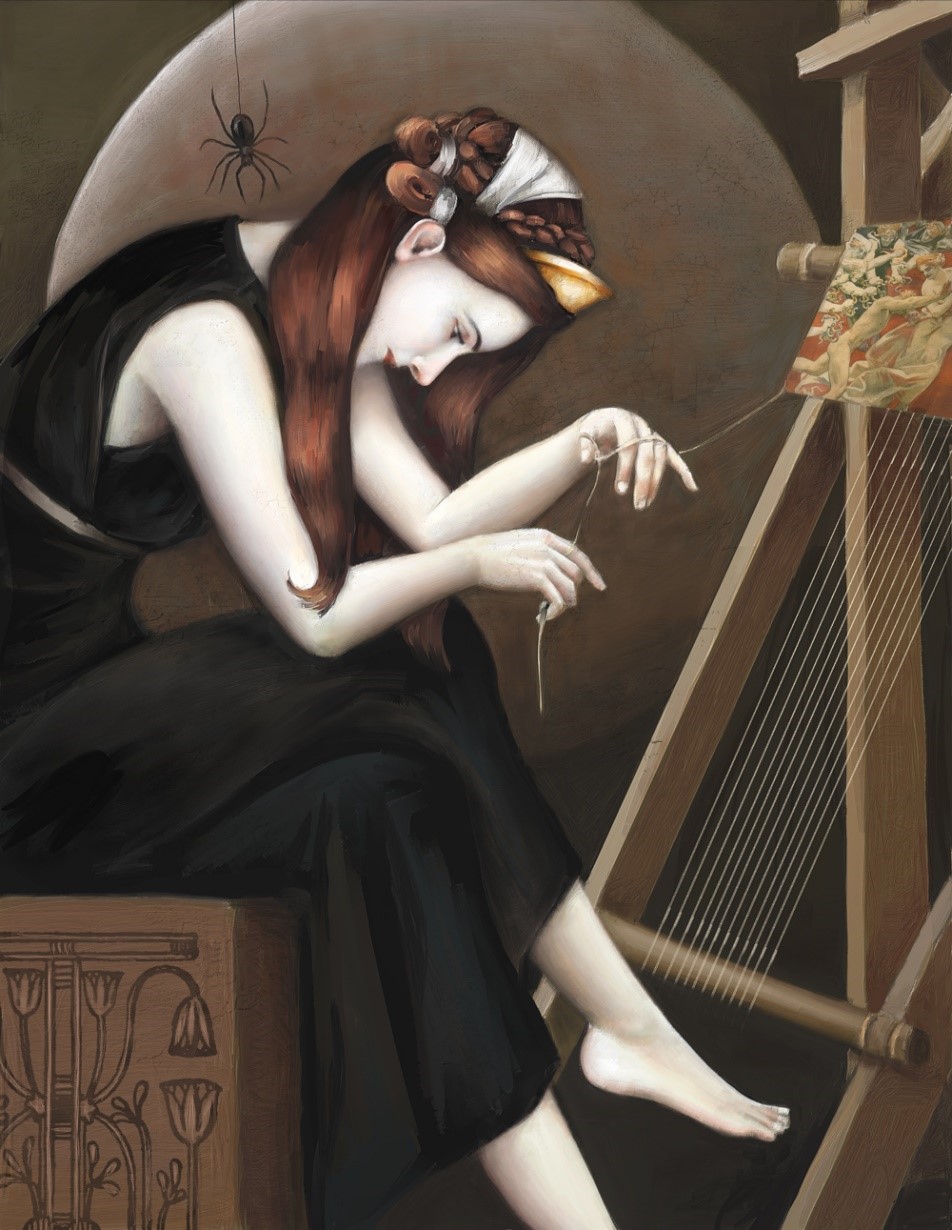
Arachne weaving her final tapestry, by Carlyn Becchia (www.carlynbeccia.com/) Reproduced by kind permission of the artist.

Emma Bridges reports on ‘Remaking ancient Greek and Roman myths in the twenty-first century’

Earlier this month the Open University’s Camden office hosted an event entitled ‘Remaking ancient Greek and Roman myths in the twenty-first century’. The aim of the day was to bring together academics and practitioners whose work focuses on contemporary versions of the mythical tales of ancient Greece and Rome. Myth is by its very nature pliable, and this means that it has always offered a rich source of inspiration for creative practitioners who have sought to rework these ancient stories in new contexts – historical, geographical and artistic. For those of us who study the reception of the ancient world in the post-classical era there is a wealth of myth-themed material which provides us with the opportunity to think about how these new contexts shape such creative responses, and to consider some of the reasons why these stories have enjoyed such longevity.

Since joining the department of Classical Studies I’ve particularly relished the chance to work on our online journal Practitioners’ Voices in Classical Reception Studies, interviewing some of those for whom sources and themes from the ancient world have provided a stimulus for their own creative endeavours. This opportunity to engage with those whose creative work intersects with some of my own academic interests has been particularly valuable and thought-provoking, and it was with this in mind that I sought to bring together a whole range of practitioners and academics working on ancient mythical themes for this one-day colloquium. The day featured poets, playwrights and novelists, as well as those working on visual art and digital media; it was a huge privilege to hear these creative voices presenting, reading from and discussing their own artistic outputs. The colloquium culminated in a spell-binding performance from members of Blazon Theatre (one of whom, actress Laura Martin-Simpson, is studying for a Classical Studies degree at the OU), who brought to us a rehearsed reading of extracts from their new play, ICONS, which reimagines the myths of the Amazons for the twenty-first century.

You can read the abstracts of talks which were given here, and there is a Storify of livetweets from the day (via #OU21Cmyth), featuring images and audio clips, here. Thanks also to one of the participants, the poet Gareth Prior, who has put together a blog post reflecting on the day’s events. The conversations which the event opened up are set to continue in various forms; in light of the number of offers of papers received, we are discussing running a follow-up event, and there will be further news in due course as to how we plan to disseminate more widely the day’s proceedings. Watch this space!

More Classical Civilisation in more schools!

This month I have been lucky enough to visit two sixth-form colleges where Classics is thriving, and thriving for the first time. Both colleges have recently begun offering “Classical Civilisation”, which — if you didn’t already know – is a fantastic subject at school level that enables students to learn about the Greeks and Romans through examining their archaeological remains, art and architecture, history and literature (in English translation).

Henry and Paul Found posing in Paul's classroomBoth sets of students had the opportunity to study Classics because their outstanding teachers have — in their own time — trained themselves to deliver the course material. It is a sad truth that if it wasn’t for the extraordinary energy and passion of teachers such as Paul Found (pictured left) and Eddie Barnett, the cultural remains of the Greek and Roman worlds would scarcely feature in the formal education of children in the UK outside of fee-paying schools. I am happy to report that more teachers are already following Eddie and Paul’s pioneering example!
A few of us in the Classics department were involved in a recent event at King’s College London, organised by Edith Hall, designed to celebrate and raise the profile of the subject. At the event, attended by over 40 sixth formers, writer and comic Natalie Haynes, poet and playwright Caroline Bird, and poet and film-maker Caleb Femi all performed, demonstrating how they continue to make the classical new and relevant in their own work. The campaign to get more classics into more British schools is now very much gaining momentum.

But back to the story… Eddie Barnett is primarily a Philosophy teacher. His interest in the Greeks grew from his reading of ancient philosophy at university. At Christ the King Sixth-form College in Lewisham, Eddie has fought for the chance to teach the subject (off timetable) to around a dozen pupils. Those of his after-school Classics club who weren’t away on a university visit when I crashed their class one wet Tuesday afternoon were kind and courageous enough to tell me how they were getting on with Homer’s Odyssey.

Paul Found — Head of Classics at Norton Knatchbull School in Kent — first got into Classics when he was doing an OU degree. But you can read more about that in this earlier post… For now I’d like simply to introduce his wonderful students, who had recently done exams — I quickly gathered — on the Odyssey and Suetonius’ Life of Nero. Paul’s enthusiasm for the subject is clearly infectious!

https://youtu.be/O2Kr5tv6DYk

Arts Hub Live, and a Classical Studies Picnic

What’s the best way of celebrating the end of the academic year at a distance-learning institution like the Open University? We can’t exactly take all our thousands of students to the pub (!), so we need to think creatively about how to collectively ‘wind down’ after the end of exams… as well as how to support students as they start to think ahead to their next modules or qualifications.

This year, the Arts Faculty tried something a bit different – a two-day academic Arts event that was broadcast live from a studio on the OU campus in Milton Keynes. The ‘Arts Student Hub Live’ (Friday June 10th – Saturday June 11th) involved a team of producers and OU staff and students getting together to create a jam-packed programme of live chat shows, quizzes and interactive ‘study support’ sessions – all designed to help our Arts and Humanities students take stock of their achievements over the past year, and find out more about the various subjects, modules and degrees offered in the Arts & Humanities programme.

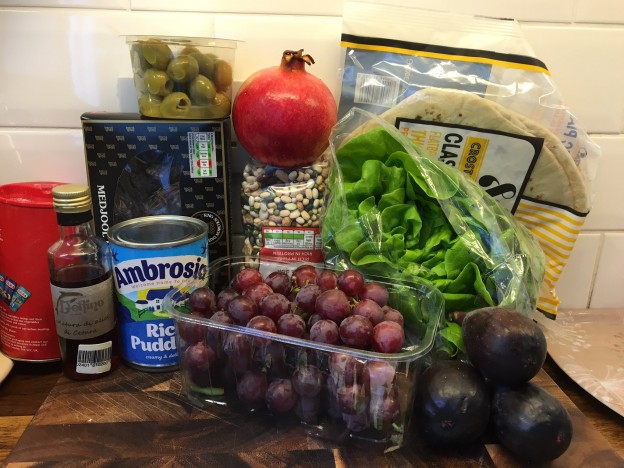
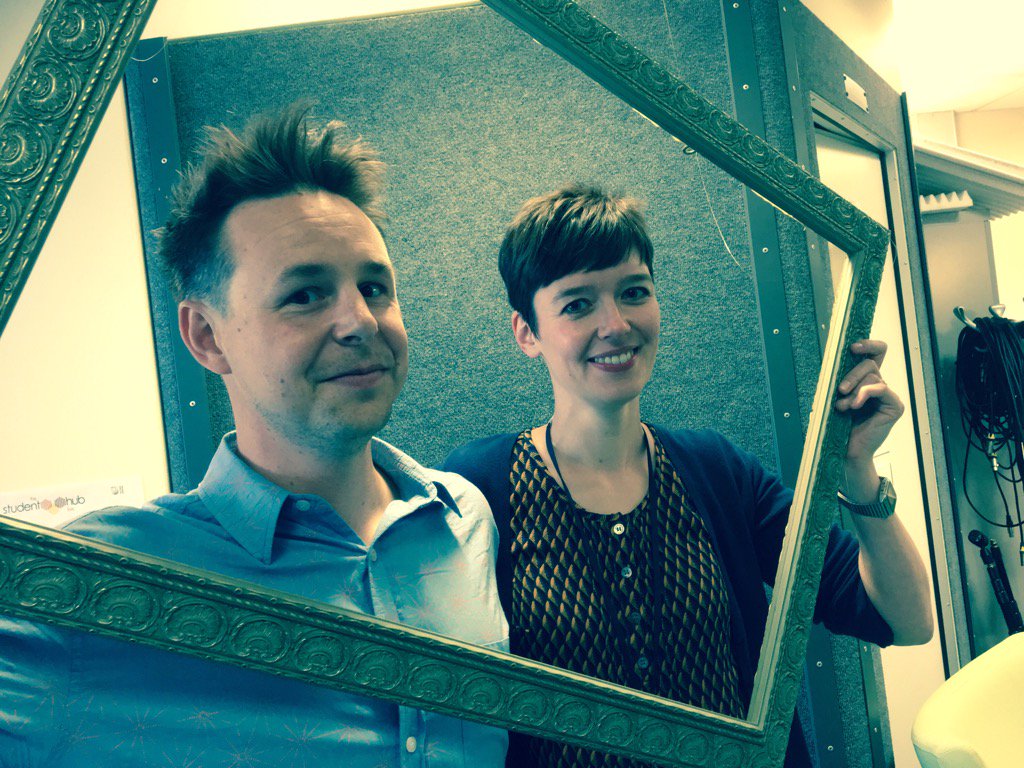
henry_jessIt’s difficult to express quite how much fun and hard work it was putting the event together, but you’ll be able to get some inkling from the videos on this webpage. Our main Classical Studies session involved Jess Hughes and Henry Stead rustling up a lunchtime ‘Classical picnic’, which they shared with the Hub presenter Karen Foley and her pet rhinoceros. Radishes, retsina, dates and Ambrosia rice pudding were just some of the delicacies that we used to showcase the diversity of Classical Studies and introduce our tempting undergraduate curriculum.

Other sessions with a classical theme included Henry’s talk about Creative Writing, and Jessica’s discussion with Dan Weinbren about ‘Myths of the early OU’ (think Pygmalion and Educating Rita). We’ve embedded those three videos here, but you can find all the sessions from the event on the Student Hub Live website. And if our picnic video inspires you to learn more about our Classical Studies modules, you might like to try some tasty taster materials on our department website.


(Follow this link to access the whole Arts Hub Live programme)

Classical Studies picnic

Myth and Storytelling

Creative Writing

ps. The Student Hub Live is on Twitter. Follow @StudentHubLive for notifications of future events.

Borders and Boundaries: a report on the Leeds postgraduate interdisciplinary conference

OU PhD student Sophie Raudnitz reports on the 7th annual postgraduate interdisciplinary conference hosted by the University of Leeds.

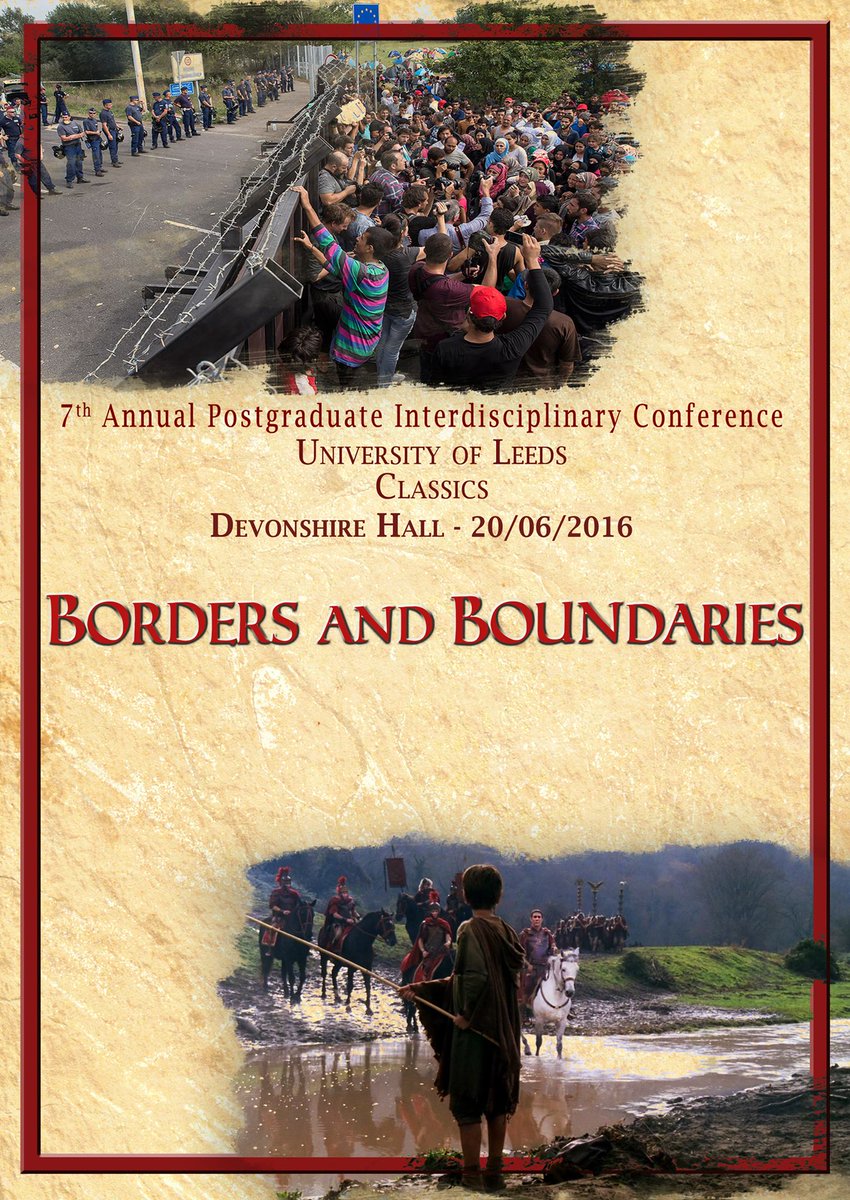
Leeds posterOn Monday 20th June, in a week when the issue of national borders and where we draw them was the focus of such intense political attention, I was delighted to attend the 7th Annual Postgraduate Interdisciplinary Conference at the University of Leeds, entitled Borders and Boundaries. The aim of this conference was to bring together postgraduate students from different disciplines and different universities to think about borders—cultural, social, psychological and geographical—how we define them and how they are or might be transgressed.

The conference took place at the beautiful Devonshire Hall in Leeds and was hosted by the Classics Department. There were two short keynotes speeches, one from Dr Ingrid Sharp from the Department of German and the other from Dr Emma Stafford from the Department of Classics, both of the University of Leeds. Dr Sharp spoke about ‘Crossing Gender Boundaries: Expressions of Feminist Rage in German Crime Fiction’ – a thought provoking and entertaining look at the way in which German feminist crime writers use humour as a way of affirming rather than denigrating women’s existence. Dr Stafford spoke later on ‘Thinking About Impact’ and research which crosses the boundary between the academic setting and the wider world.

The programme was packed, with five sessions timetabled and two panels running simultaneously in each. Panel topics included ‘Human and Divine’, ‘Aquatic Boundaries’, ‘Home and Away’, ‘Intertextuality’ and ‘Memory’. Though most speakers were classicists, we also heard papers about wearing the veil as a Muslim feminist issue (by Sadia Seddiki, University of Leeds) and ‘transnational’, as opposed to ‘global’ memories of the Holocaust (by Jade Douglas, University of Leeds). I especially enjoyed Jade Douglas’s paper as her study of transnational Holocaust memory intersected with my own research in very interesting ways but as usual with conferences of this kind, just hearing the range of topics which people are researching, and the energy and enthusiasm with which they speak about them, is inspiring in itself. Given this, it seems churlish to mention individual papers but highlights for me included Natalie Enright (University of Leeds) speaking about ‘Crossing Psychic Boundaries: Humoral Infection of the Soul in Plato’s Timaeus’, Devon Allen (University of Leeds) discussing ‘To What Extent is There a Mythological influence over the Folkloric Type of a Mermaid’ and Maria Haley (University of Leeds) on ‘Beyond Justice: Atreus’ Transgressive Revenge in Greek Tragedy’. You can read Henry Clarke’s Storify of tweets from the event here.

My own paper, the last of the day, was on ‘The Politics of Empathy: a Memory-Centred Approach to Euripides’ Trojan Women’ and it suggested that the notion of empathy might unite political and aesthetic approaches to tragedy but also might be a way into reading across genres and considering, for example, discussions around the legitimacy or morality of Holocaust fictions. The paper centred on the ways in which rhetoric generates empathy to sway political responses, and giving it at this conference on Borders and Boundaries, attended by delegates from across the EU, in that week when political rhetoric regarding borders and immigration was at its height, I could suddenly feel its ‘impact’.

In all these respects, it was a very worthwhile trip. It was also great to compare experiences with postgraduate students from other universities and to meet people face to face I had hitherto only met on Twitter. My thanks to the committee from the University of Leeds Classics Department, and to Natalie Enright in particular, for organising such a great day.

by Sophie Raudnitz

ICONS: giving life to the Amazons via the modern female gaze

untitled

We are delighted to invite you to a free public event taking place at The Open University in London (1-11 Hawley Crescent, Camden, London NW1 8NP) at 5.45pm on 7th July 2016.

Laura Martin-Simpson and Rachel Bagshaw of Blazon Theatre will be presenting readings from ICONS, a new play about the Amazons by Paula B. Stanic. All are welcome and attendance is free. To reserve a space please contact Emma Bridges: [email protected].

Wham, #BAM: Linking the Big Ancient Mediterranean

This week Elton Barker, Reader in Classical Studies at the OU, tells us about his recent trip to the University of Iowa for the ‘Linking the Big Ancient Mediterranean’ (#BAM2016) conference.

BAM2016 all guestsWith this month’s news in the UK being dominated by the EU referendum and specifically the issue of migration, a fortnight ago I was making good my escape, so I thought, to the relative sanctuary of the American Mid-West. But, in addition to being detained upon entry to the US at Chicago O’Hare airport (the inconvenience of a missed flight a merest hint of the difficulty many experience when travelling), participants at the conference to which I had been invited time and again came back to a matrix of contemporary concerns, relating to ideas of networks and mobility; standards, services and accessibility; and transformation.

Perhaps I shouldn’t have been surprised: the conference was entitled “Linking the Big Ancient Mediterranean” (BAM) after all, and came with the promise of “leveraging the ancient world’s impressive and growing body of linked data to provide an innovative platform for research and teaching”. Organised by our Iowa hosts Sarah Bond and Paul Dilley, #BAM2016 brought together an array of scholars and research developers to talk about not only what digital work they were undertaking but how and why that was important for understanding their topic. The work represented was highly diverse: language texts ranged from Greek, Latin and Persian (Open Philology; Digital Latin Library), to Coptic (Coptic Scriptorium) and Syriac (Syriaca.org); disciplines from epigraphy (Inscriptions of Israel/Palestine; http://www.trismegistos.org/) and papyrology (http://papyri.info/), to graffiti (Ancient Graffiti Project), numismatics (Nomisma.org) and archaeology (3-D modelling of cultural heritage sites); and approaches from focusing on linking places (Pelagios), to linking people (SNAP:DRGN) and time (PeriodO). There were also a number of useful resources presented, such as the Classical Language Toolkit and a gazetteer of ancient place names (Pleiades Project). (You can see the full line-up at the BAM conference website.)

Far from occluding the hard graft and uncertainty that goes into research, digital activity was shown to shine a light on scholarly practices. Nowhere was this better exemplified that in the project presented by Adam Rabinowitz, called PeriodO. Where a gazetteer like Pleiades has allowed researchers to agree on what place they are talking about (whether one uses the character string “Athens” or another “Athina” or even “Αθήνα”), which means that online documents referring to the same place can now be linked together (by Pelagios—the project I’m working on, more on which in a future post), there is no such agreement on time. Different scholars can—and frequently do—use the same period terms to mean widely different things, or with respect to widely different spaces. For example, how does a computer know that 323 BC, the Hellenistic period, the age of Alexander, etc. all specify more or less the same time? PeriodO, a Gazetteer of Period Definitions, is an attempt to bring some order to this category chaos. Thus, an element of scholarly publications so familiar as the expression of time was revealed to be hugely complex and complicated because of the attempt to apply it in a digital realm. The same is true too, as Ryan Horne (Technical Director at BAM and map guru at the Ancient World Mapping Center) pointed out, of maps—and visualisations more generally: how do you visualise uncertain or ambiguous data?

So, ambiguity and uncertainty were key take home messages—ironically, arguably, given how precise and certain digital data first appear. (We all need to be educated in reading visualisations and interpreting search results, not just our students.) But there are at least three further points to make about the projects presented:

1. Collaboration: as is clear from the brief narrative about PeriodO, it has built on previous and on-going work in the field, specifically by adapting an approach to connecting data taken from Pelagios’s focus on places; and Pelagios itself has been possible only because of Pleiades (among a whole host of other partners). There are various ways of doing collaboration of course: at Iowa, they have a dedicated in-house Digital Scholarship & Publishing Studio, which helps to support scholars and provide assistance in addressing critical issues such as preservation and sustainability (more longstanding problems that haven’t gone away now that we’ve moved to the digital realm). What #BAM2016 revealed, however, is that collaboration also takes the form of teams of scholars and research developers that cross not only institution but also continents. (Pelagios’s Commons Committee is formed of both groups from European, US and South American institutions. And such collaboration as being developed by PeriodO, Pelagios and others is at its basis a way of connecting data and facilitating further collaboration—an infrastructure from the ground up, as it were.

2. Openness: a common element of all the projects (including Iowa’s Walt Whitman archive), which underpins the collaborative practices noted above, is the fact that they are open and accessible to all. At the very least openness means being able to access data and material openly—so, for data providers/curators, this means not holding data behind a paywall or making them accessible only via institutional networks. An indication of openness is the use of permissive Creative Commons (CC) licenses, such as those recently advertised by the AWMC for maps or those used by Perseus, which are importantly for not only allowing use but also enabling re-use. (The Hestia project was able to “reuse” the Perseus text of Herodotus, to conduct various digital mapping experiments. I write more about this experience, in the context of digital texts more generally, with Melissa Terras.) In fact, sharing extends beyond data: a number of the projects are using the GitHub online repository to make their tools and code available, which can then be used and improved upon by the community.

3. Community: and so we get to the c-word—the human factor in the digital world. As part of their goal of openness, all the projects had in mind a public audience that includes but also somehow extends beyond academia. (How to address different audiences was a major concern highlighted by a number of speakers.) As part of their interest in collaboration, all the projects had in mind, too, building common methods and processes for working with digital data and tools. In fact, together with technical development, community building is the aim of Pelagios Commons, on the understanding that digital resources will remain a niche product and the preserve of the few unless they can be embedded in everyday practice. This is not only a question of how data can be produced but also how data can be consumed: while digital classics guru, Sebastian Heath, was presenting his work on Mapping Roman Amphitheaters, thoughts turned to how his combination of narrative and modelling approaches could form a recognisable scholarly publication. (Or, rather, how they currently don’t.) More challenging still: now that we are able to link between datasets of highly varied nature—texts, databases (of archaeological material), images (of maps, artefacts, etc.)—what happens then? How does one read archaeological excavation data alongside a literary text? And, even if one has as the target the Bigger Ancient Mediterranean picture, how can we put these diverse data together to make sense of this highly contested, rapidly changing, transforming space?

I’ll finish my summary on this note of caution about the possible transformative, even disruptive, effects of the digital on traditional scholarship, though other opinions are available. (See, for example, the excellent blog posts on #BAM2016 by Michael Satlow and Ryan Horne, while an archive of all the tweets—and there were many—has been created in storify.) But to end, paradoxically, I’d like to IMG_2103briefly sketch how I began my presentation, with Herodotus. We are all by now familiar with the Greek – barbarian axis by which Herodotus introduces his inquiry into the Persian Wars, and which has proven influential for how space—at least the Mediterranean space—is still viewed as divided between West and East (or a European vs. Oriental/African other). We even hear an echo of Herodotus’s opening concerns just a few chapters into his narrative, when it is said that the Persians consider “Asia and the barbarian nations dwelling there” their own, while considering Europe and Greece (or, more accurately, the “Greek thing”, to Hellenikon) separate (1.4.4). Yet, that viewpoint is pointedly attributed to Persian wise men; observing how Herodotus begins his attempt to put together (sumballesthai—a word Herodotus uses to describe moments of interpretation) his Big Ancient Mediterranean suggests a far more complex and uncertain route. Immediately the category distinction between Greek and barbarian is complicated and compromised by the introduction of not only Persians but also Phoenicians (1.1: Are they both barbarian? To what extent? In the same way?) And not only do the Phoenicians enter the scene already networking (carrying Egyptian and Assyrian merchandise here and there and to Argos), but they have a different story of the origins of the conflict (1.5.2). The Mediterranean comes across as an already highly interconnected, diverse and contested space, and Herodotus’s way of putting that space together—to borrow a contemporary idea—highly networked. (For more on Herodotus’s networked thinking, see Hestia’s New Worlds OUP book.)

Putting aside these opening skirmishes of accusation and counter-accusation, Herodotus asserts that he’ll investigate cites both small and large alike, since, he reckons, happiness does not reside “in the same place” (1.5.4)—a striking metaphor carried over from the spatial realm to the analysis of human life. For Herodotus, the Mediterranean was already a world in motion. In antiquity this insight anticipated Thucydides’s anatomisation of the great “movement”, kinesis, of his time, the war between the Athenians and Spartans. So it is again now, and we have an obligation as researchers to inquire into its causes and unpick as best we can the various threads that provide the dominant stories of our day.

Editor’s note: You can find Elton on Twitter @eltonteb