
A Life in Letters: Ford Madox Ford

Pablo Scheffer, BA English Literature student, King’s College, London

This summer I had the pleasure of spending a month as a research assistant at the Cornell University library, working on the digitalisation of the letters of Ford Madox Ford. When I started the project, I had only read a handful of Ford’s essays and none of his longer works, knowing him mostly from his connection to other modernist figures, and so I had the unusual experience of getting to know the author not through a thorough reading of his work, but rather through an immersion in his personal correspondence.
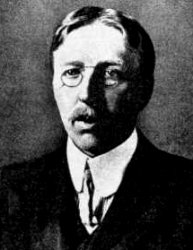
Ford Madox Ford PublicDomain, https://commons.wikimedia.org/w/index.php?curid=51044

Through this experience, I came to realise to what extent we tend to view the lives of authors, especially of authors who are no longer alive, through a lens of the literature they have left behind. A great example of this is the abysmal J.R.R. Tolkien biopic Tolkien that came out earlier this year, in which the novelist’s life is portrayed as a series of events that all, in some teleological way, contribute to his creation of The Lord of the Rings. The film gives Tolkien’s life meaning purely based on its relevance for our “understanding” of his books, resulting in a strange cocktail of dragons and melodrama that seems far removed from a realistic depiction of life.

Although Tolkien’s portrayal of J.R.R.’s life is an especially cringe-inducing instance of us viewing an author through their oeuvre, it does point to what I think is a more general trend: because we have a tendency to approach authors through their stories, we seem to consider their lives, to a degree at least, as we would consider a story: as a linear narrative where elements introduced in the beginning are shown to have relevance at a later point. From our own lives we know, however, that life is expressedly not a singular, linear narrative, but rather a messy amalgamation of a great many different narratives, or perhaps not even a narrative at all.

I had never considered this difference between the way we view authors and the way we view ourselves until, through this assistantship, I spent time with the letters of Ford. Reading his correspondence, especially his correspondence with family and close friends, I was struck by the familiarity of the language – the letters appeared to me more like postcards from a good friend than the work of a high-brow modernist. The words were not stern and stately, as I had (perhaps ignorantly) expected, but often playful: they were the words of a little “Fordie” writing to his grandad, or of a playful “Pumpums” sending postcards to his “dearest little kid”.

The more I read, the more I began to form a picture of Ford which was very different from the image that I had had before. It was a picture of a man in whose life writing was admittedly a large, but far from an all-consuming part. I found that where I had initially seen the person Ford as peripheral to his oeuvre, I began instead to consider Ford’s oeuvre as peripheral to its creator. As a result, where initially the smooth surface of the literature had lured me subliminally into an artificial view of the writer’s life, viewing the literature from the perspective of the writer dissolved this smooth surface into a messy process of writing and rewriting.

Now, this is not to say that viewing a book “through” its author is necessarily always a good thing (Roland Barthes would have something to say about that) – rather, I would say that Ford’s letters have showed me how it can be a refreshing and demystifying experience to get to know an author and their literature not through the polished works of art, but rather through their rough, everyday correspondence.


Professor Sara Haslam and Professor Max Saunders would like to thank the Open University and King’s College, London for their financial support for this initiative. 

‘Let Me Tell You A Story’: Reflections on the EastSide Arts Festival, Belfast

Patricia Ferguson, PhD student, English Literature

‘Let me tell you a story’ was the principal theme of this year’s EastSide Arts festival. These are my reflections on four events which seem to me to resonate profoundly with the present state of affairs in Northern Ireland. The Irish genius for the ancient art of storytelling has never dimmed; it has become if anything brighter than ever in recent years. Libraries NI has its own Storyteller in Residence, whom I was privileged to meet. (Tales & Tunes With Liz Weir). Her first job had been as Children’s Librarian for the City of Belfast in 1976, when the Troubles were at their height and where they remained for the next twenty years. Undeterred by all this, she started a storytelling group at the Linen Hall Library in 1985, calling it ‘The Yarnspinners’: ‘I had a dream that one day there would be story telling groups all over Ireland. That dream has sort of come true; there are now the Tullycarnet Yarn Spinners, the Dublin Yarn Spinners, the Cork Yarn Spinners, there’s a group in Castlerock now as well.’[1]

Our event took place at Tullycarnet where yarns have been spun at least once a month for twenty-seven years. There were more than a hundred of us in that small library, brought to tears of grief and laughter by tales tragic, poignant, and hilarious, and beguiled by Maeshine’s exquisite melodies. If the musica universalis became audible to the human ear it would surely sound like this.

Word and song came together in a different way at St Martin’s Church on the Newtonards Road. (An Evening With EastSide Choir & Women Aloud NI) After each song, two members of the award winning writing group responded with stories or poems written specially for the occasion. The effect was startling; quite ordinary, well-known songs discovered the power to evoke the most personal memories and to inspire some intriguing yarnspinning. (I want to hear the murder mystery tale again!) All the same, I was constantly distracted by remembering where we were: St Martin’s Church of Ireland is just across the road from St Matthew’s Roman Catholic Church – a stone’s throw, in common parlance. As everyone in Belfast knows, plenty of those, and much worse, were thrown throughout the night of 27-28 June 1970 in what became known as ‘The Battle of St Matthew’s’. We are on the edge of Short Strand, a small Catholic enclave in the heart of Protestant East Belfast, where ‘Catholics believed that they were about to become “victims of a Protestant pogrom” and Protestants believed they were on the “eve of an IRA insurrection”’.[2] The rights and wrongs of these perceptions are still argued over and each can sound as plausible as the other: compare and contrast, for example, the accounts of the battle given by An Phoblacht and Long Kesh Inside Out.[3] [4]

In such an impasse is a just judgment even possible? This question is as old as it is intractable; it was asked by Sophocles in the Antigone more than two millennia ago and, still unresolved, was discussed here at the Festival by Northern Ireland’s Attorney General himself, John Larkin QC. (Antigone: A Choice Between Law and Justice?) The Irish have long seen parallels between the Greek classics (especially Antigone) and their own situation. In 1984, while the Troubles raged around them, Irish playwrights presented it in four different versions. One of these, Tom Paulin’s play, The Riot Act, is set in Northern Ireland, where: ‘Creon becomes a Unionist politician devoted to law and order, and Antigone becomes a republican who wishes to bury her dead brother. Here the alien laws of Creon’s Unionist state are opposed by Antigone’s devotion to the native ethos of family, kin, tribe. As Antigone says: “Down in the dark earth/ there’s no law says,/ Break with your own kin, go lick the State”. ‘[5]

Seamus Heaney took up this theme in his own translation of the play, The Burial at Thebes (London: Faber, 2004). Comparing the burial of the hunger striker, Francis Hughes, in 1981 to Antigone’s burial of her brother he asked: ‘By what right did the steel ring of the defence forces close round the remains of one who was son, brother, comrade, neighbour, companion?’ and found no satisfactory answer. I heartily recommend the lecture, which is in the public domain and can be found here: 

Immediately after the lawyer came the journalists. (Reporting the Troubles: A Discussion). This was a book launch for the second edition of Reporting the Troubles: Journalists Tell Their Stories of the Northern Ireland Conflict, compiled by Deric Henderson and Ivan Little (Newtonards: Blackstaff Press, 2019). They and their colleague Eamonn Maillie chaired the discussion. They looked at us with haunted eyes. They had been there throughout those thirty years, never knowing whether they would find themselves reporting atrocities happening in their own families. The book is indeed, as it says on the cover, ‘a landmark book, raw, thought provoking and profoundly moving, a remarkable act of remembrance’. But always the question arises: how much should be remembered? Surely the best thing to do is let the past go? Gail Walker, editor of the Belfast Telegraph, thinks not. ‘That’, she says in her contribution to the book, ‘is a recipe for mass neurosis, delusion, and moral hypocrisy – that, to keep the “peace” we must inflict another kind of violence on survivors, censoring their stories, blue-pencilling the raw heart and hurt mind’. (pp. 222-23)

On the contrary, we must hear as many stories as possible.

[1]    ‘Meet the Teller: Liz Weir’, Liz Weir: Storyteller, Writer, (2019) <https://www.lizweir.org/liz-goes-digital/> [accessed 21 August 2019]

[2]    ‘Battle of St Matthew’s 27-28 June 1970’, Belfast Child: Remembering the Victims, <https://belfastchildis.com/2016/06/26/battle-of-st-matthews-27th-28th-june-1970/> [accessed 21 August 2019]

[3]    ‘Remembering the Risen People: The Battle of St Matthew’s and the Falls Curfew’, An Phoblacht/Republican News <https://www.anphoblacht.com/contents/25115> [accessed 21 August 2019]

[4]    ‘De-bunking the Myth of the “Battle” of St Matthew’s’, Long Kesh Inside Out <https://www.longkeshinsideout.co.uk/?p=3720> [accessed 21 August 2019]

[5]    Amid Our Troubles: Irish Versions of Greek Tragedy, ed. by Marianne McDonald and J. Michael Walton (London: Methuen, 2002), pp. 52; 208.