In conversation with Ellora Sutton, prize-winning MA student

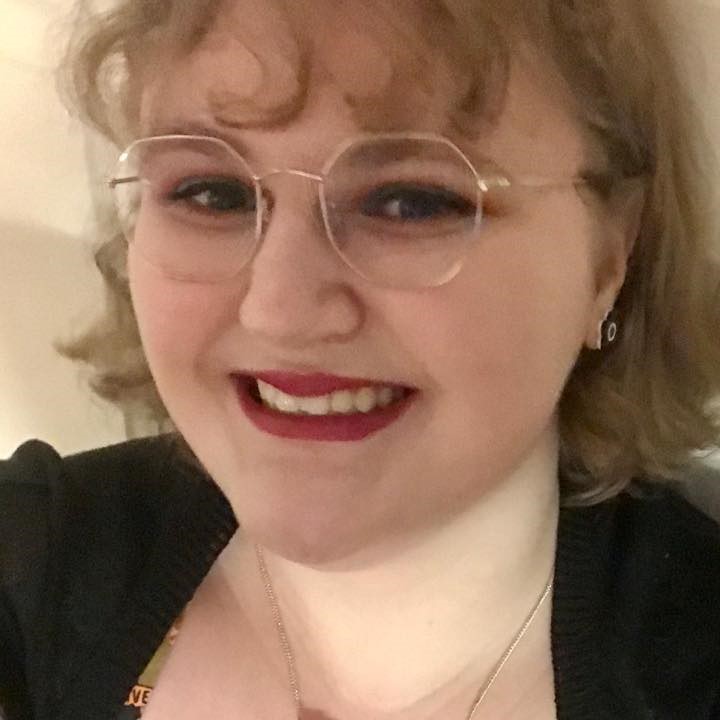
OU Creative Writing MA student Ellora Sutton, winner of the 2020 Mslexia Poetry competition, talks to Sally O’Reilly, Senior Lecturer, Creative Writing.

Ellora Sutton

Can you tell me about yourself and your writing? When did you first start? Do you focus on writing poetry, or do you write in other genres?

I live in the small village of Kingsley, in Hampshire, with my grandparents and aunt. I graduated with a First Class BA (Hons) in Journalism and Creative Writing from the University for the Creative Arts back in 2018, and I work in the heritage sector although I like to call myself a poet. My debut chapbook, All the Shades of Grief, was published last September by Nightingale & Sparrow, I’ve been published by Poetry News, Poetry Birmingham Literary Journal, and fourteen poems, amongst others. I’ve won the Mslexia Poetry Competition, the Poetry Society and Artlyst’s Art to Poetry Award, and I’m the first person to have won the Pre-Raphaelite Society Poetry Competition two years in a row. My main themes include art, feminism, mental health, and mythology.

I’ve always written. Some of my earliest memories are of dictating little stories to my mother for her to write down for me, before I knew how to properly hold a pen. I really got into poetry when I studied Carol Ann Duffy’s The World’s Wife at A-level, it was an absolute awakening for me. It was the first time I really experienced poetry rather than just reading it. My mother died when I was fifteen, and poetry was a vital outlet for me in terms of processing that grief – it still is. I focus my writing on poetry, I don’t have the patience for anything else! I love poetry because it really is an ‘anything goes’ kind of genre. There is total freedom in terms of form, subject, theme. I love the possibilities, the chances for surrealism. Poetry is the oldest kind of writing, but it in many ways feels (to me at least) like the most modern.

What stage are you at with the Creative Writing MA? Assuming poetry is your first genre, what is your secondary genre? Do the two genres inform each other, and in what way?

I am in my second year, and I’ve just started planning my big end-of-module project, I’m hoping to do something with trauma and Medusa. Yes, poetry is my first genre. My secondary genre, for both years, has been creative nonfiction, which has been utterly illuminating. I’d never tried creative nonfiction before, but it strikes me as quite a natural bedfellow to poetry. I’ve come to view poetry as a type of creative nonfiction, in that it often deals with the personal lived experience of the writer in creative ways. It’s been incredibly helpful as well in terms of research, a skill that I’ve carried over into my poetry.

How has the MA helped with your writing?

I live in quite a rural area, and I don’t drive, so it’s been wonderful to have such a thriving community of fellow writers and students to share my work with. It’s been very helpful, getting honest, constructive feedback on early drafts – it’s also been helpful to do the same for others, it’s sharpened my understanding of craft greatly. The MA has really pushed me to explore forms and themes I wouldn’t have otherwise thought myself capable of. For example, prose poetry had always felt beyond me. But we studied it in the second year, and it was set as an activity – the poem I first drafted for that activity, ‘A postcard on the restorative effects of sea air after a nervous breakdown’, recently won the Mslexia Poetry Competition. Prose poems have since become a bit of an obsession. Perhaps most importantly though, the MA has massively boosted my confidence in my writing.

What do you like to read? Has the MA made a difference to this? Who are your favourite poets/authors? Is there a writer you have discovered recently who you would recommend?

I have quite an eclectic taste. My big obsession is and forever will be Jane Austen – I am just coming to the end of my tenure as poet-in-residence at Jane Austen’s House. I do mostly read contemporary poetry, though, in the form of collections, pamphlets, magazines and journals. The MA has definitely widened my reading – studying creative nonfiction has ignited a love in me of biography, memoir, history, art history. It’s also made critical and craft writing feel much more accessible. Writing Poems by Peter Sansom has become my absolute bible, and I first met it through the MA.

My favourite poets include: Liz Berry, Carol Ann Duffy, Sylvia Plath, John Keats, Andrew McMillan, Ella Frears, Ella Duffy, Nina Mingya Powles, Phoebe Stuckes, Caroline Bird, Chen Chen, Ocean Vuong, Pascale Petit, Hannah Hodgson, Rachel Long, Natalie Diaz, Danez Smith, Natalie Linh Bolderston, Malika Booker – this is a very abridged list! I recently read Life Without Air by Daisy Lafarge, which absolutely blew my mind. And I’ve got to mention specifically Malika Booker’s Pepper Seed, another recent read of mine, the kind of book that stuns you as a reader and inspires you as a writer. My most prized possession is my signed copy of Carol Ann Duffy’s Collected Poems.

Where do you go from here? What would you like to achieve with your writing?

I’m currently working on a manuscript of poems looking at women’s mental health through the lens of my personal family history, which has been a very exploratory and freeing experience. I would love to find a publisher for that – that’s really my next big goal, a first collection. And completing my MA, of course! After that, I’d love to have a go at a PhD in poetry.

‘Things we cannot know’: Julian Barnes’ The Man in the Red Coat

Alistair Daniel, Associate Lecturer, Creative Writing

In June 1885, three Frenchmen – the prince Edmond de Polignac, Count Robert de Montesquiou-Fezensac, and the ‘celebrity gynaecologist’ Dr Samuel Jean Pozzi – arrived in London. They went shopping, had dinner with Henry James, and went home. It’s a thin premise for a story, fictional or real, yet from it Julian Barnes has woven a typically rich and absorbing tapestry in The Man in the Red Coat (2019).

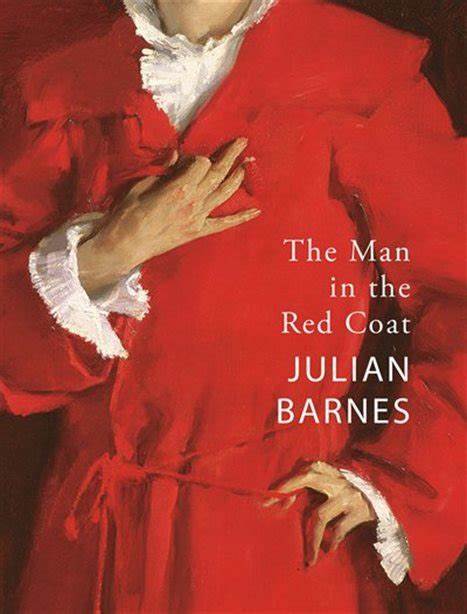
From A History of the World in 10 ½ Chapters (1989) to Levels of Life (2013), Barnes has spent a long and garlanded career eluding categorisation and The Man in the Red Coat is no exception. Is it a group biography, a biography, or something else? As a portrait of its three protagonists it’s more than lopsided, since Barnes largely ignores Polignac in favour of Montesquiou and Pozzi, both of whom make fascinating subjects in their own right. Montesquiou was a snob with a taste for cruelty, picking up talented boyfriends and destroying them when he grew bored. The dark allure of his character was not lost on artists of the time, and the count appears in several novels, including Huysmans’ À rebours (1884) and Proust’s À la recherche du temps perdu (1913-27). He was also the model for Whistler’s Arrangement in Gold and Black (1891-2). It’s perhaps this artistic over-representation that encourages Barnes to focus on Pozzi, himself the subject of Sargent’s Dr Pozzi at Home (1881), a portrait that provides the cover, the title and the inspiration for this book.

Image of book cover for ‘The Man in the Red Coat’ by Julian Barnes.

If Barnes recounts Montesquiou’s bad behaviour with relish, his sympathies lie firmly with Pozzi, a pioneering surgeon whose innovations in hygiene and surgical technique radically improved survival rates, particularly for bullet wounds to the gut. He treated both public and private patients and was tireless in his promotion of high medical standards all over the world. He was also something of an international playboy, hobnobbing with celebrities and taking mistresses to Bayreuth. Nor did his professionalism prevent him from seducing his patients, and Barnes is careful to trace the impact of his behaviour on his long-suffering family through the journals of his outraged daughter Catherine.

Pozzi himself kept no journal, and it’s perhaps for this reason that The Man in the Red Coat sidesteps conventional biography. In fact, for long stretches the book neglects Pozzi in favour of a stroll through fin de siècle Paris, with Barnes as flâneur and guide. It’s a world populated by artists, including Oscar Wilde, Sarah Bernhardt, the Goncourt brothers, Huysmans, Proust and a host of less illustrious figures, like the Symbolist poet and novelist Jean Lorrain, who wasted his talent in endless feuds (he once fought a duel with Proust).

Writing in the fragmentary, episodic style familiar from his recent fiction (The Sense of an Ending, The Noise of Time), Barnes grants himself licence to stray into any area that takes his fancy – the Dreyfus affair, duelling culture, Oscar Wilde’s tour of the US – and in many ways The Man in the Red Coat reads as a compendium of familiar Barnesian enthusiasms, including Flaubert, literary style, the nature of biography and 19th-century France. As a result the book, while never less than entertaining, is more extended essay than biography, a companion piece to Something to Declare (2002), his essay collection on French culture, liberally sprinkled with colour plates and photo cards of fin de siècle celebrities. It meanders, with frequent detours, through Pozzi’s life in loose chronology, before eventually arriving at his demise.

One of Barnes’ preoccupations – here as elsewhere – is with the challenges of historical memory. ‘“We cannot know”’, he writes, ‘is one of the strongest phrases in the biographer’s language,’ and in a late section entitled ‘Things we cannot know’, Barnes lists some of the unanswerable questions that surround Pozzi’s life. Many novelists would view the gaps in the historical record as an opportunity, as Barnes is well aware: ‘All these matters could,’ he notes, ‘be solved in a novel.’ Which begs the question: why didn’t he weave a novel out of such rich – and tantalisingly incomplete – material? After all, he has done it before: both Flaubert’s Parrot (1984) and Arthur and George (2005) made fiction from nineteenth-century lives. It’s a question that only intensifies at the book’s denouement, when a disgruntled patient shoots Pozzi in the gut and the most celebrated surgeon of the age suddenly finds himself under the knife. Here Pozzi’s life assumes the pattern of art. For some novelists the symmetry would be irresistible (Ian McEwan made a similarly ironic plot twist the climax of Saturday). But Barnes is unmoved. As a novelist he is allergic to neat plotting and glib denouements and, as Sebastian Groes and Peter Childs have pointed out, ‘the unanswered and unresolved meanings of life and death suffuse all Barnes’s work’ (2011, p. 9). In Barnes’ view, it is not the job of fiction to stitch life into pleasing patterns and shapes. It’s only in non-fiction that ‘we have to allow things to happen – because they did – which are glib and implausible and moralistic’ (Barnes, 2019, p. 258). It’s this commitment to life’s complexity, and the limits of knowledge, that accounts for the book’s episodic structure, a structure that, through its gaps and silences, its detours and shifts in focus and tone, embraces mystery, leaves loose ends untied and offers more questions than answers. In Flaubert’s Parrot, Geoffrey Braithwaite likens biography to a fishing net, ‘a collection of holes tied together’ (Barnes, 1984, p. 38). Nearly 40 years on from that award-winning novel Barnes is still fishing in these philosophical waters, hauling lost treasures from the deep, inspecting the flotsam, and contemplating all the things lost at sea.

The Man in the Red Coat is available in hardback.

Barnes, J. (1984), Flaubert’s Parrot, London: Picador

Groes, S. & Childs, P. eds (2011), Julian Barnes: Contemporary Critical Perspectives, London: Continuum


Ed Hogan interview

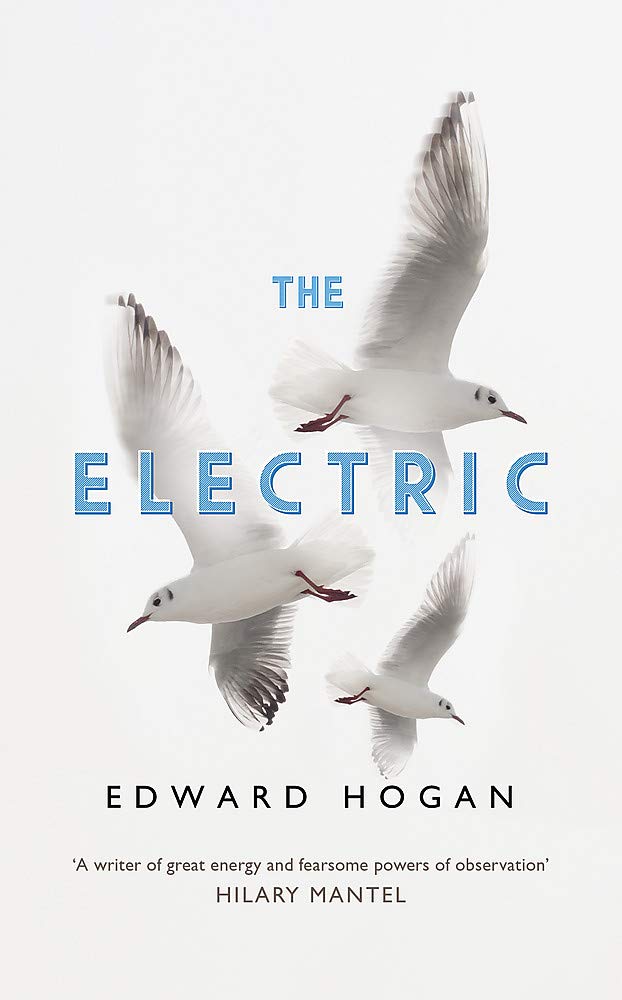
Ed Hogan is a Lecturer in Creative Writing at the Open University. His first novel, Blackmoor, won the Desmond Elliott Prize, and was shortlisted for the Sunday Times Young Writer of the Year Award. Other novels include The Hunger Trace, and Daylight Saving, which was shortlisted for the Branford Boase Award. His next book, The Electric, is published by John Murray, in 2020. He is now writing short stories, has recently been longlisted for the Costa Short Story Prize and the Sunday Times Audible Short Story prize.  Here he discusses his approach to writing short stories with Sally O’Reilly, Senior Lecturer in Creative Writing.

Sally: How would you define a short story? And what are its limitations? I’ve read a number of contemporary short stories recently, and many of these cover long time periods, have multiple characters and are told from different points of view.  What’s your take on this?

Ed: Last year, I made a commitment to read a short story every day. What struck me was the variety of the form. Yes, I read lots of oblique, Hemingway-ish stories. But, as you suggest, there were also many long stories with lots of narrative – the type Alice Munro specialises in. Some were like dramatic monologues, while others played with the conventions of sub-genres. I read epistolary stories, and stories that took the form of job inductions, or psychotherapy sessions.

Short stories allow you to travel very quickly in your reading. One particular week, I read stories by a writer from Korea (Kim Young-Ha), Argentina (Samanta Schweblin), Zimbabwe (Petina Gappah) and…Derbyshire (Hilary Mantel). In doing this, I realised that some of my earlier assumptions about the form were culture-bound.

I think short stories lend themselves to formal boldness, because they allow both readers and writers to walk the tightrope a bit more. A writer might try something unusual, because it won’t require 500 pages. And a reader might agree to suspend disbelief for 2000 words.

In terms of effects, I can think of many occasions when I’ve cried over short stories, and several times recently (James Salter’s ‘Last Night’, and Camille Bordas’ ‘The Presentation on Egypt’) when I have literally shouted out in shock.

I know you’ve turned to reading short stories recently, too. How did that come about?

Sally: I was partly inspired by your example! And also, because I am writing a novel, I feel freed up by reading short stories. I feel that the possibilities for writing at any length seem looser and more open after reading short stories. A lot of novels, my own included, include a certain amount of ‘business’, linking scenes, sections to establish character, sections which slow things down for a while. In short stories, there is so much precision and intensity. 

Do you think there are fashions in the short story, in terms of what is published, and what competition judges are looking for? Writing is always a conversation/argument/response to other writing, but is this sense of engaging with other stories stronger when you are writing at this length? Is it inhibiting to be aware of the zeitgeist, or do you find it useful to immerse yourself in short fiction when you are writing stories?

Ed: Recently, I read three short stories by well-known British writers (Jon McGregor, Sarah Hall, Cynan Jones), and each one was about a person gradually realising that they’re stranded in a large body of water. I found that very striking. Island anxiety, perhaps.

I read short stories every day, but they’re not always contemporary ones (Daphne Du Maurier, yesterday). In my writing, I’m much more interested in the moment of composition than the moment of publication.

In terms of competitions, I’m drawn to the anonymity – the fact that you don’t send a CV with it. Although I know that the anonymity of competitions can be problematic.

I guess a lot of novelists, in June 2020, are probably looking at their contemporary novels, and thinking, ‘Ah. Right. I may have to make a few changes, here.’ That makes assumptions about novels being ‘news’ or even mimetic, but what about you? I know you’re writing historical fiction, but has the pandemic, or the protests, made you look again at your work in progress?

Sally: Yes! The novel I am working on is set in 1899 and the ‘present’, and this has now morphed from 2020 to 2019 due to coronavirus. There is bound to be a weird thing in contemporary fiction where what we thought of as normal life (with all its abnormalities) ended in 2019 and then there is a sort of cliff edge. Having said this, some of the themes I’m writing about relate to nature and science, and the pandemic makes this aspect seem even more urgent and relevant. The zeitgeist has changed, and that will permeate fiction. 
Sally: Can you tell me more about your Sunday Times Audible longlisted short story ‘Single Sit’, and how you came to write it? Did it come easily, or did you spend a long time writing and refining it? How did it compare to the process of producing other short stories that you have written?

Ed: ‘Single Sit’ is about a conservatory salesman on a call with a potential customer. My dad sold windows and conservatories for many years, alongside his successful semi-professional football career, so I knew some of the language from that business. (Although Frank, my character, is very different from my dad). I’m interested in work vocabularies. Kick-ins and blowouts and single sits.

It arose from a bit of dialogue between Frank and Mrs Cortez, the customer. Once I hit on a relationship – any kind of relationship – I feel like I might have a story. So, I wrote the first two thirds in a few days. But then it went somewhere unexpected, and I couldn’t finish it for ages. I’m in a writing group, and they helped me a lot with the ending. The whole process, start to finish, with editing and putting it away…it took two years.

The longlisting was a fluke, but this is a story about a salesman, and the first principle of sales is that you play the numbers. Knock on every door, enter every competition. ‘Double your failure rate’, as they say.

Sally: You have published several novels, with your latest, The Electric, coming out this summer. Is it possible to compare the process of novel writing to short story writing?

Ed: A while ago, I was asked to recommend some books for a friend. The list I wrote contained about six short story collections, and the others – things like Hawthorn and Child, Legend of a Suicide, In Other Rooms, Other Wonders; Union Street, The Vegetarian – weren’t really ‘conventional’ novels, but collections of linked stories. In those books, much meaning came from the overlap of the stories, the repetition of themes, ‘the singular obsessions endlessly revised’ to steal a phrase from Thomas Lux. I thought I should investigate what those reading tendencies might mean for my writing practice. I’m still new to the short story as a writer, though, and most of the stories I write are terrible, but it’s a process.

There are practical considerations, too. I reckon there’s a moment in writing – and I’m certain this goes for writing in all research disciplines – where you become absolutely absorbed, completely compelled. It’s a physical thing. Currently, given busy personal and professional circumstances for which I am very grateful, the short story is the form which allows me to complete a draft of something while I am still in touch with that initial impulse. To finish before I forget why I started. Of course, then you have to spend two years revising it!

Sally: Do you like writing shorter pieces? Do you find them ‘easier’ in any way, or just different from novel writing? Do you envisage a short story in its entirety, or do you ever write not knowing the outcome, as novelists often do?  And, final query in a multifaceted question, can you write short stories while you are working on a novel, or does the one exclude the other?

Ed: I definitely don’t find short stories easier. Writers often balk at the question, ‘Where do you get your ideas from?’ but that’s where I struggle. George Saunders says that when he finishes a story, he’s convinced he’ll never have another idea again. I feel like that, too. Unfortunately for me, that’s where my similarities with George Saunders end.

One thing about producing several stories over a year or so is that you see your unconscious preoccupations delineated quite sharply. Much of my recent short fiction has taken place in or around cars, despite the fact that I don’t really like them. When you see those connections, you can decide whether to resist or explore them.

The editing process is very different with a short story, isn’t it? For a start, you can re-read your story in one sitting. I remember watching Sympathy for the Devil, the film which shows the Rolling Stones in the studio, developing the song of the title. I was so jealous. With a pop song, you try it one way, and three minutes later, you can – if you’re Mick Jagger – say, “Oh, not like that, Charlie, you mug!” and try it another way. It takes me three weeks to read my own novel.

 

A little literary tourism: in search of Hilary Mantel

Shafquat Towheed, Senior Lecturer in English

Hilary Mantel has been lauded for reviving the fortunes of the historical novel in English, for being the first woman writer to have won the Booker Prize twice (2009, 2012), and for selling over five million copies of her books – but where did it all start? Where did Mantel become a writer, hone her craft, and enter the public domain as a published novelist? What were the social and environmental circumstances that facilitated her arrival as an author? 

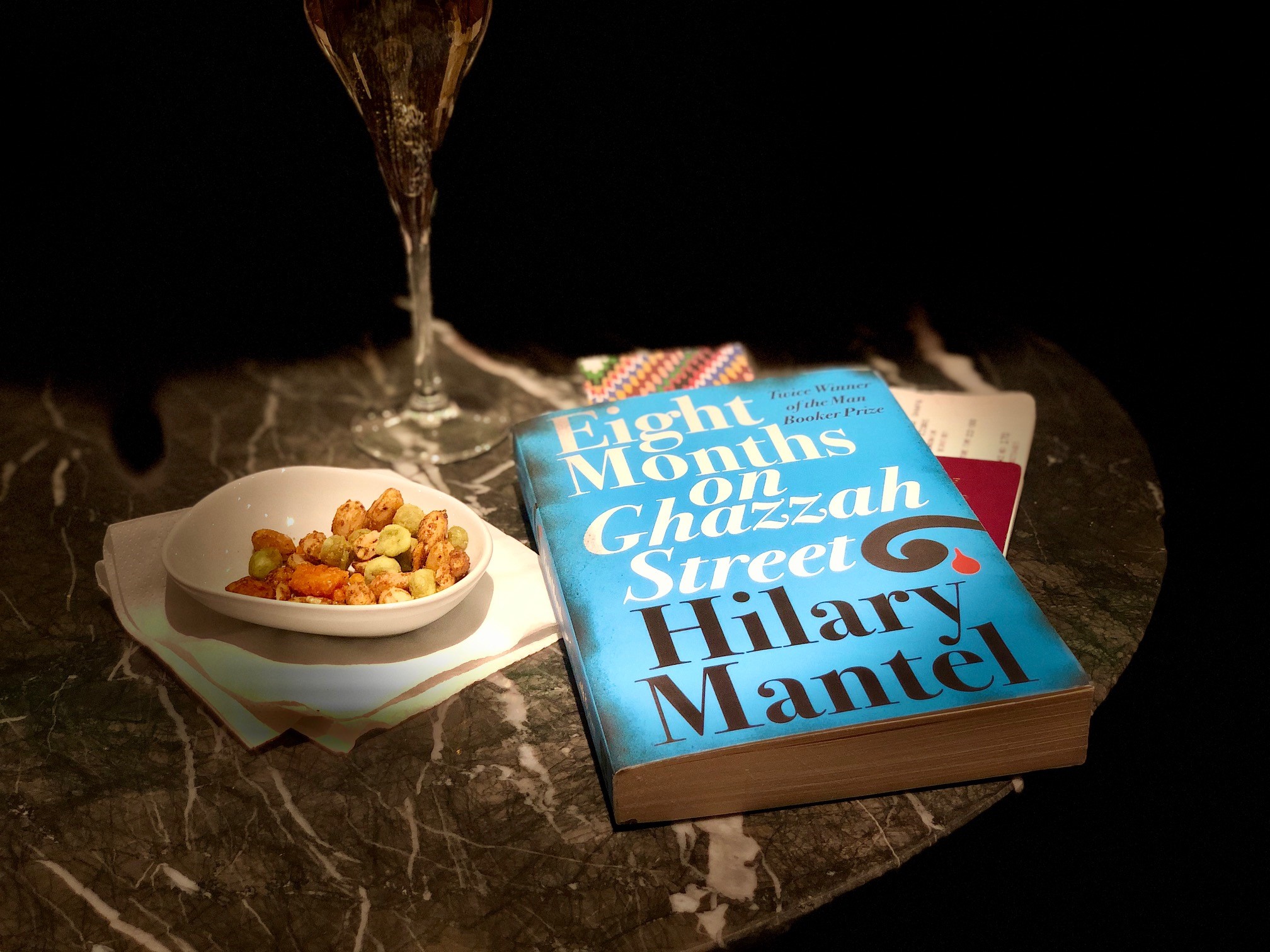
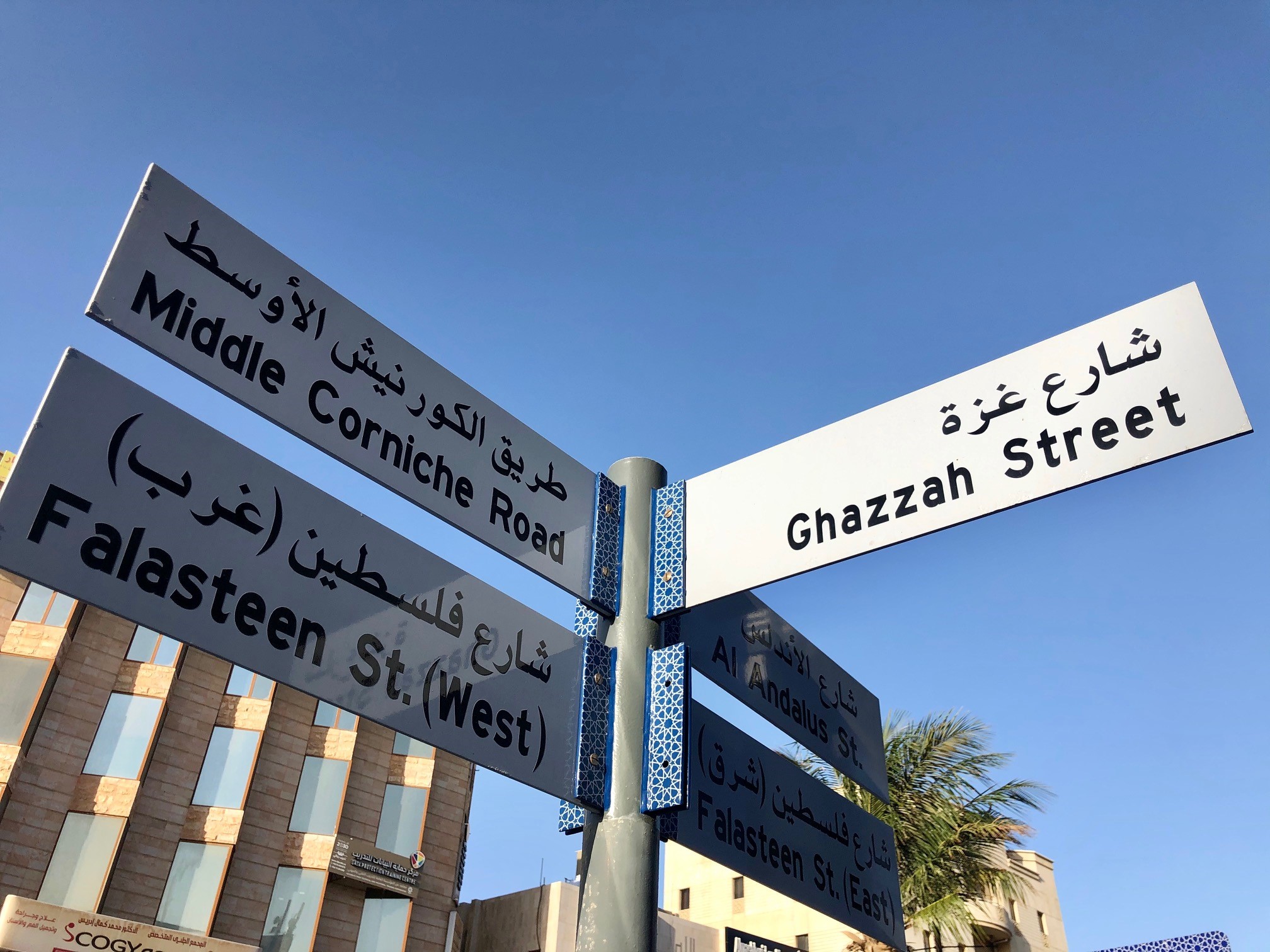
 I had recently been reading Mantel’s third novel, Eight Months on Ghazzah Street (London: Viking, 1988), which is set in Jeddah, Saudi Arabia, in 1984-85, and tells the story of Frances Shore, the unhappily married cartographer wife of a civil engineer on an expatriate work contract in the Kingdom. The novel is perhaps the best evocation of 1980s Saudi Arabia written by a woman in English, and carefully reconstructs the oppressive, punitive environment that she encounters. A mapmaker stranded in a city without signs, Frances Shore observes that pavements in Jeddah exist to stop cars crashing into buildings, and not for the benefit of pedestrians. Her large apartment on Ghazzah Street has windows with views of blank compound walls, and she can only glimpse a view of the sea by climbing to the roof. Denied the opportunity to work or drive, Frances Shore reads her way through all the detective novels she can find, while keeping a diary of her claustrophobic life and trying to reconstruct the lives of others around her. It is a compellingly atmospheric novel. 

When I recently went to Saudi Arabia for a short visit, I had to go and find Ghazzah Street, and see the place that Mantel had reimagined in her fiction for myself. Within 72 hours of setting foot in the Kingdom, I was there, and a spot of surreptitious literary detective work (and pilgrimage) had begun.  

 So here is Ghazzah Street, 9 blocks in from the sea, in Hamrah in Jeddah’s downtown, just off Shari’eh Falasteen (Palestine Street). Several of the buildings look plausible as the likely home of Frances Shore in the novel -which thinly fictionalised the first apartment Mantel actually lived in. Much has changed – Ghazzah Street now has a swanky business hotel, Palestine Street is beautifully pedestrianised, and women are allowed to drive – but parts of the built environment dating from the 1970s and 1980s are exactly as Mantel would have encountered and thinly fictionalised in the novel. In fact, Mantel spent not eight months in Jeddah, but stuck it out for four years, in three different addresses in Jeddah and one outside of the city, accompanying her geologist husband. 

Mantel hated her time in Saudi Arabia and to the best of my knowledge, has never been back. And yet, it was those four years, living in the most gender repressive society on earth, that was the crucible that forged her as a writer. She had time to write, as denied the ability to work or drive, she could do little else. Like her fictional character Frances Shore, Mantel read her way through the British Council Library’s collection of detective fiction, and similarly, kept a diary of her day to day life. She arrived as a housewife and left as a professional writer, with two novels under her belt, and the material – her Jeddah diaries – for her third, Eight Months on Ghazzah Street, ready to go. She worked through her material and wrote the novel back home in England during the winter of 1986, in a world that ‘always seemed to be dark’. Even before the novel was published, Mantel’s Jeddah material was winning awards: her first literary prize was as the first ever recipient of the Shiva Naipaul Memorial Prize for Travel Writing (1987) for a piece on Jeddah. 

 So, if you are thinking of the place that turned Hilary Mantel from a geologist’s wife into an awardwinning novelist, look to Jeddah, and not just for the inspiration for Eight Months on Ghazzah Street. Surely, there could have been no better preparation for writing about absolute male patriarchy and the divine right of kings in Tudor England than having lived in the Kingdom of Saudi Arabia? Perhaps even more ironically, Mantel now has a readership within the Kingdom: Wolf Hall and Bring up the Bodies are both openly sold and read there, as my own visit to Jarir Books, Jeddah’s largest physical and online book retailer, located just a few kilometres away from Ghazzah Street, proved. 

Three Books

Sally O’Reilly, Lecturer, Creative Writing

I’ve no idea how many books I’ve read in my life. I know I started young and read avidly from the age of five. My earliest reading focused around magic and adventure, and I developed a passion for Roman warfare via the medium of Rosemary Sutcliff. The obsession with the details of shield deployment in a battlefield situation has faded; the love of reading that transports me to an unfamiliar place has not.

Here are three books that stand out from the rest:

The book I remember from my childhood

My common law step-grandfather gave me a boxed set of all the Narnia books when I was seven. I loved and re-reread them all, but the one that blew me away was The Magician’s Nephew, by C.S. Lewis, the tale of two Victorian children who travel back to the Genesis of Narnia. (I had yet to make the discovery that all of these books were Christian allegories, though very little seems to be under the radar when I look back on them now.) What I liked best was the evocation of lost London, in particular the attics that connected a row of tall houses, and the way in which Lewis boldly sets out his own Creation story, with Aslan breathing the new Narnia into being. It seemed that anything was possible, anything could be described in a book, and I found that so exciting.

My all-time favourite book/ultimate recommendation

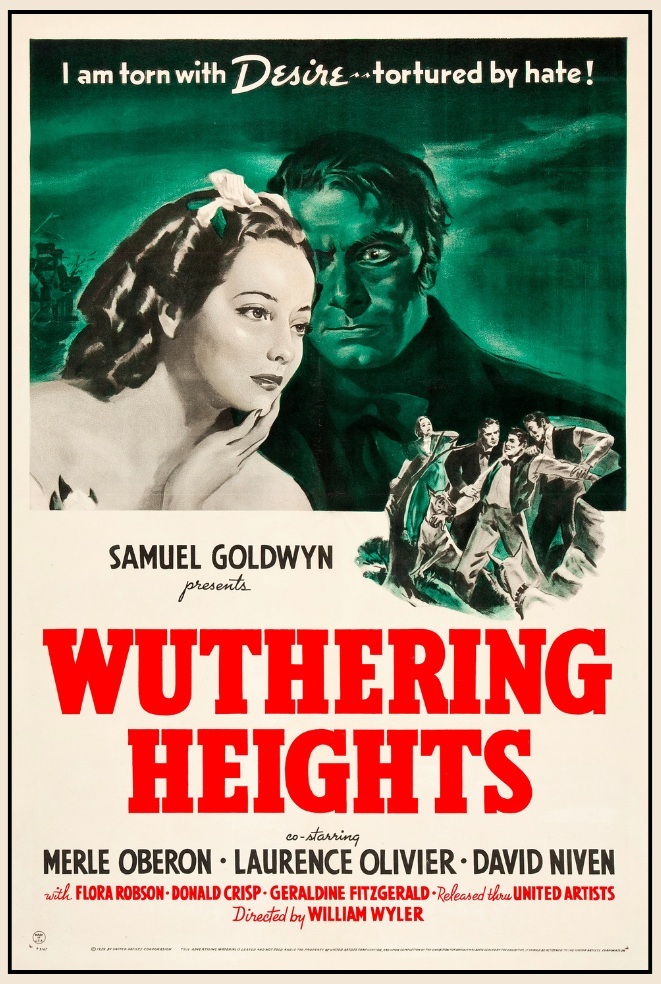
It’s impossible to be accurate about this, as these things do shift around as you find new things, but I keep coming back to Emily Bronte’s Wuthering Heights, which recently took a bit of a drubbing among some of my Facebook friends for its poor plot structure.  There is a danger in teaching creative writing that you might suggest that there are absolutes in writing, when I would say there are just two – read a lot and write a lot – and this book is proof of that.

This is what I wrote on Facebook in its defence: ‘It’s not a sensible book at all, but so mad and intense that it creates its own weird magic space, unlike anything. Charlotte Bronte’s books, crazed as they are, are positively Austen-like in their restraint compared to this one.’ What stays with me from this book is its character, the moor, the intensity of teenage passion, something bleak and mysterious that doesn’t make any sense. It’s my ultimate recommendation (today) because of this – few writers can communicate the essence of obsession and contrariness as Emily Bronte does in this book. And I also actually love the Russian doll structure, tales within tales, the enjoyment in a story told by a fireside with the wind howling outside.

The book I am reading now 

I’m currently reading Reality Hunger by David Shields, which is opening my eyes to the extent to which my own genre of writing, historical fiction, overlaps with creative nonfiction as well as fiction.  I’d describe this book as an opinion-starter, and it’s a bit ‘novel is dead’ (or at least in intensive care) for my taste. I think the novel, literary or generic, will absorb all comers – the success of Karl Ove Knausgaard’s maximalist My Struggle series is an example of fiction that encompasses many of the tropes and conventions of nonfiction.