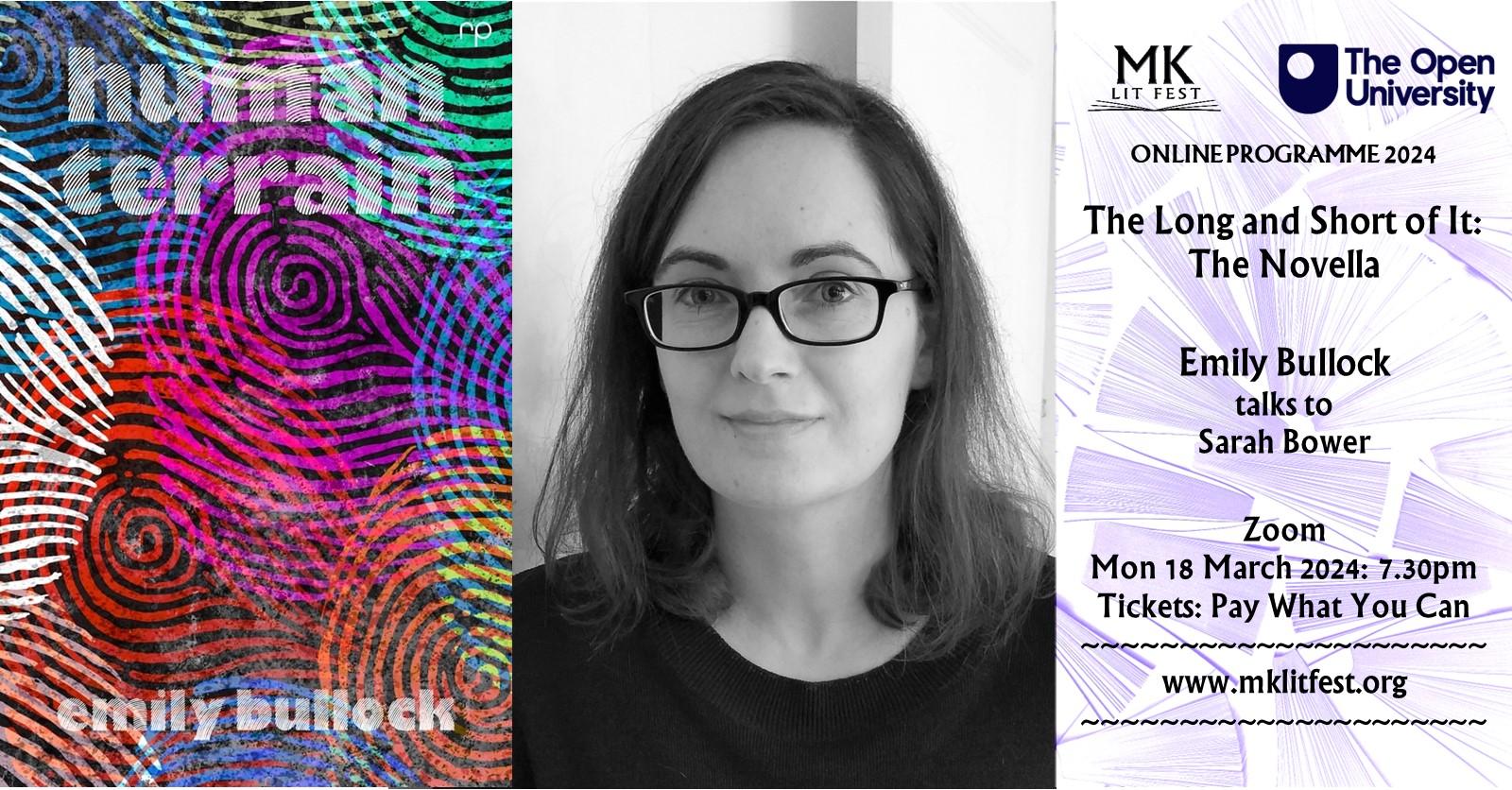
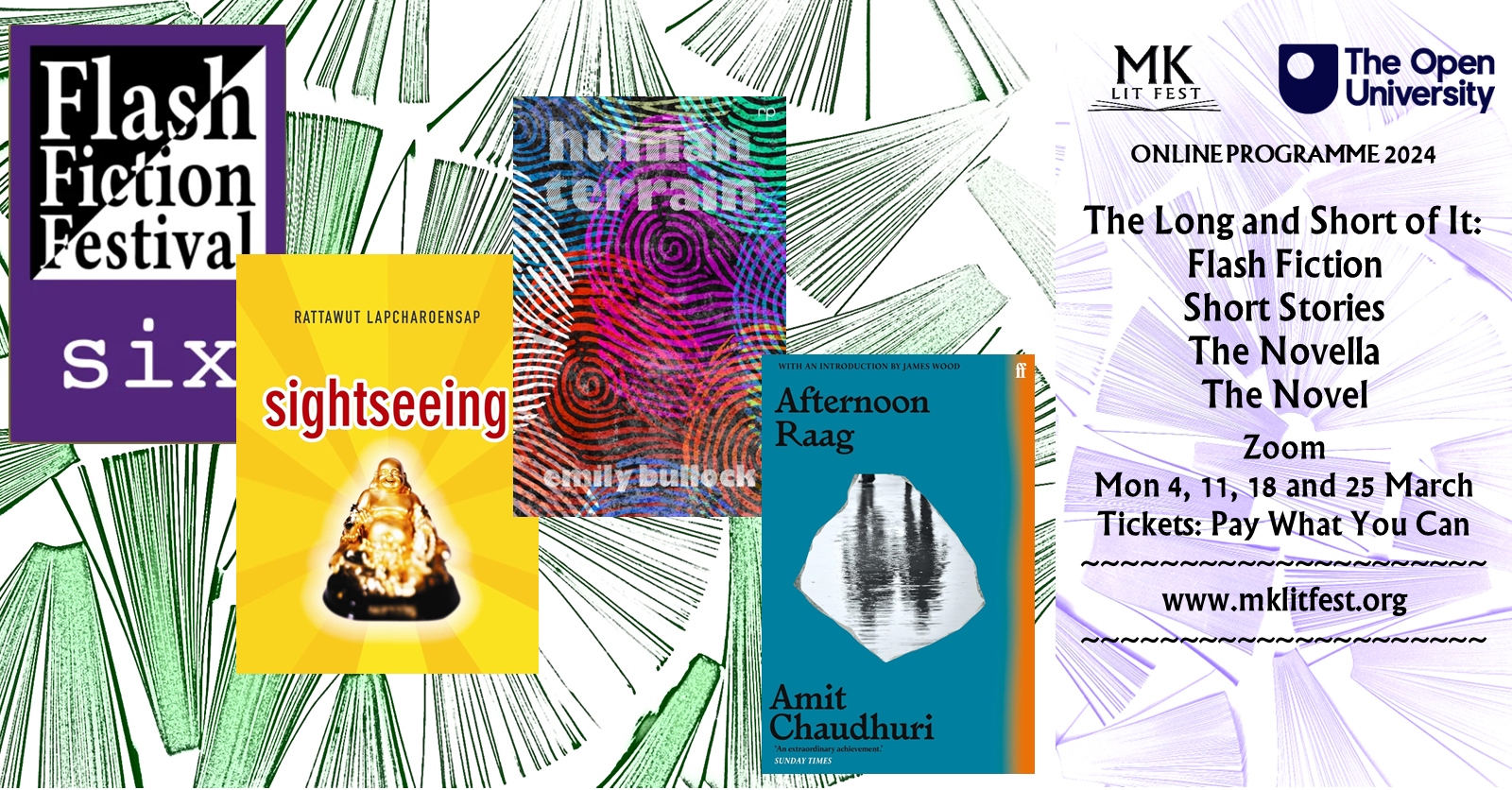
On Monday 18 March 2024, in the third instalment of the MK Lit Fest series The Long and Short of It, acclaimed writer Emily Bullock was in conversation with OU Associate Lecturer and PhD student Sarah Bower discussing the novella, sometimes dubbed literature’s ‘awkward middle child’.
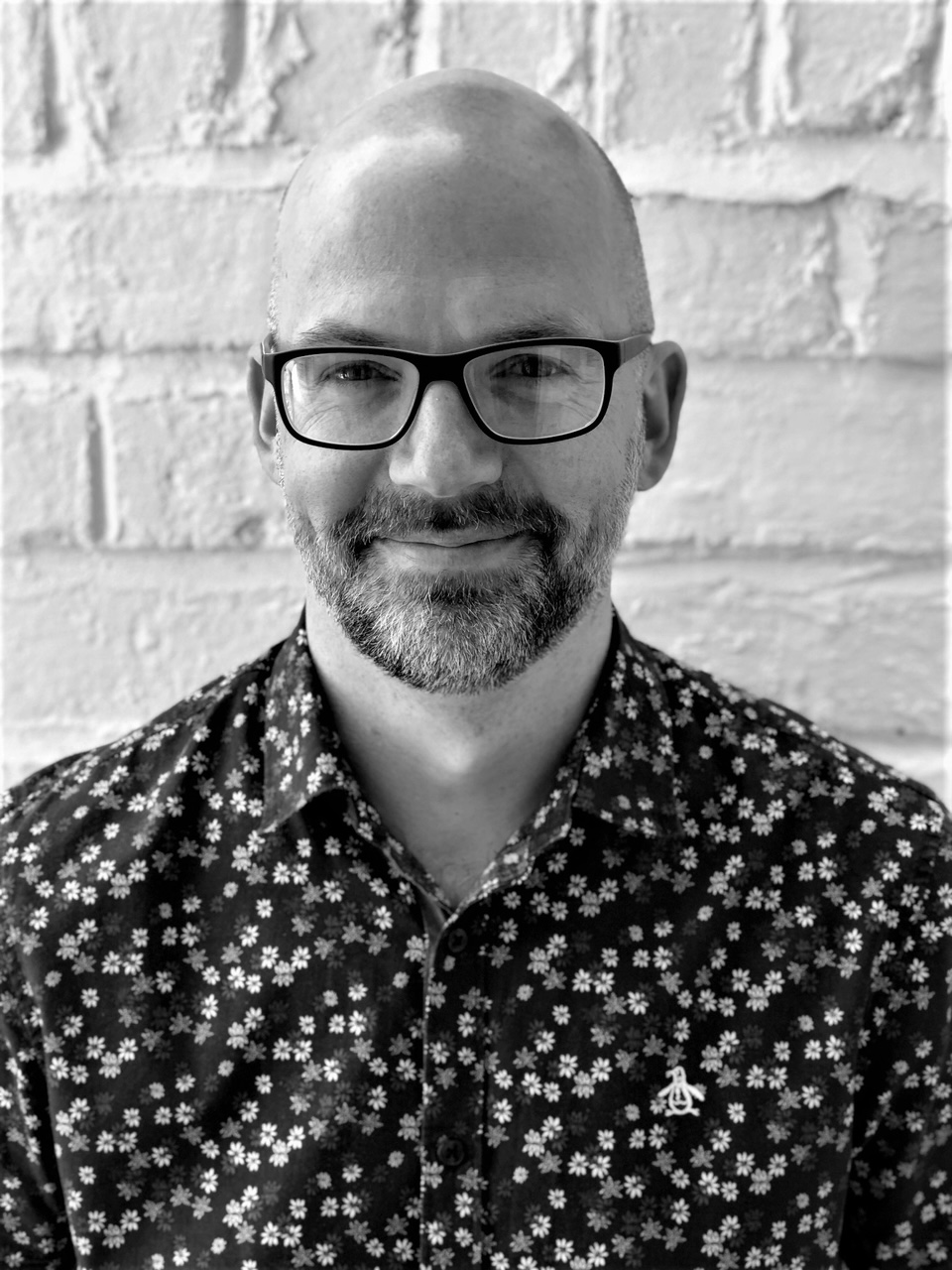
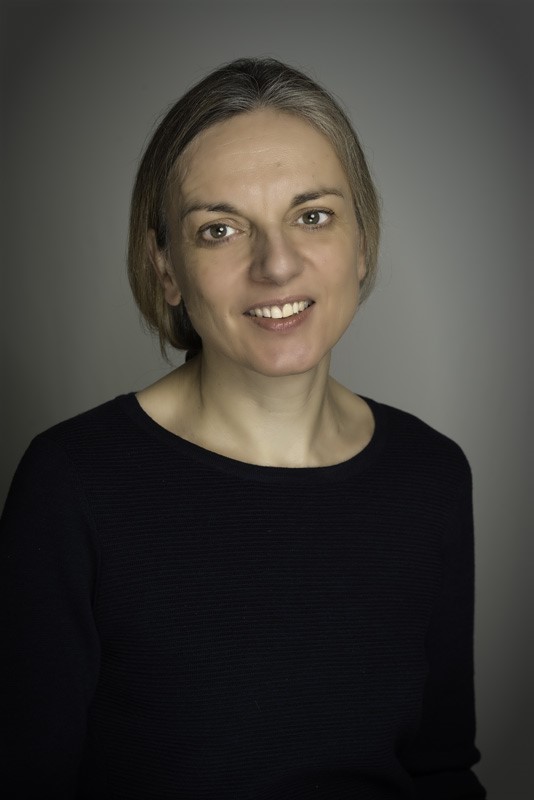
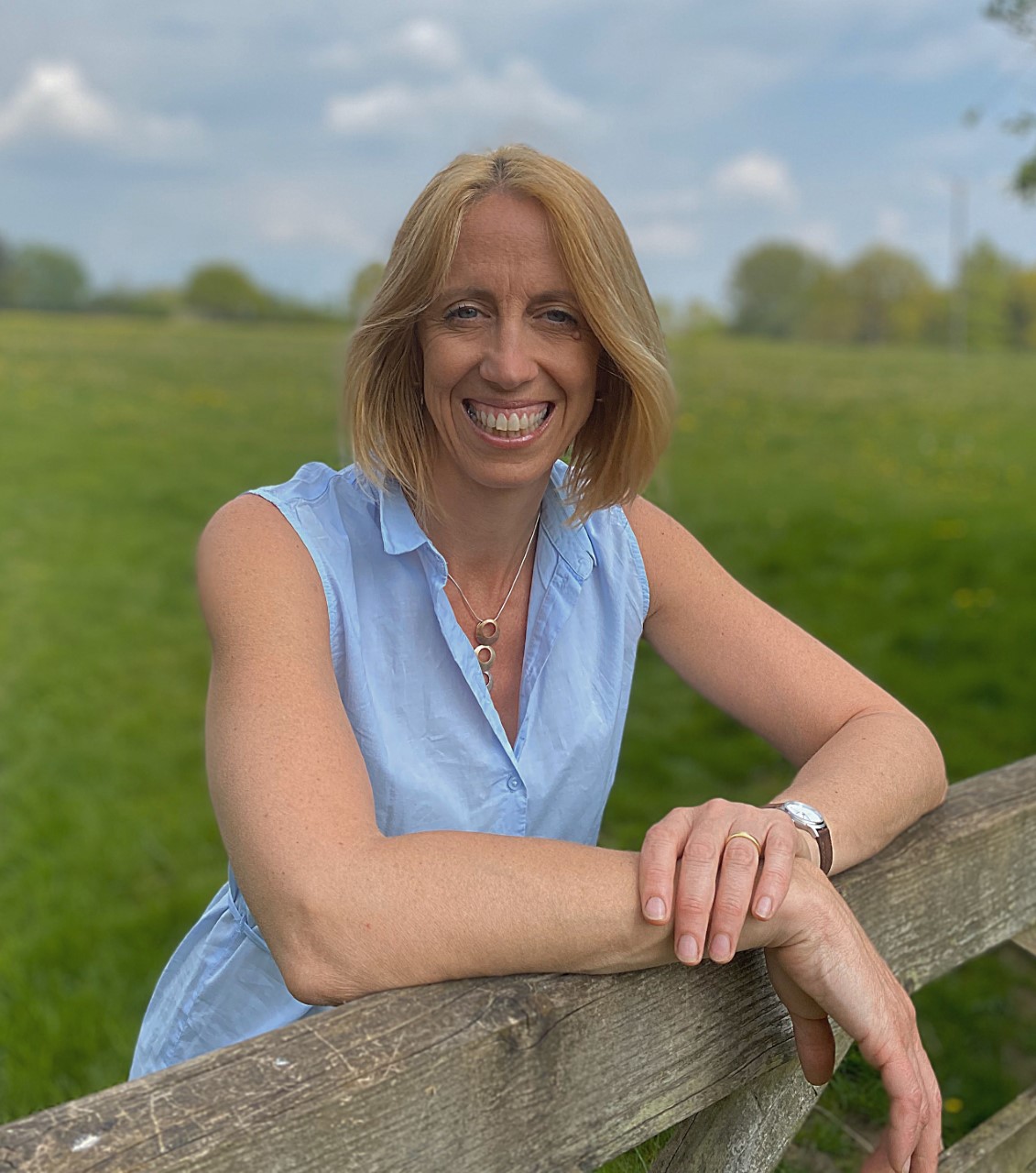
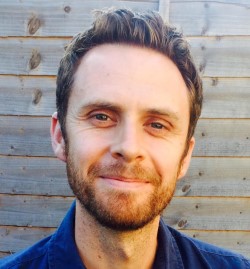
Emily BullockSarah Bower
The novella is for some a bit of a puzzle; too long to be a short story and too short to be a novel. For many mainstream publishers it is a headache to be avoided. For some readers the novella represents poor value for money, for others, it is the most perfect literary form. Although shorter than novel in terms of word count, a novella is not necessarily easier to write, and to write well requires the intense control and refinement perhaps more often associated with poetry.
Interviewing Emily Bullock about her forthcoming publication For Always Only and the form of the novella, Sarah Bower (herself the author of a novella) asked questions that got right to the heart of the matter.
For Always and Only is about the process of reading James Joyce’s Finnegan’s Wake, or at least it is partly about that because a novella is no one-trick pony and is never only about just one thing. There is a degree of irony, noted Bower, in using Joyce’s sprawling and notoriously difficult work as the organising principle for a short, tightly controlled novella. To explain how this works, Bullock gave an account of her own process of reading Joyce, not entirely for meaning, but as a kind of readerly ‘beach combing’, and how she makes Finnegan’s Wake her own by frequently interrupting Joyce with her own lines of thought. Roland Barthes also remarked on this aspect of reading in The Rustle of Language:
Has it never happened, as you were reading a book, that you kept stopping as you read, not because you weren’t interested, but because you were: because of a flow of ideas, stimuli, associations? In a word, haven’t you ever happened to read while looking up from your book? (1986, p29).
In the light of these descriptive accounts of reading and reading while looking up, the connection with Joyce begins to make perfect sense as the backbone of writing that is very much ‘about’ reading.
The process of writing this novella was notable for the amount of cutting Bullock found she was willing to do, such as cutting out her character’s backstory, cutting flashbacks, stripping back description, and ending chapters abruptly. All this cutting, she explained, leaves the remaining gaps to do more work and leaves space for the reader who must invest in the reading process. The reader needs to be particularly alert to what is not on the page. Writers often talk about the balance between showing and telling, but in the case of the novella, according to Bullock, what the writer is not showing and not telling become highly significant.
Bullock’s forthcoming novella is set in a claustrophobic bedsit in Bloomsbury, a location that gives a wry nod to Virginia Woolf’s ‘A Room of One’s Own’ and which is also perfectly sized to provide a counterpoint to Joyce’s Dublin. And yet, the setting offers a similar intensity to Dublin but, of course, achieved in far fewer words. In the reading Bullock gave, her use of lists of items economically created a whole world whilst leaving scope within the tight frame of narrative to express bigger ideas.
In answer to Bower’s question about how a writer might know that the novella is the literary form that would best serve the story they want to tell, Bullock explained that whilst a short story is very often the synthesis of two ideas, and a novel gives ample room for complexities of character chronology, and worldbuilding, stories that are of an experimental nature, stories with strong ideas and those requiring considerable reader engagement might find their ideal form in the pithy perfection of the novella.
In a lively Q&A session Bullock fielded questions on For Always Only (to be published later this year by Reflex Press) and on the form of novella more generally. Enthusiastic audience involvement would suggest that despite the lacklustre support from mainstream publishers, there is an enduring appetite for the intriguing form of novella, and many of the questions and comments raised could have kept us all talking long into the night.
The series will conclude with the novel form on Monday 25 March.
Gwyneth Jones
Gwyneth Jones is a writer of short and flash fictions under the pen name Jupiter Jones, and her work has been widely anthologised. She is currently a PhD candidate at the Open University researching (dis)connectivity in the literary hybrid form of the novella-in-flash. Her supervisors are Dr Jane Yeh and Dr Emma Claire Sweeney.
On Monday 12 March 2024, we had the privilege to hear the writer RattawutLapcharoensap in conversation with OU Associate Lecturer Dr. Alistair Daniel. In this second instalment of the MK Lit Fest series The Long and Short of It, they explored the unique challenges and pleasures, and possibly also pains, of short story writing.
PhD student, Anne Wetherilt, offers here a summary of the event for those of you who couldn’t make it.
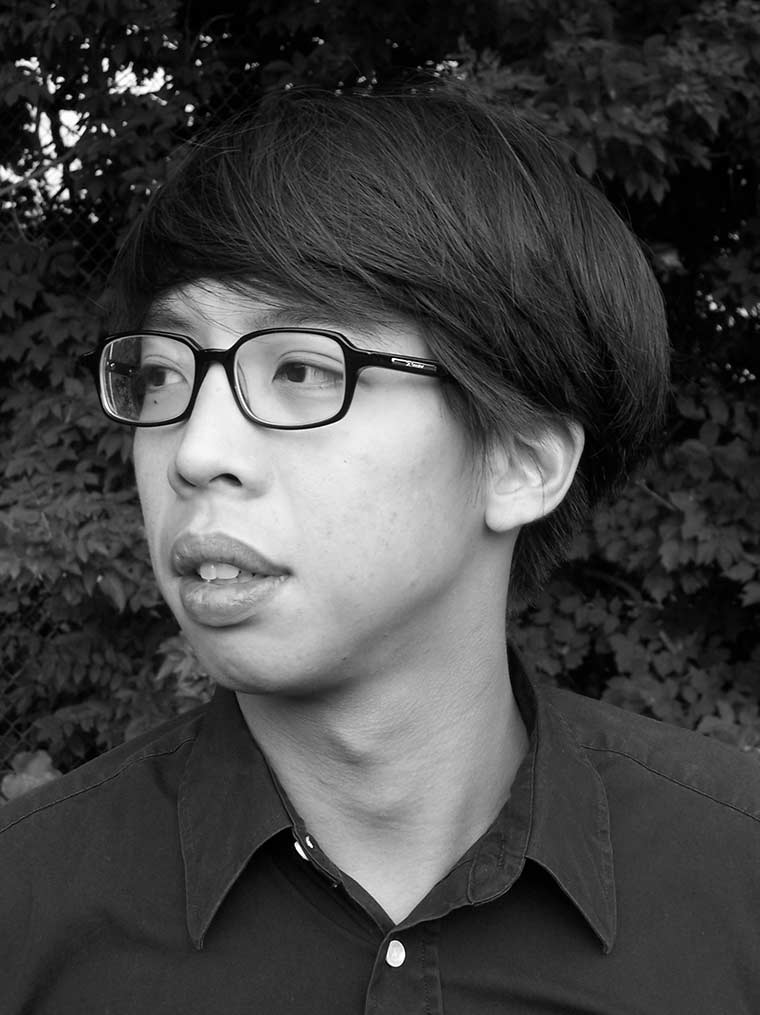
Alistair DanielRattawut Lapcharoensap
Rattawut Lapcharoensap, Alastair Daniel wrote earlier this month burst onto the literary scene in 2005 with his debut story collection, Sightseeing. It won the Asian American Literary Award and was a finalist for the Guardian First Book Award.
Short stories, Edgar Allan Poe famously wrote, need to be read in one setting. But this, Lapcharoensap argues, short-sells the short story. An avid reader of the form – he quotes James Joyce, Frank O’Connor, Sherwood Anderson, Flannery O’Connor, Alice Munro, Katherine Anne Porter and Junot Diaz amongst others – Lapcharoensap is drawn to the short story because of its ability to capture the individual and the collective experience, and its intense awareness of human loneliness.
His short stories have a strong sense of place. ‘I want to write the truth about the communities I felt part of’, he tells us. Indeed, in Sightseeing, he gives us a richly detailed picture of Bangkok in the 1980s and 1990s. The stories are rooted in experiences he witnessed as a young person and carried with him as an adult. And whilst they touch on topical political issues, his main aim is always to tell the truth about his characters’ lives.
When Sightseeing came out, William Sutcliffe, writing in The Guardian praised its ‘novelistic richness’. Lapcharoensap aims to achieve this richness through his characters. Even though a short story gives the reader only a glimpse of the character’s life, you can present the whole person: where they came from; what they have done earlier in their life; how they have lived their life. You can write beautifully and with great emotional clarity, he asserts, a short story need not be short in terms of descriptive power.
In Sightseeing, these stories typically narrate the experiences of young boys or adolescent men. But they are brought to us by older first-person narrators, who calmly observe and report their own earlier encounters with life. This older first-person narrator, Lapcharoensap reflects, brings an interesting perspective to the story. They may have greater articulacy, but often continue to be bewildered.
Given the centrality of place and character in his stories, it is perhaps no surprise to learn that Lapcharoensap usually starts the writing process with a scene or a character. Asking ‘who is speaking’, he expands on a notion, a feeling, a telling detail or bird’s eye view. The story line may emerge later – although sometimes it doesn’t. This early composition is like playing in the dark, he explains, and proceeds without a plan. But planning comes in when he starts revising and here we get a glimpse of the personal discipline Lapcharoensap applies to his writing. Revision is about looking for opportunities to exercise the imagination, he believes. The creative act is not just the initial inspiration – the artist struck by the imagination in his study. Rather, such moments occur in the sequence of drafts, when ‘something beautiful emerges from the lumps of despair’.
For all their promise, short stories can be prone to clichés and pitfalls. Lapcharoensap is particularly wary of the emphasis on epiphany. The Joycean epiphany can be beautiful, he argues, but as a narrative habit it can also be limiting. Not every character needs to act, stumble and learn from their mistakes. Weak epiphanies or false epiphanies abound in short stories, and as a genre requirement, it can limit a young writer in their development and imagination. Another pitfall, he admits, is to create characters like yourself, which you don’t allow to fail or behave foolishly. Invariably, this reduces the richness of the story, and the fictional narration becomes wishful fulfilment.
Part of the joy of being a short story writer, Lapcharoensap notes, is in seeing them published as part of a collection. Each story is written on its own and should stand on its own feet. But they are enriched by their neighbours, as the writer organises them in a particular way to achieve formal and thematic dignity.
Sightseeing closes with ‘Cockfighter’, which at 90 pages is closer to a novella.This particular one did not end, Lapcharoensap explains. ‘It just wouldn’t stop and I continued to be interested in it’. As a reader, he loves the novella – it has the expansiveness of the novel yet requires the rigour and economy of the short story. To this reader of Sightseeing, Lapcharoensap moves effortlessly across the two forms, offering us ‘novelistic richness’, as well as sheer reading pleasure.
The series will delve into the novella form on Monday 18 March and conclude with the novel on Monday 25 March.
Anne Wetherilt
Anne Wetherilt is a part-time PhD student in the Department of English, funded by the Open Oxford Cambridge (OOC) Doctoral Training Partnership. Her thesis – ‘Decolonisation and the Female Middlebrow: Politics, Economics and the Novel’ – studies the work of women writers, who witnessed the end of the British empire. Her supervisors are Prof. Alex Tickell and Prof. David Johnson.
Creative Writing PhD student and Associate Lecturer Sarah Bower found herself inadvertently crafting a novella during the second lockdown summer of 2021. Ahead of Monday’s online event with fellow OU novella writer Emily Bullock, Sarah unveils how writing a novella helped her uncover hidden layers of her larger literary endeavors.
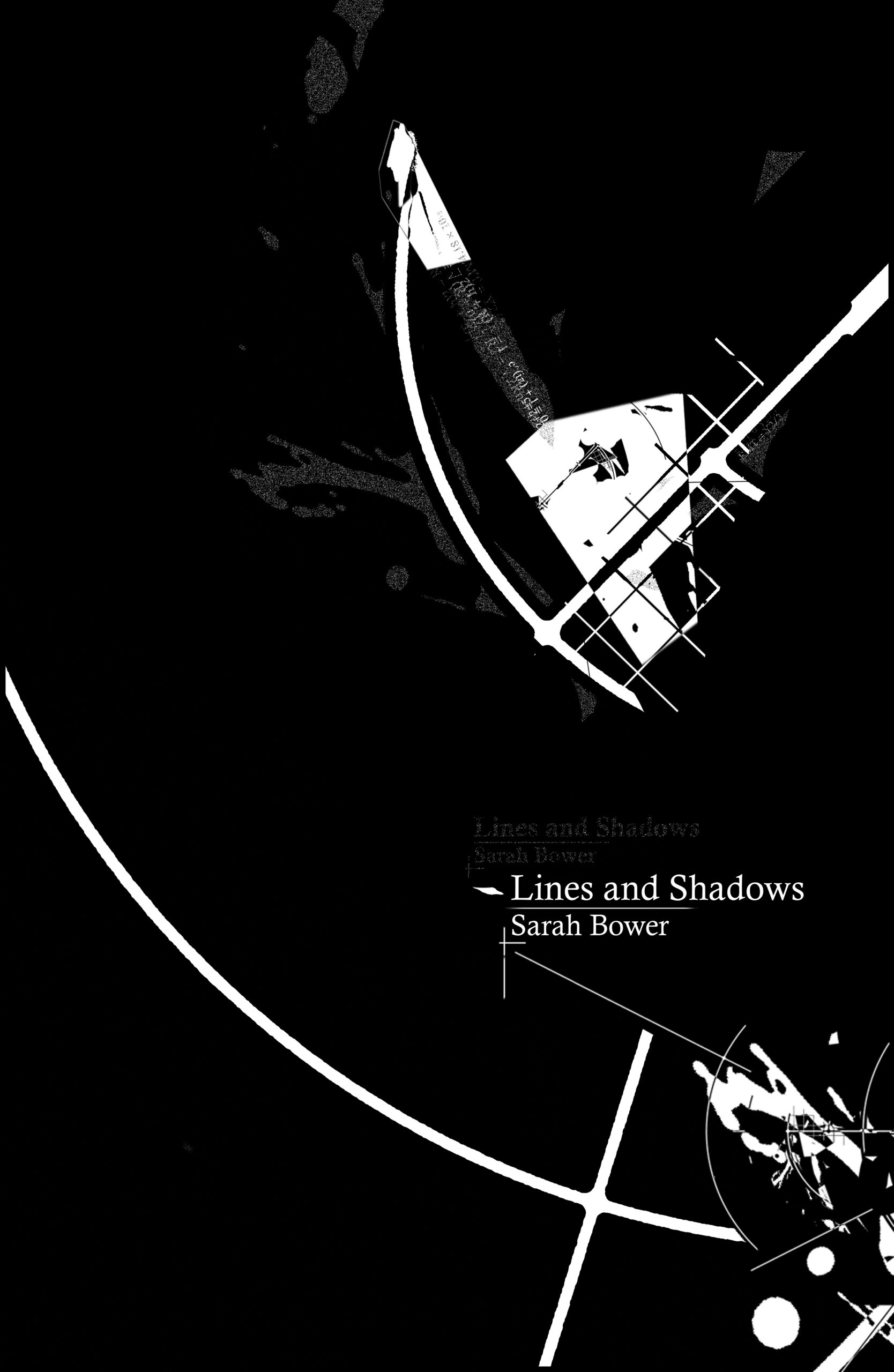
Rather as Withnail and I went on holiday ‘by mistake’, in the second lockdown summer of 2021 I wrote a novella by accident. In August 2023, it was published by Story Machine as Lines and Shadows. Admittedly, it seems an odd sort of mishap, and you would be within your rights to doubt my assertion that it was an accident at all because who writes an entire book – even a short one – by accident?
Let me tell you how and why it happened.
I was in the first summer of my PhD in creative and critical writing, for which I am writing a much longer novel, part of which, set in 1968 and 69, is about the role of women in the manufacture of spacesuits for Apollo. End of year marking was over, there was little or no prospect of diversions such as test cricket or holidays. The PhD beckoned. I opened up the file…
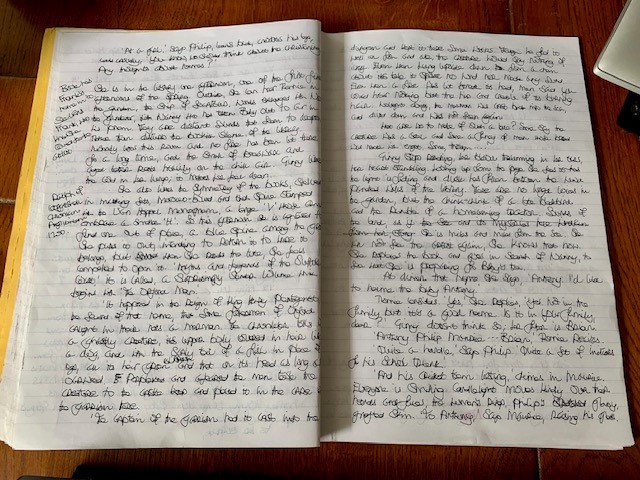
…and picked up a notebook in which I started writing, by hand and with no conscious forethought, something completely different.
I headed it ‘Ghost Story’ and wrote: ‘The letter from the Ministry of Defence was lying on Ginny Matlock’s plate when she came down to breakfast.’ Beyond that point I knew very little.
Fiction writing is a peculiar process. The writer is split between the mechanical brain which wields the pen or types on the keyboard, undertakes the research, knows how to spell and where to put a comma (most of the time). Then there is the parallel universe of the imagination in which she is not only not herself but may be many others. F. Scott Fitzgerald wrote, in The Last Tycoon, ‘Writers aren’t people exactly. Or, if they’re any good, they’re a whole lot of people trying so hard to be one person.’ The writer is never entirely in control of all these people and sometimes, the ones who have been waiting patiently in the background – perhaps for years – decide they’re tired of waiting and elbow their way to the front of the queue.
The character waiting for me was, in the Romantic tradition, a place: the Suffolk coastal town of Orford. I had lived in Suffolk and known I wanted to write about Orford for many years, not only for its bleak, beautiful and ever shifting landscape. I had written about the East Anglian coastline and its unpredictability before, in my novel Erosion. But Orford has a strange history, which transports the imagination from a medieval merman to nuclear weapons testing and Cold War listening posts. It had lain dormant in my subconscious for twenty years or more, and it was initially a mystery to me why it chose to rise to the surface in that particular summer.
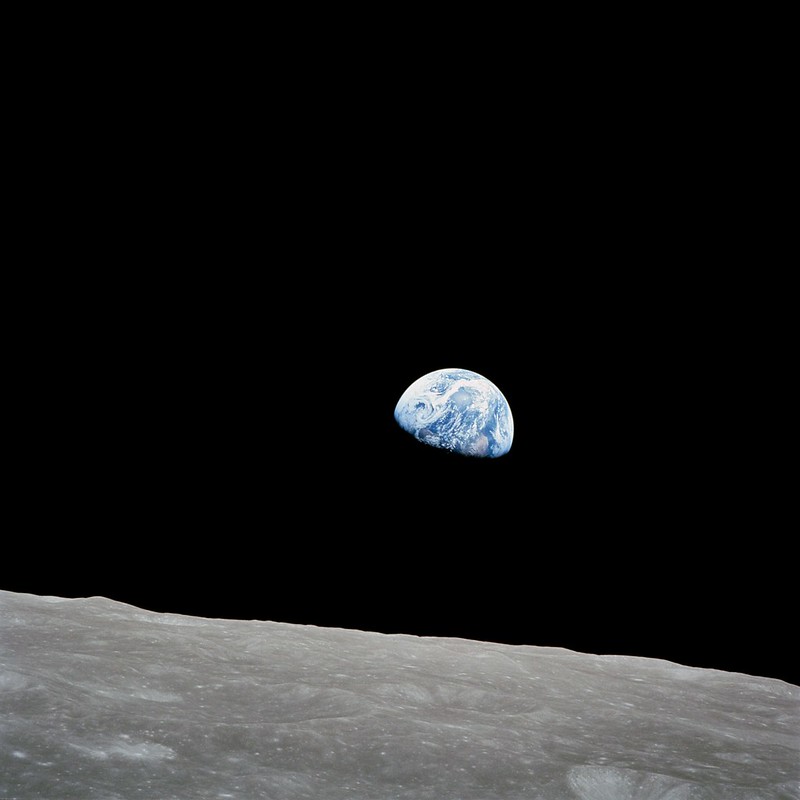
Earthrise 1968
The novella is set between 1960 and 1962, culminating with the Cuban Missile Crisis, in a fictional village called Aldeford. This is closely based on Orford but the inability to conduct either location research or visit the relevant archives in Ipswich due to lockdown meant that I could not achieve the historical accuracy necessary to set my story in the real place. This was liberating, however, as was scribbling in a notebook in the unstructured spaces of my day – while waiting for the kettle to boil, eating breakfast, watching the bath run. I was daydreaming on paper. The characters conjured into being this way – Ginny, the mathematics prodigy from Manchester, her society girl housemates, the Korean war hero Philip and the mysterious Artist – had the freedom to do as they wished and to tell me what they wanted to.
It wasn’t until they had finished and fallen silent that I understood their function in the process of a whole lot of people trying to become me. I realised, during the course of discussions with my editor which helped to sharpen the novella’s focus, that its creative impulse was a means of delving into the deep backstory of my PhD. It prepared the ground for writing about the proxy war that was the space race and the real war in Vietnam that was the grisly underbelly of America’s triumphant moonshot. Kennedy became president in 1960 and made his ‘We Choose to Go to the Moon’ speech at Rice University in 1962, a month before the missile crisis. While my characters’ lives and loves and encounters with ghosts and spies were unfolding on a secret airforce base in Suffolk, the building blocks for 1968 – for everything from student riots to Earthrise – were being assembled in America.
Lines and Shadows by Sarah Bower
Lines and Shadows is my first novella. At 40,000 words it is long for the form but about half the length of a novel.
Perhaps, in the context in which I was writing, it took this form because the novella too shape shifts like the Orford coast. Neither novel nor short story, it is commonly seen as originating in fourteenth century Italy with Boccaccio’s Decameron. The word ‘novella’ translates from Italian as ‘a short story related to true, or apparently true, facts.’ What better way to describe a book written by accident, set in a fictional version of a real place and tucked into the corners of another book altogether.
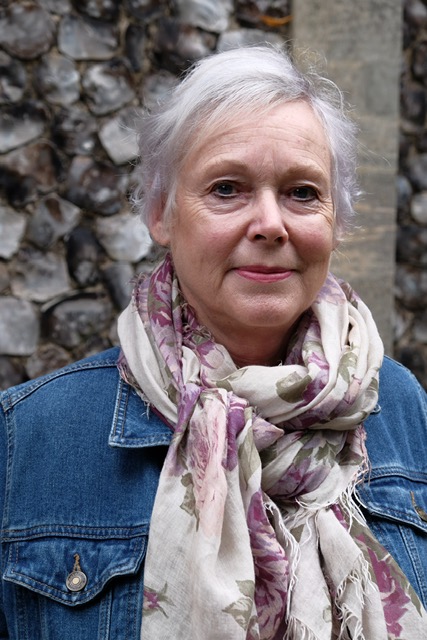
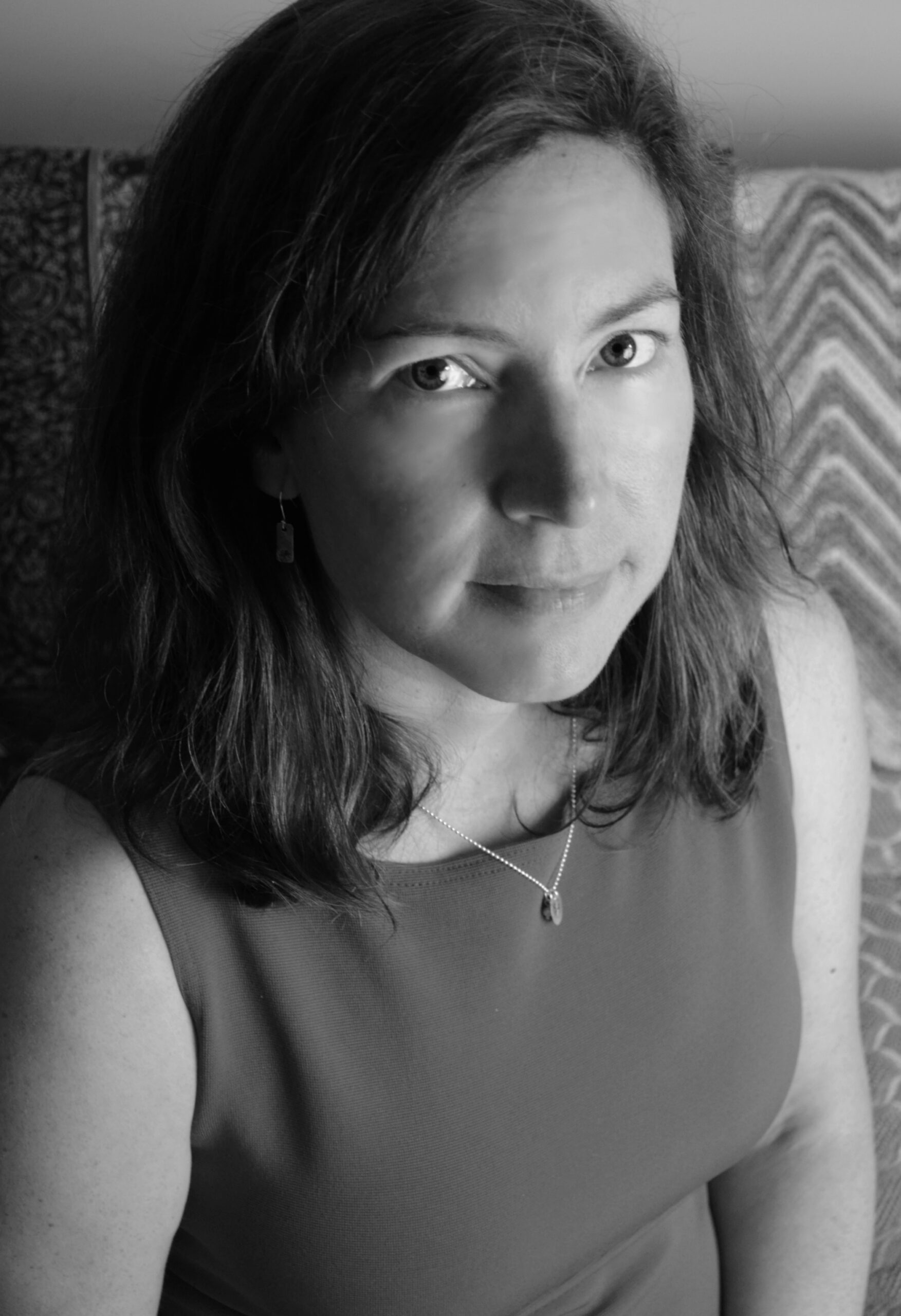
Sarah Bower
Sarah Bower is an Associate Lecturer at the OU, where she is also reading for a PhD in creative and critical writing. She is the author of three previous novels. Her first, The Needle in the Blood, winner of the 2007 Susan Hill Award, was re-issued in September 2023. She also writes short fiction and has edited anthologies of memoir and of literary translations into English. She is currently working on a book of prompts and inspirations for creative writing for imprisoned people.
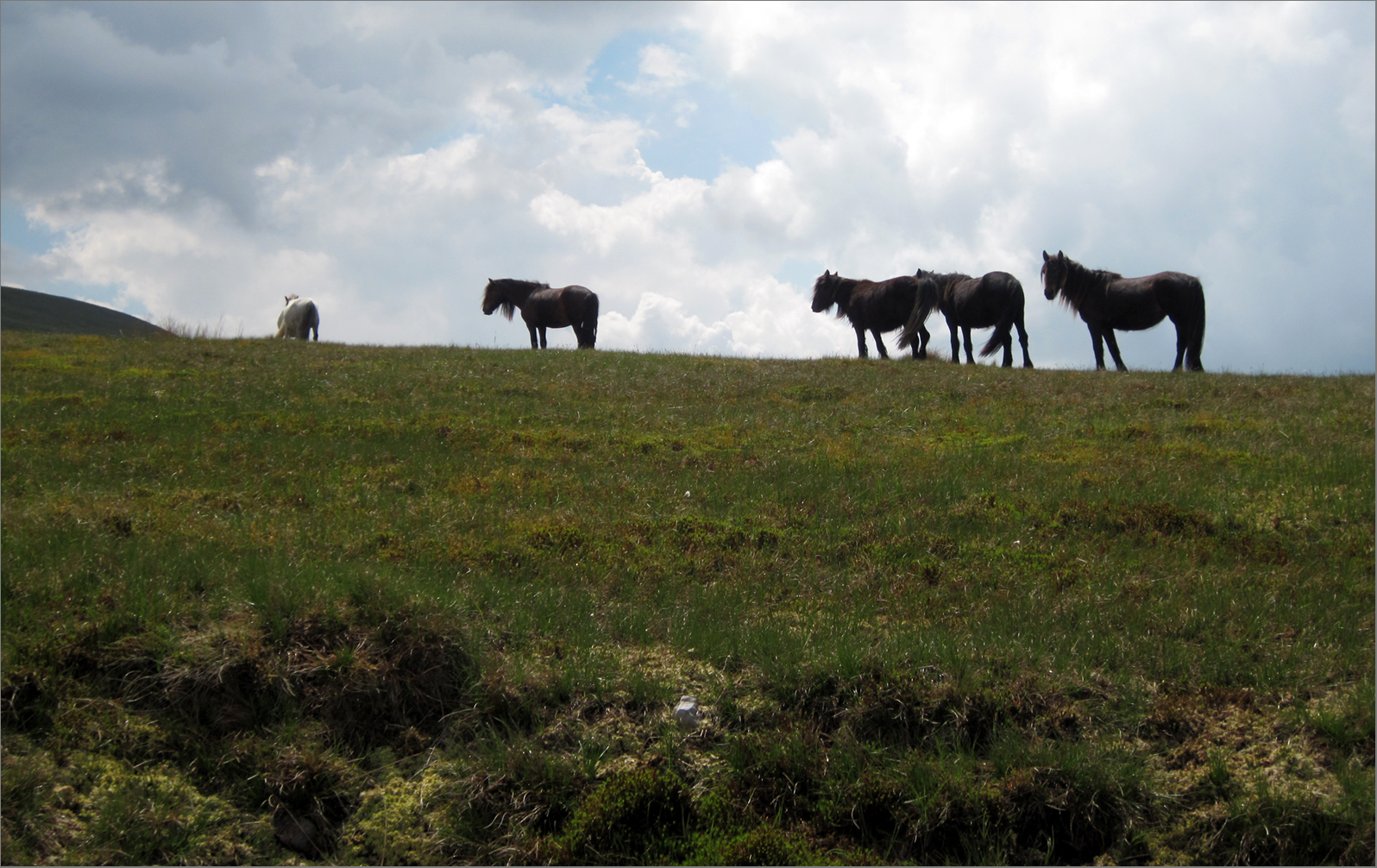
When the world opened again after lockdown, my steadfast companion was the view out my home office window of a fell in Cumbria. Fell ponies often arranged themselves along the ridge of the commons above grazing sheep, backlit by low winter sun. I would gaze at their silhouettes when I needed a break from my computer screen. Former colleagues at brick-and-mortar universities in the US and UK began heading back to campus as COVID restrictions were lifted. I’d taken a job at the OU working from home during the pandemic, and I’d moved five hours north in search of an affordable house with a garden. My ‘new’ office was in a converted bedroom. I couldn’t go to campus or meet colleagues face-to-face for several months after lockdown eased, so I dug in and reconciled myself to living and working in what I came to think of as my ‘fast-moving cloud,’ the western slope of the Howgills.
Fell ponies
Working at the OU has transformed my life as an academic. Moving into a home-based role that is part operational, part distance learning, and part research has provided time for reflection. Most days after lunch, I walk a different lane or track or public footpath in my tiny village where sheep outnumber humans, and I think about things. I live on the edge of the Lake District, countryside that writers Dorothy and William Wordsworth and their friend Samuel Taylor Coleridge would have found familiar. At first, the reality of experiencing the romantic notion of the ‘sublime’ was quite a shock, and it took months to connect with the land in a way other than fear (of high winds, low clouds, and gusting rain) or dread (of same). With time, though, I settled in and got on with work and with writing and connecting with local writers and artists, which has made everything better, especially the low-lying clouds.
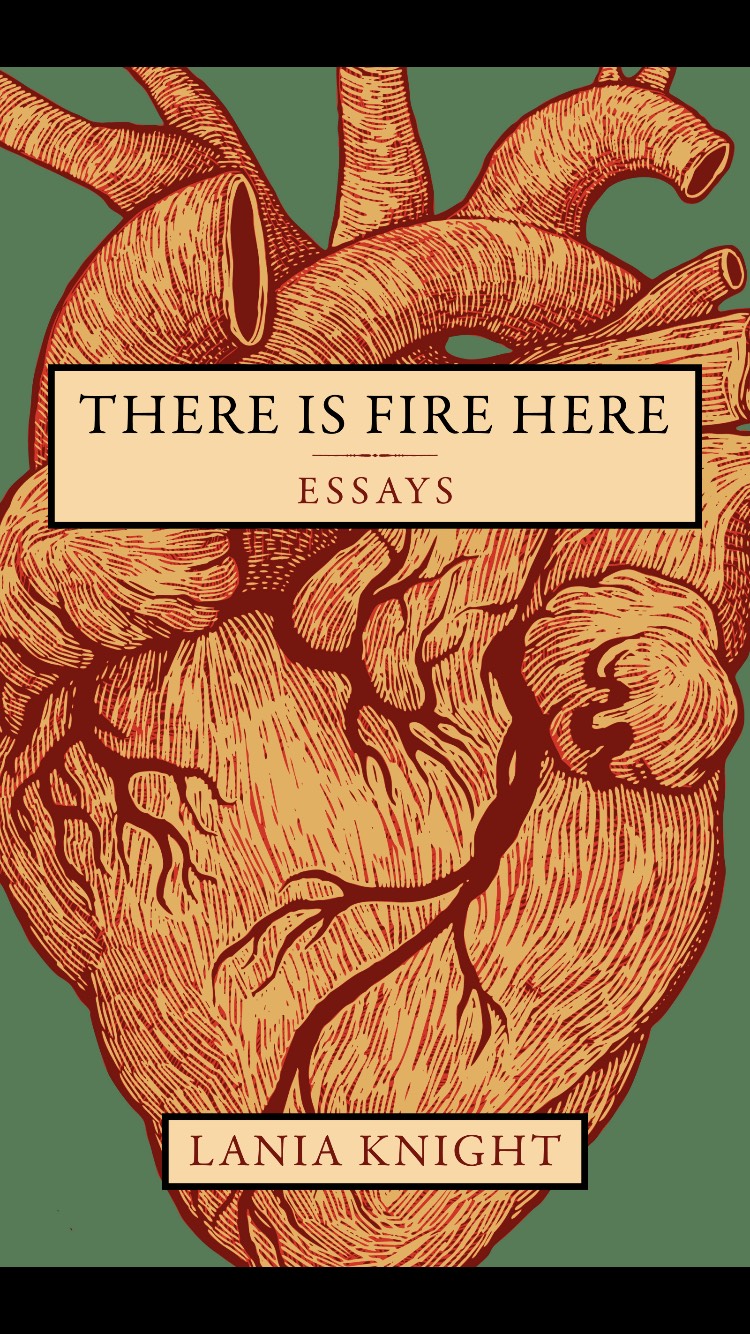
Like other writers who have lived in isolated landscapes, I’ve found this time fruitful. A collection of personal essays There is Fire Here was published in September by a small UK publisher, Signal 8 Press. I have long been a fan of the ‘fourth genre,’ and There Is Fire Here has been a satisfying opportunity to bring together fifteen essays spanning the day I dropped out of high school in Texas and left home on the back of a motorbike at sixteen, to my move across the Atlantic to the UK, where I learned how to write poetry.
Some of the joys of being a writer and an academic are the connections between your research, your teaching, your colleagues, and public outreach. My work in creative nonfiction includes my own writing, my teaching, and public engagement—a circle which is finely balanced within my role at the OU.
While I was working on finalising the manuscript for There Is Fire Here, I was asked to serve on the panel that would be revising the third-year Arts & Humanities module, A363 Advanced Creative Writing. I proposed that we expand the teaching on life writing.
Emma Claire Sweeney, the discipline’s Media Lead and a fellow course author, asked if I might like to interview Kit de Waal for the Milton Keynes Literary Festival. De Waal’s debut memoir Without Warning and Only Sometimes had recently been released and the festival needed someone to interview her. It was a dream role. I was sent all her previous books to read, which included several novels and an anthology she edited, Common People. I set those on my bedside table and devoured them.
Kit de Waal
During my conversation with de Waal at Milton Keynes Lit Fest, I confessed in front of the festival audience that I had cried on the train finishing one of de Waal’s novels,My Name Is Leon. In the same way that she had wowed me with her stories, Kit wowed the crowd, made them laugh and cry, held them enthralled for the entire hour. An OU camera team were there to record it all.
Soon, clips from that conversation with Kit de Waal will be part of the next iteration of A363 Advanced Creative Writing, a culmination of research, teaching and public engagement woven through bespoke teaching materials for the OU. I’ve sent Kit a copy of my book, and fingers crossed, she’ll be attending my online book launch on Wednesday 8th November, when I’ll be in conversation with brilliant UK writer, Zoe Lambert.
Tickets are free and it will be a relaxed evening. I’ll be joining from Cumbria, in a comfy spot by the woodstove. Grab your favourite drink, settle in somewhere cozy and join us.
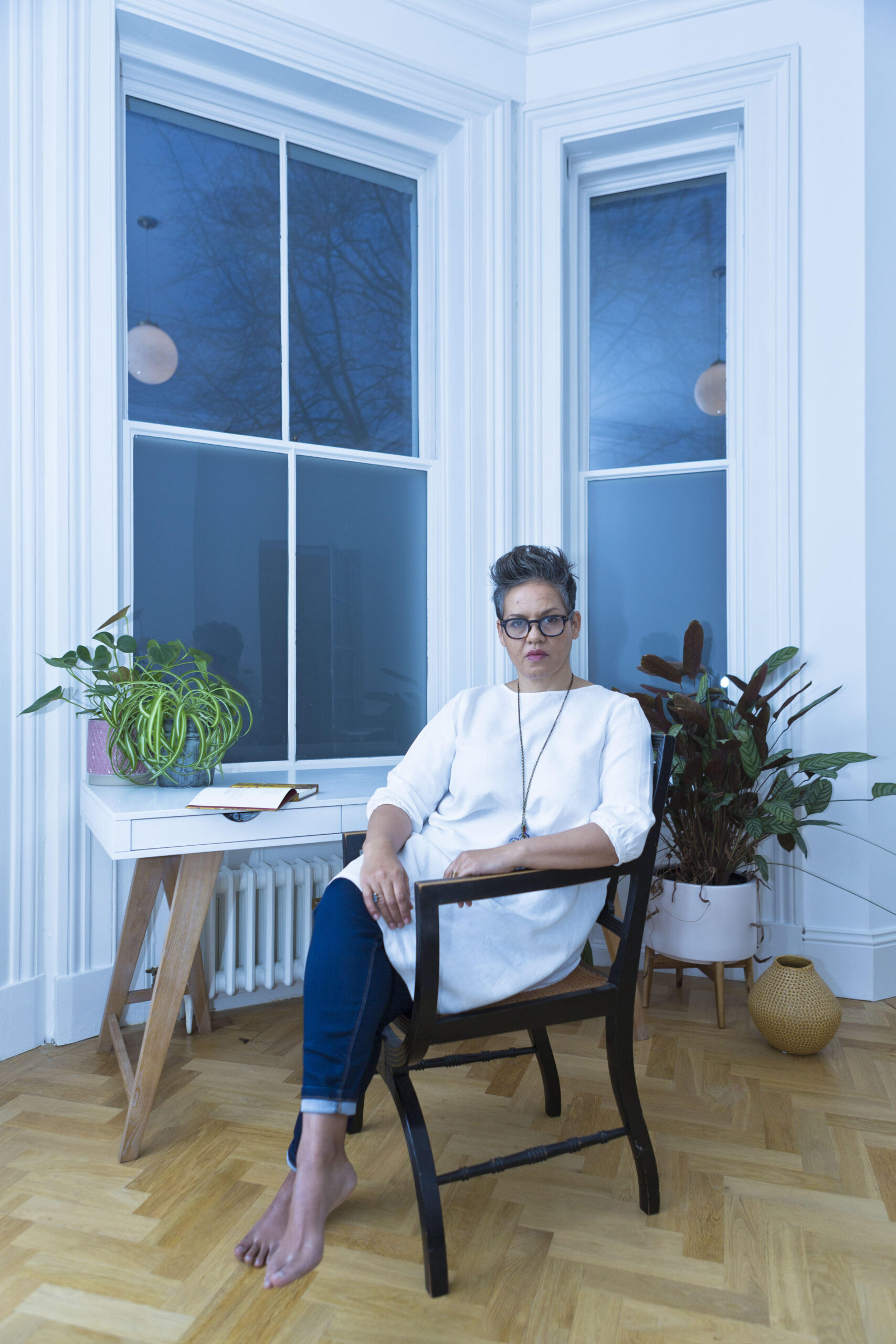
Lania Knight
Lania Knight holds a BSc in Plant Science and Environmental Conservation from the University of New Hampshire, and an MA and PhD in English Literature and Creative Writing from the University of Missouri. She is the author of four books, including two novels, Three Cubic Feet, shortlisted for the Lambda Literary Award in Debut Fiction, and Remnant, a dystopian novel set in the American Midwest, as well as a poetry pamphlet Single-Track B-Road, and a collection of personal essays There Is Fire Here.
In recent months, several members of our Creative Writing team have been collaborating with our local bookish friends at Milton Keynes Literary Festival.
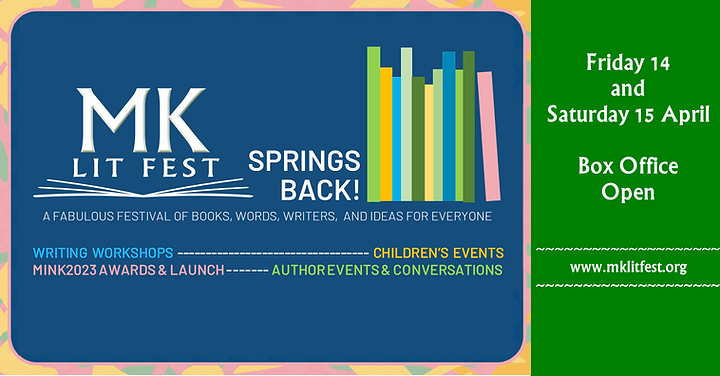
On Saturday 15th April, lecturer Lania Knight interviewed fellow novelist and life writer Kit de Waal about the extraordinary journey she has made since first voluntarily reading a novel at the age of 22.
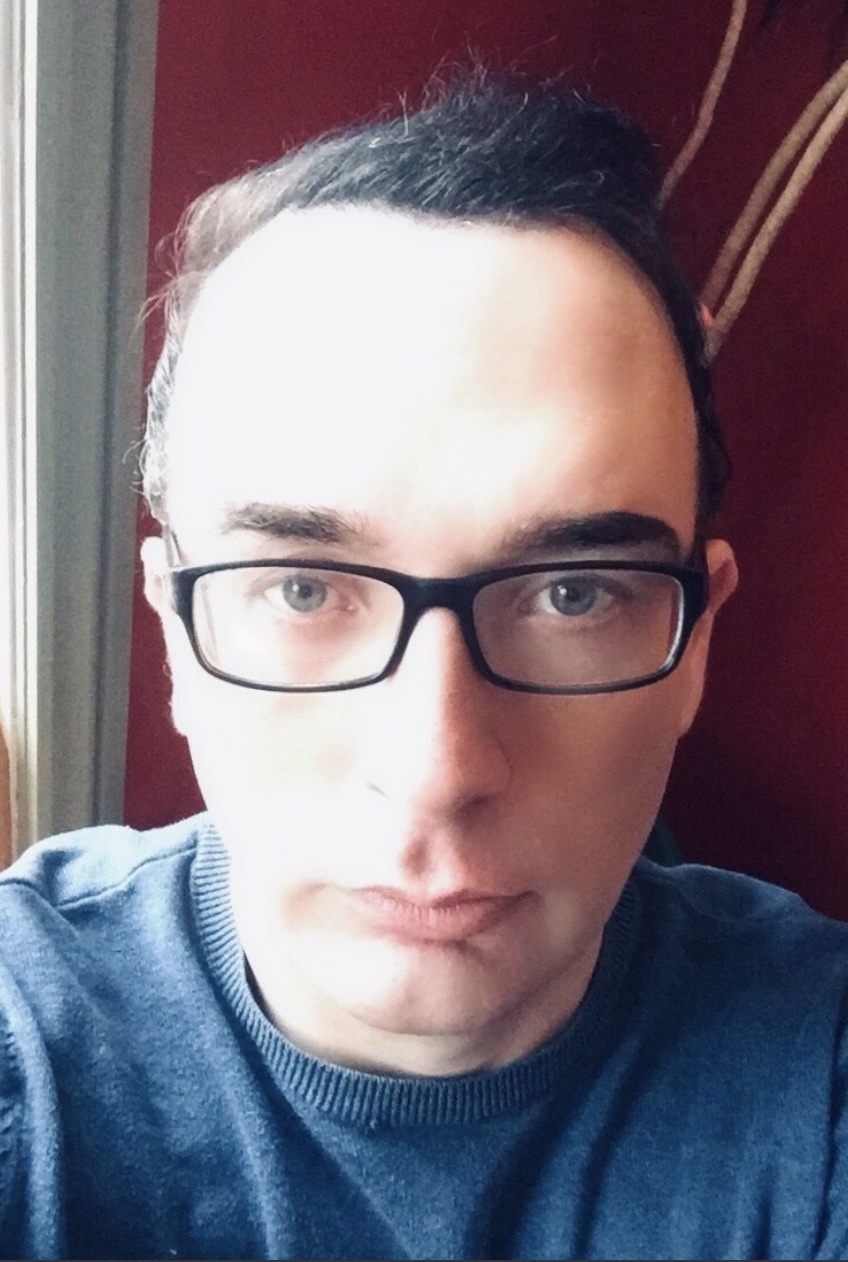
Saturday was also be a big day for those writers who have been shortlisted for MKLitFest’s MinK2023 Writing Competition. In the leadup to tomorrow’s announcement of the winners, we caught up with Open University PhD graduand, Patrick Wright, who acted as a judge for the poetry categories.
Tell us a little about your first encounters with poetry and your journey to becoming a poet.
My mother used to recite quite a bit of poetry around the house when I was growing up — poems such as ‘Night Mail’ by W.H. Auden and William Wordsworth’s ‘Daffodils’. This was my first introduction to rhythm and rhyme. We also had a few anthologies lying around that I’d dip into. I recall studying poems by Norman Nicholson at school and I was especially taken by ‘Windscale’.
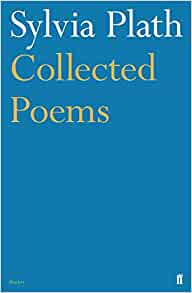
My interest was only really piqued though by my discovery as a teenager of Sylvia Plath. I saw then what poetry could do in terms of confessionalism and free verse. I began to experiment with writing my own poems at this time — without a clue about what I was doing. It wasn’t until I studied for an MA in Creative Writing, at the Centre for New Writing, University of Manchester, that I truly started to learn the craft and see myself as a poet.
How has winning awards and having poems selected for anthologies affected your writing life?
It’s given me encouragement. Poetry can be a solitary activity and there are times when I wonder if it’s worth the investment. Is it too rarefied or self-indulgent? However, moments of praise and recognition always make the sacrifice worthwhile. There can also be a tinge of glamour at times. Though I’ve learnt to not feel too intensely about the ups and the downs. I can’t rely on the fruits at the end of the process: writing must be enjoyed for its own sake; and yet there’s certainly a kick that comes with having work accepted by a magazine or anthology, and that feeling can be quite addictive. I’m now more confident too and willing to take additional risks: with form for example or having the courage to break the rules I was taught. With the success that’s come my way, I’m also persuaded that my poems can sit alongside the poets I admire.
You are an award-winning poet yourself, and now you have judged MK Litfest’s flash fiction competitions. From your experience on both sides of the process, what would you say makes for a prize-winning poem?
I suppose it must tick several boxes at once. Technical elements should be considered; but there’s also the theme, the way a poem strikes at the heart of something in the zeitgeist, or how it leaves an impression. There’s also the inevitable subjective aspect, and what I think works best at a given moment. It’s often fine margins — and I have no doubts that my thoughts as a judge might have changed if I’d read the same poems again another time or in a different mood. Taste and a complex set of characteristics that the reader values (some of which are hard to pin down) will often shape the final verdict. So, my message to poets is: Don’t be discouraged and keep writing. There’s every chance that next time you will have your work chosen.
Tell us a bit about some of the poems you shortlisted for MK Litfest.
In the 14-19 group I enjoyed ‘My Roots’, ‘To all you ash-grey men’, and ‘The Aftermath’. I thought that ‘My Roots’ was particularly impressive with the poet’s clear adherence to the theme (Milton Keynes and green spaces), awareness of form, organised stanzas, and memorable images.
In the 20-plus group, I liked ‘The Green’, ‘The Other One’, and ‘Covid Spring’. Each of these had a distinctive voice and demonstrated a striking or unusual use of language. ‘The Green’ stood out for me with its neat couplets and appreciation of sound.
How has your work and research at the OU shaped you as a poet?
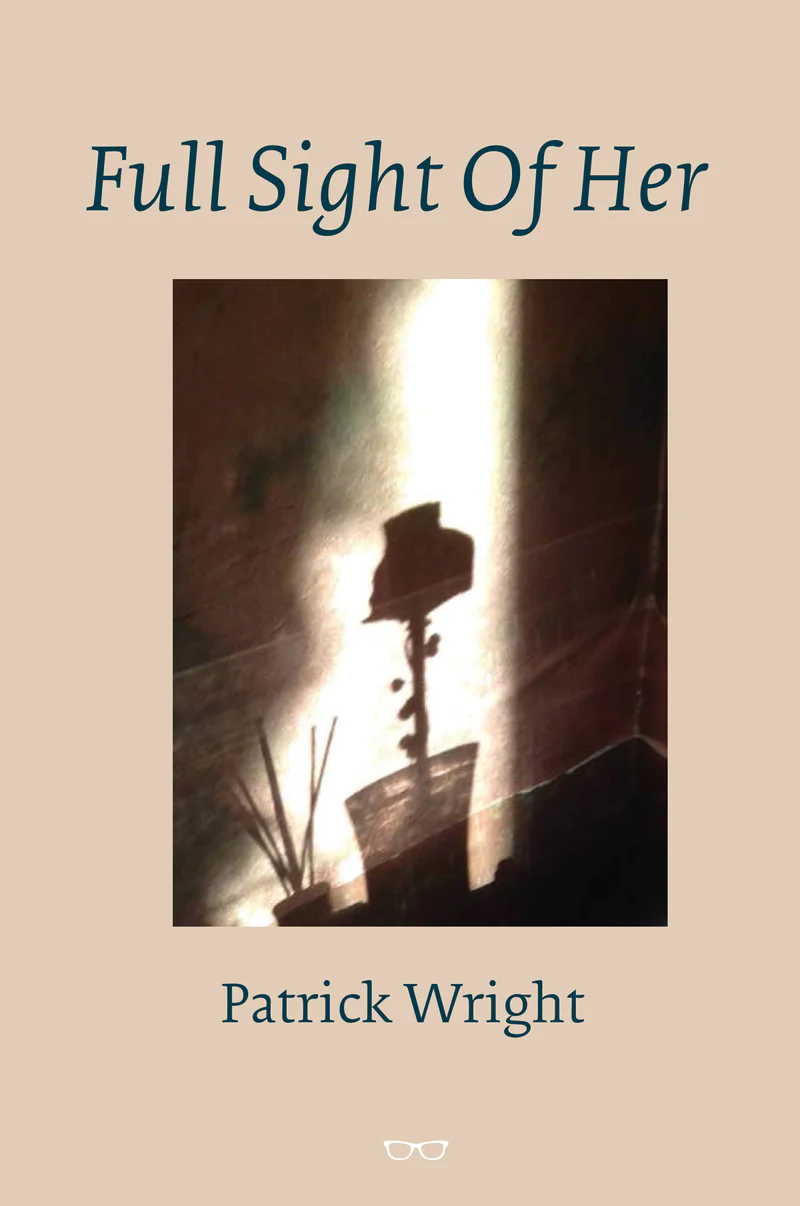
Looking back, my PhD in Creative Writing (Exit Strategy: Ekphrasis through the lens of the abstract and the formless) was a way of going in another direction from my first collection (Full Sight of Her). I was clear from the start that I wanted to be open to new forms, constraints, and feedback — always in the hope of allowing me to find a new voice and not sound like myself. This striving to get away from what I’d done before is one reason the collection is called Exit Strategy. It was about having a book of poems that could be expressive of a new identity, and I achieved that. The critical part helped me become more aware of other poets and where my writing fits in the present landscape.
Aside from new ways of making a poem in response to modern art (the focus of my thesis), I’m particularly interested in aligning myself with the current trend of exploring hybrid forms, such as the prose poem or the lyric essay. My current project follows in this vein: a memoir that includes prose poems.
Patrick Wright has a poetry collection, Full Sight of Her, published by Eyewear and nominated for the John Pollard Prize. He has been twice shortlisted for the Bridport Prize and teaches English Literature and Creative Writing at the Open University. He has just completed a PhD in Creative Writing on the ekphrasis of modern and contemporary art, supervised by Jane Yeh and Siobhan Campbell.
Dónall Mac Cathmhaoill, Open University Lecturer in Creative Writing, has been collaborating with University of València colleagues who share his interest in contemporary Irish theatre. Together, they have been exploring the relationship between performativity, truth, and documentary sources.
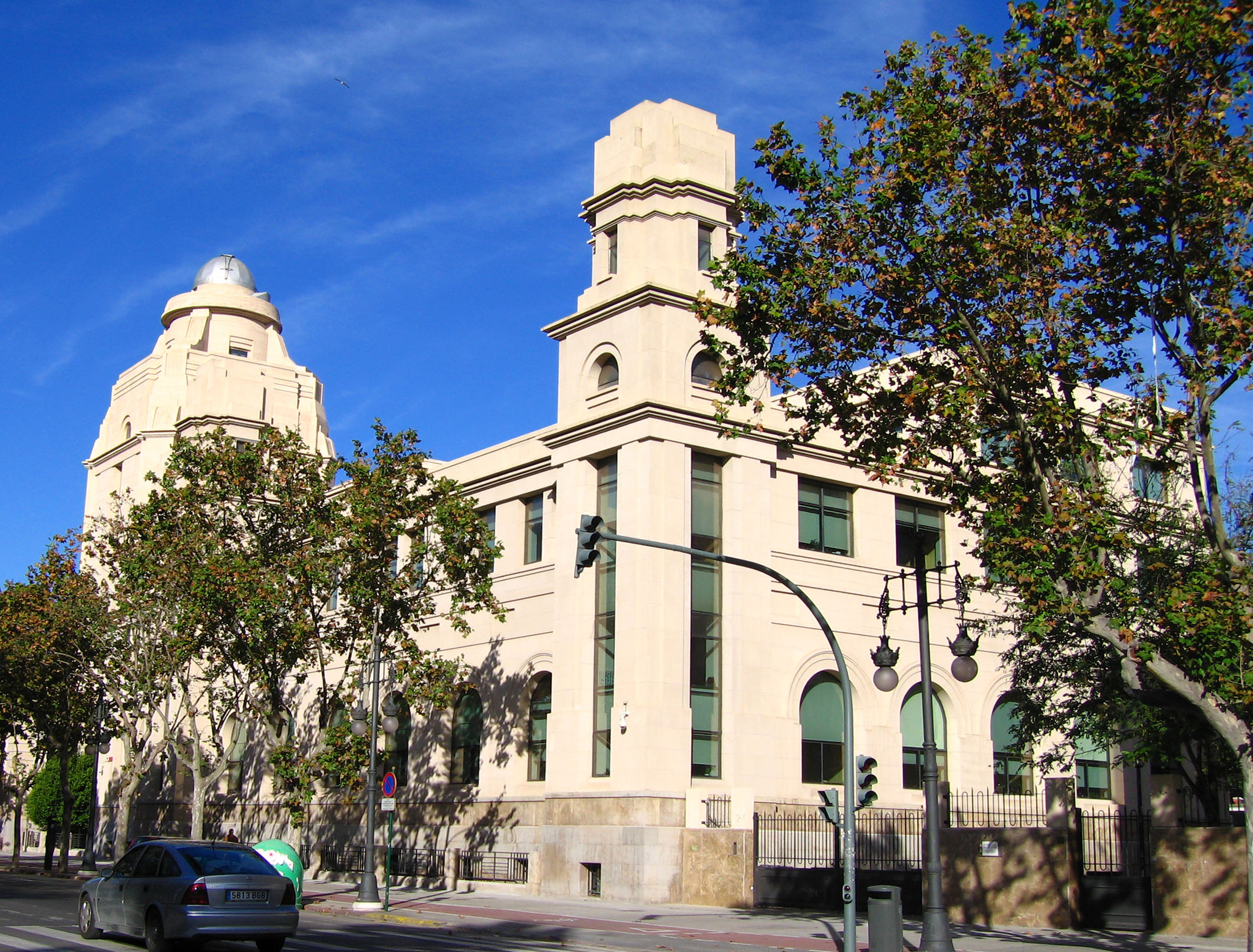
The University of València’s Rectorate (This image is in the public domain)
València in spring is generally a relaxing, pleasantly warm place to be. So I was very much looking forward to conducting a couple of seminars with the Departament de Filologia Anglesa during the month of Las Fallas – the Valencian festival to bid adiós to wintry days.
I came out expecting warm Levante breezes and two-hour terrace lunches with academic colleagues. Unfortunately, València has been experiencing some of the coldest, wettest weather ever for this time of year: high winds and incessant rain. (Being Irish, I felt right at home.)
The research trip evolved through my connection with Dra Maria Gaviña Costero, an English literature academic who specialises in the literature of the Irish conflict, particularly drama.
Given my own research into theatres of conflict, we found we had many interests in common. Having contributed some suggestions of writers the department might consider for their new drama module, I was invited last year to speak at their annual conference.
The idea then developed to deliver a research seminar and workshop with the university undergraduates in English, looking at performativity, truth, and documentary sources in Irish theatre.
The plan was to develop this collaboration to create a research paper on the work of Northern Irish playwright Stacey Gregg, who I had recommended for inclusion on the undergraduate drama module. Gregg agreed to take part in the session I would deliver.
The design of the research process was simple enough: the students would take part in a drama workshop where the contingent and subjective nature of dramatic truth would be explored. This involved creating dramatic narratives from ostensibly ‘true’ and ‘real’ material: documentary drama by another name.
The credibility of the narratives was predicated on their affective and aesthetic qualities: on the extent of identification between audience and performer, and on the presence of aesthetic signifiers of truthfulness, such as simplicity and directness of presentation, what Elizabeth Burns calls ‘authenticating conventions’ (1972, p.108).
Importantly, though, the narratives would be considered truthful through the rhetorical convention of having them presented by ‘real people’. This is a technique which has been used in northern Irish post-conflict drama, and which has been subject to academic scrutiny (Upton, 2010; Weigelhofer, 2015; De Ornellas & Mac Cathmhaoill, 2021).
Some, notably Carole-Anne Upton (2011), have called into question the assumptions upon which this work is built. The workshop and seminar explored how truth, and indeed identity, in documentary drama are contingent and subjective, performative and in flux.
The follow-up seminar, just completed, saw Gregg joining us online from Belfast for a discussion and Q&A. The undergraduates had by this stage read Gregg’s play Scorch, which is written from documentary sources. Gregg outlined the strategies she used as a creative writer to ensure truthfulness and fidelity to source in a work that is both documentary and fictional.
These methods – including in-depth case research, interviews, consultations with subject specialists, and presentation of work-in-progress – allow her to write plays that do not claim to be ‘the truth’ but that are unquestionably truthful.
The themes of these seminars will provide the material for upcoming research papers. They are also explored in my journal article in Platform: Journal of Theatre and Performing Arts, 15 (2): ‘Boundaries: respecting authenticating limits in the production of a play on trans marginality’.
Dónall Mac Cathmhaoill
Dónall Mac Cathmhaoill is a lecturer in Creative Writing at the OU. His PhD examines modes of authorship in theatre for social and political advocacy. His research interests range from authorship in theatre for social change to advocacy theatre in post-conflict societies. As a writer-director he has wide experience working with communities in Ireland, the UK and beyond. He was director of Irish theatre company Tinderbox, a producer and Head of Education at Soho Theatre, and has worked with major theatre companies including Bruised Sky, London; 7:84 Theatre Company, Scotland; Jagriti Theatre in Bengaluru, India; and Irish language company Aisling Ghéar.
Works cited
Burns, E. (1972) Theatricality: a study of convention in the theatre and in social life. London: Longman.
De Ornellas, K. and Mac Cathmhaoill, D. (2021) Addressing the legacy of inter-communal violence through drama: mainstream theatre and community action. In: Glencree Journal, 2021, 163-174.
Gregg, S. (2016) Scorch. London: Nick Hern.
Mac Cathmhaoill, D. (2021) Boundaries: respecting authenticating limits in the production of a play on trans marginality. Platform: Journal of Theatre and Performing Arts, 15 (2), 111-117.
Upton, C.A. (2010) Theatre of Witness: Teya Sepinuck in conversation with Carole-Anne Upton. Performing Ethos, 1 (1), 97-108.
Upton, C.A. (2011) Real people as actors – actors as real people. Studies in Theatre and Performance, 31 (2), 209-222.
Weigelhofer, M. (2015) The function of narrative in public space: witnessing performed storytelling in Northern Ireland. Journal of Arts and Communities, 6 (1), 29-44.
Meghan Flaherty, Associate Lecturer on A215, has recently been awarded a Scottish Book Trust Ignite Fellowship. The fellowship offers talented professional authors practical and financial support for exploring new avenues or making new breakthroughs. Meghan will be working on her second book, a memoir about motherhood, memory, and the self – the stories we tell each other in order to live and how those narratives define us. We asked her to tell us about juggling her roles as mother, writer and OU tutor.
Motherhood is hard. It’s even harder (I tell myself) when your children are small and the world has gone haywire. The pandemic has forced so many of us to juggle so much, and in such claustrophobic space. How can you possibly be a person, a writer, a mother, a pre-school teacher, a playmate, a chef, a maid, a student, a professional and keep your family safe and healthy all at once? (Not to mention keeping up with all the latest parenting advice on Instagram—and falling ever short.)
I say this and I’ve had it easy. My family has weathered its particular challenges, but we’ve managed to tread water for the past two years. In all of the uncertainty, we’ve never feared for a roof over our heads, and despite a few nursery colds (when nursery is open) and the persistent stress, we’ve managed to fend off harm. We’re lucky. My husband and I have jobs that don’t require us to leave the house in lockdowns. Our kids are young enough to not mourn what they have lost in this new normal. (And young enough, thank heaven, not to require help with any maths homework.) We are not high risk (in any category), and so we’ve managed fine, despite the occasional storm clouds of depression and that niggling, insurmountable anxiety, the fatigue of functioning in so much flux.
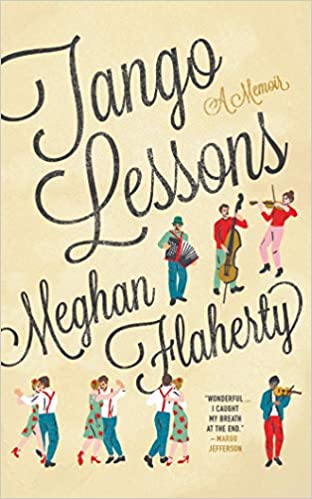
Tango Lessons: A memoir by Meghan Flaherty
What I haven’t managed to do (apart from keeping my skirting boards clean and being perfectly patient with my children) is write. I sit here typing this beside a pile of pages—the mess of which I hope to call my second book. This lump of untouched draft, this tome of half-baked words, is the albatross of my pandemic, of my past five years. Granted, during that time, I also had two children under two (both of them nutters), moved across the world, and lost a beloved parent to leukemia. (Not to mention: made it through the Trump administration.) I’ve had my share of good excuses.
My kids came first. Then lockdowns. Then the move. More lockdown. Toilet training. The purchase of our first house. Another move. My husband’s thyroid surgery. Working to pay the bills. Grieving. More bills. When was there time to sit down at my desk and do art? And if I’d found the time, where was the energy? The inspiration (from the Latin ‘in’/‘spirare’, to inhale, to breathe in)?
I’ve recently been given the gift of an Ignite Fellowship from the Scottish Book Trust, which includes a much-appreciated bursary, the promise of a week’s retreat (!!!), and mentorship, but above all else: a vote of confidence. Someone outside of my house, my head, telling me to put my bottom in my chair and get this done. A reason to pick up this doorstop on my desk and make a book of it. Even when I think I’m too exhausted to access the part of me that writes. The part I’ve shaded over with these other roles, back-burnered and forgotten. You’ll understand why I fumble here for words; my gratitude feels inexpressible.
Since I started teaching at the OU, I’ve been so impressed by the tenacity of my students. Most of whom, I note, are juggling so much more than I. That they manage to keep pace against the current of this pandemic, managing their own families and jobs and stresses, their own mental health and learning challenges, to pursue their degrees (and churn out stories, essays, poems) is remarkable. As I steer them through their module this year, I hope to channel some of their resolve and pluck.
For those first, intense weeks of lockdown, I seemed to be out of step with the rest of the world. Everyone was telling Twitter how much time they had to walk through nature and take up knitting, to make TikTok videos and bake bread (if they could track down yeast). Frankly it sounded wonderful but it was not my experience. Quite the contrary, I was chained to my desk trying to write a novel in four weeks – the most intense working challenge of my life.
It started when my agent rang me out of the blue to say that my publisher had ‘had an idea’ and thought I might be the writer to bring it to fruition. Piatkus publish my historical novels as Joanna Courtney. These are works set in 1066 and earlier that take at least a year to research and write, but what they wanted from me now was a contemporary novel, a lockdown love story. Needless to say, we had to move fast.
I was perhaps not as bizarre choice as that makes it sound. Two years ago I’d started writing contemporary fiction as Anna Stuart for another publisher, Trapeze. Both books (Bonnie and Stan and Four Minutes to Save a Life) had done well so hopefully that was some quality assurance for them. More importantly they knew that I’m quite efficient when it comes to writing – though none of us were sure if ‘efficient’ would add up to a 70,000-word novel in four weeks.
This, I was told, was an ‘IP (Intellectual Property) Project’ in which the core idea for the novel had been invented by the publisher – to be precise a lovely editor called Hannah – and I was the ‘hired pen’ to bring it to life. It’s not like ghost writing as I was simply given a handful of characters and a plot outline with the rest very much mine to bring to life. However, because it was her idea the editor was very bought in and very, very helpful in how we put it together. That was to be invaluable in the intense weeks that followed.
I loved the basic concept and the characters seemed to come to life for me instantly so I fleshed out Hannah’s core plans and within a week we had signed a deal. It was hard to credit. Having spent years and years trying to land a novel contract, I felt as if I was suddenly being handed one on a plate – now all I had to do was write it. Simples! Except that my normally empty house was now filled with a husband working from home, two kids who should have been doing GCSEs and A-levels, and a 23-year-old stepson who’d had to flee his lovely job in the ski-bars of Whistler. It was a worry. I like a quiet house to write in and I certainly wasn’t going to get that.
As it turns out, however, the young folk quickly went nocturnal, leaving things pretty quiet until at least midday and with my husband working with China we were both at our desks by 7am – my most productive time anyway. Plus, to be fair to the kids, they stepped up and took on both the cooking (enthusiastically) and the cleaning (less so!), so all I had to do was shut myself in my little office and write. To be honest, I loved it.
The novel is called Just the Two of Us and is about a middle-aged couple whose kids have left home and who are on the brink of divorce when they find themselves locked down together. All that enforced time in the house pushes them to explore the things that have messed up what was once a wonderful marriage and to see if, perhaps, there’s a way back to happiness. It cuts between the current story and flashbacks to their long, shared past and was fun to write, if a little tricky in terms of timelines.
That, however, is where my editor came in. I provided the first 28,000 words in a week (it was a hell of a week!) and she was back to me two days later – that’s almost unprecedented in the publishing world! It was the same again once the first draft was done three weeks later. We chatted on the phone and over email and tinkered with second and third drafts and, miraculously, six weeks after I signed the contract, we sent Just the Two of Us to copy edit at 80,000 words. It was a whirlwind but fantastic fun and, most importantly, early reviews from NetGalley readers suggest that people are really enjoying it.
How did we do it? I’ve no idea! I’m a planner. I always have a full chapter-by-chapter synopsis of my novels, historical or contemporary, before I start so that I can hit the ground running and I think that helped here. I have no idea how people manage to just start writing without knowing where the novel is going, but everyone has to write the way that suits them best. It seems that for me that is in a manic, concentrated run.
Lessons learned? The biggie is that traditional publishing houses can be more mobile and responsive than they usually let on and I think that’s the way they’re going to have to go with digital-first publishers producing books so nimbly these days. For myself, it confirmed that I like working under pressure – and that I really like not doing housework!!
My agent did scare me the other day by saying ‘I know how fast you can write books now, so I expect at least three next year.’ In this, she will be disappointed. Just the Two of Us was a one-off, driven by the strange coronavirus circumstances we all found ourselves in. I may not have learned to knit, or made TikTok videos (to my kids’ relief) but I did write a lockdown love story.
Jo Wilde is on twitter and facebook as @jowildeauthor
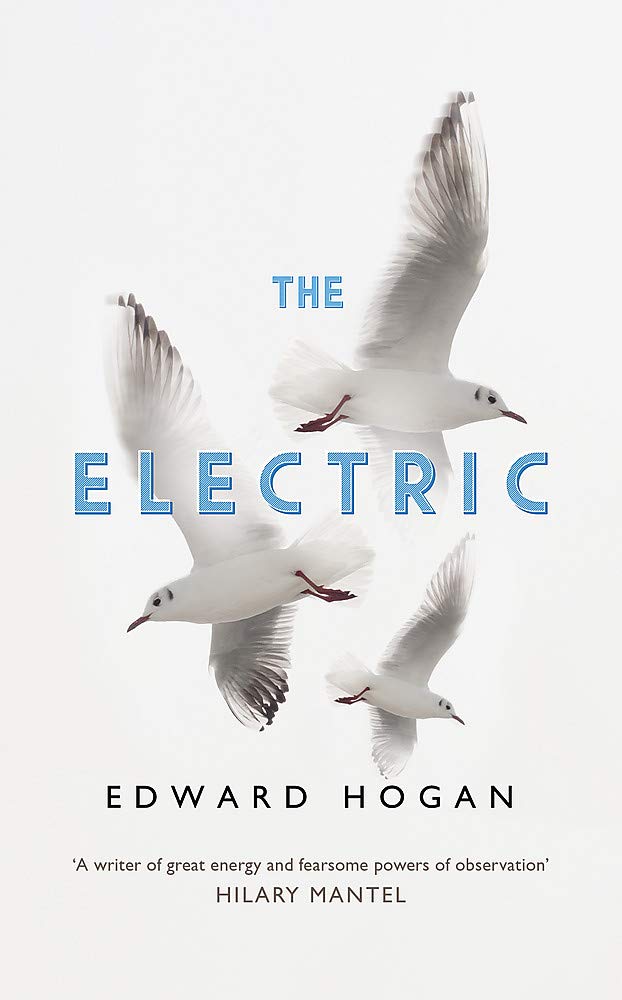
Ed Hogan is a Lecturer in Creative Writing at the Open University. His first novel, Blackmoor, won the Desmond Elliott Prize, and was shortlisted for the Sunday Times Young Writer of the Year Award. Other novels include The Hunger Trace, and Daylight Saving, which was shortlisted for the Branford Boase Award. His next book, The Electric, is published by John Murray, in 2020. He is now writing short stories, has recently been longlisted for the Costa Short Story Prize and the Sunday Times Audible Short Story prize. Here he discusses his approach to writing short stories with Sally O’Reilly, Senior Lecturer in Creative Writing.
Sally: How would you define a short story? And what are its limitations? I’ve read a number of contemporary short stories recently, and many of these cover long time periods, have multiple characters and are told from different points of view. What’s your take on this?
Ed: Last year, I made a commitment to read a short story every day. What struck me was the variety of the form. Yes, I read lots of oblique, Hemingway-ish stories. But, as you suggest, there were also many long stories with lots of narrative – the type Alice Munro specialises in. Some were like dramatic monologues, while others played with the conventions of sub-genres. I read epistolary stories, and stories that took the form of job inductions, or psychotherapy sessions.
Short stories allow you to travel very quickly in your reading. One particular week, I read stories by a writer from Korea (Kim Young-Ha), Argentina (Samanta Schweblin), Zimbabwe (Petina Gappah) and…Derbyshire (Hilary Mantel). In doing this, I realised that some of my earlier assumptions about the form were culture-bound.
I think short stories lend themselves to formal boldness, because they allow both readers and writers to walk the tightrope a bit more. A writer might try something unusual, because it won’t require 500 pages. And a reader might agree to suspend disbelief for 2000 words.
In terms of effects, I can think of many occasions when I’ve cried over short stories, and several times recently (James Salter’s ‘Last Night’, and Camille Bordas’ ‘The Presentation on Egypt’) when I have literally shouted out in shock.
I know you’ve turned to reading short stories recently, too. How did that come about?
Sally: I was partly inspired by your example! And also, because I am writing a novel, I feel freed up by reading short stories. I feel that the possibilities for writing at any length seem looser and more open after reading short stories. A lot of novels, my own included, include a certain amount of ‘business’, linking scenes, sections to establish character, sections which slow things down for a while. In short stories, there is so much precision and intensity.
Do you think there are fashions in the short story, in terms of what is published, and what competition judges are looking for? Writing is always a conversation/argument/response to other writing, but is this sense of engaging with other stories stronger when you are writing at this length? Is it inhibiting to be aware of the zeitgeist, or do you find it useful to immerse yourself in short fiction when you are writing stories?
Ed: Recently, I read three short stories by well-known British writers (Jon McGregor, Sarah Hall, Cynan Jones), and each one was about a person gradually realising that they’re stranded in a large body of water. I found that very striking. Island anxiety, perhaps.
I read short stories every day, but they’re not always contemporary ones (Daphne Du Maurier, yesterday). In my writing, I’m much more interested in the moment of composition than the moment of publication.
In terms of competitions, I’m drawn to the anonymity – the fact that you don’t send a CV with it. Although I know that the anonymity of competitions can be problematic.
I guess a lot of novelists, in June 2020, are probably looking at their contemporary novels, and thinking, ‘Ah. Right. I may have to make a few changes, here.’ That makes assumptions about novels being ‘news’ or even mimetic, but what about you? I know you’re writing historical fiction, but has the pandemic, or the protests, made you look again at your work in progress?
Sally: Yes! The novel I am working on is set in 1899 and the ‘present’, and this has now morphed from 2020 to 2019 due to coronavirus. There is bound to be a weird thing in contemporary fiction where what we thought of as normal life (with all its abnormalities) ended in 2019 and then there is a sort of cliff edge. Having said this, some of the themes I’m writing about relate to nature and science, and the pandemic makes this aspect seem even more urgent and relevant. The zeitgeist has changed, and that will permeate fiction.
Sally: Can you tell me more about your Sunday Times Audible longlisted short story ‘Single Sit’, and how you came to write it? Did it come easily, or did you spend a long time writing and refining it? How did it compare to the process of producing other short stories that you have written?
Ed: ‘Single Sit’ is about a conservatory salesman on a call with a potential customer. My dad sold windows and conservatories for many years, alongside his successful semi-professional football career, so I knew some of the language from that business. (Although Frank, my character, is very different from my dad). I’m interested in work vocabularies. Kick-ins and blowouts and single sits.
It arose from a bit of dialogue between Frank and Mrs Cortez, the customer. Once I hit on a relationship – any kind of relationship – I feel like I might have a story. So, I wrote the first two thirds in a few days. But then it went somewhere unexpected, and I couldn’t finish it for ages. I’m in a writing group, and they helped me a lot with the ending. The whole process, start to finish, with editing and putting it away…it took two years.
The longlisting was a fluke, but this is a story about a salesman, and the first principle of sales is that you play the numbers. Knock on every door, enter every competition. ‘Double your failure rate’, as they say.
Sally: You have published several novels, with your latest, The Electric, coming out this summer. Is it possible to compare the process of novel writing to short story writing?
Ed: A while ago, I was asked to recommend some books for a friend. The list I wrote contained about six short story collections, and the others – things like Hawthorn and Child, Legend of a Suicide, In Other Rooms, Other Wonders; Union Street, The Vegetarian – weren’treally ‘conventional’ novels, but collections of linked stories. In those books, much meaning came from the overlap of the stories, the repetition of themes, ‘the singular obsessions endlessly revised’ to steal a phrase from Thomas Lux. I thought I should investigate what those reading tendencies might mean for my writing practice. I’m still new to the short story as a writer, though, and most of the stories I write are terrible, but it’s a process.
There are practical considerations, too. I reckon there’s a moment in writing – and I’m certain this goes for writing in all research disciplines – where you become absolutely absorbed, completely compelled. It’s a physical thing. Currently, given busy personal and professional circumstances for which I am very grateful, the short story is the form which allows me to complete a draft of something while I am still in touch with that initial impulse. To finish before I forget why I started. Of course, then you have to spend two years revising it!
Sally: Do you like writing shorter pieces? Do you find them ‘easier’ in any way, or just different from novel writing? Do you envisage a short story in its entirety, or do you ever write not knowing the outcome, as novelists often do? And, final query in a multifaceted question, can you write short stories while you are working on a novel, or does the one exclude the other?
Ed: I definitely don’t find short stories easier. Writers often balk at the question, ‘Where do you get your ideas from?’ but that’s where I struggle. George Saunders says that when he finishes a story, he’s convinced he’ll never have another idea again. I feel like that, too. Unfortunately for me, that’s where my similarities with George Saunders end.
One thing about producing several stories over a year or so is that you see your unconscious preoccupations delineated quite sharply. Much of my recent short fiction has taken place in or around cars, despite the fact that I don’t really like them. When you see those connections, you can decide whether to resist or explore them.
The editing process is very different with a short story, isn’t it? For a start, you can re-read your story in one sitting. I remember watching Sympathy for the Devil, the film which shows the Rolling Stones in the studio, developing the song of the title. I was so jealous. With a pop song, you try it one way, and three minutes later, you can – if you’re Mick Jagger – say, “Oh, not like that, Charlie, you mug!” and try it another way. It takes me three weeks to read my own novel.
The popularity of writing retreats has grown and grown over the past few years: retreats masquerading as holidays where not much writing is done, teaching retreats where you get a writing tutor thrown in, retreats where you can be totally alone. The most important thing is solitude, the space to write where you are given your own desk and your own room and the promise that when you leave you might be on your way to creating your greatest work. I’ve been on two this year: at Gladstone’s Library for a weekend and the Arvon Foundation’s Clockhouse Writing Retreat in Shropshire where, for the past few years, I’ve spent a week each August writing and thinking in the kind of solitude that allows me the kind of creative freedom I just don’t get every day.
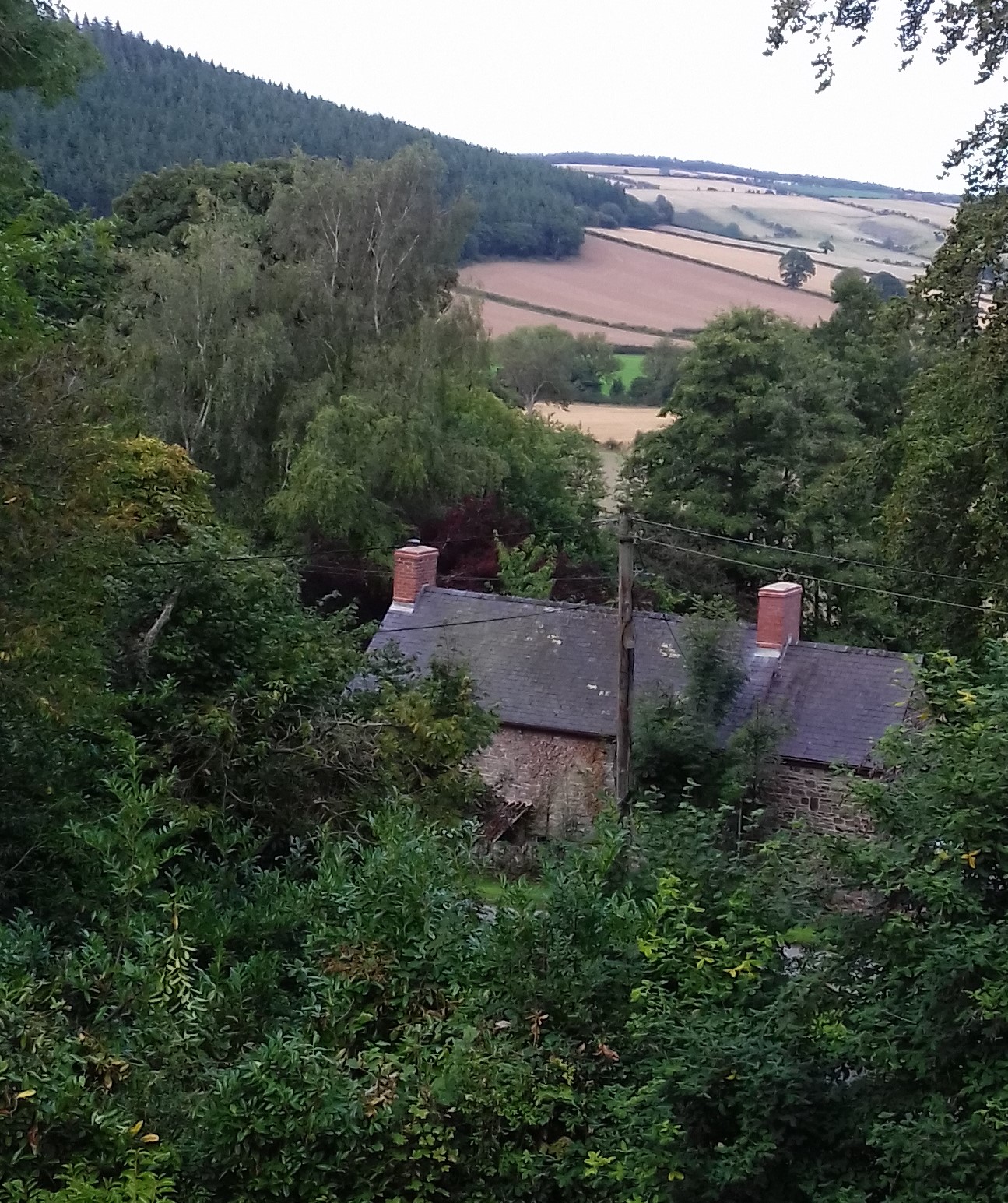
View from the Clockhouse, The Hurst, Clun, Shropshire
Retreat in the traditional sense has always indicated some kind of withdrawal to a secluded, quiet place where we might find silence but where we might also find isolation. In a world where the common cure for loneliness means creating ever more connections, this kind of isolation where we spend time alone with our thoughts can seem a frightening place to be.
I recently discovered Michael Harris’s book Solitude, in pursuit of a singular life in a crowded world which examines the idea of solitude as ‘a resource’ which can be ‘harvested and hoarded’ and to which there are ‘benefits to maintaining’ so that it might enrich us. Solitude he says is ‘a fertile state, yet one we have a hard time accessing’ (Harris, M. (2017) p.29). This idea of solitude is always on my mind at this time of year because October always seems to me like a month for contemplation. The psychiatrist Anthony Storr writing in 1988 explains in his book Solitude that ‘nearly all kinds of creative people, in adult life, show some avoidance of others, some need of solitude’ (Storr, A. (1988) p.146). This suggests the imagery of an artist tucked away in her studio, the writer trapped in a garret and these are the clichés that jump into people’s mind whenever a writer talks about having private space in which to write or indeed of needing it. Sara Maitland has written a great deal about silence and the retreat into being alone and in her book How to be alone talks about ‘being fascinated by silence; by what happens to the human spirit, to identity and personality when the talking stops, when you press the off-button, when you venture out into that enormous emptiness’ (Maitland, S. (2014), p. 7).
Some years ago, I attended a silent retreat at Loyola Hall in Widnes near Liverpool which turned out to be a transformative experience and taught me for the first time the value of silence and of living with only my thoughts, which weren’t good at the time, for company. The place felt isolated even though it was virtually on the hard shoulder of the M62 motorway near Warrington. There were pylons which ticked like crickets running through the wild, untended grounds and in the woodland which closed the hall off from the outside world, a dog was said to roam, hiding from the owner from whom it had so cleverly escaped. I spent hours walking, looking for the dog – a King Charles spaniel apparently; I spent hours sitting in the lounges, eating in silence; I spent time reading and thinking. It’s when you disappear into your own head that you worry you will find the madness you’ve been hiding from all this time and the surprise is that the opposite can happen. It surprised me and at the time I think it saved me. Several years later I was commissioned to write a short story to accompany some paintings in Warrington Art Gallery only a few miles from the hall. I decided to set my story there making the fictional place into a retreat for people broken by life which was exactly how I had felt when I set foot in there myself. ‘My Mind’s Eye’ was about a singer suffering from PTSD following the loss of her daughter in a car accident, she exists in the company of other people broken by life and slowly through the power of isolation and then through comradeship, the healing begins.
Michael Harris talks about the power of daydreaming where to retreat needn’t be to remove oneself to a physical place for a length of time because every day can deliver moments where being alone can ‘allow for the drifting, unfocused mind to be inspired’ (Harris, M. (2017) p. 54). This kind of retreat is often the most productive not only to find peace but also, I’ve found, as an essential part of writing. It’s the place where ideas begin and this is something I’ve been writing about for just over a year now in my own blog A Writer Retreats where I explore the idea of retreat being as simple as gathering leaves in an autumn garden or walking up an Alpine hill in the darkness listening for wolves. Somewhere there’s a story out there, in the space between thinking and doing. Retreat brings me back to myself when I feel like things are slipping away and connects me to my creative self.
It seems as if I’m not alone in feeling like I want to retreat at this time of year. On Mental Health Day on October 10th last week, I was on a train coming back from Liverpool when some volunteers from The Samaritans boarded the train to hand cards out for people who might need them. I was struck by how many people refused then went back to staring at their phones, out of the window, looking away. ‘We can offer a retreat when you think the world has forgotten you,’ one of the volunteers said in answer to someone who had engaged them in a conversation. I took a card, looked out of the window, the rain beating against it in the darkness, all those lights in tower block windows and so many people in there on their own and thought about Michael Harris’s words that ‘True solitude – as opposed to the failed solitude we call loneliness – is a fertile state, yet one we have a hard time accessing’ (Harris, 29). How can we tell the difference and what do we do if we can’t?
Harris, M. (2017) Solitude, in pursuit of a singular life in a crowded world London: Random House
Maitland, S. (2014) How to be alone London:Macmillan
Storr, A. (1988; reprint 2005) Solitude New York: Free Press