In a new publication, OU Creative Writing lecturer Dónall Mac Cathmhaoill and Kevin De Ornellas of Ulster University explore ageism as presented in Edward Bond’s ‘Shakespearean’ trilogy about aged men
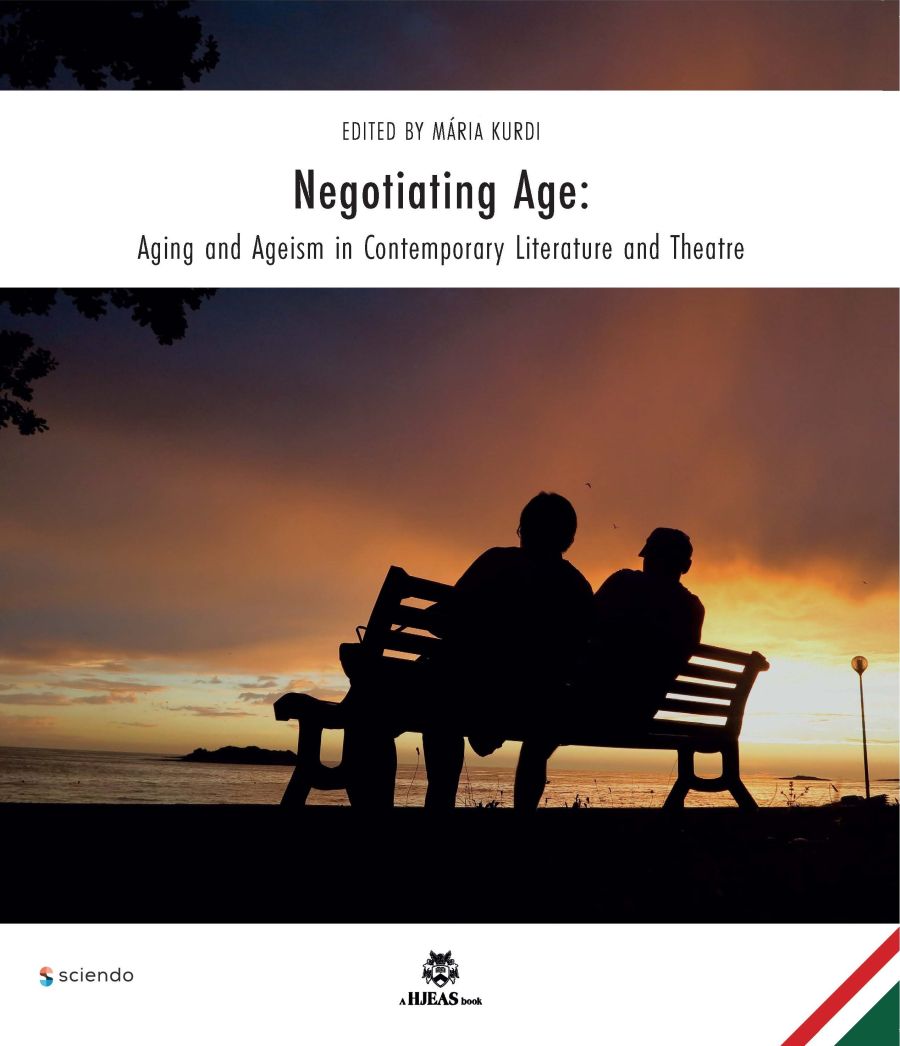
Negotiating Age: Aging and Ageism in Contemporary Literature and Theatre, edited by Mária Kurdi, and published by Debrecen University Press
It is argued that three plays by Edward Bond, born in 1934, should be regarded as a loose trilogy—and that the plays are united because they use the legacy of Shakespeare to provoke uncomfortable reflections on aging and ageism.
Two Bond plays are renowned for addressing the vexed legacy of Shakespeare head-on.
Lear (1971) is an uncompromising appropriation of King Lear in which Bond ‘corrects’ Shakespeare’s too-casual treatment of the under-represented effects of the mad king’s actions on the poor of the mismanaged kingdom of Britain.
Bingo (1973) is a bitter depiction of a dying Shakespeare who realizes that his art has been worthless because it has done nothing to frustrate murderous inequalities in post-Tudor England.
It is less well known that The Worlds (1979) is also a Shakespearean adaptation. The story of an arrogant company director, Trench, who loses his position and degenerates into a rabid, destructive, tramp-like, terrorist-supporting misanthrope, is an adaptation of Timon of Athens.
Bingo is a quasi-biographical conceit; the other two plays are radical appropriations.
Julie Sanders’s definition of appropriation as opposed to mere adaptation is important here. She argues that appropriation represents more decisive journey away from the informing text into a wholly new cultural product.
In other words, appropriations, such as those by Bond, are new works in their own right. They are not adaptations of Shakespeare but radical new plays contrived to perpetuate Bond’s theatrical, political, and moral vision.
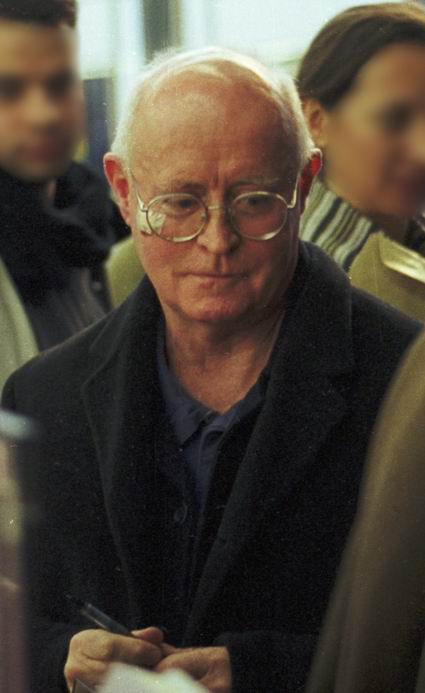
Edward Bond at the Théâtre National de la Colline, Paris, January 2001. Author: D. Tuaillon. Permission is granted to copy, distribute and/or modify this document under the terms of the GNU Free Documentation License.
Many critics have written about Bond’s engagement with Shakespeare—especially Lear and Bingo. But none have afforded The Worlds the same attention as the previous two.
Crucially, critics have, understandably, concentrated on the quasi-Brechtian staging techniques in Bond’s plays as well as the blistering, uncompromisingly leftist critiques of historical and contemporary economic and social inequalities. But none have addressed the arguably more humanistic issue of ageism.
This is important because the lead characters in the three plays are all victims of ferocious ageism. Despite his callousness, Bond’s Lear is a man more sinned against than sinning because his aged impotence and alleged senescence are met with even more overt contempt than in Shakespeare’s original.
Shakespeare, in Bingo, is openly mocked for willful inactivity by his supposed friend, Ben Jonson, and by his shrewish daughter, Judith.
And Trench, in The Worlds, is revered when fit to run his company but ruthlessly marginalized and discarded when he is forcibly retired from his own executive board.
The descent into psychological torment that all three lead characters endure is directly related to ageism. Aging is almost entirely presented as a cause for scorn and derision in these plays. Bond generally sidesteps any sense of aging well: in his plays, good aging cannot be bought. The three leading characters addressed in this essay do improve as people—but only within themselves and in a manner unnoticed and/or unappreciated by their contemporaries.
The plays are set variously in ancient Britain, in Jacobean England and in late-1970s Britain: it is widely acknowledged that Bond rightly or wrongly sees consistent economic discrimination across these vastly different eras. It should, we argue, also be apparent that Bond sees bigotry towards the aged as being another social malady that is consistent across centuries and even millennia.
Shakespeare’s plays are full of reflection on aging and on inter-generational conflict. Characters in Shakespeare plays often ‘retire’: King Lear relinquishes his kingship; Lady Macbeth skulks off and gives up on public life; and Prospero breaks his staff.
Across Bond’s three plays, he appropriates Shakespearean meditations on aging and juxtaposes them with his own observations about society’s disregard for those who are no longer economically productive.
This blog post is an adapted extract from: Kevin De Ornellas and Dónall Mac Cathmhaoill (2024) “You’ll Get Old Sitting There”: Contempt for Aged Males in Three ‘Shakespearean’ Works by Edward Bond. In: Kurdi, M. (ed.) Negotiating Age: Aging and Ageism in Contemporary Literature and Theatre. Debrecen University Press, 26-47.
The authors would like to thank Anoush Simon for practical assistance in the production of this essay.
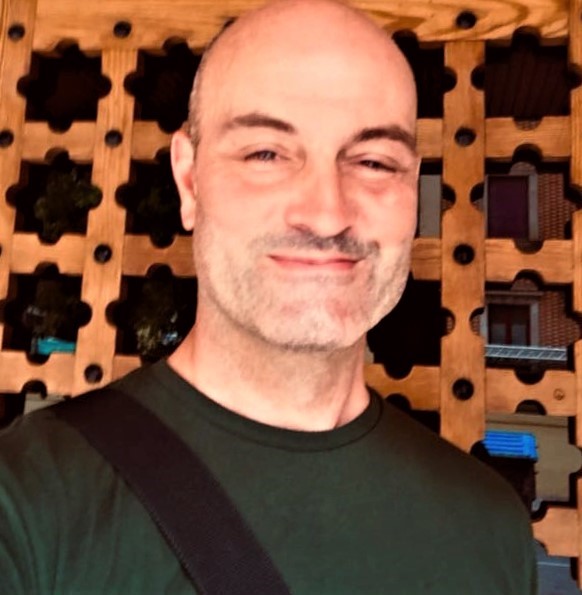
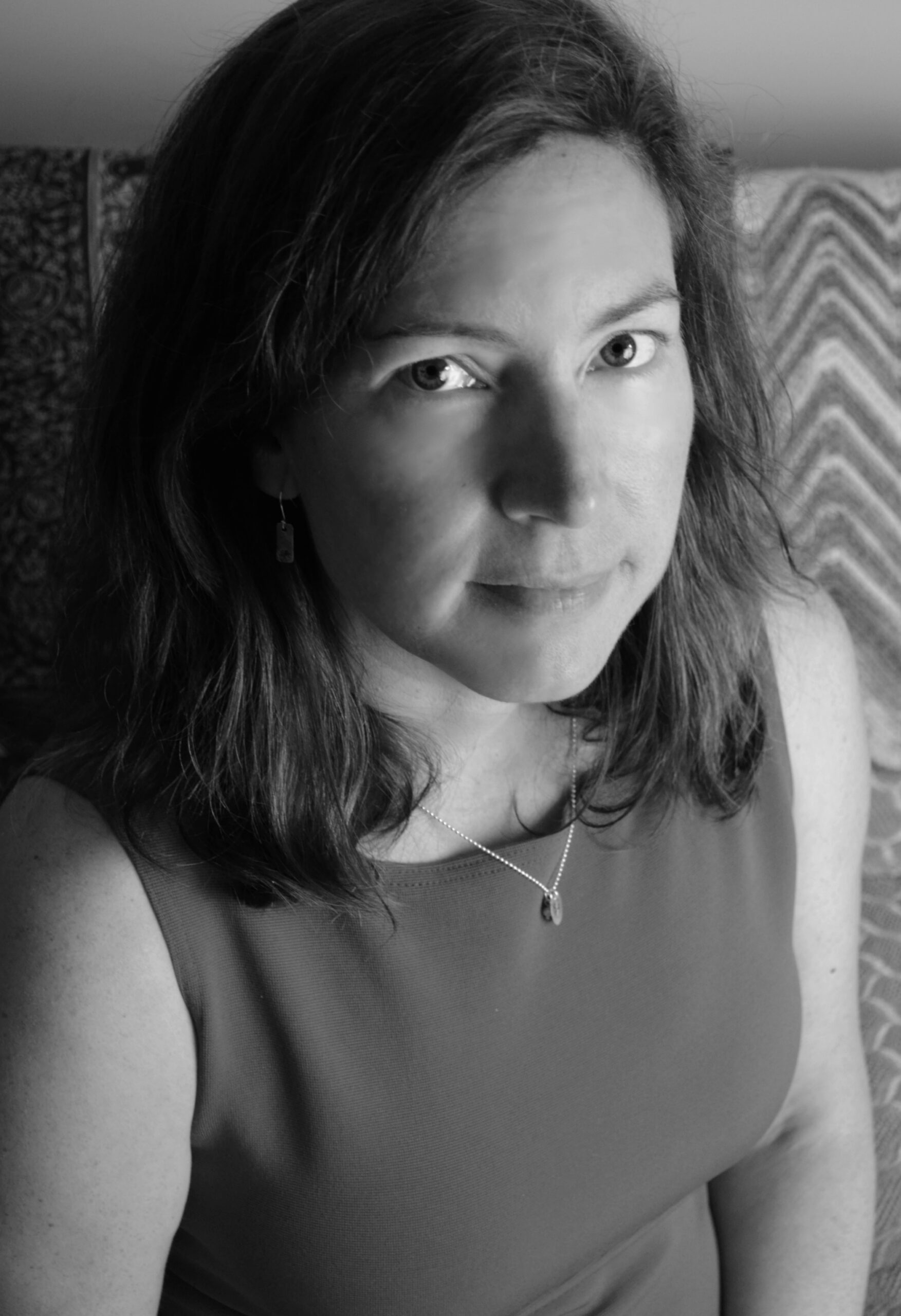
Dónall Mac Cathmhaoill, a lecturer in Creative Writing at The Open University
Dónall Mac Cathmhaoill is a lecturer in Creative Writing at The Open University, United Kingdom. His research interests are in authorship and structures of production in theatre for social change, and theatre in post-conflict societies. Upcoming publications include a chapter on ethics and aesthetics in applied theatre in the Wiley Blackwell Handbook of Literary Evaluation, chapters on writing drama in the upcoming Creative Writing Handbook from Bloomsbury, and a monograph on post-conflict Irish theatre for University of Exeter Press.
Kevin De Ornellas, a Lecturer in English at Ulster University
Kevin De Ornellas is a Lecturer in English at Ulster University. His PhD is in English Renaissance Literature from Queen’s University Belfast, and his research focuses on drama on stage and on the page – especially Renaissance and post-War drama. He is also interested in the study of representations of animals and the environment in literature and culture. His publications include The Horse in Early Modern English Culture (2013), chapters in several books, among them The Wiley Blackwell Companion to Contemporary British and Irish Literature, and the Companion to Literary Biography. He is an editor of the forthcoming Wiley Blackwell Handbook of Literary Evaluation.
In readiness for the BBC’s adaptation of Agatha Christie’s 1939 novel Murder is Easy, which will air this festive season, senior lecturer Anthony Howell lets us in on how the Queen of Crime has added a touch of mystery to new Open University courses.
The sheer star power of Agatha Christie took me by surprise, I must admit. I was aware of the statistics (her novels have sold over 2 billions copies) and that her best-known protagonist, Hercule Poirot, was enjoying new prominence as a result of the recent Kenneth Branagh adaptations. But given that I primarily investigate the dusty corners of the late 18th- and early 19th century (and am used to being read mostly by two old university friends and the dog) I was struck by the degree to which she justified the label ‘popular’. We had decided to make ‘Literature and the Popular’ the organising theme for the first block of teaching material on the new MA in English Literature (A893). But, quite honestly, there is popular fiction and then there is Agatha Christie, in a class all of her own.
Kenneth Branagh as Hercule Poirot in Death on the Nile (2022). This image is publicly available.
With some trepidation, I volunteered early in module production to contribute a unit on Christie for the new MA. I had enjoyed her novels since my teenage years but writing about them in a teaching context would involve venturing some distance from my specialism. Nevertheless, I was confident that with some preparation I could get a handle on it. Christie is normally considered ‘middlebrow’ as an author and, clearly, her work is intended as a form of escapism. Among other things, I was able to touch on how this made it, in the words of Alison Light, an invaluable ‘literature of convalescence’ for the British public after the the First World War. However, Christie also possessed a seemingly supernatural skill for crafting a satisfying clue-puzzle story and it became clear to me that this was the key to the cultural impact of her fiction.
The unit was later adapted into an OpenLearn course, Agatha Christie and the Golden Age of Detective Fiction, with the help of the module Chair, Alex Tickell. Launched in 2006, OpenLearn is the Open University’s home of free learning. It hosts over 10,000 free courses, articles, activities and videos. There were around 15 million visits to the platform last year from all over the globe so pairing Agatha Christie with OpenLearn always had the potential to be a powerful combination. You can view the course here.
OpenLearn: the home of free learning at the OU
Right away, it seemed to have a ready-made audience and the ability to travel all by itself with minimal effort (certainly from me). A range of people interested from all walks of life began to click though the minute it landed on Google. I was invited to take part in different kinds of media to promote it. Local radio, for example, with a lighter tone and a mainstream audience. It was hugely enjoyable. The Faculty’s social media team created a buzz with some activities on Facebook, Twitter and Instagram. People responded immediately, sharing pictures of their own rare collections of Christie’s novels, participating in quizzes and games and generally responding very warmly to this opportunity to share their enthusiasm for one of their favourite authors.
Although we did take the course out into the world, the world also came looking for us. For the first time, I received emails out of the blue from learners not yet enrolled on an Open University course. One wanted help to download and print a copy of the course for her elderly mother, who struggled to read on a screen. Another had recently visited Torquay museum and thought the course might be a good fit for the Agatha Christie display there.
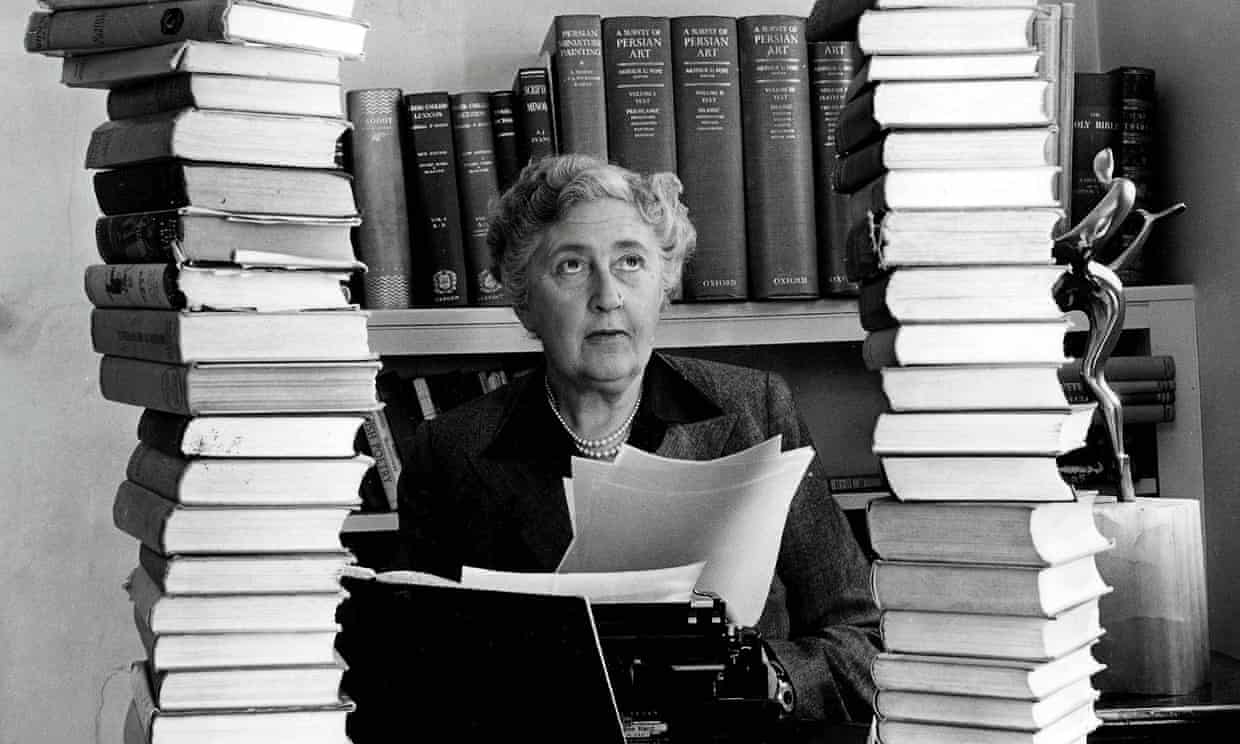
Agatha Christie at her home: Winterbrook House, Berkshire, 1950. This image is publicly available.
Professionally too, unsolicited requests arrived. An offer came to act as a reviewer for a new course on European Crime fiction, currently under production in the school of Social Sciences at the OU. I was encouraged to attend ‘Captivating Criminality’, the annual conference of the International Crime Fiction Association, which took place at the imposing setting of Corsham Court in Wiltshire. Experts in the field were keen to hear more about the OpenLearn course and the feedback from students. I’ll be moonlighting at the next one in Budapest too.
This is a very roundabout way of explaining that, since writing the course, I have found myself periodically snatched away from my usual teaching and research interests and taken in quite different directions. It sometimes feels as if I have been kidnapped by Christie herself and taken by her to new places without very much agency of my own; plotted helplessly into a new narrative.
Agatha Christie and the Golden Age of Detective Fiction now feels established on OpenLearn. In the first few weeks, the course page had received over 15,000 visits. As of this month, that has now risen to 57,000 visits and 2,460 enrolled learners (with 806 gaining statements of participation). I was delighted to learn that the course will soon feature in a new landing page featuring Women in the Arts, curated by Hannah Parish. I would say that it’s comfortably the biggest pedagogical impact I’ve managed to have in my career so far. But, although it’s been enormous fun for me, it doesn’t feel much like my impact. I’m left, in the end, along with the detective fiction enthusiasts, to ponder a familiar question: whodunit?
Anthony Howell is a Senior Lecturer, Staff Tutor and Associate lecturer in the Department of English Literature and Creative Writing at the Open University. He is currently Chair of the MA in English Part 2 and a module team member on A893 and A894. Anthony has contributed teaching units to a variety of OU modules and developed new teaching strategies to support students in secure environments. His research interests are in the field of Romanticism, in particular the work of Sir Walter Scott, William Wordsworth and John Clare.
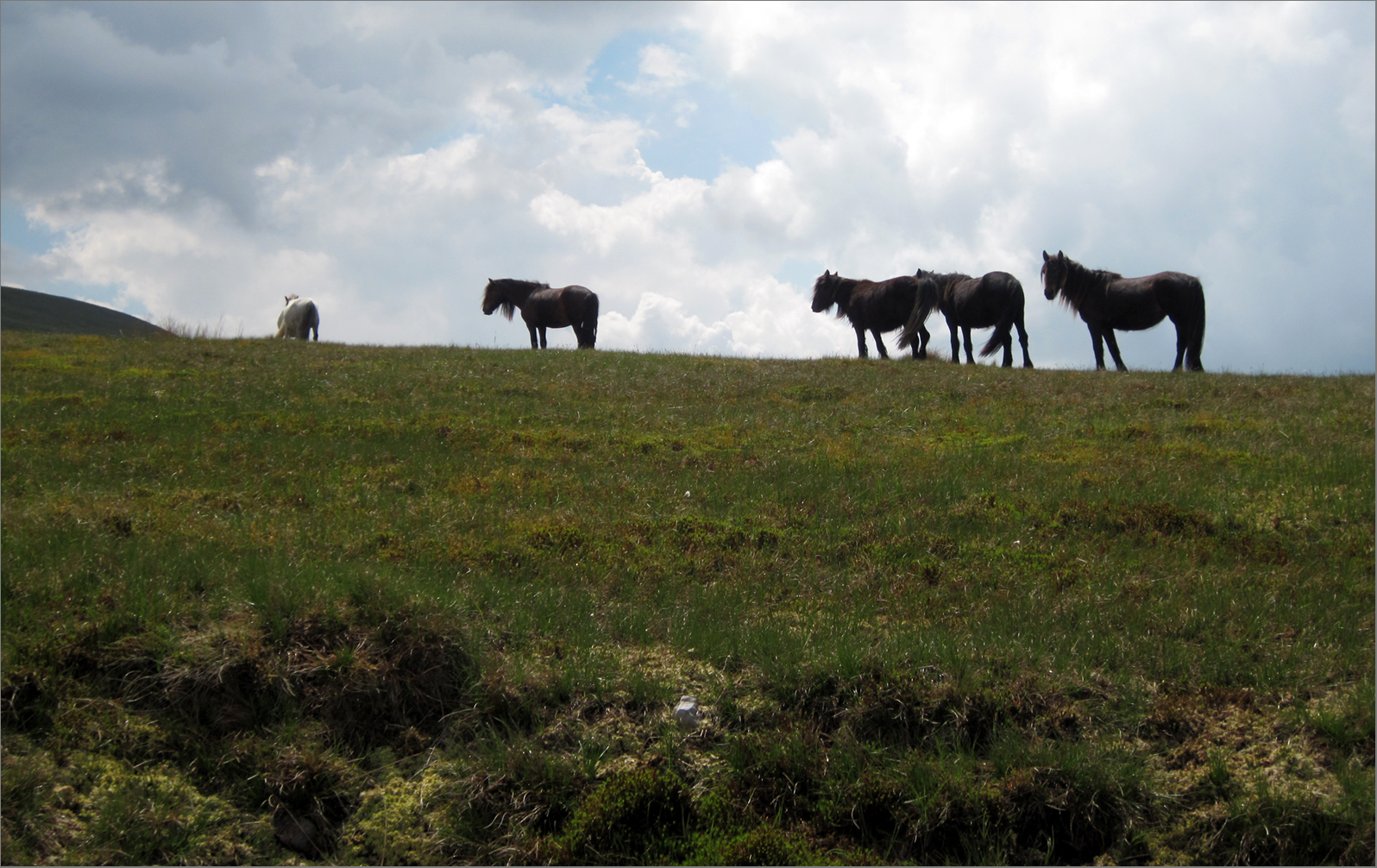
When the world opened again after lockdown, my steadfast companion was the view out my home office window of a fell in Cumbria. Fell ponies often arranged themselves along the ridge of the commons above grazing sheep, backlit by low winter sun. I would gaze at their silhouettes when I needed a break from my computer screen. Former colleagues at brick-and-mortar universities in the US and UK began heading back to campus as COVID restrictions were lifted. I’d taken a job at the OU working from home during the pandemic, and I’d moved five hours north in search of an affordable house with a garden. My ‘new’ office was in a converted bedroom. I couldn’t go to campus or meet colleagues face-to-face for several months after lockdown eased, so I dug in and reconciled myself to living and working in what I came to think of as my ‘fast-moving cloud,’ the western slope of the Howgills.
Fell ponies
Working at the OU has transformed my life as an academic. Moving into a home-based role that is part operational, part distance learning, and part research has provided time for reflection. Most days after lunch, I walk a different lane or track or public footpath in my tiny village where sheep outnumber humans, and I think about things. I live on the edge of the Lake District, countryside that writers Dorothy and William Wordsworth and their friend Samuel Taylor Coleridge would have found familiar. At first, the reality of experiencing the romantic notion of the ‘sublime’ was quite a shock, and it took months to connect with the land in a way other than fear (of high winds, low clouds, and gusting rain) or dread (of same). With time, though, I settled in and got on with work and with writing and connecting with local writers and artists, which has made everything better, especially the low-lying clouds.
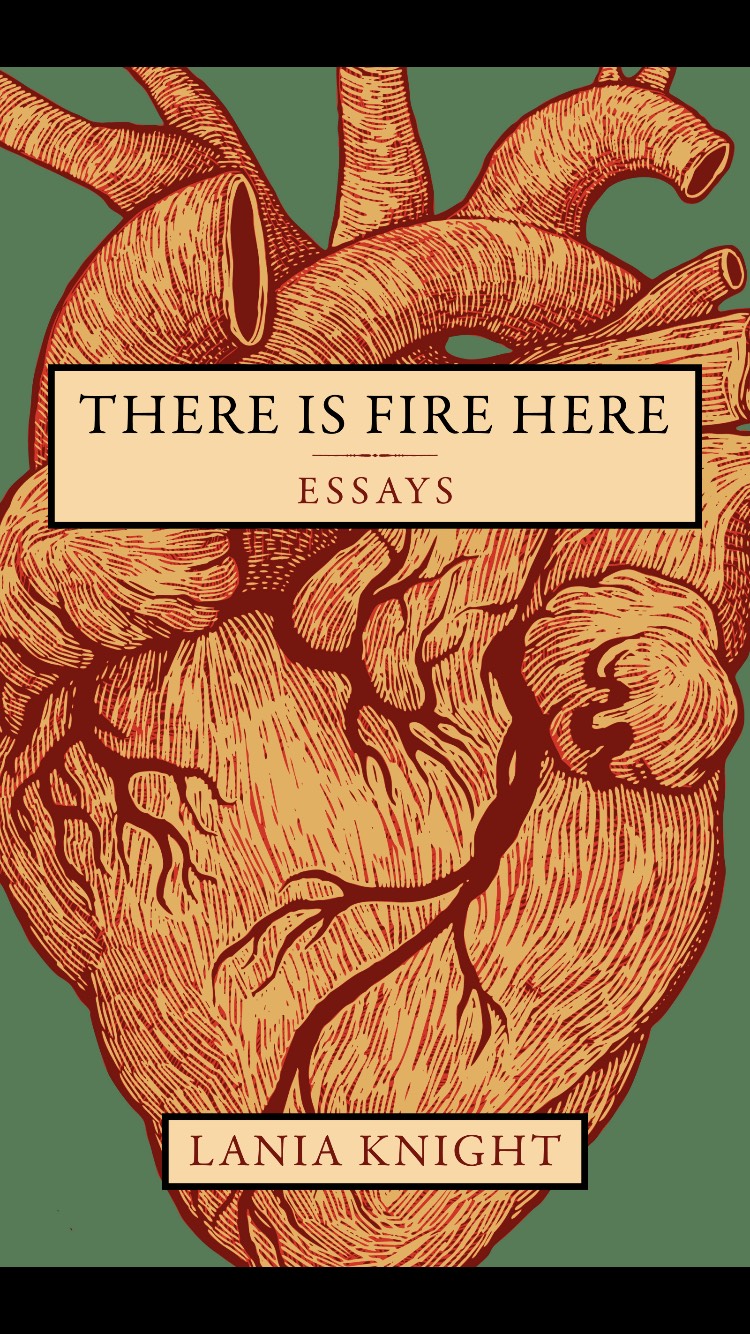
Like other writers who have lived in isolated landscapes, I’ve found this time fruitful. A collection of personal essays There is Fire Here was published in September by a small UK publisher, Signal 8 Press. I have long been a fan of the ‘fourth genre,’ and There Is Fire Here has been a satisfying opportunity to bring together fifteen essays spanning the day I dropped out of high school in Texas and left home on the back of a motorbike at sixteen, to my move across the Atlantic to the UK, where I learned how to write poetry.
Some of the joys of being a writer and an academic are the connections between your research, your teaching, your colleagues, and public outreach. My work in creative nonfiction includes my own writing, my teaching, and public engagement—a circle which is finely balanced within my role at the OU.
While I was working on finalising the manuscript for There Is Fire Here, I was asked to serve on the panel that would be revising the third-year Arts & Humanities module, A363 Advanced Creative Writing. I proposed that we expand the teaching on life writing.
Emma Claire Sweeney, the discipline’s Media Lead and a fellow course author, asked if I might like to interview Kit de Waal for the Milton Keynes Literary Festival. De Waal’s debut memoir Without Warning and Only Sometimes had recently been released and the festival needed someone to interview her. It was a dream role. I was sent all her previous books to read, which included several novels and an anthology she edited, Common People. I set those on my bedside table and devoured them.
Kit de Waal
During my conversation with de Waal at Milton Keynes Lit Fest, I confessed in front of the festival audience that I had cried on the train finishing one of de Waal’s novels,My Name Is Leon. In the same way that she had wowed me with her stories, Kit wowed the crowd, made them laugh and cry, held them enthralled for the entire hour. An OU camera team were there to record it all.
Soon, clips from that conversation with Kit de Waal will be part of the next iteration of A363 Advanced Creative Writing, a culmination of research, teaching and public engagement woven through bespoke teaching materials for the OU. I’ve sent Kit a copy of my book, and fingers crossed, she’ll be attending my online book launch on Wednesday 8th November, when I’ll be in conversation with brilliant UK writer, Zoe Lambert.
Tickets are free and it will be a relaxed evening. I’ll be joining from Cumbria, in a comfy spot by the woodstove. Grab your favourite drink, settle in somewhere cozy and join us.
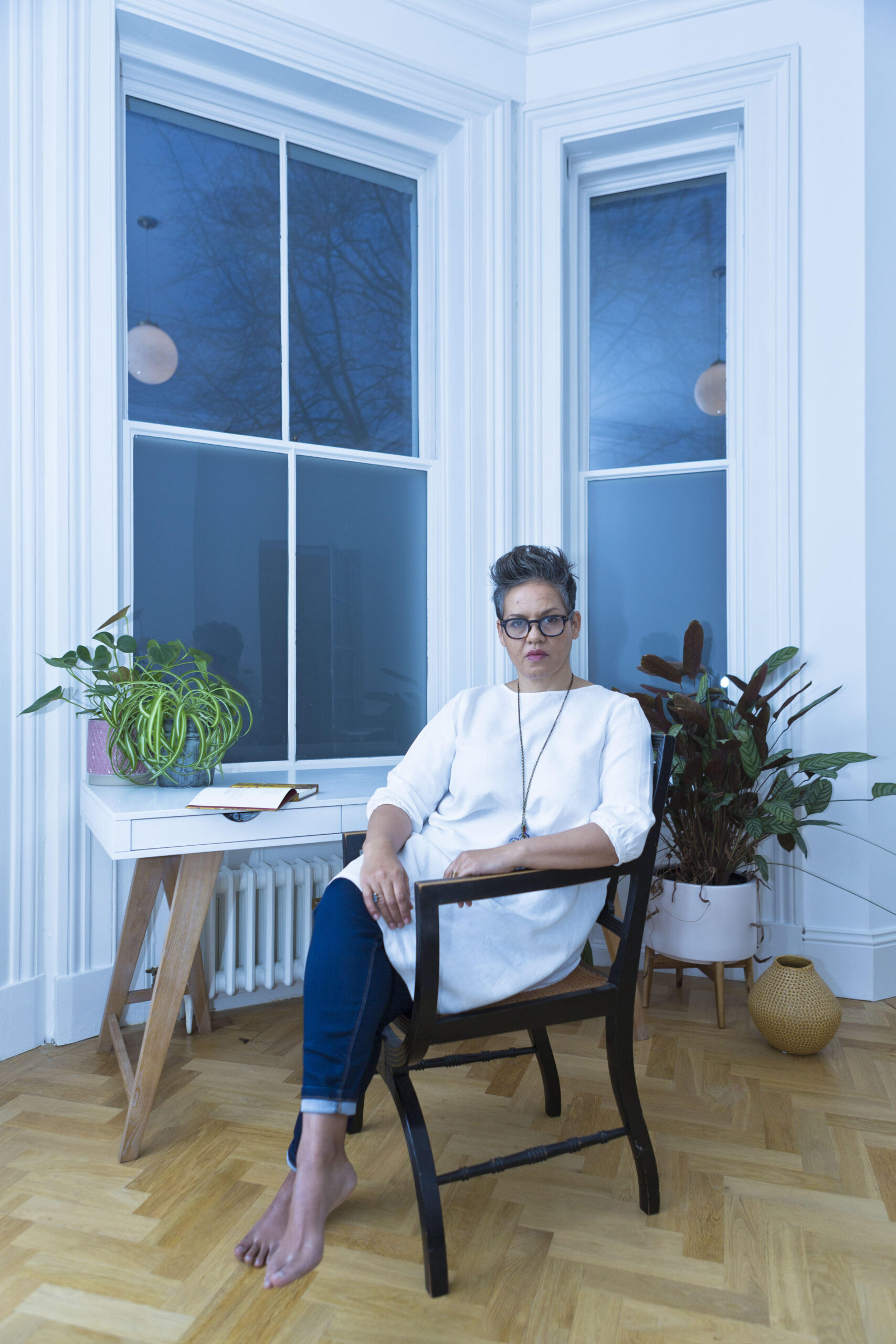
Lania Knight
Lania Knight holds a BSc in Plant Science and Environmental Conservation from the University of New Hampshire, and an MA and PhD in English Literature and Creative Writing from the University of Missouri. She is the author of four books, including two novels, Three Cubic Feet, shortlisted for the Lambda Literary Award in Debut Fiction, and Remnant, a dystopian novel set in the American Midwest, as well as a poetry pamphlet Single-Track B-Road, and a collection of personal essays There Is Fire Here.
In this bonus summer post, Jennifer Shepherd, Chair of the Faculty of Arts and Social Sciences team in Ireland, shares a behind-the-scenes glimpse into the Open University’s partnership with the John Hewitt Society’s annual Summer School.
What does summertime mean to you?
For me, it’s festival time.
Each summer, I find myself in the picturesque cathedral town of Armagh, Northern Ireland at the Marketplace Theatre, home to the annual John Hewitt International Summer School. Now in its 36th year, the festival is hosted by the John Hewitt Society, established to celebrate the legacy of local poet, art historian and social activist John Hewitt.
Hewitt’s legacy is everywhere in evidence here in Armagh in late July, as a diverse group of writers, visual artists, musicians, political commentators and social entrepreneurs gather to celebrate the power of story to explore some of the most pressing social issues we face today on the island of Ireland.
It’s warm and unpretentious and full of surprises.
One day the mainstage hosts eminent Irish playwright Frank McGuiness, sharing the wit and wisdom of a literary career spanning over 4 decades; another day finds bestselling crime writer Denise Mina discussing her take on hard-boiled crime fiction; still another, a round table of political commentators and journalists pitch ideas for engaging citizens meaningfully in the Northern Ireland political system.
Everywhere there’s story, whether it takes the form of images – such as Nigel Swann’s haunting photographs of the ‘Yellow Star’ houses of Budapest – or music, provided by award-winning folk artist Jack Warnock.
As an OU academic based in Northern Ireland, I have the pleasure of managing a partnership with the John Hewitt Society on the delivery of the Summer School. It’s a natural fit since the Open University has much to offer local conversations around politics, history, and creativity.
Collaborating with the John Hewitt Society for the last decade has allowed the Open University in Ireland to showcase the incredible quality of our teaching and research, particularly in the area of creative writing.
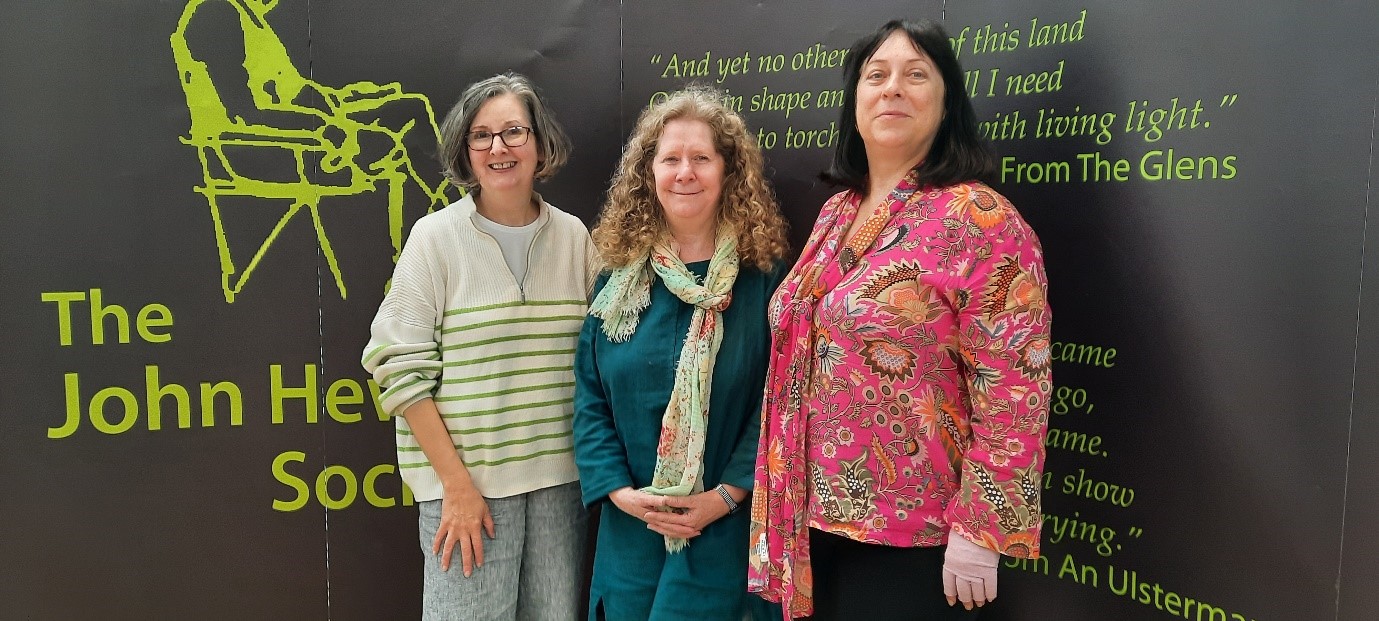
Heather Richardson, Nessa O’Mahony, and Siobhan Campbell
It’s a pleasure to meet festival-goers during the week who have signed up for workshops led by OU writers – this year, we were joined by novelist Heather Richardson, and poets Nessa O’Mahony and Siobhan Campbell. Festival-goers are full of praise for our teachers, noting that OU writers really ‘see’ each student and bring out the very best in them and their writing.
‘Oh, you’re with the OU,’ is how I’m often greeted when I introduce myself in the busy foyer between events—because if there’s a proverbial zero degrees of separation in Ireland, the same holds true here for the Open University.
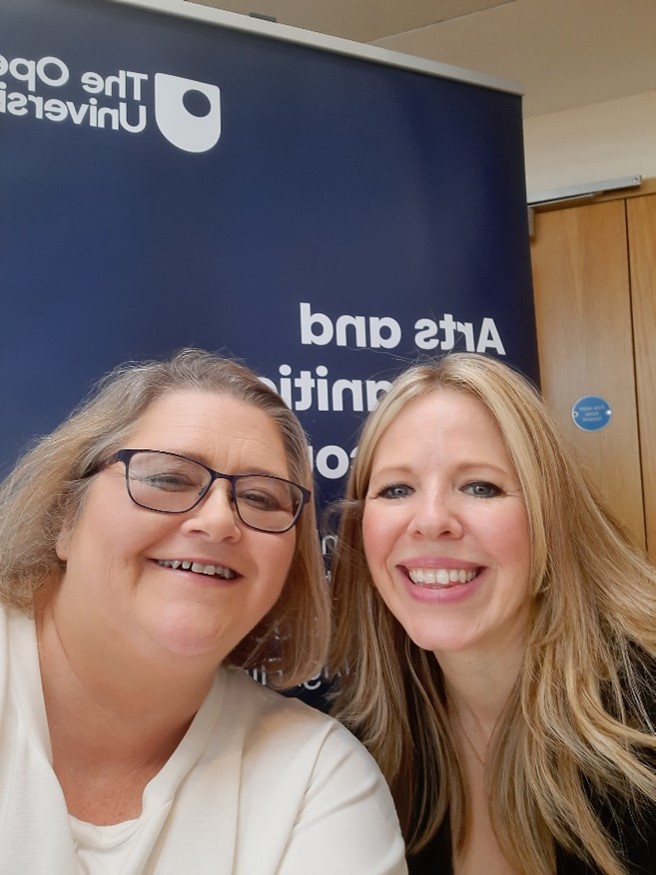
Jennifer Shepherd (right) with former OU student
At the local book vendor’s festival stall, a man tells me his friend is studying on the new English Lit MA and really enjoying it. I encounter a woman at the OU pop-up stand who confides that she’s already got a place reserved on an MA programme and wonders if she can get further details. Another man lingers over the OU leaflets on display and tells me a long story about a professional life that took many unplanned turns. He always wanted to study law but never got the chance – did I think it was too late for him? A former OU student of my own waves from across the crowded foyer and makes her way over for a catchup and selfie.
She reminisces fondly about her first OU module and grins at the memory of her debut at an Open University open mic night, the first of many engagements over the years as an accomplished poet and flash-fiction writer.
And maybe this is what I like most about my annual pilgrimage to Armagh each summer: to see the power of story at work in unexpected places. While speakers on the mainstage are inspiring us with tips for master storytelling or compelling new visions for a shared future in Ireland, I’m seeing something just as exciting at my Open University pop-up stand. People talk about their daily lives and, when they do, I get a glimpse of the way in which OU study allows people to write new futures for themselves and shape the story of their own lives in fresh and exciting ways.
Jennifer Shepherd
Originally from Canada, Jennifer Shepherd completed her PhD at the University of Alberta and post-doctoral fellowship at the University of Hull. She is a Senior Lecturer and Staff Tutor in the Department of English Literature and Creative Writing at the OU. As chair of the FASS team in Ireland, she is responsible for facilitating local knowledge exchange and engagement opportunities, as well as maintaining partnerships with Ireland-based organisations which include the John Hewitt Society, the Belfast Book Festival, and Dublin/Belfast Culture Nights.
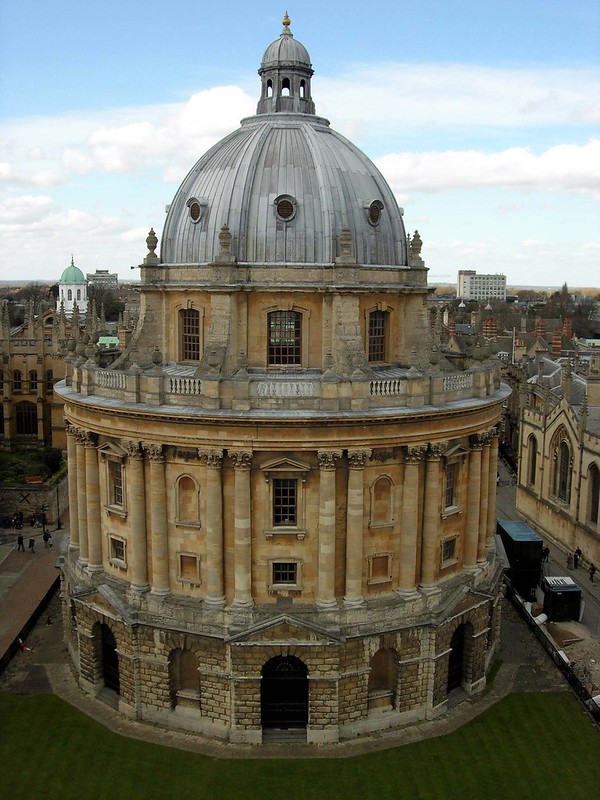
Part-time postgraduate researcher, Antonia Saunders, kicks off our series on the PhD journey and beyond with her reflections on a recent trip to Oxford’s Bodleian Libraries. As Antonia reveals, her visit not only furthered her research into how 19th-century historians and novelists constructed an idea of Jewishness, it also offered broader and more unexpected rewards.
As a part-time PhD student with a full-time job in corporate banking, I sometimes feel as if I am snatching snippets of time to follow my aspirations of becoming a full-time academic.
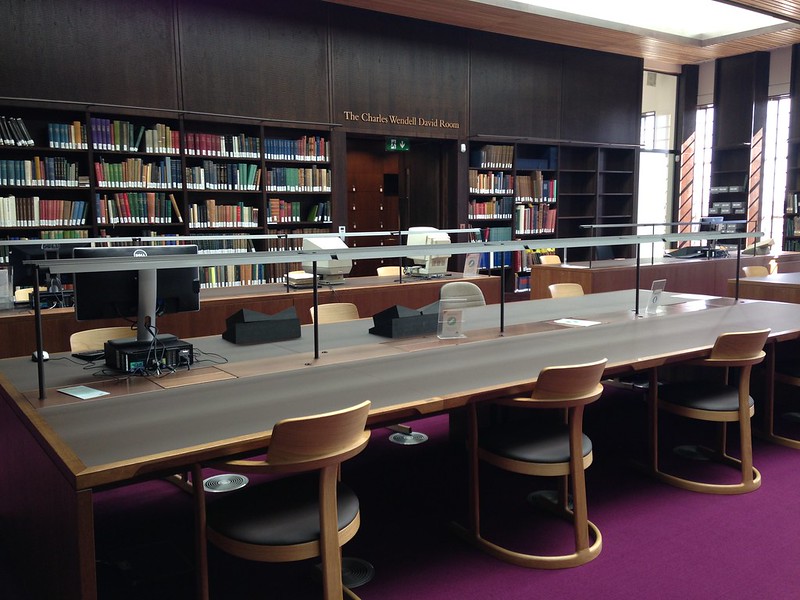
So, when my supervisors suggested that I use some of my Support Grant to facilitate a three-day research trip to the Bodleian Libraries, I got onto it straight away. The prospect was overwhelmingly appealing: access to materials relating to my research on Maria Edgeworth, Benjamin Disraeli, and George Eliot; accommodation in college rooms; an uninterrupted period to focus on my research.
I needed to apply for a Bodleian Reader card ahead of my visit, and my supervisor very kindly supplied me with a letter of introduction. I could order materials for my visit up to five days before. My list of archival materials has over forty items, and you can only order up to ten items at a time. So, I selected what I thought might be the most relevant ones to look at on my first visit.
These included handwritten manuscripts and typed proofs of Disraeli’s novels, and one of George Eliot’s notebooks from 1861, and two for 1868 when she first conceived the idea of her long poem The Spanish Gypsy. I also wanted to consult Gordon S. Haight’s seven volumes of George Eliot’s letters in the Old Bodleian Library as these have not, as yet, been digitized.
I spent most of my visit in the Weston Library with the resources I had ordered. The ability to search through Disraeli’s papers and George Eliot’s notebook was thrilling. At first, I found Disraeli’s handwriting illegible – horizontal lines in brown ink with occasional bumps and tails. I had a sinking feeling that I wouldn’t be able to make out anything. But I tried comparing his handwriting to his novels on Project Gutenberg, and – slowly, very slowly – I began to be able to decipher his handwriting, and to note some changes between the manuscript and the finished novels.
George Eliot’s handwriting in her notebooks was meticulously neat, but she had written some pages in Latin, German, and Italian, so I copied down some passages with names and words I recognised to translate later on. I also spent some time in the Old Bodleian Library reading through Haight’s volumes of George Eliot’s letters.
I didn’t get through all of the material I ordered for my visit. Now that I know what is held there, I am planning my next trips with a more focused approach to specific materials – perhaps visiting for one day at a time,
I do, however, highly recommend staying overnight in college rooms. I booked into St. Stephen’s House, a theological college, about a twenty-minute walk from the centre of Oxford. The students were welcoming, and I had some very interesting conversations over breakfast. One of the students had a diamond pin on his lapel with the figures 1897. I asked him of the significance of the year, and he told me it was from the diamond jubilee of Queen Victoria and that he collects Victorian merchandise from the golden and diamond jubilees. I also spoke to a visitor who is an Egyptologist translating a ceremonial text held at the Ashmolean Museum.
I completed both my BA and my MA at the Open University, and I am passionate about the egalitarian principles the university is founded on, especially because of the opportunities it has afforded me. However, the chance to sit down and meet other students in a relaxed atmosphere, and to talk about interests beyond my own research, gave me a feel of what it might have been like had I attended university in my youth.
The benefits reaped during my visit went beyond the academic. I also experienced a boost to my mental health. I found it invaluable to clear space in my schedule to focus on my research, to be able to think a thought through without being interrupted by pressures of work or home life, and to be surrounded by such a wealth of learning and knowledge.
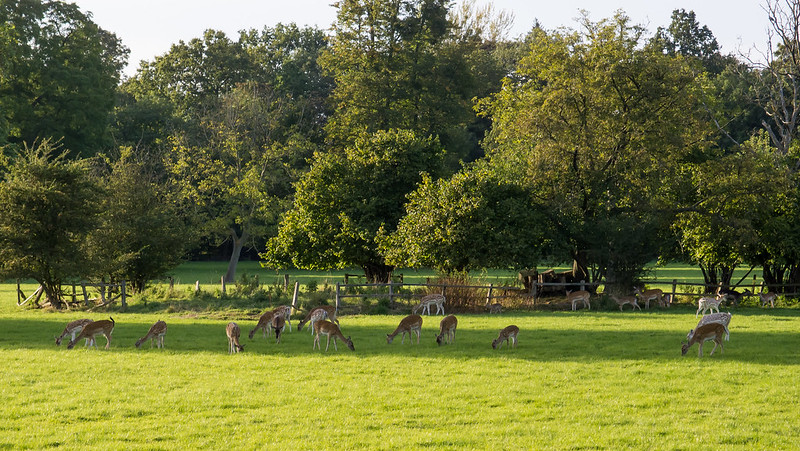
One of my supervisors, who lives in Oxford, met me for a walk on two of the days. She gave me a tour of Magdalen College, including a walk around the deer park and through a field of snake’s head fritillaries. She also took me to her own alma mater, New College, where we heard the choristers practising.
I started my research in 2020 during lockdown, and I think I have inadvertently adopted sedentary habits – always a potential risk for bibliophiles. But it felt so good to be out and about, walking in the fresh air. It made me reflect on my use of time and to commit to getting outside each day, rain or shine, to clear my mind.
Antonia Saunders
Antonia Saunders studied for both her BA and MA at The Open University. Her primary interest is in the novel in all its forms with a particular concentration on the nineteenth and early twentieth century. She began her part-time PhD at the OU in October 2020. Her thesis, The construction of a Jewish Identity in histories and novels of the nineteenth century, considers the literary and historiographical contexts of representations of Jewish people and Jewish Identity.
Here at the Open University, we have recently launched a Creative Writing scholarship for our masters degree programme. These scholarships are aimed at low-income UK residents from Black backgrounds, and 16 students will be funded over the next 5 years.
This qualification offers opportunities to develop skills in fiction, poetry, creative nonfiction and scriptwriting. Students get to write in a genre of their choice and experiment with at least one other through practical and inspiring activities. By the end of the programme, students will have produced a substantial piece of their own creative writing to a professional standard, honing their practice through sharing, reading and critiquing the writing work of peers in online forums.
Since applications are open until 29 July 2022, we thought it might be useful for those still trying to decide whether to submit to hear from some recent and current Creative Writing MA students. We happen to have had a flurry of poetry success stories recently, so we have interviewed a group of MA students and graduates who have each won a high-profile award and/or published a collection or pamphlet.
What was the highlight of your experience on the OU’s MA in Creative Writing?
Marian Christie:For the first time, I felt part of a writing community, with an engaged and supportive peer group and a tutor who was generous with insightful comments, suggestions and encouragement.
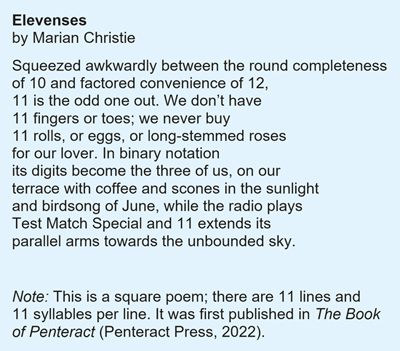
One of the exercises we were given during the MA was to write a poem that uses numerical sequencing in its structure. This was a revelation to me, leading me to explore the Oulipo movement and contemporary mathematical poetry. I started using mathematical imagery and visual elements in my poetry, and my tutor encouraged me to experiment with these forms further.
Viv Longley: The highlight for me was having my poetry taken seriously and critically particularly by my super tutor. I had never been appreciated in this context before.
Zoë Walkingon: The members of my tutor group have made each other laugh, squeal with outrageous delight, and feel genuinely touched by one anothers writing. I am always amazed by how such different responses and writing are generated out of the same prompt activities.
And what did you find most challenging?
Zoë Walkingon: The most challenging aspect for me personally has been the amount of time spent in front of a screen, because I also work full time from home at a computer all day. The fact that the learning is all in chunks means this screen-based activity can be spread out over each week though. Also, I tend to still write the old-fashioned way – into a notebook, and only use my computer to type up when something is looking half decent.
Marian Christie: Most challenging (but also very rewarding!) was preparing an extended and cohesive collection of poetry for the End of Module Assessment. This required me to reflect on my own relationship with the poetry that I write and the themes that preoccupy me, both consciously and subconsciously. It introduced me to the skills of careful editing and attention to detail, of making choices on inclusion and sequencing, and, above all, it served to clarify my own poetic voice.
Viv Longley: I had anticipated that it would prove challenging to write in more than one genre. But there was real power in having to take a different option in the second term. I produced some non-fiction that introduced me to another form of writing altogether, and I have returned to this genre a lot since.
How did your learning on the MA feed into your published writing?
Viv Longley: It took me a long while even to consider that someone else might read my poetry, let alone publish it. Essentially, I used to think of my writing as ‘mine’ and ‘private’. The first step was to get used to there being a ‘reader’ – be that another student or my tutor.
Zoë Walkingon: I have been writing poetry as a hobby for a few years now, but until I started the MA I didn’t know much about the technicalities. I was always more interested in the ideas. Now, I feel I am developing a language to better understand how poetry works and am perhaps also developing an ability to edit my work.
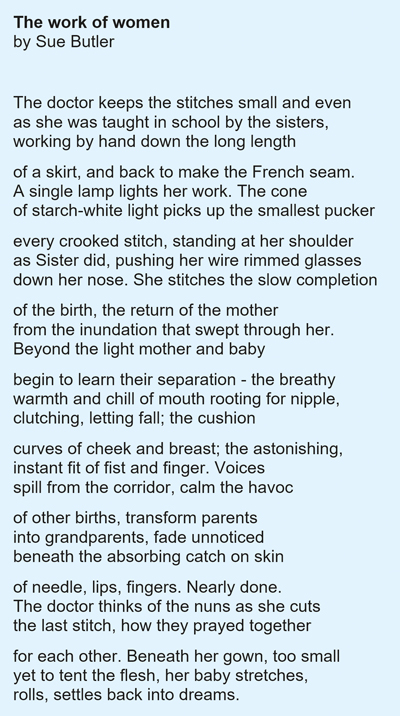
Sue Butler: The module on poetics, particularly the poetics of bearing witness, was especially significant to me. Consideration of my own poetics – the material I might use from the lives of others, and the use I might make of it – led to some poems being returned to the ‘bottom of my computer’ while others were reworked. ‘The Work of Women’ is one of these. I had learnt (been conditioned?) to consider my own needs, motives and concerns secondary to those of others around me. Now, I acknowledge and foreground the lens through which I wish to write – that of woman, mother, witness to suffering.
Which aspect of teaching from the MA comes back to you most often?
Sue Butler: To turn early drafts inside out, upside down, chop them up and glue them back together. I still consider myself to be an insufficiently adventurous editor, but I no longer get over-attached to early drafts.
Viv Longley: It has given me a set of tools that I now carry around with me. It is exactly what my work needed to give it polish, style and most of all, my voice. Other people recognise my writing as ‘mine’. I learnt to trust the feedback of some of my fellow students, and we are now working on producing an anthology of poetry called Daughters of Thyme. A shout out for Jane Keenan and Sue Brice with whom I am sharing this venture.
What advice would you give someone considering embarking on the OU’s Creative Writing MA?
Viv Longley: Hush your busy mind saying that you are not good enough. Go for it, enjoy it, roll in it, do your absolute best at everything, never underestimate yourself. You never know where you’ll land up. Such a challenge at my age too. The brain is now alive and alerted.
Sue Butler: I would say to a new student get over your shyness early. Relish the constructive criticisms of your peers. Give feedback yourself – you will learn to feed back to yourself on your own poems as well as building a supportive and effective tutor group.
Zoë Walkingon: One of the worries I had myself before starting on the MA was that writing was a hobby that I loved, and I worried that studying it in a more formal sense might kill the enjoyment for me, and, heaven forbid, might even start to make me fall out of love with writing! I have not found this to be the case. In fact, doing the MA has made me write more than I usually would.
Marian Christie: Make the most of your tutor group! Your fellow students provide a safe, supportive and welcoming community within which you can experiment with form, style, voice and technique, and in the process learn from each other. Members of my tutor group have kept in touch after graduating, sharing our work, celebrating successes and commiserating rejections, and meeting up both online and occasionally in person too.
If hearing from these current and former creative writing students has whet your appetite, you can find out more on our website aboutour masters degree programme. And remember that applications are open for our scholarshipuntil 29 July 2022.
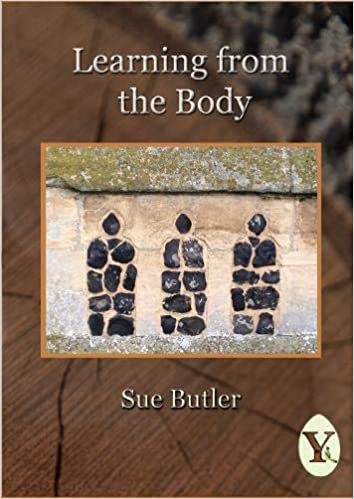
Sue Butler, a retired GP took up walking and Creative Writing in retirement – both unpredictable forms of meditation on life in all its grace, pain and peculiarity. Her pamphlet ‘Learning from the Body’ is published by Yaffle press. It reflects the intimate connection General Practice brings with many lives, the gift and burden of that connection. Her poems have been published in One Hand Clapping, Poetry and Covid, Spelt, and the Hippocrates Prize Anthologyfor 2020.
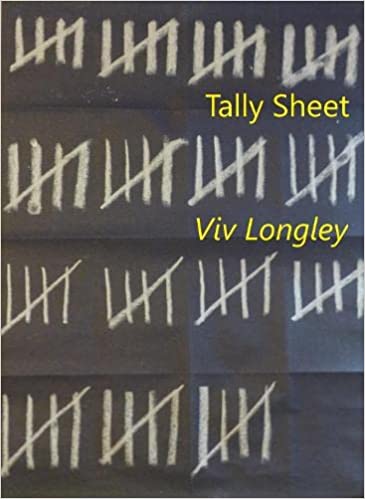
Viv Longley is now in her eighth decade. She was educated at Oxford High School for Girls, Hull and Warwick Universities. Her career culminated in Head of the Policy Unit in Kirklees Council. A secret writer for many years, Viv is a long-term member of Agbrigg Writers in Wakefield, and a contributor to their publications. Viv’s collection Tally Sheet was published by Currock Press, and praised by Ian McMillan for her use of ‘detail, rhythm, observation and a kind of “speech made visible” to underline and celebrate our common humanity’.
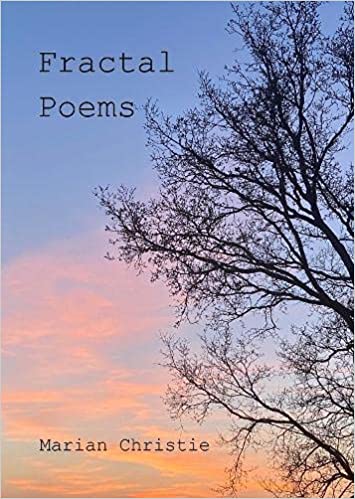
Marian Christie was born in Zimbabwe. She has an MSc in Mathematics and an MA in Creative Writing, both from the OU. Her work often explores the interface between poetry and mathematics. Publications include Fractal Poems (Penteract Press) and a collection of essays, From Fibs to Fractals: exploring mathematical forms in poetry (Beir Bua Press).
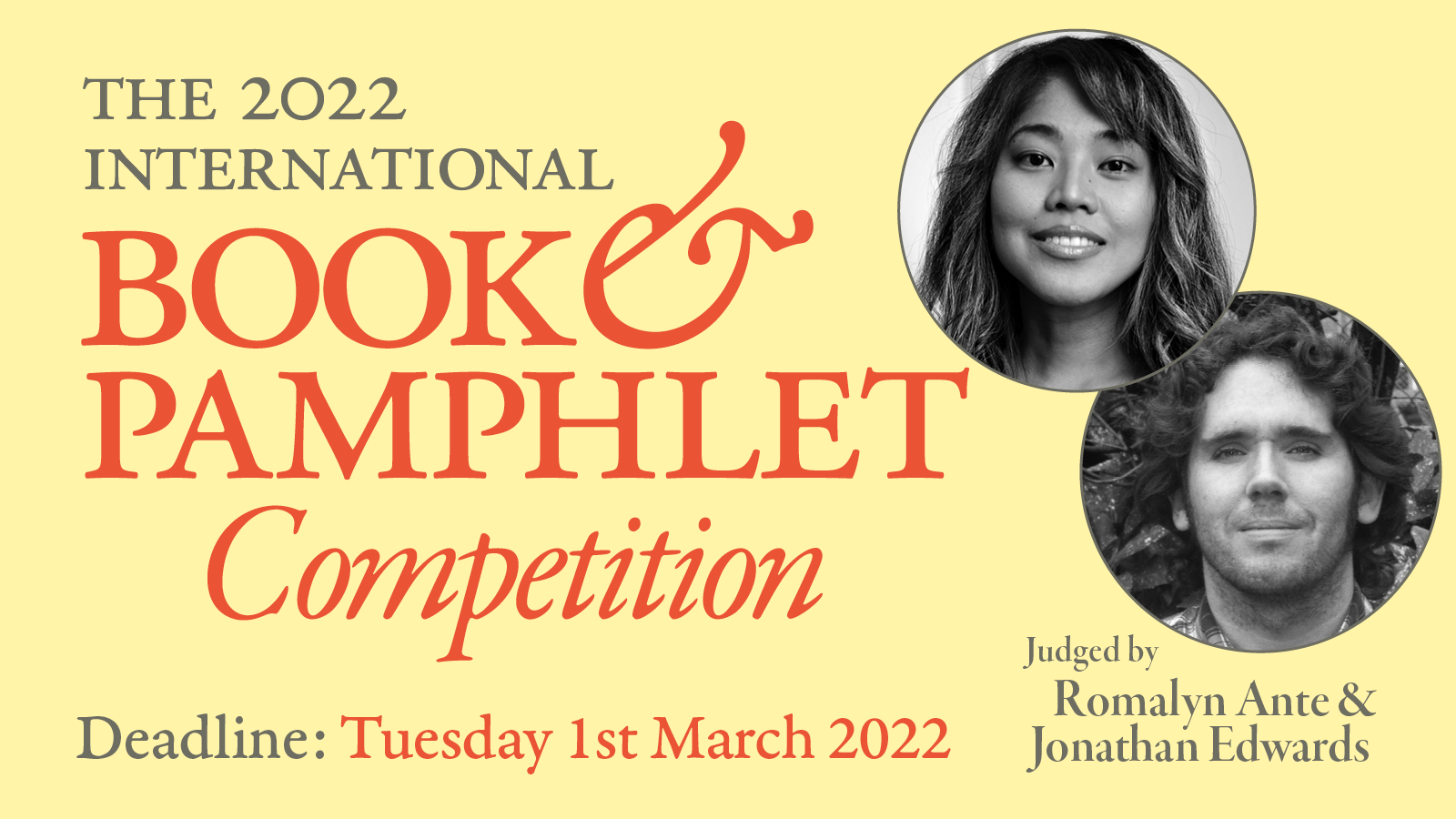
Zoë Walkingon lives in Bedfordshire. She has had work published in The North, Strix, Hinterland and various anthologies. Her collection, I hate to be the one to tellyou, won the 2022 International Book & Pamphlet Competition. Judge Romalyn Ante praised Zoë’s poems for erupting with ‘beauty and emotional resonance’.
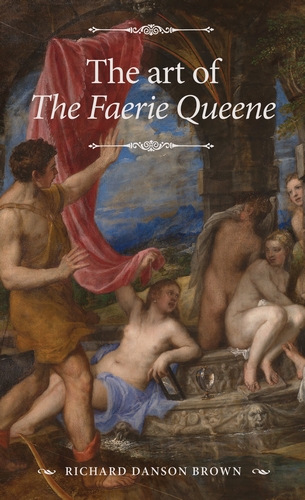
On their virtual stand at the Renaissance Society of America’s annual meeting, Manchester University Press recently featuredRichardDanson Brown’s latest book, The art of The Faerie Queene. Richard is Professor of English Literature at the Open University, and Head of the School of Arts and Humanities. Here, he shares with us the longstanding obsessions, academic collaborations, and scholarly disagreements that informed his writing of The art of The Faerie Queene.
Published by Manchester University Press, 2018
If I believed in fate, I would say that I was destined to write this book, since it reflects obsessions I’ve had for most of my adult life and probably earlier: poetic forms, what those forms tell us, how skilful writers work with those forms to create new texts, what claims such formal work might have on us as readers. From first reading it aged 19, The Faerie Queene had seemed to me a formal structure—or rather a series of formal structures—of the utmost intricacy, where the liaisons between poetic line and poetic conceit were always shifting, always provocative.
As it is, I am not a fatalist, so there are other, more persuasive accounts for its genesis: firstly, my collaboration with Julian Lethbridge on the Concordance to the Rhymes of The Faerie Queene (2013) left me with an unfinished sense that there was more to say, even after the two comparatively long studies we contributed to that vast volume. Academic collaborations are productive as much for the swerves they induce in thinking as the moments of agreement around shared ambitions. While Julian and I very much agreed that form was a neglected category in post 1980s Spenser criticism, we were to take that thought in different directions. While for Julian, the evidence of the Concordance pointed towards Spenserian automation—what he calls the “non-expressive” aspects of The Faerie Queene—for me, those same data sets sent me back towards poetic particularity, and a sense that even if Spenser is often formulaic (and he is), readers can never take automatism on trust. Each instance of poetic usage at some level demands the reader recodes familiar lexis and stanza form in terms of “darke conceit”.
I was strengthened in this perspective by a different collaboration, with David Lee Miller, on Spenser Review. In between the pleasurable stresses of editing the journal for its three appearances a year, David and I would exchange emails and conversations about latest projects, with him gently insisting that he genuinely did want to see draft chapters from what was at that stage a much delayed and longed-for project. (As well as book reviews editor on SpR, I was at that period dean of a faculty in a university undertaking a momentous “change process”; “O pittious worke of MUTABILITIE!” indeed.) David’s readings strengthened the book at every page, demanding more craft, and broader sympathies, as I worked through a structure which one reader called an “inverted Christmas tree,” moving from individual words, via lines, meters, rhymes, and stanzas up to the larger forms of cantos and books and the poem as a whole. My book as it turned out was inconceivable without the input of Julian and David, which is why I dedicated it to them jointly.
Writing about your own work is always mildly queasy. (Maybe this is a scholarly version of the modesty topos, but I am not faking for effect.) For many years, I found it difficult to reread my first book (on the Complaints). With The art of The Faerie Queene, I have related but different feelings. In an ideal world, it would be more comprehensive—less tendentious and show-offy. But we don’t live in such a world, and I look at this book, with the beautiful painting of Titian’s Actaeon fatally raising his arm towards the naked Diana on the cover, with a kind of equanimity. Some of the things unsaid from the Concordance are contained within these covers.
Thanks to Manchester University Press for allowing us to repost this piece, which was originally published on their blog.
Richard Danson Brown
Richard Danson Brown is Professor of English Literature at the Open University, and Head of the School of Arts and Humanities. Throughout his career, his main research interest has been the poetry of Edmund Spenser, but he has also worked extensively on the poetry and drama of Louis MacNeice. Richard has had his own poems published in several magazines, and was an editor of The English Review, a peer reviewed magazine aimed at sixth form students.
Dónall Mac Cathmhaoill, Open University Lecturer in Creative Writing, has been collaborating with University of València colleagues who share his interest in contemporary Irish theatre. Together, they have been exploring the relationship between performativity, truth, and documentary sources.
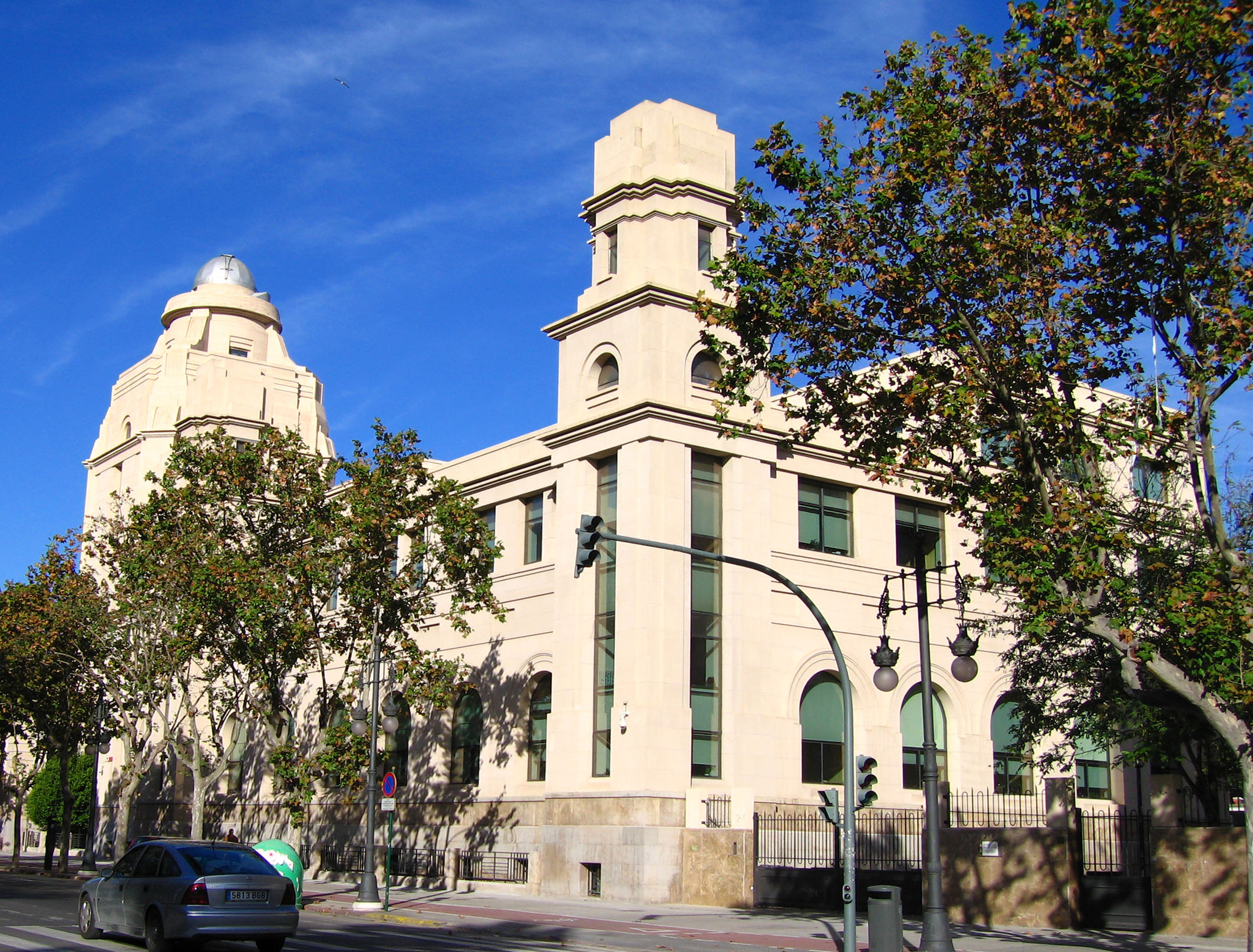
The University of València’s Rectorate (This image is in the public domain)
València in spring is generally a relaxing, pleasantly warm place to be. So I was very much looking forward to conducting a couple of seminars with the Departament de Filologia Anglesa during the month of Las Fallas – the Valencian festival to bid adiós to wintry days.
I came out expecting warm Levante breezes and two-hour terrace lunches with academic colleagues. Unfortunately, València has been experiencing some of the coldest, wettest weather ever for this time of year: high winds and incessant rain. (Being Irish, I felt right at home.)
The research trip evolved through my connection with Dra Maria Gaviña Costero, an English literature academic who specialises in the literature of the Irish conflict, particularly drama.
Given my own research into theatres of conflict, we found we had many interests in common. Having contributed some suggestions of writers the department might consider for their new drama module, I was invited last year to speak at their annual conference.
The idea then developed to deliver a research seminar and workshop with the university undergraduates in English, looking at performativity, truth, and documentary sources in Irish theatre.
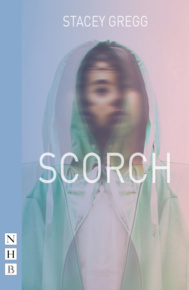
The plan was to develop this collaboration to create a research paper on the work of Northern Irish playwright Stacey Gregg, who I had recommended for inclusion on the undergraduate drama module. Gregg agreed to take part in the session I would deliver.
The design of the research process was simple enough: the students would take part in a drama workshop where the contingent and subjective nature of dramatic truth would be explored. This involved creating dramatic narratives from ostensibly ‘true’ and ‘real’ material: documentary drama by another name.
The credibility of the narratives was predicated on their affective and aesthetic qualities: on the extent of identification between audience and performer, and on the presence of aesthetic signifiers of truthfulness, such as simplicity and directness of presentation, what Elizabeth Burns calls ‘authenticating conventions’ (1972, p.108).
Importantly, though, the narratives would be considered truthful through the rhetorical convention of having them presented by ‘real people’. This is a technique which has been used in northern Irish post-conflict drama, and which has been subject to academic scrutiny (Upton, 2010; Weigelhofer, 2015; De Ornellas & Mac Cathmhaoill, 2021).
Some, notably Carole-Anne Upton (2011), have called into question the assumptions upon which this work is built. The workshop and seminar explored how truth, and indeed identity, in documentary drama are contingent and subjective, performative and in flux.
The follow-up seminar, just completed, saw Gregg joining us online from Belfast for a discussion and Q&A. The undergraduates had by this stage read Gregg’s play Scorch, which is written from documentary sources. Gregg outlined the strategies she used as a creative writer to ensure truthfulness and fidelity to source in a work that is both documentary and fictional.
These methods – including in-depth case research, interviews, consultations with subject specialists, and presentation of work-in-progress – allow her to write plays that do not claim to be ‘the truth’ but that are unquestionably truthful.
The themes of these seminars will provide the material for upcoming research papers. They are also explored in my journal article in Platform: Journal of Theatre and Performing Arts, 15 (2): ‘Boundaries: respecting authenticating limits in the production of a play on trans marginality’.
Dónall Mac Cathmhaoill
Dónall Mac Cathmhaoill is a lecturer in Creative Writing at the OU. His PhD examines modes of authorship in theatre for social and political advocacy. His research interests range from authorship in theatre for social change to advocacy theatre in post-conflict societies. As a writer-director he has wide experience working with communities in Ireland, the UK and beyond. He was director of Irish theatre company Tinderbox, a producer and Head of Education at Soho Theatre, and has worked with major theatre companies including Bruised Sky, London; 7:84 Theatre Company, Scotland; Jagriti Theatre in Bengaluru, India; and Irish language company Aisling Ghéar.
Works cited
Burns, E. (1972) Theatricality: a study of convention in the theatre and in social life. London: Longman.
De Ornellas, K. and Mac Cathmhaoill, D. (2021) Addressing the legacy of inter-communal violence through drama: mainstream theatre and community action. In: Glencree Journal, 2021, 163-174.
Gregg, S. (2016) Scorch. London: Nick Hern.
Mac Cathmhaoill, D. (2021) Boundaries: respecting authenticating limits in the production of a play on trans marginality. Platform: Journal of Theatre and Performing Arts, 15 (2), 111-117.
Upton, C.A. (2010) Theatre of Witness: Teya Sepinuck in conversation with Carole-Anne Upton. Performing Ethos, 1 (1), 97-108.
Upton, C.A. (2011) Real people as actors – actors as real people. Studies in Theatre and Performance, 31 (2), 209-222.
Weigelhofer, M. (2015) The function of narrative in public space: witnessing performed storytelling in Northern Ireland. Journal of Arts and Communities, 6 (1), 29-44.
Meghan Flaherty, Associate Lecturer on A215, has recently been awarded a Scottish Book Trust Ignite Fellowship. The fellowship offers talented professional authors practical and financial support for exploring new avenues or making new breakthroughs. Meghan will be working on her second book, a memoir about motherhood, memory, and the self – the stories we tell each other in order to live and how those narratives define us. We asked her to tell us about juggling her roles as mother, writer and OU tutor.
Motherhood is hard. It’s even harder (I tell myself) when your children are small and the world has gone haywire. The pandemic has forced so many of us to juggle so much, and in such claustrophobic space. How can you possibly be a person, a writer, a mother, a pre-school teacher, a playmate, a chef, a maid, a student, a professional and keep your family safe and healthy all at once? (Not to mention keeping up with all the latest parenting advice on Instagram—and falling ever short.)
I say this and I’ve had it easy. My family has weathered its particular challenges, but we’ve managed to tread water for the past two years. In all of the uncertainty, we’ve never feared for a roof over our heads, and despite a few nursery colds (when nursery is open) and the persistent stress, we’ve managed to fend off harm. We’re lucky. My husband and I have jobs that don’t require us to leave the house in lockdowns. Our kids are young enough to not mourn what they have lost in this new normal. (And young enough, thank heaven, not to require help with any maths homework.) We are not high risk (in any category), and so we’ve managed fine, despite the occasional storm clouds of depression and that niggling, insurmountable anxiety, the fatigue of functioning in so much flux.
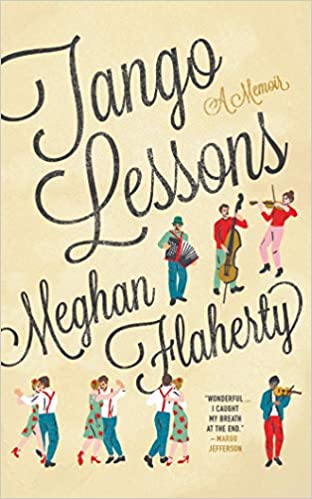
Tango Lessons: A memoir by Meghan Flaherty
What I haven’t managed to do (apart from keeping my skirting boards clean and being perfectly patient with my children) is write. I sit here typing this beside a pile of pages—the mess of which I hope to call my second book. This lump of untouched draft, this tome of half-baked words, is the albatross of my pandemic, of my past five years. Granted, during that time, I also had two children under two (both of them nutters), moved across the world, and lost a beloved parent to leukemia. (Not to mention: made it through the Trump administration.) I’ve had my share of good excuses.
My kids came first. Then lockdowns. Then the move. More lockdown. Toilet training. The purchase of our first house. Another move. My husband’s thyroid surgery. Working to pay the bills. Grieving. More bills. When was there time to sit down at my desk and do art? And if I’d found the time, where was the energy? The inspiration (from the Latin ‘in’/‘spirare’, to inhale, to breathe in)?
I’ve recently been given the gift of an Ignite Fellowship from the Scottish Book Trust, which includes a much-appreciated bursary, the promise of a week’s retreat (!!!), and mentorship, but above all else: a vote of confidence. Someone outside of my house, my head, telling me to put my bottom in my chair and get this done. A reason to pick up this doorstop on my desk and make a book of it. Even when I think I’m too exhausted to access the part of me that writes. The part I’ve shaded over with these other roles, back-burnered and forgotten. You’ll understand why I fumble here for words; my gratitude feels inexpressible.
Since I started teaching at the OU, I’ve been so impressed by the tenacity of my students. Most of whom, I note, are juggling so much more than I. That they manage to keep pace against the current of this pandemic, managing their own families and jobs and stresses, their own mental health and learning challenges, to pursue their degrees (and churn out stories, essays, poems) is remarkable. As I steer them through their module this year, I hope to channel some of their resolve and pluck.
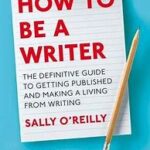
Sally O’Reilly is a novelist and Senior Lecturer here at the Open University’s Department of English and Creative Writing, where her role as Media Lead has included editing this blog. Before Sally’s appointment as a Central Academic in 2014, she’d already worked here for many years as an Associate Lecturer. But Sally’s long relationship with the OU is about to evolve as she is now making the leap to fulltime writing. Ahead of her departure, Sally’s successor as Media Lead, Emma Claire Sweeney, has seized the opportunity to ask Sally about her recent research into climate change and creativity – an area where Sally hopes to continue collaborating with OU colleagues.
Emma: How do you think creative writing might play a role in addressing the societal challenges posed by climate change?
Sally: Like so many people, I am increasingly alarmed by the climate crisis and I also feel unsure what I can do to help. It’s hard to see a way in which any one person can make a difference, and there are two default settings – thinking about something else, or assuming a position of nihilistic fatalism. But what I’ve realised is that it’s not about any one person, it’s about the power of collective action and social change, and while one person is powerless alone, if you can start communicating with like-minded people, astonishing changes can be made.
And while, at first, I thought that trying to address these issues was something I must do outside my work and writing time, I saw eventually that writing creatively is directly related to the climate crisis, because writers can (perhaps) encapsulate what this means in human terms, and be part of a movement to reimagine the world.
I’ve talked about this in three videos recorded for the Faculty of Arts and Social Sciences:
Imaginative writing can seem like an adjunct, a ‘nice to have’, rather than being essential to society like (say) physics. But if you look at the way people turned to books, film and TV during the lockdown, you see how vital narrative is to everyone. So writing can both help people process what is going on, and help communicate the situation – but without pushing an overt ‘message’ because there we have another pitfall, becoming polemical or seeming to preach.
Emma: Can you name a few contemporary writers who you feel have navigated this territory particularly well?
I really like the way that a fiction writers like Jenny Offill can play on our sense of unease by weaving alarming statistics about climate, preppers and the coming apocalypse into a contemporary realist narrative. It is the very ordinariness of the story that makes it terrifying.
Right now, I’m in the middle of a fascinating book called Being a Human by Charles Foster, which isn’t overtly about climate change, but about the way in which humans lived for many thousands of years, as Palaeolithic hunter gatherers. They lived long, healthy lives, their carbon footprint was zero and they produced visual art of stunning sophistication. Our view of modernity as being part of a post-Enlightenment process of constant improvement does not stand much scrutiny if you take the long view, and the despoliation of the planet is part of that. What’s particularly interesting about Foster, who is an extraordinary writer, a sort of modern William Blake, is that he bends genre in this book. Ostensibly, it’s creative nonfiction, but he brings in the ghost figures of a character named X and his son, spirits from the Palaeolithic age. His writing reminds me of both Ted Hughes and Alan Garner, the sense of the numinous in nature, the mystery in being. And Foster also embodies the meeting of scientific, empirical knowledge and creativity – he has studied veterinary medicine, he is barrister, and he has a wild imagination.
Sally: I invited poets, fiction writers, scientists and activists to talk about how distilling observations about the natural world and telling stories relates to the present moment and our choices about the climate. I’m aware of my own ignorance here. My writing has not focussed on climate previously, and so it is as steep a learning curve for me as it is for anyone. But in the research I have done so far, I can see how this issue connects with so many other issues – racism, social justice, education, equality.
Emma: So your own research interests are changing in the light of these connections?
After I leave the OU, I will be working on a series of essays about the contemporary world and climate, working tranche title Eco Worrier. And my current novel explores Victorian attitudes to nature and the way in which the ancient, shamanic understanding of the natural world had its last gasp at that time. It’s a book that has led me down a lot of surprising, twisty pathways, like walking through an ancient forest. Or so I tell myself when my energies are flagging.
Emma: Another area of your research relates to diverse voices in historical fiction. Could you tell us a bit more about that? Are there links between this and your interest in creativity and climate change?
Sally: I’m in the process of putting together a collection of essays about difference in historical fiction, and the way that previously marginalised voices are now being heard in this genre. Two years ago, I would have said this was separate from my interest in climate, but now I see a close connection. If you read about the British Empire and the ruthless way in which the British colonised and exploited people and resources, you can see how the foundations of climate injustice were laid. The Industrial Revolution paved the way for global expansion, which traditional British histories have said made the UK the ‘workshop of the world’, but we did this at the expense of disenfranchised groups in Britain – women, children, the working class – as well as in the global South. And the roots of Empire go back to Tudor England, to those glamorous swashbucklers Drake and Raleigh, that period of history that now seems so brightly coloured and picturesque.
Emma: Now that you are leaving your current post at the OU to write full time, how do you hope your new relationship with the OU might develop?
I’d like to find a new way of working, writing books that have academic rigour in collaboration with academics, perhaps in other disciplines, and also writing novels that reflect the new way that I see the modern world. One of the poets at the first seminar, Kristian Evans, talked about the way in which writing makes us more present to reality, and helps us experience life with more intensity, more directness. I’d like to channel that, into reading, thinking and writing. And collaborating. Because as I was saying earlier, this has to be about collective action. Novelists are good at sitting on their own tapping out sole-authored books, and writing novels is still my priority, but I’ll be looking for creative collaborations with OU colleagues whose interests relate to mine. I’d like to follow Foster’s example and work at the interface between fiction and nonfiction, a way of writing that seems particularly resonant at this time, when the facts are so extraordinary that processing them is an imaginative challenge.