OU News
News from The Open University
- Home
- AI sheds new light on dinosaur footprints
AI sheds new light on dinosaur footprints
Posted on • Science, maths, computing and technology
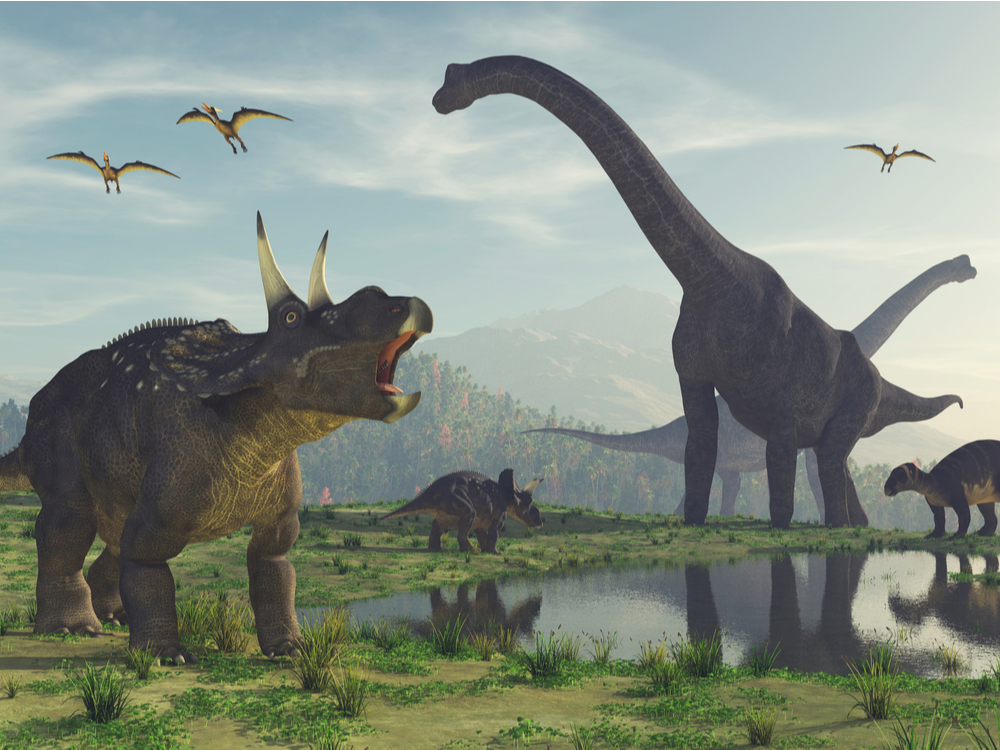
A new publication introduces a transformative AI approach to studying dinosaur footprints, offering researchers (and enthusiasts!) an objective way to classify tracks and investigate the conditions in which dinosaurs lived.
The paper, published in Proceedings of the National Academy of Sciences (PNAS), discussed how using an unsupervised neural network, the team — including Dr Gregor Hartmann of Helmholtz-Zentrum Belrin and Open University (OU) Researcher Tone Blakesley — analysed nearly 2,000 fossil footprints and identified eight key shape features, such as digit spread, heel position and load distribution, to identify the variation in footprint shape.
Tone’s involvement in the project began years earlier on the Isle of Skye. Summers spent fossil hunting with local expert and colleague Dr Dugie Ross sparked his passion, leading to the discovery of his first footprint in 2018 and undertaking his Masters at the University of Edinburgh – supervised by Professor Steve Brusatte and Dr Paige dePolo. This journey laid the foundation for DinoTracker, a free user friendly app built from footprint research.
The study focuses on two debated sets of footprints, each highlighting the app’s ability not just to classify tracks but to interrogate environmental conditions.
The Late Triassic “bird like” tracks – found in South Africa- are 215 million year old footprints that closely resemble modern bird tracks, despite predating bird fossils by some 60 million years. DinoTracker confirmed their strong similarity to both fossil and living bird prints. This finding raises the questions: were these shapes the result of anatomy, or did dinosaurs walking on wet, unstable ground splay their toes for stability? The app’s feature sliders allow researchers to consider how substrate and behaviour may have produced these bird like impressions.
An additional set of Middle Jurassic footprints on the Isle of Skye suspected to belong to ornithopods were identified using DinoTracker – supporting the clades more ancient origins compared to evidence provided by body fossils. This prompts new questions about how herbivorous and carnivorous dinosaurs shared coastal habitats, and how different substrates influenced footprint preservation.
The DinoTracker app allows users to upload or draw footprints, explore morphological features and compare results across a set of seven closest footprint ‘neighbours’, providing a powerful way to study behaviour, movement and ancient landscapes. As an article about the app in The Conversation notes, footprints reflect not just anatomy but ground conditions, and AI now helps reveal those hidden stories.
With future expansions and potential citizen science applications, DinoTracker embodies the OU’s mission to make cutting edge research open, accessible and deeply engaging.
You can find out more information about DinoTracker in this short video created by and featuring Tone Blakesley.
First published on OU’s Research news site.


Explore

Undergraduate
Postgraduate
Policy
-
Follow us on Social media
-