OU News
News from The Open University
- Home
- Trees for hotter cities: OU partners on new approach to grow community support for tree-planting
Trees for hotter cities: OU partners on new approach to grow community support for tree-planting
Posted on • Arts and social sciences
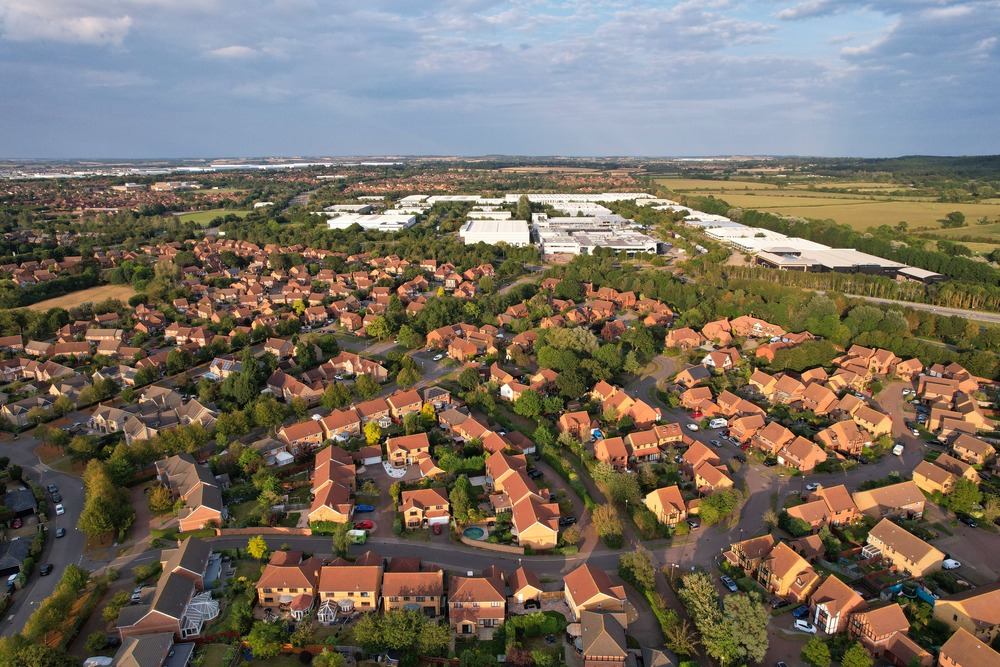
Efforts to plant more trees in cities could be boosted thanks to a new tool for planners and community groups, published by researchers working at sites across the UK.
The new free-to-use tool, Tree Value Visions, aims to support councils and communities in thinking about the future of trees in towns and cities in a more inclusive way. By providing an out-of-the-box solution, the tool helps cash-strapped local authorities to make the most effective use of available resources.
An international group of researchers, alongside Open University staff from Wales, England and Scotland, cooperated across five pilot locations to develop new guidelines on growing trees and growing support from local residents.
Trees in urban areas help cities adapt to rising temperatures: providing shade and reducing exposure to extreme heat. The UK Government has a target to increase tree planting to 30,000 hectares per year as part of efforts to tackle climate change and biodiversity loss.
The tool supports local groups, particularly councils, to understand and increase support for tree cover – without the costs of commissioning expensive consultancy firms. It is accessed via a free online training course available from The Open University.
The research, published in the peer-reviewed journal npj Urban Sustainability, suggests that spending and planning decisions often focus on measurable benefits such as carbon storage or the visual impact, but give less attention to deeper connections people have with the natural world.
By identifying priority actions that meet multiple needs, the tool encourages local authorities to integrate the wider importance of trees in people’s everyday lives across different policy areas, such as housing, transport and climate resilience.
Project Researcher Dr Peter Wood, an Open University Associate Lecturer, said:
“The tool practically supports the inclusion of local communities in the management of the urban spaces where they live. It provides a ‘flat pack’ kit that can be used to identify local priorities, sort them with scientific rigour, and then communicate the results in an enjoyable, popular, storytelling method.
“With fieldwork conducted across Britain, this research suggests how the unique culture of local places can be built into environmental projects, but ensuring a common experience. Our team brought local residents together in community centres and council halls, to tell us how improvements to the urban environment could improve their own lives.
“The final tool is free, online, and will help local councils to target spending at the actions that will be most appreciated by local taxpayers – like planting trees to cool streets during summer heatwaves!”
Project Lead Professor Jasper Kenter, a Research Fellow in Deliberative Ecological Economics at Aberystwyth Business School, said:
“Urban treescapes are not just environmental systems, they are places where people live their lives, form memories and build relationships. They shape how communities experience their neighbourhoods, from everyday travel and leisure to longer-term connections with nature and place.
“Our new tool helps bring those experiences into decision-making, alongside environmental and economic considerations. It is designed to support more inclusive discussions about the future of urban trees and to encourage communities and policy makers to think about how we live from, in, with, and are part of, nature in cities.”
“A spokesperson for The Parks Trust in Milton Keynes said:
“We were pleased to be involved in the series of Branching Beyond workshops, helping to explore how people in Milton Keynes value and experience trees across the city. The discussions highlighted the importance of listening to local perspectives when planning for the future of urban trees, so that decisions reflect the needs of communities as well as the benefits trees provide for nature, climate resilience and wellbeing.”
Maria Gill, Senior Green Corridors Officer at St Nicks environment charity in York, said:
“The Tree Values Vision tool will be a great help to community groups and charities like ours. It will help us to plan positive and practical habitat improvement work across our sites, whilst working with the community to get their input, so that habitat interventions enrich these areas for the people that use them and value them, as well as supporting wildlife.”
City of Edinburgh Council, Culture and Communities Convener Councillor Margaret Graham said:
“We know how important trees are to the environment and ecosystem, but also to people’s quality of life. By focusing on local communities, the Open University’s new tool recognises just how important residents’ experiences are when introducing more trees to streets and urban areas.
“In Edinburgh we are making strides toward becoming a Million Tree City and initiatives like this will be invaluable to growing our network of trees across the Capital.”
Representative groups of residents in several UK cities, including Cardiff, Milton Keynes, Edinburgh, York and Camden, have helped develop and test the tool to identify priorities and potential actions for improving their local treescapes. The research included local authorities and the Local Government Association as project partners, and combined with the Open University’s open training platform, supported the project to win follow on funding from a central government strategic programme.
The research builds on the IPBES Values Assessment, an international framework that highlights the different ways people value nature. The work was based on a collaboration between Aberystwyth University, Loughborough University, the University of York, The Open University, Forest Research, the Stockholm Environment Institute, and Ecologos Research, supported by the Local Government Association, the London Borough of Camden, City of Edinburgh Council, and international authors from Washington State University and the University of Oregon.
It was funded by UK Research and Innovation (UKRI), the Department for Environment, Food and Rural Affairs (Defra), the Welsh Government, the Scottish Government and the Forestry Commission through the Future of Treescapes Programme.
The team are looking to further share, test and improve the Tree Value Visions tool in the future.
Picture credit – Altaf Shah on Pexels


Explore

Undergraduate
Postgraduate
Policy
-
Follow us on Social media
-