OU News
News from The Open University
- Home
- Open University celebrates Beagle 2 legacy and looks to the future of space research
Open University celebrates Beagle 2 legacy and looks to the future of space research
Posted on • Science, maths, computing and technology, Space
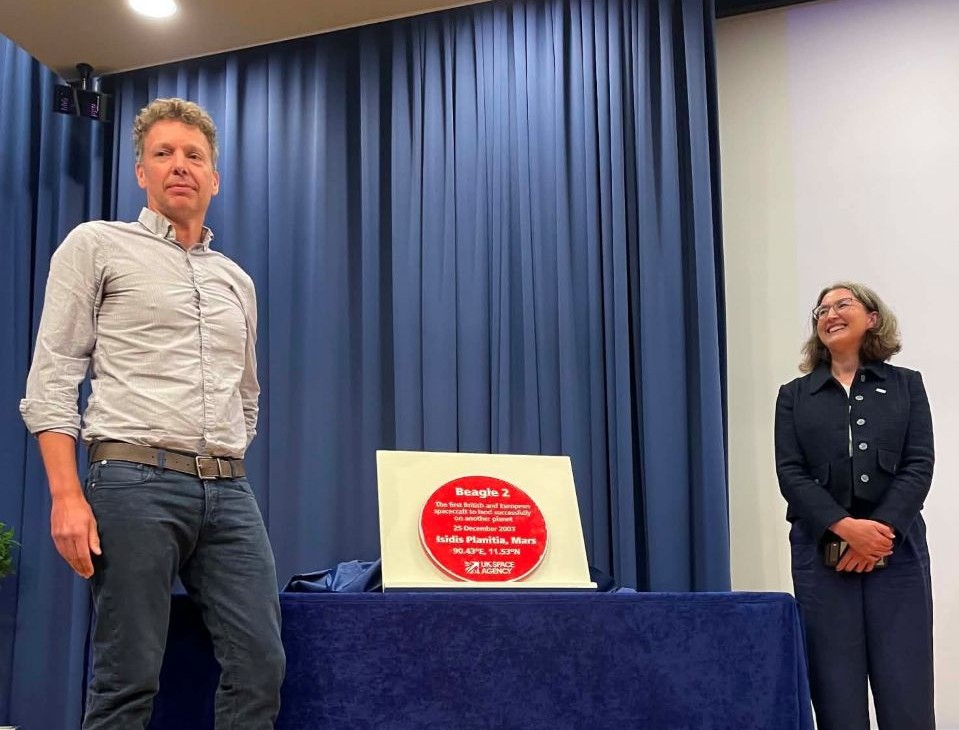
The Open University celebrated its pioneering contribution to space exploration today (7 October 2026) with the unveiling of a plaque commemorating the Beagle 2 mission alongside a showcase of the University’s current and future space research.
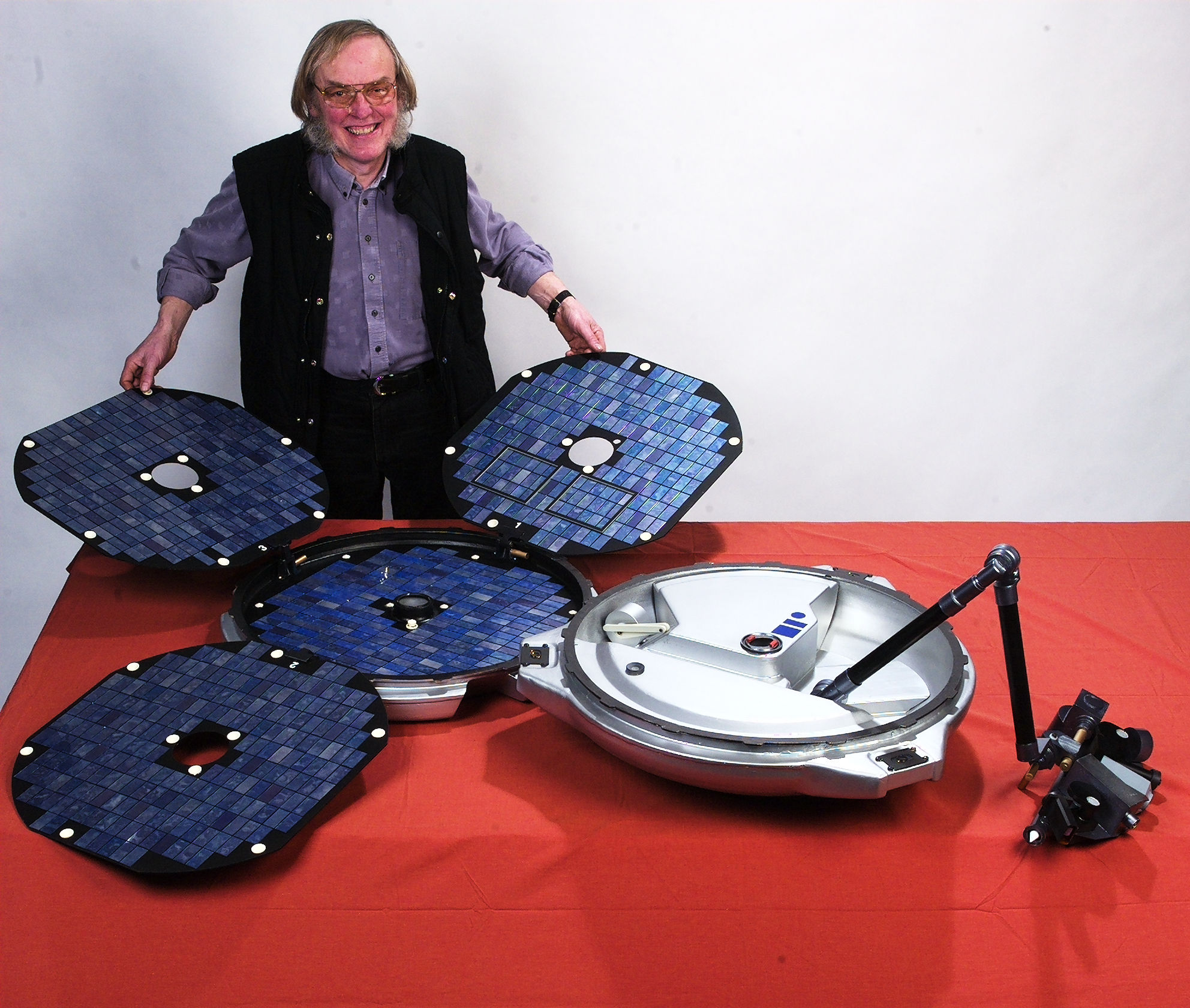
Prof Colin Pillinger, with Beagle 2 model. He was one of the founders of planetary and space science research at the OU.
Led by the late Professor Colin Pillinger and a team including scientists and engineers at The Open University, Beagle 2 captured the public imagination and demonstrated the ambition and ingenuity of UK space science.
Although the spacecraft did not complete its scientific mission following its arrival at Mars in 2003, its rediscovery on the Martian surface more than a decade later showed that it had successfully landed and come remarkably close to full deployment. Its legacy extends well beyond the mission itself, inspiring scientists and engineers and helping demonstrate the UK’s capability in planetary exploration.
The plaque, which is provided by the UK Space Agency, will exist as a permanent reminder of The Open University’s contribution to Beagle 2 and the people whose expertise and determination made the mission possible. It will be one of many plaques hosted at sites across the UK which contributed to the development of Beagle 2.
The event, which welcomed guests to the Berrill Lecture Theatre at the OU, also looked to the future, demonstrating how the legacy of Beagle 2 continues through OU Space exploration, and reveals the breadth of space related research taking place across the university.
OU researchers are advancing knowledge in astronomy, atmospheric research and space environments, space instrumentation, astrobiology, advanced imaging technologies, and planetary sciences. By bringing together this expertise into interdisciplinary research projects, OU Space aims to foster new collaborations, drive innovation and deliver scientific, economic and societal impact.
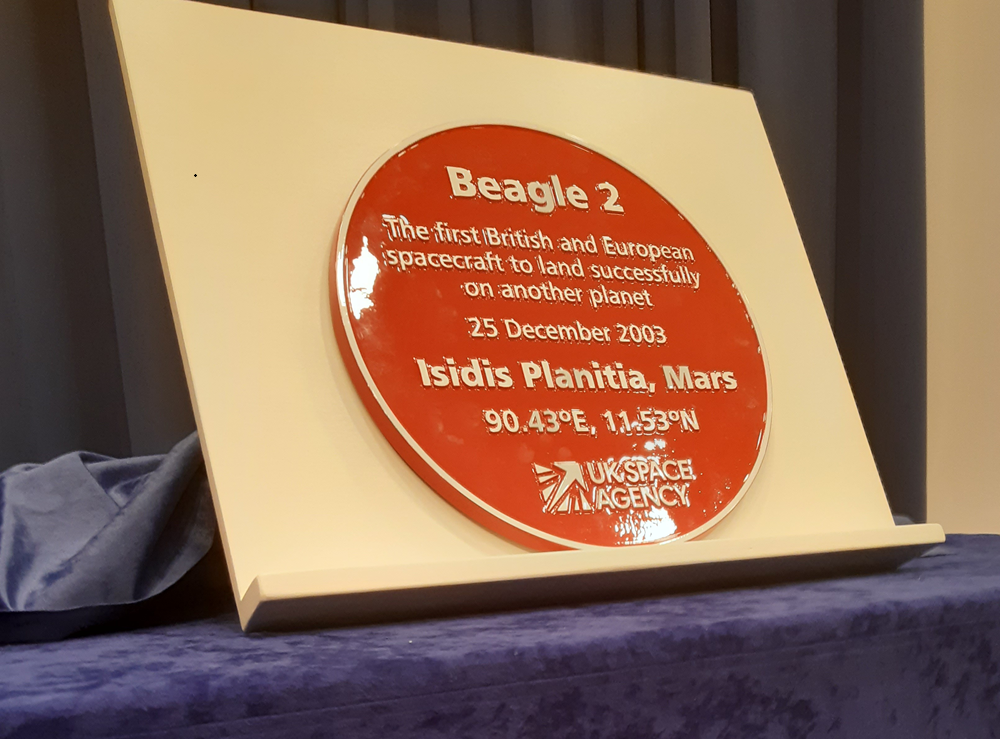
Thirteen plaques will be unveiled across the UK to celebrate Beagle 2, the first British and European spacecraft to successfully land on another planet.
Professor Arosha Bandara, Associate Dean & Director of STEM Research at The Open University, said: “Beagle 2 represents an extraordinary chapter in The Open University’s history and we are very grateful to the UK Space Agency for providing this plaque to mark this achievement and celebrate the work our late colleague Professor Colin Pillinger who led this ground-breaking project with colleagues from across the university.
“As we unveil this plaque, we are also looking to future as the legacy of Beagle 2 can be seen in the range of world leading space research taking place across the University today.”
Professor Mark Brandon, Pro-Vice Chancellor, Research and Innovation, said: “Beagle 2 genuinely captured the attention of the general public, and it is testimony to the incredible researchers and engineers who built it. We learned so much from it.”
Nicolas Pillinger, Professor Pillinger’s son conducted the unveiling together with Julie Black, Deputy Director for Earth Observation & Discovery at the UK Space Agency.
Mr Pillinger said his father would have been very pleased to know that science exploration is continuing at the OU. He said his father was always pleased to work as part of a team: “My dad always spoke of himself as being the frontman to the band that was behind this.”
Julie Black, from UK Space Agency, said: “Something is not finished until it’s impact on the world is finished.
“This plaque is a permanent signal of hope, curiosity and ideas for the future.”
As well as marking an important chapter in the University’s history, the event gives an opportunity to look ahead with confidence and ambition, building on the spirit of Beagle 2 to help shape the next generation of space research, innovation and talent.
This ambition supports The Open University’s “Opening Up” strategy, with its emphasis on societal impact, student success and partnership, through education and research that creates public value across the four nations of the UK and beyond.
Main image: Nicolas Pillinger, Professor Pillinger’s son unveiling the plaque together with Julie Black, Deputy Director for Earth Observation & Discovery at the UK Space Agency. Copyright: The Open University.


Explore

Undergraduate
Postgraduate
Policy
-
Follow us on Social media
-