OU News
News from The Open University
- Home
- How the National Trust’s art collections can shape meadow restoration
How the National Trust’s art collections can shape meadow restoration
Posted on • Arts, Arts and social sciences
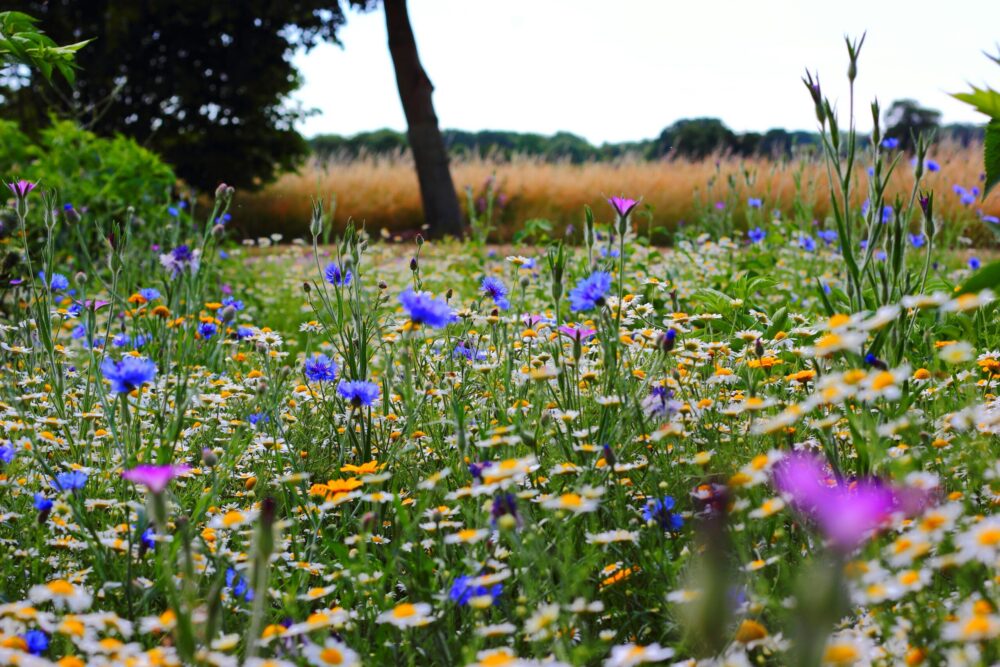
Earlier this year I found myself stood among a sea of swaying ox-eye daises in a floodplain meadow on the Attingham estate in Shropshire, on land owned by the National Trust, says Samuel Shaw, Lecturer in History of Art, The Open University. I noticed other plants growing here: the sunny yellows of meadow buttercup, the wine-reds of great burnet and the furry seed heads of meadow foxtail. The sounds of birds and insects bubbled in the background.
It felt like a thriving environment, but I knew that this meadow could be so much more. Floodplain meadows are hugely important spaces, supporting rare plant communities and providing food for animals to eat during the winter months.
The soils of floodplain meadows are recognised by scientists as an important carbon store, helping to slow floodwaters and absorb nutrients. Many remaining floodplain meadows have been managed in the same way for more than 1,000 years. However, such sites are rare and most meadows are in serious need of restoration.
The diversity and abundance of the plants and animals I encountered at Attingham did not indicate a flourishing ecosystem. While birds such as lapwing had been seen passing through the site, they not been encouraged to stay and breed. The quality of the soil was improving, but only slowly.
Read the full article on The Conversation
Picture credit: Freddie Ramm on Pexels


Explore

Undergraduate
Postgraduate
Policy
-
Follow us on Social media
-