OU News
News from The Open University
- Home
- OU study sheds light on future of Milton Keynes’ ancient woodlands
OU study sheds light on future of Milton Keynes’ ancient woodlands
Posted on • Science, maths, computing and technology
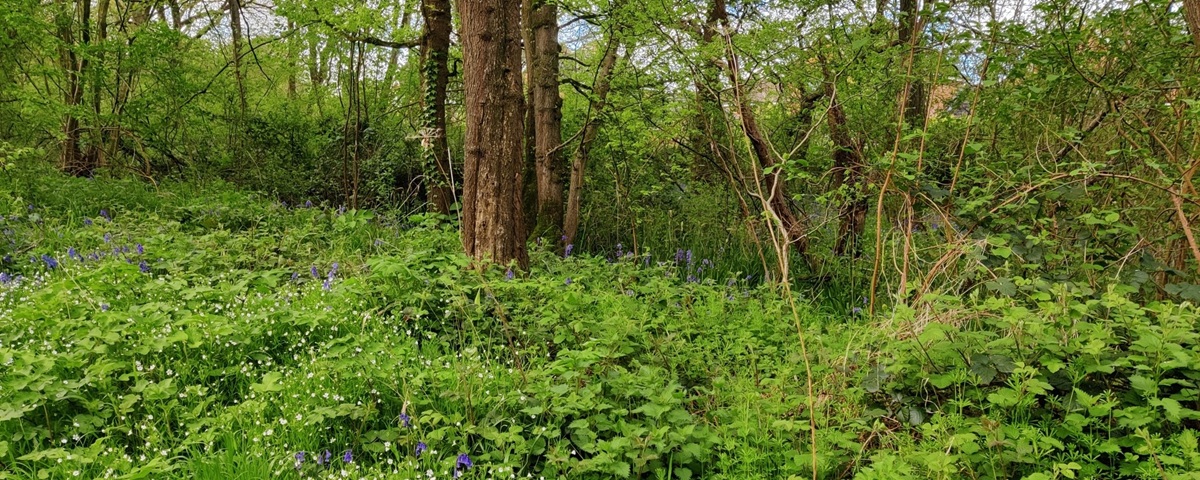
New research from The Open University (OU), recently published in Ecological Solutions and Evidence, has revealed how ancient woodlands in Milton Keynes are responding to the pressures of being surrounded by a growing city.
The study was led by a team of OU researchers from the university’s STEM faculty: Holly Woo, Sarah Davies, Kadmiel Maseyk, and Philip Wheeler. The team looked at historic records of plants in ancient woodlands across southern England. Three of the woods studied were in Milton Keynes, where housing developments expanded around them during the 1980s and 1990s.
The research shows that ancient woodlands close to towns and cities are increasingly home to non-native plant species, spreading from nearby gardens and parks. However, Milton Keynes’ ancient woodlands still support a similar number of specialist woodland species as comparable rural sites, underlining their importance for local biodiversity.
Holly Woo, postgraduate researcher who worked on the study, said:
“This research into historic change helps us to understand the threats to ancient woodlands in urban settings. While the effects of pollution and changing landscape are very important, the increase in non-native species suggests that we also need to think about how we manage people visiting the woods and advise people with gardens nearby on how to prevent the spread of introduced invasive species.”
Dr Philip Wheeler, who supervised the research, said:
“The connection between people and nature is so important, particularly in urban areas. We are lucky that we still have some fragments of ancient woodlands close to human populations and within urban areas, but we must take care of these. We must manage them to maintain nature for the benefit of people.”
The Parks Trust, which owns and manages the city’s three largest ancient woodlands, said:
“Our three largest ancient woodlands in Milton Keynes are incredibly valuable sites for biodiversity in the city, though the pressures they face are ever-increasing. This research will play an important role in informing management decisions in a complex, shifting environment. The impacts from the popularity of the woodlands, expansion of the city and ash dieback in ash-dominant canopies can already be felt in these sensitive habitats. However, this research presents the Trust with an opportunity to educate park users and update our practices to bolster resilience in our ancient woodlands to provide ecological safe havens that coexist with people in perpetuity.”
Header image credit: Holly Woo


Explore

Undergraduate
Postgraduate
Policy
-
Follow us on Social media
-