By Alexandra Okada
It was a real pleasure to meet Ann Berger Valente, Educational Research Manager at the MIT Media Lab in the Lifelong Kindergarten group.
I was a Master’s student at PUC-SP and a researcher at the Paulo Freire Centre, working with Emancipatory Pedagogy, while also teaching computational thinking with Logo, developed by Seymour Papert at MIT, my mentors both José Armando and Ann Valente worked with Papert and Freire.
Freire at PUC-SP, Papert at MIT, and Gardner and Perkins at Harvard were great inspirations, shaping my understanding of emancipatory education and its power to equip my generation with critical pedagogies and technology-enhanced learning.
At MIT, I had the joy of presenting the METEOR project alongside student-created technologies—such as a solar cap designed to charge cell phones in high schools. We also showcased a project on the human body, inspired by the OU–BBC series The Human Body. This initiative was developed by undergraduate students in Medicine and Computer Science, led by my colleague and former advisee, Prof. Alexandre Marino Costa, at UFSC in partnership with the Brazilian Government.
These projects exemplify open schooling, which brings together school students and researchers to tackle real-life problems through technology, while developing transversal competencies in partnership. The solar cap, for instance, enabled schoolchildren to act as eco-entrepreneurs, while the use of AR in schools fostered digital health advocates, raising awareness about the human body and wellbeing.
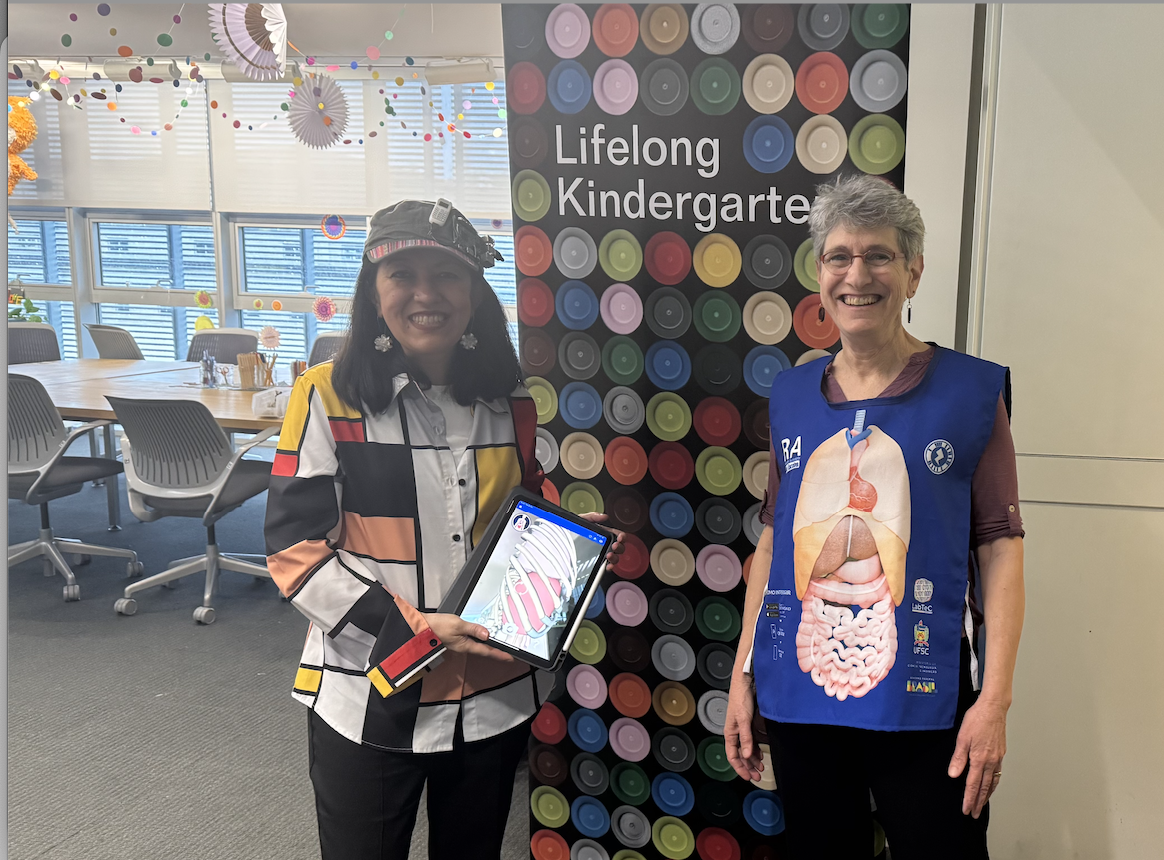 Image 1: Dr. Okada and Dr. Valente at the MIT Media Lab – Lifelong Kindergarten
Ann plays a central role in leading and designing research and evaluation for the Brazilian Creative Learning Network (BCLN) — a powerful initiative that is transforming education in Brazil by promoting more creative, relevant, and hands-on learning in both schools and community spaces.
Her academic path is as inspiring as her practice:
- 🎓 B.A. in Child Development, Tufts University
- 🎓 M.Ed., Harvard Graduate School of Education
- 🎓 Ph.D. in Medical Sciences, Universidade Estadual de Campinas
How Ann defines “creative learning”
From her work and reflections, Ann frames creative learning as:
- Playful, open-ended, and inclusive → learning that goes beyond rigid, standardized tasks and creates spaces for experimenting, exploring, and imagining.
- Learners as active agents → children and young people are not passive recipients of knowledge but creators who design, solve problems, and collaborate.
- Authentic, meaningful contexts → connecting learning with what matters in local and cultural settings, from school to festivals and community events.
- Supporting educators → enabling teachers with tools, frameworks, and professional development so they can scaffold creative learning in ways that are feasible and adaptable.
Ann sees creative learning as transformative: nurturing creativity, agency, collaboration, and relevance, where learners and educators alike thrive.
Her key projects with links
Ann’s leadership has contributed to several initiatives, most notably:
- Brazilian Creative Learning Network (BCLN) → a movement bringing creative, hands-on practices to schools and communities across Brazil.
- Creative Learning Fellowship / Challenge Brazil → supporting educators to design and implement creative practices, building professional capacity.
- Festivals of Invention and Creativity (FICs) → community events where children, families, educators, and policymakers explore invention and creativity together, using both low-tech and high-tech materials.
- FIC Toolkit with J-WEL (MIT Jameel World Education Lab) → developing global resources so that communities worldwide — in Chile, Mexico, South Africa, and beyond — can adapt and host their own creative festivals.
Meeting Ann reminded me of the global momentum for creative, inclusive, and participatory education. Her vision resonates strongly with Rumpus’ commitment to frameworks like CARE–KNOW–DO, where learners care about meaningful challenges, know through inquiry and collaboration, and do by taking creative and transformative actions in their communities with enjoyment.
References
Valente, A. B. (2020). The “Creative Learning Challenge Brazil” from the Perspective of Constructionism. Proceedings of Constructionism, 536-545.
Valente, A. B., & Burd, L. Brazilian Creative Learning Network. PROCEEDINGS OF CONSTRUCTIONISM/FABLEARN 2023, 153.
Valente, A. B., & Burd, L. (2019). Creative Learning Challenge Brazil: A Constructionism approach to educational leadership development. Tecnologias, Sociedade e conhecimento, 6(2), 9-29.
Valente, A. B. (2003). Evaluation of executive function in AD/HD children using neuropsychological instrumensts and Logo computer programming activities. J. bras. psiquiatr, 13-23.