At MIT open learning

Meeting Curt Newton at MIT: Where Jazz, Open Education, and Climate Action Converge

During my recent visit to MIT Open Learning, I had the privilege of engaging with Curt Newton, Director of MIT OpenCourseWare (OCW), along with Chris Rabe, Program Lead for Universal Climate, and Shira Segal, Collaborations and Engagement Manager at OCW. What emerged was a fascinating exploration of how open education, climate action, and creative engagement can transform how we learn and act on our planet’s most pressing challenges.

Curt Newton: A Unique Voice in Open Education
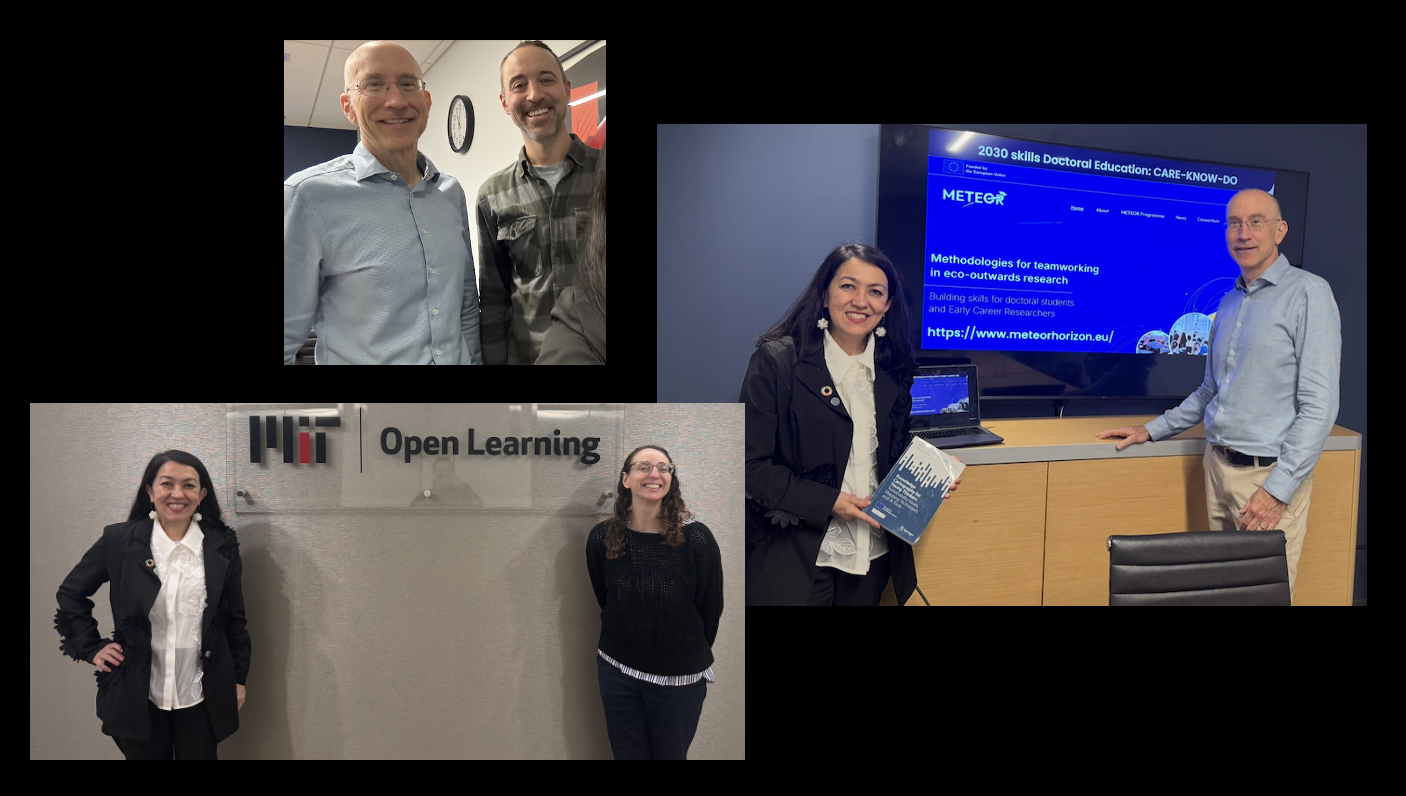
Image 1:  MIT Open learning team: Curt, Chris and Shira

Curt Newton leads MIT OpenCourseWare in supporting millions of global learners and educators every year with freely shared materials from over 2,500 MIT courses. He joined OCW in 2004, shortly after its launch, captivated by the promise of open education.

But Curt is far more than an open education leader. What makes his work particularly inspiring is his commitment to climate action alongside open learning. He became activated in climate change work through MIT’s 2014 community climate conversations process and helped launch and co-lead the MIT ClimateX program (2015-2018). He also serves on the steering team of 350 MA and is a trained Climate Reality Project Leader.

When Jazz Meets Climate Education

Here’s where Curt’s approach becomes truly extraordinary—he embodies the philosophy that learning should be joyful, creative, and deeply engaging. This aligns with our Rumpus approach to fun in education: making complex, urgent topics accessible through creativity, artistry, and playfulness.

Source: Yotube A Climate Meditation for Solo Drumset // Curt Newton @ MIT Chapel, April 17 2024.   ‘A improvised sonic meditation on climate change and the polycrisis of our times. What can the practices of slowing down, curiosity, and seeking resonance offer as we navigate this urgent moment?’

Curt’s unique approach combines his professional expertise with creative activism. His latest recording, “Waking Up!” with Eric Hofbauer’s Five Agents ensemble, is a jazz suite inspired by Greta Thunberg’s galvanizing 2019 “How dare you!” speech at the United Nations. He’s also performed “A Climate Meditation for Solo Drumset”—using music and artistic expression to engage people emotionally with climate issues in ways that data and policy papers alone cannot achieve.

This is the essence of fun as engagement: transforming serious, urgent topics like climate change into experiences that move, inspire, and energize people. When we make learning playful and creative—whether through jazz, interactive experiments, storytelling, or games—we don’t diminish the importance of the subject. Instead, we create deeper connections and synergistic impact.

A Rich Exchange of Ideas

During our meeting, several key insights emerged:

Curt Newton presented MIT’s extensive climate-related initiatives, including the Climate Portal and the ClimateX community, which provide open resources and foster global engagement on climate action. These platforms democratize access to climate knowledge while building communities of practice around the world. This is particularly relevant for the METEOR network of researchers across Europe, Latin America, and Africa.

Chris Rabe introduced the Universal Climate course, emphasizing its role in promoting climate literacy and justice through accessible, open educational materials—ensuring that climate education reaches beyond elite institutions. This is especially useful for our open schooling network CONNECT-science.net, focused on underserved students.

Shira Segal highlighted the mission of MIT OpenCourseWare to democratize education by providing free access to MIT’s course materials and discussed the upcoming OEGlobal Conference 2026, which MIT will host, focusing on open education and global collaboration. This was very useful for our next steps in expanding Open Learning with CatchUp Open Education.

Bridging Worlds: The METEOR Project and Indigenous Knowledge

I presented the METEOR EC-funded project, focusing on methodologies for teamworking in eco-outwards research and the development of transversal skills for researchers and doctoral students. Our research in the UK emphasizes participatory and community-based approaches, engaging local Indigenous communities alongside METEOR researchers from the Open University and the Federal University of Pará in the Amazon rainforest.

By integrating ethnographic accounts, community-based participatory research, open schooling, and AI-enabled tools, we explore how climate knowledge, culture, and resilience intersect. This work builds on our recently published article with UNESCO, which highlights the role of AI and open schooling in supporting sustainable education practices in the Amazon rainforest while respecting local cultural knowledge.

The conversation revealed powerful connections: just as Curt uses jazz to make climate education emotionally resonant, our work demonstrates how local cultural knowledge and creative expression are essential to meaningful climate action and artivism (art + activism). Both approaches reject the notion that education must be dry or detached—instead, they embrace the full spectrum of human experience, from artistic expression to community wisdom co-creation.

Fun, Creativity, and Serious Purpose

What struck me most about meeting Curt and the MIT Open Learning team was their embodiment of a crucial principle: you can be rigorous and playful at the same time. Curt’s work proves that open education isn’t just about access to information—it’s about making that information come alive in ways that spark curiosity, joy, and action.

Whether it’s through a jazz performance that channels climate urgency, a universally accessible climate course, or community-based research, the message is clear: if we want people to care deeply and act boldly on issues like sustainability, we need to engage not just their minds, but their hearts and imaginations too.

Looking Forward: OEGlobal 2026 and Beyond

The meeting provided a rich opportunity to discuss synergies between MIT’s climate initiatives, open educational resources, and our own work fostering inclusive, culturally grounded climate education. With MIT hosting the OEGlobal Conference 2026, there will be unprecedented opportunities to advance these collaborations and share what we’re learning with a global community of open education advocates.

It was inspiring to collaborate on open education initiatives that empower learners worldwide to address climate challenges through innovation, community engagement, and shared knowledge. And it was a powerful reminder that the most effective climate education combines scientific rigor with cultural sensitivity, technological innovation with artistic expression, and global reach with local wisdom.

The conversations at MIT were very insightful for Rumpus Group and Meteor Network. That’s what happens when jazz meets climate action. That’s what Curt Newton and OCW team including Hal Abelson are bringing to the world.

Hal Abelson is a founding director of Creative Commons and has been a strong advocate for open education and free sharing of knowledge. He played a key role in starting MIT’s OpenCourseWare program in 2002, which was one of the first large collections of teaching materials published under a Creative Commons license. Abelson has emphasized that Creative Commons provides the foundation for open sharing on the web, allowing people to legally reuse and remix content, which he views as transformative for education and knowledge dissemination. He has been actively involved in making educational resources and educational technology openly accessible, reflecting his commitment to democratizing access to knowledge and empowering learners worldwide.

🌍 Useful Links for Teachers, Researchers, and Practitioners

MIT Climate Education and Resources

  • MIT Climate Courses – Explore MIT’s online courses on sustainability, energy, and climate.
    🔗 learn.mit.edu

  • MIT Climate Portal – Central hub for research, news, and community engagement on climate change.
    🔗 climate.mit.edu/about

  • Climate Explainers (MIT’s Climate FAQ) – Accessible explanations of key climate concepts.
    🔗 Climate Explainers

  • CATE: Climate Action Through Education – K–12 curriculum, hands-on activities, and current research.
    🔗 cate.mit.edu

  • MIT Climate Podcasts – Explore the science, technologies, and policies shaping climate action.
    🔗 Til Climate Podcast


Featured MIT Courses

  • Climate in Classrooms: Tools for All Teachers and Disciplines
    Level: Introductory | Instructors: Christopher Knittel, Antje Danielson
    🔗 Course Link

  • Cities and Climate Change: Mitigation and Adaptation
    Level: Introductory | Instructors: Janelle Knox Hayes, Juan Camilo Osorio, Cynthia Rosenzweig, Daniela Coray, Maria Dombrov, Kevin Hsu
    🔗 Course Link

  • Transformative Living Labs in Urban Climate Action and Transportation Planning
    Level: Intermediate | Instructors: Christopher Knittel, Oliver Lah
    🔗 Course Link


Podcasts & Media

  • 🎧 Episode: “Did Climate Change Do That?” (13:37)
    🔗 Listen here

  • 🎥 MIT Campus Climate Action Speaker Series:
    What Can MIT Learn from Smith’s Geothermal Transition?
    🔗 Watch on YouTube


Open Climate Learning & Perspectives

    • Open Climate Learning Initiative – Promotes inclusive, locally adapted open climate education resources.
      🔗 cleanet.org presentation


Community Engagement

  • Campus Climate Action Ambassadors – MIT program engaging staff, students, and researchers in sustainability initiatives.
    🔗 Learn more


 RUMPUS INITIATIVES 

At NYC Climate Week

by Ale Okada

Education for a Sustainable Future: Reflections from the NYC Green School Conference 2025

During Climate Week NYC and the 80th United Nations General Assembly, I had the privilege of participating in the 9th NYC Green School Conference 2025—a gathering that brought together education leaders, youth activists, policymakers, and sustainability practitioners from across the globe.

Image 1:  NYC – Climate Week Summitt

Sharing the CARE–KNOW–DO Model

I was honored to present the CARE–KNOW–DO model, a framework that guides three initiatives I’m passionate about leading:

🔹 METEOR Project – Advancing researchers’ professional education for sustainability, equipping the next generation of scientists with the knowledge and tools to address environmental challenges.

🔹 CONNECT Project – Empowering school students through real-world science projects that connect classroom learning to pressing environmental issues.

🔹 CATCHUP Education Project – Providing foundational skills and social-emotional learning to children in crisis areas affected by climate change, ensuring that those most impacted by environmental disruption don’t lose access to quality education and psychological support.

The model is simple but powerful: we must help learners care about sustainability challenges, know the science and solutions, and feel empowered to do something meaningful about them.

Learning from Inspiring Voices

The panel discussions were enriching, and I was fortunate to exchange ideas with remarkable co-panelists:

Dr. Jai Asundi, Executive Director of the Center for Study of Science, Technology and Policy (CSTEP), Bangalore, India—whose work bridges research and policy in transformative ways.

Viraf Mehta, Teacher at The Browning School, New York, USA—bringing ground-level insights from educators on the frontlines of green education.

Key Takeaways

Seven themes emerged as central to the future of climate-conscious education:

1. Greening Education is Urgent
Sustainability can no longer be treated as an elective or add-on. It must become a foundational pillar of education at all levels—from primary schools to universities and professional training.

2. Youth Leadership Matters
Young people aren’t just the future—they’re leading climate action today. Programs like Pupils for the Planet showcase how students are driving real change in their schools and communities.

3. Fun and Engagement are Essential
Learning about climate change doesn’t have to be doom and gloom. Gamification, interactive experiments, outdoor learning, and creative projects make sustainability education joyful and memorable. When learners are engaged and having fun, they’re more likely to retain knowledge and take action. The most effective programs blend serious content with playful, hands-on experiences that spark curiosity and imagination.

4. Education in Crisis Areas Cannot Be Forgotten
Climate change is already disrupting education in vulnerable regions through displacement, extreme weather events, and resource scarcity. We must prioritize foundational literacy, numeracy, and social-emotional learning for children in climate-affected areas. Building resilience isn’t just about environmental adaptation—it’s about ensuring every child has the psychological support and educational foundation to rebuild their future with hope and agency.

5. Cross-Sector Collaboration is Essential
Systemic change requires governments, universities, businesses, and civil society to work together. Siloed efforts won’t be enough; we need integrated strategies and shared accountability.

6. Green Career Pathways are Growing
Sustainability is no longer confined to environmental science. Green careers are emerging across industries—from finance and engineering to design and policy—creating new opportunities for purpose-driven work.

7. Technology and Storytelling Drive Change
Digital tools and creative narratives have immense power to shift mindsets and behaviors. Whether through data visualization, immersive experiences, or compelling stories, these approaches help people connect emotionally with climate issues.

Moving Forward

This conference reaffirmed my belief that climate-conscious education is central to building equitable, resilient, and sustainable futures. The path forward requires us to think beyond traditional models and embrace innovation, collaboration, and youth voice—while ensuring that the most vulnerable learners aren’t left behind.

As educators, researchers, and changemakers, we have a responsibility—and an opportunity—to ensure that every learner is equipped not just with knowledge, but with the agency and inspiration to create a better world.

The conversations that began at Climate Week NYC must continue. Let’s keep building bridges, sharing solutions, and empowering the next generation of sustainability leaders. 🌿📚


#ClimateWeekNYC #UNGA2025 #Sustainability #Education #GreenSchools #YouthLeadership #ClimateAction

At MIT media lab

By Alexandra Okada

It was a real pleasure to meet Ann Berger Valente, Educational Research Manager at the MIT Media Lab in the Lifelong Kindergarten group.

I was a Master’s student at PUC-SP and a researcher at the Paulo Freire Centre, working with Emancipatory Pedagogy, while also teaching computational thinking with Logo, developed by Seymour Papert at MIT, my  mentors both  José Armando and Ann Valente worked with Papert and Freire.

Freire at PUC-SP, Papert at MIT, and Gardner and Perkins at Harvard were great inspirations, shaping my understanding of emancipatory education and its power to equip my generation with critical pedagogies and technology-enhanced learning.

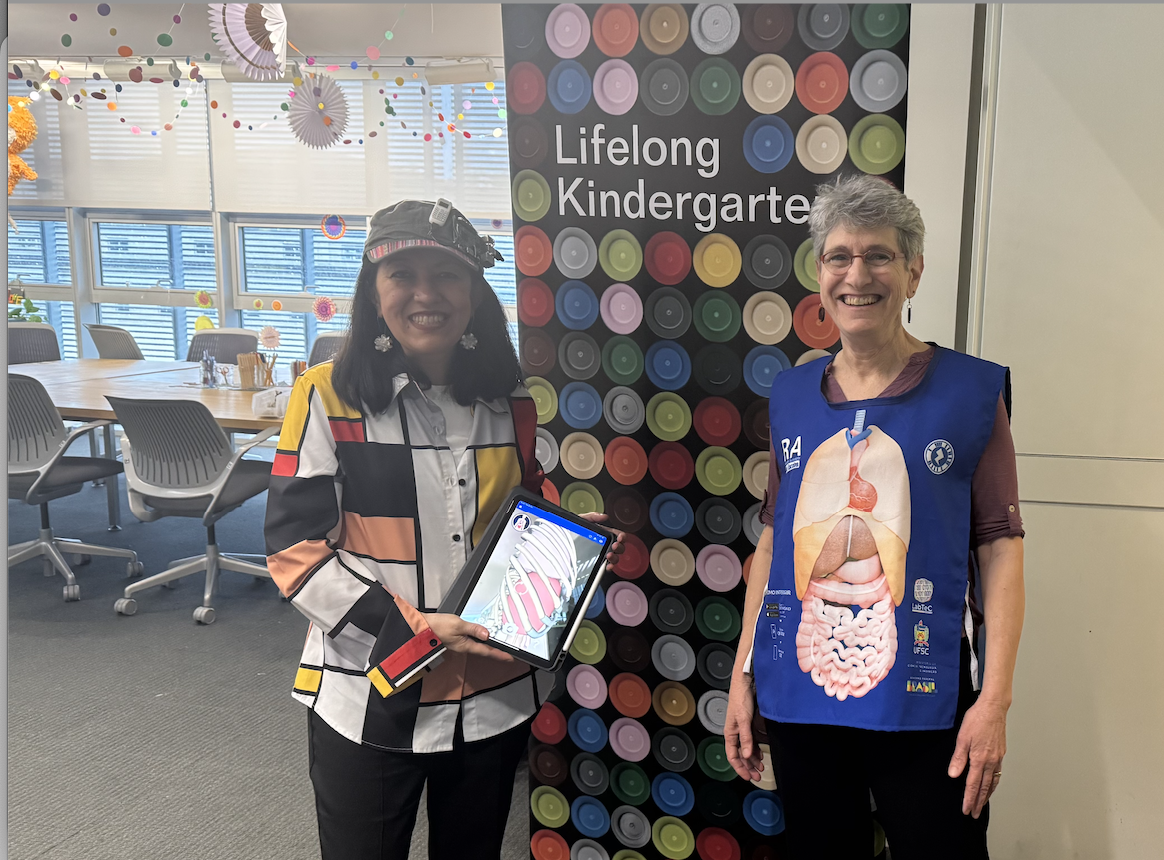
At MIT, I had the joy of presenting the METEOR project alongside student-created technologies—such as a solar cap designed to charge cell phones in high schools.  We also showcased a project on the human body, inspired by the OU–BBC series The Human Body. This initiative was developed by undergraduate students in Medicine and Computer Science, led by my colleague and former advisee, Prof. Alexandre Marino Costa, at UFSC in partnership with the Brazilian Government.

These projects exemplify open schooling, which brings together school students and researchers to tackle real-life problems through technology, while developing transversal competencies in partnership. The solar cap, for instance, enabled schoolchildren to act as eco-entrepreneurs, while the use of AR in schools fostered digital health advocates, raising awareness about the human body and wellbeing.

Image 1: Dr. Okada and Dr. Valente at the MIT Media Lab – Lifelong Kindergarten
Ann plays a central role in leading and designing research and evaluation for the Brazilian Creative Learning Network (BCLN) — a powerful initiative that is transforming education in Brazil by promoting more creative, relevant, and hands-on learning in both schools and community spaces.

Her academic path is as inspiring as her practice:

  • 🎓 B.A. in Child Development, Tufts University
  • 🎓 M.Ed., Harvard Graduate School of Education
  • 🎓 Ph.D. in Medical Sciences, Universidade Estadual de Campinas

How Ann defines “creative learning”

From her work and reflections, Ann frames creative learning as:

  1. Playful, open-ended, and inclusive → learning that goes beyond rigid, standardized tasks and creates spaces for experimenting, exploring, and imagining.
  2. Learners as active agents → children and young people are not passive recipients of knowledge but creators who design, solve problems, and collaborate.
  3. Authentic, meaningful contexts → connecting learning with what matters in local and cultural settings, from school to festivals and community events.
  4. Supporting educators → enabling teachers with tools, frameworks, and professional development so they can scaffold creative learning in ways that are feasible and adaptable.

Ann sees creative learning as transformative: nurturing creativity, agency, collaboration, and relevance, where learners and educators alike thrive.

Her key projects with links

Ann’s leadership has contributed to several initiatives, most notably:

Meeting Ann reminded me of the global momentum for creative, inclusive, and participatory education. Her vision resonates strongly with Rumpus’ commitment to frameworks like CARE–KNOW–DO, where learners care about meaningful challenges, know through inquiry and collaboration, and do by taking creative and transformative actions in their communities with enjoyment.

References

Valente, A. B. (2020). The “Creative Learning Challenge Brazil” from the Perspective of Constructionism. Proceedings of Constructionism, 536-545.

Valente, A. B., & Burd, L. Brazilian Creative Learning Network. PROCEEDINGS OF CONSTRUCTIONISM/FABLEARN 2023, 153.

Valente, A. B., & Burd, L. (2019). Creative Learning Challenge Brazil: A Constructionism approach to educational leadership development. Tecnologias, Sociedade e conhecimento6(2), 9-29.

Valente, A. B. (2003). Evaluation of executive function in AD/HD children using neuropsychological instrumensts and Logo computer programming activities. J. bras. psiquiatr, 13-23.

AT UNESCO – upskill.map

Rethinking Researcher Development with upSkill.Map

Alexandra  Okada

What happens when global challenges, digital learning, and leading researchers converge in Paris? At UNESCO’s event on AI and the Future of Education, the answer became clear: a vibrant exchange of ideas on how education and research must evolve for a rapidly changing world.

This year, I had the opportunity to present our work on Global Education and Digital Transformation at The Open University. It was both exhilarating and humbling to contribute OU perspectives to such a global conversation.

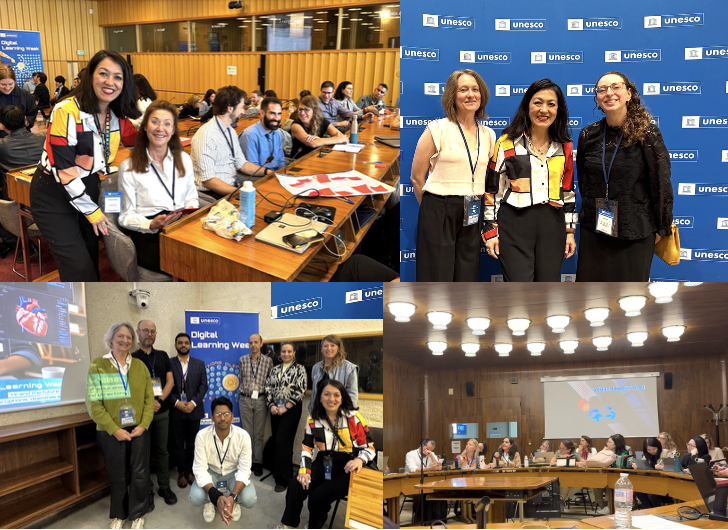
Image 1:  UNESCO – Digital Learning Week: AI and the Future of Education 

Introducing upSkill.Map

On stage, I shared two interconnected pieces of work: the European METEOR project, which supports researchers in developing transversal competences, and a new tool I’ve been developing—upSkill.Map.

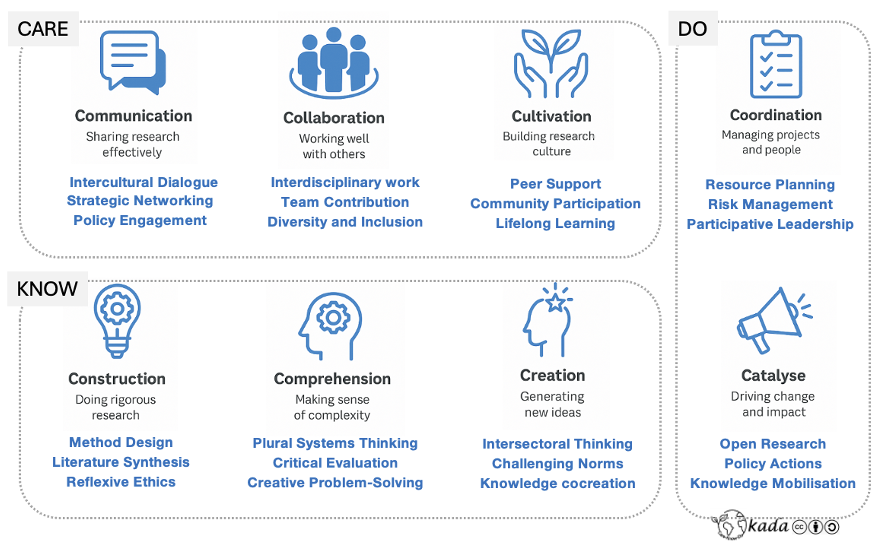
Despite its name, upSkill.Map is not a treasure map with X marking the spot (though I rather like that metaphor!). Instead, it works more like a compass—helping researchers navigate today’s complex research environment by reflecting on three essential questions:

  • CARE: What values guide my work, and how do I act responsibly towards people and planet?

  • KNOW: What knowledge and technologies am I engaging with—and am I doing so critically?

  • DO: How does my research create meaningful impact in the world?

Image 2: Okada (2025) upSkill.Map

When we piloted upSkill.Map with doctoral researchers, I was struck by their strong commitment to collaboration, resilience, and responsibility. The process also revealed where institutions could do more—particularly in supporting interdisciplinary and impactful research, and in raising awareness to engage more participants interested in research for fair and sustainable futures.


Why this matters (and why it was fun)

For me, upSkill.Map is about sparking curiosity and enjoyment in the researcher’s journey. It offers a space to connect values, knowledge, and action in ways that feel more like an adventure map than a checklist. Sometimes the steps are neat, sometimes improvised—but always moving towards something meaningful.

The metaphor progression tells the story: not a treasure map (fixed endpoint) → compass (directional tool) → adventure map (exploratory framework)

For the OU, this work serves two important purposes: it enriches our doctoral education with fresh approaches to transversal skills, and through the METEOR project (Methodologies of Teamworking in Eco-outwards Research, funded by the European Commission), it connects us with international partners to co-create new models of researcher development for a just and sustainable future.

As I said in Paris:

“Research is not only about advancing knowledge—it’s about aligning innovation for a sustainable future. Tools like upSkill.Map can help us do both.”


Looking ahead

Being at UNESCO was also a reminder of the joy of research. It’s easy to focus only on the seriousness of global challenges—AI, climate change, social justice—but events like this highlight the creativity and playfulness that make research sustainable. Conversations over coffee, sketches on napkins, debates spilling out of lecture halls—all reflect the spirit that research can be both impactful and enjoyable.

That’s the balance I hope upSkill.Map can bring: helping researchers grow not just as specialists, but as curious, adaptable global citizens—ready to collaborate, improvise, and lead with purpose in an interconnected world.

An invitation to Rumpus

I’d love to hear from fellow OU researchers: What skills do you think tomorrow’s researchers will need most—and how do you bring fun and curiosity into your own research practice?


Links I shared at UNESCO Digital Learning Week:

AI and the Future of Education

  • Okada, A. & Vaz, G. (2025). Rethinking AI in Research with Ancestral Wisdom for Future Generations. UNESCO – Futures of Education. [LINK]

  • Okada, A; Sherborne, T; Panselinas, G; Kolionis, G. (2025). Fostering Transversal Skills through Open Schooling supported by the CARE–KNOW–DO Pedagogical Model and the UNESCO AI Competencies Framework. International Journal of Artificial Intelligence in Education. Springer. [LINK]

  • Okada, A. (2025). Knowledge Cartography for Young Thinkers: Sustainability Issues, Mapping Techniques and AI Tools. Advanced Information and Knowledge Processing. Springer. [LINK]