‘I’m the self inflicted, mind detonator…I’m a Firestarter’
Each Monday I present a new object. In this weather those not frantically revising may well be enjoying barbeques. So I’ve selected an appropriate element as my object of the week. As a clue to what it is, I’ve turned to an OU module so fresh that it hasn’t even been presented. Environment and Society, DD213, is due for release in October 2018. Here is a sneak preview of the opening sentence:
Fire is both a naturally occurred chemical reaction on Earth and a tool adapted by humans. It can modify environments and serve to shape social interactions between individuals, groups of humans and the places in which they live.
The idea of something which is essential, which can modify environments and shape social relations can be applied to education.When, at its opening on 24th April 1969, the OU’s first Chancellor Lord Crowther sought an image for the human mind he compared it ‘to a fire
which can be set alight and blown with the divine afflatus’.
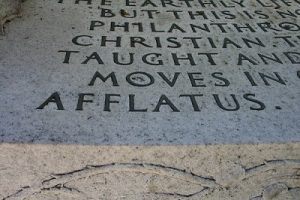
Crowther contrasted this idea of an inspiration, which comes from the word inspire, meaning to breathe or blow onto, with the image of the mind as a vessel into which one could pour knowledge. The OU, by providing intellectual tinder and matches, could inspire learners to light the fire in their bellies, or minds. Moreover, they were encouraged to seek out tutors and fire questions at them. It also brings to mind the legend of the phoenix, a bird which regenerates through fire. The distinctive avian pops up in the series of stories about a character who appears to have limited opportunities until his life is transformed when he attends an educational establishment, Harry Potter.
At the time of the OU’s opening a popular educationalist was Paulo Freire. Freire argued that much of what was called education amounted to ‘educational banking’. Teachers filled the heads of learners with their narratives, even if these narratives were not relevant to the learners. Treating learners as ‘‘receiving objects’, reinforced existing social relations and impeded the development of a student’s critical consciousness. It required students to be passive and did not encourage dialogue. Transmission-focused teaching prevented students from renewing cultural knowledge through thoughtful conversations. However, Freire argued, this was not the only way to proceed. If learning involved the learners and encouraged activity and non-hierarchical, dialogue, then, through that learning, people could ‘make and remake themselves’. Learners, could make their own meanings with the new knowledge they constructed being based on what they already knew and what they were trying to achieve. This idea of learning, not as pouring cold water, but lighting fires, was perhaps in Crowther’s mind when he spoke back in 1969. At the OU’s first degree ceremony, in 1973, an honorary doctorate was presented Freire.
Crowther’s image might have reminded listeners of the importance of air for combustion, how the circulation of air can ensure that thinking is not congested, how the airwaves could be used to deliver the materials and support the interactions necessary for learning. Yet, while OU broadcasts travelled through the ether, the university did not emerge out of thin air, nor were its subsequent achievements confined to the realm of the abstract.
Crowther’s image of fire may also have built on associations of fire with truth, sometimes a rather painful disruptive truth. While fire serves many other functions in stories and songs there are plenty of literary reminders of this role. These include the Biblical account of Moses who rather unwillingly received Divine Instruction from a fire, a burning bush in a desert of ignorance. Luke cites Jesus as holding the revolutionary and disruptive view that ‘I came to cast fire on the earth, and would that it were already kindled!’ When exiled Russian revolutionaries established, in 1900, what became the most successful underground Russian newspaper in 50 years, they called it Iskra (Spark). The name was later adopted by the OU branch of the University and College Union for its newsletter.
Fire’s association with truth was perhaps reinforced by the comic inversion of this in Hillaire Belloc’s 1907 poem Matilda Who told Lies, and was Burned to Death which [plot spoiler alert] concludes as below:
For every time she shouted ‘Fire!’
They only answered ‘Little Liar!’
And therefore when her Aunt returned,
Matilda, and the House, were Burned.
While for students, education can be the lighting of a fire which provides warmth, they are also entangled in their societies, communities, families. Others around them, witnesses to the changes, can feel burned. In a play, later film, about an OU student, Educating Rita, Rita’s husband resents the time she spends studying. A genuine student, interviewed in an early study of the OU, captured the sense of the challenges provided by learning through the OU when she summarised her experience thus: ‘It messes up your whole life, but it’s worth it.’
A century before the OU Louisa May Alcott wrote her novel Little Women. In this she sets out some of the emotions you might associate with writing a TMA which can involve both inspiration and perspiration:
She did not think herself a genius by any means; but when the writing fit came on, she gave herself up to it with entire abandon….The divine afflatus usually lasted a week or two, and then she emerged from her “vortex,” hungry, sleepy, cross, or despondent.
Having started with the Prodigy, I’ll conclude with Elvis Costello, who reminded us that indoor fireworks while they can ‘dazzle or delight or bring a tear’ can also ‘still burn your fingers’. Education, sociable, collaborative engagement which enables you to see things in a different light, can be edgy, risky, can throw your preconceptions over a cliff or into a furnace. But that is also its pleasure.


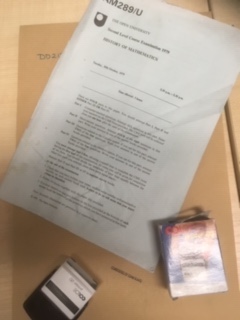
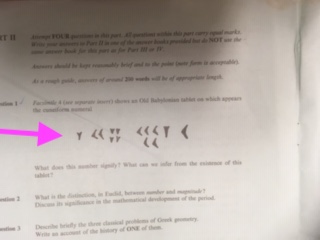

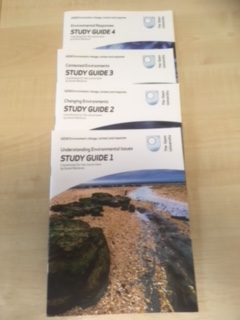
 The contents are unknown and there is room for speculation. What is inside? There have been records, cassettes, video disks, computers, models of the human brain and of course study guides. These ones are for U216.