Archive for the ‘History of the OU’ Category

Support for informal learning

Monday, March 14th, 2011

One of the ways in which the OU has had an impact is in helping learners transfer their skills and apply their formally assessed learning within the informal sector. It has enabled the production of knowledge outside the academy through a commitment to communities of ex-students. Students, many of whom had never met one another, have been encouraged to go on to form informal, voluntary, convivial, educational communities of practice based on those studies. These have enabled them to achieve together that which they could not separately. There are many OU examples of partnerships and traffic across what has been characterised as a ‘moving frontier’ between the state and civil society.

Between 1976 and 1985 a second level module, Art and environment, did not offer practical skills in painting or sculpture nor did it offer art criticism or cognitive skills. Rather it dealt with ‘the processes and attitudes of art’ and sought to develop ‘strategies for creative work’. Members of the society created by former students of the module, ‘share skills, experiences, ideas and knowledge of creativity and personal growth’.

Created, in 1998, by students and staff from an interdisciplinary third level module, The Family & Community Historical Research Society has conducted a range of connected local historical projects, encourages links between institutionally based and independent researchers and offers its own Continued Learning courses. This society is formally registered as a charity.

A first level digital photography module which was first presented in 2007 encourages students to upload photographs and discuss them online. Former students have established their own online groups in order to continue to collaborate.

In September 2010 the work of 36 OU students was collated into a book by fellow student Esther Clark At home with words includes 72 short stories and poems, many written for A215 Creative Writing but others written especially for the book. All profits from the book will go to Cancer Research UK which was also sponoired by a specialist letting company, Leaders.

If you know of a course which inspired people to go on learning together, please contact us.
Happy international women’s day

Tuesday, March 8th, 2011

The OU is celebrating international women’s day with new content on its iTunes U homepage and The Real Wonder Women on Open Learn, as well as various events on campus.

This is no more than you would expect, given the significant role women have played in the OU’s history – amongst its founders, as staff members at all levels and as a significant proportion of the student body.

This blog has already looked at the role of Jennie Lee, the minister tasked with making the OU a reality and who left such a stamp on its institutional formation. Some other significant women in the University’s history are covered in an article on Platform today. And of course, some would argue that the OU has played a role in the struggle for women’s equality, but has been denigrated as a ‘housewives’ university’. A previous blogpost looked at some of these issues.

Part-time provision

Friday, March 4th, 2011

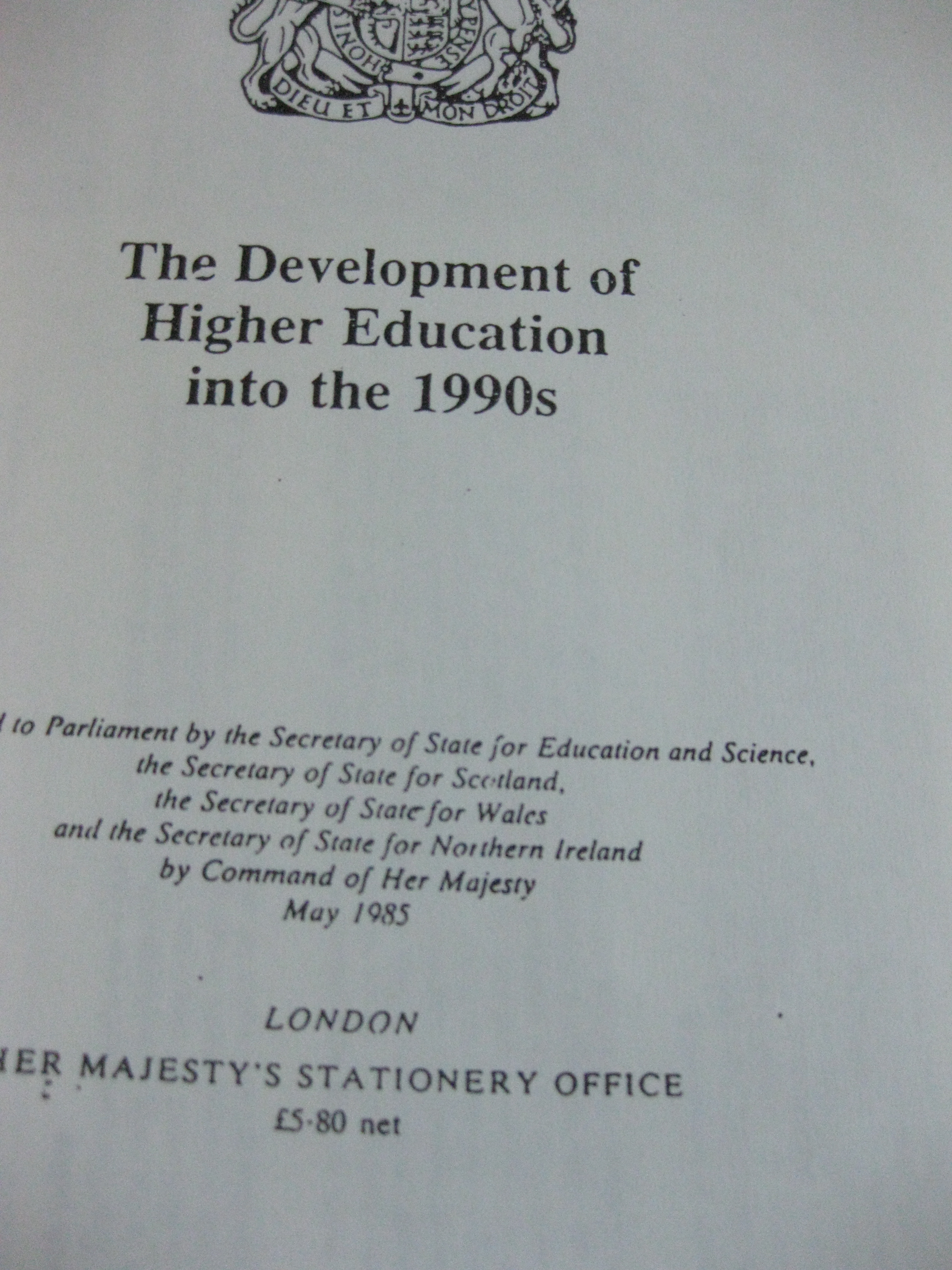
In the May 1985 DES Green Paper The Development of Higher Education into the 1990s (HMSO, London, Cmd 9524) the OU was the only named institution which received any favourable comments, being seen as the major provider of part-time degrees. There are now far more part-time students, four in ten undergraduates, but they still tend to be marginalised. The OU remains a significant provider and in order for concerns about the needs of those who work and study to reach the appropriate Parliamentary ears it fell to Vice-Chancellor Martin Bean to present the case for part-time learners to the Education Bill Committee in the Commons in March 2011.

The session can be viewed here. The OU’s session can be found between 1 hour 30 minutes and 2 hours 14 minutes.

History of the regions and nations – help required

Thursday, March 3rd, 2011

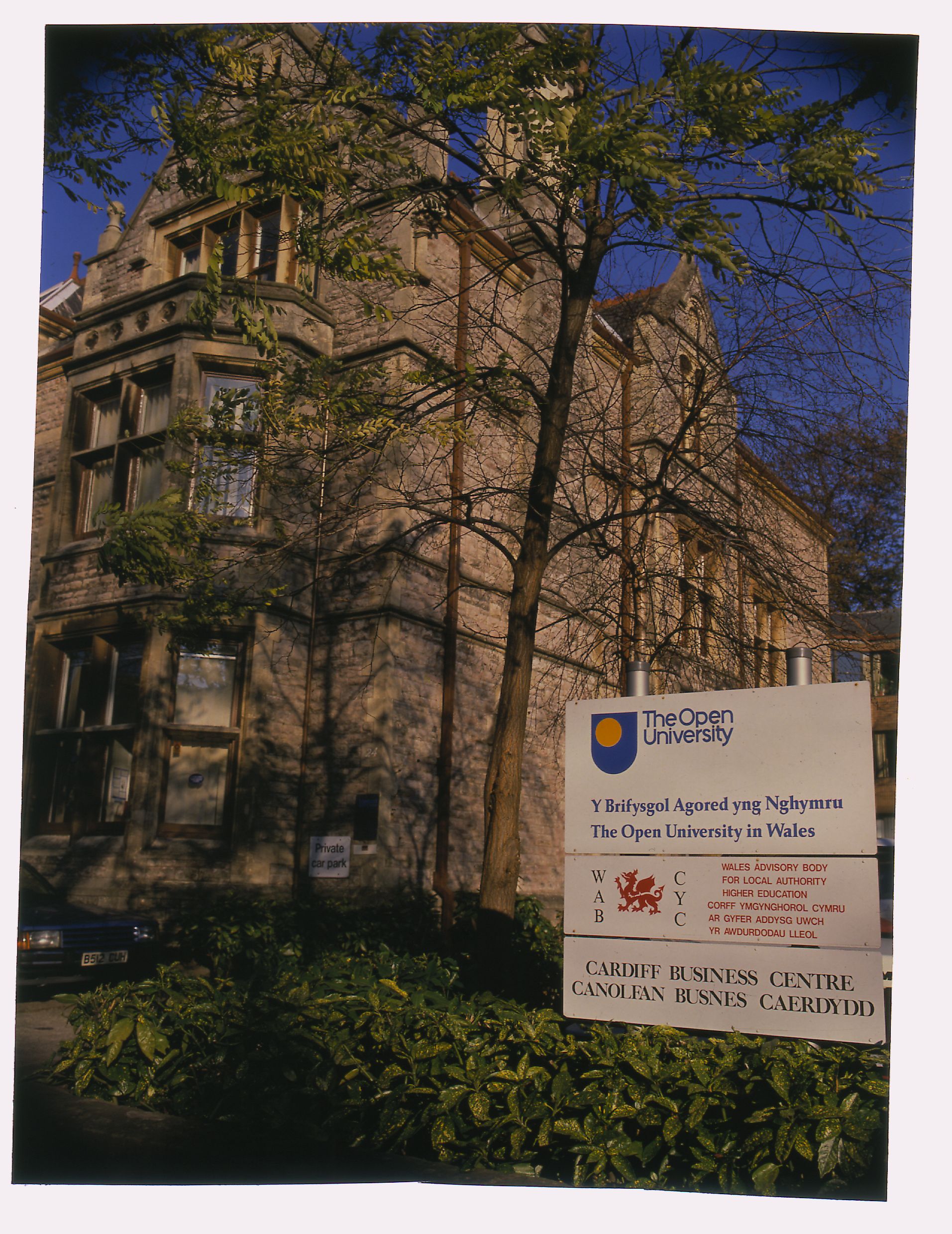
The History of the OU project was pleased to receive a copy of The Open University in Wales: A Charter Celebration by Mandy Ashworth, which was published in 1994 to celebrate the University’s 25th anniversary. This contains a fairly detailed rundown of the history of the OU in Wales, some of its unique features, and ways in which it pioneered initiatives that were later taken up by the University as a whole. If any readers know of similar publications relating to other regions or nations, the project would like to hear from you.

Images of students

Wednesday, March 2nd, 2011

In 1971 half a dozen models appeared under the headline ‘Which is The Open University student? They were dressed to indicate different trades and the copy referred to specific posts which students might hold, ‘engineers, nurses, shopkeepers, teachers, shopfloor and officeworkers…’ The advertisement explained that students could receive a grant, could ‘study in your spare time’ and could ‘tune in to sample our radio and television broadcasts’. These six role models indicated the range of students, though the OU also took students with severe disabilities, who were in prison and those who were serving overseas in the Services (and their civilian associates). It was also open to students from ethnic minority backgrounds. Since that time there have been many other advertisements for the OU and many images produced for it. Perhaps you became aware of the OU because of a specific image or advertisement? In order to compose a history of the OU we’d like to hear what attracted you to the university.

Thinking outside the box

Monday, February 28th, 2011


Although before it was opened it was known as the University of the Air and although it has been responsible for thousands of television programmes, in its support for learning the OU has always thought well outside ‘the box’. This is not to associate it with Britain’s most despised business term in 2008 (see the report of a YouGov poll Daily Telegraph 28 November 2008) but to recognise that the OU has been facilitating networks of learners far beyond the campus  and indeed beyond the airwaves for decades. (more…)

“The Coalition believes in a big, strong and effective higher education sector”

Friday, February 25th, 2011

Speaking to the Universities UK Spring Conference David Willetts, Minister of State for Universities and Science, quoted above, made a few general points regarding his vision. He wants to give students ‘better value and greater choice’.

 He noted that ‘the growth of higher education in England between 1850 and 1950’ was based on local colleges which taught students for existing degrees at the University of London and elsewhere. This system meant that ‘students at new institutions could obtain degrees or other qualifications from prestigious and well understood institutions’. He went on

The external degrees of the University of London are now largely for foreign students. They should, once again, be widely available across Britain.

This was the model rejected by Jennie Lee when the design for the OU was being discussed.  While the current Minister may have considered Jennie Lee’s rationale and rejected it he does not refer to this route to his conclusions.

He argued that ‘We are committed to improving social mobility and we recognise that better access to higher education is one of the most effective ways to do that.’ However, his method was not to focus on learning. Instead he talks of putting ‘the quality of teaching where it should be – at the heart of the system’.

The government has distinctive ideas regarding the development of the HE sector. But will it draw on the most useful historical analogies and models and the best research? For a different view of this speech see Doug’s blog.

Sky’s the limit for flat earthers?

Monday, February 21st, 2011

Founded in 2004 the Leadership Foundation for Higher Education offers support and advice on leadership, governance and management to the UK higher education sector. In a keynote speech to its 2011 conference, Martin Bean, vice-chancellor of The Open University since 1 October 2009, stressed the importance of internationalisation for UK and US universities. We face, as Martin Bean, put it, a ‘flat world with no boundaries’ but making successful links requires that ‘senior people in your governance body’ support expansion and that the choice of areas of activity and partners is determined by the university’s values and culture.

Martin Bean’s advice may well be derived his own experience of international educational ventures. He was President of AIESEC International, (Association Internationale des Étudiants en Sciences Économiques et Commerciales) in 1986-7. This international, not-for-profit organisation run by students and recent graduates was described by Kofi Anan as

an agent of positive change through education and cultural exchange to develop a broader understanding of cultural, socio-economic and business management issues.

In addition, Martin Bean may have built on an understanding of the history of the OU. (more…)

The economics of The Open University

Monday, February 21st, 2011

21 February is the birthday of Leslie Wagner (here in black and yellow gown) formerly of the OU. When it first opened the economic efficiency of the OU was assessed. The OU produced data on a variety of aspects of the OU’s activities including how much it cost to produce a graduate, the cost to individuals and to the public sector. A study made in 1971 by an economist at the OU, Leslie Wagner, indicated that the OU was cheaper than other universities. The identification of fixed and variable costs, and deciding which costs ought to be allocated to teaching, which to research and which to ensuring that the university was also for the ‘storage of knowledge and maintenance of cultural standards’, was open to discussion. Wagner concluded:

It would be imprudent to draw any very definite conclusions from these figures. There are too many conceptual and statistical problems for that sort of exercise. Nevertheless, the gap between the Open University and the conventional universities’ figures is too large to be ignored

There were further studies, most of which largely agreed with Wagner’s assessment but in 1978 John Mace attacked the case that the OU was cheaper. He concluded that the idea that the OU ‘outperforms conventional universities in terms of openness and costs per graduate… is a dangerous myth. The studies suffer from serious methodological shortcomings’. The debate then took a turn towards another aspect of economics: output. To make a comparison in regard to attainment the same questions were set for students at the OU and for students at a conventional university. Overall, Lumsden and Alex Scott concluded, ‘the academic standards of the OU compare well with conventional universities’.

References:

Leslie Wagner, ‘The economics of the Open University’, Higher Education, 1, 2, May 1972, pp. 159-183;

Charles F Carter, ‘The economics of the Open University: a comment’, Higher Education, 2, !, February 1973, pp. 69-70

Bruce Laidlaw and Richard Layard, ‘Traditional versus Open University teaching methods: a cost comparison’, Higher education, 3, 4, 1974, pp. 439-467;

K. G. Lumsden and C. Ritchie, ‘The Open University: a survey and economic analysis’, Instructional Science 4, 1975, pp. 237-291;

Greville Rumble, ‘The economics of the Open University of the United Kingdom’, Open University mimeo, 1976

Leslie Wagner, ‘The economics of the Open University revisited’, Higher Education, 6 1977, pp. 359-381.

John Mace, ‘Mythology in the making: is the Open University really cost effective?’, Higher education, 7, 3, August 1978, pp. 295-309

Keith Lumsden and Alex Scott, ‘An output comparison of Open University and conventional students’, Higher Education, 11, 5, September 1982, pp. 573-591.

Has OU study changed offenders?

Tuesday, February 15th, 2011

What impact does studying with the OU have on learners? Sometimes the results appear dramatic because of the change in the fortunes of the offenders. In January 1971 among the first students to start studying at the OU were 22 prisoners, the first of many to study at the OU. Many had difficulties that other students did not face. As one Tutor pointed out some years later, it is difficult for a Category A prisoner to set up a rain gauge outside when he has to be handcuffed to a prison officer every day to check the water level. (more…)