At HARVARD!

Two Decades, Two Encounters: From Gardner to Perkins and the genuine fun of the Whole Game

I met Howard Gardner in the early 2000s, just as I was discovering Project Zero through work at the Open University. The encounter left an impression that would shape my thinking for years to come. Two decades later, I had the wonderful opportunity to sit down with David Perkins at Harvard University— and suddenly, the circle felt complete.

Project Zero was launched in 1967 at the Harvard Graduate School of Education by philosopher Nelson Goodman, an enthusiast of the arts who sought to establish firm knowledge about arts education — hence the whimsical name, starting from zero. Founding members Howard Gardner and David Perkins directed it for many years, leaving a profound legacy in educational research. Gardner became famous for Frames of Mind: The Theory of Multiple Intelligences (1983), which revolutionized how we understand human capabilities. Perkins authored Knowledge as Design (1986) and Making Learning Whole (2008), offering a practical framework for authentic learning.
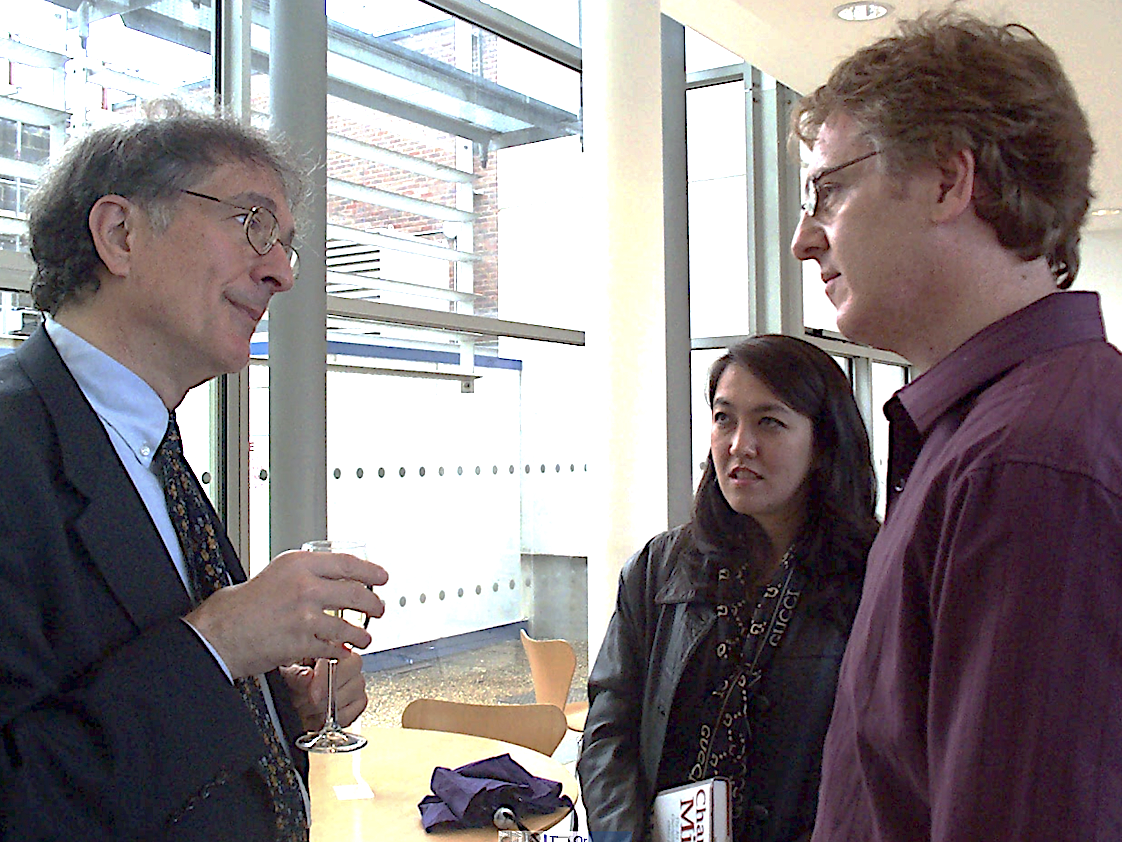
Image 1:  Howard Gardner, Alexandra Okada and Tony Sherborne at The Open University UK
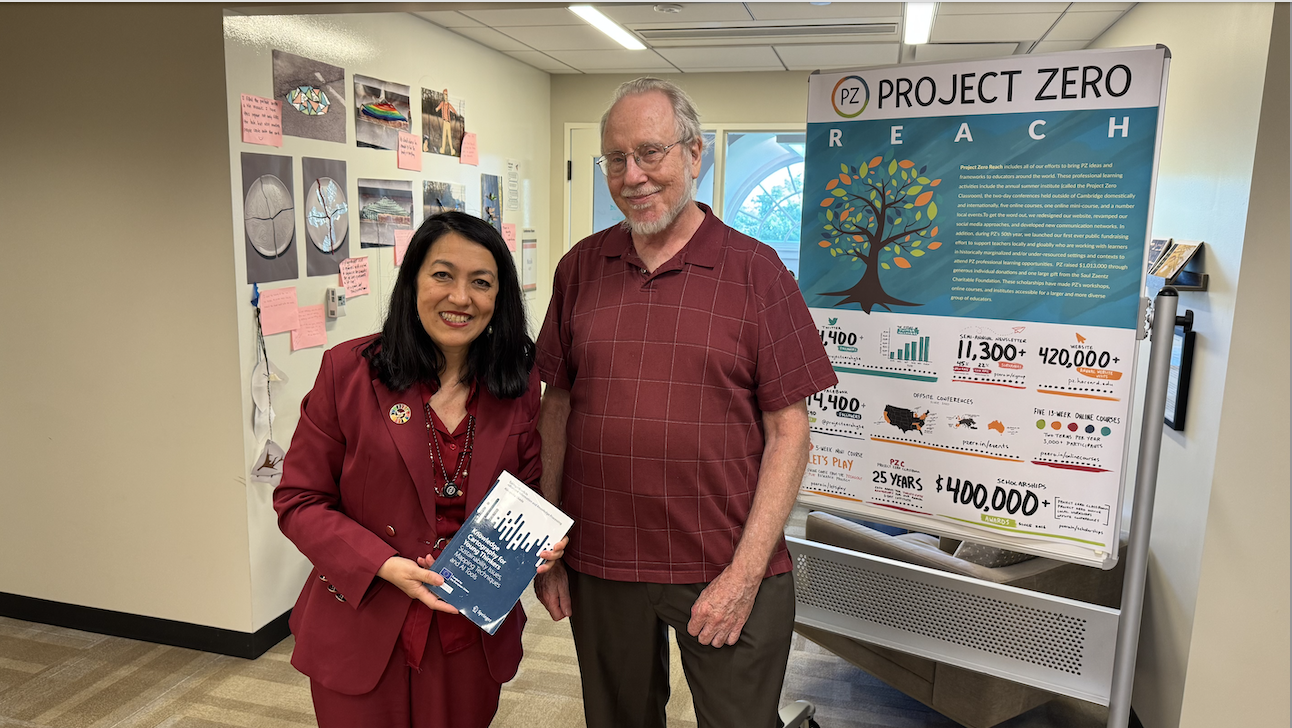
Image 2  Alexandra Okada and David Perkins at Harvard University, USA

For several decades, Gardner and Perkins led Harvard’s Project Zero, conducting transformative research in education. Their collaboration addressed artistic knowledge, creativity, ethics, and the nature of human potential — laying foundations that continue to shape educators worldwide.

Perkins’ Theories Helping Me Advance CARE–KNOW–DO

Perkins identified two common “diseases of learning” in education:

Elementitis: Learning disconnected bits without the whole game. Children memorize times tables without solving real problems, students drill grammar rules without writing texts that matter, and learners know musical scales but never play a full song.

Aboutitis: Learning about something without actually doing it. Students read about science experiments instead of performing them, and learn about entrepreneurship from textbooks rather than launching real initiatives.

Perkins argues for engaging with the “whole game” from the start, through simplified but authentic versions of real practice. His call to move beyond these diseases is a reminder that learning must be authentic, holistic, and transformative.

Understanding the Whole Game

As we talked, something clicked for me. The core parts of CARE–KNOW–DO were not just a sequence — but dimensions of the whole game itself. And when you play the whole game, learning stops feeling like work and starts feeling like fun.

Connecting the Principles

With my notebook in hand, we sketched the connections. Perkins lays out five core learning principles:

  1. Play the whole game – Experience the complete, authentic activity.
  2. Make it worth playing – Connect learning to real-world purpose.
  3. Work on the hard parts – Focus effort where challenges often arise.
  4. Play out of town – Transfer skills to unfamiliar new contexts.
  5. Uncover the hidden game – Reveal underlying strategies and thinking

These principles align meaningfully with CARE–KNOW–DO:

CARE – Motivation & Value

Perkins stresses “make the game worth playing.” Learners need to see purpose, relevance, and meaning — not just deferred rewards. When students care about real-world problems like local pollution, climate change, or social justice, the meaning is immediate and real. And here’s the secret: when learning matters, it becomes genuinely fun. CARE compels learners to value the whole game and engage with it fully.

KNOW – Understanding & Knowledge

Perkins highlights how “elementitis” and “aboutitis” fragment understanding. Learners must “uncover the hidden game” — grasping big ideas, cognitive strategies, and conceptual models that clarify authentic practice. His “theory of difficulty” calls educators to anticipate misconceptions and tacit challenges. In our projects, students learn ecosystems and pollution science, but more crucially, they learn how to investigate, question their own assumptions, and build knowledge together. KNOW is about grasping rich knowledge structures, far beyond isolated facts.

DO – Practice & Application

Perkins  advocates for “play the whole game” (even in junior versions) and “work on the hard parts” through deliberate action. Authentic engagement means solving problems, experimenting, creating, and performing — not just describing them. Education must prepare learners to “play out of town,” transferring skills to unfamiliar contexts. In our work, students don’t just learn about environmental activism; they practice it. They tackle genuine difficulties: persuading officials, organizing teams, presenting data convincingly. DO means practicing authentic activities and building competence through real action.

The Framework in Action

In short:

  • CARE provides motivation — learners see why it matters
  • KNOW enables understanding — learners grasp key ideas
  • DO builds practice — learners develop capability by doing the whole game

CARE–KNOW–DO is a transformative, co-learning framework. It equips students and communities to care about real problems, know through inquiry and collaboration, and do through meaningful action. This framework evolves across projects like weSPOT, ENGAGE, CONNECT, and METEOR.

The Moment of Recognition

Sitting with Perkins, I realized: co-learning becomes whole only when caring, knowing, and doing unite. That’s when transformation happens. Learners don’t just acquire skills; they become more fully themselves.

What I’m Taking Forward

Perkins’ philosophy of “learning as a whole” is the foundation for CARE–KNOW–DO. Both frameworks share a conviction: learners should engage with the whole game from the very beginning. As Perkins challenges “elementitis” and “aboutitis” by insisting on authentic learning, CARE–KNOW–DO builds a practical pathway — connecting motivation (CARE), knowledge (KNOW), and practice (DO) for truly empowering, transformative education.

The whole game is not a distant goal. It’s where learning should begin.

That’s what Perkins helped me name: We don’t prepare students to play the game. We invite them in and play together.

The plastic-polluted river, the climate data, the community challenge — these are not examples to analyze after mastering basics. They are the basics. They’re the whole game, ready to be played by everyone, even beginners. And that’s where the real fun lives — in the authentic doing, the genuine struggle, the moment when learning comes alive.

Even by all of us who are, in the end, still learning.


This encounter reminded me why I fell in love with education research. It’s not about building better filing systems for knowledge. It’s about helping humans become more capable, more caring, more fully alive.

Thanks, David and whole PZ team, for the conversation I’ll be unpacking for years to come. And thanks, Howard, for starting me on this journey two decades ago.
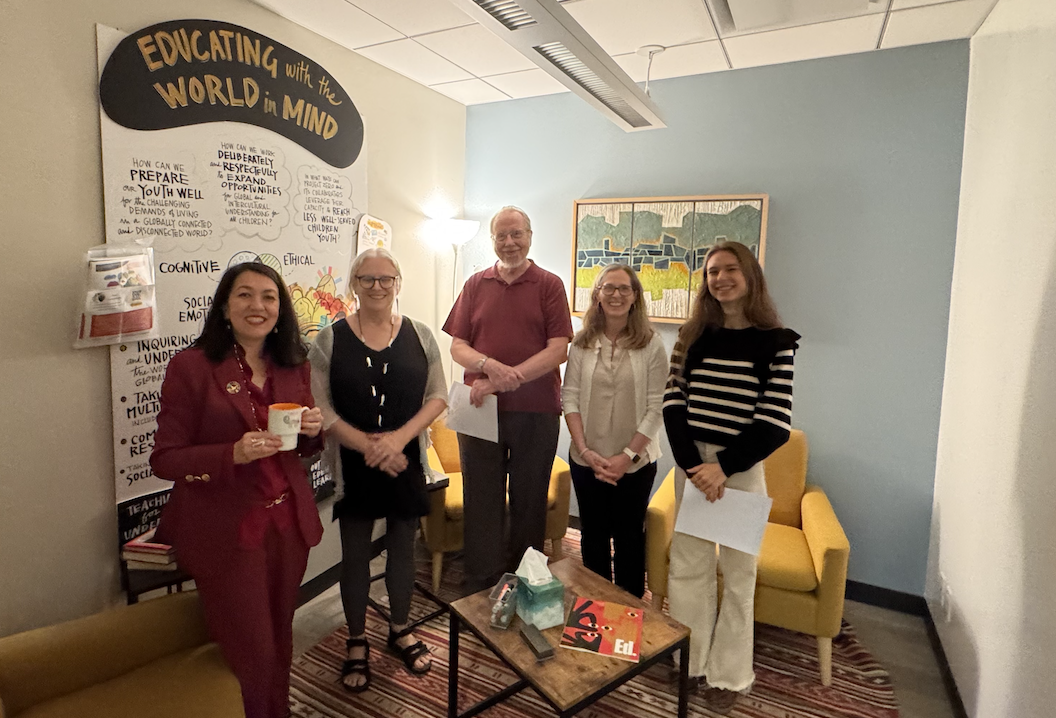
Image 3: Project Zero Team – Educating with the world in mind as well as “heart and soul!”

Important Links:
References
Gardner, H. (1983). Frames of mind: The theory of multiple intelligences. Basic Books.
Perkins, D. N. (1986). Knowledge as design. In H. M. Collins (Ed.), The knowledge system in society (pp. 99–120). Ablex Publishing.

Perkins, D. N. (1992). Smart schools: From training memories to educating minds. Free Press.
Perkins, D. N. (1994). The intelligent eye: Learning to think by looking at art. Getty Publications.
Perkins, D. N. (2008). Making learning whole: How seven principles of teaching can transform education. Jossey-Bass.
Perkins, D. N. (2014). Future wise: Educating our children for a changing world. Wiley.
At MIT media lab

By Alexandra Okada

It was a real pleasure to meet Ann Berger Valente, Educational Research Manager at the MIT Media Lab in the Lifelong Kindergarten group.

I was a Master’s student at PUC-SP and a researcher at the Paulo Freire Centre, working with Emancipatory Pedagogy, while also teaching computational thinking with Logo, developed by Seymour Papert at MIT, my  mentors both  José Armando and Ann Valente worked with Papert and Freire.

Freire at PUC-SP, Papert at MIT, and Gardner and Perkins at Harvard were great inspirations, shaping my understanding of emancipatory education and its power to equip my generation with critical pedagogies and technology-enhanced learning.

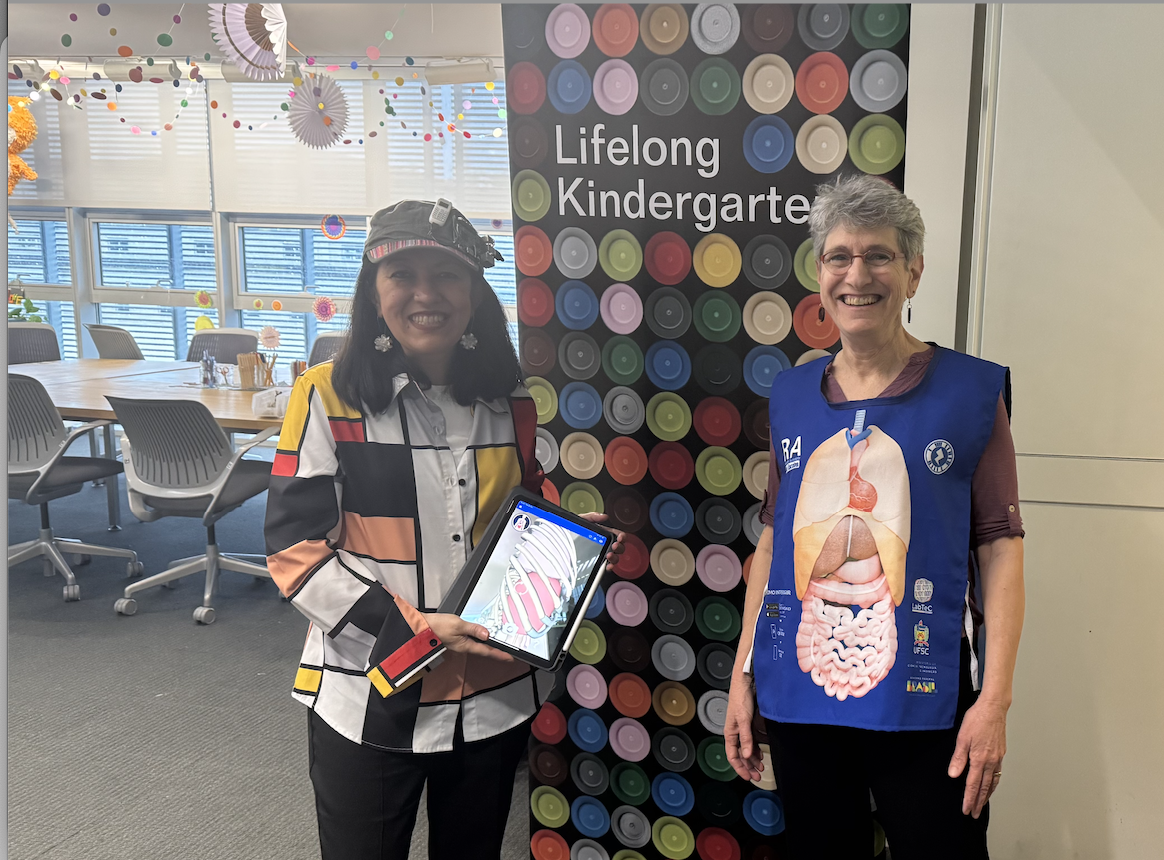
At MIT, I had the joy of presenting the METEOR project alongside student-created technologies—such as a solar cap designed to charge cell phones in high schools.  We also showcased a project on the human body, inspired by the OU–BBC series The Human Body. This initiative was developed by undergraduate students in Medicine and Computer Science, led by my colleague and former advisee, Prof. Alexandre Marino Costa, at UFSC in partnership with the Brazilian Government.

These projects exemplify open schooling, which brings together school students and researchers to tackle real-life problems through technology, while developing transversal competencies in partnership. The solar cap, for instance, enabled schoolchildren to act as eco-entrepreneurs, while the use of AR in schools fostered digital health advocates, raising awareness about the human body and wellbeing.

Image 1: Dr. Okada and Dr. Valente at the MIT Media Lab – Lifelong Kindergarten
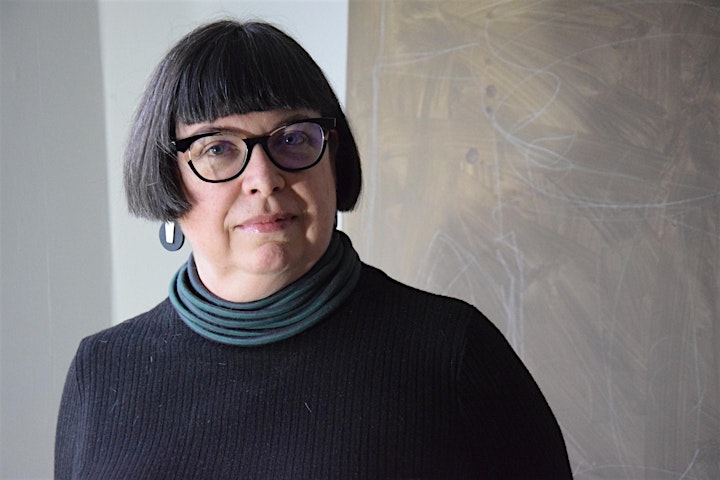
Ann plays a central role in leading and designing research and evaluation for the Brazilian Creative Learning Network (BCLN) — a powerful initiative that is transforming education in Brazil by promoting more creative, relevant, and hands-on learning in both schools and community spaces.

Her academic path is as inspiring as her practice:

  • 🎓 B.A. in Child Development, Tufts University
  • 🎓 M.Ed., Harvard Graduate School of Education
  • 🎓 Ph.D. in Medical Sciences, Universidade Estadual de Campinas

How Ann defines “creative learning”

From her work and reflections, Ann frames creative learning as:

  1. Playful, open-ended, and inclusive → learning that goes beyond rigid, standardized tasks and creates spaces for experimenting, exploring, and imagining.
  2. Learners as active agents → children and young people are not passive recipients of knowledge but creators who design, solve problems, and collaborate.
  3. Authentic, meaningful contexts → connecting learning with what matters in local and cultural settings, from school to festivals and community events.
  4. Supporting educators → enabling teachers with tools, frameworks, and professional development so they can scaffold creative learning in ways that are feasible and adaptable.

Ann sees creative learning as transformative: nurturing creativity, agency, collaboration, and relevance, where learners and educators alike thrive.

Her key projects with links

Ann’s leadership has contributed to several initiatives, most notably:

Meeting Ann reminded me of the global momentum for creative, inclusive, and participatory education. Her vision resonates strongly with Rumpus’ commitment to frameworks like CARE–KNOW–DO, where learners care about meaningful challenges, know through inquiry and collaboration, and do by taking creative and transformative actions in their communities with enjoyment.

References

Valente, A. B. (2020). The “Creative Learning Challenge Brazil” from the Perspective of Constructionism. Proceedings of Constructionism, 536-545.

Valente, A. B., & Burd, L. Brazilian Creative Learning Network. PROCEEDINGS OF CONSTRUCTIONISM/FABLEARN 2023, 153.

Valente, A. B., & Burd, L. (2019). Creative Learning Challenge Brazil: A Constructionism approach to educational leadership development. Tecnologias, Sociedade e conhecimento6(2), 9-29.

Valente, A. B. (2003). Evaluation of executive function in AD/HD children using neuropsychological instrumensts and Logo computer programming activities. J. bras. psiquiatr, 13-23.

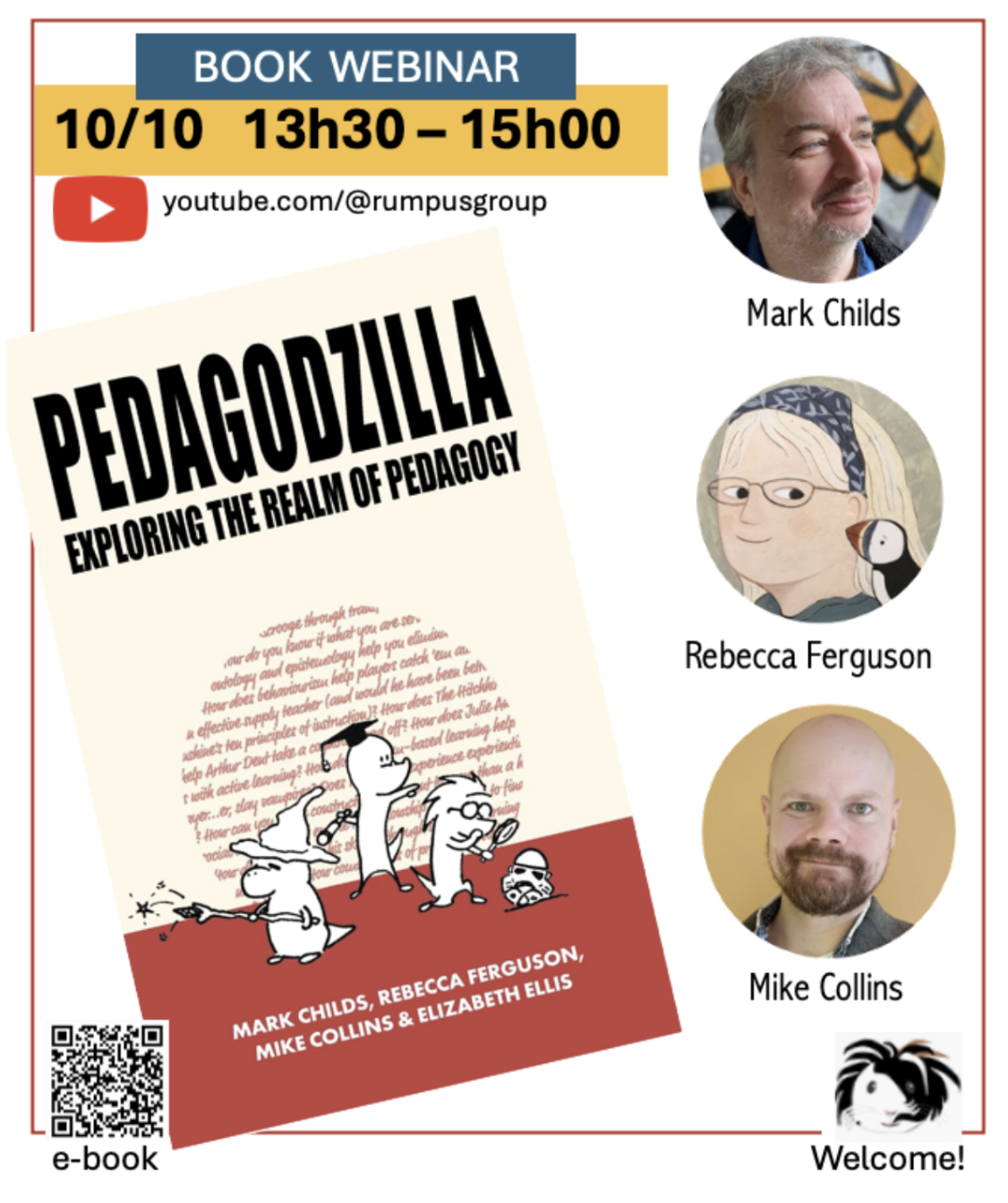
Book Webinar

Discover Pedagodzilla: Where Learning Meets Pop Culture

Link: Join the meeting in TEAMS here

The Pedagodzilla podcast brings learning theories to life through pop culture references. From Star Wars and The Muppets to The Matrix, we explore educational concepts through your favorite movies, TV shows, and social media trends. By blending pedagogy with pop culture, we make complex ideas both accessible and entertaining, securing Pedagodzilla’s spot among the top education podcasts.

Now, Pedagodzilla is a book! This first volume transforms our podcast’s key episodes into a guide to essential learning theories. Explore the philosophies behind different approaches, understand their limitations, and delve into social and contextual learning strategies—all while enjoying quirky pop culture trivia.

Join us for an enlightening webinar about this ebook, where we’ll cover educational theory, practical teaching tips, and some fun media insights. 

  • Why we did It?
  • What were the playful and fun elements?
  • Why did they work ?
  • What would we keep the same, and what would we do differently next time?

For a taste of our podcast, visit pedagodzilla.com

‘Just’ fun – or fundamental?

Dr Mimi Tatlow-Golden Senior Lecturer in Developmental Psychology and Childhood examines constructions and assumptions of childhoods and development in a range of domains including education, food, and digital media.  She advocates for interdisciplinary accounts of childhood spanning psychology and Childhood Studies.

On Wed, 19 May 2021  13:00 – 13:50 BST

She will be talking about The role of fun in children and young people’s activities and relationships.

 ‘Just’ fun – or fundamental? A lunchtime talk with Dr Mimi Tatlow-Golden image

More details about Mimi’s work CLICK HERE (article and videoclip).

You are invited to REGISTER and join PEDAL for a free online lunchtime talk with Dr Mimi Tatlow-Golden from the Open University.

Fun is frequently invoked as a requirement for a good childhood and a necessary (if not sufficient) condition of play – yet fun is rarely taken seriously by the adult world. In this presentation, Dr Mimi Tatlow-Golden shares a key finding in a mixed methods study with 526 children aged 10-13 years in the greater Dublin region: the centrality of fun. In an exploration of early adolescent self-concept, participants drew, wrote, talked and created Identity Pies about their most salient activities and relationships and the meanings they associated with these. Analyses conclude that, from ‘fooling around’ to flow, fun is a kaleidoscopic construct through which young people refract key experiences – and that far from being ’just’ fun, it often indicates deep significance in activities and relationships.”

Dr Tatlow-Golden will also introduce interdisciplinary, international work currently underway at The Open University’s RUMPUS group for research into fun, with a focus on defining fun and fun in formal, informal and non-formal learning.

The Centre for Research on Play in Education, Development & Learning (PEDAL) is located in the University of Cambridge’s Faculty of Education, and was launched with funding from the LEGO Foundation. Their mission is to conduct academic research into the role of play in young children’s education, development and learning to inform wider practice and policy. Find out more here.

To sign up to PEDAL’s mailing list, click here.

Engaging EdD/PhD induction for women in WELS-ECYS

‘My PhD journey’: Exploring the doctoral process with Body Mapping  and  fun

Alexandra Okada
& Mimi Tatlow-Golden

Body mapping can be a way of telling stories, much like totems that are constructed with symbols that have different meanings, but whose significance can only be understood in relation to the creator’s overall story and experience  

Gastaldo et. al.,( 2012) p.5


Introduction

At RUMPUS, we research fun, in childhood and in learning.
But academic meetings? Even when interesting, meetings are rarely fun.

So when RUMPUS group members come together for research and planning, we try and honour the spirit of our interest in fun, using various means to lighten the atmosphere. Sometimes it’s as simple as ‘wear a hat’. It is surprising how easily the formal atmosphere of work can be punctured by looking at a work colleague in an incongruous piece of headwear.  (It has to be said that this approach requires trust in a group. We can imagine colleagues with whom this wouldn’t feel comfortable or particularly fun at all, but it does work for us).

In 2019 we welcomed our first two Ph.D. students to RUMPUS. Both came with expertise in previous careers and after an extended application process including collaborative proposal development and competitive interviews for Faculty research funding. We had therefore already had multiple meetings, ideas development and exchanges and knew one another reasonably well. Still, we wanted to introduce them to the inevitable peaks and troughs of the Ph.D. journey ahead, and although we can’t dispense with dynamics of power in a supervisor-PhD student relationship, we wanted to set a more egalitarian tone, and to set the tone for an exploratory, playful feel to the path we were about to step into together.

So this session, a work/funshop for eight researchers, aimed for lecturers, professors and researchers to share their own Ph.D. experiences, the joys and challenges, together with our new group members.

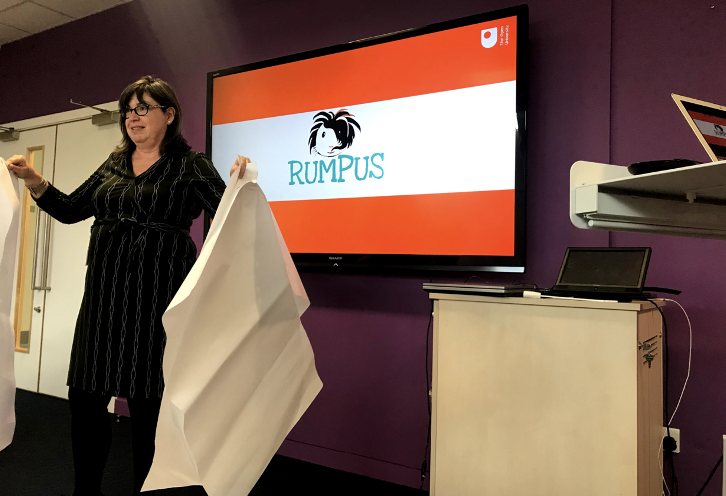
Rather than working our way through yet another set of slides, Mimi chose body mapping for this. Ale supported the session by taking photos, notes, generating data and integrating previous studies about body mapping from the literature to initiate this article.

Body mapping - what is it?

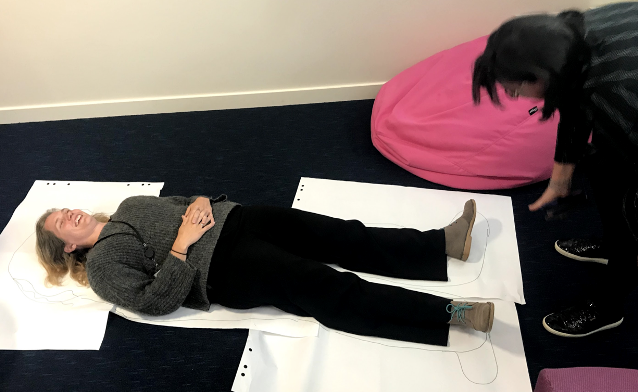
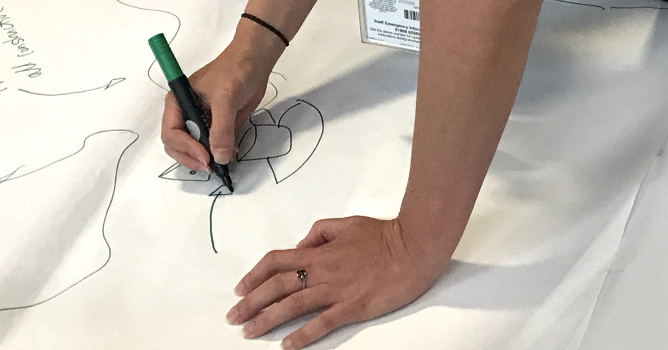
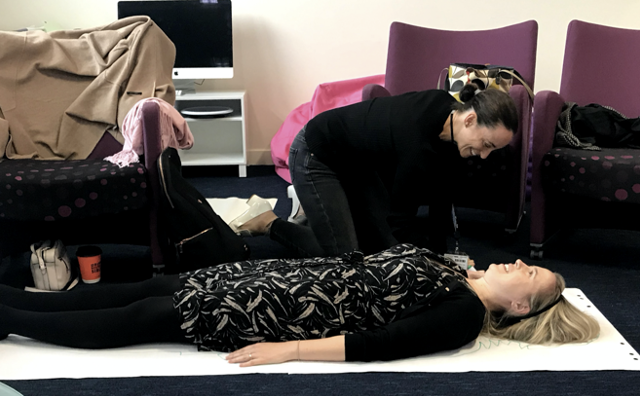
Body mapping is a simple visual drawing approach that requires no skill or previous experience. First, a rough, life-size outline of each group participant’s body is drawn on paper. This can be done in pairs, as each person lies on the ground on large sheets of paper and the other draws around it – but equally a free-hand life-size body outline can simply be drawn (see below for variations on this approach).

Next, each participant writes, draws or colours, in their body outline and around it – filling areas in or leaving them blank, responding to the theme of the session. The idea is to express experiences, thoughts and emotions that relate to the experience under discussion. Participants can use keywords, sentences or symbols; graphs, maps, icons, texture or collage.

Body mapping can represent a specific context or personal moment, or a longer journey, and It is limited only by time, imagination, materials and engagement. It reiterates that as humans, all our experiences are embodied. As with hat-wearing, it does also require an atmosphere of trust, and it is important that a genuine opt-in approach is taken so that participants feel free to choose another route or to sit this out altogether.

Body mapping can be used in reflective workshops. It can also be used to collect qualitative research data about subjective experiences associated with one’s embodied self (Coetzee et. al, 2019) through a life-size human body figure (McCorquodale and DeLuca (2020) or a smaller one drawn on a standard sheet of paper.

Location and materials

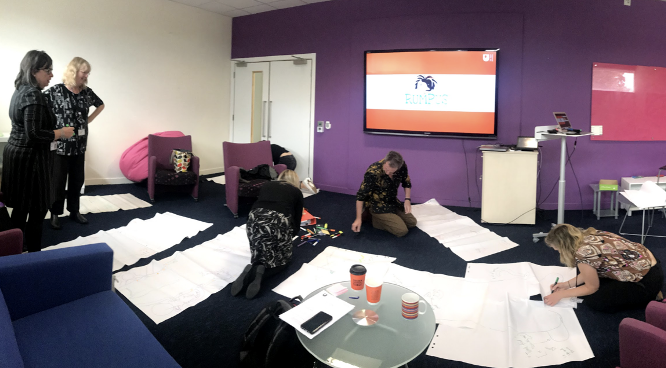
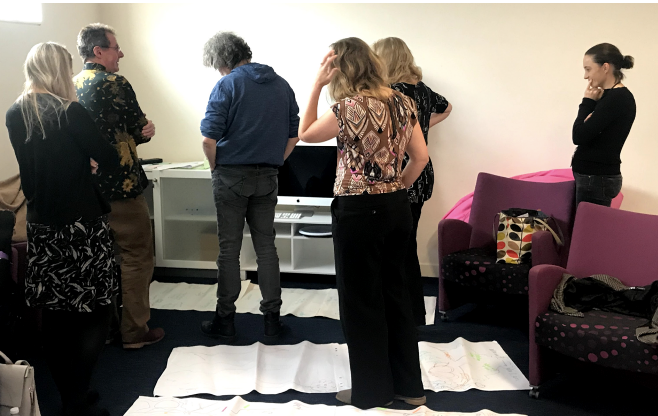
A special location suggested by Prof. Fergurson was selected for this workshop/funshop, the Creative Room in the Jennie Lee Building of the Open University. At RUMPUS, we often try and meet off campus, again to step away from the formal constraints of much of our academic lives. This location was a next-best to capture that atmosphere of stepping away: unlike a standard meeting room, the Creative Room is a large and cosy space with brightly coloured walls and a carpeted floor. that lends itself to drawing, interaction and dialogue.

The materials we used were basic: flipchart paper sheets, handfuls of colourful marker pens, sticky tapes and staplers.

Process

Our induction meeting started with an open conversation with the whole group so those who had not yet met could start to get to know each other. We chatted about each others’ current research ideas and the key ideas and concepts the students had drawn on in their proposals and interviews. As is so often the case, discussion about fun – what it is, how it’s experienced and how to research it – quickly became quite animated.

This was followed by a brief presentation of images associated with current research underway at the RUMPUS research group.

Mimi then explained the body mapping activity.

The objective was to learn from each other about doctoral journeys. The four supervisors and another research group member illustrated their experiences of completing their Ph.D. research studies. The two Ph.D.  students – women – described their journey of preparing their successful doctoral proposal.

Mimi highlighted the ethical protocol of keeping the conversation private to the group, and that no one was obligated to share if they preferred not to. Individual approval to report on this event has been obtained by email from each participant.

For this blog article, the participants provided their consent for photos and comments about the body mapping session that occurred before the pandemic – a year ago.  Since the induction, our meetings have been implemented only online.

The body mapping portion of the workshop took about an hour in total: 10 minutes to prepare the real-size body outline in pairs, 15-20 minutes to illustrate the research journey in the body outline. Finally, each of the seven participants took the rest of the group on a tour of their body maps, for a few minutes each, sharing and explaining as much as they preferred.

Working in pairs and threes, seven of the eight participants supported each other to attach paper sheets and outline their bodies.

Findings and Discussion

According to Gastaldo et. al.  (2012, p.5). “Body mapping can be a way of telling stories, much like totems that are constructed with symbols that have different meanings, but whose significance can only be understood in relation to the creator’s overall story and experience”.

Therefore, dialogue about the body mapping contributes to capturing the full nature of the experience.

It’s important to recognise that – like many aspects of the doctoral relationship – and indeed like fun itself, body mapping can be experienced in various ways. As McCorquodale and DeLuca (2020, p.1) highlight,

“Body mapping can be a fun and expressive experience for participants of social research [but] It can also be a confusing and overwhelming experience for researchers and participants new to the method.

Building relationships before body mapping is important so participants know each other. This also creates the flexibility to make choices about how to participate, and conversation – and allowing silence – is important so that everyone feels as comfortable as possible.

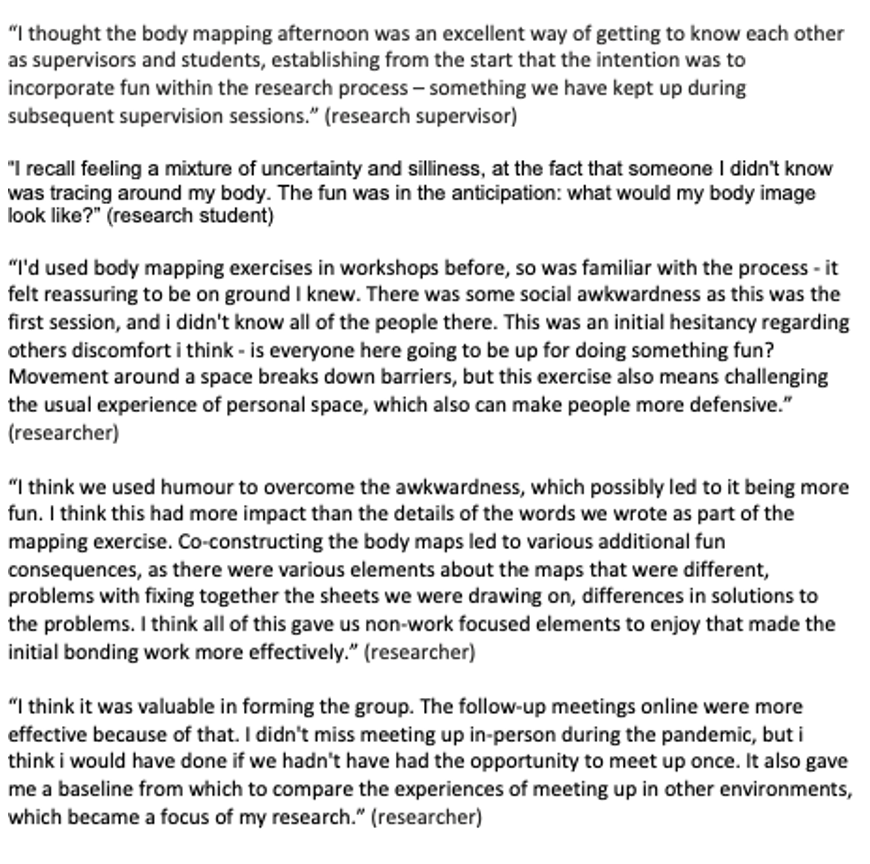
For reflective educational researchers and practitioners, the following extracts selected from participants’ comments about their experience were very meaningful to explore the nuances of fun that emerged, for example,   get to know each other; incorporate and keep fun up during supervision meetings; face uncertainty or silliness as well as activate imagination and anticipation. Last but not least, being aware of any awkwardness related to the activities and environment and finding ways to sort out any discomfort with the facilitators as well as being open to exciting emerging pathways … led participants to find precious joy in the process of learning.

‘Non-work focus elements’  became pearls for meaning-making, bonding and identity with body mapping.

Data: participants'views

Final Remarks

Body maps can be completed by individual research participants or collectively in groups (CORNWALL, 1992). The body maps become springboards for discussion to fully understand the lived experiences depicted. These discussions can take place while the maps are being drawn. They can also take place afterwards either as one-to-one interviews or in larger groups.

The body mapping enabled participants to identify thoughts, relationships, feelings and emotions associated with their research journey . Drawing events using our real size body activated memories, feelings, emotions and senses that triggered a rush of past events or even seemingly forgotten em”body”ied experiences.

Listening to each other’s body mapping was very meaningful as well as brought the participants close together strengthening group identity.

References

Gastaldo, D., Rivas-Quarneti, N., & Magalhães, L. (2018, March). Body-map storytelling as a health research methodology: Blurred lines creating clear pictures. In Forum Qualitative Sozialforschung/Forum: Qualitative Social Research (Vol. 19, No. 2).

Coetzee, B., Roomaney, R., Willis, N., & Kagee, A. (2019). Body mapping in research. In Pranee Liamputtong (ed.), Handbook of Research Methods in Health Social Sciences. Springer Singapore. pp. 1237-1254 (2019)

McCorquodale, L., & DeLuca, S. (2020). You Want Me to Draw What? Body Mapping in Qualitative Research as Canadian Socio-Political Commentary. In Forum Qualitative Sozialforschung/Forum: Qualitative Social Research (Vol. 21, No. 2).

Cornwall, A. (1992). Body mapping in health RRA/PRA. RRA Notes16(July), 69-76.


ESRC-IAA opportunity to connect fun in learning and Social Science

ESRC-IAA is a funding opportunity led by Oxford to enhance the impact of Social Science research through Knowledge Exchange activities.

This collaborative initiative was launched today with a workshop supported by Prof. Jane Seale, Dr. Andrea Berardi and Dr. Gareth Davies at the OU Wilson Building.

In this event, Prof. Mark Pellard and Lorna Hards from Oxford University presented the ESRC-IAA scheme. The key objectives of this call are to build capacity, promote impact and facilitate knowledge exchange for supporting new or existing ideas/projects.

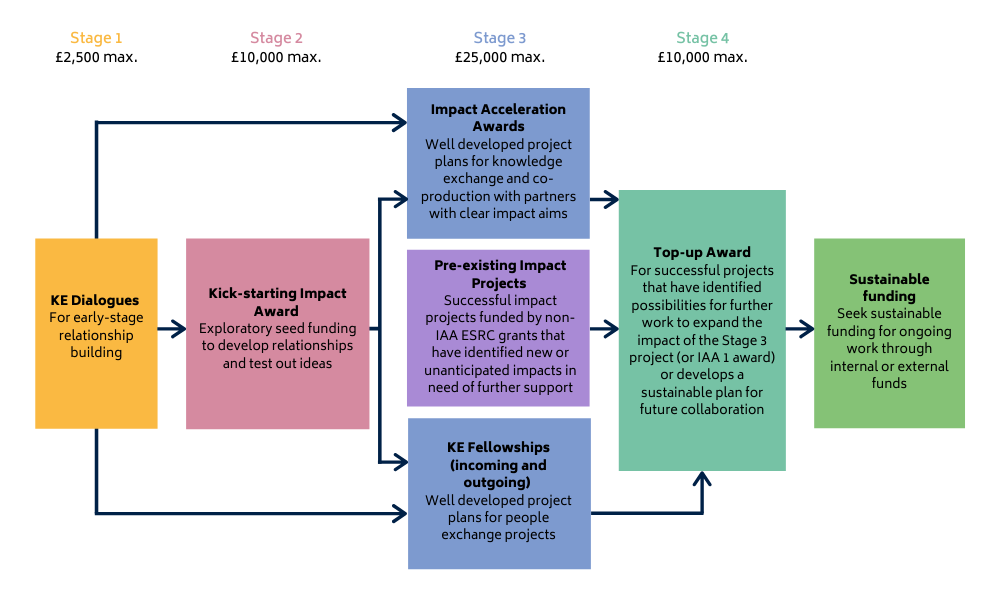
“Being part of an ESRC-IAA is prestigious and will open up opportunities for fruitful partnerships through 4 stages”.

Lorna explained that this funding will help the OU staff to develop close relationships with Oxford and Reading colleagues. The scheme requires that Oxford academics lead on grants submitted but the OU and Reading researchers can participate in the co-creation process and contribute to the proposal as partners.
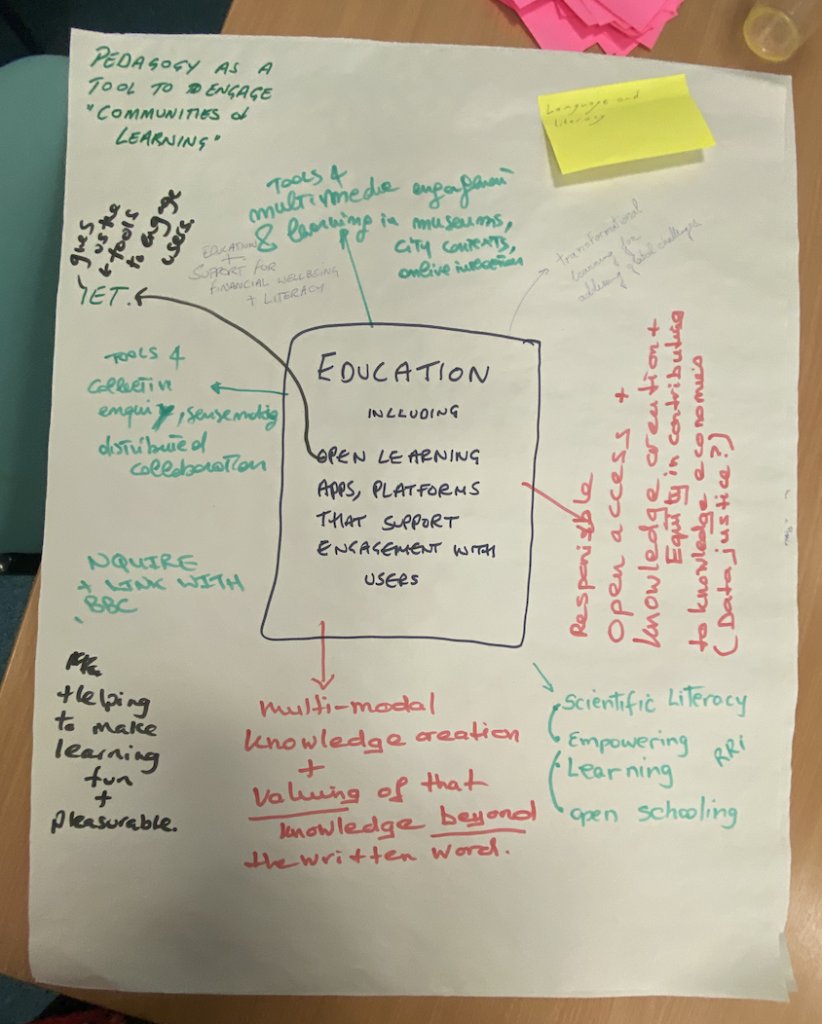
Jane and Andrea discussed about how partnerships could be promoted through themes and strategies. They invited all participants to brainstorm ideas  and identify key topics that the OU research groups have expertise for initiating collaborations with researchers from Oxford, Reading and Oxford Brookes.

The deadline to submit an application is by the 3rd of Feb. The website provides more information about the process of submission and how to find Oxford partners to prepare with them a proposal for this call.

Rumpus Research interdisciplinary team is open to new collaborations in particular for connecting Learning with Fun for Social Innovation, UN Sustainable Development Goals and OECD Future of Education and Skills 2030.

A list of projects that have received funding from Oxford’s ESRC Impact Acceleration Account (IAA) and the Higher Education and Innovation Fund (HEIF) can be accessed in this website.

This is one of the posters created in the workshop today.